








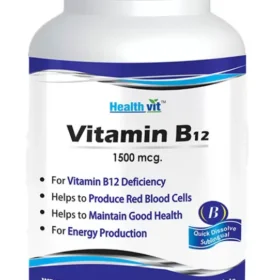
Vitamin B12 1500 mcg Tablets — Nerve Health & Energy
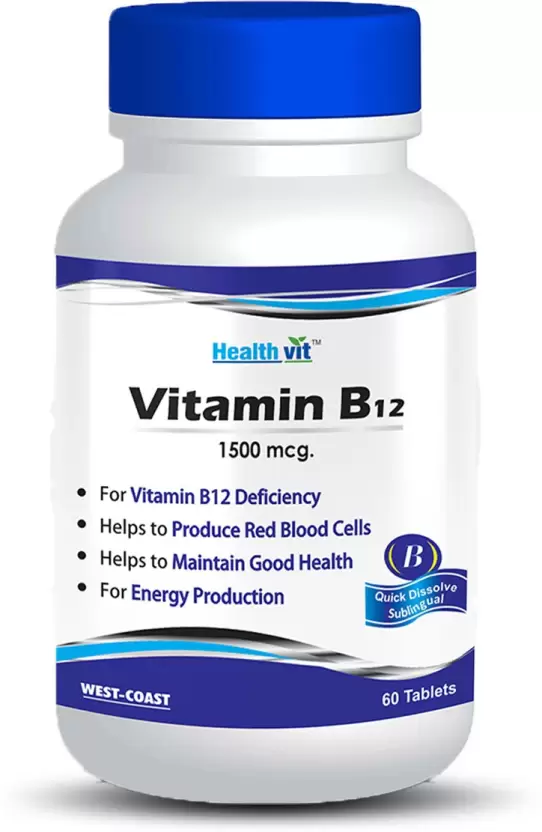
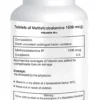
✅ Boosts energy levels
✅ Supports nerve health
✅ Aids in red blood cell production
✅ Improves mood and memory
✅ Enhances metabolism
✓ Medically reviewed by Morgan Ellis — Pharmacy Researcher · 8 years experience · Last reviewed: May 2026
Quick Answer
Vitamin B12 1500 mcg tablets deliver high-dose oral cyanocobalamin (or methylcobalamin in some formulations) to correct and prevent vitamin B12 deficiency — a common but under-recognised cause of peripheral neuropathy, megaloblastic anaemia, fatigue, and cognitive symptoms. The 1500 mcg strength is suitable for replacement in mild-to-moderate deficiency, long-term maintenance after parenteral loading, and routine support for high-risk groups: vegans and vegetarians, adults over 60, patients on long-term metformin or proton-pump inhibitors, post-bariatric surgery, and those with atrophic gastritis. Take one tablet daily with water. Even patients with pernicious anaemia can absorb a small fraction of high-dose oral B12 by passive diffusion, making 1500 mcg an effective alternative to monthly injections in many cases.
📦 Every order is covered by our Reshipment Assurance Policy — if your parcel does not arrive within 20 business days, we reship it.
Why order from MedsBase
Our generic medications are sourced from WHO-GMP certified manufacturers and shipped worldwide in discreet, plain packaging — no medication name on the parcel exterior. Card payments are routed through a regulated processor (statement descriptors include a regulated card-payment processor — never “MedsBase” or any medication name). Crypto and SEPA bank transfer are also accepted. Every order is backed by our Reshipment Assurance Policy.
What Is Vitamin B12?
Vitamin B12 (cobalamin) is a water-soluble vitamin essential for DNA synthesis, red blood cell production, myelin formation, and homocysteine metabolism. Humans cannot synthesise B12 — all dietary B12 comes from animal foods (meat, fish, eggs, dairy) or fortified plant foods. The 1500 mcg tablet provides a high-dose oral replacement that exceeds the recommended daily intake (2.4 mcg) by several hundred-fold, leveraging passive diffusion to absorb B12 even when intrinsic factor (the gastric protein required for active absorption) is deficient.
Why High-Dose B12 Tablets Work Without Injections
The body absorbs B12 by two pathways:
- Active, intrinsic-factor-mediated absorption — efficient but limited to about 1–2 mcg per dose, requires healthy gastric parietal cells and ileum
- Passive diffusion — inefficient (≈1% of dose) but proportional to oral dose; requires no intrinsic factor
At 1500 mcg per tablet, passive diffusion alone delivers roughly 15 mcg — well above the daily requirement. Multiple randomised trials have shown that high-dose oral B12 (1000–2000 mcg/day) is non-inferior to monthly intramuscular injections for maintenance therapy, including in pernicious anaemia.
Indications
- Vitamin B12 deficiency — symptomatic or biochemical (serum B12 <200 pg/ml, or 200–300 pg/ml with raised methylmalonic acid / homocysteine)
- Pernicious anaemia maintenance — after parenteral loading
- Vegan and vegetarian supplementation
- Post-bariatric surgery — sleeve, bypass, duodenal switch
- Long-term metformin therapy — depletes B12 in 30% of users over 5–10 years
- Long-term PPI or H2 blocker use — reduces B12 absorption
- Atrophic gastritis in older adults
- Peripheral neuropathy with documented B12 deficiency
- Mouth ulcers and glossitis from B12 deficiency
- Pre- and post-natal supplementation in vegan mothers (under medical supervision)
Dose & Administration
| Use case | Dose | Duration |
|---|---|---|
| Mild-to-moderate B12 deficiency | 1500 mcg once daily | 3–6 months, then maintenance |
| Maintenance after parenteral loading | 1500 mcg once daily | Long-term / lifelong (pernicious anaemia) |
| Vegan supplementation | 1500 mcg once daily, or 2 tablets twice weekly | Ongoing |
| Long-term metformin / PPI users | 1500 mcg daily or every other day | Ongoing while medication continues |
| Severe symptomatic deficiency with neurological signs | Use injection first (Neurobion or B12 IM); switch to 1500 mcg tablet for maintenance | Lifelong if cause persists |
How to take: swallow with a glass of water. Food does not significantly affect absorption of the high-dose tablet — the 1% passive-diffusion fraction is broadly stable. Take at the same time each day for habit consistency.
Common Side Effects
Vitamin B12 is exceptionally well-tolerated. Excess B12 is excreted in the urine — there is no defined upper safe intake limit. Reported effects are uncommon and usually mild:
- Mild headache
- Mild gastrointestinal upset, nausea
- Itching or rash (rare)
- Bright yellow or pink urine (harmless excretion of vitamin metabolites)
Rare Serious Effects
- Allergic reaction to cobalt (the metal core of cobalamin) — very rare
- Acne flare-ups in very high-dose users (case reports)
- Hypokalaemia early in megaloblastic anaemia treatment as new red cells take up potassium — relevant only when correcting severe deficiency rapidly
Contraindications
- Known hypersensitivity to cobalamin or cobalt
- Leber’s hereditary optic neuropathy — B12 may worsen optic atrophy
- Pre-existing megaloblastic anaemia where folate deficiency has not been excluded — B12 alone can mask folate-deficient anaemia and worsen neurological deterioration
Drug Interactions
Several common medications reduce B12 absorption — these are reasons to take a B12 supplement, not reasons to avoid it:
- Metformin — depletes B12 in roughly 30% of long-term users
- Proton-pump inhibitors (omeprazole, esomeprazole, pantoprazole) — reduce gastric acid needed to release B12 from food protein
- H2-receptor blockers (ranitidine, famotidine) — same mechanism as PPIs
- Colchicine — reduces ileal B12 absorption
- Chloramphenicol — may blunt the haematological response to B12
- Nitrous oxide — inactivates B12; recurrent or prolonged exposure (occupational, recreational) can precipitate functional B12 deficiency despite normal blood levels
Storage
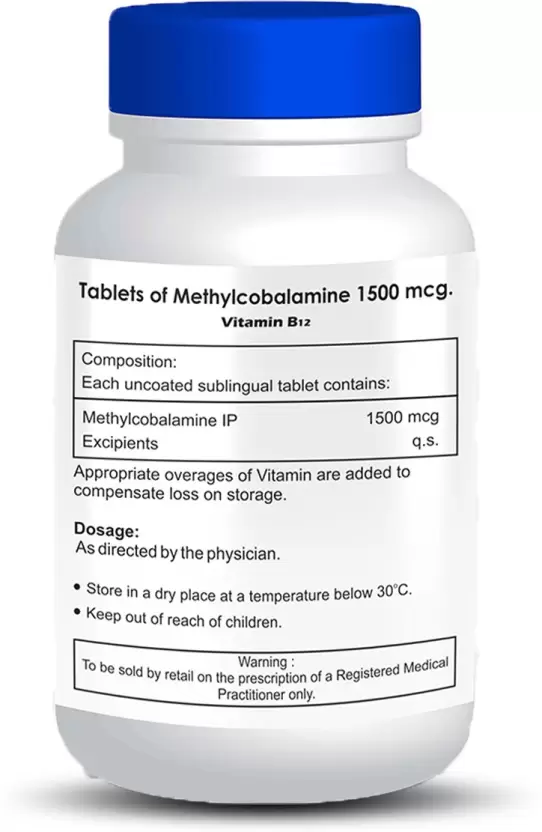
Store below 25 °C in a dry place. Protect from direct sunlight. Keep in original blister packaging until use. Keep out of reach of children.
Frequently Asked Questions
How will I know if my B12 is too low?
Common symptoms include fatigue, weakness, pins-and-needles or numbness in hands and feet, sore tongue, mouth ulcers, breathlessness, pale skin, mood changes, and memory problems. Diagnosis requires a blood test — serum B12 below 200 pg/ml is deficient; 200–300 pg/ml is borderline and methylmalonic acid testing helps confirm.
Should I take B12 if I am vegan or vegetarian?
Yes — most experts recommend a B12 supplement for anyone following a strict plant-based diet. Plant foods (other than fortified products) contain almost no bioavailable B12. A 1500 mcg daily tablet provides comfortable margin above the daily requirement.
Is 1500 mcg too much B12?
No — there is no defined upper safe intake limit for vitamin B12. The body absorbs only what it needs and excretes the rest in urine. High-dose tablets exploit passive diffusion to ensure adequate absorption even in patients with poor active uptake.
Can high-dose B12 tablets replace my monthly injections?
For most patients with pernicious anaemia or B12 deficiency on maintenance, yes. Multiple randomised trials show non-inferiority of 1000–2000 mcg daily oral B12 vs. monthly intramuscular injection. Discuss the switch with your doctor — patients with severe neurological symptoms or active malabsorption should usually continue parenteral loading initially.
Will B12 give me energy?
Only if you are actually deficient. B12 deficiency causes fatigue, and correcting it restores energy. If your B12 level is already normal, taking more will not provide a measurable energy boost — the surplus is excreted in urine.
How long until I feel better?
Haematological improvement (rising haemoglobin, falling MCV) is detectable within 1 week. Symptomatic improvement of fatigue and tongue soreness usually occurs within 2–4 weeks. Neurological recovery (numbness, tingling) is slower — weeks to months — and incomplete if the deficiency was prolonged.
Should I take B12 with folate?
For megaloblastic anaemia of unclear cause, both should be measured before treatment. Replacing only B12 in a folate-deficient patient corrects anaemia but lets neurological deterioration progress. Conversely, replacing only folate can mask undiagnosed B12 deficiency. Most B-complex multivitamins include both.
What is the difference between cyanocobalamin and methylcobalamin?
Both are forms of vitamin B12. Cyanocobalamin is converted in the body to the active forms (methylcobalamin and adenosylcobalamin); methylcobalamin is already in active form. For correcting general B12 deficiency, both are effective at equivalent doses. Methylcobalamin is sometimes preferred for neuropathy or for patients with rare cobalamin metabolism disorders.
Can I take vitamin B12 with my other medications?
B12 has very few significant drug interactions. It does not interfere with thyroid medication, antibiotics (other than chloramphenicol), antidepressants, anticoagulants, or most cardiovascular drugs. It is one of the safest supplements to add to a polypharmacy regimen.
Should I take Vitamin B12 if I am on metformin?
Yes — metformin reduces B12 absorption in the terminal ileum. Around 30% of long-term metformin users develop B12 deficiency over 5–10 years, which can present as worsening peripheral neuropathy mistaken for diabetic neuropathy. Annual B12 testing or ongoing supplementation is reasonable.
Can children take this tablet?
The 1500 mcg strength is intended for adult use. Children with B12 deficiency need paediatrician-guided dosing — usually lower starting doses with regular monitoring. Do not give adult-strength tablets to children without medical advice.
See also: Gabasign 300 / 600 mg — Cipla’s gabapentin generic — same FDA-approved molecule, full dose range from 300 mg starter to 600 mg maintenance.
Beyond a single-nutrient option like Vitamin B12 1500 mcg, Metabolis (methylated B-complex) supplies methylcobalamin alongside methylfolate and P-5-P pyridoxal — the active B-vitamin forms used for homocysteine and methylation support.
Related Alternatives
Other products in Chronic Conditions that customers also view:
More options in Neuropathic Pain Medication
Ranked by recent MedsBase order volume — what other customers in this category are picking.

| Strength | 1500 mcg |
|---|---|
| Quantity | 60 Tablet/s, 120 Tablet/s, 180 Tablet/s, 360 Tablet/s |
 Vitamin B12 1500 mcg Tablets — Nerve Health & Energy
Q & A
Vitamin B12 1500 mcg Tablets — Nerve Health & Energy
Related products



Reviews
There are no reviews yet