







Vitamin B12 (Cyanocobalamin) Injectable — Pharmaceutical Grade
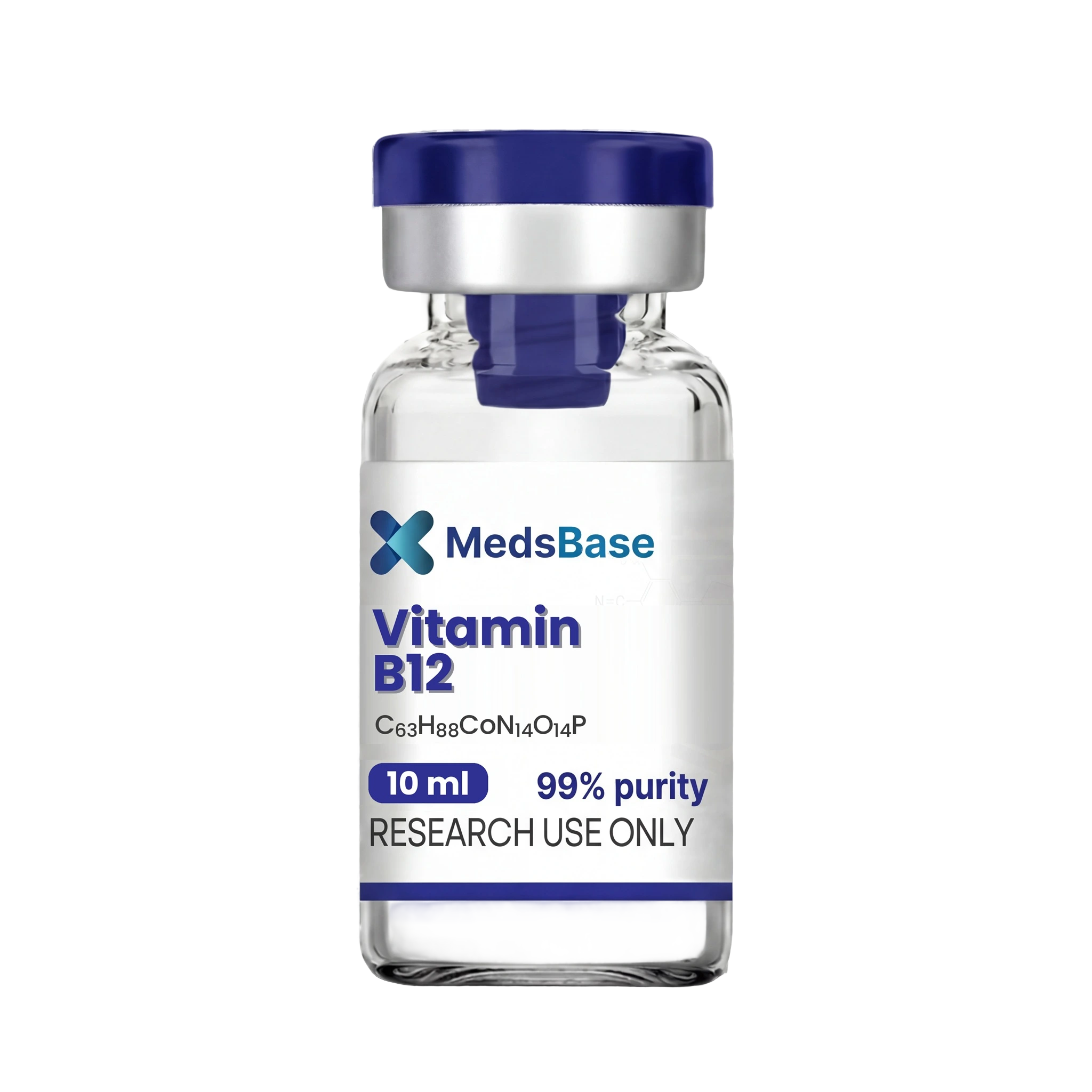
✅ Cobalt-centered corrinoid coenzyme — vitamin B12 family (CAS 68-19-9)
✅ Pre-formulated sterile aqueous solution (no reconstitution required)
✅ 1 mg/mL × 10 mL multi-dose vial (10 mg total cyanocobalamin)
✅ Cellular methionine synthase + methylmalonyl-CoA mutase cofactor
✅ Small-molecule companion compound (MW 1355.37, USP-grade)
Vitamin B12 (Cyanocobalamin) Injectable contains 1 mg/mL × 10 mL sterile cyanocobalamin solution.
✓ Medically reviewed by Morgan Ellis — Pharmacy Researcher · 8 years experience · Last reviewed: May 2026
Quick Answer — What is B12 (Cyanocobalamin) Injectable?
Vitamin B12 (Cyanocobalamin) is the synthetic cyano-coordinated form of the cobalamin coenzyme family (CAS 68-19-9, MF C63H88CoN14O14P, MW 1355.37 g/mol). Supplied here as a 10 mg per 10 mL multi-dose injectable vial (1 mg/mL pre-formulated sterile aqueous solution — no reconstitution required) for studies and companion-protocol use alongside the peptide catalogue. Cyanocobalamin is the most-cited B12 form in published studies because it is the most chemically stable: cells take it up via the transcobalamin-II / cubilin pathway and convert it intracellularly to the two biologically-active cobalamin forms — methylcobalamin (cofactor for methionine synthase / SAM cycle / one-carbon metabolism) and adenosylcobalamin (cofactor for methylmalonyl-CoA mutase / odd-chain fatty acid metabolism / TCA entry). For clinical studies use only. Not a peptide — small-molecule cobalt-centered corrinoid coenzyme.
📦 Every order is covered by our Reshipment Assurance Policy — if your parcel does not arrive within 20 business days, we reship it.
| Specification | Detail |
|---|---|
| Compound Class | Cobalt-centered corrinoid coenzyme; vitamin B12 family; small-molecule cofactor; not a peptide |
| Chemical Name | Cyanocobalamin (synonyms: Vitamin B12, cobalamin (cyano form), CN-B12; the cyano-coordinated synthetic stabilisation form of the cobalamin family) |
| CAS Number | 68-19-9 (cyanocobalamin); related cobalamin CAS — methylcobalamin 13422-55-4, hydroxocobalamin 13422-51-0, adenosylcobalamin 13870-90-1 (not supplied here) |
| Molecular Formula | C63H88CoN14O14P |
| Molecular Weight | 1355.37 g/mol |
| Mechanism | Cyanocobalamin enters cells via the receptor-mediated transcobalamin-II → cubilin pathway and is converted intracellularly by methionine synthase reductase (MTRR) and methylmalonic aciduria cblA-type protein (MMAA) into the two biologically-active cobalamin coenzymes — methylcobalamin (cytosolic cofactor for methionine synthase) and adenosylcobalamin (mitochondrial cofactor for methylmalonyl-CoA mutase). Both coenzymes are essential for one-carbon / methylation and propionyl-CoA / odd-chain fatty acid metabolism respectively. |
| Sequence | n/a (small-molecule corrinoid coenzyme — not a peptide) |
| Form & Concentration | Pre-formulated sterile aqueous solution — 1 mg/mL cyanocobalamin in physiological-buffer base, 10 mL multi-dose vial (10 mg total cyanocobalamin per vial). Characteristic deep red colour from the cobalt-corrin chromophore. No reconstitution required — withdraw aseptically with sterile syringe. |
| Purity | ≥99% (HPLC verified); USP-grade cyanocobalamin reference standard. COA available on request. |
| Solubility | Highly water-soluble (~12.5 mg/mL solubility limit at 25 °C); pre-formulated solution is well below saturation. Stable in aqueous buffer at pH 4–7. Avoid alkaline conditions (rapid hydroxocobalamin formation) and strong-reducing conditions (cob(II)alamin generation). |
| Storage | Refrigerate at 2–8 °C; protect from light (cyanocobalamin is photosensitive — UV/blue light catalyses cyano-to-hydroxo conversion). Use multi-dose vial within 60 days of first puncture. Do not freeze (ice-crystal formation can crack the glass vial and risks photolytic degradation on prolonged frozen storage). Use within stated expiry on the vial label (typically 24 months from manufacture). |
What Is Vitamin B12 (Cyanocobalamin)?
Cyanocobalamin (CAS 68-19-9) is the synthetic, cyano-coordinated form of the vitamin B12 family of cobalamin coenzymes. Structurally it is a complex cobalt-centered corrinoid: a 19-atom macrocyclic ring (the corrin ring, similar in geometry to the porphyrin ring of haemoglobin but distinct in composition) coordinates a central cobalt ion in its 3+ oxidation state, with a dimethylbenzimidazole nucleotide tail dangling below the ring and a cyano (-CN) group occupying the upper axial coordination position. Molecular formula C63H88CoN14O14P, molecular weight 1355.37 g/mol. The molecule is intensely red — its visible-spectrum absorption (λmax ~360, ~520, ~550 nm) is what gives B12 solutions their characteristic deep pink-red colour. The “cyano” form is a synthetic stabilisation choice rather than a biologically-significant species in vivo. Cobalamins in cells exist primarily as methylcobalamin (a methyl group on the upper axial position — the cytosolic cofactor for methionine synthase) and adenosylcobalamin (a 5′-deoxyadenosyl group on the upper axial position — the mitochondrial cofactor for methylmalonyl-CoA mutase). These two active forms are interconverted by dedicated cellular enzymes and are not commercially supplied in stable injectable form because of their light-sensitivity. Cyanocobalamin is supplied instead because the cyano group is photochemically and thermally stable, and cells convert cyanocobalamin to the methyl and adenosyl forms intracellularly via methionine synthase reductase (MTRR) and the methylmalonic aciduria cblA-type protein (MMAA), respectively. In the studies and clinical context, cyanocobalamin injectable preparations are the canonical supplemental form. The 10 mL multi-dose vial format (1 mg/mL × 10 mL = 10 mg per vial) supplied here matches the standard pharmaceutical preparation pattern. MedsBase stocks this format in the peptide-studies catalogue as a small-molecule companion compound used in protocols that combine peptide studies with cobalamin-axis biology — recovery, methylation-cycle studies, hematology, cognitive studies with nootropic peptides, and energy-metabolism panels where the SAM cycle is engaged.
Mechanism of Action — Two Cobalamin-Coenzyme Reactions
B12 / cyanocobalamin’s biological mechanism is the sum of the two enzymatic reactions catalysed by the active cobalamin coenzymes derived from it:
- Cellular uptake via transcobalamin-II → cubilin / megalin — Free cyanocobalamin in extracellular fluid is bound by transcobalamin-II (TCII), and the TCII-B12 complex is taken up by the cubilin / megalin receptor system on cell surfaces. Intracellular release into the lysosome is followed by transport into the cytosol via the LMBRD1 / ABCD4 efflux complex.
- Intracellular conversion to active coenzymes — In the cytosol, methionine synthase reductase (MTRR) reduces and methylates cyanocobalamin to methylcobalamin (the active cytosolic form), losing the cyano group as cyanide (which is then detoxified by the rhodanese / thiosulfate system at the very low quantities generated). In the mitochondrion, the methylmalonic aciduria cblA-type protein (MMAA) plus methionine synthase reductase converts cyanocobalamin to adenosylcobalamin (the active mitochondrial form).
- Methylcobalamin → methionine synthase (cytosolic, one-carbon / SAM cycle) — Methionine synthase catalyses the transfer of a methyl group from 5-methyl-tetrahydrofolate to homocysteine, regenerating methionine and tetrahydrofolate. This is the critical link between B12, folate, and the methionine / SAM cycle. SAM (S-adenosyl-methionine, generated from methionine + ATP) is the universal cellular methyl donor for the hundreds of cellular methylation reactions — DNA methylation, histone methylation, phospholipid methylation, neurotransmitter methylation (catecholamines, melatonin), creatine biosynthesis. B12 deficiency therefore disrupts the entire methylation programme of the cell and is the molecular basis for the haematological (megaloblastic anaemia from impaired DNA-methylation-dependent thymidine synthesis) and neurological (demyelination from impaired phospholipid methylation) sequelae of clinical B12 deficiency.
- Adenosylcobalamin → methylmalonyl-CoA mutase (mitochondrial, propionyl-CoA / TCA entry) — Methylmalonyl-CoA mutase catalyses the intramolecular rearrangement of (R)-methylmalonyl-CoA to succinyl-CoA. This is the metabolic entry point for propionyl-CoA-generating substrates — odd-chain fatty acids, branched-chain amino acids (valine, isoleucine, methionine), cholesterol side-chain. Adenosylcobalamin deficiency causes accumulation of methylmalonate (the diagnostic biomarker of clinical B12 deficiency) and impairs propionyl-CoA / odd-chain fat oxidation.
- Connection to NAD-axis and one-carbon metabolism crossover — The B12 / methionine-synthase reaction sits at the same metabolic node as the SAM-consuming methylation reactions catalysed by hundreds of cellular methyltransferases, including NNMT (nicotinamide N-methyltransferase) — the target of 5-Amino-1MQ. NNMT consumes SAM to methylate nicotinamide; impaired B12 / methionine-synthase function lowers cellular SAM availability and therefore lowers NNMT activity indirectly. Studies that probes the NAD-axis / one-carbon-metabolism crossover often co-administers B12 and NNMT-pathway tools to dissect these connected biochemistries.
The pharmacokinetic profile of injectable cyanocobalamin is well-characterised: IM or SC administration produces rapid systemic absorption with peak plasma concentrations at 1–2 hours; substantial dose-dependent renal clearance (the kidney saturates and dose-dumps any cyanocobalamin above the transcobalamin-II carrier capacity); cellular uptake then proceeds over hours-to-days; conversion to active coenzymes happens continuously thereafter; and the very low daily turnover requirement of cobalamin coenzymes (~2 µg/d in human physiology) means that single high-dose injections produce sustained tissue-level effects for weeks. The 1 mg/mL × 10 mL multi-dose format supports typical protocols ranging from single-bolus high-dose work to weekly or daily smaller-dose chronic dosing.
Published Evidence
B12 / cyanocobalamin is used in clinical contexts that investigate:
- One-carbon metabolism and SAM-cycle studies — the canonical small-molecule cofactor for methionine synthase; standard tool compound for any studies that probes the folate / B12 / methionine / SAM axis; widely used in DNA-methylation and histone-methylation pharmacology studies
- Homocysteine-axis studies — methionine synthase deficiency / impairment causes homocysteine accumulation; cyanocobalamin supplementation is the standard intervention in published studies models of hyperhomocysteinaemia and cardiovascular risk
- Haematology and erythropoiesis studies — B12 deficiency causes megaloblastic anaemia via impaired DNA-methylation-dependent thymidine synthesis; published studies uses cyanocobalamin in vitamin-deficiency erythropoiesis models, bone-marrow culture studies, and reticulocyte-response studies
- Peripheral neuropathy and demyelination studies — B12 deficiency causes peripheral neuropathy and subacute combined degeneration of the spinal cord via impaired phospholipid methylation in myelin sheaths; published studies uses cyanocobalamin supplementation in demyelination / remyelination model systems
- NAD-axis / methylation crossover studies — combined with 5-Amino-1MQ (NNMT inhibitor) or NAD⁺ in published studies that probes the SAM-cycle / nicotinamide-methylation node
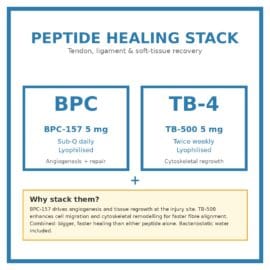
- Recovery and athletic-applications (combined with peptide protocols) — frequently included as a companion compound in protocols that combine peptide therapeutics (BPC-157, TB-500, GH peptides) with cofactor / vitamin support; the canonical small-molecule companion to peptide-axis recovery
- Cognitive and nootropic-applications — combined with cognitive peptides (Selank, Semax, DSIP) in studies on the cognitive sequelae of B12 deficiency and the cobalamin axis in CNS function
- Cyanocobalamin vs methylcobalamin vs hydroxocobalamin comparative studies — published studies has compared the four cobalamin forms head-to-head for bioavailability, intracellular conversion kinetics, and tissue-retention profiles; cyanocobalamin is the canonical reference compound against which the others are benchmarked
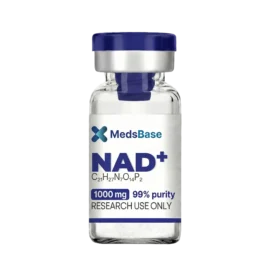
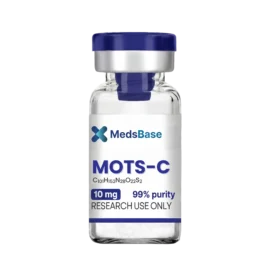
For broader context on small-molecule cofactor / coenzyme compounds in this catalogue, see L-Carnitine (the closest small-molecule companion analogue — mitochondrial long-chain fatty-acid shuttle), NAD⁺ (oxidised dinucleotide coenzyme — direct NAD-pool supplementation), 5-Amino-1MQ (NNMT inhibitor — connects B12 / methionine cycle to NAD-axis), and MOTS-c (mitochondrial-derived metabolic peptide). Browse the full peptides & compounds catalog.
Available Pack Sizes
MedsBase stocks Vitamin B12 (Cyanocobalamin) Injectable in a single concentration / vial format with three pack-size options:
| Pack Size | Typical Use Case | Total Material |
|---|---|---|
| 1 Vial | Single-experiment, dose-titration, or short-course in-vivo studies — 10 mg total cyanocobalamin in 10 mL multi-dose format covers 4–8 weeks of typical protocol dosing in rodents or small-cohort cell-culture work | 10 mg / 10 mL |
| 5 Vials | Multi-cohort or extended-cycle studies — typical mid-scale protocols using B12 as a companion compound alongside peptide-dosing; per-vial economics improve significantly vs single-vial purchase | 50 mg / 50 mL |
| 10 Vials | Large-cohort or long-arm protocols — chronic-dosing companion supply alongside long-cycle peptide protocols; lowest per-mg cost; covers multi-animal cohort work without re-purchase | 100 mg / 100 mL |
The single 1-vial pack is convenient for single-experiment or titration work; the 5-vial and 10-vial packs provide significant per-vial savings for chronic protocols or multi-cohort studies. The 1 mg/mL × 10 mL multi-dose format matches the standard pharmaceutical injectable cyanocobalamin pattern and is well-suited to typical protocol dosing — IM, SC, or IV administration of 100 µg to 1 mg per dose (equivalent to 0.1–1 mL of the supplied solution) covers essentially all published studies dose ranges.
How It Compares — B12 (Cyanocobalamin) vs L-Carnitine
B12 and L-Carnitine are the two best-characterised small-molecule companion compounds in this catalogue. Both serve as cofactor / shuttle compounds in mitochondrial and metabolic support, both are supplied in multi-dose injectable formats appropriate for protocol use alongside the peptide catalogue, and both are mechanistically distinct from the peptide compounds. The comparison illustrates the two canonical “small-molecule companion” compounds that users add to peptide protocols.
| Criterion | B12 (Cyanocobalamin) | L-Carnitine |
|---|---|---|
| Chemical class | Cobalt-centered corrinoid coenzyme (single small molecule) | Quaternary-ammonium amino-acid derivative (single zwitterion) |
| Molecular weight | 1355.37 g/mol | 161.20 g/mol |
| Cellular role | Cofactor — methionine synthase (cytosolic, SAM cycle) + methylmalonyl-CoA mutase (mitochondrial, propionyl-CoA → TCA) | Substrate carrier — long-chain fatty-acid shuttle across the mitochondrial inner membrane (β-oxidation entry) |
| Best studies focus | One-carbon / methylation, homocysteine axis, megaloblastic erythropoiesis, demyelination studies, cognitive / nootropic crossover | Fat oxidation, mitochondrial bioenergetics, insulin sensitivity, sperm motility, cardiovascular metabolic support |
| FDA approval | Yes — cyanocobalamin injectable approved for vitamin B12 deficiency; hydroxocobalamin approved as Cyanokit (cyanide antidote) | Yes — levocarnitine approved for primary/secondary carnitine deficiency (oral and IV) |
| Daily turnover requirement | Very low (~2 µg/d in human physiology) — single high-dose injections sustain tissue levels for weeks | High — endogenous carnitine pool ~25 g; daily replacement requirement in deficiency states is substantial |
| Supplied form | Pre-formulated sterile aqueous solution (1 mg/mL × 10 mL multi-dose) | Lyophilized powder (reconstitute with BAC water) |
| Typical dose | 100 µg to 1 mg per dose (0.1–1 mL of supplied solution), IM / SC / IV | Hundreds of mg to gram-level per dose (rodent / large-animal protocols) |
For studies focused on one-carbon metabolism, SAM cycle, homocysteine axis, or megaloblastic erythropoiesis, B12 / cyanocobalamin is the canonical small-molecule companion. For studies focused on long-chain fatty-acid oxidation, mitochondrial bioenergetics, or insulin sensitivity, L-Carnitine is the more targeted tool. The two compounds are commonly co-administered as part of broader peptide-protocols that benefit from both methylation-cycle and fatty-acid-oxidation cofactor support.
Storage and Handling
Pre-formulated solution — no reconstitution required. Unlike the lyophilized peptide products in this catalogue, cyanocobalamin injectable is supplied as a ready-to-use sterile aqueous solution. Withdraw aseptically with a sterile syringe each use; do not introduce contaminants into the multi-dose vial. Storage: refrigerate at 2–8 °C in original packaging. Protect from light at all times — cyanocobalamin is photosensitive (UV and short-wavelength visible light catalyses cyano-to-hydroxo and cyano-to-cob(II)alamin photoproducts). Store the vial in its original light-protective box or wrap in foil if removed. Avoid prolonged exposure to clinical ambient light during handling. Do not freeze. Ice-crystal formation can crack the glass vial, and frozen storage offers no stability benefit beyond refrigeration for an already-formulated aqueous solution. The solution is stable at 2–8 °C for at least 24 months from manufacture date in unopened state. After first puncture: use the multi-dose vial within 60 days. The pre-formulated buffer includes preservatives (typically benzyl alcohol or phenol at pharmaceutical-grade concentrations) that maintain sterility during multi-dose use, but cumulative septum punctures eventually risk microbial ingress. Discard if cloudiness, particulates, marked colour change (especially fading from the characteristic deep red — indicates photodegradation), or precipitation appears.
Frequently Asked Questions
Why does the supplied B12 solution have a deep red colour?
The cobalt-centered corrin ring of cobalamins is a strong visible-spectrum chromophore — cyanocobalamin’s λmax absorbance bands at ~360 nm (UV), ~520 nm (green), and ~550 nm (green-yellow) produce the characteristic pink-red transmitted colour. Any cyanocobalamin solution should look intensely red; fading toward yellow or brown indicates photodegradation (cyano-to-hydroxo conversion or further reduction to cob(II)alamin) and the vial should be discarded.
Why does this B12 product use the cyano form instead of methyl- or hydroxocobalamin?
Cyanocobalamin is the standard form supplied as injectable B12 because it is photochemically and thermally the most stable of the cobalamin forms — the cyano group resists the photolytic degradation that affects methyl-, hydroxo-, and adenosylcobalamin in solution. Once cyanocobalamin enters cells, intracellular enzymes (MTRR, MMAA) convert it to the biologically-active methylcobalamin and adenosylcobalamin forms. For most applications, cyanocobalamin is therefore the practical choice. Users specifically studying methylcobalamin or hydroxocobalamin pharmacology (e.g., differential cellular-uptake kinetics, light-degradation pathways, or cyanide-antidote applications) require those specific forms separately.
Is this B12 product a peptide?
No. Cyanocobalamin is a small-molecule cobalt-centered corrinoid coenzyme (MW 1355.37 g/mol), not a peptide. We stock it in our peptide-studies catalogue as the canonical small-molecule companion compound used in protocols that combine peptide studies with cobalamin-axis biology. The spec table Sequence row is marked “n/a” for this reason. Other small-molecule companions in this catalogue include L-Carnitine, NAD⁺, 5-Amino-1MQ, and AICAR.
What published dose ranges have been used in studies?
Injectable cyanocobalamin published dosing in human-clinical and rodent in-vivo work typically uses 100–1000 µg per dose (0.1–1.0 mL of the supplied 1 mg/mL solution), IM or SC, daily for the first week and then weekly or monthly thereafter for chronic protocols. The 1000 µg single bolus is the canonical “loading dose” in clinical-translational studies. In-vitro cell-culture protocols typically use nanomolar to micromolar concentrations. Users should consult primary literature appropriate to the specific application (haematology, neuropathy, cardiovascular, one-carbon metabolism, etc.).
Can B12 be combined with peptides like Selank, Semax, or DSIP in protocols?
Yes — B12 is commonly combined with nootropic peptides (Selank, Semax, DSIP) in studies on the cognitive sequelae of cobalamin deficiency and the broader cobalamin-axis contribution to CNS function. B12 is also commonly co-administered with recovery peptides (BPC-157, TB-500), growth-hormone peptides (Sermorelin, Tesamorelin), and metabolic peptides (MOTS-c) as a companion cofactor. The pre-formulated aqueous form means it can be withdrawn fresh into a separate syringe for each administration — do not mix with other peptide solutions in the same syringe, as the cobalt-corrin chromophore can interact with thiol-containing peptides and induce minor photoredox effects.
Why is cyanocobalamin sometimes mentioned alongside cyanide?
The cyano group on cyanocobalamin is a very small amount of bound cyanide — when intracellular enzymes convert cyanocobalamin to the active methyl/adenosyl forms, free cyanide is released in stoichiometric amount, but the quantity is very small (~25 µg of cyanide per 1 mg of cyanocobalamin) and is detoxified by the cellular rhodanese / thiosulfate system without clinical significance. The opposite reaction — cobalamin scavenging cyanide — is the basis of hydroxocobalamin’s approved use as a cyanide-antidote drug (Cyanokit), where high-dose hydroxocobalamin sequesters circulating cyanide as cyanocobalamin for renal excretion. Users in cyanide-antidote studies require hydroxocobalamin specifically, not cyanocobalamin.
How does this pharmaceutical-grade B12 compare with the existing branded B12 products on MedsBase?
The existing branded B12 products on MedsBase (e.g., Vitamin B12 1500 mcg Tablets) are clinical-pharmaceutical-grade B12 packaged in tablet form for oral / sublingual use, positioned in the nerve-health / energy-supplement category. The pharmaceutical-grade B12 supplied here is the injectable cyanocobalamin form in 10 mL multi-dose vial format, positioned in the peptide-studies catalogue as a small-molecule companion alongside the peptide compounds. Users requiring an oral / sublingual B12 supplement should use the tablet products; users requiring injectable cyanocobalamin for in-vivo or cell-culture work alongside peptide protocols can use the material supplied here.
Is B12 on the WADA Prohibited List?
No. Vitamin B12 / cyanocobalamin is not on the WADA Prohibited List. It is a vitamin / cofactor compound commonly used both clinically (for B12 deficiency treatment) and as a permitted supplement in athletic contexts. There are no athletic-performance regulatory restrictions on cyanocobalamin or other cobalamin forms.
Other Small-Molecule Companion Compounds
- L-Carnitine — Mitochondrial fatty-acid shuttle — closest small-molecule companion analogue
- NAD⁺ — Oxidised dinucleotide coenzyme — direct NAD-pool supplementation studies
- 5-Amino-1MQ — NNMT inhibitor — connects B12 / methionine cycle to NAD-axis methylation
- AICAR — Canonical small-molecule AMPK activator — companion metabolic support compound
- MOTS-c — Mitochondrial-derived metabolic peptide — alternative-mechanism cofactor studies
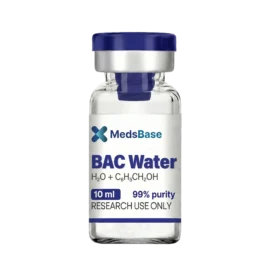
- BAC Water (Bacteriostatic Water) — Required for reconstituting any lyophilized vial — sterile, 0.9% benzyl-alcohol-preserved diluent
More options in Peptides
Ranked by recent MedsBase order volume — what other customers in this category are picking.
| Strength | 10 mg / 10 mL |
|---|---|
| Quantity | 1 Vial, 5 Vials, 10 Vials, 30 Vials |
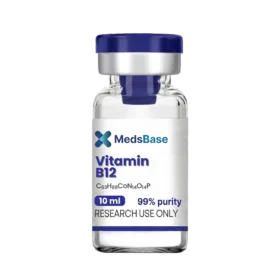 Vitamin B12 (Cyanocobalamin) Injectable — Pharmaceutical Grade
Q & A
Vitamin B12 (Cyanocobalamin) Injectable — Pharmaceutical Grade
Related products



Reviews
There are no reviews yet