









Cordarone
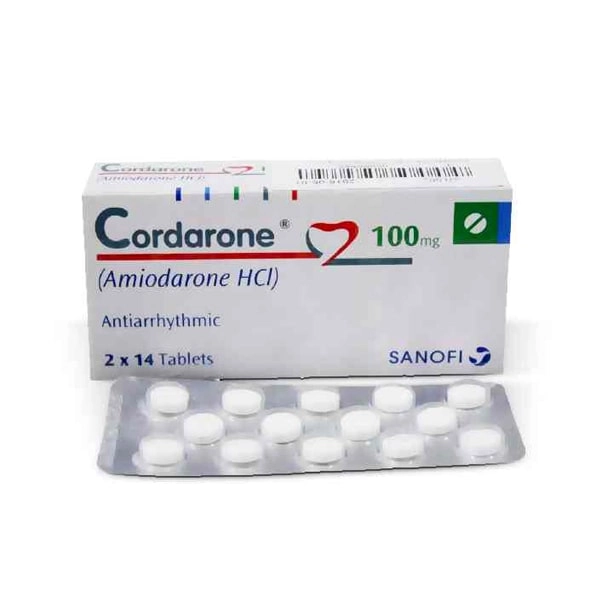
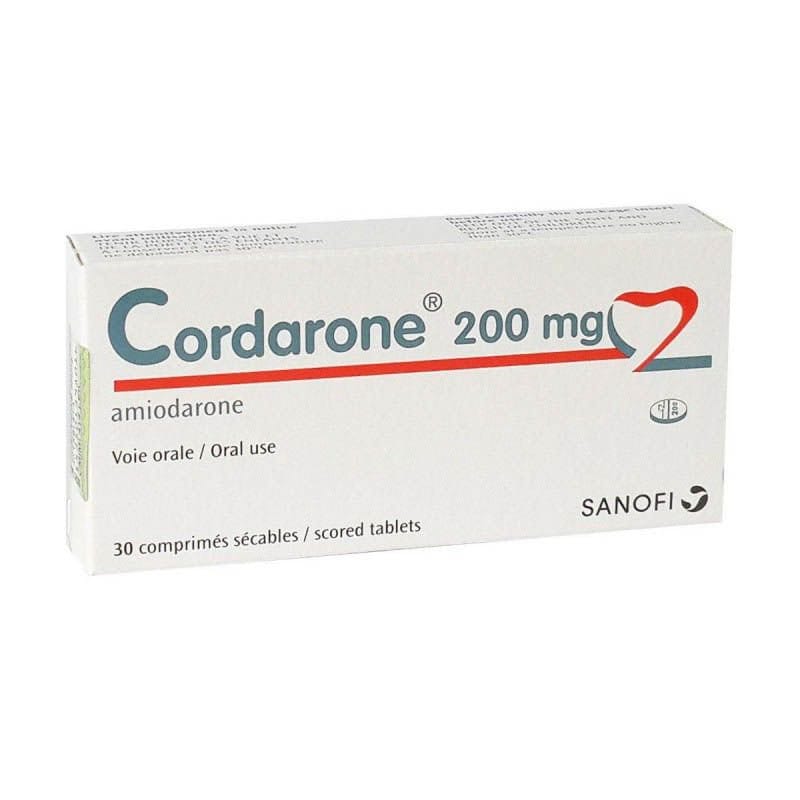
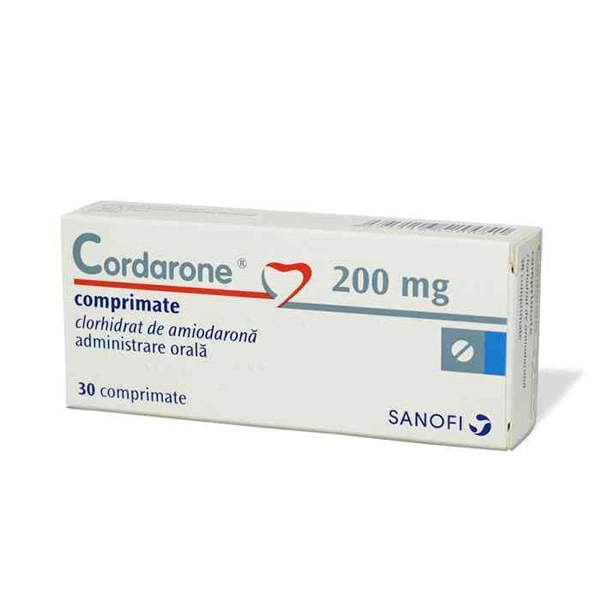
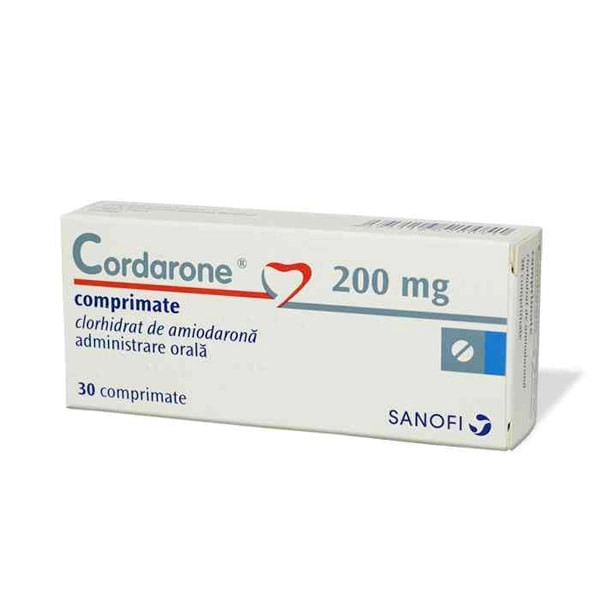

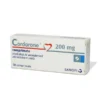
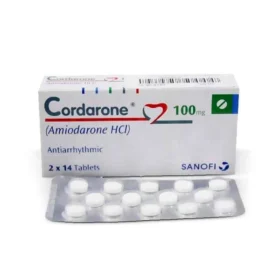
Cordarone is Sanofi’s amiodarone 100/200 mg tablets — the reference class III antiarrhythmic. Multi-channel blocker (K, Na, Ca, beta). Most effective oral agent for AF, VT, and VF, particularly in structural heart disease (HF, post-MI) where other antiarrhythmics are contraindicated. Substantial organ toxicity (pulmonary, hepatic, thyroid, corneal, skin) requires careful monitoring. Half-life 40-60 days means effects persist weeks after stopping. Specialist-managed.
✓ Medically reviewed by Morgan Ellis — Pharmacy Researcher · 8 years experience · Last reviewed: May 2026
⚡ Quick Answer — What is Cordarone?
Cordarone is 100 / 200 mg amiodarone tablets from Sanofi — a class III antiarrhythmic (with class I, II, and IV properties — “multichannel blocker”). Amiodarone was introduced in the 1960s as an anti-anginal by Labaz; its antiarrhythmic properties were recognised later. Despite substantial organ toxicity, it remains the most effective oral antiarrhythmic for both atrial (AF, flutter) and ventricular (VT, VF) arrhythmias and is widely used in structural heart disease where other antiarrhythmics are contraindicated. blocks multiple ion channels — potassium (class III, prolongs repolarisation), sodium (class I), beta-receptors (class II, partial), and calcium (class IV). Also blocks thyroid hormone conversion and peripheral action. Extremely long half-life (40-60 days) and large volume of distribution mean therapeutic effect builds over weeks. Dosing: Loading: 200 mg three times daily for 1 week, then 200 mg twice daily for 1 week, then maintenance 200 mg once daily (total loading dose typically 10 g). Maintenance: 100-400 mg once daily (adjust by clinical response and drug levels). Arrhythmia management is a cardiology-led discipline — diagnosis, drug selection, and monitoring typically require specialist input. This is not a drug for self-initiated therapy.
📦 Every order is covered by our Reshipment Assurance Policy — if your parcel does not arrive within 20 business days, we reship it.
Why order from MedsBase
Our generic medications are sourced from WHO-GMP certified manufacturers and shipped worldwide in discreet, plain packaging — no medication name on the parcel exterior. Card payments are routed through a regulated processor (statement descriptors include a regulated card-payment processor — never “MedsBase” or any medication name). Crypto and SEPA bank transfer are also accepted. Every order is backed by our Reshipment Assurance Policy.
What Is Cordarone?
Cordarone is 100 / 200 mg amiodarone tablets from Sanofi, supplied in 30-90 tablets. Amiodarone was introduced in the 1960s as an anti-anginal by Labaz; its antiarrhythmic properties were recognised later. Despite substantial organ toxicity, it remains the most effective oral antiarrhythmic for both atrial (AF, flutter) and ventricular (VT, VF) arrhythmias and is widely used in structural heart disease where other antiarrhythmics are contraindicated.
How Amiodarone Works
Amiodarone blocks multiple ion channels — potassium (class III, prolongs repolarisation), sodium (class I), beta-receptors (class II, partial), and calcium (class IV). Also blocks thyroid hormone conversion and peripheral action. Extremely long half-life (40-60 days) and large volume of distribution mean therapeutic effect builds over weeks.
Approved Uses
- Atrial fibrillation and flutter (rhythm control; also rate control in specific situations)
- Ventricular tachycardia / ventricular fibrillation — acute IV use in cardiac arrest (ALS); chronic oral for recurrence prevention
- Supraventricular arrhythmias resistant to other agents
- Preferred antiarrhythmic in structural heart disease (HF, post-MI) where class Ic agents (flecainide, propafenone) are contraindicated
Dosage and Monitoring
Dosing: Loading: 200 mg three times daily for 1 week, then 200 mg twice daily for 1 week, then maintenance 200 mg once daily (total loading dose typically 10 g). Maintenance: 100-400 mg once daily (adjust by clinical response and drug levels).
Monitoring:
- Baseline: ECG, LFTs, TSH (free T4 if abnormal), chest X-ray, pulmonary function tests (DLCO), ophthalmology review, skin inspection.
- 3-monthly: LFTs, TSH.
- 6-monthly: chest X-ray; PFTs if any pulmonary symptoms.
- Annually: full eye exam for corneal microdeposits and optic neuropathy.
- Stop on: dyspnoea with PFT decline or new infiltrates, transaminases >3× ULN, severe thyroid dysfunction not correctable, QT interval >500 ms, bradycardia <50 bpm with symptoms, blue-grey skin discolouration, severe visual disturbance.
Side Effects
- Pulmonary toxicity (1-17%) — can be fatal; pneumonitis progressing to fibrosis. Incidence is dose-related. Stop immediately on dyspnoea with PFT decline or new infiltrates.
- Hepatotoxicity (1-3% clinically significant; 15-50% with mild LFT rise)
- Thyroid dysfunction — both hypothyroidism (10-20%) and hyperthyroidism (2-10%). Amiodarone-induced thyrotoxicosis (AIT) can be life-threatening.
- Corneal microdeposits — universal after months of therapy; rarely affect vision; usually reversible.
- Optic neuropathy (rare; can progress to permanent visual loss — stop immediately on any visual change)
- Blue-grey skin discolouration (photosensitivity-related; irreversible)
- Peripheral neuropathy
- Bradycardia, QT prolongation, torsades de pointes (rare — despite QT prolongation, amiodarone rarely causes torsades)
- GI: nausea, anorexia, constipation
Contraindications
- Sinus bradycardia without pacemaker
- Second/third-degree AV block without pacemaker
- Severe thyroid dysfunction (unless the arrhythmia is life-threatening and thyroid support is in place)
- Known iodine or amiodarone hypersensitivity
- Concurrent drugs that cause torsades de pointes (relative)
- Pregnancy (avoid; fetal hypothyroidism reported)
- Breastfeeding (avoid; enters milk)
Drug Interactions
- Warfarin — amiodarone roughly doubles INR; halve warfarin dose on amiodarone initiation; monitor weekly.
- Digoxin — raises digoxin levels 50-100%; halve digoxin dose.
- Statins — amiodarone inhibits CYP3A4, raising simvastatin and atorvastatin levels; cap simvastatin at 20 mg with amiodarone.
- Other QT-prolonging drugs (fluoroquinolones, macrolides, SSRIs, antipsychotics, methadone) — additive QT prolongation; avoid or monitor ECG.
- Non-DHP CCBs and beta-blockers — additive bradycardia and AV block.
- Grapefruit juice — raises amiodarone levels.
Frequently Asked Questions
Why does amiodarone need so much monitoring?
Amiodarone is extraordinarily effective but accumulates in tissue over weeks (half-life 40-60 days) and causes distinctive organ toxicities — pulmonary fibrosis (potentially fatal), hepatitis, both hypothyroidism and hyperthyroidism, corneal deposits, optic neuropathy, and blue-grey skin. Monitoring is designed to catch these early and reversibly. It is the price of the drug’s unique efficacy in structural heart disease where other antiarrhythmics fail.
Can I stop amiodarone quickly?
Tissue half-life is 40-60 days — so the effect persists weeks after the last dose. This is usually an advantage (gradual wash-out) but complicates switching to another antiarrhythmic. Any switch is specialist-led; plan ahead for interactions lingering 2-3 months after stop.
Can I take Cordarone in pregnancy?
Generally no. Amiodarone contains iodine and can cause fetal hypothyroidism. Use only for life-threatening maternal arrhythmia after specialist consultation.
Where can I buy Cordarone online?
You can buy Cordarone (amiodarone 100 / 200 mg, 30-90 tablets) from MedsBase with discreet packaging and worldwide shipping.
Related Cardiovascular Medications
- Abana — Ayurvedic cardiac formulation
- Coq Forte — CoQ10 + lycopene + selenium + omega-3
- Ecopril — Clopidogrel 75 mg (antiplatelet)
- Ecosprin — Aspirin 75/150 mg (antiplatelet)
- Rioci 1 — Riociguat 1 mg (sGC stimulator for PAH)
- Tachyra — Amiodarone 200 mg
- Browse all High Blood Pressure Medications
Related Alternatives
Other products in Chronic Conditions that customers also view:
More options in High Blood Pressure Medication
Ranked by recent MedsBase order volume — what other customers in this category are picking.
| Strength | 100 mg, 200 mg |
|---|---|
| Quantity | 30 Tablet/s, 60 Tablet/s, 90 Tablet/s |
| Pharma Form | Tablet/s |
| Manufacturer | Sanofi India Ltd |
| Treatment | Arrhythmias |
| Generic Brand | Amiodarone |
 Cordarone
Q & A
Cordarone
Related products






Reviews
There are no reviews yet