Emeset 4 ODT
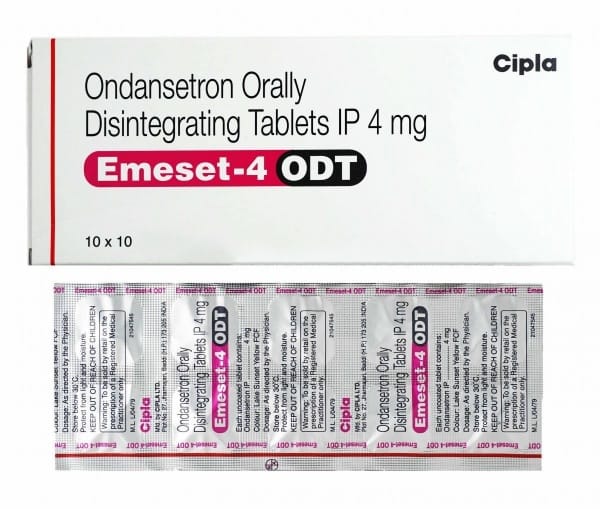
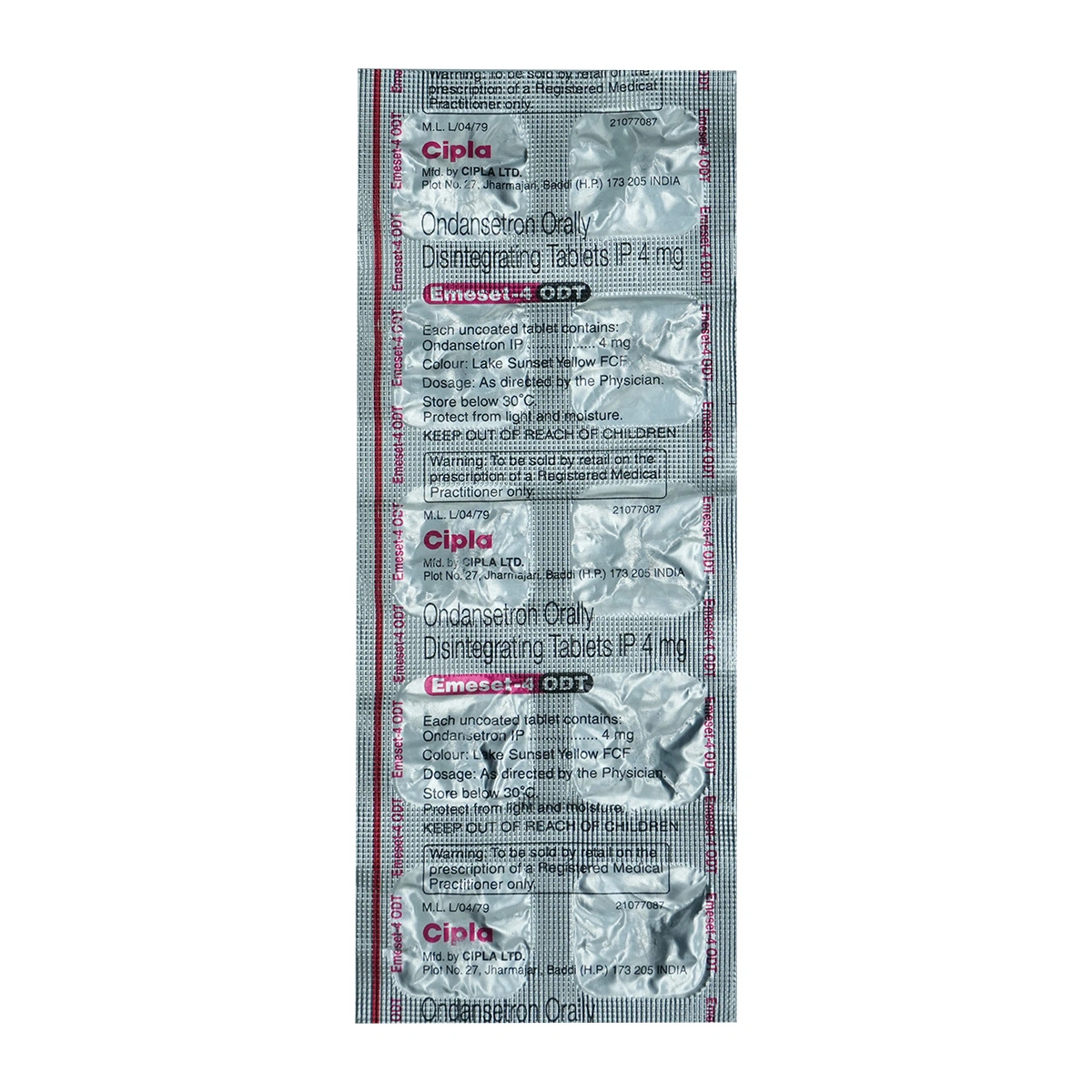
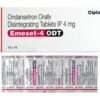
Emeset 4 ODT (Ondansetron 4 mg orodispersible) — selective 5-HT3 antagonist for chemo, radiation, post-operative, and severe gastroenteritis nausea. Dissolves on tongue without water.
✓ Medically reviewed by Morgan Ellis — Pharmacy Researcher · 8 years experience · Last reviewed: May 2026
⚡ Quick Answer — What is Emeset 4 ODT?
Emeset 4 ODT is a orally disintegrating tablet (ODT/MD) of ondansetron 4 mg, a selective serotonin 5-HT3 receptor antagonist. It is the most-used antiemetic worldwide and works against the strong serotonergic emetic stimulus generated by chemotherapy, radiation, surgery, gastroenteritis, and migraine. Manufactured by Cipla under WHO-GMP standards. Onset within 30 minutes orally and 8–12 hour duration; usually given 30–60 minutes before chemo or as needed for breakthrough nausea.
📦 Every order is covered by our Reshipment Assurance Policy — if your parcel does not arrive within 20 business days, we reship it.
Why order from MedsBase
Our generic medications are sourced from WHO-GMP certified manufacturers and shipped worldwide in discreet, plain packaging — no medication name on the parcel exterior. Card payments are routed through a regulated processor (statement descriptors include a regulated card-payment processor — never “MedsBase” or any medication name). Crypto and SEPA bank transfer are also accepted. Every order is backed by our Reshipment Assurance Policy.
When ondansetron is the right antiemetic
Ondansetron is the first-line antiemetic for serotonin-driven nausea — chemotherapy-induced nausea and vomiting (CINV), post-operative nausea and vomiting (PONV), radiation-induced nausea, and severe gastroenteritis. It is less useful for motion sickness and vestibular nausea (where the dominant pathway is histaminergic and cholinergic — promethazine/Avomine, cinnarizine, and meclozine work better) and not first-line for nausea-vomiting of pregnancy (NVP first-line is doxylamine + B6; ondansetron is reserved for refractory hyperemesis gravidarum after considering a small first-trimester cardiac/cleft-palate signal in observational studies).
Why order from MedsBase
Emeset 4 ODT is supplied from a WHO-GMP certified manufacturer. Every order ships discreetly worldwide and is covered by our Reshipment Assurance Policy — if it does not arrive within 20 business days, we reship at no cost. Ondansetron is the global standard for serotonin-driven emesis with millions of doses delivered safely each year. Orally disintegrating tablet (ODT/MD) formulation is convenient when active vomiting prevents reliable swallowing.
Mechanism of action
Chemotherapy, radiation, and surgery damage gut enterochromaffin cells, which release massive amounts of serotonin (5-HT). The serotonin binds 5-HT3 receptors on vagal afferents and on the chemoreceptor trigger zone (area postrema), which signal the medullary vomiting centre. Ondansetron is a highly selective antagonist at the 5-HT3 receptor — it blocks this signal at both peripheral and central sites without affecting D2, H1, muscarinic, or alpha-adrenergic receptors. That selectivity explains its clean side-effect profile: minimal sedation, no extrapyramidal reactions, no anticholinergic burden.
Indications
- CINV: moderately or highly emetogenic chemotherapy (cisplatin, anthracyclines, cyclophosphamide regimens) — usually with dexamethasone ± aprepitant for highly emetogenic regimens.
- Radiation-induced nausea: total body irradiation, high-dose abdominal radiation.
- Post-operative nausea and vomiting (PONV): single 4 mg dose at induction or end of surgery.
- Severe gastroenteritis: dehydration risk in children/adults.
- Migraine-associated nausea: often with sumatriptan or other triptans.
- Refractory hyperemesis gravidarum: after first-line doxylamine+B6 (Doxinate, Pregnidoxin NU) and metoclopramide have failed; specialist supervision recommended.
Dose
| Indication | Dose |
|---|---|
| CINV (adult) | 8 mg 30 min before chemo, then 8 mg every 8–12 h for up to 5 days |
| PONV (adult) | 4 mg single dose, IV at induction or oral 1 h pre-op |
| Severe gastroenteritis (adult) | 4–8 mg every 8 h as needed (max 24 mg/day) |
| Paediatric (4–11 y, gastro) | 4 mg every 8 h (8–15 kg: 2 mg; 15–30 kg: 4 mg; >30 kg: 4–8 mg) |
| Severe hepatic impairment | Maximum 8 mg/day (Child-Pugh C) |
| Single-dose maximum | 16 mg IV; 24 mg oral — do not exceed |
Place the ODT on a dry tongue; it dissolves in 10–30 seconds with saliva. Do not push through the foil — peel back. No water needed, useful for active vomiting.
Side effects
- Common (> 10%): headache, constipation (the most clinically meaningful side effect — pre-empt with hydration and stool softener if multi-day course)
- Common (1–10%): mild flushing, fatigue, transient AST/ALT rise, dizziness, hot flushes after IV
- Less common: bradycardia, hypotension, myalgia
- Rare but serious: QT prolongation/torsades, serotonin syndrome (with SSRIs/SNRIs/triptans/MAOIs), severe hypersensitivity, transient blindness (very rare, with rapid IV)
- Uncommon: extrapyramidal reactions (rare with ondansetron unlike older antiemetics)
Drug interactions
- Apomorphine: ABSOLUTE contraindication — severe hypotension and loss of consciousness reported.
- Other QT-prolonging drugs (azithromycin, clarithromycin, citalopram, escitalopram, methadone, amiodarone, sotalol, fluoroquinolones, hydroxychloroquine, antipsychotics): avoid combination or monitor ECG.
- Serotonergic drugs (SSRIs, SNRIs, MAOIs, triptans, tramadol, fentanyl, linezolid, methylene blue): rare serotonin syndrome reported — counsel patients to recognise tremor/agitation/clonus/hyperthermia.
- Tramadol: ondansetron may reduce tramadol analgesic effect (5-HT3 blockade interferes with descending pain inhibition).
- Strong CYP3A4 inducers (rifampicin, phenytoin, carbamazepine): can lower ondansetron levels and reduce efficacy.
Frequently Asked Questions
How quickly does Emeset 4 ODT work?
Ondansetron ODTs reach therapeutic plasma levels in about 30 minutes after dissolution. Onset of antiemetic effect is similar to swallowed tablets; the ODT advantage is reliability when vomiting is active.
Is Emeset 4 ODT safe in pregnancy?
Ondansetron is reserved for refractory hyperemesis gravidarum after doxylamine+B6 (Doxinate, Pregnidoxin NU), pyridoxine, and metoclopramide have failed. Some observational studies suggest a small first-trimester cardiac and cleft-palate signal; use should be discussed with a clinician.
Can I take Emeset 4 ODT for motion sickness?
Ondansetron works on the serotonin pathway and is not effective for motion sickness, which is histaminergic/cholinergic. Use promethazine (Avomine), cinnarizine, meclozine, or a hyoscine patch instead.
How is Emeset 4 ODT different from metoclopramide or domperidone?
Metoclopramide and domperidone are D2 antagonists — they speed gastric emptying and treat dyspepsia/regurgitation/gastroparesis nausea. Ondansetron is a 5-HT3 antagonist — better for chemo, radiation, surgery, severe gastroenteritis, and migraine nausea. Ondansetron is more expensive but cleaner (no extrapyramidal reactions, no hyperprolactinaemia).
Does Emeset 4 ODT cause drowsiness?
No. Unlike promethazine, prochlorperazine, and metoclopramide, ondansetron does not cause sedation or confusion and is preferred for ambulatory or driving patients.
What is the maximum dose?
Maximum single oral dose is 24 mg; maximum single IV dose is 16 mg (FDA cap). Total daily dose typically 24 mg/day; in severe hepatic impairment cap at 8 mg/day.
Can I take it with my SSRI antidepressant?
Short-term combinations are usually safe but counsel patients to recognise serotonin syndrome (tremor, agitation, hyperreflexia, clonus, fever). Long-term concurrent use is generally avoided when an alternative antiemetic is available.
Is constipation a problem?
Yes — ondansetron causes constipation in up to 1 in 10 users (more on multi-day chemo courses). Maintain hydration, fibre, and a stimulant laxative (senna/bisacodyl) prophylactically during chemo cycles.
Can Emeset 4 ODT be used in children?
Yes — weight-based dosing is well established for paediatric gastroenteritis (8–15 kg = 2 mg, 15–30 kg = 4 mg, >30 kg = 4–8 mg every 8 h). The ODT formulation is particularly useful for children who cannot swallow tablets.
How is Emeset 4 ODT stored?
Store at room temperature (below 30°C), protect from light and moisture, keep out of reach of children. Keep ODT blisters sealed until use; do not refrigerate.
Other Nausea Treatments
- Ondem Injection (ondansetron 2 mg/ml IV/IM)
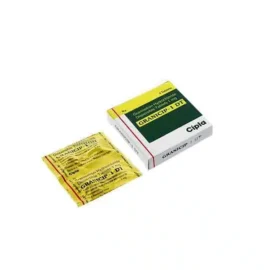
- Granicip (granisetron — longer-acting 5-HT3)
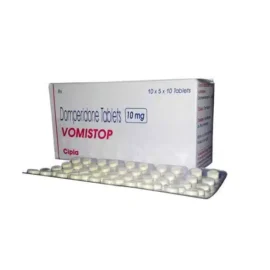
- Dompewal (domperidone — D2 antagonist for regurgitation)
- Stemetil MD (prochlorperazine ODT — vestibular nausea)
- Avomine (promethazine — motion sickness)
- Browse all Nausea Treatments
More options in Nausea Treatment
Ranked by recent MedsBase order volume — what other customers in this category are picking.


| Strength | 4 mg |
|---|---|
| Quantity | 30 Tablet/s, 60 Tablet/s, 90 Tablet/s, 180 Tablet/s |
Q & A
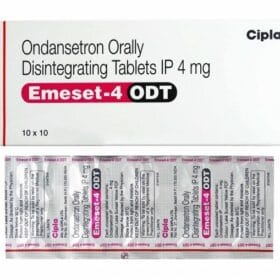 Emeset 4 ODT
Related products