








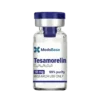
Epitalon

✅ Supports cellular longevity
✅ Enhances molecular stability
✅ Modulates oxidative stress
✅ Regulates circadian rhythm
✅ Promotes genomic integrity
Epitalon contains synthetic peptide compound.
✓ Medically reviewed by Morgan Ellis — Pharmacy Researcher · 8 years experience · Last reviewed: May 2026
Quick Answer — What is Epitalon?
Epitalon (Ala-Glu-Asp-Gly, AEDG) is a synthetic tetrapeptide analog of a natural pineal-gland peptide. Central to Vladimir Khavinson’s Russian longevity-studies programme, it is studied for effects on telomere length, circadian rhythm, and gene-expression profiles in aging studies. Supplied in 10 mg and 50 mg lyophilized vials.
📦 Every order is covered by our Reshipment Assurance Policy — if your parcel does not arrive within 20 business days, we reship it.
| Specification | Detail |
|---|---|
| CAS Number | 307297-39-8 |
| Molecular Formula | C14H22N4O9 |
| Molecular Weight | 390.35 Da |
| Sequence | Ala-Glu-Asp-Gly (AEDG) |
| Form | Lyophilized powder (or as supplied) |
| Purity | ≥99% (HPLC verified, COA on request) |
| Storage | Lyophilized: 2–8 °C (refrigerator) for working stock; −20 °C for long-term storage of unopened vials. Reconstituted: 2–8 °C, use within ~30 days. Protect from light. Do not freeze–thaw the reconstituted solution. |
| Solubility | Bacteriostatic water (recommended) or sterile water for shorter use windows |
What Is Epitalon?
Epitalon (also called Epithalon or AEDG peptide) is a synthetic four-amino-acid peptide: L-Ala-L-Glu-L-Asp-Gly. It is a synthetic analog of a natural pineal-gland peptide called epithalamin, isolated from bovine pineal extract and characterised by Vladimir Khavinson and colleagues at the St. Petersburg Institute of Bioregulation and Gerontology beginning in the 1980s. Epitalon is one of the most-studied peptides in the Russian longevity-studies programme, with published preclinical and small human-cohort studies spanning four decades. The studies claims — telomerase activation, chromatin remodeling, lifespan extension in model organisms, normalization of melatonin rhythms in older studies subjects — are substantial but come from a narrow group; independent Western replication is limited. Molecular weight approximately 390.4 Da. Supplied as a high-purity lyophilized powder for reconstitution with bacteriostatic water. Epitalon is for clinical studies use only. For deeper mechanism, Khavinson context, and honest-science summary, see our Epitalon guide.
Mechanism of Action — Telomerase, Pineal Signaling, Gene Expression
Epitalon’s proposed mechanisms span multiple biological systems. The is suggestive rather than conclusive on direct mechanism, but three pathways appear consistently in the published literature:
- Telomerase signaling (hypothesized) — Khavinson’s group published multiple reports of telomere-length elongation in lymphocytes and fibroblasts following Epitalon administration, attributed to telomerase activation. Whether Epitalon directly activates telomerase or does so indirectly via gene-expression modulation remains unresolved. Western replication of the telomere observation is limited.
- Pineal-gland and melatonin rhythm — Epitalon is an analog of a pineal-derived peptide and multiple studies describe restoration of age-disrupted melatonin circadian rhythms. The pineal-peptide origin is the mechanistic anchor for sleep-architecture and circadian rhythm support context.
- Gene expression modulation — expression profiling studies in Khavinson’s group describe modulation of approximately 300 rodent genes, with effects on stress-response, antioxidant-defense, and aging-marker pathways. This is the most mechanistically plausible pathway for broader anti-aging studies observations.
The broader studies framework is that pineal-derived peptides regulate age-related system-level biology — sleep, hormonal rhythm, antioxidant defense — that collectively influence lifespan. Whether this framework holds up against rigorous Western-standard replication remains an open studies question.
Published Evidence
Epitalon is used in clinical contexts that investigate:
- Telomere-length studies — lymphocyte and fibroblast telomere support in cellular-aging models (Khavinson et al., Neuro Endocrinol Lett 2002; Anisimov et al., Biogerontology 2003)
- Aging studies — cellular-aging markers, stress-response, and lifespan in rodent longevity study models
- Melatonin and circadian rhythm support — pineal function and sleep-phase studies in aging models
- Sleep architecture — slow-wave and REM sleep studies in older rodent models
- Eye-health studies — retinal and optic-nerve studies in age-related degeneration models
- NAD+ stacking — paired with NAD+ in longevity protocols for complementary cellular-aging pathway coverage
- Longevity stacking — paired with Semax in cognitive-aging studies and with GHK-Cu in broader anti-aging studies
For broader context on longevity peptide studies, see the peptides catalog.
Available Strengths and Concentrations
MedsBase stocks Epitalon in the following lyophilized vial sizes:
| Vial Strength | Typical Use Case | Pack Sizes |
|---|---|---|
| 10 mg | Standard strength — supports a single 10-day cycle at 5 mg + leftover | 10, 20, or 30 vials |
| 50 mg | Extended protocols, multiple cycles per vial, lowest per-mg cost | 10, 20, or 30 vials |
Epitalon protocols typically use cyclical dosing (10–20 day active periods 1–2 times per year) rather than continuous administration. All strengths are supplied as lyophilized powder at 99%+ HPLC purity.
How It Compares — Epitalon vs Other Longevity Peptides
Epitalon sits within a small longevity-peptide studies space. Key comparators:
| Criterion | Epitalon | NAD+ | SS-31 (Elamipretide) |
|---|---|---|---|
| Primary mechanism | Telomerase / pineal signaling | Sirtuin / PARP coenzyme | Mitochondrial cardiolipin binding |
| Study-evidence strength | Narrow group (Khavinson), limited Western replication | Well-characterised biochemistry, many labs | Multiple human trials, Szeto-Schiller lab |
| Regulatory status | Not approved anywhere | Not approved (IV therapy use common) | FDA orphan-drug, Phase 3 |
| Typical dose | 5–10 mg SC daily, 10–20 day cycles | 50–100 mg daily | 5–40 mg SC daily |
Users often use Epitalon alongside NAD+ and SS-31 (Elamipretide) in multi-pathway longevity protocols.
Storage and Reconstitution
Before reconstitution: store lyophilized vials refrigerated at 2–8 °C in original packaging, stable up to 36 months. Avoid freeze-thaw cycles on the powder. Reconstitution procedure: inject bacteriostatic water down the side wall of the peptide vial per the chart above. Swirl gently — do not shake — and allow 5–10 minutes for full dissolution. Solution should be clear and colourless. After reconstitution: store refrigerated at 2–8 °C and use within 30 days. Do not freeze reconstituted solution.
Frequently Asked Questions
What is Epitalon used for in studies?
Epitalon is used in studies investigating telomere-length biology, cellular-aging biomarkers, melatonin and circadian rhythm studies, sleep architecture, eye-health studies, and multi-pathway longevity protocols stacked with other compounds. It is not FDA-approved and is sold here strictly for clinical studies use only.
Does Epitalon really activate telomerase?
Khavinson’s Russian group has published multiple studies reporting telomere-length elongation in lymphocytes and fibroblasts following Epitalon. The proposed mechanism is telomerase activation. Independent Western replication of these telomere observations is limited, so users should treat the telomerase-activation claim as a working hypothesis rather than established mechanism.
What is the typical Epitalon dose?
Published preclinical and small-cohort protocols typically use 5–10 mg SC daily, administered in cyclical 10–20 day blocks 1–2 times per year rather than continuous administration. A 10 mg vial reconstituted with 1.0 mL bacteriostatic water yields 10 mg/mL — 50 ticks on a U-100 syringe delivers 5 mg.
Is Epitalon FDA approved?
No. Epitalon has not received FDA, EMA, or any regulatory approval. It is available in Russia as Epithalon / Endoluten (a pineal-extract product) but not specifically as the AEDG synthetic peptide. All Epitalon sold by specialist suppliers is for clinical investigation.
Who is Vladimir Khavinson and why is he cited everywhere?
Vladimir Khavinson is a Russian user at the St. Petersburg Institute of Bioregulation and Gerontology who has led the long-running Epitalon and bioregulatory-peptide studies programme. Most of the published Epitalon studies originates from his group, which is both the source of deep studies history on the compound and the reason independent Western replication is limited.
How should Epitalon be stored?
Lyophilized vials: refrigerated at 2–8 °C in original packaging, stable up to 36 months. Reconstituted solution: refrigerated at 2–8 °C, use within 30 days. Do not freeze reconstituted solution.
How do I reconstitute Epitalon?
Follow the reconstitution chart above. Add bacteriostatic water down the side wall of the vial, swirl gently, and allow 5–10 minutes for full dissolution. Do not shake.
Can Epitalon be stacked with other peptides in studies?
Yes. Epitalon is commonly paired with NAD+, SS-31, and Semax in multi-pathway longevity and cognitive-aging protocols. Each acts via a distinct mechanism, so combined protocols target broader aspects of cellular-aging biology.
What strengths does MedsBase stock?
MedsBase carries Epitalon in 10 mg and 50 mg lyophilized vials. Each strength is available in 10-vial, 20-vial, or 30-vial pack sizes. All vials are supplied at 99%+ HPLC purity with a certificate of analysis on request.
Does Epitalon cause side reported effects?
Published studies reports a clean safety profile at typical doses. No significant off-target signals have been identified. Because Epitalon is a small (four amino-acid) peptide with limited systemic exposure, pharmacological concerns are lower than for many peptides — but long-term human safety data remain limited.
What is the half-life of Epitalon?
Epitalon (Ala-Glu-Asp-Gly) is a short tetrapeptide with a rapid plasma half-life estimated at under 30 minutes, consistent with small unmodified peptides. Despite rapid clearance, multiple preclinical and human longevity studies by the original users (Khavinson et al.) used intermittent administration cycles — typically 10–20 day courses — with reported effects on telomerase activity and biomarkers persisting between cycles.
How does Epitalon activate telomerase in studies?
Epitalon is proposed to stimulate telomerase activity by upregulating hTERT (human telomerase reverse transcriptase) gene expression in somatic cells. In vitro studies and rodent longevity models have shown extended telomere length and increased telomerase activity in treated cells. The mechanism is believed to involve interaction with the pineal gland and downstream neuroendocrine regulation, though direct molecular details remain an active area of studies.
Can I order Epitalon for international shipping?
Yes. MedsBase ships Epitalon worldwide from our dedicated peptide shipping network. Peptide-only orders qualify for our standalone peptide shipping service. Orders ship in temperature-controlled packaging with full tracking.
Other Peptides for Recovery and Performance
- BPC-157 — Body Protection Compound — tendon, ligament, gut recovery
- TB-500 — Thymosin Beta-4 fragment — soft tissue and vascular recovery
- Ipamorelin — Selective ghrelin agonist — clean GH pulse without cortisol/prolactin
- CJC-1295 with DAC — GHRH analog with extended half-life
- GHK-Cu — Copper peptide — skin and connective tissue regeneration
Further Reading
📖 Learn the science behind this peptide
Read our complete evidence-based guide: Epitalon — telomerase, longevity & the honest science. Covers pineal-peptide origin, Khavinson’s studies programme, telomere-length studies, cyclical dosing protocols, and realistic studies expectations.
More options in Peptides
Ranked by recent MedsBase order volume — what other customers in this category are picking.
| Strength | 10 mg, 50 mg |
|---|---|
| Quantity | 10 Vials, 20 Vials, 30 Vials |
 Epitalon
Q & A
Epitalon
Related products
Reviews
There are no reviews yet