








Melorise


✅ Relieves pain
✅ Reduces inflammation
✅ Eases joint stiffness
✅ Improves mobility
✅ Manages arthritis
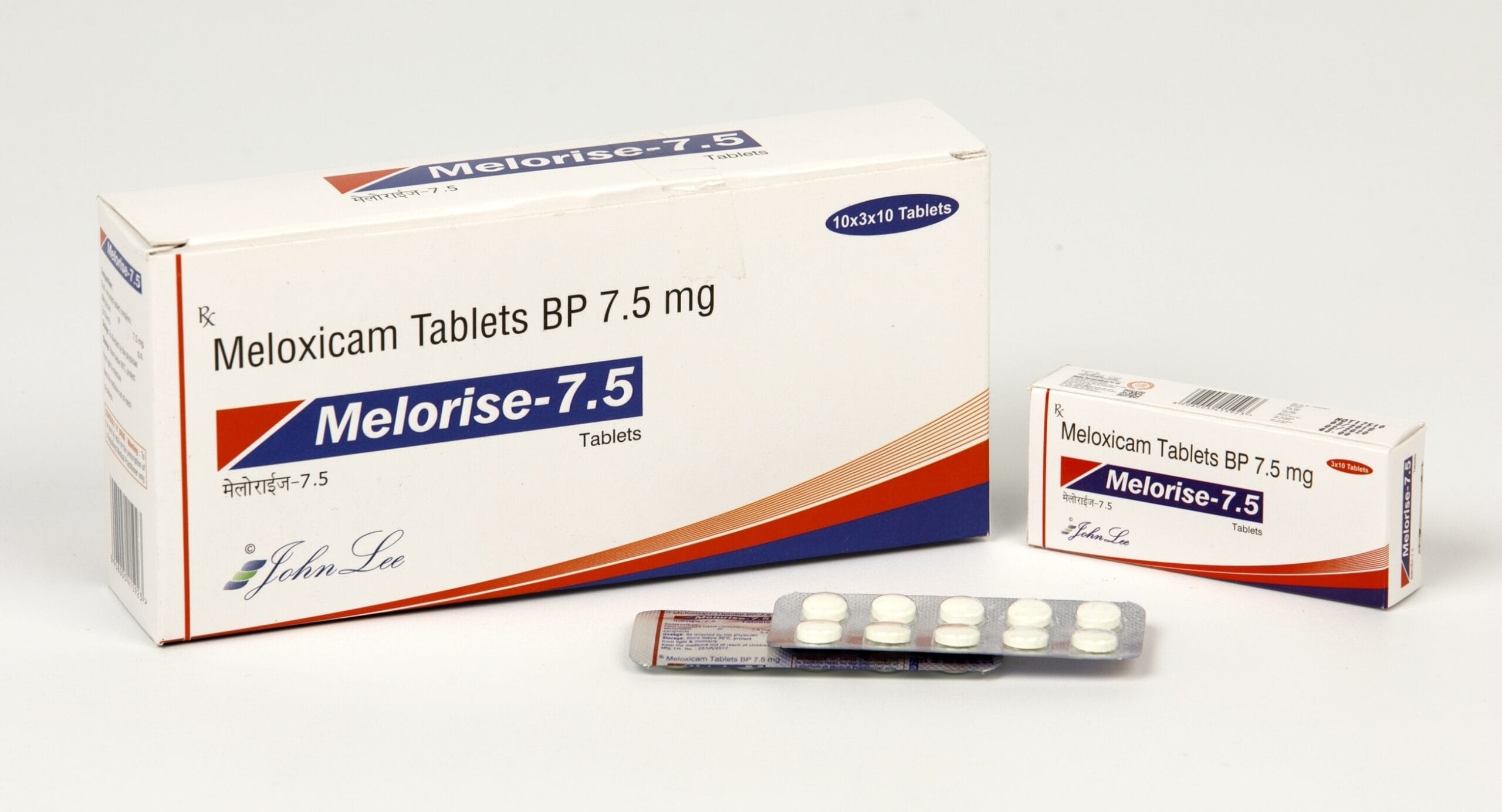
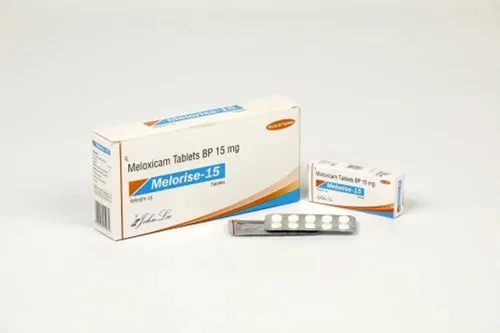
Melorise contains Meloxicam.
✓ Medically reviewed by Morgan Ellis — Pharmacy Researcher · 8 years experience · Last reviewed: May 2026
⚡ Quick Answer — What is Melorise?
Melorise is a meloxicam tablet available in 7.5 mg and 15 mg strengths. Meloxicam is a preferential COX-2 NSAID with a long half-life (~20 hours) that permits once-daily dosing. It is used for osteoarthritis (7.5 mg/day), rheumatoid arthritis, and ankylosing spondylitis (15 mg/day), and provides strong anti-inflammatory action with a modestly gentler GI profile than non-selective NSAIDs. Take with food.
📦 Every order is covered by our Reshipment Assurance Policy — if your parcel does not arrive within 20 business days, we reship it.
Why order from MedsBase
Our generic medications are sourced from WHO-GMP certified manufacturers and shipped worldwide in discreet, plain packaging — no medication name on the parcel exterior. Card payments are routed through a regulated processor (statement descriptors include a regulated card-payment processor — never “MedsBase” or any medication name). Crypto and SEPA bank transfer are also accepted. Every order is backed by our Reshipment Assurance Policy.
Melorise is an oral tablet of meloxicam, an NSAID in the oxicam class with preferential activity against COX-2. At therapeutic doses (7.5–15 mg/day), meloxicam inhibits COX-2 (the inflammation-driving isoform) substantially more than COX-1 (the stomach-protective isoform), giving a modest but real reduction in gastric-ulcer risk compared with classical non-selective NSAIDs like diclofenac, ibuprofen, and naproxen.
Meloxicam has a long plasma half-life of approximately 20 hours, which allows simple once-daily dosing and steady 24-hour anti-inflammatory cover — a practical advantage in chronic inflammatory arthritis where adherence matters.
What Is Melorise Used For?
- Osteoarthritis — 7.5 mg once daily (15 mg/day if needed and tolerated)
- Rheumatoid arthritis — 15 mg once daily
- Ankylosing spondylitis — 15 mg once daily
- Acute musculoskeletal pain and injury
- Juvenile idiopathic arthritis (specialist supervision, weight-based dosing)
- Primary dysmenorrhoea (off-label, short courses)
How Does Meloxicam Work?
Meloxicam is a preferential COX-2 inhibitor. At therapeutic doses it shows roughly a 10-fold selectivity for COX-2 over COX-1, placing it between the non-selective NSAIDs (ibuprofen, diclofenac, naproxen) and the highly selective coxibs (celecoxib, etoricoxib). Clinical trials and meta-analyses confirm a modest but real reduction in GI ulcer and bleed rate compared with non-selective NSAIDs, while pain-relief efficacy is comparable.
Melorise Dosing
- Osteoarthritis: 7.5 mg once daily with food (may increase to 15 mg/day)
- Rheumatoid arthritis and ankylosing spondylitis: 15 mg once daily with food
- Elderly: start at 7.5 mg once daily
- Maximum: 15 mg/day
- Renal impairment (mild-moderate): 7.5 mg/day maximum; avoid if CrCl < 30 mL/min
- Hepatic impairment: 7.5 mg/day; avoid in severe impairment
Swallow whole with water. Always take with food. If you miss a dose, take it as soon as you remember unless the next dose is due within 8 hours — then skip.
GI, cardiovascular, and renal safety. Meloxicam carries all the standard NSAID risks (GI ulcer, heart attack, stroke, acute kidney injury, raised blood pressure). Use at the lowest effective dose for the shortest clinically reasonable time. Consider adding a proton pump inhibitor for courses longer than 2–4 weeks. Patients with established cardiovascular disease should discuss with their doctor before starting.
Who Should Not Take Melorise?
- Known hypersensitivity to meloxicam or any NSAID
- Active peptic ulcer or GI bleed
- Aspirin- or NSAID-induced asthma, urticaria, or angioedema
- Severe heart failure (NYHA IV)
- Established ischaemic heart disease, peripheral arterial disease, cerebrovascular disease (use an alternative NSAID where possible)
- Severe hepatic impairment (Child-Pugh C)
- Severe renal impairment (CrCl < 30 mL/min)
- Third trimester of pregnancy
- Recent CABG surgery
- Inflammatory bowel disease flare
Side Effects of Melorise
- Common: dyspepsia, nausea, diarrhoea, abdominal pain, headache, dizziness, skin rash, ankle swelling
- Uncommon: peptic ulcer, GI bleeding, raised blood pressure, elevated liver enzymes, tinnitus, palpitations
- Rare but serious: severe hepatotoxicity, Stevens-Johnson syndrome, acute kidney injury, heart failure aggravation, myocardial infarction, stroke, anaphylaxis
Melorise vs Other NSAIDs
| Drug | COX preference | Dose | GI risk |
|---|---|---|---|
| Meloxicam (Melorise) | Preferential COX-2 | 7.5–15 mg OD | Moderate-low |
| Etodolac (Etova) | Preferential COX-2 | 200–400 mg BID | Moderate-low |
| Celecoxib (Celeheal) | Highly selective COX-2 | 100–200 mg BID | Lowest |
| Etoricoxib (Etorlee) | Highly selective COX-2 | 60–120 mg OD | Low |
| Ibuprofen (Brufen) | Non-selective | 400 mg TDS | Moderate |
| Naproxen | Non-selective | 500 mg BID | Moderate |
| Diclofenac (Voveran SR) | Non-selective (slight COX-2) | 75 mg BID | Moderate-high |
Ordering & Delivery
MedsBase offers worldwide shipping on every order. Orders are dispatched in discreet packaging and arrive in branded manufacturer packs. If your preferred pack size is out of stock, contact customer support for an ETA.
Medical disclaimer. The information on this page is provided for general education only. It is not a substitute for advice from your own doctor or pharmacist. Talk to a qualified healthcare professional before starting, stopping, or changing therapy.
Frequently Asked Questions
What is Melorise used for?
Melorise (meloxicam) is used for osteoarthritis, rheumatoid arthritis, ankylosing spondylitis, and acute musculoskeletal pain. Simple once-daily dosing makes it convenient for chronic inflammatory conditions.
Is meloxicam safer than ibuprofen or diclofenac for the stomach?
Modestly yes. Meloxicam’s preferential COX-2 activity reduces the rate of gastric ulcer and upper-GI bleeding compared with non-selective NSAIDs at equivalent anti-inflammatory effect. It is not as gentle as selective coxibs like celecoxib.
Which strength should I take — 7.5 mg or 15 mg?
7.5 mg once daily is the starting dose for osteoarthritis and usually enough for mild-to-moderate symptoms. 15 mg once daily is used for rheumatoid arthritis, ankylosing spondylitis, and when 7.5 mg is insufficient for osteoarthritis.
How long does Melorise take to work?
Pain relief begins within 1–2 hours of a dose. Full anti-inflammatory effect in chronic arthritis builds over 1–2 weeks of daily use. Because of the long half-life, stable blood levels take 5–7 days to establish.
Should I take Melorise with food?
Yes — always with food or immediately after. This reduces gastric irritation.
Can I take Melorise long-term?
Yes, for chronic inflammatory arthritis at the lowest effective dose. Monitor blood pressure, kidney function, and liver enzymes at least annually. Consider a proton pump inhibitor for longer-term GI protection.
Can I take Melorise with paracetamol?
Yes. Paracetamol works on a different pathway and is safely combined with meloxicam for stronger pain relief.
Can I take Melorise with aspirin?
Low-dose aspirin (cardioprotection) can be continued with meloxicam but the combined GI bleed risk rises — a proton pump inhibitor is usually co-prescribed.
Is Melorise safe in pregnancy?
Avoid after 20 weeks; contraindicated in the third trimester. Use in early pregnancy only on specialist advice.
What if I miss a dose?
Take it when you remember unless the next dose is due within 8 hours — then skip. Never double up.
How is meloxicam different from etodolac?
Both are preferential COX-2 NSAIDs with similar GI profiles. Meloxicam is dosed once daily (20-hour half-life); etodolac is dosed twice daily (7-hour half-life). Choose based on adherence preference and individual tolerance.
Related Alternatives
Other products in Chronic Conditions that customers also view:
More options in Pain Relief Medication
Ranked by recent MedsBase order volume — what other customers in this category are picking.
| Strength | 7.5 mg, 15 mg |
|---|---|
| Quantity | 30 Tablet/s, 60 Tablet/s, 90 Tablet/s, 180 Tablet/s |
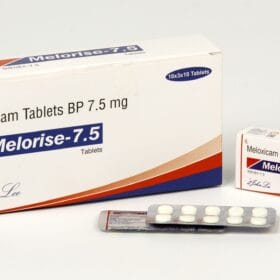 Melorise
Q & A
Melorise
Related products




Reviews
There are no reviews yet