








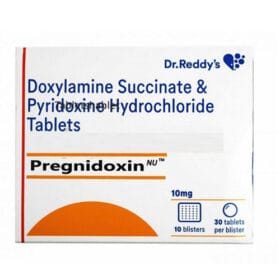
Pregnidoxin NU
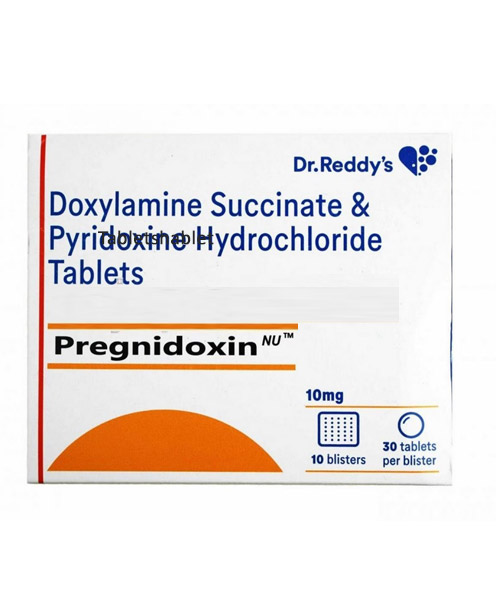
Pregnidoxin NU (Doxylamine 10 mg + Vitamin B6/Pyridoxine 10 mg) — ACOG/NICE/SOGC first-line pharmacological therapy for nausea-vomiting of pregnancy (NVP). FDA Pregnancy Category A.
✓ Medically reviewed by Morgan Ellis — Pharmacy Researcher · 8 years experience · Last reviewed: May 2026
⚡ Quick Answer — What is Pregnidoxin NU?
Pregnidoxin NU combines doxylamine succinate 10 mg + pyridoxine (Vitamin B6) 10 mg — the first-line pharmacological treatment for nausea and vomiting of pregnancy (NVP) per ACOG, NICE, and SOGC guidelines. Doxylamine is a sedating H1 antihistamine; pyridoxine is the active form of Vitamin B6 (mechanism in NVP not fully established). Used for morning sickness when conservative measures (small frequent meals, ginger, acupressure) fail. Manufactured by Inmark under WHO-GMP standards. FDA Pregnancy Category A — the safest oral antiemetic in pregnancy.
📦 Every order is covered by our Reshipment Assurance Policy — if your parcel does not arrive within 20 business days, we reship it.
Why order from MedsBase
Our generic medications are sourced from WHO-GMP certified manufacturers and shipped worldwide in discreet, plain packaging — no medication name on the parcel exterior. Card payments are routed through a regulated processor (statement descriptors include a regulated card-payment processor — never “MedsBase” or any medication name). Crypto and SEPA bank transfer are also accepted. Every order is backed by our Reshipment Assurance Policy.
When to use Pregnidoxin NU
NVP affects 70–80% of pregnancies and typically peaks at 9–13 weeks gestation. About 0.3–3% develop severe disease (hyperemesis gravidarum). The standard escalation is:
- Lifestyle: small frequent meals, dry crackers on waking, hydration, avoid triggers, ginger 250 mg four times daily, sea-band acupressure.
- If lifestyle fails: add pyridoxine (Vitamin B6) 10–25 mg three times daily.
- If pyridoxine alone is insufficient: add doxylamine (Doxinate, Pregnidoxin NU) — 1 tablet at bedtime, escalate to up to 4 tablets/day (1 morning, 1 mid-afternoon, 2 bedtime).
- If doxylamine + B6 fails: add metoclopramide, ondansetron, or prochlorperazine; consider IV fluids and admission for hyperemesis gravidarum.
Why order from MedsBase
Pregnidoxin NU is supplied from a WHO-GMP certified manufacturer. Every order ships discreetly worldwide and is covered by our Reshipment Assurance Policy — if it does not arrive within 20 business days, we reship at no cost. Doxylamine + B6 is the safest oral antiemetic in pregnancy with the longest human safety record (FDA Pregnancy Category A) and is endorsed as first-line by every major obstetric body.
Mechanism of action
Doxylamine is a sedating first-generation H1 antihistamine. It blocks histamine receptors in the chemoreceptor trigger zone and the medullary vomiting centre, suppressing the H1-driven emetic signal. It also has anticholinergic activity that reduces gastric motility and vestibular signalling. Sedation is part of the therapeutic effect — bedtime dosing helps with the early-morning nausea on waking.
Pyridoxine (Vitamin B6) mechanism in NVP is not fully established. The active metabolite pyridoxal 5-phosphate is a cofactor for over 100 enzymes including amino-acid metabolism, neurotransmitter synthesis, and steroid-hormone modulation. Several RCTs show modest benefit over placebo even as monotherapy; combination with doxylamine is consistently superior to either alone.
Indications
- Nausea and vomiting of pregnancy (NVP) — first-line after lifestyle and B6 alone
- Hyperemesis gravidarum — first-line drug therapy before metoclopramide/ondansetron
- Mild allergic rhinitis or insomnia — non-pregnancy uses for the doxylamine fraction (less common indication)
Dose
| Schedule | Tablets |
|---|---|
| Day 1 (start) | 2 tablets at bedtime |
| Day 2 | 2 tablets at bedtime + 1 tablet mid-afternoon if morning symptoms persist |
| Day 3 onwards (max) | 2 tablets at bedtime + 1 mid-afternoon + 1 morning — total max 4 tablets/day |
| Maintenance | Lowest effective dose; reassess every 2 weeks — many patients can reduce as the second trimester begins |
| Discontinuation | Once nausea has resolved; not needed long-term — NVP usually settles by 16–20 weeks |
The bedtime-loaded schedule reflects the natural rhythm of NVP — symptoms peak in the early morning. The 2-tablet bedtime dose has its peak doxylamine effect 4–6 hours later, exactly when the typical NVP attack occurs.
Side effects
- Common: drowsiness (the dominant side effect — useful at bedtime, less so during the day), dry mouth, blurred vision, mild constipation
- Less common: dizziness, palpitation, urinary hesitancy, mild headache
- Rare: rash, photosensitivity, paradoxical excitation (children)
- The combination has an exceptional safety record from millions of pregnancies; no increased risk of birth defects, low birth weight, or pregnancy complications has been demonstrated
Drug interactions
- CNS depressants (alcohol, opioids, benzodiazepines, gabapentinoids): additive sedation — avoid combination, particularly during the day.
- Anticholinergics (TCAs, oxybutynin, hyoscine, antipsychotics): additive dry mouth, blurred vision, urinary retention.
- MAO inhibitors: may prolong and intensify the sedative effect — avoid combination.
- Levodopa: high-dose pyridoxine (> 50 mg/day) can reduce levodopa effectiveness in Parkinson’s; standard doxylamine+B6 dosing rarely reaches this threshold.
- Drugs that raise gastric pH (PPIs, H2 blockers, antacids): no clinically significant interaction.
Frequently Asked Questions
Is Pregnidoxin NU safe in pregnancy?
Yes — doxylamine + pyridoxine is the only oral antiemetic combination in FDA Pregnancy Category A, with millions of pregnancies of safety data going back to the 1950s. ACOG, NICE, and SOGC list it as first-line pharmacological therapy for NVP after lifestyle measures.
When during the day should I take Pregnidoxin NU?
Most patients take 2 tablets at bedtime for the typical morning-sickness pattern, then add 1 tablet mid-afternoon and 1 in the morning if symptoms persist. The bedtime-loaded schedule places the peak doxylamine effect during the early-morning hours when NVP is worst.
How quickly does Pregnidoxin NU work?
The first night of bedtime dosing often produces noticeable improvement the next morning, but full effect takes 2–3 days as the schedule is built up. If no improvement after 1 week at the maximum dose (4 tablets/day), reassess with a clinician.
Is the drowsiness a problem?
Bedtime dosing leverages the drowsiness as a sleep aid. Daytime doses (mid-afternoon, morning) may cause drowsiness — avoid driving, operating machinery, or activities requiring alertness until you know how it affects you.
When can I stop Pregnidoxin NU?
NVP usually peaks at 9–13 weeks gestation and resolves by 16–20 weeks. Once symptoms have settled for several days, taper down by removing the morning and afternoon doses first, then stop the bedtime dose. There is no withdrawal syndrome.
Can Pregnidoxin NU be used outside pregnancy?
The combination is occasionally used for sleep aid, allergic rhinitis, or vestibular nausea (off-label). The first-line indication and safety record are specifically for NVP.
What if Pregnidoxin NU does not control my nausea?
Add metoclopramide, ondansetron, or promethazine (under medical supervision). Severe persistent vomiting with weight loss, dehydration, or ketosis (hyperemesis gravidarum) requires assessment and possible IV fluids/admission.
Does Pregnidoxin NU affect the baby?
No — the safety record from over 60 years of use shows no increase in birth defects, low birth weight, prematurity, or neurodevelopmental problems. Treating severe NVP actually improves outcomes by reducing the maternal nutritional deficit.
What is the difference between Pregnidoxin NU and Doxinate?
Both are doxylamine + pyridoxine combinations — the same molecules, the same first-line indication. Different brands from different manufacturers; clinical effect and safety are equivalent.
How is Pregnidoxin NU stored?
Store tablets at room temperature (below 25°C), protected from light and moisture. Keep out of reach of children — doxylamine overdose in children causes anticholinergic toxicity and respiratory depression.
Other Nausea Treatments
- Doxinate (doxylamine + B6 — alternative brand)
- Dompewal (domperidone — second-line NVP)
- Ondem (ondansetron — refractory hyperemesis)
- Avomine (promethazine — third-line NVP)
- Stemetil MD (prochlorperazine ODT — refractory)
- Browse all Nausea Treatments
More options in Nausea Treatment
Ranked by recent MedsBase order volume — what other customers in this category are picking.

| Strength | 10 mg |
|---|---|
| Quantity | 30 Tablet/s, 60 Tablet/s, 90 Tablet/s, 180 Tablet/s |
 Pregnidoxin NU
Q & A
Pregnidoxin NU
Related products





Reviews
There are no reviews yet