







SLU-PP-332 (Pan-ERR Agonist Exercise Mimetic)
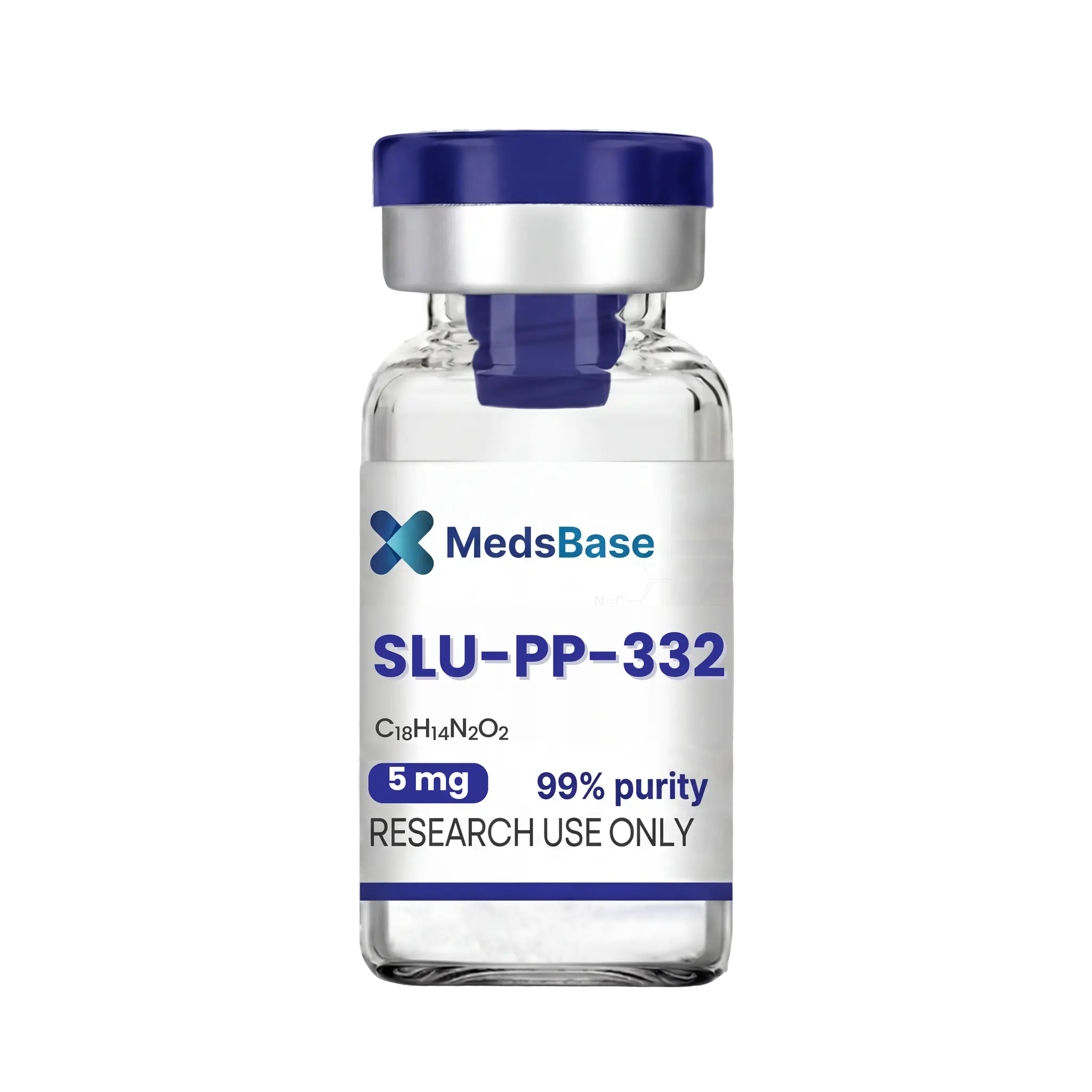
✅ Synthetic small-molecule pan-agonist of ERRα/β/γ nuclear receptors
✅ Direct transcriptional driver of mitochondrial biogenesis + oxidative-fibre induction
✅ Leading exercise-mimetic compound (Billon et al. 2023, ACS Chem Biol)
✅ EC₅₀ ERRα ~98 nM; ~4-fold ERRα-selective over ERRγ
✅ Some suppliers label as SLU-PP-322; canonical name SLU-PP-332; CAS 303760-60-3, MW 290.32
SLU-PP-332 contains synthetic pan-ERR small-molecule compound. Not a peptide.
✓ Medically reviewed by Morgan Ellis — Pharmacy Researcher · 8 years experience · Last reviewed: May 2026
Quick Answer — What is SLU-PP-332?
SLU-PP-332 (CAS 303760-60-3, MF C18H14N2O2, MW 290.3 g/mol) is a synthetic small-molecule pan-agonist of estrogen-related receptors (ERRα / ERRβ / ERRγ) developed in the Burris clinical at Saint Louis University. ERRs are orphan nuclear-receptor transcription factors that drive mitochondrial biogenesis, fatty-acid oxidation, oxidative-fibre development, and the muscle-adaptation programme normally engaged by exercise — making SLU-PP-332 a leading “exercise mimetic” tool. Published in Billon et al. (2023, ACS Chemical Biology) — acute single-dose drives an aerobic-exercise-response gene signature in skeletal muscle; chronic dosing increases Type IIa oxidative-fibre proportion and improves endurance capacity in mice. Small molecule — not a peptide. Note: some supplier batches are labelled SLU-PP-322 / SLU-PP-332 interchangeably — both refer to the same Burris-lab ERR pan-agonist; consult COA for batch-specific identification. For clinical studies use only.
📦 Every order is covered by our Reshipment Assurance Policy — if your parcel does not arrive within 20 business days, we reship it.
| Specification | Detail |
|---|---|
| Compound Class | Synthetic small-molecule pan-agonist of estrogen-related receptors (ERRα / ERRβ / ERRγ); orphan nuclear-receptor agonist; exercise-mimetic tool; not a peptide |
| Chemical Name | SLU-PP-332 (synonyms: SLU-PP-322 in some supplier batches; pan-ERR agonist; Burris-lab Compound 332) |
| CAS Number | 303760-60-3 (canonical, per MedKoo / MedChemExpress / scientific literature) |
| Molecular Formula | C18H14N2O2 |
| Molecular Weight | 290.32 g/mol |
| Mechanism | Pan-agonist of ERRα, ERRβ, ERRγ nuclear receptors with ~4-fold ERRα selectivity over ERRγ. EC50 ERRα ~98 nM (Billon et al. 2023). ERR receptor activation drives transcription of PGC-1α target genes — mitochondrial biogenesis (TFAM, NRF1, NRF2), fatty-acid β-oxidation (CPT1B, MCAD, LCAD), oxidative-phosphorylation complex subunits, and oxidative-fibre-type myosin heavy chains. Net effect mimics the transcriptional programme of exercise adaptation. |
| Sequence | n/a (small-molecule synthetic compound — not a peptide) |
| Form | Lyophilized white-to-off-white powder; single-use vials |
| Purity | ≥99% (HPLC verified, COA on request) |
| Solubility | DMSO ≥50 mg/mL; aqueous solubility moderate (sub-mg/mL). For in-vitro work, prepare DMSO stocks and dilute into culture medium just before use. For in-vivo work, formulations typically use DMSO/PEG/saline or similar co-solvent systems. |
| Storage | Lyophilized: 2–8 °C short-term, −20 °C long-term (≥36 months). Reconstituted DMSO: −20 °C, single-thaw use. Protect from light. Avoid repeated freeze-thaw. |
Mechanism of Action — Pan-ERR Agonism Drives Exercise-Adaptation Transcription
SLU-PP-332 is the most-cited synthetic small-molecule ERR pan-agonist in the published literature. ERRs (estrogen-related receptors α, β, γ) are orphan nuclear receptors that share the DNA-binding domain of estrogen receptors but do not bind estrogen — they are constitutively active in the absence of any natural endogenous ligand and instead are regulated by coactivator-binding (most importantly PGC-1α). ERRs are the principal transcriptional drivers of:
- Mitochondrial biogenesis — direct transcriptional control of TFAM, NRF1, NRF2, and dozens of mitochondrial-protein-import genes
- Fatty-acid β-oxidation — induction of CPT1B (carnitine palmitoyltransferase 1B), MCAD, LCAD, and other β-oxidation enzymes
- Oxidative phosphorylation — transcription of nuclear-encoded ETC complex subunits
- Oxidative-fibre development — Type IIa (oxidative fast-twitch) myosin heavy chain induction; conversion from glycolytic Type IIb fibres to oxidative Type IIa fibres
- Glucose-handling adaptation — improved skeletal-muscle insulin sensitivity in DIO mouse models
This is the same transcriptional programme that is engaged by PGC-1α-driven exercise adaptation — making pan-ERR agonism a direct pharmacological route to the exercise-adaptation phenotype. The Billon et al. (2023) ACS Chemical Biology paper demonstrated that acute single-dose SLU-PP-332 produces a gene-expression signature in mouse skeletal muscle that overlaps substantially with the signature produced by a bout of voluntary wheel-running — and chronic dosing (50 mg/kg/d IP for 4 weeks) increases Type IIa fibre proportion and treadmill endurance in mice. Follow-up work (Billon et al. 2024, alleviation of metabolic syndrome) has demonstrated metabolic-improvement effects in DIO mice including glucose-tolerance improvement and reduced hepatic steatosis.
Published Evidence
- Pan-ERR receptor pharmacology — canonical reference small-molecule ERR pan-agonist
- Exercise-mimetic transcriptional studies — published as the leading “exercise in a pill” compound alongside AICAR; mechanistically distinct (ERR-direct vs AMPK-AMP-mimetic)
- Mitochondrial biogenesis studies — direct transcriptional driver of TFAM / NRF1 / NRF2 axis
- Skeletal-muscle adaptation studies — Type IIa oxidative-fibre induction, endurance-performance phenotype
- Metabolic-syndrome studies — DIO mouse models, hepatic steatosis, insulin sensitivity
- PGC-1α pathway pharmacology — engages PGC-1α-driven transcriptional cascade from downstream
For broader context see AICAR (canonical AMPK-mediated exercise mimetic — different mechanism), AOD-9604 (lipolytic-only fat-loss peptide), MOTS-c (mitochondrial-derived peptide), 5-Amino-1MQ (NAD-axis NNMT inhibitor), NAD⁺ (electron-transport coenzyme).
Available Strengths
| Vial Strength | Pack Sizes |
|---|---|
| 5 mg — studies standard; supports DIO mouse cohorts at 50 mg/kg/d ×4–8 wk and in-vitro pharmacology at nM-µM concentrations | 10, 20, or 30 vials |
How It Compares — SLU-PP-332 vs AICAR
SLU-PP-332 and AICAR are the two most-cited “exercise mimetic” compounds in this catalogue, but they engage the exercise-adaptation programme through mechanistically distinct upstream routes. SLU-PP-332 directly activates the ERR family (the downstream transcription factor for the mitochondrial-biogenesis programme). AICAR activates AMPK (the upstream energy-sensor kinase that, among many other effects, drives PGC-1α expression and PGC-1α-ERR co-activation). The two compounds therefore converge on the same downstream gene-expression signature but engage it from different points of the regulatory cascade.
| Criterion | SLU-PP-332 | AICAR |
|---|---|---|
| MW | 290.32 g/mol | 258.23 g/mol |
| Mechanism | Direct ERRα/β/γ nuclear-receptor agonist | AMPK activator (via intracellular ZMP) |
| Point of intervention | Downstream transcription factor | Upstream energy-sensor kinase |
| Best-studied focus | Type IIa oxidative-fibre induction, endurance phenotype | Insulin sensitivity, hepatic gluconeogenesis, broader AMPK pharmacology |
| Typical dose | 50 mg/kg/d IP (mouse, Billon protocol) | 250–500 mg/kg/d IP (mouse) |
| WADA status | Not currently named | Prohibited at all times (S4.5) |
Storage and Reconstitution
Lyophilized vials: store at 2–8 °C short-term, −20 °C long-term. Reconstitute in DMSO at ≥10 mg/mL working stock (aqueous solubility is limited; DMSO is the preferred solvent). For in-vivo work, formulate with co-solvents (DMSO/PEG-400/saline or similar) just before administration. Store DMSO stocks at −20 °C, single-thaw use. Protect from light. Avoid repeated freeze-thaw.
FAQ
Is “SLU-PP-322” the same as SLU-PP-332?
Some supplier batches use “SLU-PP-322” and “SLU-PP-332” interchangeably for the same Burris-lab ERR pan-agonist. The canonical scientific designation is SLU-PP-332 (Billon et al. 2023, ACS Chemical Biology), with CAS 303760-60-3. Consult batch COA for definitive identification.
What published dose ranges have been used?
Mouse in-vivo protocols use 50 mg/kg/d IP for 4–8 weeks (Billon et al. canonical protocol). In-vitro myotube and primary muscle-cell pharmacology uses 100 nM to 10 µM in growth medium. EC50 on ERRα is ~98 nM.
How is SLU-PP-332 different from other exercise mimetics?
SLU-PP-332 directly activates ERRs — the downstream transcription factors. AICAR activates AMPK (upstream kinase). The 2010s-vintage PPARδ agonists (GW501516) activate a different but partially-overlapping transcriptional programme. Different mechanism, partially-overlapping output.
Is SLU-PP-332 on the WADA Prohibited List?
Not currently under its specific name, but the broader S4 class (Hormone and Metabolic Modulators) includes exercise-mimetic compounds. The compound’s regulatory status may evolve as more data accumulates. Users in human-subject contexts should consult the current WADA list.
Other Exercise-Mimetic / Metabolic Compounds
- AICAR — Canonical AMPK-mediated exercise mimetic — complementary mechanism
- AOD-9604 — Lipolytic-only hGH C-terminal fragment
- MOTS-c — Mitochondrial-derived metabolic peptide AMPK activator
- 5-Amino-1MQ — NNMT inhibitor — NAD-axis precursor sparing
- NAD⁺ — Direct dinucleotide pool supplementation
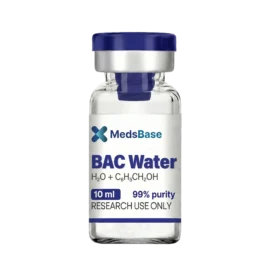
- BAC Water (Bacteriostatic Water) — Required for reconstituting any lyophilized vial — sterile, 0.9% benzyl-alcohol-preserved diluent
More options in Peptides
Ranked by recent MedsBase order volume — what other customers in this category are picking.
| Strength | 5 mg |
|---|---|
| Quantity | 10 Vials, 20 Vials, 30 Vials |
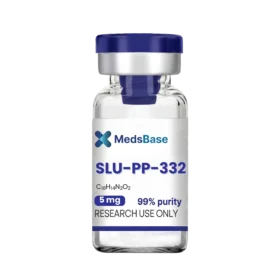 SLU-PP-332 (Pan-ERR Agonist Exercise Mimetic)
Q & A
SLU-PP-332 (Pan-ERR Agonist Exercise Mimetic)
Related products
Reviews
There are no reviews yet