







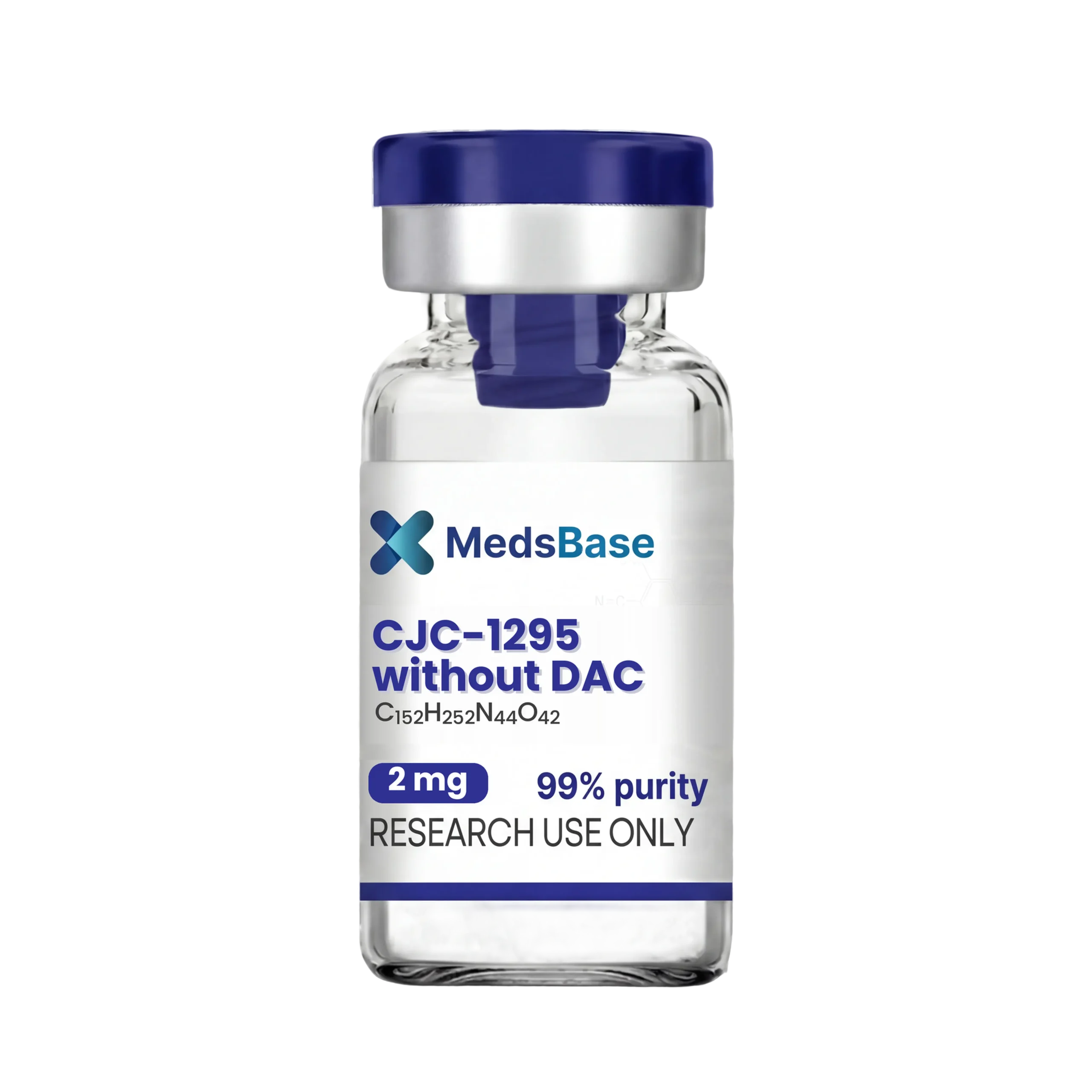
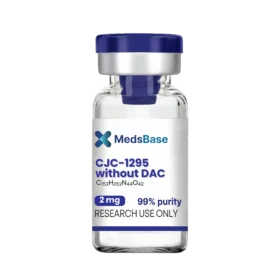
CJC-1295 without DAC
✅ Supports growth signaling
✅ Enhances metabolic regulation
✅ Promotes tissue regeneration
✅ Improves recovery pathways
✅ Boosts hormonal balance
CJC-1295 with DAC contains synthetic peptide compound.
✓ Medically reviewed by Morgan Ellis — Pharmacy Researcher · 8 years experience · Last reviewed: May 2026
Quick Answer — What is CJC-1295 without DAC?
CJC-1295 without DAC (also called Mod GRF 1-29) is a synthetic modified GHRH (1-29) analog with a short ~30-minute plasma half-life. Unlike the DAC version, it lacks the albumin-binding tether, producing a pulsatile rather than sustained GH signal. This kinetic profile makes it the preferred research tool when pulse-timing matters. Supplied in 2 mg to 10 mg lyophilized vials for laboratory research use only.
📦 Every order is covered by our Reshipment Assurance Policy — if your parcel does not arrive within 20 business days, we reship it.
| Specification | Detail |
|---|---|
| CAS Number | 863288-34-0 (parent) · 446262-90-4 (Mod-GRF 1–29 form widely cited) |
| Molecular Formula | C152H252N44O42 |
| Molecular Weight | 3367.92 Da |
| Sequence | D-Ala-Tyr-Asp-Ala-Ile-Phe-Thr-Gln-Ser-Tyr-Arg-Lys-Val-Leu-Ala-Gln-Leu-Ser-Ala-Arg-Lys-Leu-Leu-Gln-Asp-Ile-Leu-Ser-Arg-NH2 (Mod-GRF 1–29, no DAC linker) |
| Form | Lyophilized powder (or as supplied) |
| Purity | ≥99% (HPLC verified, COA on request) |
| Storage | Lyophilized: 2–8 °C (refrigerator) for working stock; −20 °C for long-term storage of unopened vials. Reconstituted: 2–8 °C, use within ~30 days. Protect from light. Do not freeze–thaw the reconstituted solution. |
| Solubility | Bacteriostatic water (recommended) or sterile water for shorter use windows |
| Research Use | For laboratory research use only. Not for human or veterinary diagnostic or therapeutic use. |
What Is CJC-1295 without DAC?
CJC-1295 without DAC (commonly called Mod GRF 1-29 or simply tetrasubstituted GRF 1-29) is a synthetic 30-amino-acid analog of growth-hormone-releasing hormone. It shares the same core peptide sequence as CJC-1295 with DAC — four amino-acid substitutions on the native GHRH (1-29) sequence provide resistance to DPP-IV cleavage — but lacks the albumin-binding DAC modification that extends half-life in the “with DAC” version.
The practical consequence of no DAC: plasma half-life remains in the minutes-to-hours range (~30 minutes) rather than days. Research protocols therefore use multiple daily injections (typically 2–3x) to maintain GHRH signal rather than the weekly dosing of the DAC version. This mimics the short, pulsatile profile of endogenous GHRH and is the preferred research tool when pulse-timing matters — particularly in protocols studying physiological GH pulsatility alongside ghrelin-receptor agonists such as ipamorelin.
Molecular weight approximately 3,367 Da. Supplied as a high-purity lyophilized powder for reconstitution with bacteriostatic water. CJC-1295 without DAC is for laboratory research use only and is not intended for human or veterinary diagnosis or therapy. For mechanism, research context, and stacking protocols, see our Ipamorelin & CJC-1295 research guide.
Mechanism of Action — Pulsatile GHRH Signaling
Mod GRF 1-29 acts through the same pituitary GHRH receptor pathway as native GHRH, but with a kinetic profile that distinguishes it from both native GHRH and the DAC version:
- GHRH receptor agonism — CJC-1295 without DAC binds GHRH receptors on pituitary somatotropes, stimulating growth-hormone synthesis and release. The amino-acid substitutions resist DPP-IV degradation, giving longer activity than native GHRH (which lasts only a few minutes) but still within the short-half-life range of 30 minutes.
- Short, pulsatile kinetics — because there is no albumin tether, plasma levels rise and fall on a timescale matching the body’s natural GH pulse architecture. This is the critical mechanistic distinction from the DAC version, which produces a sustained non-pulsatile elevation.
- GHRP synergy via parallel receptor — co-administration with a growth-hormone-releasing peptide such as ipamorelin (acting on the parallel ghrelin-receptor pathway) produces GH pulses substantially larger than either compound alone. The short-half-life version is often preferred for this stacking research because both peptides can be timed together for same-pulse amplification.
The research implication: Mod GRF 1-29 is the tool of choice when the research question involves physiological pulsatile GH signaling. The DAC version is preferred when the question involves sustained GH/IGF-1 elevation. Same peptide family; fundamentally different pharmacokinetics.
Published Research Applications
CJC-1295 without DAC is used in laboratory research contexts that investigate:
- Pulsatile GH release — physiological GH-pulse research matching native GHRH kinetics
- Ipamorelin stacking — the canonical GHRH + GHRP research combination, often using the short-half-life variant for same-pulse timing
- Body composition research — lean-mass, IGF-1 response, and body-composition research in pulsatile GH-axis modulation studies
- Sleep architecture — pre-sleep dosing aligned with endogenous nocturnal GH-surge research
- Recovery research — skeletal-muscle recovery protocols combined with BPC-157 and TB-500 for connective-tissue and muscle research
- Comparative kinetic research — side-by-side with CJC-1295 with DAC to isolate the albumin-tether effect on GH-axis signaling
- GHRH analog comparisons — alongside sermorelin and tesamorelin for cross-analog pharmacology research
For broader context on GH-axis peptides see the research peptides catalog.
Available Strengths and Concentrations
MedsBase stocks CJC-1295 without DAC in the following lyophilized vial sizes:
| Vial Strength | Typical Use Case | Pack Sizes |
|---|---|---|
| 2 mg | Pilot dosing, titration, or short protocols | 10, 20, or 30 vials |
| 5 mg | Standard research strength — supports ~50 administrations at 100 mcg | 10, 20, or 30 vials |
| 10 mg | Extended protocols, multi-daily dosing, lowest per-mg cost | 10, 20, or 30 vials |
Because Mod GRF 1-29 is typically dosed 2–3x daily at 100–200 mcg per administration, a 5 mg vial supports 2–3 weeks of research use. All strengths are supplied as lyophilized powder at 99%+ HPLC purity.
How It Compares — CJC-1295 without DAC vs With DAC vs Ipamorelin
The three GH-axis peptides differ significantly in receptor, half-life, and stacking characteristics:
| Criterion | CJC-1295 without DAC | CJC-1295 with DAC | Ipamorelin |
|---|---|---|---|
| Class | GHRH analog (short half-life) | GHRH analog (extended half-life) | GHRP (ghrelin-receptor) |
| Half-life | ~30 minutes | ~7 days (albumin-bound) | ~2 hours |
| GH profile | Pulsatile, physiological | Sustained elevation | Pulsatile burst |
| Typical dose | 100–200 mcg, 2–3x daily | 1–2 mg weekly | 200–300 mcg, 2–3x daily |
| Ideal research use | Pulse-timing research, same-pulse stacking | Sustained IGF-1 research | Canonical pairing with CJC-1295 |
Full protocol comparison in our Ipamorelin + CJC-1295 research guide.
Storage and Reconstitution
Before reconstitution: store lyophilized vials refrigerated at 2–8 °C in original packaging, stable up to 36 months. Avoid freeze-thaw cycles on the powder.
Reconstitution procedure: inject bacteriostatic water down the side wall of the peptide vial per the chart above. Swirl gently — do not shake — and allow 5–10 minutes for full dissolution. Solution should be clear and colourless.
After reconstitution: store refrigerated at 2–8 °C and use within 30 days. Do not freeze reconstituted solution.
Frequently Asked Questions
What is CJC-1295 without DAC used for in research?
CJC-1295 without DAC (Mod GRF 1-29) is used in laboratory research investigating pulsatile growth-hormone release, GHRH-receptor pharmacology, IGF-1 response kinetics, sleep architecture, body composition, and synergistic stacking with GHRP peptides such as ipamorelin. It is not FDA-approved and is sold here strictly for laboratory research use only.
What is the difference between CJC-1295 with and without DAC?
Both versions share the same core modified GHRH (1-29) sequence. The “with DAC” version has a maleimide group that binds covalently to serum albumin, extending plasma half-life from ~30 minutes to ~7 days. The “without DAC” version lacks this tether and retains the short half-life needed for pulsatile-research protocols. Choice depends on whether the research question requires sustained or pulsatile GHRH signaling.
What is the typical research dose?
Published preclinical protocols typically use 100–200 mcg per administration, 2–3 times daily. A 5 mg vial reconstituted with 2.0 mL bacteriostatic water yields 2.5 mg/mL — 4 ticks on a U-100 syringe delivers 100 mcg.
Is CJC-1295 without DAC FDA approved?
No. Neither the with-DAC nor without-DAC version of CJC-1295 has received FDA, EMA, or any regulatory approval. Original development by ConjuChem was discontinued. All CJC-1295 sold by research-use-only suppliers is for laboratory investigation only.
Why would I choose “without DAC” over “with DAC” in research?
“Without DAC” is preferred when the research question involves pulsatile physiological GH signaling, same-pulse ipamorelin stacking (both peptides timed together), or sleep-architecture research where pre-sleep dosing needs to align with the natural nocturnal GH surge. “With DAC” is preferred for sustained-IGF-1 elevation research and simpler weekly dosing.
How should CJC-1295 without DAC be stored?
Lyophilized vials: refrigerated at 2–8 °C in original packaging, stable up to 36 months. Reconstituted solution: refrigerated at 2–8 °C, use within 30 days. Do not freeze reconstituted solution.
How do I reconstitute CJC-1295 without DAC?
Follow the reconstitution chart above. Add bacteriostatic water down the side wall of the vial, swirl gently, and allow 5–10 minutes for full dissolution. Do not shake.
Should I stack CJC-1295 without DAC with ipamorelin?
Yes — this is the canonical GH-axis research stack for pulsatile-signaling research. Both peptides are typically dosed together 2–3x daily; the short half-lives of both align so that each administration produces a same-pulse synergistic GH release. See our stack research guide.
What strengths does MedsBase stock?
MedsBase carries CJC-1295 without DAC in 2 mg, 5 mg, and 10 mg lyophilized vials. Each strength is available in 10-vial, 20-vial, or 30-vial pack sizes. All vials are supplied at 99%+ HPLC purity with a certificate of analysis on request.
Does CJC-1295 without DAC cause side effects in research?
Published preclinical research has reported a reasonable safety profile at typical research doses. The most commonly reported observation is transient injection-site redness. Long-term human safety data are not available. Because the pulsatile kinetics are closer to native GHRH than the DAC version, some researchers consider this form more physiologically consistent.
What is the half-life of CJC-1295 Without DAC?
CJC-1295 without DAC (Modified GRF(1-29)) has a plasma half-life of approximately 30 minutes — extended from native GHRH(1-29)’s ~7 minutes by four amino acid substitutions that protect against enzymatic degradation. This moderate half-life produces a pulsatile GH release pattern, making it more physiologically similar to endogenous GHRH signalling than the longer-acting DAC form.
Why choose CJC-1295 Without DAC over the DAC version?
CJC-1295 without DAC preserves a pulsatile GH secretion pattern similar to endogenous GHRH physiology. Research protocols prioritising physiological pulsatility — particularly when stacking with a GHRP like Ipamorelin — typically use the no-DAC form. The DAC version is favoured in research requiring maximal GH area-under-the-curve with less frequent administration.
Can I order CJC-1295 without DAC for international shipping?
Yes. MedsBase ships CJC-1295 without DAC worldwide from our dedicated peptide shipping network. Peptide-only orders qualify for our standalone peptide shipping service. Orders ship in temperature-controlled packaging with full tracking.
Other Peptides for Recovery and Performance Research
- BPC-157 — Body Protection Compound — tendon, ligament, gut recovery research
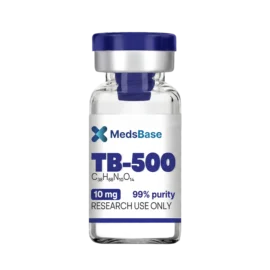
- TB-500 — Thymosin Beta-4 fragment — soft tissue and vascular recovery research
- Ipamorelin — Selective ghrelin agonist — clean GH pulse without cortisol/prolactin
- CJC-1295 with DAC — GHRH analog with extended half-life
- GHK-Cu — Copper peptide — skin and connective tissue regeneration research
Further Reading
📖 Learn the research behind this peptide
Read our complete evidence-based guide: Ipamorelin & CJC-1295 — mechanism, stacking & protocols. Covers pulsatile vs sustained GHRH pharmacology, DAC vs no-DAC kinetic differences, canonical stacking protocols, reconstitution, and safety notes.
More options in Peptides
Ranked by recent MedsBase order volume — what other customers in this category are picking.
| Strength | 2 mg, 5 mg, 10 mg |
|---|---|
| Quantity | 10 Vials, 20 Vials, 30 Vials |
 CJC-1295 without DAC
Q & A
CJC-1295 without DAC
Related products
Reviews
There are no reviews yet