






Super Shred (L-Carnitine + MIC + ATP + Albuterol + B12 Compounded Blend)

✅ Multi-axis compounded studies-injectable blend (5 actives, not a peptide)
✅ 10 mL sterile liquid vial @ 553 mg/mL total concentration
✅ L-Carnitine 400 + MIC 100 + ATP 50 + Albuterol 2 + B12 1 mg/mL
✅ Pre-formulated — no reconstitution required
✅ Refrigerate 2–8 °C; do not freeze; 60-day post-puncture window
Super Shred contains a compounded multi-ingredient studies blend.
✓ Medically reviewed by Morgan Ellis — Pharmacy Researcher · 8 years experience · Last reviewed: May 2026
Quick Answer — What is Super Shred?
Super Shred is a multi-ingredient compounded studies-injectable blend supplied as a sterile liquid solution at 553 mg/mL total active concentration in 10 mL vials. Each vial combines five distinct mitochondrial / lipotropic / β2-adrenergic / cofactor compounds in one pre-formulated solution: L-carnitine (mitochondrial fatty-acid shuttle), MIC blend (methionine + inositol + choline lipotropics), ATP (cellular energy substrate), albuterol (β2-adrenergic agonist), and vitamin B12 (cyanocobalamin cofactor). Designed for fat-oxidation, mitochondrial-function, and adrenergic-metabolic support protocols where multi-axis intervention is the study goal. Not a peptide — a small-molecule compounded blend. Supplied ready for use.
📦 Every order is covered by our Reshipment Assurance Policy — if your parcel does not arrive within 20 business days, we reship it.
| Specification | Detail |
|---|---|
| Product Type | Multi-ingredient compounded studies-injectable blend (5 active components); not a peptide; pre-formulated sterile liquid solution |
| Total Active Concentration | 553 mg/mL (sum of all five components) |
| Vial Volume | 10 mL (multi-dose vial) |
| Total Active Mass per Vial | 5,530 mg combined active compounds per 10 mL vial |
| CAS Number | Multi-ingredient — see ingredient table below for individual CAS numbers |
| Sequence | n/a (multi-ingredient small-molecule compounded blend — not a peptide) |
| Molecular Formula | Compounded multi-active blend — L-Carnitine (C7H15NO3) + methionine + inositol + choline (MIC) + ATP (C10H16N5O13P3) + Albuterol (C13H21NO3) + Vitamin B12 (C63H88CoN14O14P). No single molecular formula due to compounded blend composition. |
| Form | Sterile aqueous liquid solution, ready-to-use (no reconstitution required); clear pale-yellow appearance (B12 colour dominant) |
| Component Purity | All components ≥99% (HPLC-verified individually; blend COA on request) |
| Storage | Refrigerate at 2–8 °C immediately on receipt. Do not freeze — freeze-thaw can cause B12 degradation and ATP hydrolysis. Protect from light (B12 is photosensitive). Use within 60 days of vial first puncture. Sterile multi-dose vial — use aseptic withdrawal technique. |
| Reconstitution | Not required — pre-formulated sterile liquid. Swirl gently before each withdrawal to ensure uniform mixing of the five components. |
Ingredient Breakdown — Per mL and Per 10 mL Vial
Each 10 mL Super Shred vial contains the following five active components dissolved in sterile aqueous vehicle. Per-component CAS, molecular formula, molecular weight, and amounts per mL / per vial are listed below for spec-sheet reference.
| Component | CAS | Mol. Formula | MW (Da) | mg / mL | mg / vial |
|---|---|---|---|---|---|
| L-Carnitine (levocarnitine) | 541-15-1 | C7H15NO3 | 161.20 | 400 | 4,000 |
| MIC Blend — Methionine + Inositol + Choline | 63-68-3 / 87-89-8 / 67-48-1 | C5H11NO2S / C6H12O6 / C5H14ClNO | 149.21 / 180.16 / 139.62 | 100 (combined) | 1,000 (combined) |
| ATP (adenosine triphosphate disodium salt) | 987-65-5 | C10H14N5Na2O13P3 | 551.14 | 50 | 500 |
| Albuterol (salbutamol; β2-adrenergic agonist) | 18559-94-9 | C13H21NO3 | 239.31 | 2 | 20 |
| Vitamin B12 (cyanocobalamin) | 68-19-9 | C63H88CoN14O14P | 1,355.4 | 1 | 10 |
| TOTAL | — | — | — | 553 mg/mL | 5,530 mg/vial |
What Is the Super Shred Blend?
Super Shred is a pharmaceutical-grade compounded liquid blend that combines five complementary metabolic and adrenergic compounds in a single pre-formulated sterile injectable solution. The blend is engineered to recruit several distinct mechanisms relevant to fat-oxidation, mitochondrial-function, and adrenergic-metabolic support in one administration: substrate-side support for mitochondrial fatty-acid transport (L-carnitine), hepatic lipid-export support (MIC lipotropic axis), cellular energy-currency support (ATP), β2-adrenergic-receptor agonism (albuterol), and one-carbon-cycle cofactor support (B12). Unlike the lyophilized peptide products in this catalogue, Super Shred is supplied as a ready-to-use sterile liquid at 553 mg/mL total active concentration — no reconstitution required. Each of the five components has a distinct studies profile, well-documented mechanism, and substantial published literature in its own right. The compounded blend format is offered because many protocols that examine multi-axis metabolic intervention (substrate availability × electron-transport × adrenergic stimulation) require simultaneous administration of all five compounds at fixed ratios — making pre-formulated co-administration substantially more practical than reconstituting and combining each component separately for each dosing event. Super Shred contains albuterol (salbutamol), a regulated β2-adrenergic agonist with established clinical use in respiratory medicine. Users ordering this product are responsible for compliance with the regulatory framework that applies in their jurisdiction. The blend is not approved by the FDA, EMA, MHRA, or any other major regulator as a compounded formulation, and individual components have varying approval status (levocarnitine and cyanocobalamin are FDA-approved; albuterol is FDA-approved by inhalation and oral route but not as part of this blend; ATP and MIC components are not approved).
Mechanism of Action — Five Complementary Pathways
The five components in Super Shred recruit complementary studies-relevant mechanisms:
- L-Carnitine — Mitochondrial long-chain fatty-acid shuttle. Levocarnitine is the obligate carrier for long-chain fatty acids across the otherwise-impermeable mitochondrial inner membrane via the CPT-I / CACT / CPT-II transport system. At 400 mg/mL, the blend’s L-carnitine dose dominates total mass; the design rationale is to provide substrate-side substrate so that β-oxidation is not limited by carrier availability. See standalone L-Carnitine for full mechanistic detail.
- MIC Blend (Methionine, Inositol, Choline) — Hepatic lipid export and methyl-donor support. The classical “MIC lipotropic” mixture in dosing supports hepatic phosphatidylcholine biosynthesis (via choline), one-carbon metabolism and S-adenosylmethionine pool (via methionine), and inositol-phospholipid signalling (via myo-inositol). Together these support the hepatic export of triglyceride-rich very-low-density lipoprotein (VLDL), which is the downstream limiting step for liver fat clearance. The 100 mg/mL combined dose places MIC in a moderate-supplementation range used in published studies protocols on hepatic steatosis and fat-mobilisation models.
- ATP (Adenosine Triphosphate Disodium) — Cellular energy currency. Exogenous ATP has been studied in cardiovascular, ischemia-reperfusion, and exercise-physiology contexts. While intracellular ATP is rapidly synthesised by mitochondria and cannot be directly imported from the extracellular space, extracellular ATP signals through purinergic receptors (P2X / P2Y families) and contributes to vasodilation, mast-cell modulation, and endothelial signalling. ATP also serves as a substrate reserve for circulating adenosine generation by ectonucleotidases (CD39 / CD73).
- Albuterol (Salbutamol) — β2-adrenergic receptor agonist. Albuterol is a short-acting selective β2-adrenergic receptor agonist. At the molecular level it activates Gαs-coupled β2-receptors on multiple tissues — including bronchial smooth muscle (the indication for which it is clinically approved), but also skeletal muscle (where it promotes glycogenolysis, lipolysis, and protein synthesis at supraphysiological doses), adipose tissue (lipolysis via cAMP / hormone-sensitive lipase), and the central nervous system (CNS-stimulant-like effects). Albuterol is on the WADA Prohibited List above defined urinary thresholds. Users handling albuterol must be aware of local regulatory status — albuterol is a regulated drug in most jurisdictions and is a controlled substance in some athletic-regulatory frameworks.
- Vitamin B12 (Cyanocobalamin) — One-carbon-cycle cofactor. B12 is an essential cofactor for methionine synthase and methylmalonyl-CoA mutase, supporting one-carbon metabolism, S-adenosylmethionine (SAM) synthesis, and odd-chain fatty-acid catabolism. B12 deficiency disrupts methylation reactions, neurological function, and erythropoiesis. In compounded lipotropic blends, B12 is included both as a one-carbon-cycle cofactor (synergistic with MIC) and as a visible quality-control marker — its red pigment provides a colour signal that the blend is intact.
The combined blend acts on substrate availability (L-carnitine), hepatic processing (MIC), cellular energy (ATP), adrenergic-receptor stimulation (albuterol), and methyl-cofactor support (B12) simultaneously. Study protocols that aim to dissect multi-axis interventions in fat-oxidation or metabolic-flexibility models use compounded co-administration of the full blend; users needing to dissect single-axis contributions instead use the standalone components separately (see L-Carnitine standalone, NAD⁺).
Published Evidence
Super Shred is used in clinical contexts that investigate:
- Multi-axis fat-oxidation studies — combined substrate-availability + adrenergic-stimulation + hepatic-export studies in rodent and large-animal models
- Adrenergic-metabolic interaction studies — β2-adrenergic stimulation of skeletal-muscle lipolysis in the presence of mitochondrial substrate (L-carnitine) and methyl-donor cofactors
- Exercise physiology and substrate utilisation — multi-component intervention studies on endurance performance, substrate switching, and post-exercise recovery in rodent and large-animal models (where local regulatory frameworks permit)
- Hepatic lipid-clearance studies — the MIC component is the classical lipotropic studies mixture for hepatic-steatosis and VLDL-export models
- Mitochondrial-bioenergetic studies — combined substrate + cofactor intervention on mitochondrial function in cardiac, hepatic, and skeletal-muscle studies
- Purinergic signalling studies — the ATP component supports extracellular purinergic receptor studies alongside the other metabolic compounds
- Compounded-blend formulation studies — studies on the stability, pharmacokinetic interactions, and bioavailability of multi-ingredient liquid studies blends
For broader context on related single-component mitochondrial / metabolic support compounds in this catalogue, see L-Carnitine standalone (mitochondrial fatty-acid shuttle), NAD⁺ (electron-transport coenzyme), SS-31 (Elamipretide) (cardiolipin-targeted mitochondrial peptide), and MOTS-c (mitochondrial-derived metabolic-regulator peptide). Browse the full peptides & compounds catalog for related compounds.
Available Pack Sizes
MedsBase stocks Super Shred in three pack sizes calibrated to typical protocol durations. Each pack contains 10 mL vials of pre-formulated 553 mg/mL solution:
| Pack Size | Total Liquid | Total Active Mass | Typical |
|---|---|---|---|
| 1 vial | 10 mL | 5,530 mg | Single-cohort pilot work, short-cycle protocols, dose-titration |
| 5 vials | 50 mL | 27,650 mg | Standard strength — multi-week protocols, multi-cohort studies, ladder discount applied |
| 10 vials | 100 mL | 55,300 mg | Extended-cycle / large-cohort protocols, maximum ladder discount |
How It Compares — Super Shred vs Standalone L-Carnitine
Super Shred and standalone L-Carnitine share L-carnitine as a major component but differ substantially in formulation strategy, complexity, and use case. Standalone L-Carnitine is a single-axis tool for substrate-side mitochondrial fat-oxidation studies. Super Shred is a multi-axis compounded blend designed for protocols that require simultaneous substrate, adrenergic, and cofactor intervention.
| Criterion | Super Shred | L-Carnitine standalone |
|---|---|---|
| Components | 5 (L-carnitine, MIC, ATP, albuterol, B12) | 1 (L-carnitine) |
| Form | Pre-formulated sterile liquid (no reconstitution) | Lyophilized powder (reconstitution required) |
| Studies design | Multi-axis intervention; substrate × adrenergic × cofactor simultaneously | Single-axis substrate-availability studies |
| Mechanistic dissection | Compound effects cannot be cleanly attributed to a single mechanism | Effects attributable specifically to substrate-side intervention |
| Regulatory complexity | Higher — contains albuterol (Rx + WADA-listed) | Lower — FDA-approved single small molecule |
| Storage | Refrigerate (do not freeze); 60 days post-puncture | Refrigerate or freeze (lyophilized); 30 days post-reconstitution |
| Best-fit studies scenario | Multi-axis applied studies, exercise-physiology, fat-oxidation panel work | Single-mechanism studies, mitochondrial-bioenergetic dissection |
For mechanistic single-component studies where a clean attribution of effect to a specific mechanism matters, the standalone components are the appropriate tools. For applied multi-axis studies where the entire blend is the intervention being studied, Super Shred is the appropriate compound.
Storage and Handling
On receipt: Refrigerate at 2–8 °C immediately. The vial ships in temperature-controlled packaging — transfer to a dedicated refrigerator without delay. Do not freeze the liquid — freeze-thaw cycles cause vitamin B12 degradation, ATP hydrolysis, and potentially albuterol oxidation. Protect from direct light at all times (B12 is photosensitive). The clear pale-yellow colour reflects cyanocobalamin and is normal; deeper colour darkening or appearance of particulates indicates degradation — discard such vials. Vial handling: Super Shred is supplied as a sterile multi-dose vial. Use aseptic technique for each withdrawal: wipe the stopper with 70% isopropyl alcohol; use a fresh sterile needle and syringe per withdrawal. Do not over-pressurise the vial — air injection into a multi-dose vial is acceptable but should be modest. Swirl gently before each withdrawal to ensure uniform mixing of the five components. Once first-punctured, use within 60 days. Discard the vial if any cloudiness, particulates, colour deepening, or odour change appears.
Frequently Asked Questions
Is Super Shred a peptide?
No. Super Shred is a multi-ingredient small-molecule studies-injectable blend — not a peptide. We stock it in our studies-peptide catalogue alongside NAD⁺ and L-Carnitine because it serves complementary mitochondrial / metabolic support applications and is supplied in the same injectable-vial format. The Spec Sequence row is marked “n/a” for this reason and the Ingredient Breakdown table replaces the single-CAS-row format used for individual peptides.
Why is the blend called “Super Shred”?
“Super Shred” is the supplier’s product designation reflecting the blend’s marketing positioning around fat-oxidation and metabolic support. The studies framing used here is broader than the marketing name suggests — fat-oxidation is one application but multi-axis adrenergic and mitochondrial are equally relevant uses. We retain the supplier name for cross-vendor traceability.
What does “MIC blend” mean and what are the three components?
MIC is the classical lipotropic studies mixture: Methionine (an essential amino acid and methyl donor), Inositol (a carbocyclic polyol cofactor for second-messenger phosphoinositide signalling), and Choline (a precursor for phosphatidylcholine biosynthesis and the lipid neurotransmitter acetylcholine). Together these three compounds support hepatic phospholipid biosynthesis and lipoprotein export — historically the basis for the “lipotropic” studies designation. The 100 mg/mL combined dose places MIC in a moderate-supplementation range used in published studies protocols.
Why is albuterol included? Is this legal in my jurisdiction?
Albuterol (salbutamol) is a selective β2-adrenergic agonist included in this blend for its established studies effects on adrenergic-receptor-mediated lipolysis and skeletal-muscle metabolism. Albuterol is a regulated drug in most jurisdictions and is on the WADA Prohibited List above defined urinary thresholds. Users handling this product are responsible for compliance with the regulatory framework in their jurisdiction.
What does “compounded blend” mean?
A compounded blend is a formulation that combines multiple individual active ingredients into a single pre-mixed solution at fixed ratios. Unlike a single-component product (like our standalone L-Carnitine), a compounded blend cannot be cleanly attributed to a single mechanism — the observed effects are the sum of all components acting together. Compounded blends are preferred when the entire combination is the studies intervention being studied; standalone components are preferred when single-mechanism attribution matters.
How is this different from reconstituting the lyophilized peptides?
The lyophilized peptide products in this catalogue ship as dry powder and require reconstitution with bacteriostatic water before use. Super Shred is supplied as a pre-formulated sterile liquid — ready to use, no reconstitution needed. This simplifies protocol setup but limits shelf life after first vial puncture compared to the dry-lyophilized format.
Can I freeze Super Shred to extend the shelf life?
No. The blend contains components that are damaged by freeze-thaw cycles — B12 (cyanocobalamin) is sensitive to freezing-induced photolytic damage, ATP can hydrolyse, and albuterol can oxidise. Store refrigerated at 2–8 °C and use within 60 days of first puncture. The dry lyophilized standalone components (L-Carnitine, NAD⁺) can be frozen for long-term storage — but the compounded liquid blend cannot.
What administration routes are used in published studies?
Intramuscular and subcutaneous routes are the most common in published studies on multi-ingredient lipotropic and adrenergic-metabolic blends. Intravenous administration is less common because of the higher volume per dose. Users should determine the appropriate route from peer-reviewed literature specific to their protocol — and note that the regulatory framework for albuterol administration may further constrain the available routes in some jurisdictions.
Companion Compounds
- L-Carnitine (Levocarnitine) — Standalone L-Carnitine vials for dose-titration studies or alternative protocols
- Vitamin B12 (Cyanocobalamin) Injectable — Standalone B12 component for separate dosing
- 5-Amino-1MQ — NNMT inhibitor for NAD-axis / metabolic support
- AOD-9604 — HGH-fragment lipolytic peptide — orthogonal fat-loss mechanism
- AICAR (Acadesine) — AMPK activator — exercise-mimetic studies
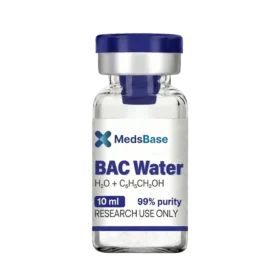
- BAC Water (Bacteriostatic Water) — Sterile 0.9% benzyl-alcohol diluent for any lyophilized companion vials
More options in Peptides
Ranked by recent MedsBase order volume — what other customers in this category are picking.
| Pack Size | 1 Vial, 5 Vials, 10 Vials |
|---|
 Super Shred (L-Carnitine + MIC + ATP + Albuterol + B12 Compounded Blend)
Q & A
Super Shred (L-Carnitine + MIC + ATP + Albuterol + B12 Compounded Blend)
Related products
Reviews
There are no reviews yet