







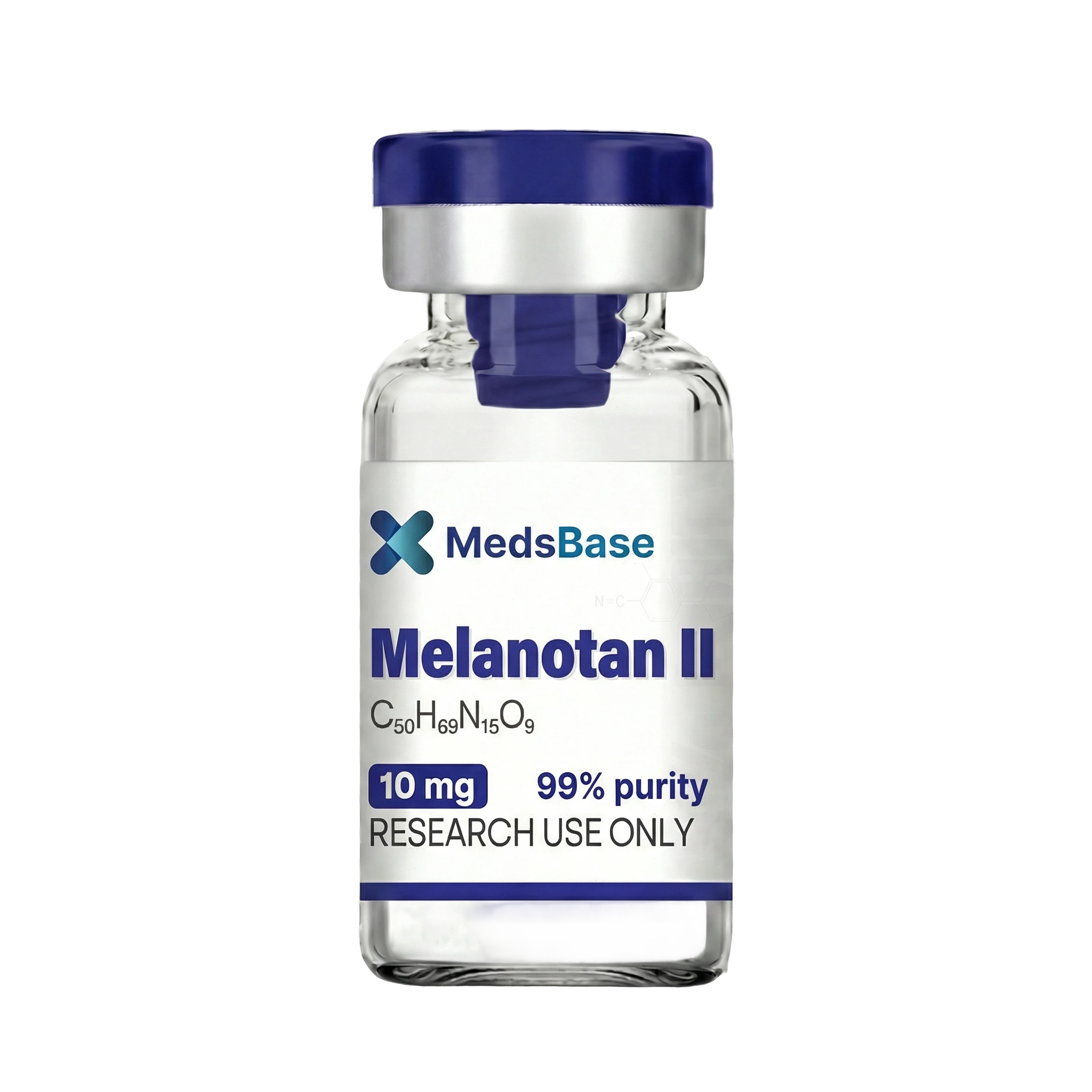
Melanotan II
✅ Unterstützt die Hautpigmentierung
✅ Fördert die Melaninproduktion
✅ Aktiviert Photoprotektionswege
✅ Verbessert die metabolische Signalübertragung
✅ Optimiert die Zellfunktion
Melanotan II enthält synthetische Peptidverbindung.
✓ Medizinisch überprüft von Morgan Ellis — Pharmazieforscher · 8 Jahre Erfahrung · Zuletzt überprüft: Mai 2026
Kurze Antwort — Was ist Melanotan II?
Melanotan II (MTII) ist ein synthetisches sieben-Aminosäuren-zyklisches Analogon des alpha-Melanozyten-stimulierenden Hormons (α-MSH). Es ist ein breiter Melanocortin-Agonist mit Aktivität an MC1R, MC3R, MC4R und MC5R – unterscheidet sich von den stärker MC4R-selektiven PT-141. in studies, MTII is studied for melanogenesis, photoprotection, and broader melanocortin pharmacology. Supplied in 10 mg lyophilized vials.
📦 Jede Bestellung ist durch unsere Reshipment Assurance Policy abgedeckt — wenn Ihr Paket nicht innerhalb von 20 Werktagen ankommt, versenden wir es erneut.
| Spezifikation | Detail |
|---|---|
| CAS-Nummer | 121062-08-6 |
| Molekularformel | C50H69N15O9 |
| Molekulargewicht | 1024.18 Da |
| Sequenz | Ac-Nle-cyclo[Asp-His-D-Phe-Arg-Trp-Lys]-NH2 |
| Form | Lyophilisat (oder wie geliefert) |
| Reinheit | ≥99% (HPLC-bestätigt, COA auf Anfrage) |
| Lagerung | Lyophilisat: 2–8 °C (Kühlschrank) für Arbeitsvorrat; −20 °C zur Langzeitlagerung ungeöffneter Fläschchen. Rekonstituiert: 2–8 °C, innerhalb von ~30 Tagen verwenden. Vor Licht schützen. Die rekonstituierte Lösung nicht einfrieren und auftauen. |
| Löslichkeit | Bakteriostatisches Wasser (empfohlen) oder steriles Wasser für kürzere Anwendungszeiträume |
Was ist Melanotan II?
Melanotan II (oft abgekürzt MTII) is a synthetic cyclic heptapeptide analog of alpha-melanocyte stimulating hormone (α-MSH). It was developed in the 1980s at the University of Arizona by Hruby and colleagues as an analog designed to resist enzymatic degradation and cross the blood-brain barrier efficiently — useful tools for melanocortin-receptor pharmacology studies. Sequence (cyclic): Ac-Nle-cyclo[Asp-His-D-Phe-Arg-Trp-Lys]-NH2. Molekulargewicht ca. 1.024,2 Da. Im Gegensatz zu PT-141 (bremelanotide), which was refined from Melanotan II specifically to reduce MC1R activity (minimal tanning effect) while preserving MC4R-mediated signals, Melanotan II retains breite Melanocortin-Agonismus — activity across MC1R, MC3R, MC4R, and MC5R. This pan-receptor profile is the central studies characteristic of MTII: it drives melanogenesis (MC1R) alongside appetite suppression (MC4R), arousal-pathway signaling (MC4R shared with PT-141), and broader melanocortin effects. Supplied as a high-purity lyophilized powder for reconstitution with bacteriostatic water. The US FDA has issued multiple public warnings about unregulated Melanotan II use — it has never received FDA approval and carries documented safety concerns including atypical nevus development, elevated blood pressure, nausea, and focal hyperpigmentation. For deeper mechanism and context, see our full Melanotan II guide.
Wirkmechanismus – Breiter Melanocortin-Agonismus
Melanotan II’s pharmacology is defined by its activity across multiple melanocortin-receptor subtypes, each producing a distinct studies-relevant effect:
- MC1R-Agonismus (Melanogenese) – MTII bindet an MC1R auf epidermalen Melanozyten und aktiviert die cyclische-AMP-Signalisierung, die die Melaninsynthese von Phäomelanin zu Eumelanin umstellt. Eumelanin absorbs UV radiation more effectively than pheomelanin, producing the tanning signal that distinguishes MTII from MC1R-selectively-weaker analogs such as PT-141.
- MC4R-Signalgebung (ZNS-Pfade) — MTII activates MC4R in hypothalamic regions including the mPOA and arcuate nucleus, producing appetitive-behavior modulation, feeding-behavior effects, and CNS arousal-pathway signaling that partially overlaps with PT-141’s primary use.
- MC3R- und MC5R-Aktivität — MTII’s broader receptor profile includes activity at MC3R (central energy homeostasis) and MC5R (exocrine-gland and peripheral-tissue effects). This broader activity contributes to the studies observation that MTII produces more heterogeneous effects than MC4R-selective analogs — and to the wider safety-profile concerns.
Because Melanotan II activates multiple melanocortin pathways simultaneously, it has been used in clinical studies across dermatology, neuroscience, endocrinology, and melanocortin pharmacology. The lack of MC-receptor selectivity is also why FDA and dermatological societies have warned about its unregulated use — off-target effects are more common than with selective analogs.
Published Evidence
Melanotan II is used in clinical contexts that investigate:
- Melanogenesis studies — MC1R-driven eumelanin synthesis in cultured human melanocytes and rodent pigmentation-study models (Dorr et al., Life Sci 1996; Langan et al., Br J Dermatol 2010)
- Photoprotection studies — UV-response and melanin-production studies in dermatology models, with a particular studies focus on high-risk-for-skin-cancer populations
- Erythropoietic protoporphyria (EPP) studies — closely related MC1R-agonist studies led to FDA approval of afamelanotide (Scenesse) for EPP — MTII is one of the key reference compounds in this studies lineage
- Melanocortin-Rezeptor-Pharmakologie — MC1R/MC3R/MC4R/MC5R selectivity profiling in drug-discovery studies
- CNS arousal-pathway studies — MC4R-mediated CNS effects (partial overlap with PT-141 studies space)
- Appetite / feeding-behavior studies — MC4R-Modulation der Nahrungsaufnahme in Verhaltensmodellen von Nagetieren
- Comparative MC-analog studies — im direkten Vergleich mit PT-141 (Bremelanotid) zur Isolierung von MC4R-selektiven vs. breitbandigen Effekten
Für einen breiteren Kontext zu MC-Familienpeptiden siehe die Peptid-Katalog.
Verfügbare Stärken
MedsBase führt Melanotan II in einer einzigen 10 mg lyophilisierten Vial-Stärke, erhältlich in Packungen mit 10, 20 oder 30 Vials:
| Vial-Stärke | Typischer Anwendungsfall | Packungsgrößen |
|---|---|---|
| 10 mg | Standard strength — supports approximately 40 administrations at 250 mcg titration dose | 10, 20 oder 30 Vials |
The 10 mg single-strength format matches typical protocol requirements. Published protocols typically use a titration strategy (starting at 250 mcg and increasing to 500 mcg–1 mg) to manage MTII’s narrow tolerability window. Supplied as lyophilized powder at 99%+ HPLC purity.
Vergleich – Melanotan II vs PT-141
MTII and PT-141 are the two most-studied melanocortin peptides. PT-141 was developed from MTII specifically to narrow the receptor-selectivity profile and reduce off-target effects — the comparison is clinically and mechanistically instructive:
| Kriterium | Melanotan II | PT-141 (Bremelanotid) |
|---|---|---|
| Rezeptorselektivität | Breit: MC1R, MC3R, MC4R, MC5R | MC4R-präferiert (reduziertes MC1R) |
| Primary signal | Melanogenese, Bräunung, Appetit, Erregung | Zentraler Erregungsweg |
| Zulassungsstatus | Nicht zugelassen (FDA-Warnungen ausgesprochen) | FDA-zugelassen als Vyleesi (HSDD) |
| Nebenwirkungsprofil | Breiter: Pigmentveränderungen, Übelkeit, Blutdruckanstieg, Nävusentwicklung | Enger gefasst: Übelkeit, Flush, vorübergehender Blutdruckanstieg |
| Typische Dosis | 250 mcg Titration bis 1 mg | 1–1,75 mg bei Bedarf |
in studies where receptor selectivity matters (central arousal without tanning), PT-141 is typically preferred. in studies where broad melanocortin activity is the variable of interest (e.g., melanogenesis-focused dermatology studies), MTII remains the canonical reference compound.
Lagerung und Rekonstitution
Vor der Rekonstitution: lyophilisierte Fläschchen gekühlt bei 2–8 °C in der Originalverpackung lagern, bis zu 36 Monate stabil. Gefrier-Tau-Zyklen des Pulvers vermeiden. Rekonstitutionsverfahren: Spritzen Sie das bakterostatische Wasser entlang der Seitenwand des Fläschchens gemäß der obigen Tabelle ein. Behutsam schwenken – nicht nicht Schütteln — und 5–10 Minuten zur vollständigen Auflösung warten. Die Lösung sollte klar und farblos sein. gekühlt bei 2–8 °C lagern und innerhalb von 30 Tagen verwenden. Rekonstituierte Lösung nicht einfrieren. Wofür wird Melanotan II in der Forschung verwendet?.
Häufig gestellte Fragen
What is Melanotan II used for in studies?
Melanotan II is used in studies investigating melanogenesis (MC1R-driven eumelanin synthesis), photoprotection, melanocortin-receptor pharmacology, CNS arousal pathways, appetitive-behavior studies, and comparative MC-analog pharmacology (especially versus MC4R-selective PT-141). It is nicht FDA-approved and is sold here strictly for clinical studies use only.
Wie unterscheidet sich Melanotan II von PT-141?
PT-141 (Bremelanotid) wurde aus Melanotan II speziell entwickelt, um die MC1R-Aktivität (minimale Bräunung) zu reduzieren und die MC4R-vermittelten Erregungspfadeffekte zu verstärken. Melanotan II behält eine breite Aktivität über MC1R, MC3R, MC4R und MC5R bei. PT-141 ist von der FDA als Vyleesi für weibliche HSDD zugelassen; MTII ist nicht zugelassen und trägt FDA-Sicherheitswarnungen über unregulierten Gebrauch.
Ist Melanotan II von der FDA zugelassen?
No. Melanotan II has never received FDA, EMA, or any regulatory approval for any indication. The US FDA has issued multiple public warnings about unregulated Melanotan II products because documented safety issues include atypical nevus (mole) development, transient hypertension, nausea, and focal hyperpigmentation. All Melanotan II sold by specialist suppliers is for clinical investigation only.
What is the typical Melanotan II dose?
Published preclinical protocols and studies titration schemes typically start at 250 mcg and increase incrementally to 500 mcg or 1 mg per administration. A 10 mg vial reconstituted with 2.0 mL bacteriostatic water yields 5 mg/mL — 5 ticks on a U-100 syringe delivers 250 mcg. The titration approach is standard because MTII has a narrow tolerability window.
Warum hat die FDA vor Melanotan II gewarnt?
The FDA and dermatological societies have flagged MTII because unregulated sales for cosmetic tanning have produced documented safety issues including melanoma-associated atypical nevi, dysplastic nevus syndrome exacerbation, elevated blood pressure, rhabdomyolysis in isolated cases, and focal hyperpigmentation. Lot-to-lot variability between suppliers has been documented. Clinical studies should treat MTII with the same caution as any unapproved compound.
Wie sollte Melanotan II gelagert werden?
Lyophilisierte Fläschchen: gekühlt bei 2–8 °C in der Originalverpackung, bis zu 36 Monate haltbar. Rekonstituierte Lösung: gekühlt bei 2–8 °C, innerhalb von 30 Tagen verwenden. Rekonstituierte Lösung nicht einfrieren.
Wie rekonstituiere ich Melanotan II?
Befolgen Sie das oben angegebene Rekonstitutionsschema. Geben Sie das bakterostatische Wasser an der Seitenwand des Fläschchens hinzu, schwenken Sie es vorsichtig und lassen Sie es 5–10 Minuten zur vollständigen Auflösung stehen. Tun Sie nicht Steht Melanotan II in Zusammenhang mit Afamelanotid oder Scenesse?.
Is Melanotan II related to afamelanotide or Scenesse?
Yes, indirectly. All three are synthetic α-MSH analogs in the melanocortin family. Afamelanotide (Scenesse) is the FDA-approved implant for erythropoietic protoporphyria (EPP). Melanotan II is a distinct studies analog with different receptor-selectivity and administration route (SC injection vs subcutaneous implant). Some of the mechanistic studies that preceded afamelanotide’s approval involved MTII as a reference compound.
Welche Stärken führt MedsBase?
MedsBase führt Melanotan II in 10 mg lyophilisierten Fläschchen, erhältlich in Packungsgrößen von 10, 20 oder 30 Fläschchen. Alle Fläschchen werden mit einer HPLC-Reinheit von 99 %+ geliefert und auf Anfrage mit einem Analysezertifikat versehen.
Does Melanotan II cause side reported effects?
Reported effects in published studies and case-report literature include: nausea (especially early in dosing), transient blood-pressure elevation, facial flushing, yawning, appetite suppression, and focal hyperpigmentation. More serious concerns include atypical nevus development and, in isolated case reports, associations with dysplastic nevi or melanoma. These concerns are a primary reason for the FDA warnings and why protocols should use conservative titration.
Wie lange ist die Halbwertszeit von Melanotan II?
Melanotan II has an estimated plasma half-life of approximately 33 minutes, with a terminal elimination half-life of around 2 hours based on human pharmacokinetic studies. Study protocols studying acute MC1R/MC4R effects use single-dose administration, while those examining sustained tanning or other endpoints use repeated dosing schedules.
Wie unterscheidet sich Melanotan II von PT-141?
Melanotan II is a cyclic α-MSH analog with broad melanocortin receptor (MC1R–MC5R) activity, studied for UV-induced pigmentation, appetite suppression, and arousal studies. PT-141 (bremelanotide) is a metabolite of Melanotan II with reduced MC1R activity and more selective MC4R activity, and has FDA approval for hypoactive sexual desire disorder. MT-II produces more pronounced pigmentation effects; PT-141’s central arousal effects have the more characterised clinical dataset.
Kann ich Melanotan II für den internationalen Versand bestellen?
Ja. MedsBase versendet Melanotan II weltweit über unser spezielles Peptid-Versandnetzwerk. Bestellungen, die nur Peptide enthalten, qualifizieren sich für unseren eigenständigen Peptid-Versandservice. Die Sendungen werden in temperaturkontrollierter Verpackung mit vollständiger Sendungsverfolgung verschickt.
Other Peptides for Recovery and Performance
- BPC-157 — Body Protection Compound — tendon, ligament, gut recovery
- TB-500 — Thymosin Beta-4 fragment — soft tissue and vascular recovery
- Ipamorelin — Selektiver Ghrelin-Agonist — sauberer GH-Puls ohne Cortisol/Prolaktin
- CJC-1295 mit DAC — GHRH-Analogon mit verlängerter Halbwertszeit
- GHK-Cu — Copper peptide — skin and connective tissue regeneration
Weiterführende Literatur
📖 Learn the science behind this peptide
Lesen Sie unseren vollständigen evidenzbasierten Leitfaden: Melanotan II — mechanism, melanogenesis & honest studies. Covers MC-receptor pharmacology, the MTII-to-PT-141 lineage, FDA safety warnings, published studies dosing ranges, reconstitution protocols, and comparative analog context.
Weitere Optionen in Peptiden
Sortiert nach aktuellen MedsBase-Bestellvolumen — was andere Kunden in dieser Kategorie wählen.
| Stärke | 10 mg |
|---|---|
| Menge | 10 Fläschchen, 20 Fläschchen, 30 Fläschchen |
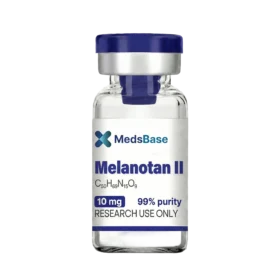 Melanotan II
Fragen & Antworten
Melanotan II
Ähnliche Produkte
Bewertungen
Es gibt noch keine Bewertungen.