






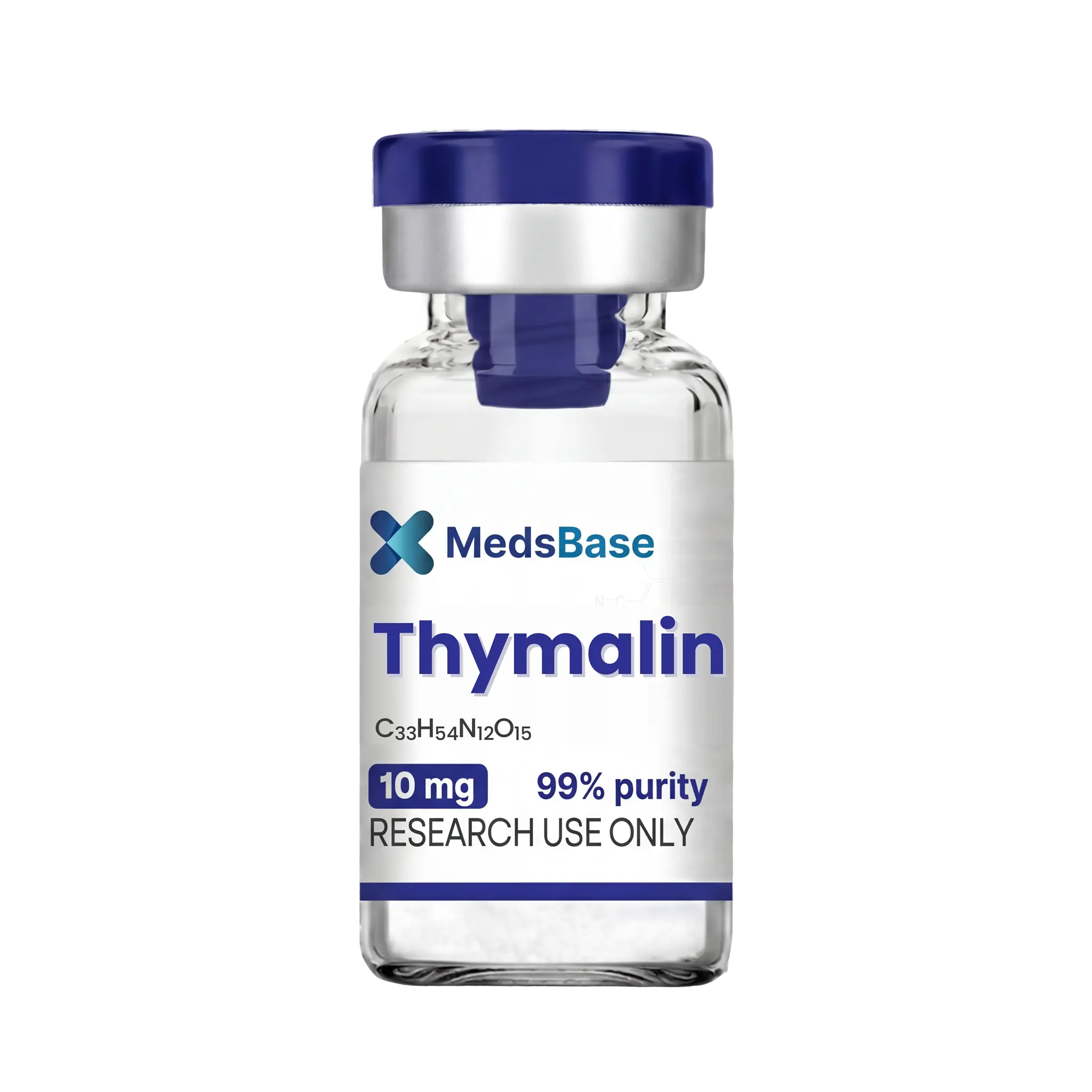
Thymalin (Khavinson Thymus-Polypeptid-Bioregulator)
✅ Mehrkomponenten-Thymuspolypeptid-Präparation (Khavinson-Bioregulator-Klasse)
✅ Mischung aus kurzen Oligopeptiden (Di- bis Hexapeptide) — keine einzelne Sequenz
✅ Thymic-axis T-cell maturation + age-related thymic involution studies
✅ Published Russian-studies immune-modulator (St. Petersburg Gerontology Institute)
✅ Lyophilisiertes HPLC ≥99% mit Batch-Fingerprint-COA
Thymalin enthält eine mehrkomponentige, thymusabgeleitete Polypeptid-Bioregulator-Präparation.
✓ Medizinisch überprüft von Morgan Ellis — Pharmazieforscher · 8 Jahre Erfahrung · Zuletzt überprüft: Mai 2026
Kurze Antwort — Was ist Thymalin?
Thymalin ist ein Polypeptid-Präparat, das aus Kalbs- oder Schweinethymusgewebe extrahiert wurde, entwickelt von Khavinson and colleagues at the St. Petersburg Institute of Bioregulation and Gerontology beginning in the 1970s. Unlike single-peptide compounds, Thymalin is a multikomponentiger Peptidkomplex (typical MW range 1–10 kDa across the mixture) consisting of short oligopeptide bioregulators that originate in thymic stromal cells. The most cited active components are tetrapeptide EW (Glu-Trp) and other Khavinson-class short peptide bioregulators. Thymalin is used in published Russian and Eastern European studies as a thymus-axis immune-modulator that promotes T-cell maturation, restores age-related thymic involution markers, and modulates neuroendocrine-immune crosstalk. For clinical studies use only. Polypeptid-Bioregulator-Präparat — kein Einzelsequenz-Peptid.
📦 Jede Bestellung ist durch unsere Reshipment Assurance Policy abgedeckt — wenn Ihr Paket nicht innerhalb von 20 Werktagen ankommt, versenden wir es erneut.
| Spezifikation | Detail |
|---|---|
| Verbindungsklasse | Polypeptid-Bioregulator-Präparat (multikomponentige thymische Peptidmischung); Khavinson-Klasse Peptid-Bioregulator |
| Quelle | Aus Kalbs- oder Schweinethymus gewonnen; gereinigt durch Säureextraktion + chromatographische Fraktionierung |
| CAS-Nummer | Multikomponenten-Präparat — keine einzelne kanonische CAS; Identifizierung durch HPLC-Fingerabdruck und Bioaktivitätsassay |
| Molekularformel | Multikomponentiger thymischer Polypeptid-Bioregulator (Khavinson-Präparat) — heterogenes niedermolekulares Peptidpool aus Kalbsthymus-Ultrafiltrat, < 10 kDa. Keine einzelne Molekülformel aufgrund der Multipeptid-Zusammensetzung; Aktivität wird der Kurzpeptid-Fraktion zugeordnet. |
| Wirkstoffe | Mischung aus kurzen Oligopeptiden (vorwiegend Di- bis Hexapeptide), MW-Bereich ~200–10.000 Da. Die am besten charakterisierten Komponenten umfassen das thymische Dipeptid EW (Glu-Trp) und andere Khavinson-Kurzepeptid-Bioregulatoren. |
| Mechanismus | Multi-component thymus-axis immune modulation. Published studies attributes effects to: (1) promotion of T-cell precursor maturation in thymic cortex and medulla; (2) restoration of age-related thymic involution markers (improved TREC count, increased thymic-output naive T-cell production); (3) modulation of cytokine balance (IL-2, IFN-γ upregulation in lymphocyte cultures); (4) crosstalk with hypothalamic-pituitary axis via the Khavinson-peptide bioregulator network. |
| Form / Reinheit | Lyophilisiertes weißes bis blassgelbes amorphes Pulver; ≥99% HPLC-Reinheit (Multikomponenten-Präparat; HPLC-Profil-Fingerabdruck COA verfügbar) |
| Lagerung | Lyophilisat: 2–8 °C kurzfristig, −20 °C langfristig. Rekonstituiert: 2–8 °C, innerhalb von 30 Tagen verwenden. Einfrieren-Auftauen vermeiden. |
Wirkmechanismus — Thymus-Achsen-Bioregulator
Thymalin ist der kanonische Khavinson-Klasse Peptid-Bioregulator derived from thymic tissue. The Khavinson bioregulator concept (developed at the St. Petersburg Institute of Bioregulation and Gerontology from the 1970s) posits that tissue-specific short peptides act as inter-organ signalling molecules that maintain age-appropriate tissue function — and that age-related decline reflects loss of these peptide bioregulator signals from the source tissue. Thymalin is the original member of this class and is used in published Russian studies as the canonical thymus-axis bioregulator. Mechanism of action across published studies:
- Reifung von T-Zell-Vorläufern — fördert die Differenzierung von CD4-CD8- Thymozyten-Vorläufern durch das CD4+CD8+ doppelpositive Stadium hin zu reifen CD4+ oder CD8+ T-Zell-Ausgangspopulationen
- Umkehr der Thymusinvolution — published rodent and human-subject studies reports improvement in age-related thymic-involution markers (increased thymic-output TREC count, improved naive-T-cell ratio)
- Zytokinmodulation — veröffentlichte In-vitro-Lymphozytenkulturstudien berichten von einer Hochregulierung der IL-2- und IFN-γ-Produktion
- Neuroendokrin-Immun-Kreuztalk — Khavinson-Peptide sollen die hypothalamisch-pituitär-immunologische Integration modulieren
- Anti-ageing / longevity studies — multi-decade Russian-studies cohort follow-up has reported reduced age-adjusted mortality in elderly populations receiving repeated Thymalin courses (controversial — not replicated in Western trials)
Published Evidence
- Khavinson-Bioregulator-Pharmakologie — canonical thymic-axis compound
- Thymic involution studies — altersbedingter Rückgang der T-Zell-Produktion
- Immune-system aging studies — naive-T-Zell-Produktion, TREC-Zahl
- Zytokinnetzwerkmodulation — IL-2, IFN-γ studies
- Comparative thymic-peptide studies — im Vergleich zu Epitalon (Pineal-Achsen-Bioregulator) und anderen Khavinson-Kurppeptiden
Für einen breiteren Kontext siehe Epitalon (Khavinson-Pineal-Tetrapeptid), (Khavinson-Tripeptid-Bioregulator). (Khavinson-Tripeptid), Thymosin Alpha-1 (Einzelsequenz-Thymus-Immunpeptid — direkter Vergleich) und den vollständigen Peptid-Katalog.
Verfügbare Stärken
| Vial-Stärke | Packungsgrößen |
|---|---|
| 10 mg — protocol standard; mirrors clinical-use vial format from Russian Thymalin preparations | 10, 20 oder 30 Vials |
Vergleich — Thymalin vs. Thymosin Alpha-1
Beide sind thymusabgeleitete Immunpeptide, unterscheiden sich jedoch grundlegend in ihrer molekularen Natur. Thymosin Alpha-1 is a defined single-sequence 28-amino-acid peptide (CAS 62304-98-7, MW 3108) with characterised mechanism (PRR-pathway and T-cell-axis modulation). Thymalin is a multi-component polypeptide preparation derived from whole thymic tissue extract — containing multiple short oligopeptides whose individual identities and proportions vary slightly between batches. Users studying defined-mechanism single-peptide pharmacology use Thymosin Alpha-1; those studying broader Khavinson-bioregulator-class thymic-extract effects use Thymalin.
Lagerung und Rekonstitution
Lyophilisiert 2–8 °C kurzfristig, −20 °C langfristig. In bakterienstatischem Wasser rekonstituieren (1,0 mL pro 10 mg Fläschchen → 10 mg/mL). Sanft schwenken. Rekonstituiert bei 2–8 °C lagern, innerhalb von 30 Tagen verwenden.
FAQ
Ist Thymalin ein einzelnes Peptid oder eine Mischung?
Thymalin ist ein mehrkomponentiges Polypeptid-Präparat – eine Mischung aus kurzen Oligopeptiden (hauptsächlich Di-, Tri-, Tetra- und Hexapeptide), die aus Thymusgewebe extrahiert werden. Es handelt sich nicht um ein Einzelsequenz-Peptid. Das HPLC-Fingerabdruckmuster ist von Charge zu Charge reproduzierbar, aber das Präparat ist durch seine Mischungszusammensetzung und nicht durch eine einzelne CAS-Nummer/Sequenz charakterisiert.
Wie unterscheidet sich Thymalin von Thymosin Alpha-1?
Thymalin ist ein mehrkomponentiger Thymusextrakt; Thymosin Alpha-1 ist ein definiertes Einzelsequenz-28-Aminosäuren-Peptid. Sie sind mechanistisch verwandt (beide modulieren die thymusabhängige Immunfunktion), aber molekular unterschiedlich.
What dose ranges are used in studies?
Russische klinische Protokolle verwenden 5–20 mg/Tag intramuskulär für 5-10-tägige Behandlungszyklen. In-vitro-Lymphozytenkulturstudien verwenden mikromolare Peptidmischungskonzentrationen.
Other Khavinson / Immune Bioregulator Peptides
- Thymosin Alpha-1 — Definiertes Einzelsequenz-28-Aminosäuren-Thymuspeptid – direkter Vergleich
- Epitalon — Khavinson-Pineal-Achsen-Tetrapeptid
- (Khavinson-Tripeptid-Bioregulator). — Khavinson-Tripeptid-Bioregulator
- Selank — Russisch entwickeltes anxiolytisches/immunmodulierendes Peptid
- Semax — Russisch entwickeltes nootropes Peptid
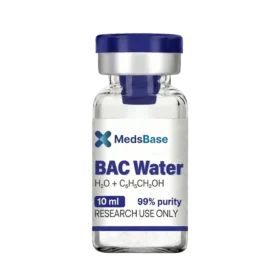
- BAC-Wasser (Bakteriostatisches Wasser) — Erforderlich zur Rekonstitution lyophilisierter Fläschchen — steriles, 0,9% Benzylalkohol-konserviertes Lösungsmittel
Weitere Optionen in Peptiden
Sortiert nach aktuellen MedsBase-Bestellvolumen — was andere Kunden in dieser Kategorie wählen.
| Stärke | 10 mg |
|---|---|
| Menge | 10 Fläschchen, 20 Fläschchen, 30 Fläschchen |
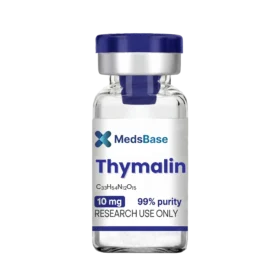 Thymalin (Khavinson Thymus-Polypeptid-Bioregulator)
Fragen & Antworten
Thymalin (Khavinson Thymus-Polypeptid-Bioregulator)
Ähnliche Produkte
Bewertungen
Es gibt noch keine Bewertungen.