







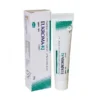
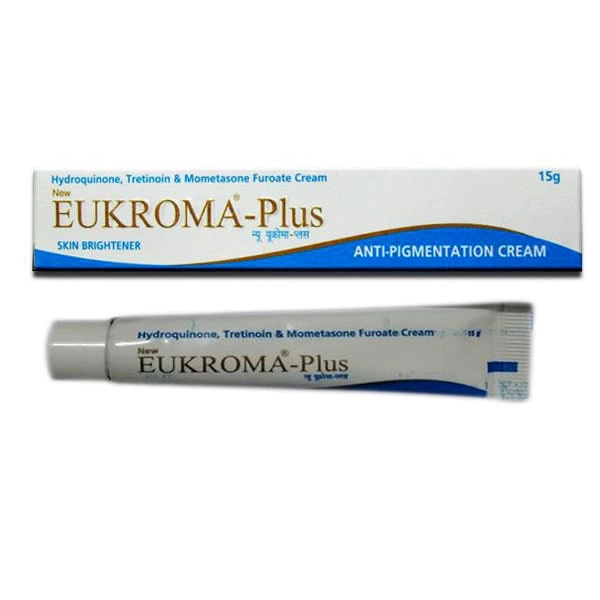
Eukroma Plus Cream
✅ Lyser hudtonen
✅ Reducerer pigmentering
✅ Behandler hudlidelser
✅ Forbedrer hudens udseende
✅ Fremmer hudens sundhed
✓ Medicinsk gennemgået af Morgan Ellis — Apoteksforsker · 8 års erfaring · Sidst gennemgået: maj 2026
⚡ Hurtigt svar — Hvad er Eukroma Plus Cream?
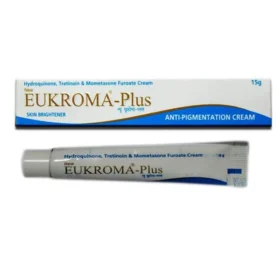
Eukroma Plus Cream er en topikal “Kligman-triple” afpigmenterende creme fra Yash Pharma, der indeholder hydroquinone 2% + tretinoin 0,025% + mometasone furoate 0,1%. Det er en receptpligtig korttidsbehandling mod melasma, postinflammatorisk hyperpigmentering (PIH) efter acne, og sol-lentigines i ansigtet. Påfør en tynd ærte-stor mængde på berørte mørke pletter kun én gang om natten, med en streng 8 uger på / 8 uger af cyklusprotokol — det inkluderede topikale steroid (mometasonfuroat, et kortikosteroid med moderat styrke) forårsager hudatrofi ved kontinuerlig brug. Daglig SPF 50+ om morgenen er obligatorisk — UV-udsættelse ophæver hydroquinons virkning inden for få dage. Brug ikke under graviditet, amning eller på beskadiget hud. Hydroquinon er begrænset til specialistvejledning i USA (FDA 2020) og EU.
📦 Hver ordre er dækket af vores Reshipment Assurance Policy — hvis din pakke ikke ankommer inden for 20 hverdage, sender vi en erstatning.
Hvorfor bestille fra MedsBase
Vores generiske medicin kommer fra WHO-GMP certificerede producenter og sendes verdensomspændende i diskret, neutral emballage — ingen medicinnavn på pakkens ydre. Kortbetalinger håndteres af en reguleret processor (kontoudtogsbeskrivelser inkluderer en reguleret betalingsprocessor — aldrig “MedsBase” eller medicinnavn). Crypto og SEPA bankoverførsel accepteres også. Hver ordre er dækket af vores Reshipment Assurance Policy.
Hvad er Eukroma Plus Cream?
Eukroma Plus Cream er en topikal depigmenterende creme fra Yash Pharma, der indeholder tre aktive ingredienser i en fast dosiskombination: hydroquinone 2% + tretinoin 0,025% + mometasone furoate 0,1%. Formuleringen følger den klassiske Kligman-protokol — den mest klinisk validerede korttidskombination til behandling af melasma (chloasma), postinflammatorisk hyperpigmentering (PIH) efter acne eller eksem, og ved stædige sol-lentiginer.
Eukroma Plus Cream er beregnet til kortvarig brug kun — typisk 8 ugers natlig påføring efterfulgt af en 8-ugers pause. Hydrokinonkomponenten bærer en pigmentbivirkningsrisiko (ekstern ochronose) ved kontinuerlig brug ud over 6 måneder, og den topikale kortikosteroidkomponent forårsager udtynding af huden, telangiektasier og rebound-dermatitis ved kontinuerlig brug. Brugt cyklisk er kombinationen sikker og meget effektiv; brugt dagligt i årevis kan den forårsage skader, der kan være svære at vende.
Hvordan virker Eukroma Plus Cream?
De tre ingredienser i Eukroma Plus Cream bekæmper hyperpigmentering fra forskellige vinkler samtidig:
- Hydrokinon — det mest effektive topikale depigmenteringsmiddel, der i øjeblikket er tilgængeligt. Hæmmer enzymet tyrosinase indenfor melanocytter, hvilket blokerer melaninsyntesen ved det hastighedsbegrænsende trin. Synlig lysning efter 4–8 uger.
- Tretinoin — et topikalt retinoid, der fremskynder omsætningen af melaninbelagte overfladekeratinocytter (så eksisterende pigment forlader huden hurtigere) og øger hydrokinonets penetration ind i epidermis.
- mometasonfuroat — et topikalt kortikosteroid med moderat styrke, der undertrykker den irritative dermatitis forårsaget af hydrokinon + tretinoin (uden det er kombinationen for irriterende at tolerere) og tilføjer direkte antiinflammatorisk virkning, der reducerer postinflammatorisk pigmentering.
Synlig forbedring efter 4 uger; klinisk signifikant lysning efter 8–12 uger. Gevinster er UV-afhængige — uden streng solbeskyttelse vil afpigmenteringseffekten vende tilbage inden for få dage efter ubeskyttet soludstilling.
— det forstærker den normale fysiologiske respons snarere end at udløse en kunstigt.
- Melasma (chloasma) — symmetriske brune pletter på kinder, pande, overlæbe og hage, ofte hormonelt drevet (graviditet, p-piller, sol)
- Postinflammatorisk hyperpigmentering (PIH) efter acne, især på hud af Fitzpatrick III–VI type
- Solælde (solpletter, alderspletter) på ansigtet og håndryggen
- Fregner (ephelider) — mindre effektive; UV-drevne og har tendens til at vende tilbage
- Periorbital hyperpigmentering (mørke underøjne) kun af melaninoprindelse — ikke effektivt mod vaskulære mørke ringe
Eukroma Plus Cream er ikke til: dermal-pigment melasma (dybt pigment, der ikke reagerer på lokalbehandling — kræver laser eller kemisk peeling), fotodermatitis eller enhver tilstand, hvor den omgivende hud er beskadiget eller eksematøs, eller som daglig kosmetisk lysningscreme. Daglig langtidsbrug som kosmetisk lysningscreme er den hyppigste årsag til permanent hydrokinon-induceret okronose.
Eukroma Plus Cream Dosering og Anvendelse — CYKLUSPROTOKOL
Eukroma Plus Cream leveres i 20 g tuber, der indeholder hydrokinon 2% + tretinoin 0,025% + mometasonfuroat 0,1%.
Sådan anvendes Eukroma Plus Cream korrekt
- Vask forsigtigt med en mild, ikke-skummende rens, og tør derefter forsigtigt. Vent 20–30 minutter, til huden er helt tør.
- Påfør en tynd, ærte-stor mængde kun på de mørke pletter — ikke på hele ansigtet. Fordel tyndt og kun på den misfarvede zone. Undgå den omkringliggende sunde hud (kortikosteroidet vil gøre sund hud tyndere).
- Undgå øjne, mundvige, næsebor, læber, slimhinder, øjenlåg og hals.
- Kun en gang om natten — aldrig to gange dagligt. Vask hænder efter påføring.
- CYKLUS: 8 uger med natlig brug, derefter en obligatorisk 8 ugers pause. Brug ikke kontinuerligt i mere end 8 uger ad gangen. Efter pausen kan du starte en ny 8-ugers cykel, hvis nødvendigt. Maksimalt 4 cykluser på 12 måneder.
- Daglig bredspektret SPF 50+ om morgenen er obligatorisk — ikke kun under behandlingen, men også uafbrudt bagefter, da UV-genaktiverer pigment. Genpåfør hver 2.–3. time, hvis du er udendørs. Brug en bredskygget hat. Undgå middagssol og solarier helt.
- Stop omgående, hvis du bemærker blå-sort eller grå misfarvning af behandlede områder (tegn på okronose), fortyndet hud med synlige blodkar, vedvarende stikken eller tilbagevendende mørkning af pletten.
- Kombiner ikke med efterladnings-AHA- eller BHA-serum, retinol, peelings eller microneedling under den 8-ugers behandlingscyklus. Den kortikosteroide komponent beskytter ikke huden mod sammensat irritation.
Bivirkninger ved Eukroma Plus Cream
Almindelige (milde, aftager efter 2–4 uger):
- Mild tørhed, afskalning, skæl på det behandlede område
- Stikken eller brænden ved påføring (værst i uge 1–2)
- Mild rødme
- Øget følsomhed over for sol
- Indledende udbrud af mikrokomedoner, hvis brugt på acne-udsat hud
Mindre almindelige, men vigtige:
- Kontaktdermatitis (3–5%) — især hos patienter med følsom hud eller eksem
- Halo-effekt — lysning af den sunde hud omkring det mørke område (brug minimum nødvendigt og påfør kun på selve området)
- Akne-lignende udslæt fra den topikale kortikosteroide komponent, især ved overbrug eller ansigtsanvendelse ud over 4 uger
- Telangiektasier (fine røde blodkar) og tynd hud fra kortikosteroidkomponenten — reversibel kun hvis opdaget tidligt
- Perioral dermatitis fra steroidbrug omkring munden
Sjældent, men stop og søg dermatologisk vurdering:
- Eksogen okronose — blå-sort eller skifergrå paradoksal hyperpigmentering, som er kendetegnet ved overforbrug af hydrokinon. Udvikles ved kontinuerlig brug ud over 6 måneder, især ved højere koncentrationer og på Fitzpatrick V–VI hud. Svær at reversere og kan være permanent.
- Steroidrebound-dermatitis — kraftig rødme, brændende fornemmelse og forværret pigmentation, når cremen pludselig stoppes efter langvarig daglig brug. Håndteres med en langsom udtrapning.
- Hypothalamus-hypofyse-binyre (HPA)-aksens undertrykkelse — teoretisk ved langvarig omfattende kortikosteroidanvendelse; sjælden ved kun ansigtsbrug
- Alvorlig kontakt dermatitis eller eksematøs reaktion
Advarsler og forholdsregler — KRITISK
- Graviditet og amning: kontraindikeret. Tretinoinkomponenten er FDA Graviditetskategori C; hydrokinon er også kategori C med op til 35% systemisk absorption dokumenteret. Kortikosteroiden tilføjer yderligere fosterrisiko. Brug azelainsyre (graviditetssikker) til melasma i stedet.
- Soludsaettelse: daglig bredspektret SPF 50+ er obligatorisk. Uden det vil hydrokinonens effekt vende om inden for få dage, og du risikerer okronose. Undgå solarier helt.
- Cyklusprotokol er ikke til forhandling: brug aldrig kontinuerligt ud over 8 uger ad gangen. Kontinuerlig daglig brug ud over 6 måneder medfører risiko for eksogen okronose (som kan være permanent) og kortikosteroid-induceret hudatrofi.
- FDA-handling 2020: FDA fjernede alle hydrokinonprodukter uden recept fra det amerikanske marked i 2020 efter evaluering af tilfælde af okronose. Hydrokinon er nu begrænset til brug under specialistsupervision i USA, EU og det meste af Asien.
- Anvend ikke på beskadiget hud, aktiv eksem, alvorligt solskoldning eller åbne sår.
- Anvend ikke omkring øjnene, på øjenlågene eller på læberne. Kortikosteroidet forårsager hurtig fortynding af huden i disse områder.
- Voksbehandling, trådtrækning, laserhårfjerning, dermabrasion, microneedling, kemiske peels: stop Eukroma Plus Cream i mindst 14 dage før nogen af disse procedurer og genoptag kun efter at huden er fuldt genoprettet.
- Astma, alvorlig atopisk dermatitis: forsigtighed - sulfitkonserveringsmidler i nogle hydrokinonformuleringer kan udløse reaktioner.
- Børn under 12 år: ikke til brug hos børn.
Kontraindikationer — Hvem bør IKKE bruge Eukroma Plus Cream
- Kendt overfølsomhed over for hydrokinon, tretinoin, mometasonfuroat eller enhver komponent i cremebasen
- Graviditet, planlægning af graviditet eller amning
- Aktiv eksem, alvorlig rosacea, beskadiget hud, væskeudsivende dermatitis eller åbne sår på det område, der skal behandles
- Etableret eksogen okronose (blå-sort hydrokinon-induceret pigmentering)
- Eksisterende ansigtsatropi eller telangiektasier forårsaget af kortikosteroider
- Samtidig oral isotretinoin-terapi
- Børn under 12 år
- Patienter, der ikke er villige til at forpligte sig til daglig SPF 50+ og den strikte cyklusprotokol
Lægemiddel- og hudplejeinteraktioner
| Kombiner med | Effekt | Hvad skal der gøres |
|---|---|---|
| Andre topikale retinoidder (tretinoin, tazaroten, adapalen) | Overflødig sammen med tretinoin i Eukroma Plus Cream; alvorlig kumulativ irritation | Stop andre retinoidder under den 8-ugers behandlingscyklus. |
| Højprocentige AHA/BHA-serumer til efterladning på huden | Alvorlig irritation, barriereskade, øget risiko for okronose | Undgå under den 8-ugers cyklus. Genoptag kun i pauserne mellem cyklusser. |
| Andre topikale kortikosteroider | Komponeret steroidatropi | Brug ikke andre ansigtssteroidcremer under Eukroma Plus Cream-behandlingen. |
| Resorcinol, phenolbaserede produkter | Øget risiko for ochronose | Undgå kombination. |
| Daglig solcreme (bredspektret SPF 50+) | Obligatorisk ledsager | Påfør hver morgen. Genpåfør hver 2.-3. time udendørs. |
| Vitamin C-serum (L-ascorbinsyre 10–15%) | Kompatibel — supplerende tyrosinasehæmning + antioxidant | Vitamin C om morgenen under SPF, Eukroma Plus Cream om aftenen. |
| Niacinamid 5% | Kompatibel — reducerer melanosomoverførsel; støtter barrieren | Fremragende vedligeholdelsesprodukt uden for cyklus. |
| Oral isotretinoin | Stablet retinoid + hudskørhed | Stop Eukroma Plus Cream under oral isotretinoin-behandling. |
Opbevaringsvejledning
- Opbevar ved stuetemperatur, 15–25°C. Må ikke opbevares i køleskab eller fryser.
- Hold tuben tæt lukket og væk fra direkte sollys — hydrokinon oxiderer (bliver brun) ved kontakt med luft og lys, hvilket reducerer virkningen.
- Hvis cremen er blevet brun eller grå i tuben, skal den kasseres — oxideret hydrokinon er virkningsløst.
- Kasser efter 6 måneder efter første åbning, selvom der er produkt tilbage i tuben.
- Opbevar utilgængeligt for børn.
Relaterede alternativer på MedsBase
Andre afpigmenterende og akneprodukter på lager hos MedsBase:
- Melrio Creme (hydrokinon + tretinoin + fluocinolon)
- Melacare Forte Creme (hydrokinon + tretinoin + mometason)
- Kojiglo Forte Creme (hydrokinon + tretinoin + mometason)
- Epilite Væske (hydrokinon 2%)
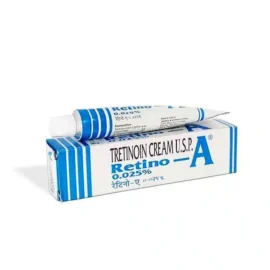
- Retino-A Cream (tretinoin 0,025% / 0,05%)
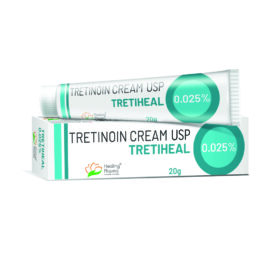
- Tretiheal Cream (tretinoin 0,025% / 0,05% / 0,1%)
- Isotroin (oral isotretinoin 5 / 10 / 20 / 30 mg)
Nyttig læsning: Tretinoin creme vs gel · Tretinoin vs retinol · Alt hvad du vil vide om acne.
Ofte stillede spørgsmål
Hvorfor er 8-ugers på / 8-ugers af cyklusprotokollen vigtig?
To forskellige risici dikterer cyklusreglen: (1) hydrokinon forårsager exogen okronose (paradoksal blå-sort pigmentering, der kan være permanent) ved kontinuerlig brug i mere end ca. 6 måneder; (2) den topikale kortikosteroidkomponent forårsager hudatrofi, telangiektasier og rebound-dermatitis ved kontinuerlig ansigtsbrug. 8-på / 8-af cyklussen giver 32 ugers behandling årligt med dokumenteret sikkerhed. Kontinuerlig daglig brug er den mest almindelige årsag til permanent hudskade fra depigmenterende cremer.
Hvornår kan jeg forvente resultater fra Eukroma Plus Cream?
Synlig lysning efter 4 uger; klinisk signifikant forbedring efter 8–12 uger — lige før den obligatoriske pause mellem cyklusser. De fleste patienter har brug for 2–3 cyklusser (8 uger på, 8 uger pause) over 6–12 måneder for stabil melasma-fjernelse. Vedligeholdelse under pausen kræver azelainsyre 15–20% eller vitamin C + niacinamid.
Er hydrokinon sikkert? Jeg har læst, at det kan forårsage kræft.
Hydrokinon er klassificeret af IARC som Gruppe 3 (ikke klassificeret med hensyn til dets kræftfremkaldende virkning på mennesker) — hvilket betyder, at data fra rotteforsøg ikke kan overføres til topikal menneskelig eksponering. Årtiers brug inden for dermatologi i 2–4% koncentration cyklisk har ikke vist øget kræftrisiko hos mennesker. Den reelle sikkerhedsbekymring er okronose (en pigmentationsbivirkning, ikke kræft), som kan forebygges ved at følge den 8-ugers cyklusprotokol og SPF 50+ dagligt.
Hvorfor blev hydrokinon begrænset af FDA?
FDA fjernede hydrokinon fra det amerikanske marked i september 2020 efter evaluering af akkumulerede tilfælde af ochronose. Hydrokinon er stadig godkendt til receptpligtig brug i koncentrationer op til 4%, men daglig langvarig kosmetisk brug var den population, der udløste forbuddet. Receptpligtig tilsyn er sikkerhedsmekanismen — cyklisk korttidsbrug under lægelig supervision forbliver standarden for melasma.
Kan jeg bruge Eukroma Plus Cream under graviditet eller amning?
Nej. Alle tre ingredienser er problematiske under graviditet: tretinoin (graviditetskategori C, teratogen i dyreforsøg), hydrokinon (op til 35% systemisk absorption ved ansigtsapplikation) og kortikosteroiden (lille men målelig systemisk eksponering). For graviditetsrelateret melasma skal du skifte til azelainsyre 15–20% (graviditetskategori B) og stringent SPF 50+ dagligt.
Hvorfor har jeg brug for SPF 50+ hver dag?
UV-eksponering aktiverer melanocytter og reverserer alle fremskridt. Uden daglig bredspektret SPF 50+ (mineral eller hybrid foretrækkes til melasma) vil selv små mængder tilfældig sol (kørsel, gåture udenfor) annullere uger med cremebrug på få dage. SPF er den enkelt vigtigste faktor i langtidskontrol af melasma — vigtigere end cremen selv.
Hvad er eksogen ochronose, og hvordan undgår jeg det?
Eksogen ochronose er en paradoks blå-sort eller skifergrå hyperpigmentering der udvikles i hud udsat for hydrokinon for længe — typisk kontinuerlig daglig brug i over 6 måneder, hyppigere ved koncentrationer >4% og på Fitzpatrick V–VI hud. Det kan være permanent. Forebyggelse: Hold dig til 8-dage på / 8-dage af-cyklussen, brug aldrig mere end 4 cykluser om året, påfør aldrig på et større område end nødvendigt, og stop omgående, hvis du bemærker mørkning af den behandlede hud.
Hvad kan jeg bruge i den 8-ugers pause?
Den standard vedligeholdelsesrutine: azelainsyre 15–20% (mild tyrosinase-hæmmer, sikker under graviditet), vitamin C 10–15% serum om morgenen, niacinamid 5% (reducerer melanosomoverførsel) og streng daglig brug af SPF 50+. Tranexamsyre (oral eller topisk) bruges også til vedligeholdelse af melasma under dermatologisk tilsyn. Undgå alle efterladte AHA/BHA-serum i pauseperioden, hvis du planlægger at genoptage Eukroma Plus Cream.
Kan jeg bruge Eukroma Plus Cream på min krop (bryst, hænder, hals)?
Generelt ikke anbefalet — kortikosteroidkomponenten er for potent til langvarig brug på kropsområder, og stor overfladeanvendelse øger systemisk optagelse. Ved hyperpigmentering på kroppen bør du bruge ren hydrokinon eller azelainsyre under dermatologisk tilsyn. Eukroma Plus Cream er kun beregnet til facialt melasma og PIH.
Eukroma Plus Cream vs. azelainsyre — hvilken skal jeg vælge?
Eukroma Plus Cream er mere potent og virker hurtigere, men har de nævnte cyklusbegrænsninger og risiko for okronose. Azelainsyre 15–20% er mildere, sikker under graviditet, kan bruges kontinuerligt og er fremragende til vedligeholdelse efter en Kligman-trippelbehandling eller som primær terapi ved mildere hyperpigmentering. De fleste dermatologer veksler: Eukroma Plus Cream til aktive behandlingscykler, azelainsyre til vedligeholdelse mellem cyklerne.
Relaterede alternativer
Andre produkter inden for Generel sundhed som kunder også ser:
Flere muligheder i Beauty & Skin Care
Rangeret efter seneste MedsBase ordrevolumen — hvad andre kunder i denne kategori vælger.


| Styrke | 2% og 0,1%+ 0,025% |
|---|---|
| Antal | 1 Tube/r, 3 Tube/r, 6 Tube/r |
| Farmaceutisk form | Creme/r |
| Producent | Yash Pharma |
| Behandling | Melasma |
| Generisk mærke | Hydrokinon + Octyl Methoxycinnamate + Oxybenzone |
 Eukroma Plus Cream
Spørgsmål & svar
Eukroma Plus Cream
Relaterede produkter


Anmeldelser
Der er ingen anmeldelser endnu