







Vitamin B12 (Cyanocobalamin) Injectable — Pharmaceutical Grade
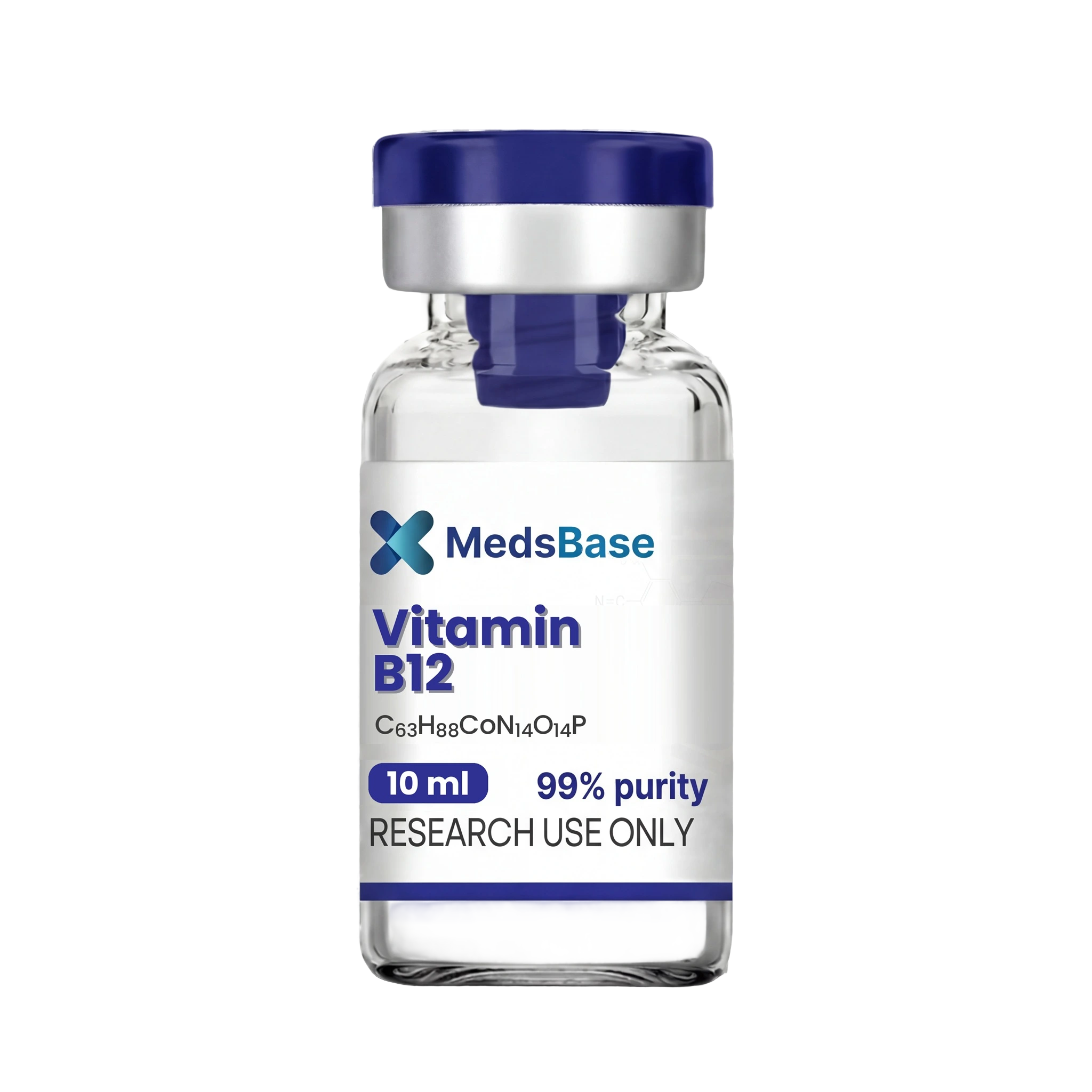
✅ Cobalt-zentriertes Corrinoid-Coenzym — Vitamin-B12-Familie (CAS 68-19-9)
✅ Vorgefertigte sterile wässrige Lösung (keine Rekonstitution erforderlich)
✅ 1 mg/mL × 10 mL multi-dose vial (10 mg total cyanocobalamin)
✅ Zellulärer Cofaktor für Methionin-Synthase + Methylmalonyl-CoA-Mutase
✅ Small-molecule companion compound (MW 1355.37, USP-grade)
Vitamin B12 (Cyanocobalamin) Injektionslösung enthält 1 mg/mL × 10 mL sterile Cyanocobalamin-Lösung.
✓ Medizinisch überprüft von Morgan Ellis — Pharmazieforscher · 8 Jahre Erfahrung · Zuletzt überprüft: Mai 2026
Kurze Antwort — Was ist B12 (Cyanocobalamin) Injektionslösung?
Vitamin B12 (Cyanocobalamin) ist die synthetische Cyano-koordinierte Form der Cobalamin-Coenzym-Familie (CAS 68-19-9, MF C63H88CoN14O14P, MW 1355,37 g/mol). Hier geliefert als 10 mg pro 10 mL Mehrdosen-Injektionsflasche (1 mg/mL pre-formulated sterile aqueous solution — no reconstitution required) for studies and companion-protocol use alongside the peptide catalogue. Cyanocobalamin is the most-cited B12 form in published studies because it is the most chemically stable: cells take it up via the transcobalamin-II / cubilin pathway and convert it intracellularly to the two biologically-active cobalamin forms — Methylcobalamin (Cofaktor für Methionin-Synthase / SAM-Zyklus / Ein-Kohlenstoff-Stoffwechsel) und Adenosylcobalamin (cofactor for methylmalonyl-CoA mutase / odd-chain fatty acid metabolism / TCA entry). For clinical studies use only. Kein Peptid — kleines Molekül mit Kobalt-zentriertem Corrinoid-Coenzym.
📦 Jede Bestellung ist durch unsere Reshipment Assurance Policy abgedeckt — wenn Ihr Paket nicht innerhalb von 20 Werktagen ankommt, versenden wir es erneut.
| Spezifikation | Detail |
|---|---|
| Verbindungsklasse | Kobalt-zentriertes Corrinoid-Coenzym; Vitamin-B12-Familie; kleines Molekül-Cofaktor; kein Peptid |
| Chemischer Name | Cyanocobalamin (Synonyme: Vitamin B12, Cobalamin (Cyano-Form), CN-B12; die cyano-koordinierte synthetische Stabilisierungsform der Cobalamin-Familie) |
| CAS-Nummer | 68-19-9 (Cyanocobalamin); verwandte Cobalamin-CAS — Methylcobalamin 13422-55-4, Hydroxocobalamin 13422-51-0, Adenosylcobalamin 13870-90-1 (hier nicht geliefert) |
| Molekularformel | C63H88CoN14O14P |
| Molekulargewicht | 1355,37 g/mol |
| Mechanismus | Cyanocobalamin gelangt über den rezeptorvermittelten Transcobalamin-II → Cubilin-Weg in die Zellen und wird intrazellulär durch Methionin-Synthase-Reduktase (MTRR) und Methylmalonazidurie cblA-Typ-Protein (MMAA) in die beiden biologisch aktiven Cobalamin-Coenzyme umgewandelt — Methylcobalamin (cytosolischer Cofaktor für Methionin-Synthase) und Adenosylcobalamin (mitochondrialer Cofaktor für Methylmalonyl-CoA-Mutase). Beide Coenzyme sind jeweils essentiell für den Ein-Kohlenstoff- / Methylierungs- und Propionyl-CoA- / Stoffwechsel von ungeradzahligen Fettsäuren. |
| Sequenz | n/a (kleines Molekül Corrinoid-Coenzym — kein Peptid) |
| Form & Konzentration | Vorgefertigte sterile wässrige Lösung — 1 mg/mL cyanocobalamin in physiological-buffer base, 10 mL multi-dose vial (10 mg total cyanocobalamin per vial). Characteristic deep red colour from the cobalt-corrin chromophore. Keine Rekonstitution erforderlich — aseptisch mit steriler Spritze entnehmen. |
| Reinheit | ≥99% (HPLC-verifiziert); USP-gerechter Cyanocobalamin-Referenzstandard. Analysezertifikat auf Anfrage erhältlich. |
| Löslichkeit | Hochgradig wasserlöslich (~12,5 mg/mL Löslichkeitsgrenze bei 25 °C); vorgefertigte Lösung liegt deutlich unter der Sättigung. Stabil in wässrigem Puffer bei pH 4–7. Alkalische Bedingungen vermeiden (schnelle Hydroxocobalamin-Bildung) sowie stark reduzierende Bedingungen (Cob(II)alamin-Entstehung). |
| Lagerung | Bei 2–8 °C kühl lagern; lichtgeschützt aufbewahren (Cyanocobalamin ist lichtempfindlich — UV-/Blaulicht katalysiert die Cyano-zu-Hydroxo-Umwandlung). Mehrdosenflasche innerhalb von 60 Tagen nach erstem Einstich verwenden. Nicht einfrieren (Eiskristallbildung kann die Glasflasche beschädigen und riskiert photolytischen Abbau bei längerer Gefrierlagerung). Innerhalb des auf dem Flaschenetikett angegebenen Verfalldatums verwenden (typischerweise 24 Monate ab Herstellung). |
Was ist Vitamin B12 (Cyanocobalamin)?
Cyanocobalamin (CAS 68-19-9) ist die synthetische, cyano-koordinierte Form der Vitamin-B12-Familie der Cobalamin-Coenzyme. Strukturell handelt es sich um einen komplexen, kobaltzentrierten Corrinoid: Ein 19-Atom-Makrozyklus (der Corrin-Ring, ähnlich in der Geometrie zum Porphyrin-Ring des Hämoglobins, aber unterschiedlich in der Zusammensetzung) koordiniert ein zentrales Kobaltion in seiner 3+-Oxidationsstufe, mit einem Dimethylbenzimidazol-Nukleotid-Schwanz unterhalb des Rings und einer Cyano (-CN)-Gruppe in der oberen axialen Koordinationsposition. Molekülformel C, Molekulargewicht 1355,37 g/mol. Das Molekül ist intensiv rot – seine Absorption im sichtbaren Spektrum (λmax ~360, ~520, ~550 nm) verleiht B12-Lösungen ihre charakteristische tiefe rosa-rote Farbe.63H88CoN14O14P, molecular weight 1355.37 g/mol. The molecule is intensely red — its visible-spectrum absorption (λmax ~360, ~520, ~550 nm) is what gives B12 solutions their characteristic deep pink-red colour. The “cyano” form is a synthetic stabilisation choice rather than a biologically-significant species in vivo. Cobalamins in cells exist primarily as Methylcobalamin (eine Methylgruppe an der oberen axialen Position — der cytosolische Cofaktor für Methioninsynthase) und Adenosylcobalamin (a 5′-deoxyadenosyl group on the upper axial position — the mitochondrial cofactor for methylmalonyl-CoA mutase). These two active forms are interconverted by dedicated cellular enzymes and are not commercially supplied in stable injectable form because of their light-sensitivity. Cyanocobalamin is supplied instead because the cyano group is photochemically and thermally stable, and cells convert cyanocobalamin to the methyl and adenosyl forms intracellularly via methionine synthase reductase (MTRR) and the methylmalonic aciduria cblA-type protein (MMAA), respectively. In the studies and clinical context, cyanocobalamin injectable preparations are the canonical supplemental form. The 10 mL multi-dose vial format (1 mg/mL × 10 mL = 10 mg per vial) supplied here matches the standard pharmaceutical preparation pattern. MedsBase stocks this format in the peptide-studies catalogue as a small-molecule companion compound used in protocols that combine peptide studies with cobalamin-axis biology — recovery, methylation-cycle studies, hematology, cognitive studies with nootropic peptides, and energy-metabolism panels where the SAM cycle is engaged.
Wirkmechanismus — Zwei Cobalamin-Coenzym-Reaktionen
Der biologische Mechanismus von B12/Cyanocobalamin ist die Summe der beiden enzymatischen Reaktionen, die durch die daraus abgeleiteten aktiven Cobalamin-Coenzyme katalysiert werden:
- Zelluläre Aufnahme via Transcobalamin-II → Cubilin / Megalin — Freies Cyanocobalamin in der extrazellulären Flüssigkeit wird an Transcobalamin-II (TCII) gebunden, und der TCII-B12-Komplex wird über das Cubilin/Megalin-Rezeptorsystem an Zelloberflächen aufgenommen. Die intrazelluläre Freisetzung in das Lysosom wird gefolgt vom Transport in das Zytosol über den LMBRD1/ABCD4-Efflux-Komplex.
- Intrazelluläre Umwandlung in aktive Coenzyme — Im Zytosol reduziert und methyliert die Methionin-Synthase-Reduktase (MTRR) Cyanocobalamin zu Methylcobalamin (der aktiven zytosolischen Form), wobei die Cyano-Gruppe als Cyanid verloren geht (das dann durch das Rhodanase/Thiosulfat-System in den sehr geringen entstehenden Mengen entgiftet wird). In den Mitochondrien wandelt das Methylmalonazidurie cblA-Typ-Protein (MMAA) plus Methionin-Synthase-Reduktase Cyanocobalamin in Adenosylcobalamin (die aktive mitochondriale Form) um.
- Methylcobalamin → Methionin-Synthase (zytosolisch, Ein-Kohlenstoff-/SAM-Zyklus) — Die Methionin-Synthase katalysiert die Übertragung einer Methylgruppe von 5-Methyl-Tetrahydrofolat auf Homocystein, wodurch Methionin und Tetrahydrofolat regeneriert werden. Dies ist die kritische Verbindung zwischen B12, Folat und dem Methionin-/SAM-Zyklus. SAM (S-Adenosyl-Methionin, gebildet aus Methionin + ATP) ist der universelle zelluläre Methylgruppendonor für die hunderte von zellulären Methylierungsreaktionen – DNA-Methylierung, Histon-Methylierung, Phospholipid-Methylierung, Neurotransmitter-Methylierung (Katecholamine, Melatonin), Kreatin-Biosynthese. Ein B12-Mangel stört daher das gesamte Methylierungsprogramm der Zelle und ist die molekulare Grundlage für die hämatologischen (megaloblastäre Anämie durch beeinträchtigte DNA-Methylierungs-abhängige Thymidin-Synthese) und neurologischen (Demyelinisierung durch beeinträchtigte Phospholipid-Methylierung) Folgen eines klinischen B12-Mangels.
- Adenosylcobalamin → Methylmalonyl-CoA-Mutase (mitochondrial, Propionyl-CoA-/TCA-Eintritt) — Die Methylmalonyl-CoA-Mutase katalysiert die intramolekulare Umlagerung von (R)-Methylmalonyl-CoA zu Succinyl-CoA. Dies ist der metabolische Eintrittspunkt für Propionyl-CoA-bildende Substrate – ungeradzahlige Fettsäuren, verzweigtkettige Aminosäuren (Valin, Isoleucin, Methionin), Cholesterin-Seitenkette. Ein Adenosylcobalamin-Mangel verursacht eine Anreicherung von Methylmalonat (der diagnostische Biomarker eines klinischen B12-Mangels) und beeinträchtigt die Propionyl-CoA-/ungeradzahlige Fettsäure-Oxidation.
- Verbindung zur NAD-Achse und Crossover des Ein-Kohlenstoff-Metabolismus — Die B12-/Methionin-Synthase-Reaktion befindet sich am gleichen metabolischen Knotenpunkt wie die SAM-verbrauchenden Methylierungsreaktionen, die von hunderten zellulären Methyltransferasen katalysiert werden, einschließlich NNMT (Nicotinamid-N-Methyltransferase) – das Ziel von 5-Amino-1MQ. NNMT consumes SAM to methylate nicotinamide; impaired B12 / methionine-synthase function lowers cellular SAM availability and therefore lowers NNMT activity indirectly. Studies that probes the NAD-axis / one-carbon-metabolism crossover often co-administers B12 and NNMT-pathway tools to dissect these connected biochemistries.
The pharmacokinetic profile of injectable cyanocobalamin is well-characterised: IM or SC administration produces rapid systemic absorption with peak plasma concentrations at 1–2 hours; substantial dose-dependent renal clearance (the kidney saturates and dose-dumps any cyanocobalamin above the transcobalamin-II carrier capacity); cellular uptake then proceeds over hours-to-days; conversion to active coenzymes happens continuously thereafter; and the very low daily turnover requirement of cobalamin coenzymes (~2 µg/d in human physiology) means that single high-dose injections produce sustained tissue-level effects for weeks. The 1 mg/mL × 10 mL multi-dose format supports typical protocols ranging from single-bolus high-dose work to weekly or daily smaller-dose chronic dosing.
Published Evidence
B12 / cyanocobalamin is used in clinical contexts that investigate:
- One-carbon metabolism and SAM-cycle studies — the canonical small-molecule cofactor for methionine synthase; standard tool compound for any studies that probes the folate / B12 / methionine / SAM axis; widely used in DNA-methylation and histone-methylation pharmacology studies
- Homocysteine-axis studies — methionine synthase deficiency / impairment causes homocysteine accumulation; cyanocobalamin supplementation is the standard intervention in published studies models of hyperhomocysteinaemia and cardiovascular risk
- Haematology and erythropoiesis studies — B12 deficiency causes megaloblastic anaemia via impaired DNA-methylation-dependent thymidine synthesis; published studies uses cyanocobalamin in vitamin-deficiency erythropoiesis models, bone-marrow culture studies, and reticulocyte-response studies
- Peripheral neuropathy and demyelination studies — B12 deficiency causes peripheral neuropathy and subacute combined degeneration of the spinal cord via impaired phospholipid methylation in myelin sheaths; published studies uses cyanocobalamin supplementation in demyelination / remyelination model systems
- NAD-axis / methylation crossover studies — kombiniert mit 5-Amino-1MQ (NNMT-Inhibitor) oder NAD⁺ in published studies that probes the SAM-cycle / nicotinamide-methylation node
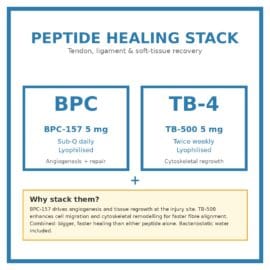
- Recovery and athletic-applications (combined with peptide protocols) — frequently included as a companion compound in protocols that combine peptide therapeutics (BPC-157, TB-500, GH peptides) with cofactor / vitamin support; the canonical small-molecule companion to peptide-axis recovery
- Cognitive and nootropic-applications — kombiniert mit kognitiven Peptiden (Selank, Semax, DSIP) in studies on the cognitive sequelae of B12 deficiency and the cobalamin axis in CNS function
- Cyanocobalamin vs methylcobalamin vs hydroxocobalamin comparative studies — published studies has compared the four cobalamin forms head-to-head for bioavailability, intracellular conversion kinetics, and tissue-retention profiles; cyanocobalamin is the canonical reference compound against which the others are benchmarked
For broader context on small-molecule cofactor / coenzyme compounds in this catalogue, see L-Carnitin (the closest small-molecule companion analogue — mitochondrial long-chain fatty-acid shuttle), NAD⁺ (oxidierte Dinucleotid-Coenzym — direkte NAD-Pool-Supplementierung), 5-Amino-1MQ (NNMT-Inhibitor — verbindet B12-/Methionin-Zyklus mit der NAD-Achse), und MOTS-c (mitochondriales metabolisches Peptid). Durchsuchen Sie das vollständige peptides & compounds catalog.
Verfügbare Packungsgrößen
MedsBase führt Vitamin B12 (Cyanocobalamin) Injektionslösung in einer einzigen Konzentration/Vial-Format mit drei Packungsgrößen-Optionen:
| Packungsgröße | Typischer Anwendungsfall | Gesamtmaterial |
|---|---|---|
| 1 Flasche | Single-experiment, dose-titration, or short-course in-vivo studies — 10 mg total cyanocobalamin in 10 mL multi-dose format covers 4–8 weeks of typical protocol dosing in rodents or small-cohort cell-culture work | 10 mg / 10 mL |
| 5 Flaschen | Multi-cohort or extended-cycle studies — typical mid-scale protocols using B12 as a companion compound alongside peptide-dosing; per-vial economics improve significantly vs single-vial purchase | 50 mg / 50 mL |
| 10 Fläschchen | Large-cohort or long-arm protocols — chronic-dosing companion supply alongside long-cycle peptide protocols; lowest per-mg cost; covers multi-animal cohort work without re-purchase | 100 mg / 100 mL |
The single 1-vial pack is convenient for single-experiment or titration work; the 5-vial and 10-vial packs provide significant per-vial savings for chronic protocols or multi-cohort studies. The 1 mg/mL × 10 mL multi-dose format matches the standard pharmaceutical injectable cyanocobalamin pattern and is well-suited to typical protocol dosing — IM, SC, or IV administration of 100 µg to 1 mg per dose (equivalent to 0.1–1 mL of the supplied solution) covers essentially all published studies dose ranges.
Vergleich – B12 (Cyanocobalamin) vs. L-Carnitin
B12 und L-Carnitin are the two best-characterised small-molecule companion compounds in this catalogue. Both serve as cofactor / shuttle compounds in mitochondrial and metabolic support, both are supplied in multi-dose injectable formats appropriate for protocol use alongside the peptide catalogue, and both are mechanistically distinct from the peptide compounds. The comparison illustrates the two canonical “small-molecule companion” compounds that users add to peptide protocols.
| Kriterium | B12 (Cyanocobalamin) | L-Carnitin |
|---|---|---|
| Chemische Klasse | Cobalt-zentriertes Corrinoid-Coenzym (einzelnes kleines Molekül) | Quartäre Ammonium-Aminosäure-Derivat (einzelnes Zwitterion) |
| Molekulargewicht | 1355,37 g/mol | 161.20 g/mol |
| Zelluläre Rolle | Cofaktor – Methionin-Synthase (zytosolisch, SAM-Zyklus) + Methylmalonyl-CoA-Mutase (mitochondrial, Propionyl-CoA → TCA) | Substrat-Träger – Langkettige Fettsäure-Shuttle über die mitochondriale Innenmembran (β-Oxidations-Eintritt) |
| Best studies focus | One-carbon / methylation, homocysteine axis, megaloblastic erythropoiesis, demyelination studies, cognitive / nootropic crossover | Fat oxidation, mitochondrial bioenergetics, insulin sensitivity, sperm motility, cardiovascular metabolic support |
| FDA-Zulassung | Ja — Cyanocobalamin-Injektion für Vitamin-B12-Mangel zugelassen; Hydroxocobalamin als Cyanokit (Gegenmittel bei Cyanidvergiftung) zugelassen | Ja — Levocarnitin für primären/sekundären Carnitinmangel (oral und intravenös) zugelassen |
| Täglicher Umsatzbedarf | Sehr gering (~2 µg/Tag in der menschlichen Physiologie) — einzelne Hochdosis-Injektionen halten die Gewebespiegel über Wochen aufrecht | Hoch — endogener Carnitinpool ~25 g; täglicher Ersatzbedarf bei Mangelzuständen ist erheblich |
| Gelieferte Form | Vorgefertigte sterile wässrige Lösung (1 mg/mL × 10 mL Mehrdosis) | Lyophilisat (mit BAC-Wasser rekonstituieren) |
| Typische Dosis | 100 µg bis 1 mg pro Dosis (0,1–1 ml der gelieferten Lösung), IM / SC / IV | Hunderte mg bis Gramm-Bereich pro Dosis (Nager- / Großtier-Protokolle) |
For studies focused on one-carbon metabolism, SAM cycle, homocysteine axis, or megaloblastic erythropoiesis, B12 / cyanocobalamin is the canonical small-molecule companion. For studies focused on long-chain fatty-acid oxidation, mitochondrial bioenergetics, or insulin sensitivity, L-Carnitin is the more targeted tool. The two compounds are commonly co-administered as part of broader peptide-protocols that benefit from both methylation-cycle and fatty-acid-oxidation cofactor support.
Lagerung und Handhabung
Vorgefertigte Lösung – keine Rekonstitution erforderlich. Im Gegensatz zu den lyophilisierten Peptidprodukten in diesem Katalog wird Cyanocobalamin zur Injektion als gebrauchsfertige sterile wässrige Lösung geliefert. Jede Anwendung aseptisch mit einer sterilen Spritze entnehmen; keine Kontaminanten in das Mehrdosenfläschchen einbringen. Lagerung: im Originalpackung bei 2–8 °C kühl lagern. Stets vor Licht schützen — cyanocobalamin is photosensitive (UV and short-wavelength visible light catalyses cyano-to-hydroxo and cyano-to-cob(II)alamin photoproducts). Store the vial in its original light-protective box or wrap in foil if removed. Avoid prolonged exposure to clinical ambient light during handling. Nicht einfrieren. Eiskristallbildung kann das Glasfläschchen beschädigen, und gefrorene Lagerung bietet gegenüber Kühlung für eine bereits formulierte wässrige Lösung keine zusätzliche Stabilität. Die Lösung ist ungeöffnet bei 2–8 °C mindestens 24 Monate ab Herstellungsdatum stabil. Nach erstem Einstich: Verwenden Sie die Mehrdosisflasche innerhalb von 60 Tagen. Der vorgefertigte Puffer enthält Konservierungsmittel (typischerweise Benzylalkohol oder Phenol in pharmazeutischer Konzentration), die die Sterilität bei Mehrfachverwendung gewährleisten, aber wiederholte Septumpunktionen bergen letztendlich das Risiko von mikrobieller Kontamination. Verwerfen Sie die Lösung bei Trübung, Partikeln, deutlicher Farbveränderung (insbesondere Verblassen des charakteristischen tiefen Rots – deutet auf Photodegradation hin) oder Ausfällungen.
Häufig gestellte Fragen
Warum hat die gelieferte B12-Lösung eine tiefrote Farbe?
Der kobaltzentrierte Corrinring der Cobalamine ist ein starkes Chromophor im sichtbaren Spektrum – die Absorptionsbanden von Cyanocobalamin bei ~360 nm (UV), ~520 nm (grün) und ~550 nm (grün-gelb) erzeugen die charakteristische pink-rote Transmissionsfarbe. Jede Cyanocobalamin-Lösung sollte intensiv rot aussehen; ein Verblassen zu Gelb oder Braun deutet auf Photodegradation hin (Umwandlung von Cyano- zu Hydroxocobalamin oder weitere Reduktion zu Cob(II)alamin) und die Flasche sollte verworfen werden.
Warum verwendet dieses B12-Produkt die Cyanoform anstelle von Methyl- oder Hydroxocobalamin?
Cyanocobalamin is the standard form supplied as injectable B12 because it is photochemically and thermally the most stable of the cobalamin forms — the cyano group resists the photolytic degradation that affects methyl-, hydroxo-, and adenosylcobalamin in solution. Once cyanocobalamin enters cells, intracellular enzymes (MTRR, MMAA) convert it to the biologically-active methylcobalamin and adenosylcobalamin forms. For most applications, cyanocobalamin is therefore the practical choice. Users specifically studying methylcobalamin or hydroxocobalamin pharmacology (e.g., differential cellular-uptake kinetics, light-degradation pathways, or cyanide-antidote applications) require those specific forms separately.
Ist dieses B12-Produkt ein Peptid?
Nein. Cyanocobalamin ist ein kleines Molekül, ein kobaltzentriertes Corrinoid-Coenzym (MW 1355,37 g/mol), nicht a peptide. We stock it in our peptide-studies catalogue as the canonical small-molecule companion compound used in protocols that combine peptide studies with cobalamin-axis biology. The spec table Sequence row is marked “n/a” for this reason. Other small-molecule companions in this catalogue include L-Carnitin, NAD⁺, 5-Amino-1MQ, und AICAR.
What published dose ranges have been used in studies?
Injectable cyanocobalamin published dosing in human-clinical and rodent in-vivo work typically uses 100–1000 µg per dose (0.1–1.0 mL of the supplied 1 mg/mL solution), IM or SC, daily for the first week and then weekly or monthly thereafter for chronic protocols. The 1000 µg single bolus is the canonical “loading dose” in clinical-translational studies. In-vitro cell-culture protocols typically use nanomolar to micromolar concentrations. Users should consult primary literature appropriate to the specific application (haematology, neuropathy, cardiovascular, one-carbon metabolism, etc.).
Can B12 be combined with peptides like Selank, Semax, or DSIP in protocols?
Ja – B12 wird häufig mit nootropen Peptiden (Selank, Semax, DSIP) in studies on the cognitive sequelae of cobalamin deficiency and the broader cobalamin-axis contribution to CNS function. B12 is also commonly co-administered with recovery peptides (BPC-157, TB-500), growth-hormone peptides (Sermorelin, Tesamorelin) und metabolischen Peptiden (MOTS-c) als Begleitcofaktor verabreicht. Die vorgefertigte wässrige Form bedeutet, dass es frisch in eine separate Spritze aufgezogen werden kann – mischen Sie es nicht mit anderen Peptidlösungen in derselben Spritze, da das Kobalt-Corrin-Chromophor mit thiolhaltigen Peptiden interagieren und geringfügige Photoredox-Effekte induzieren kann.
Warum wird Cyanocobalamin manchmal im Zusammenhang mit Cyanid erwähnt?
The cyano group on cyanocobalamin is a very small amount of bound cyanide — when intracellular enzymes convert cyanocobalamin to the active methyl/adenosyl forms, free cyanide is released in stoichiometric amount, but the quantity is very small (~25 µg of cyanide per 1 mg of cyanocobalamin) and is detoxified by the cellular rhodanese / thiosulfate system without clinical significance. The opposite reaction — cobalamin scavenging cyanide — is the basis of hydroxocobalamin’s approved use as a cyanide-antidote drug (Cyanokit), where high-dose hydroxocobalamin sequesters circulating cyanide as cyanocobalamin for renal excretion. Users in cyanide-antidote studies require hydroxocobalamin specifically, not cyanocobalamin.
How does this pharmaceutical-grade B12 compare with the existing branded B12 products on MedsBase?
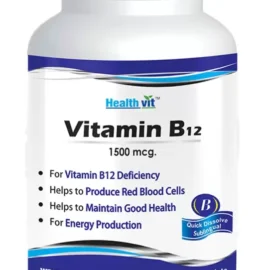
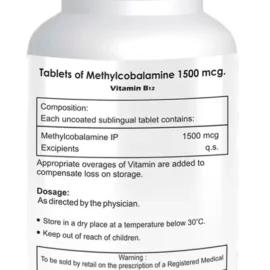
Die bestehenden Marken-B12-Produkte auf MedsBase (z.B., Vitamin B12 1500 mcg Tabletten) are clinical-pharmaceutical-grade B12 packaged in tablet form for oral / sublingual use, positioned in the nerve-health / energy-supplement category. The pharmaceutical-grade B12 supplied here is the injectable cyanocobalamin form in 10 mL multi-dose vial format, positioned in the peptide-studies catalogue as a small-molecule companion alongside the peptide compounds. Users requiring an oral / sublingual B12 supplement should use the tablet products; users requiring injectable cyanocobalamin for in-vivo or cell-culture work alongside peptide protocols can use the material supplied here.
Steht B12 auf der WADA-Verbotsliste?
Nein. Vitamin B12/Cyanocobalamin steht nicht auf der WADA-Verbotsliste. Es ist eine Vitamin/Cofaktor-Verbindung, die sowohl klinisch (zur Behandlung von B12-Mangel) als auch als erlaubtes Ergänzungsmittel im sportlichen Kontext häufig verwendet wird. Es gibt keine leistungssportlichen regulatorischen Beschränkungen für Cyanocobalamin oder andere Cobalaminformen.
Other Small-Molecule Companion Compounds
- L-Carnitin — Mitochondrial fatty-acid shuttle — closest small-molecule companion analogue
- NAD⁺ — Oxidised dinucleotide coenzyme — direct NAD-pool supplementation studies
- 5-Amino-1MQ — NNMT-Hemmer — verbindet B12/Methionin-Zyklus mit NAD-Achsen-Methylierung
- AICAR — Canonical small-molecule AMPK activator — companion metabolic support compound
- MOTS-c — Mitochondrial-derived metabolic peptide — alternative-mechanism cofactor studies
- BAC-Wasser (Bakteriostatisches Wasser) — Erforderlich zur Rekonstitution lyophilisierter Fläschchen — steriles, 0,9% Benzylalkohol-konserviertes Lösungsmittel
Weitere Optionen in Peptiden
Sortiert nach aktuellen MedsBase-Bestellvolumen — was andere Kunden in dieser Kategorie wählen.
| Stärke | 10 mg / 10 mL |
|---|---|
| Menge | 1 Fläschchen, 5 Fläschchen, 10 Fläschchen, 30 Fläschchen |
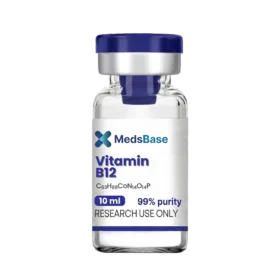 Vitamin B12 (Cyanocobalamin) Injectable — Pharmaceutical Grade
Fragen & Antworten
Vitamin B12 (Cyanocobalamin) Injectable — Pharmaceutical Grade
Ähnliche Produkte
Bewertungen
Es gibt noch keine Bewertungen.