









MOTS-c
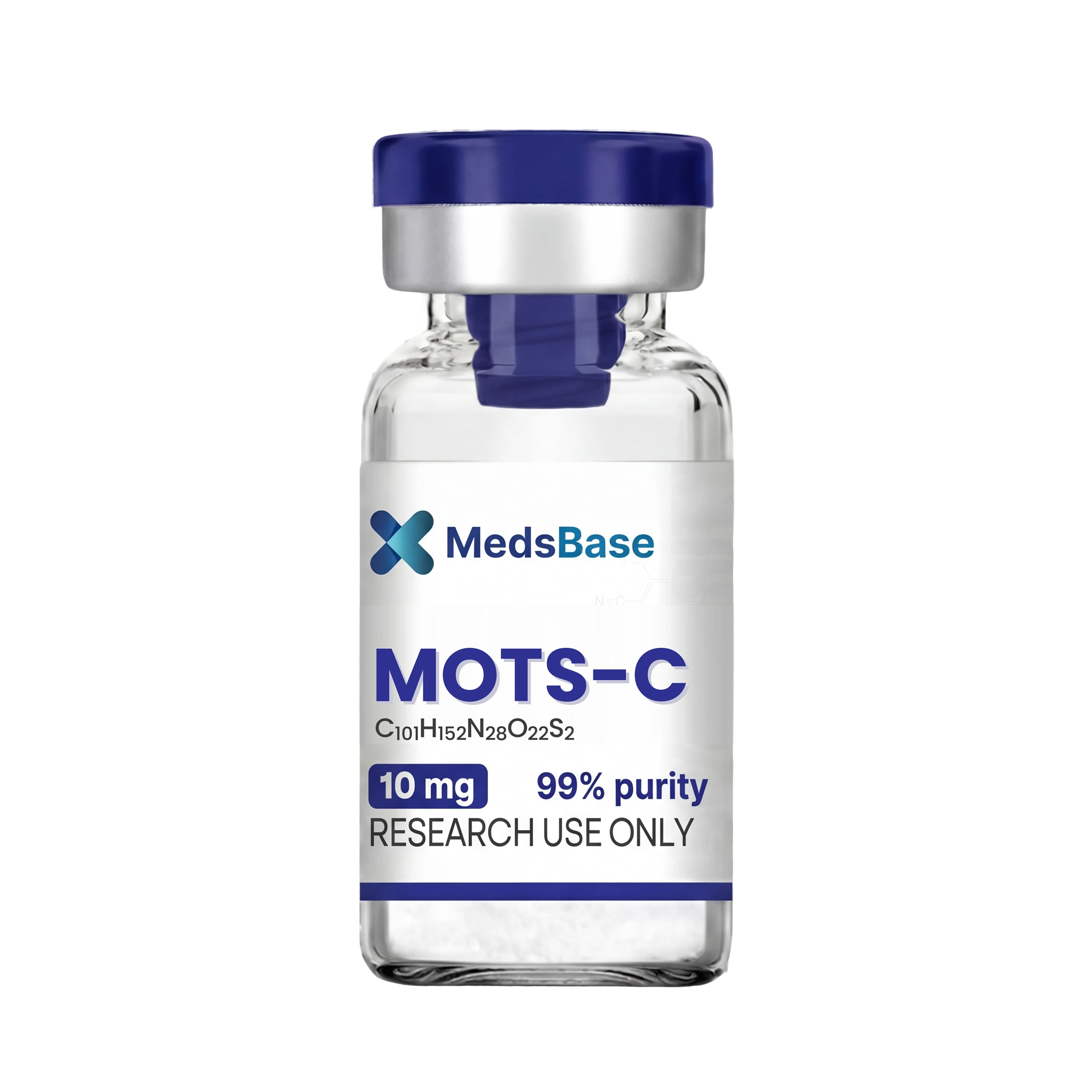
✅ Mitochondrial kodiertes Signalisierungspeptid
✅ Aktiviert den AMPK-Stoffwechselweg
✅ Unterstützt die Insulinsensitivität
✅ Trainingsmimetikum in präklinischen Modellen
✅ Longevity & geroscience compound
MOTS-c enthält synthetische Peptidverbindung.
✓ Medizinisch überprüft von Morgan Ellis — Pharmazieforscher · 8 Jahre Erfahrung · Zuletzt überprüft: Mai 2026
Kurze Antwort — Was ist MOTS-c?
MOTS-c (Mitochondrial Open Reading frame of the Twelve S rRNA-c) is a 16-amino-acid mitochondrially-encoded signaling peptide first identified in 2015. In published preclinical studies it acts as an exercise-mimetic and metabolic regulator by activating the AMPK pathway, restoring insulin sensitivity, and modulating nuclear gene expression in response to mitochondrial stress. Supplied in 10 mg to 40 mg lyophilized vials.
📦 Jede Bestellung ist durch unsere Reshipment Assurance Policy abgedeckt — wenn Ihr Paket nicht innerhalb von 20 Werktagen ankommt, versenden wir es erneut.
| Spezifikation | Detail |
|---|---|
| CAS-Nummer | 1627580-64-6 |
| Molekularformel | C100H152N28O22S2 |
| Molekulargewicht | 2174.62 Da |
| Sequenz | Met-Arg-Trp-Gln-Glu-Met-Gly-Tyr-Ile-Phe-Tyr-Pro-Arg-Lys-Leu-Arg (MRWQEMGYIFYPRKLR, 16 Aminosäuren; kodiert im mitochondrialen 12S-rRNA-Gen) |
| Form | Lyophilisat (weiß bis leicht gelblich) |
| Reinheit | ≥99% (HPLC-bestätigt, COA auf Anfrage) |
| Lagerung | Lyophilisat: 2–8 °C (Kühlschrank) für Arbeitsvorrat; −20 °C zur Langzeitlagerung ungeöffneter Fläschchen. Rekonstituiert: 2–8 °C, innerhalb von ~30 Tagen verwenden. Vor Licht schützen. Die rekonstituierte Lösung nicht einfrieren und auftauen. |
| Löslichkeit | Bakteriostatisches Wasser (empfohlen) oder steriles Wasser für kürzere Anwendungszeiträume |
Was ist MOTS-c?
MOTS-c (Mitochondrial Open Reading Frame of the Twelve S rRNA-c) ist ein 16-Aminosäuren-Peptid, das erstmals von Lee et al. in Cell Metabolism (2015) as a member of the newly recognised class of mitochondrially-derived peptides (MDPs). Unlike every other peptide in the studies catalog — which are encoded by nuclear DNA and synthesised in the cytoplasm — MOTS-c is encoded within the mitochondrial 12S rRNA gene and translated by mitochondrial ribosomes. This unusual biological origin makes it a direct intracellular signal of mitochondrial state, and the most-cited member of a peptide class that includes humanin and the SHLP family. The peptide sequence is MRWQEMGYIFYPRKLR, molecular weight approximately 2,175 Da, empirical formula C100H152N28O22S2. Endogenes MOTS-c verlagert sich unter metabolischem und oxidativem Stress von den Mitochondrien in den Zellkern, wo es ein Folsäurezyklus-/Methioninstoffwechsel-Genprogramm reguliert – ein Mechanismus, der unter kernkodierten Peptiden ohne Parallele ist. MOTS-c wird als hochreines lyophilisiertes Pulver zur Rekonstitution mit bakterienstatischem Wasser geliefert und ist for clinical studies use only. For related metabolic and longevity peptides, see our full Peptid-Katalog.
Wirkmechanismus – AMPK, Glukosestoffwechsel und nukleäre Translokation
Was MOTS-c von älteren metabolischen Peptiden unterscheidet, ist sein trimodaler Wirkmechanismus that spans the mitochondrion, the cytoplasm, and the nucleus — each contributing to the observed metabolic phenotype in published studies:
- AMPK-Pfad-Aktivierung – MOTS-c aktiviert die AMP-aktivierte Proteinkinase (AMPK), den zellulären Hauptenergiesensor, durch Erhöhung des intrazellulären AMP:ATP-Verhältnisses und über einen folsäurezyklusabhängigen Mechanismus. Die AMPK-Aktivierung verschiebt den zellulären Stoffwechsel in Richtung Katabolismus: erhöhte Glukoseaufnahme via GLUT4-Translokation, Fettsäureoxidation, mitochondriale Biogenese durch PGC-1α und Autophagie. Dies ist derselbe Pfad, der durch Metformin und Bewegung angesteuert wird, was MOTS-c in der veröffentlichten Literatur die Bezeichnung “Exercise-mimetic Peptide” eingebracht hat.
- Insulinsensitivität und Glukoseverwertung — In high-fat-diet rodent models, MOTS-c administration restores insulin-stimulated glucose uptake in skeletal muscle and adipose tissue. The effect is independent of body-weight change in some studies designs, suggesting a direct insulin-sensitising mechanism rather than secondary to weight loss. MOTS-c-treated obese mice show normalised oral glucose tolerance and improved euglycaemic-clamp parameters in published studies.
- Nukleare Translokation und adaptive Genexpression — Unter metabolischem oder oxidativem Stress translokiert MOTS-c von den Mitochondrien in den Zellkern, wo es ein Transkriptionsprogramm mitreguliert, das auf die antioxidative Reaktion (NRF2), den Folat-Methionin-Zyklus und adaptive Stoffwechselgene ausgerichtet ist. Diese mitochondriale-nukleare retrograde Signalübertragung ist eines der ersten Beispiele für intrazelluläre Kommunikation zwischen Kompartimenten auf Peptidebene und bildet die Grundlage für die breiteren Wirkungen von MOTS-c jenseits der direkten AMPK-Aktivierung.
The biological appeal of MOTS-c in metabolic support is the convergence of these three mechanisms onto pathways already known to mediate the benefits of exercise and caloric restriction. Because endogenous MOTS-c declines markedly with age in human serum (~50% reduction across adult lifespan in published cohorts), the peptide has become a frequent target in aging and longevity studies as well as in metabolic syndrome.
Published Evidence
MOTS-c is used in clinical contexts that investigate:
- Metabolic syndrome and obesity studies — insulin sensitivity, glucose tolerance, body composition in high-fat-diet rodent models; benchmark peptide for AMPK-axis intervention studies (Lee et al., Cell Metabolism 2015; Reynolds et al., Front Physiol 2021)
- Präklinische Modelle von Typ-2-Diabetes — db/db, ZDF und Streptozotocin-induzierte Diabetesmodelle; Auswirkungen auf die hepatische Insulinsensitivität, Betazellfunktion und HbA1c-Surrogate
- Trainingskapazität und mitochondriale Biogenese — Laufbandausdauer, VO2max surrogates, PGC-1α expression, mitochondrial DNA copy number in skeletal muscle studies
- Aging and longevity studies — lifespan extension models, age-related insulin resistance, sarcopenia; MOTS-c serum levels decline with age, making it a candidate replacement peptide in geroscience studies
- Kardiovaskulärer und renaler Schutz — ischaemia-reperfusion injury, oxidative stress markers, mitochondrial dysfunction in cardiac and renal tissue study models
- Bone health studies — Osteoblastendifferenzierung, Knochenmineraldichte, altersbedingte Osteoporosemodelle
- Comparative mitochondrial peptide studies — Benchmarking gegen andere mitochondrial zielgerichtete Peptide wie SS-31 (Elamipretide). Siehe den Vergleichsabschnitt unten für eine methodische Gegenüberstellung.
Für einen breiteren Kontext, wo MOTS-c in das metabolische und Langlebigkeits-Peptid-Spektrum passt, siehe SS-31 (Elamipretide) als das kanonische kardiolipin-zielgerichtete mitochondriale Peptid, Epitalon for telomere/longevity studies, and NAD+ for NAD-axis metabolic support. Browse the full Peptid-Katalog für verwandte Verbindungen.
Verfügbare Stärken und Konzentrationen
MedsBase stocks MOTS-c in three lyophilized vial sizes calibrated to typical protocol lengths. Each strength is available in 10-vial, 20-vial, or 30-vial pack formats with full reconstitution guidance:
| Vial-Stärke | Typischer Anwendungsfall | Packungsgrößen |
|---|---|---|
| 10 mg | Standard strength, short-cycle protocols | 10, 20 oder 30 Vials |
| 20 mg | Mittlere Bulk-Fläschchengröße, reduziertes Rekonstitutionsvolumen pro Dosis | 10, 20 oder 30 Vials |
| 40 mg | Extended-cycle protocols, longevity studies, lowest per-mg cost | 10, 20 oder 30 Vials |
All three strengths are the same chemical form (lyophilized powder, 99%+ HPLC purity). Higher-mg vials yield greater per-vial dose flexibility and lower per-mg cost; the trade-off is that reconstituted solution must be used within 30 days, so multi-month protocols benefit from larger vials only when the per-week dose is correspondingly high.
Vergleich — MOTS-c vs SS-31 (Elamipretide)
MOTS-c und SS-31 are the two most-cited mitochondrially-targeted peptides in current studies. They are mechanistically distinct and complementary, not redundant: MOTS-c is a signalling peptide that activates AMPK and nuclear-encoded adaptive programmes, while SS-31 is a structural peptide that binds cardiolipin in the inner mitochondrial membrane to stabilise the electron transport chain. Users often pair them in mitochondrial-dysfunction models for this reason.
| Kriterium | MOTS-c | SS-31 (Elamipretide) |
|---|---|---|
| Länge | 16 Aminosäuren | 4 Aminosäuren (Tetrapeptid) |
| Herkunft | Mitochondriale DNA-kodiert (12S rRNA-Gen) | Synthetisches Szeto-Schiller-Peptid |
| Primärer Mechanismus | AMPK-Aktivierung, nukleäre Genexpression | Cardiolipin-Bindung, ETC-Stabilisierung |
| Zelluläres Ziel | Mitochondrium → Zytoplasma → Zellkern | Nur innere Mitochondrienmembran |
| Typische Dosis | 5–15 mg, 1–3x wöchentlich | 2–5 mg, täglich |
| Strongest signal | Insulinsensitivität, körperliche Leistungsfähigkeit, Alterung | Kardiale Ischämie, renale mitochondriale Dysfunktion |
| Stacking | Frequently co-administered with SS-31 in mitochondrial studies | Wird häufig zusammen mit MOTS-c verabreicht |
The two peptides act on different layers of mitochondrial biology — MOTS-c regulates metabolic transcription, SS-31 stabilises membrane architecture — so they address non-overlapping studies questions. For metabolic/insulin sensitivity, MOTS-c is the default first choice. For cardiac, renal, or ischaemia-reperfusion mitochondrial protection, SS-31 is the canonical comparator.
Lagerung und Rekonstitution
Vor der Rekonstitution: Lagern Sie lyophilisierte Fläschchen kurzzeitig als Arbeitsvorrat bei 2–8 °C im Originalbehälter. Für ungeöffnete Langzeitlagerung bei −20 °C einfrieren. Lyophilisiertes MOTS-c ist unter Kühlung bis zu 24 Monate und bei −20 °C bis zu 36 Monate stabil. Vermeiden Sie Gefrier-Tau-Zyklen des lyophilisierten Pulvers. Rekonstitutionsverfahren: Injizieren Sie bakterostatisches Wasser an der Seitenwand des Peptidfläschchens entlang (nicht direkt auf den lyophilisierten Kuchen). Bei einem 10 mg-Fläschchen ergibt 2,0 mL bakterostatisches Wasser eine Arbeitskonzentration von 5 mg/mL – 10 Striche auf einer U-100-Insulinspritze entsprechen 500 mcg. Behutsam schwenken – nicht nicht Schütteln Sie — und lassen Sie 2–5 Minuten für die vollständige Auflösung. Eine korrekt rekonstituierte Lösung sollte klar und farblos sein. gekühlt bei 2–8 °C lagern und innerhalb von 30 Tagen verwenden. Rekonstituierte Lösung nicht einfrieren. store refrigerated at 2–8 °C and use within 30 days for optimal stability. Do not freeze the reconstituted solution — freeze-thaw cycles degrade peptide integrity. Discard any vial showing cloudiness, precipitate, or discolouration. Because MOTS-c is typically dosed 1–3 times weekly in protocols, a single reconstituted 10 mg vial typically supports 2–3 weeks of dosing depending on the target dose and frequency.
Häufig gestellte Fragen
What is MOTS-c used for in studies?
MOTS-c is used in studies investigating insulin sensitivity, type 2 diabetes models, exercise capacity, mitochondrial biogenesis, aging and longevity, cardiovascular ischaemia-reperfusion injury, renal mitochondrial dysfunction, and bone health. It is the most-cited mitochondrially-encoded signalling peptide in the published literature and serves as a benchmark for AMPK-axis interventions. MOTS-c is nicht FDA-approved and is supplied here strictly for clinical studies use only.
Wie unterscheidet sich MOTS-c von SS-31 (Elamipretide)?
MOTS-c is a 16-amino-acid signalling peptide encoded by mitochondrial DNA that activates AMPK and regulates nuclear gene expression. SS-31 is a 4-amino-acid synthetic Szeto-Schiller peptide that binds cardiolipin in the inner mitochondrial membrane to stabilise the electron transport chain. The two address different layers of mitochondrial biology — MOTS-c at the metabolic-transcription level, SS-31 at the membrane-architecture level — and are frequently co-administered in mitochondrial-dysfunction studies.
What is the typical MOTS-c dose?
Veröffentlichte präklinische Protokolle verwenden typischerweise 5–15 mg pro Verabreichung in Nagetiermodellen, gegeben 1–3 Mal pro Woche über Zyklen von 4–12 Wochen. Eine 10 mg Flasche, rekonstituiert mit 2,0 mL bakterienstatischem Wasser, ergibt 5 mg/mL – 10 Skalenteile auf einer U-100-Spritze entsprechen 500 mcg.
Ist MOTS-c von der FDA zugelassen?
No. MOTS-c is not approved by the FDA, EMA, MHRA, or any other regulator for human therapeutic use.
Wie sollte MOTS-c gelagert werden?
Lyophilisierte Fläschchen: gekühlt bei 2–8 °C für kurzfristige Arbeitsbestände oder −20 °C für die Langzeitlagerung ungeöffneter Fläschchen. Rekonstituierte Lösung: gekühlt bei 2–8 °C, innerhalb von 30 Tagen verwenden. Rekonstituierte Lösung nicht einfrieren – Gefrier-Auftau-Zyklen degradieren das Peptid. Immer vor direktem Licht schützen.
Wie rekonstituiere ich MOTS-c?
Befolgen Sie das oben beschriebene Rekonstitutionsverfahren. Geben Sie bakterienstatisches Wasser an der Seitenwand des Fläschchens hinzu (nicht auf den lyophilisierten Kuchen), schwenken Sie vorsichtig und lassen Sie 2–5 Minuten zur vollständigen Auflösung. Schütteln Sie nicht Schütteln Sie die Flasche. Eine korrekt rekonstituierte Lösung ist klar und farblos. Bei einer 10 mg Flasche + 2,0 mL Lösungsmittel beträgt die Arbeitskonzentration 5 mg/mL.
Welche Stärken führt MedsBase?
MedsBase carries MOTS-c in 10 mg, 20 mg, and 40 mg lyophilized vials. Each strength is available in 10-vial, 20-vial, or 30-vial pack sizes. All vials are supplied at 99%+ HPLC purity with a certificate of analysis available on request.
Warum wird MOTS-c als “trainingsimitierendes” Peptid bezeichnet?
The term derives from MOTS-c’s activation of AMPK and downstream effects on glucose uptake, fatty acid oxidation, and mitochondrial biogenesis — the same intracellular pathway responsible for many of the metabolic adaptations to exercise. In published studies, MOTS-c administration replicates several phenotypes of exercise training in sedentary animals: improved insulin sensitivity, increased treadmill endurance, and elevated PGC-1α expression in skeletal muscle. The metaphor is widely used in geroscience and metabolic-syndrome literature.
Can MOTS-c and SS-31 be stacked in studies?
Yes. MOTS-c and SS-31 act on different layers of mitochondrial biology and are frequently co-administered in preclinical mitochondrial-dysfunction studies. MOTS-c regulates metabolic transcription via AMPK; SS-31 stabilises the inner-membrane lipid environment. Their mechanisms are complementary rather than overlapping, which makes the combination useful in study models of multi-axis mitochondrial decline.
Does MOTS-c cause side reported effects?
Published preclinical studies has reported a notably clean safety profile at typical doses in rodent models, with no consistent off-target signals and good tolerability across 4–12 week dosing cycles. MOTS-c is structurally an endogenous human peptide, which reduces the risk of antibody-mediated reactions seen with engineered analogs. Long-term human safety data are not available because human trials are still in early stages.
Wie ist die Halbwertszeit von MOTS-c?
In preclinical studies, MOTS-c has an estimated plasma half-life of approximately 3–4 hours following subcutaneous administration. The relatively short systemic half-life is offset by intracellular accumulation and the peptide’s role as an intracellular signalling molecule rather than a circulating hormone — effects persist beyond the plasma clearance window in study models.
Warum nimmt endogenes MOTS-c mit dem Alter ab?
Published cohort data show roughly a 50% decline in human serum MOTS-c levels between young and aged adults. The mechanism is not fully understood but is thought to relate to age-associated mitochondrial DNA mutations, declining mitochondrial transcription, and reduced biosynthesis of mitochondrially-encoded peptides in general. The age-related decline is one reason MOTS-c has attracted strong interest in longevity and geroscience studies.
How long does MOTS-c take to show effects in preclinical studies?
Akute Effekte auf AMPK-Phosphorylierung und Glukoseaufnahme sind innerhalb von Stunden nach Gabe nachweisbar. Insulinsensitivitäts- und Körperzusammensetzungseffekte in Nagetiermodellen mit fettreicher Diät werden typischerweise nach 2–4 Wochen regelmäßiger Dosierung statistisch signifikant. Verbesserungen der Belastungskapazität (Laufbandausdauer, VO2max surrogates) accrue over 4–8 weeks of continuous dosing.
Kann ich MOTS-c für den internationalen Versand bestellen?
Ja. MedsBase versendet MOTS-c weltweit über unser spezielles Peptid-Versandnetzwerk. Bestellungen, die nur Peptide enthalten, qualifizieren sich für unseren eigenständigen Peptid-Versandservice. Alle Bestellungen werden in temperaturkontrollierter Verpackung mit vollständiger Sendungsverfolgung versandt und sind abgedeckt durch unser Reshipment Assurance Policy.
Other Peptides for Metabolic, Mitochondrial, and Longevity Studies
- SS-31 (Elamipretide) — Cardiolipin-bindendes mitochondriales Tetrapeptid — kanonischer Stabilisator der inneren Membran
- NAD+ — Nicotinamide adenine dinucleotide — sirtuin/longevity-axis metabolic support
- Epitalon — AEDG pineal tetrapeptide — telomerase activation and longevity studies
- Semaglutide — Long-acting GLP-1 agonist — glycaemic and body-weight studies
- Retatrutide — Triple GLP-1/GIP/glucagon agonist — multi-axis metabolic support
Weiterführende Literatur
📖 Vergleichen Sie mitochondriell zielgerichtete Peptide
Entdecken Sie die breitere Peptid-Katalog für mitochondriale und metabolische Peptide, einschließlich SS-31 (Elamipretide) for cardiolipin-targeted membrane studies, NAD+ for sirtuin-axis longevity studies, and Epitalon for telomere-axis longevity studies.
Weitere Optionen in Peptiden
Sortiert nach aktuellen MedsBase-Bestellvolumen — was andere Kunden in dieser Kategorie wählen.

| Stärke | 10 mg, 20 mg, 40 mg |
|---|---|
| Menge | 10 Fläschchen, 20 Fläschchen, 30 Fläschchen |
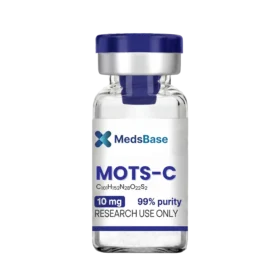 MOTS-c
Fragen & Antworten
MOTS-c
Ähnliche Produkte


Bewertungen
Es gibt noch keine Bewertungen.