







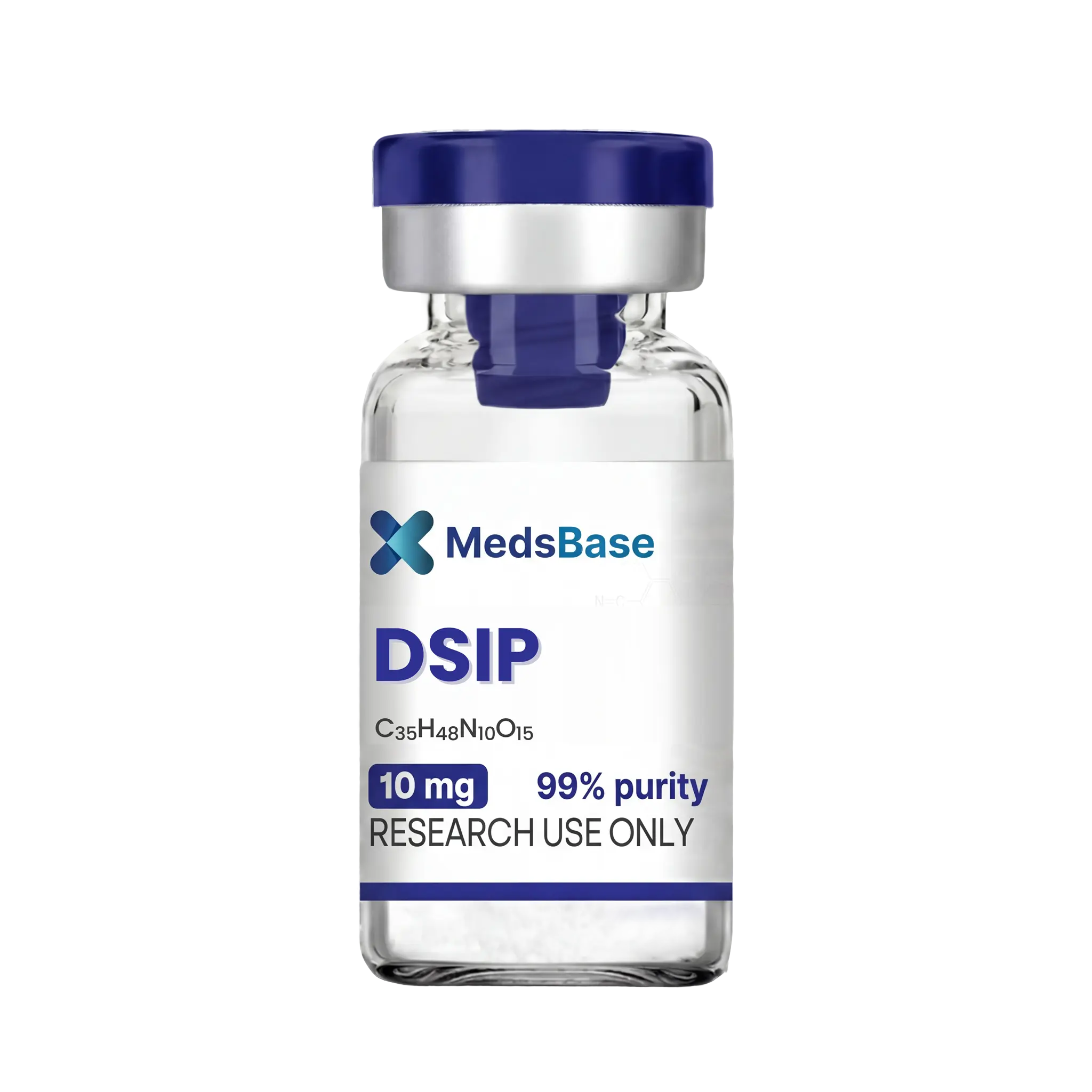
DSIP
✅ Delta-Schlaf-induzierendes Peptid (Entdeckung 1977)
✅ Moduliert die Architektur des Slow-Wave-Schlafs
✅ HPA-axis stress reactivity
✅ Anti-Entzugs- und nicht-opioide Analgesie
✅ Überwindet die Blut-Hirn-Schranke
DSIP enthält synthetische Peptidverbindung.
✓ Medizinisch überprüft von Morgan Ellis — Pharmazieforscher · 8 Jahre Erfahrung · Zuletzt überprüft: Mai 2026
Kurze Antwort — Was ist DSIP?
DSIP (Delta Sleep-Inducing Peptide) is a 9-amino-acid neuropeptide first isolated from rabbit cerebral venous blood during electrical stimulation of thalamic sleep-promoting regions in 1977. In published studies it modulates sleep architecture — specifically slow-wave (delta) sleep — alongside documented effects on stress reactivity, withdrawal syndromes, and nociception. Supplied in 5 mg to 15 mg lyophilized vials.
📦 Jede Bestellung ist durch unsere Reshipment Assurance Policy abgedeckt — wenn Ihr Paket nicht innerhalb von 20 Werktagen ankommt, versenden wir es erneut.
| Spezifikation | Detail |
|---|---|
| CAS-Nummer | 62568-57-4 |
| Molekularformel | C35H48N10O15 |
| Molekulargewicht | 848,81 Da |
| Sequenz | Trp-Ala-Gly-Gly-Asp-Ala-Ser-Gly-Glu (WAGGDASGE, 9 Aminosäuren; linear, unmodifizierte Termini) |
| Form | Lyophilisat (weiß bis leicht gelblich) |
| Reinheit | ≥99% (HPLC-bestätigt, COA auf Anfrage) |
| Lagerung | Lyophilisat: 2–8 °C (Kühlschrank) für Arbeitsvorrat; −20 °C zur Langzeitlagerung ungeöffneter Fläschchen. Rekonstituiert: 2–8 °C, innerhalb von ~30 Tagen verwenden. Vor Licht schützen. Die rekonstituierte Lösung nicht einfrieren und auftauen. |
| Löslichkeit | Bakteriostatisches Wasser (empfohlen) oder steriles Wasser für kürzere Anwendungszeiträume |
Was ist DSIP?
DSIP (Delta Sleep-Inducing Peptide) is a 9-amino-acid linear neuropeptide first isolated by Schoenenberger and Monnier at the University of Basel in 1977. The peptide was identified by dialysing cerebral venous blood from rabbits during electrical stimulation of the intralaminar thalamus — a region known to drive delta-wave (slow-wave) sleep in the cortex — and concentrating the bioactive fraction. DSIP was named for the dominant electroencephalographic signature it produced when administered to recipient animals: increased proportion of delta-wave activity during sleep. The well-characterised sequence is WAGGDASGE, molecular weight 848.81 Da, empirical formula C35H48N10O15. DSIP ist strukturell ungewöhnlich unter kleinen ZNS-aktiven Peptiden – es ist linear, an beiden Termini unmodifiziert und enthält keine Prolin- oder Cysteinreste. Das Peptid wird als hochreines lyophilisiertes Pulver zur Rekonstitution mit bakterienstatischem Wasser geliefert. DSIP ist nicht zugelassen by the FDA, EMA, MHRA, or any other major regulator for human therapeutic use. For related circadian and sleep-axis peptide studies, see our Epitalon und Selank Produktseiten.
Wirkmechanismus – Schlafarchitektur, Stressreaktivität und Neuroprotektion
What makes DSIP unusual among peptides is the breadth of effects documented for such a small, linear peptide without a clearly identified primary receptor. Published studies has mapped its activity across drei überlappende Wirkbereiche, die jeweils zum beobachteten Phänotyp beitragen:
- Modulation der Schlafarchitektur — Delta-Wellen-Schlaf (Slow-Wave-Schlaf) — DSIP increases the proportion of slow-wave (stage 3–4 / N3) sleep on quantitative EEG measurements in rodent, rabbit, and human studies without proportionally reducing REM sleep. The effect is most pronounced when DSIP is administered to subjects with fragmented or shortened sleep, suggesting the peptide acts as a homeostatic sleep-pressure modulator rather than a primary sedative. Importantly, DSIP does not directly increase total sleep time in non-sleep-deprived subjects — it reorganises sleep architecture toward higher SWS proportion.
- Modulation der HPA-Achse und Stressreaktivität — Mehrere publizierte Studien belegen eine Abschwächung der stressinduzierten Cortisol- und ACTH-Ausschüttung in Nagetiermodellen mit Restraint-Stress, ebenso wie eine Reduktion der Corticotropin-releasing-Hormon (CRH)-Signalgebung im Hypothalamus. Der stresspuffernde Effekt wirkt über einen längeren Zeitraum als Benzodiazepin-Sedativa und erzeugt keine akute behaviorale Sedierung, was auf eine Modulation des HPA-Achsen-Tonus hindeutet und nicht auf eine akute Anxiolyse.
- Antinozizeption, Neuroprotektion und Anti-Entzug — DSIP shows analgesic effects in rodent thermal and chemical-nociception models, including opioid-naive subjects (suggesting non-opioid mechanism). Russian and Eastern European has documented attenuation of opioid and alcohol withdrawal syndromes in preclinical models. Neuroprotective effects against oxidative stress, ischaemia, and excitotoxicity have been reported but remain mechanistically less well characterised than the sleep architecture work.
The receptor target for DSIP has not been definitively identified, which is unusual for a peptide with this much published behavioural data. Proposed mechanisms include GABA-A modulation, opioid-system crosstalk, and direct interaction with hypothalamic CRH neurons. The lack of an identified primary receptor combined with multiple documented effects suggests DSIP may act as a multimodal neuromodulator rather than a classical receptor agonist — a hypothesis that remains an active studies question in published peptide pharmacology.
Published Evidence
DSIP is used in clinical contexts that investigate:
- Sleep architecture and EEG studies — quantitative EEG spectral analysis, slow-wave sleep proportion, sleep fragmentation in rodent and human studies (Schoenenberger & Monnier, PNAS 1977; Kovalzon & Strekalova, Sleep Med Rev 2006)
- Stress reactivity and HPA-axis studies — Cortisol- und ACTH-Dynamik, CRH-Expression, Restraint-Stress- und Chronic-Mild-Stress-Modelle bei Nagetieren
- Withdrawal syndrome studies — Opioidentzugsschwere, Alkoholentzug, Benzodiazepin-Ausschleichung; überwiegend russische und osteuropäische Fachliteratur
- Nociception and chronic pain studies — Schwanzflick-, Heizplatten-, Formalin- und chronische Konstriktionsverletzungsmodelle bei Nagetieren; Charakterisierung nicht-opioider Mechanismen
- Neuroprotection studies — oxidative Stressmarker, Ischämie-Reperfusionsschäden, Exzitotoxizitätsmodelle
- Circadian biology studies — Synchronisation, Phasenverschiebungsreaktion, Modulation von Melatonin- und Kerntemperaturrhythmen
- Comparative sleep-axis peptide studies — Benchmarking gegen Epitalon (Pineal-Tetrapeptid) für zirkadiane Effekte und gegen Selank für stresspuffernde Effekte ohne Sedierung.
Für einen breiteren Kontext, wo DSIP in die Landschaft der kleinen ZNS-aktiven Peptide passt, siehe Epitalon (AEDG pineal tetrapeptide, circadian-axis studies), Selank (anxiolytisches Heptapeptid), und Semax (nootropes Heptapeptid). Durchsuchen Sie das vollständige Peptid-Katalog für verwandte Verbindungen.
Verfügbare Stärken und Konzentrationen
MedsBase stocks DSIP in three lyophilized vial sizes covering pilot dosing through extended protocols. Each strength is available in 10-vial, 20-vial, or 30-vial pack formats with full reconstitution guidance:
| Vial-Stärke | Typischer Anwendungsfall | Packungsgrößen |
|---|---|---|
| 5 mg | Short protocols, pilot dosing, single-EEG-session studies | 10, 20 oder 30 Vials |
| 10 mg | Standard strength, multi-week sleep-architecture studies | 10, 20 oder 30 Vials |
| 15 mg | Protokolle mit verlängertem Zyklus, niedrigste Kosten pro mg, Multikohortenstudien | 10, 20 oder 30 Vials |
All three strengths are the same chemical form (lyophilized powder, 99%+ HPLC purity). Higher-mg vials require smaller reconstitution volumes per unit dose, which is useful when users want to minimise injection volume in rodent protocols or run extended studies from a single vial.
Vergleich — DSIP vs. Epitalon
DSIP und Epitalon are the two most-cited small peptides involved in sleep, circadian, and rest-state studies. They share several studies-relevant features — both are short, linear, unmodified peptides without identified primary receptors, and both produce phenotypic effects that outlast plasma clearance — but their primary signals are distinct: DSIP modulates sleep architecture directly via SWS proportion; Epitalon acts on the pineal-melatonin axis and circadian gene expression.
| Kriterium | DSIP | Epitalon |
|---|---|---|
| Länge | 9 Aminosäuren (linear) | 4 Aminosäuren (Tetrapeptid) |
| Sequenz | WAGGDASGE | AEDG (Ala-Glu-Asp-Gly) |
| Primary signal | Slow-Wave-Schlaf-Anteil (EEG-Delta) | Pineal-Melatonin-Achse, Telomerase, zirkadiane Genexpression |
| Identifizierter Rezeptor | Keiner (multimodaler Neuromodulator) | Keiner (genregulatorisch, intrazellulär) |
| Typische Dosis | 100–500 mcg, 1x täglich | 5–10 mg, 1x täglich für Zyklen |
| Wirkungseintritt | Innerhalb derselben Sitzung (EEG-messbar) | Mehrwöchig (Zeitskala der Genexpression) |
| Stacking | Co-administered with Epitalon in circadian-sleep stack studies | In Kombination mit DSIP für kombinierte Schlaf- und zirkadiane Effekte |
For sleep-architecture studies, DSIP is the canonical first choice because it produces measurable EEG-level effects on slow-wave sleep proportion within a single sleep session. For circadian-rhythm and gene-regulatory studies, Epitalon is preferred because the effect timescale matches the underlying biology (gene expression changes over days to weeks). The two are frequently co-administered when both axes are part of the studies question.
Lagerung und Rekonstitution
Vor der Rekonstitution: Lyophilisierte Fläschchen für den kurzfristigen Gebrauch im Originalbehälter bei 2–8 °C kühl lagern. Für ungeöffnete Langzeitlagerung bei −20 °C einfrieren. Lyophilisiertes DSIP ist unter Kühlung bis zu 24 Monate und bei −20 °C bis zu 36 Monate stabil. Vermeiden Sie Gefrier-Tau-Zyklen des lyophilisierten Pulvers. DSIP ist hygroskopisch – Fläschchen nach dem Öffnen umgehend wieder verschließen und wenn möglich in einem Exsikkator aufbewahren. Rekonstitutionsverfahren: inject bacteriostatic water down the side wall of the peptide vial (not directly onto the lyophilized cake). For a 5 mg vial, 2.0 mL of bacteriostatic water yields a 2.5 mg/mL working concentration — 0.04 mL delivers a 100 mcg dose. Swirl gently — do nicht Schütteln Sie — und lassen Sie 2–5 Minuten für die vollständige Auflösung. Eine korrekt rekonstituierte Lösung sollte klar und farblos sein. gekühlt bei 2–8 °C lagern und innerhalb von 30 Tagen verwenden. Rekonstituierte Lösung nicht einfrieren. Rekonstituierte Lösung bei 2–8 °C kühl lagern und innerhalb von 30 Tagen für optimale Stabilität verwenden. Die rekonstituierte Lösung nicht einfrieren – Gefrier-Tau-Zyklen beeinträchtigen die Peptidintegrität. Fläschchen mit Trübung, Ausfällung oder Verfärbung verwerfen.
Häufig gestellte Fragen
What is DSIP used for in studies?
DSIP is used in studies investigating sleep architecture (particularly slow-wave sleep proportion), HPA-axis and stress reactivity, opioid and alcohol withdrawal syndromes, non-opioid analgesia, neuroprotection, and circadian biology. It is the most-cited sleep-axis peptide that does not act primarily as a sedative — effects manifest as reorganisation of sleep architecture rather than increased total sleep time. The pharmaceutical-grade DSIP sold here is nicht FDA-approved and is supplied strictly for clinical studies use only.
Wie unterscheidet sich DSIP von Epitalon?
Both are small unmodified peptides without identified primary receptors that influence rest-state biology, but their primary signals differ. DSIP modulates sleep architecture at the EEG level — specifically increasing slow-wave sleep proportion within a single sleep session. Epitalon acts on the pineal-melatonin axis and circadian gene expression on a gene-expression timescale of days to weeks. The two are mechanistically complementary and frequently co-administered in studies investigating combined sleep and circadian endpoints.
What is the typical DSIP dose?
Veröffentlichte präklinische Protokolle verwenden typischerweise 100–500 µg pro Verabreichung in Nagetiermodellen, subkutan oder intraperitoneal einmal täglich für 7–28 Tage. Eine 5 mg-Vial, rekonstituiert mit 2,0 mL bakterizidem Wasser, ergibt 2,5 mg/mL – 0,04 mL entsprechen 100 µg.
Ist DSIP von der FDA zugelassen?
No. DSIP is not approved by the FDA, EMA, MHRA, or any other major regulator for human therapeutic use.
Wie sollte DSIP gelagert werden?
Lyophilisierte Vials: kurzzeitig gekühlt bei 2–8 °C als Arbeitsvorrat oder bei −20 °C zur Langzeitlagerung ungeöffneter Vials. DSIP ist hygroskopisch – Vials nach dem Öffnen umgehend wieder verschließen. Rekonstituierte Lösung: gekühlt bei 2–8 °C, innerhalb von 30 Tagen verwenden. Rekonstituierte Lösung nicht einfrieren – Gefrier-Tau-Zyklen degradieren das Peptid. Immer vor direktem Licht schützen.
Wie rekonstituiere ich DSIP?
Befolgen Sie das oben beschriebene Rekonstitutionsverfahren. Geben Sie bakterienstatisches Wasser an der Seitenwand des Fläschchens hinzu (nicht auf den lyophilisierten Kuchen), schwenken Sie vorsichtig und lassen Sie 2–5 Minuten zur vollständigen Auflösung. Schütteln Sie nicht das Fläschchen nicht. Eine korrekt rekonstituierte Lösung ist klar und farblos. Für ein 5 mg-Fläschchen + 2,0 mL Verdünnungsmittel beträgt die Arbeitskonzentration 2,5 mg/mL.
Welche Stärken führt MedsBase?
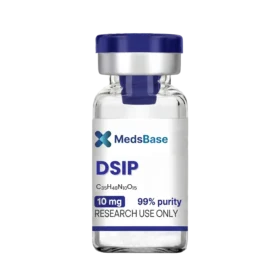
MedsBase carries DSIP in 5 mg, 10 mg, and 15 mg lyophilized vials. Each strength is available in 10-vial, 20-vial, or 30-vial pack sizes. All vials are supplied at 99%+ HPLC purity with a certificate of analysis available on request.
Does DSIP cause sedation in study models?
No — this is one of the most-cited findings in DSIP studies. Unlike benzodiazepines or other classical sedatives, DSIP does not produce acute behavioural sedation, motor coordination loss, or impaired alertness. Instead it modulates sleep architecture toward a higher proportion of slow-wave sleep when the subject does sleep, without increasing total sleep time in non-sleep-deprived subjects. This distinct profile is one of the reasons DSIP has remained a compound rather than a clinical sedative.
Can DSIP and Epitalon be stacked in studies?
Yes. DSIP and Epitalon act on different timescales and biological compartments (acute EEG-level sleep architecture vs gene-expression-level circadian regulation), so co-administration is not pharmacologically redundant. Study protocols studying combined sleep-quality and circadian-rhythm endpoints frequently use both peptides.
Does DSIP cause side reported effects?
Published preclinical studies has reported a notably clean safety profile at typical doses, with no consistent sedation, motor-coordination effects, dependence liability, or rebound on discontinuation. Long-term human safety data is limited because the peptide has not undergone modern Western regulatory review. The small size and lack of identified primary receptor are consistent with the clean tolerability profile.
Wie lang ist die Halbwertszeit von DSIP?
In preclinical studies, DSIP has a plasma half-life of approximately 7–15 minutes following intravenous or subcutaneous administration. The short plasma half-life is offset by the peptide’s ability to cross the blood-brain barrier and produce effects on sleep architecture and gene expression that persist well beyond plasma clearance.
Warum wurde DSIP ursprünglich isoliert?
DSIP wurde 1977 von Schoenenberger und Monnier an der Universität Basel identifiziert, indem sie zerebrales venöses Blut von Kaninchen während elektrischer Stimulation des intralaminaren Thalamus dialysierten – einer Gehirnregion, die für Delta-Wellen (Slow-Wave-Schlaf) bekannt ist. Sie konzentrierten die bioaktive Fraktion und charakterisierten das Peptid, das den stärksten Schlaf-EEG-Effekt bei der Übertragung auf Empfängertiere zeigte. Das Peptid wurde nach seinem dominanten elektroenzephalographischen Signal benannt: erhöhte Delta-Wellen-Aktivität während des Schlafs.
How long does DSIP take to show effects in preclinical studies?
Akute Effekte auf die Schlafarchitektur und den Delta-Wellen-Anteil im EEG sind innerhalb der ersten Schlafphase nach der Verabreichung nachweisbar. Effekte auf die HPA-Achse und die Stressreaktivität akkumulieren über 7–14 Tage regelmäßiger Dosierung. Anti-Entzugseffekte in Opioid- und Alkoholentzugsmodellen werden typischerweise über 3–7-tägige Entzugsperioden gemessen.
Kann ich DSIP für den internationalen Versand bestellen?
Ja. MedsBase versendet DSIP weltweit über unser spezielles Peptid-Versandnetzwerk. Bestellungen, die ausschließlich Peptide enthalten, qualifizieren sich für unseren eigenständigen Peptid-Versandservice. Alle Bestellungen werden in temperaturkontrollierter Verpackung mit vollständiger Sendungsverfolgung versandt und sind abgedeckt durch unser Reshipment Assurance Policy.
Other Peptides for Sleep, Circadian, and CNS Studies
- Epitalon — AEDG pineal tetrapeptide — pineal-melatonin axis and circadian gene-expression studies
- Selank — Anxiolytic heptapeptide tuftsin analog — GABA/BDNF stress resilience
- Semax — Russisch entwickeltes nootropes Heptapeptid — Melanocortin- und dopaminerge Modulation
- Oxytocin Acetat — 9-aa cyclic nonapeptide — social-bonding and affiliative behavioural support
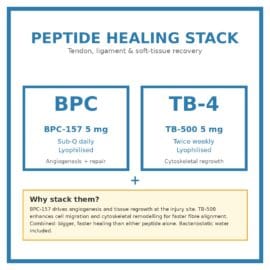
- BPC-157 — Body Protection Compound — healing and tissue-recovery
Weiterführende Literatur
📖 Explore sleep, circadian, and CNS peptides
Durchstöbern Sie das gesamte Sortiment Peptid-Katalog, mit verwandten Verbindungen einschließlich Epitalon for circadian gene-expression studies, Selank for anxiolytic stress-axis studies, and Oxytocin Acetat for social-bonding behavioural support.
Weitere Optionen in Peptiden
Sortiert nach aktuellen MedsBase-Bestellvolumen — was andere Kunden in dieser Kategorie wählen.
| Stärke | 5 mg, 10 mg, 15 mg |
|---|---|
| Menge | 10 Fläschchen, 20 Fläschchen, 30 Fläschchen |
 DSIP
Fragen & Antworten
DSIP
Ähnliche Produkte
Bewertungen
Es gibt noch keine Bewertungen.