







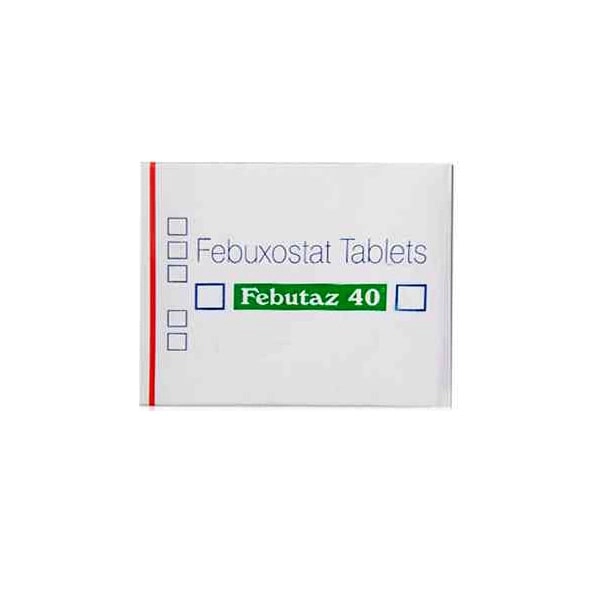
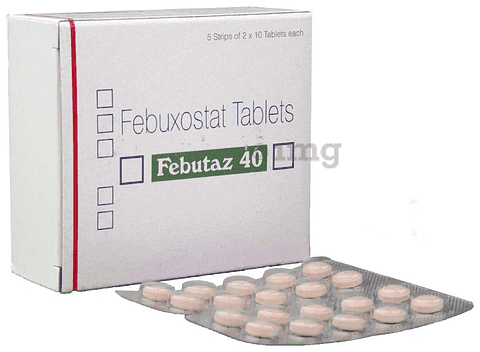
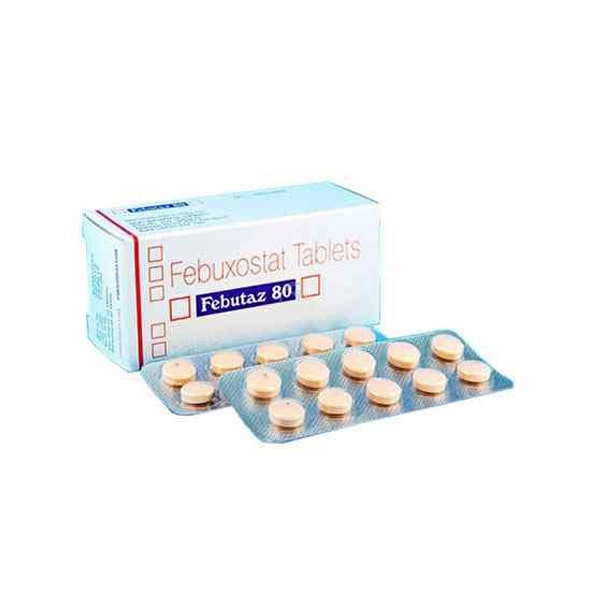
Febutaz

✅ Kontrollerer urinsyre
✅ Forebygger gigtanfald
✅ Reducerer ledssmerter
✅ Forbedrer nyrefunktion
✅ Forbedrer den generelle sundhed
✓ Medicinsk gennemgået af Morgan Ellis — Apoteksforsker · 8 års erfaring · Sidst gennemgået: maj 2026
Hurtigt svar
Febutaz indeholder febuxostat 40 mg / 80 mg fremstillet af Sun Pharma. Det anvendes til langtidsnedsættelse af serumurinsyre hos voksne med kronisk gigt (uratsænkende terapi) — inklusive dem med uratnyresten. Tag præcis som anvist af din læge — juster ikke doseringen selv.
📦 Hver ordre er dækket af vores Reshipment Assurance Policy — hvis din pakke ikke ankommer inden for 20 hverdage, sender vi en erstatning.
Hvorfor bestille fra MedsBase
Hver batch er indkøbt fra en WHO-GMP certificeret producent. Ordre sendes i neutral, unbrandet emballage fra vores logistikpartnere og er dækket af vores Reshipment Assurance Policy. Vi har betjent 1.400+ verificerede kunder med en 4,9/5 gennemsnitlig bedømmelse på mere end 600 lægemidler.
⚠ Kardiovaskulær forsigtighed — allopurinol er den foretrukne førstevalgs uratsænkende terapi
The 2018 CARES trial viste højere kardiovaskulær og total mortalitet ved febuxostat sammenlignet med allopurinol hos patienter med gigt OG etableret kardiovaskulær sygdom. The 2020 FAST trial fandt ingen overskydende risiko i en europæisk population. Store retningslinjer (ACR 2020, EULAR 2016) anbefaler allopurinol som førstevalg; febuxostat er forbeholdt patienter, der ikke kan tolerere eller når mål med allopurinol, eller som har HLA-B*5801-kontraindikationer. Drøft kardiovaskulær historie med din ordinerende læge før start.
Hvad Febutaz er og hvordan det virker
Febutaz indeholder febuxostat, en ikke-purinselektiv xanthinoxidasehæmmer. Ved at blokere xanthinoxidase stopper det omdannelsen af hypoxanthin og xanthin til urinsyre, hvilket sænker serumurat. I modsætning til allopurinol (en purinanalog) metaboliseres febuxostat hovedsageligt i leveren, så det kan anvendes ved mild til moderat nyreinsufficiens uden dosisjustering.
Febutaz er godkendt til den kroniske behandling af hyperurikæmi hos patienter med gigt, inklusive toføs gigt. Det er ikke en behandling for et akut gigtanfald; anfald håndteres med NSAID'er, colchicin eller kortikosteroider.
Dosering og indtagelse
| Patientgruppe | Anbefalet dosis |
|---|---|
| Voksne med kronisk gigt — startdosis | 40 mg én gang dagligt |
| Opjustering efter 2–4 uger, hvis serumurat > 0,36 mmol/L (6 mg/dL) | Forøg til 80 mg én gang dagligt |
| Alvorlig nyreinsufficiens (eGFR <30) | Brug med forsigtighed; begrænset data; overvej alternativ |
| Svær leversvigt (Child-Pugh C) | Undgå — ikke undersøgt |
| Toføs gigt / meget højt basisk urat | Kan have brug for 80 mg fra start under specialistvejledning |
Tag på samme tidspunkt hver dag, med eller uden mad. Fortsæt ubegrænset — gigt er en kronisk tilstand. Målserumurat er typisk < 0,36 mmol/L (< 6 mg/dL); for toføs gigt, < 0,30 mmol/L (< 5 mg/dL) for tofusopløsning.
✅ Ordiner samtidig profylakse mod akutte anfald i de første 6 måneder
Når man påbegynder enhver uratnedsættende behandling, kan det udløse gigtanfald når krystaller frigøres fra led. ACR- og EULAR-retningslinjer anbefaler profylaktisk colchicin 0,5–1 mg/dag eller NSAID i mindst 3–6 måneder ved påbegyndelse af febuxostat — stop ikke febuxostat, hvis der opstår et anfald.
Bivirkninger
| Bivirkning | Hyppighed | Noter |
|---|---|---|
| Gigtanfald (tidlig behandling) | Meget almindeligt i de første 6 måneder | Brug profylakse; stop ikke febuxostat |
| Forhøjede leverenzymer | Almindelige | Kontroller leverfunktion ved baseline, efter 2 måneder, og derefter periodisk |
| Hovedpine | Almindelige | Normalt mild |
| Diarré, kvalme | Almindelige | Tag sammen med mad |
| Udslæt | Sjælden | Stop hvis udbredt; sjældne rapporter om alvorlige hudreaktioner |
| Kardiovaskulære hændelser (ved etableret CVD) | CARES-signal | Drøft med kardiolog; overvej allopurinol |
| Hepatotoksicitet (alvorlig) | Meget sjælden | Stop og søg vurdering |
Lægemiddelinteraktioner
| Kombination | Effekt | Handling |
|---|---|---|
| Azathioprin, merkaptopurin | Stærk stigning i 6-merkaptopurinniveau — knoglemarvstoksicitet | Undgå kombination |
| Theophyllin | Theophyllinniveau kan stige | Overvåg |
| NSAID'er, colchicin, lavdosis aspirin | Bruges sammen til forebyggelse af udbrud — standardmønster | Ikke en ægte interaktion; samtidig recept |
| Diuretika (thiazid, loop) | Forhøjer serumurat — kan kræve højere febuxostatdosis | Overvåg målniveauet for urat |
| Warfarin | Ingen klinisk signifikant interaktion | Standard INR-overvågning |
Hvem bør ikke tage Febutaz
- Samtidig azathioprin eller mercaptopurin
- Svær leversvigt (Child-Pugh C)
- Etableret kardiovaskulær sygdom — allopurinol foretrækkes, medmindre allopurinol ikke kan anvendes
- Akut gigtanfald (behandl anfaldet først; start febuxostat 2 uger senere, hvis nybegynder)
- Asymptomatisk hyperurikæmi uden gigt-historie (ingen fordel)
- Graviditet / amning (ingen menneskelige data)
Hvorfor febuxostat optræder i en Blære & Prostata-kategori
Hyperurikæmi er en førende årsag til urinsyre-nysten og bidrager til kronisk uratnæfropati. Sænkning af serumurat — via febuxostat eller allopurinol — reducerer stenrecidiv hos patienter med dokumenterede uratsten. Urinsyresten drager også nytte af urin-alkalisering (kaliumcitrat) og højt væskeindtag. Hvis din indikation er sten snarere end gigt, vil din urolog eller nefrolog kombinere febuxostat med citrat, hydrering og diætisk purinbegrænsning.
Ofte stillede spørgsmål
Hvad er det rigtige serumuratmål?
< 0,36 mmol/L (< 6 mg/dL) for typisk gigt. < 0,30 mmol/L (< 5 mg/dL) ved synlige tofi eller recidiverende sten — lavere mål opløser krystaller hurtigere.
Hvorfor kan jeg få flere anfald efter ved start?
Sænkning af serumurat destabiliserer krystaloverfladen. Krystaller afgivelse og udløser anfald. Derfor ordineres colchicin 0,5–1 mg/dag eller en NSAID samtidig de første 3–6 måneder. Stop ikke febuxostat — afbrydelse gør fremtidige anfald værre.
Skal jeg være på allopurinol i stedet?
Allopurinol er førstevalg ifølge ACR 2020 / EULAR 2016-retningslinjer. Febuxostat foretrækkes, når allopurinol ikke kan nå målet trods korrekt titrering, når allopurinol ikke tolereres, eller når HLA-B*5801-testning viser risiko for alvorlige hudreaktioner (relevant i nogle asiatiske populationer).
Hvad med det kardiovaskulære signal?
CARES (2018, USA) viste højere CV- og totaldødelighed sammenlignet med allopurinol hos patienter med etableret CVD. FAST (2020, Europa) fandt ingen overskydende risiko hos patienter uden tidligere CVD. Drøft din hjertehistorie med din ordinerende læge.
Kan jeg drikke alkohol?
Alkohol — især øl — øger serumurat. Konsistent reduktion af alkohol er den livsstilsændring med størst uratpåvirkning. Beskedne mængder kan være acceptable; drøft det med din ordinerende læge.
Hvilke fødevarer skal jeg undgå?
Højpurinkost (indmad, ansjoser, sardiner, fructose-søddede drikke) øger urat. Mælkeprodukter og kirsebær er beskyttende. Kost alene når sjældent målet — det er et supplement, ikke en erstatning.
Hvor hurtigt vil tophi skrumpe?
Tophi opløses over måneder til år ved vedvarende urat < 0,30 mmol/L. Mindre tophi forsvinder først. Hvis tophi ikke skrumper efter 12 måneder på trods af bekræftet sub-mål urat, er en specialistvurdering passende.
Skal jeg have løbende blodprøver?
Ja. Serumurat hver 4.–6. uge under titrering; derefter hver 6. måned. Leverfunktionstests ved start, efter 2 måneder, og derefter periodisk. eGFR sammen med de øvrige rutineblodprøver.
Hvad hvis jeg glemmer en dosis?
Tag det så snart du husker det samme dag. Hvis det er næste dag, spring den forsømte dosis over — tag ikke en dobbeltdosis.
Hvor længe skal jeg blive ved med febuxostat?
Permanent ved etableret gigt. Ophør får urat til at stige igen og krystaller til at aflejres på ny, hvilket udløser anfald inden for uger til måneder.
Andre blære- og prostata-medicin
- Cystone — urinvejs-/nyresten-hjælpemiddel på naturbasis
- Silofast (silodosin) — alfablokerer for BPH
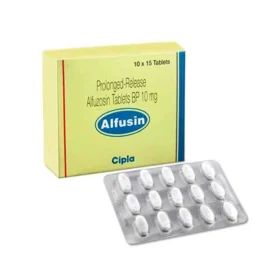
- Alfusin (alfuzosin 10 mg ER) — alfablokerer
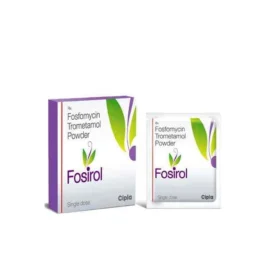
- Fosirol 3 g (fosfomycin) — engangsbehandling af UVI
- Ketosteril — ernæringstilskud til nyrerne
Medicinsk ansvarsfraskrivelse. Oplysningerne på denne side er kun til generel undervisning og er ikke en erstatning for rådgivning fra en kvalificeret kliniker. Drøft enhver ny medicin eller dosisændring med din læge eller apoteker, især hvis du er gravid, ammer, har andre medicinske tilstande eller tager andre lægemidler.
Flere muligheder i Blære Prostata
Rangeret efter seneste MedsBase ordrevolumen — hvad andre kunder i denne kategori vælger.
| Styrke | 40 mg, 80 mg |
|---|---|
| Antal | 30 tablet(ter), 60 tablet(ter), 90 tablet(ter) |
| Farmaceutisk form | Tablet/s |
| Producent | Sun Pharma |
| Behandling | Hyperurikæmi / Kronisk gigt |
| Generisk mærke | Febuxostat |
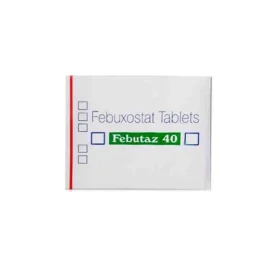 Febutaz
Spørgsmål & svar
Febutaz
Relaterede produkter








Anmeldelser
Der er ingen anmeldelser endnu