








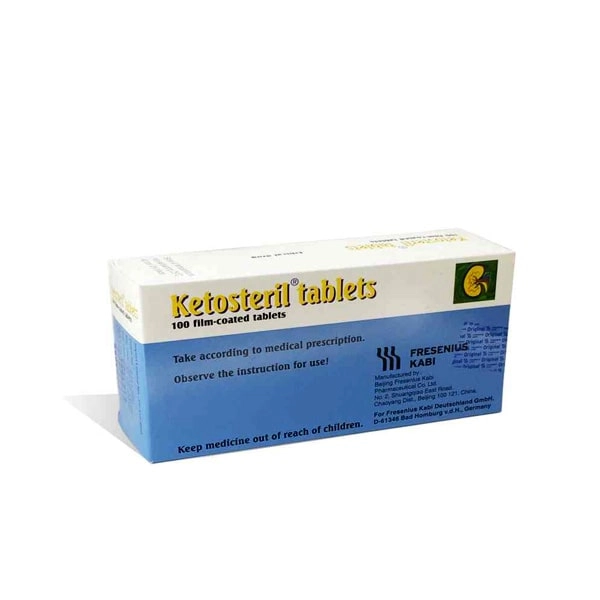
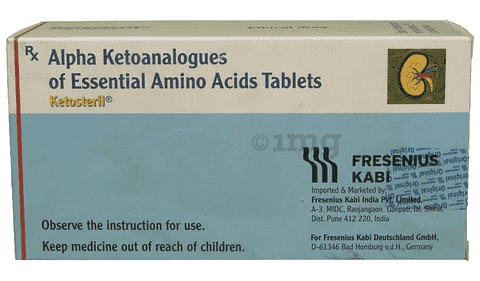
Ketosteril

✅ Forbedrer nyrefunktion
✅ Reducerer uræmisymptomer
✅ Forbedrer proteinstofskiftet
✅ Sænker serumkreatinin
✅ Håndterer kronisk nyresygdom
✓ Medicinsk gennemgået af Morgan Ellis — Apoteksforsker · 8 års erfaring · Sidst gennemgået: maj 2026
Hurtigt svar
Ketosteril indeholder ketoanaloger + essentielle aminosyrer 630 mg fremstillet af Fresenius Kabi. Det bruges til ernæringsmæssig støtte ved kronisk nyresygdom (CKD), når det anvendes sammen med en lavproteindiet for at forsinke sygdomsudviklingen og reducere uræmisymptomer. Tag præcis som anvist af din læge — juster ikke doseringen selv.
📦 Hver ordre er dækket af vores Reshipment Assurance Policy — hvis din pakke ikke ankommer inden for 20 hverdage, sender vi en erstatning.
Hvorfor bestille fra MedsBase
Hver batch er indkøbt fra en WHO-GMP certificeret producent. Ordre sendes i neutral, unbrandet emballage fra vores logistikpartnere og er dækket af vores Reshipment Assurance Policy. Vi har betjent 1.400+ verificerede kunder med en 4,9/5 gennemsnitlig bedømmelse på mere end 600 lægemidler.
⚠ Vigtigt — dette er et kosttilskud, ikke en alfa-blokker eller medicin mod BPH
Ketosteril er et nyreernæringstilskud, ikke en behandling for forstørret prostata eller overaktiv blære. Det bruges hos voksne med CKD i stadium 3–5 på en proteinbegrænset diæt (~0,4–0,6 g/kg/dag). Hvis du leder efter medicin til prostata- eller blæresymptomer, brug venligst alternativpanelet nederst på denne side.
Hvad Ketosteril er og hvordan det virker
Ketosteril indeholder en fast blanding af ketoanaloger (nitrogenfri analoger af essentielle aminosyrer) og en mindre mængde essentielle aminosyrer. Ved kronisk nyresygdom (CKD) reducerer proteinbegrænsning i kosten dannelsen af uræmiske toksiner, men medfører risiko for underernæring. Ketoanalogerne lader kroppen producere aminosyrer ved at tilføre patientens eget cirkulerende nitrogenaffald - således bevares essentiel ernæring, mens uræmibelastning og uræmiske symptomer (kvalme, træthed, kløe) reduceres.
Kombinationen er designet til brug sammen med en proteinfattig diæt (typisk 0,4–0,6 g/kg/dag under ernæringsfysiologisk vejledning). Den er ikke effektiv og kan endda forværre tilstanden ved en normalproteindiæt, da overskydende nitrogen så bliver tilført igen.
Dosering og indtagelse
| Patientgruppe | Anbefalet dosis |
|---|---|
| Voksne > 70 kg med CKD i stadium 3–5 på proteinfattig diæt | 4–8 tabletter tre gange dagligt til hovedmåltiderne (12–24 tabletter/dag) ifølge ernæringsfysiologs/nefrologplan |
| Voksne 40–70 kg | 1 tablet pr. 5 kg kropsvægt pr. dag, fordelt på måltiderne |
| Børn > 3 år (specialistvejledning) | 1 tablet pr. 5 kg/dag |
| Terminal nyreinsufficiens under dialyse | Specialistvejledt; normalt kombineret med intradialytisk proteinmatchning |
Synk hele tabletterne sammen med hovedmåltidet, så aminosyrerne er tilgængelige sammen med kostens nitrogenkilder. Knus eller tyg ikke tabletterne. Tabletterne er store; nogle brugere foretrækker at tage dem fordelt gennem måltidet i stedet for alle på én gang. Sørg for at drikke nok vand, medmindre din nefrolog har begrænset væsketilførsel.
Overvågning
- Serumkalcium — ketoanaloger indeholder kalcium; kontroller ved start og hver 1–3 måned. Stop ved hyperkalcæmi (> 2,6 mmol/L)
- Serumfosfat, PTH, eGFR, BUN/harnstoff — rutinemæssig overvågning af nyreinsufficiens
- Kropsvægt, MUAC og proteinindtag i kosten — via diætist for at sikre, at der opretholdes tilstrækkelig ernæring
- Albumin, præalbumin — hvis der mistænkes underernæring
Bivirkninger
| Bivirkning | Hyppighed | Noter |
|---|---|---|
| Hyperkalcæmi | Sjældent — stop hvis > 2,6 mmol/L | Kontroller calcium jævnligt |
| GI-bivirkninger (kvalme, mæthedsfornemmelse) | Almindeligt i starten | Tag sammen med mad; spred doseringerne ud |
| Forstoppelse | Sjælden | Tilstrækkelig væske (inden for nyregrænser) og fiber |
| Overfølsomhed (udslæt, kløe) | Meget sjælden | Stop og gennemgå |
Lægemiddelinteraktioner
| Kombination | Effekt | Handling |
|---|---|---|
| Aluminiumholdige antacida | Calcium kan øge aluminiumsabsorption | Undgå samtidig dosering — adskil med 2 timer |
| Tetracycliner, fluorokinoloner, levothyroxin, oralt jern, bisfosfonater | Calciumchelatdannelse reducerer absorption af samtidig dosering | Adskil med 2 timers mellemrum |
| Kardiale glykosider (digoxin) | Højt calciumniveau øger følsomhed overfor digoxin | Overvåg; start ikke samtidige calciumsupplementer |
| Vitamin D-analoger, calciumsupplementer | Additiv risiko for hypercalcæmi | Specialistvejledning |
Hvem bør ikke tage Ketosteril
- Hypercalcæmi (korrigeret serumcalcium > 2,6 mmol/L)
- Forstyrrelser i aminosyrestofskiftet (f.eks. ahornsirupsyge, arvelig phenylketonuri)
- Patienter, der IKKE følger en struktureret lavproteindiet (ingen gavn og mulig nitrogenoverbelastning)
- Alvorlig galaktoseintolerans / Lapp-laktase-mangel (hjælpestof)
- Overfølsomhed over for ethvert bestanddel
Ofte stillede spørgsmål
Er Ketosteril en behandling for prostata- eller blæreproblemer?
Nej. Det er et ernæringstilskud til nyresygdom — ketoanaloger plus essentielle aminosyrer — til brug sammen med en lavproteindiet for at forsinke CKD-progression og reducere uræmisymptomer. Medicin til blære/prostata er listet i alternativpanelet nederst på denne side.
Hvordan bremser den lavproteindiet plus Ketosteril faktisk CKD?
Mindre diætisk nitrogen betyder mindre ureagenerering; nyrerne håndterer mindre affald; glomerulær hyperfiltration falder. Tilføjelse af ketoanaloger gør det muligt for kroppen stadig at bygge essentielle aminosyrer ved hjælp af cirkulerende nitrogenaffald, så ernæringstilstanden forbliver tilstrækkelig. Forsøg viser, at eGFR-faldet bremses i stadierne 3–5 CKD ved en struktureret proteinbegrænset diæt plus ketoanaloger.
Hvor mange tabletter om dagen?
Cirka 1 tablet pr. 5 kg kropsvægt pr. dag, fordelt over de tre hovedmåltider. En voksen på 70 kg tager typisk 4–5 tabletter ved hvert måltid (~12–14/dag). Din nefrolog eller diætist vil finjustere.
Hvorfor til måltider?
Ketoanaloger har brug for en umiddelbar nitrogenkilde for at blive omdannet til essentielle aminosyrer. Indtagelse til måltider giver denne nitrogen og forbedrer biodisponibiliteten.
Vil jeg tage på i vægt eller muskelmasse af dette?
Ketosteril giver byggesten i form af aminosyrer, men er ikke et højkalorisk tilskud. Vedligeholdelse af vægt og muskelmasse på en lavproteindiet afhænger af tilstrækkelige kalorier i alt. En renal diætist vil planlægge kalorier omkring proteinbegrænsningen.
Hvad med dialyse — har jeg stadig brug for det?
De fleste hæmodialyseprogrammer matcher en mere liberal diætisk proteinindtag (1,0–1,2 g/kg/dag) til dialysataminosyretab. Specialvejledning er nødvendig; juster ikke selv.
Kan jeg stoppe mit fosfatbinder?
Nej. Ketosteril binder ikke diætisk fosfat. Fortsæt med din ordinerede binder (sevelamer, calciumacetat, lanthan) til måltider, medmindre din nefrolog siger andet.
Hvordan måles og overvåges calcium?
Korrigeret serumcalcium kontrolleres ved baseline og hver 1–3 måned. Hvis det stiger over 2,6 mmol/L, reduceres eller stoppes dosen. Undgå samtidig calciumsupplementer, medmindre din specialist anbefaler det.
Findes der alternativer, hvis jeg ikke kan tåle Ketosteril?
Ja — struktureret lavproteindiet uden ketoanaloger, eller alfa-ketosyreblandinger med forskellige forhold. Beslutningen tages individuelt; spørg din nyredietist.
Hvilke andre lægemidler bør jeg adskille fra dette?
Tetracycliner, fluorkinoloner, levothyroxin, oral jern, bisfosfonater og aluminiumholdige antacida bør indtages mindst 2 timer adskilt fra Ketosteril på grund af calciumchelation.
Andre blære- og prostata-medicin
- Silofast (silodosin) — alfablokerer for BPH
- Alfusin (alfuzosin 10 mg ER) — alfa-blokker til BPH
- Cystone — urinvejsstøtte på naturlig basis, supplement mod nyresten
- Urotel XL (tolterodine ER) — til symptomer på overaktiv blære
- Fosirol 3 g (fosfomycin) – ved akut UTI-episode
Medicinsk ansvarsfraskrivelse. Oplysningerne på denne side er kun til generel undervisning og er ikke en erstatning for rådgivning fra en kvalificeret kliniker. Drøft enhver ny medicin eller dosisændring med din læge eller apoteker, især hvis du er gravid, ammer, har andre medicinske tilstande eller tager andre lægemidler.
Flere muligheder i Blære Prostata
Rangeret efter seneste MedsBase ordrevolumen — hvad andre kunder i denne kategori vælger.


| Antal | 100 Tablet/s, 200 Tablet/s, 300 Tablet/s |
|---|---|
| Farmaceutisk form | Tablet/s |
| Producent | Fresenius Kabi |
| Behandling | Kronisk nyresygdom i predialyseperioden |
| Generisk mærke | Ketoanaloger + essentielle aminosyrer |
 Ketosteril
Spørgsmål & svar
Ketosteril
Relaterede produkter



















Anmeldelser
Der er ingen anmeldelser endnu