







Admenta
✅ Forbedrer kognition
✅ Forbedrer hukommelsen
✅ Bremser neurodegeneration
✅ Reducerer forvirring
✅ Behandler Alzheimers sygdom
Admenta indeholder Memantine.
✓ Medicinsk gennemgået af Morgan Ellis — Apoteksforsker · 8 års erfaring · Sidst gennemgået: maj 2026
⚡ Hurtigt svar — Hvad er Admenta?
Admenta er en oral tablet fra Sun Pharma, der indeholder memantine 5 mg — et ukonkurrencedygtig NMDA-receptorantagonist anvendes til den symptomatiske behandling af moderat til svær Alzheimers sygdom. Memantine er ikke indikeret til mild Alzheimers sygdom. Langsom titrering over 4 uger: 5 mg uge 1, 10 mg uge 2 (5 mg to gange dagligt), 15 mg uge 3, 20 mg fra uge 4 og frem (10 mg to gange dagligt). Generelt godt tolereret — hovedbivirkninger er svimmelhed, hovedpine, forstoppelse og forvirring. Reducer dosis hvis eGFR < 30 mL/min. Ofte kombineret med donepezil ved moderat til svær sygdom for yderligere kognitiv forbedring.
📦 Hver ordre er dækket af vores Reshipment Assurance Policy — hvis din pakke ikke ankommer inden for 20 hverdage, sender vi en erstatning.
Hvorfor bestille fra MedsBase
Vores generiske medicin kommer fra WHO-GMP certificerede producenter og sendes verdensomspændende i diskret, neutral emballage — ingen medicinnavn på pakkens ydre. Kortbetalinger håndteres af en reguleret processor (kontoudtogsbeskrivelser inkluderer en reguleret betalingsprocessor — aldrig “MedsBase” eller medicinnavn). Crypto og SEPA bankoverførsel accepteres også. Hver ordre er dækket af vores Reshipment Assurance Policy.
Hvad er Admenta?
Admenta er en oral tablet fra Sun Pharma, der indeholder memantinehydrochlorid 5 mg. Memantine er en lav-affinitet, spændingsafhængig, ukonkurrencedygtig antagonist af N-methyl-D-aspartat (NMDA) glutamat-receptoren. Det er mekanistisk forskelligt fra acetylcholinesterasehæmmerne (donepezil, galantamin, rivastigmin) og virker gennem den anden hovedvej, der er involveret i Alzheimers sygdom — glutamat ekscitotoksicitet.
Admenta fra Sun Pharma er en 5 mg memantin tablet — den styrke, der bruges under den obligatoriske 4-ugers op-titrering til vedligeholdelsesdosen på 20 mg/dag. Vedligeholdelsesdosis er to 5 mg tabletter to gange dagligt (4 tabletter i alt per dag). Memantin er kun godkendt til moderat til svær Alzheimers sygdom — ikke mild. Det er det standard tilføjelsesmiddel til en cholinesterasehæmmer (typisk donepezil), når patienter bevæger sig forbi den milde fase, og giver en additiv kognitiv og funktionel fordel med minimal stigning i bivirkninger.
Hvordan virker Admenta?
Alzheimers sygdom forårsager kronisk overdreven glutamat-signalering ved NMDA-receptorer — en proces kaldet glutamat ekscitotoksicitet. Konstant lavniveau NMDA-aktivering skader neuroner og forstyrrer signal-til-støj-forholdet, som hjernen har brug for for læring og hukommelse. Memantin adresserer dette gennem en unik mekanisme:
- Spændingsafhængig NMDA-blokering — memantin binder til NMDA-receptor kanaler, men kun når de allerede er åbne. Det blokerer kronisk lavniveau ekscitotoksisk aktivering, men frigiver receptoren under højamplitude fysiologisk signalering, der er nødvendig for læring. Dette er den afgørende forskel mellem memantin og ældre NMDA-blokkere som ketamin, som blokerer begge tilstande og forårsager kognitiv svækkelse.
- Gendanner signal-til-støj-forholdet — ved at reducere baggrundsglutamatstøj forbedrer memantin hjernens evne til at opfange meningsfulde signaler under lærings- og hukommelsesopgaver.
- Neuroprotektiv effekt — reduceret ekscitotoksicitet kan bremse progressionen af neuronskade, selvom dette ikke endeligt er vist at have en klinisk meningsfuld sygdomsmodificerende effekt.
Indsættelse af kognitiv forbedring: synlig ved 4–12 uger efter opnåelse af vedligeholdelsesdosis på 20 mg/dag; maksimal virkning efter 6 måneder.
— det forstærker den normale fysiologiske respons snarere end at udløse en kunstigt.
- Moderat til svær Alzheimers demens — førstelinje indikation
- Kombinationsbehandling med en cholinesterasehæmmer — standardbehandling ved moderat til svær Alzheimers; additiv kognitiv fordel
- Vaskulær demens (blandet type) — off-label beskeden virkning
- Demens med Lewy-legemer — off-label, nyttig til adfærdsmæssige symptomer
Admenta er ikke indikeret til: mild Alzheimers sygdom (cholinesterasehæmmere er førstelinje behandling på dette stadie), mild kognitiv svækkelse uden demens, frontotemporal demens, eller som kognitiv forstærker hos raske voksne.
Admenta Dosering og Hvordan Man Tager — LANGSONM TITRERING
Admenta fås som 5 mg tabletter. Titreringsskemaet er obligatorisk — direkte start på 20 mg/dag forårsager utålelig forvirring og svimmelhed hos de fleste patienter.
Standard 4-ugers titrering:
- Uge 1: 5 mg én gang dagligt (1 tablet om morgenen)
- Uge 2: 10 mg/dag = 5 mg to gange dagligt (morgen + aften)
- Uge 3: 15 mg/dag = 10 mg om morgenen + 5 mg om aftenen
- Uge 4 og fremefter (vedligeholdelse): 20 mg/dag = 10 mg to gange dagligt
Sådan tager du Admenta korrekt
- Tag med eller uden mad — mad påvirker ikke optagelsen.
- Slug hel med vand. Standardtabletter kan deles, hvis de er scorede.
- To gange dagligt ved vedligeholdelsesdosis (10 mg om morgenen + 10 mg om aftenen), med ca. 12 timers mellemrum.
- Nyredosisjustering: hvis estimeret GFR er 30–49 mL/min, begræns vedligeholdelsesdosis til 10 mg/dag. Hvis eGFR er 5–29 mL/min, er vedligeholdelsesdosis 10 mg/dag. Undgå ved eGFR < 5 mL/min.
- Glemt dosis: hvis det huskes samme dag, tag det. Hvis det huskes næste dag, spring over og fortsæt normalt — tag ikke dobbeltdosis.
- Hvis behandlingen afbrydes i mere end et par dage, genstart ved 5 mg/dag og titrer op igen over 4 uger. Memantin har ikke et akut abstinenssyndrom, men den langsomme titrering er nødvendig for at undgå bivirkninger.
- Opsyn fra en pårørende er afgørende — patienter med moderat til svær Alzheimers sygdom klarer sjældent to daglige doser pålideligt uden støtte. Brug en ugepilleorganiser fyldt af en pårørende eller plejer.
- Revurder efter 6 måneder med formel kognitiv testning (MMSE eller MoCA). Fortsæt, hvis der er gavn eller stabilisering; stop gradvist, hvis der er klar forværring trods fuld dosisbehandling.
Bivirkninger ved Admenta
Almindelige (værste under titrering, aftager ved vedligeholdelsesdosis):
- Svimmelhed
- Hovedpine
- Forvirring eller forværret forvirring (forbedres ofte ved stabil vedligeholdelsesdosis)
- Forstoppelse
- Træthed eller udmattelse
- Forhøjet blodtryk (let stigning i blodtrykket)
Mindre almindelige:
- Hallucinationer eller forværring af eksisterende hallucinationer
- Ophidselse eller aggression (paradoksalt, især under titrering)
- Fald (på grund af svimmelhed)
- Urinvejsinfektioner
Sjældent, men søg lægehjælp:
- Krampeanfald
- Alvorlige psykiske symptomer (psykose, mani)
- Pankreatitis
- Hepatitis
- Stevens-Johnson syndrom (enkelttilfælder)
Advarsler og forholdsregler
- Nedsat nyrefunktion: dosisreduktion er obligatorisk. Maksimal dosis på 10 mg/dag, hvis eGFR er 5–49 mL/min. Undgå, hvis eGFR < 5 mL/min. Memantin ophobes ved nyresvigt og forårsager toksicitet.
- Urinalkalisering: tilstande, der øger urin-pH (alvorlig UVI, renal tubulær acidose, vegetardiet med høj dosis alkaliniserende lægemidler, natriumbicarbonat) reducerer memantin-klaringen og øger blodniveauet — overvåg for bivirkninger.
- Anfaldshistorie: brug med forsigtighed — memantin kan sænke tærsklen for krampeanfald.
- Nyligt myokardieinfarkt, ukontrolleret hypertension, alvorlig hjerteinsufficiens: forsigtighed — utilstrækkelige sikkerhedsdata for disse populationer.
- Nedsat leverfunktion: ingen dosisjustering for mild-moderat; forsigtighed ved alvorlig.
- Hallucinationer og vrangforestillinger: kan forværre eksisterende psykiske symptomer hos nogle patienter med demens. Overvåg for adfærdsændringer.
- Plejersupport: patienter i den moderate-alvorlige Alzheimers population, for hvem memantin er indikeret, står sjældent for deres egen medicinering. Plejers involvering i dosisberedning, tilsyn og overholdelse er afgørende.
Kontraindikationer — Hvem bør IKKE tage Admenta
- Kendt overfølsomhed overfor memantin eller et hvilket som helst tablettilskud
- Svært nedsat nyrefunktion (eGFR < 5 mL/min)
- Mild Alzheimers demens (brug en cholinesterasehæmmer først)
- Mild kognitiv svækkelse uden demens
- Frontotemporal demens (ingen gavn og kan forværre adfærdsmæssige symptomer)
Lægemiddelinteraktioner
| Kombiner med | Effekt | Hvad skal der gøres |
|---|---|---|
| Andre NMDA-antagonister (amantadin, ketamin, dextromethorphan) | Additive psykotomimetiske effekter (forvirring, hallucinationer, dissociation) | Undgå kombination. Informer anæstesilægen om memantin før enhver procedure, der involverer ketamin. |
| Cholinesterasehæmmere (donepezil, galantamin, rivastigmin) | Standardkombination - additiv kognitiv fordel, ingen signifikant interaktion | Standard tillægsterapi ved moderat-svær Alzheimers. Se Aricep. |
| Hydrochlorothiazid og andre thiazid-diuretika | Memantin reducerer diuretisk effekt; thiazid øger memantinniveauet | Overvåg blodtryk og kontroller for bivirkninger ved memantin. |
| Natriumbicarbonat, acetazolamid, urinalkalisatorer | Reducer renal clearence af memantin — øger blodniveauet | Overvåg for memantin-toxicitet (forvirring, svimmelhed, søvnighed). |
| Levodopa, dopaminagonister (Parkinson-medicin) | Memantin kan forstærke dopaminerge effekter | Overvåg for dyskinesier og psykiatriske bivirkninger. |
| Barbiturater, neuroleptika (antipsykotika) | Memantin kan reducere deres effekt | Overvåg symptonkontrol; titrer efter behov. |
| Warfarin | Nogle tilfældesrapporter om forhøjet INR ved kombination | Kontroller INR hyppigere efter påbegyndelse af memantin. |
Opbevaringsvejledning
- Opbevar ved stuetemperatur, 15–25°C. Beskyt mod lys og fugt.
- Opbevar tabletterne i den originale blisterpakning indtil brug.
- Opbevar ikke i badeværelset — fugt forkorter holdbarheden.
- Hold utilgængeligt for børn og patienter, der måske ikke forstår, at det er medicin.
- Brug ikke efter den udløbsdato, der er angivet på pakningen.
- Returner ubrugte tabletter til apoteket til bortskaffelse.
Relaterede alternativer på MedsBase
Andre Alzheimer- og demensmedicin på lager hos MedsBase:
- Aricep (donepezil 5 / 10 mg)
- Donect (donepezil 10 mg)
- Donemax (donepezil 10 mg)
- Galamer (galantamin 4 mg)
- Rivamer (rivastigmine 1.5 mg)
Nyttig læsning: Alt hvad du behøver at vide om Alzheimers sygdom · Alt hvad der er at vide om demens · 7 måder at beskytte din hjernehelse på, når du bliver ældre · De bedste fødevarer til en sund hjerne og forbedret hukommelse.
Ofte stillede spørgsmål
Hvorfor er Admenta kun til moderat til svær Alzheimers sygdom?
Kliniske forsøg viser ingen meningsfuld kognitiv fordel ved memantin ved mild Alzheimers — glutamat-excitotoksicitetsvejen bliver kun en dominerende drivkraft for symptomer senere i sygdomsforløbet. Ved mild Alzheimers er en cholinesterasehæmmer (donepezil, galantamin, rivastigmin) førstevalg. Memantin tilføjes, når patienten udvikler moderat eller svær sygdom.
Kan Admenta kombineres med donepezil?
Ja — dette er standardkombinationen for moderat til svær Alzheimers sygdom. De to lægemidler virker på forskellige signalveje (kolinerg + glutamaterg) og giver additiv kognitiv og funktionel fordel. Der er ingen signifikant farmakokinetisk interaktion. Kombinationsbehandling er mere effektiv end enten lægemiddel alene ved moderat til svær sygdom. Aricep (donepezil) er den standardmæssige partner.
Hvorfor kræver Admenta en 4-ugers titrering?
At hoppe direkte til vedligeholdelsesdosis på 20 mg/dag fra dag ét forårsager utålelig forvirring, svimmelhed og nogle gange hallucinationer — så slemt at de fleste patienter stopper behandlingen. Den 4-ugers optitrering (5 → 10 → 15 → 20 mg/dag) lader hjernen tilpasse sig NMDA-blokeringen gradvist. At springe titreringen over er den hyppigste årsag til, at patienter “ikke kan tolerere” memantin.
Hvornår vil jeg eller min pårørende se resultater?
Synlig kognitiv forbedring ved 4–12 uger Efter at have nået vedligeholdelsesdosis på 20 mg/dag; maksimal effekt efter 6 måneder. Ligesom donepezil er memantin symptomatisk behandling, ikke sygdomsmodificerende. Revurder med formel kognitiv testning efter 6 måneder.
Kræver Admenta dosisjustering ved nyreproblemer?
Ja. Memantin udskilles via nyrerne og ophobes ved nedsat nyrefunktion. Dosisbegrænsninger: eGFR 30–49 mL/min — maksimal vedligeholdelsesdosis 10 mg/dag. eGFR 5–29 mL/min — vedligeholdelsesdosis 10 mg/dag. eGFR < 5 mL/min — undgå memantin helt. Kontroller nyrefunktion før start og ved tegn på toksicitet (forvirring, søvnighed, svimmelhed ved en tidligere stabil dosis).
Er Admenta en kur eller bremser det Alzheimers progression?
Ingen af delene. Memantin er symptomatisk terapi — det stabiliserer funktionen i et vindue på typisk 6–18 måneder. Den underliggende neurodegeneration fortsætter. Nyere sygdomsmodificerende lægemidler (anti-amyloid antistoffer som lecanemab og donanemab) målretter den underliggende patologi, men kræver intravenøs infusion, regelmæssig MR-scanning og specialistvejledning — de er ikke på lager her.
Hjælper Admenta med adfærdsmæssige symptomer (uro, aggression, hallucinationer)?
Beskeden virkning på uro og aggression ved moderat-svær Alzheimer — en af grundene til, at memantin er det foretrukne tilføjelsesmiddel på dette stadie frem for en anden acetylcholinesterasehæmmer. Memantin kan paradoksalt nok forværre hallucinationer hos en minoritet af patienter — overvåg og stop, hvis dette sker.
Kan jeg stoppe Admenta, hvis det ikke hjælper?
Drøft med den der har ordineret det. Hvis formel kognitiv testning efter 6 måneder viser ingen virkning, og patienten har en klar progression, kan memantin stoppes. I modsætning til donepezil har memantin ikke et signifikant ophørssyndrom — men en gradvis nedtrapning over 1–2 uger er stadig standardpraksis.
Er Admenta sikkert sammen med mine forældres blodtryks- eller hjerte medicin?
Memantin er generelt sikkert med de fleste kardiovaskulære lægemidler. Der er ingen signifikant interaktion med betablokkere, ACE-hæmmere, ARB’er, calciumkanalblokkere, statiner eller aspirin. Thiazid-diuretika kan let forhøje memantinniveauet — overvåg for bivirkninger, men dosisjustering er normalt ikke nødvendig. Memantin forårsager en mild stigning i blodtrykket hos nogle patienter — kontroller blodtrykket ved 6-ugers og 3-måneders besøgene.
Relaterede alternativer
Andre produkter inden for Kroniske tilstande som kunder også ser:
Flere muligheder i behandling af Alzheimers sygdom
Rangeret efter seneste MedsBase ordrevolumen — hvad andre kunder i denne kategori vælger.


| Styrke | 5 mg |
|---|---|
| Antal | 30 Tablet/s, 60 Tablet/s, 90 Tablet/s, 180 Tablet/s |
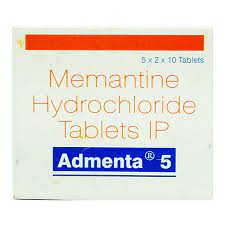 Admenta
Spørgsmål & svar
Admenta
Relaterede produkter



Anmeldelser
Der er ingen anmeldelser endnu