








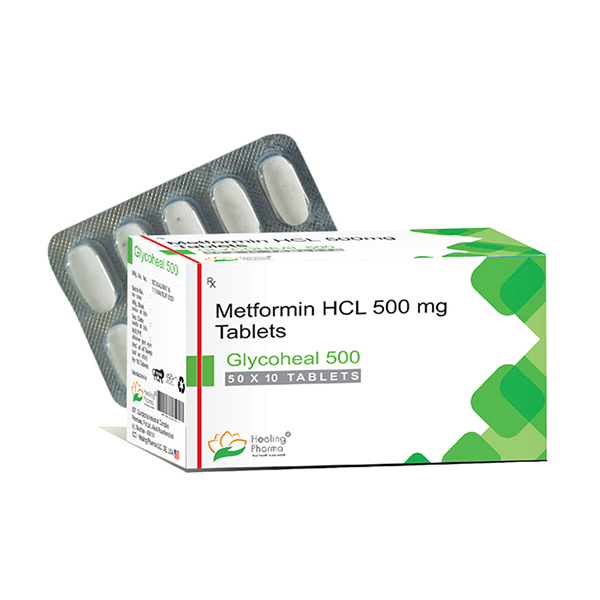
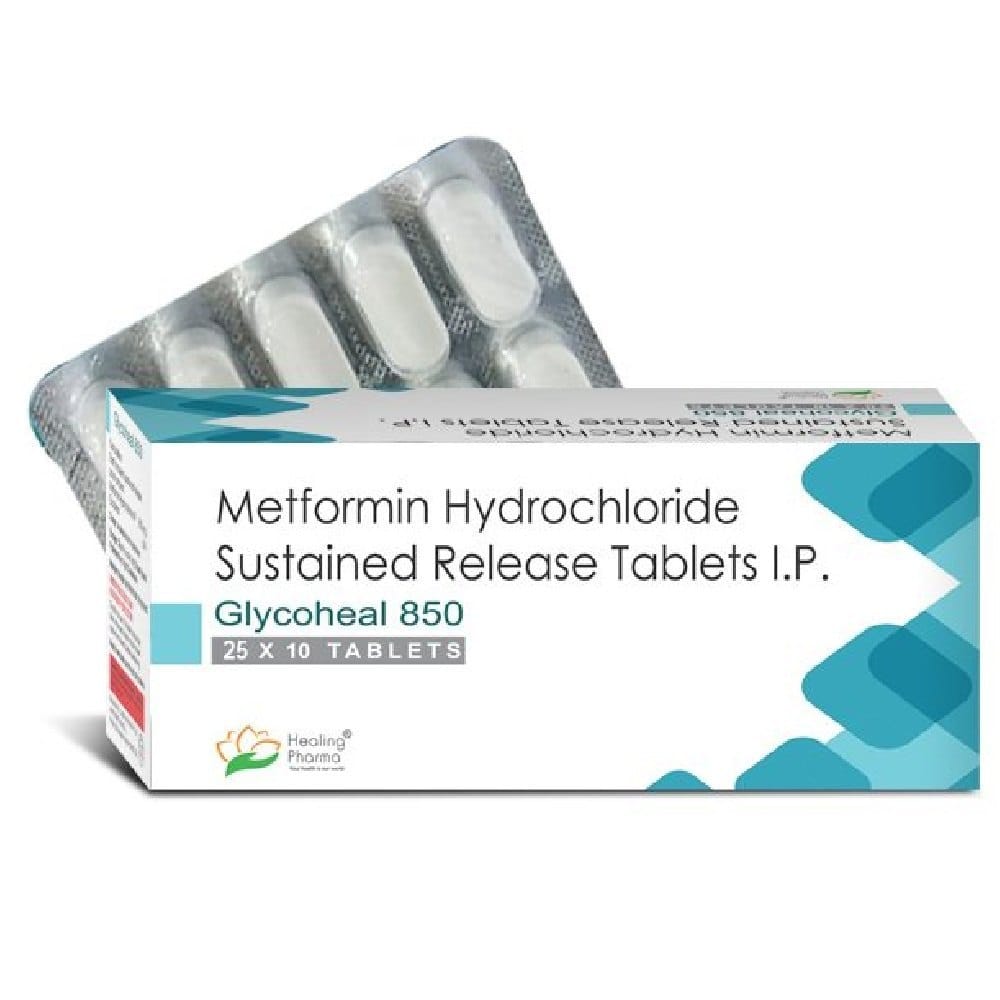
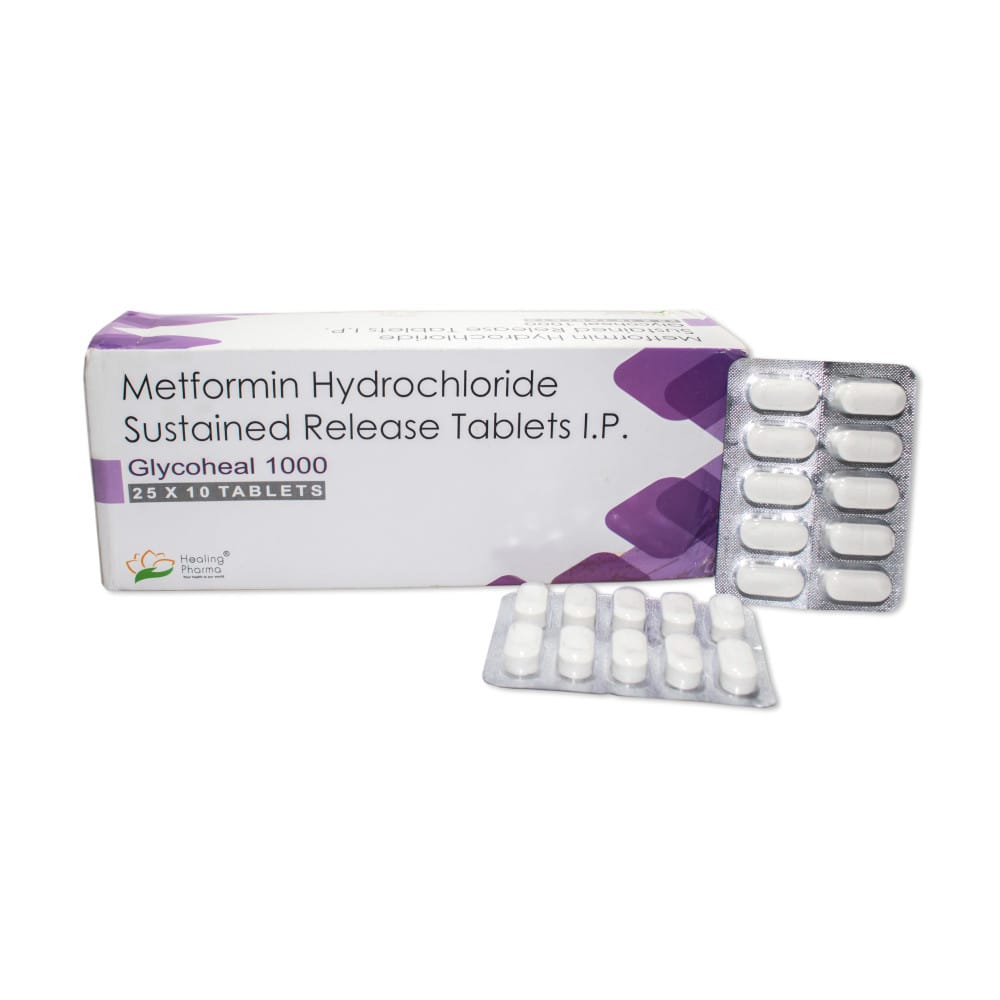
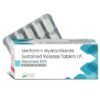
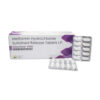
Glycoheal

✅ Kontrol af glukoseniveau
✅ Hjælpemiddel til diabetesstyring
✅ Forbedring af insulinsensitivitet
✅ Regulering af blodsukker
✅ Støtte til metabolisk balance
Glycoheal indeholder Metformin Hydrochloride.
✓ Medicinsk gennemgået af Morgan Ellis — Apoteksforsker · 8 års erfaring · Sidst gennemgået: maj 2026
⚡ Hurtigt svar — Hvad er Glycoheal?
Glycoheal er et mærke af metformin hydrochloride (500 mg, 850 mg eller 1000 mg), et førstevalgs oral medicin til type 2-diabetes. Det virker ved at reducere glukoseproduktionen i leveren og forbedre, hvordan kroppen reagerer på insulin — det forårsager ikke hypoglykæmi alene og er vægtneutralt eller moderat vægtreducerende. Metformin er den mest udbredt anvendte antidiabetiske medicin globalt, anbefalet som førstevalgs behandling af ADA, EASD, NICE og IDF retningslinjer. Også brugt off-label for polycystisk ovariesyndrom (PCOS), prædiabetes og graviditetsdiabetes. Tag sammen med mad for at reducere mavebesvær. Mest almindelige bivirkninger: diarré, kvalme, metallisk smag — forbedres normalt efter 1–2 uger eller ved skift til SR. Undgå ved eGFR < 30 mL/min/1,73 m²; dosisreducer hvis eGFR 30–45. Sikker på lang sigt; overvåg vitamin B12 årligt.
📦 Hver ordre er dækket af vores Reshipment Assurance Policy — hvis din pakke ikke ankommer inden for 20 hverdage, sender vi en erstatning.
Hvorfor bestille fra MedsBase
Vores generiske medicin kommer fra WHO-GMP certificerede producenter og sendes verdensomspændende i diskret, neutral emballage — ingen medicinnavn på pakkens ydre. Kortbetalinger håndteres af en reguleret processor (kontoudtogsbeskrivelser inkluderer en reguleret betalingsprocessor — aldrig “MedsBase” eller medicinnavn). Crypto og SEPA bankoverførsel accepteres også. Hver ordre er dækket af vores Reshipment Assurance Policy.
Hvad er Glycoheal?
Glycoheal er en oral antidiabetisk medicin, der indeholder metformin hydrochloride (500 mg, 850 mg eller 1000 mg), fremstillet af en WHO-GMP-certificeret producent. Formulering med øjeblikkelig frigivelse — tages typisk to eller tre gange dagligt sammen med måltider. Det er beregnet til voksne og børn på 10 år og derover med type 2-diabetes mellitus, typisk sammen med kost og motion. Tilgængelig i pakker med 30, 60, 90 eller 180 tabletter.
Metformin tilhører biguanid-klassen og har været i klinisk brug siden 1957. Det er den mest ordinerede diabetesmedicin i verden og er på WHOs liste over essentielle lægemidler.
Hvordan virker Glycoheal?
Metformin har tre overlappende mekanismer, der tilsammen sænker blodsukkeret uden at forårsage hypoglykæmi i ikke-diabetiske tilstande:
- Reducerer levers produktion af glukose — aktiverer AMP-aktiveret proteinkinase (AMPK) i leveren og hæmmer mitokondriel glycerophosphat dehydrogenase, hvilket reducerer glukoneogenesen med cirka en tredjedel.
- Forbedrer insulinfølsomheden — øger den perifere glukoseoptagelse i muskel- og fedtvæv, hvilket lader kroppen bruge sit eget insulin mere effektivt.
- Nedsætter tarmens optagelse af glukose — reducerer moderat den postprandielle glukosestigning og kan positivt påvirke tarmens mikrobiota.
Metformin sænker typisk HbA1c med 1,0–1,5 procentpoint som monoterapi. Det er vægtneutralt eller resulterer i beskedent vægttab (2–3 kg i gennemsnit) og har gunstige kardiovaskulære resultater (UKPDS, langtidsopfølgning).
Dosering og administration
Dosering af Metformin IR: Den sædvanlige startdosis er 500 mg to gange dagligt sammen med morgenmad og aftensmad. Titrer op i trin på 500 mg ugentligt. Den sædvanlige mål-dosis er 1.000 mg to gange dagligt (2.000 mg/dag); maksimum er 2.550 mg/dag. Tag altid Glycoheal med eller umiddelbart efter mad — dette reducerer risikoen for kvalme og diarré markant.
- Start lavt, titrer langsomt. Den største faktor for langtidstolerabilitet er en forsigtig optitrering over 4–6 uger.
- Glemt en dosis? Spring den over og tag den næste dosis på det sædvanlige tidspunkt — tag ikke en dobbeltdosis.
- Nyrejusteret dosis. eGFR > 60: fuld dosis. eGFR 45–60: overvåg nyrefunktion hver 3.–6. måned. eGFR 30–45: halver dosen. eGFR < 30: stop metformin.
- Før kontrastbilledtagning eller operation. Hold metformin på dagen for IV-jodholdigt kontrastmiddel hvis eGFR < 60, og i 48 timer efter, med genoptagelse når nyrefunktionen er stabil.
Bivirkninger
Metformin er generelt veltolereret. De mest almindelige bivirkninger (som rammer 10–25% af brugerne, normalt i de første 2 uger) er:
- Diarré, kvalme, mavekramper
- Metallisk smag i munden
- Nedsat appetit
- Luft i maven
Disse er normalt milde og selvbegrænsende. Skift til en SR-formulering eller indtagelse med større måltider løser GI-symptomerne i de fleste tilfælde.
Sjældne men vigtige:
- Vitamin B12-mangel — langtidsbrug af metformin (> 4 år) reducerer B12-absorptionen hos 6–30% af brugerne. Kontroller serum B12 årligt og suppler hvis lavt.
- Laktatacidose — ekstremt sjælden (< 10 tilfælde pr. 100.000 patientår) men potentielt dødelig. Sker næsten altid i forbindelse med akut nyreskade, sepsis, svær dehydrering eller hypoxi. Hold metformin under enhver akut sygdom med dehydrering, opkastning eller reduceret indtag.
Lægemiddelinteraktioner
- IV-jodholdigt kontrastmiddel — hold metformin før og efter proceduren hvis eGFR < 60.
- Alkohol — stort alkoholforbrug øger risikoen for laktatacidose. Moderat alkohol er generelt sikkert.
- Kationiske lægemidler (cimetidin, dolutegravir, ranolazin) — konkurrerer om renal tubulær sekretion og øger metforminniveauet.
- Karbanhydrasehæmmere (acetazolamid, topiramat) — additiv risiko for metabolisk acidose.
- Insulin og sulfonylurinstoffer — additivt blodsukkersænkende; hypoglykæmi bliver en bekymring ved kombination.
- Kortikosteroider, diuretika, beta-2-agonister — kan forhøje blodsukkeret; tættere overvågning er nødvendig.
Hvem bør ikke tage Glycoheal?
- Svær nyreinsufficiens (eGFR < 30 mL/min/1,73 m²)
- Akut eller dekompenseret hjertesvigt, der kræver indlæggelse
- Svær leversvigt
- Akut metabolisk acidose, herunder diabetisk ketoacidose
- Alvorlig akut sygdom med risiko for vævshypoksi (sepsis, respirationssvigt, nyligt hjerteanfald
- Kendt overfølsomhed over for metformin
I graviditet, metformin bruges bredt til graviditetsdiabetes og PCOS og har en stærk sikkerhedsprofil; drøft med din jordemoder. Det passerer i små mængder over i modermælken og betragtes generelt som foreneligt med amning.
Opbevaring
Opbevar Glycoheal under 25°C på et tørt sted, i den originale blister. Opbevares utilgængeligt for børn.
Ofte stillede spørgsmål
Er Glycoheal det samme som metformin?
Ja. Glycoheal indeholder den samme aktive ingrediens (metforminhydrochlorid) som originalpræparatet Glucophage og alle andre generiske metforminpræparater. Bioækvivalens er et krav fra myndighederne, så den kliniske effekt er den samme ved samme dosis.
Vil Glycoheal hjælpe mig med at tabe mig?
Metformin giver et beskedent vægttab (typisk 2–3 kg over 6–12 måneder) hos personer med type 2-diabetes eller insulinresistens. Det er ikke et vægttabsmiddel til ikke-diabetiske voksne — effekterne er små, og de fleste undersøgelser viser kun vægttab hos dem med forhøjede insulinværdier eller PCOS.
Kan jeg tage Glycoheal til PCOS?
Ja — metformin bruges bredt off-label til polycystisk ovariesyndrom for at forbedre insulinfølsomheden, genoprette ægløsning og reducere androgensymptomer. Typisk dosis er 1.500–2.000 mg/dag.
Forårsager Glycoheal hypoglykæmi (lavt blodsukker)?
Ikke alene. Metformin stimulerer ikke insulinudløsning, så det forårsager ikke hypoglykæmi som monoterapi. Lavt blodsukker bliver kun en bekymring, når metformin kombineres med et sulfonylurinstof, meglitinid eller insulin.
Hvor lang tid tager det før Glycoheal virker?
Fastende blodsukker falder normalt inden for 1–2 uger. Maksimal HbA1c-effekt ses efter 2–3 måneder. Hvis HbA1c ikke er faldet med 0,5% eller mere efter 3 måneder ved maksimal tolereret dosis, tilføjes normalt yderligere behandling.
Kan jeg drikke alkohol, mens jeg tager Glycoheal?
Moderat alkoholindtag (1–2 drinks om dagen) er generelt sikkert. Tungt eller binge-drikning bør undgås — det øger risikoen for laktatacidose og kan forårsage hypoglykæmi, især uden mad.
Hvor kan jeg købe Glycoheal online?
Du kan bestille Glycoheal (500 mg, 850 mg eller 1000 mg) fra MedsBase i pakker med 30, 60, 90 eller 180 tabletter. Vi sender worldwide, med diskret emballage og ægte WHO-GMP-certificeret producentbeholdning.
Relaterede diabetesmedikamenter
- Glycomet SR — Metformin SR 250/500/850/1000 mg
- Glycomet-GP — Kombination af Metformin + Glimepiride
- Januvia — Sitagliptin (DPP-4-hæmmer)
- Jardiance — Empagliflozin (SGLT-2-hæmmer)
- Forxiga — Dapagliflozin (SGLT-2-hæmmer)
- Amaryl — Glimepirid (sulfonylurea)
- Se alle diabetesmedicin
Brugere af Glycoheal, der nærmer sig skiftet til kombinationsterapi, kan skifte til vores Diabetes startpakke (Glycomet SR 1000 mg + Glycomet-GP) — metformin SR til første-lags behandling plus metformin + glimepirid, når monoterapi ikke opnår HbA1c-målet.
Patienter på Glycoheal patienter, der søger en depotformulering af samme aktive ingrediens, vil finde Glycomet SR (metforminhydrochlorid 250–1000 mg SR) den mest direkte matchende mulighed, der indtages en eller to gange dagligt ved måltider for at reducere maveubehag gennem dens langsomt frigivende matrix.
Relaterede alternativer
Andre produkter inden for Kroniske tilstande som kunder også ser:
Flere muligheder inden for diabetes
Rangeret efter seneste MedsBase ordrevolumen — hvad andre kunder i denne kategori vælger.

| Styrke | 500 mg, 850 mg, 1000 mg |
|---|---|
| Antal | 30 Tablet/s, 60 Tablet/s, 90 Tablet/s, 180 Tablet/s |
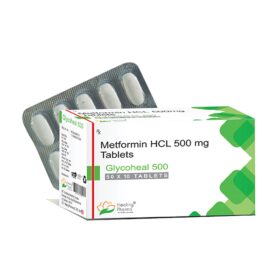 Glycoheal
Spørgsmål & svar
Glycoheal
Relaterede produkter





Anmeldelser
Der er ingen anmeldelser endnu