








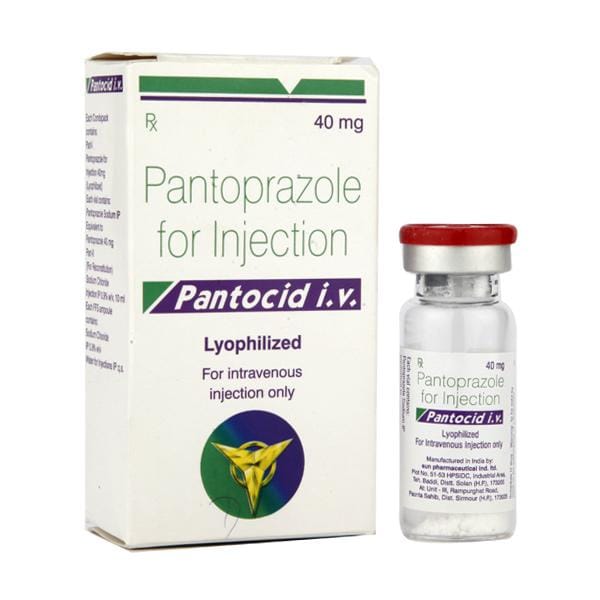
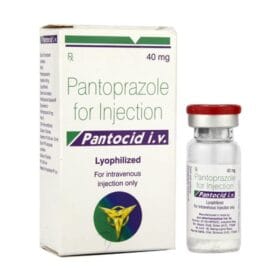
Pantocid Injection
✅ Hurtig syrelindring
✅ Helbredelse af mavesår
✅ Reducerer sure opstød
✅ Forebygger syrerelateret skade
✅ Effektiv behandling af GERD
Pantocid Injection indeholder Pantoprazole.
✓ Medicinsk gennemgået af Morgan Ellis — Apoteksforsker · 8 års erfaring · Sidst gennemgået: maj 2026
⚡ Hurtigt svar — Hvad er Pantocid Injection?
Pantocid Injection er pantoprazole natrium 40 mg pr. vial til intravenøs brug, fremstillet af Sun Pharma fra et WHO-GMP-certificeret produktionsanlæg. Dette er parenteral form af pantoprazole, der anvendes på hospitalet, når en patient ikke kan tage oral PPI — nil-per-os, postoperativt, intuberet eller med aktiv øvre GI-blødning. Standarddosis: 40 mg IV én gang dagligt rekonstitueret i 0,9% saltopløsning, infunderet over 15 minutter. Ved aktiv ikke-varikøs øvre GI-blødning med en højrisiko-endoskopisk læsion (Forrest Ia/Ib/IIa/IIb) er protokollen en 80 mg IV-bolus efterfulgt af en kontinuerlig infusion på 8 mg/t i 72 timer. Skift til oral pantoprazol (f.eks. Pantodac 40 mg), så snart patienten kan synke sikkert. Fortsat IV PPI ud over 3–5 dage tilføjer intet farmakologisk.
📦 Hver ordre er dækket af vores Reshipment Assurance Policy — hvis din pakke ikke ankommer inden for 20 hverdage, sender vi en erstatning.
Hvorfor bestille fra MedsBase
Vores generiske medicin kommer fra WHO-GMP certificerede producenter og sendes verdensomspændende i diskret, neutral emballage — ingen medicinnavn på pakkens ydre. Kortbetalinger håndteres af en reguleret processor (kontoudtogsbeskrivelser inkluderer en reguleret betalingsprocessor — aldrig “MedsBase” eller medicinnavn). Crypto og SEPA bankoverførsel accepteres også. Hver ordre er dækket af vores Reshipment Assurance Policy.
Hvad Pantocid Injection er
Pantocid Injection er Sun Pharma-mærket af intravenøs pantoprazolnatrium. Hver flaske indeholder pantoprazolnatrium svarende til 40 mg pantoprazolbase, leveret som et sterilt, lyofiliseret pulver til rekonstitution. Det er den parenterale form af den samme molekyle, der er tilgængelig oral som Pantodac, Pan, Pentab, Penlip og Walapan-40.
Hvordan Pantocid Injection virker
Pantoprazol er en benzimidazol-protonpumpehæmmer. Efter IV-administration koncentreres lægemidlet i de sure sekretoriske kanalikler i mavens parietale celler. Der protoneres det til den aktive sulfenamidform, som danner en kovalent disulfidbinding med cysteinrester på H+/K+-ATPase-pumpen. Dette blokerer irreversibelt syresecretion, indtil nye pumper er syntetiseret, hvilket giver 24–72 timers farmakodynamisk effekt fra hver dosis på trods af medicinens korte plasma-halveringstid på ~1 time. Kontinuerlig infusion anvendes ved aktiv GI-blødning, fordi den opretholder en forhøjet intragastrisk pH på > 6 — tærsklen, hvorover plateletaggregation bevares og klostabilitet forbedres.
Indikationer — Når IV Pantoprazol Anvendes
1. Aktiv øvre GI-blødning fra en peptisk ulcus (post-endoskopi)
Den største evidensbase. Efter endoskopisk hæmostase af en højrisikolesion (aktiv arteriel blødning Forrest Ia, sivede Ib, ikke-blødende synlig vessel IIa eller fastklæbet klump IIb) reducerer en 72-timers IV PPI-infusion med 80 mg bolus + 8 mg/t reblødning, kirurgi og 30-dages mortalitet. Patienter med lavrisikolesioner (Forrest IIc/III) behøver ikke IV-behandling og kan gå direkte til oral højdosis pantoprazol.
2. Patienter NPO (intet per os) med behov for syrehæmning
Postoperativ ileus, mekanisk ventilation, svær pankreatitis, vedvarende opkastning eller dysfagi. Når enterisk ernæring genoptages, skiftes til oral pantoprazol.
3. ICU-stressulcusprofilakse
For mekanisk ventilerede patienter > 48 timer, patienter med koagulopati eller patienter på vasopressorer. Bemærk: Langvarig ICU PPI-brug er forbundet med øget C. difficile infektion og ventilator-associeret pneumoni — vurder indikationen dagligt og stop, når den ikke længere er nødvendig.
4. Zollinger-Ellison-syndrom — overgangsbehandling
For patienter med syrehypersekretoriske tilstande, der midlertidigt ikke kan tage oral PPI.
Dosering og administration
| Indikation | Dosis | Noter |
|---|---|---|
| Standard voksendosis | 40 mg IV én gang dagligt | Rekonstituer med 10 mL 0,9% natriumklorid; kan yderligere fortyndes i 100 mL 0,9% NaCl; infunder over 15 minutter |
| Øvre GI-blødning (højrisikolesion, post-endoskopi) | 80 mg IV bolus, derefter 8 mg/t kontinuerlig infusion | 72 timer, derefter nedtrappet til 40 mg oralt to gange dagligt i 14 dage |
| Svær Zollinger-Ellison | 80 mg intravenøst hver 8.–12. time (specialiststyret) | 0,9% NaCl-rekonstitution; specialisttilsyn |
| Leversvigt | Maksimalt 40 mg/dag | Overvåg leverfunktionstests |
| Nyresvigt | Ingen dosisjustering nødvendig | Standardregime |
Kompatibilitet: Rekonstituer kun med 0,9% natriumchlorid. Bland ikke med andre intravenøse lægemidler i samme slange. Den rekonstituerede opløsning er stabil i 12 timer ved stuetemperatur; kasser eventuel ubrugt rest.
Skift til oral PPI så snart patienten kan synke sikkert. Fortsat intravenøs PPI-behandling ud over 3–5 dage har ingen farmakologisk fordel i forhold til oral behandling og øjer betydeligt omkostninger og infektionsrisiko.
Bivirkninger
Almindelige (1–10%): hovedpine, diarré, kvalme, mavesmerter, reaktioner på injektionsstedet (smerte, tromboflebit ved kanyleplaceringen).
Sjældne men vigtige: overfølsomhed (udslæt, angioødem; meget sjældent anafylaksi), akut interstitiel nefrit, levertoksicitet (sjældent), svær hypomagnesiæmi (ved langvarig brug), C. difficile infektion (især hos indlagte patienter) og ventilator-associeret lungebetændelse.
Kontraindikationer
- Kendt overfølsomhed over for pantoprazol eller enhver benzimidazol-PPI
- Samtidig rilpivirin (HIV) — absolut kontraindikation
- Svær leversvigt — reducer dosis
Opbevaring
Opbevar uåbnede flasker ved 15–30 °C, beskyttet mod lys. Efter rekonstitution er opløsningen stabil i 12 timer ved stuetemperatur; køling er ikke nødvendig, men forlænger ikke stabiliteten ud over 24 timer. Kassér enhver synligt misfarvet eller partikelholdig opløsning.
Ofte stillede spørgsmål
Hvornår bruges intravenøs pantoprazol i stedet for oral?
Kun når en patient ikke kan tage oral PPI — nil-per-os, postoperativt, intuberet, vedholdende opkastning, svær dysfagi — eller i den specifikke kontekst af akut øvre GI-blødning, hvor højdosis kontinuerlig infusion forbedrer resultaterne efter endoskopisk hæmostase. Når enterisk ernæring genoptages, giver oral pantoprazol ækvivalent syrehæmning til en brøkdel af omkostningerne.
Hvorfor er blødningsprotokol-doseringen så meget højere (80 mg + 8 mg/t)?
Aktiv øvre GI-blødning kræver en vedvarende intragastrisk pH > 6 for at stabilisere plateletaggregation og beskytte blodproppen mod peptisk fordøjelse. Den 80 mg startdosis plus 8 mg/t kontinuerlig infusion er det regime med det største randomiserede forsøgsgrundlag for dette. Lavere eller intermitterende dosering medfører store pH-svingninger og mindre beskyttelse mod reblødning.
Hvor længe bør intravenøs PPI fortsættes?
Ved akut GI-blødning, 72 timers kontinuerlig infusion, derefter nedtrappet til oral 40 mg to gange dagligt i 14 dage, derefter en gang dagligt. For NPO-patienter skal der skiftes til oral PPI, så snart tarmfunktionen virker. Langvarig intravenøs PPI > 5 dage har ingen farmakologisk fordel og øger C. difficile og lungebetændelsesrisiko på hospitalet.
Er intravenøs pantoprazol bedre end intravenøs omeprazol eller esomeprazol?
For syrehæmning alene, nej — alle intravenøse PPI'er når ækvivalent intragastrisk pH. Pantoprazol foretrækkes i klinisk praksis på grund af dets renere interaktionsprofil for lægemidler (især relevant for intensivpatienter på flere lægemidler, der metaboliseres af CYP3A4 og CYP2C19) og fordi evidensgrundlaget for blødningsforebyggelse er størst med pantoprazol og esomeprazol.
Kan det blandes med andre intravenøse lægemidler?
Nej. Rekonstituer kun pantoprazol med 0,9% natriumklorid og administrer gennem en dedikeret IV-linje. Administrer det ikke sammen med andre lægemidler i samme linje på grund af kompatibilitetsproblemer med flere almindelige intravenøse lægemidler.
Er intravenøst pantoprazol sikkert under graviditet?
Pantoprazol har rimelige sikkerhedsdata under graviditet. Intravenøst pantoprazol vil kun blive brugt under graviditet, når oral terapi er umulig — f.eks. hyperemesis gravidarum så alvorlig, at der er behov for parenteral ernæring, eller akut blødende peptisk ulcus. Drøft med obstetriske og GI-team.
Hvad er bivirkningerne ved intravenøst pantoprazol?
De fleste ligner oral protonpumpehæmmer: hovedpine, diarré, kvalme. Specifikt for IV-brug: smerter på injektionsstedet eller tromboflebitis ved kanylen. Vigtige hospitalskomplikationer at overvåge: C. difficile infektion, ventilator-associeret pneumoni, hypomagnesiæmi (lange intensivophold) og sjælden akut interstitiel nefritis (kreatininstigning).
Interagerer intravenøst pantoprazol med clopidogrel?
Pantoprazol har den mindste interaktion med clopidogrel af alle PPI'er, fordi det ikke hæmmer CYP2C19 i klinisk signifikant grad. Dette er en af grundene til, at det er standard intravenøs PPI på kardiologiske og hjertekirurgiske afdelinger.
Kan det gives via et perifert venekateter?
Ja — standarddosis på 40 mg rekonstitueret og fortyndet i 100 mL 0,9 % saltvand kan gives via et perifert drop. Den kontinuerlige infusion på 8 mg/t ved GI-blødning gives oftere via en dedikeret linje på grund af varigheden. Hold øje med tromboflebitis ved kanyleindstiksstedet.
Hvordan opbevares det efter rekonstitution?
Den rekonstituerede og fortyndede opløsning er stabil i 12 timer ved stuetemperatur i 0,9% saltvand. Køling forlanger holdbarheden til 24 timer. Kassér enhver opløsning, der er misfarvet, uklar eller indeholder partikler.
Relaterede alternativer
Andre produkter inden for Generel sundhed som kunder også ser:
Flere muligheder i behandling af halsbrand
Rangeret efter seneste MedsBase ordrevolumen — hvad andre kunder i denne kategori vælger.


| Styrke | 40 mg |
|---|---|
| Antal | 1 flaske, 2 flasker, 3 flasker, 6 flasker |
 Pantocid Injection
Spørgsmål & svar
Pantocid Injection
Relaterede produkter

Anmeldelser
Der er ingen anmeldelser endnu