




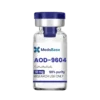
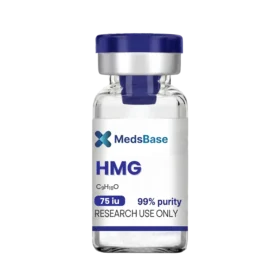
HMG (Human Menopausal Gonadotropin / Menotropin) — Pharmaceutical Grade
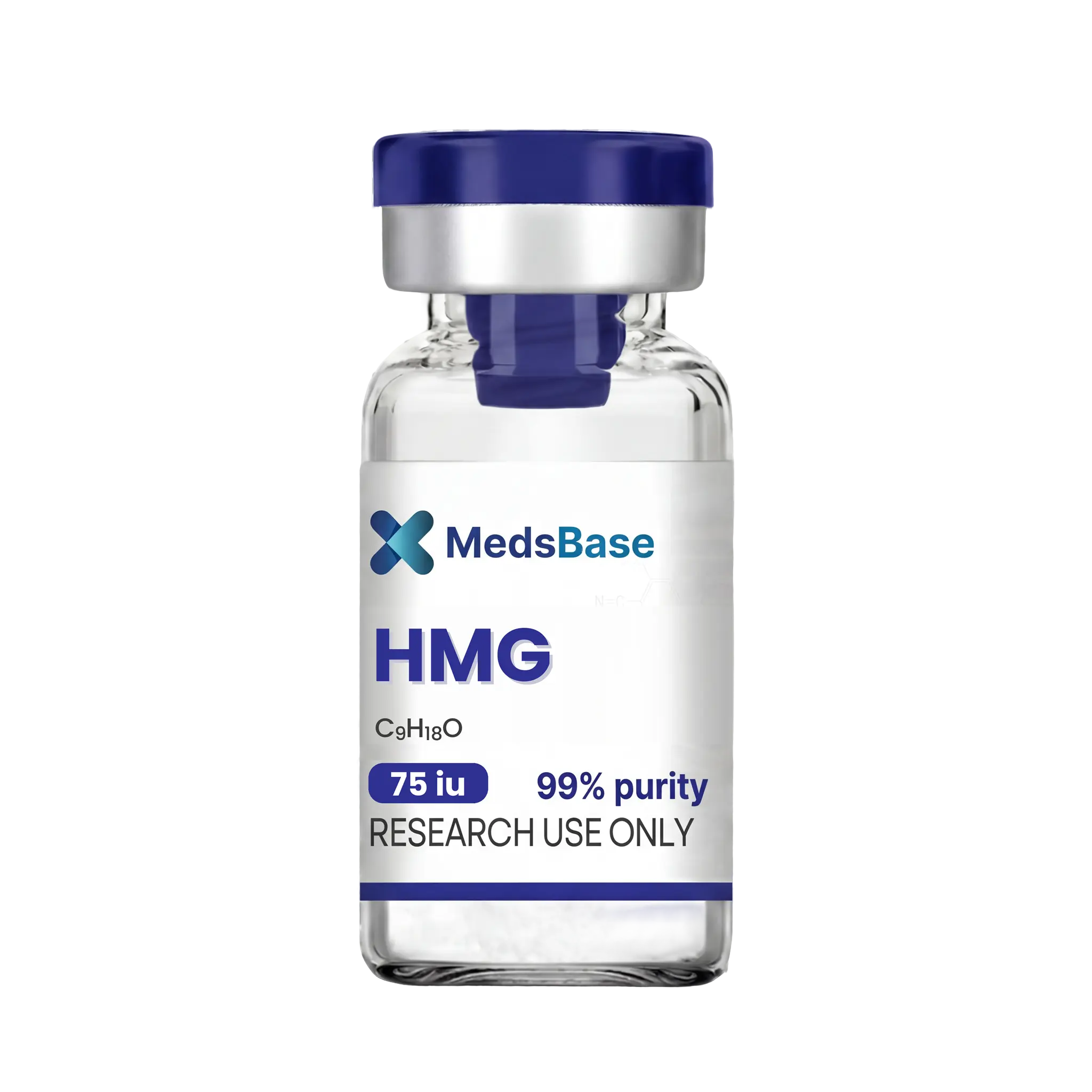
✅ Duales LH + FSH Glykoproteinhormon-Präparat — 1:1 Bioaktivitätsverhältnis (je 75 IE)
✅ Kanonischer LHCGR + FSHR dualer Gonadotropin-Rezeptor-Agonist
✅ Aus dem Urin extrahiertes Menotropin aus gepooltem Urin postmenopausaler Frauen (CAS 61489-71-2)
✅ Zwei-Zellen-Zwei-Gonadotropin-Modell — aktiviert Leydig+Sertoli oder Theka+Granulosa
✅ Standard tool for spermatogenesis-induction & ovarian-stimulation studies
HMG (Pharmaceutical Grade) enthält aus dem Urin extrahiertes Humanes Menopausales Gonadotropin (Menotropin).
✓ Medizinisch überprüft von Morgan Ellis — Pharmazieforscher · 8 Jahre Erfahrung · Zuletzt überprüft: Mai 2026
Quick Answer — What is HMG (pharmaceutical-grade)?
HMG (Humanes Menopausengonadotropin, auch bekannt als Menotropin; CAS 61489-71-2) ist ein aus Urin gewonnenes Glykoprotein-Hormon-Präparat mit gleicher LH- und FSH-Bioaktivität (75 IE LH + 75 IE FSH pro Fläschchen, das Standardverhältnis 1:1). Gewonnen aus dem Urin postmenopausaler Frauen – deren Hypophysen-Gonadotropin-Ausschüttung aufgrund des Fehlens einer negativen Rückkopplungshemmung natürlich erhöht ist – ist hMG der kanonische duale LHCGR + FSHR-Agonist in endocrine pharmacology and the reference tool for protocols that need simultaneous Leydig-cell / theca-cell steroidogenesis (LH side) and Sertoli-cell / granulosa-cell action (FSH side). The supplied pharmaceutical-grade material is the urinary-extracted glycoform at ≥99% HPLC purity. For clinical studies use only. Unterscheidet sich von klinischen Menotropin-Präparaten (Menopur, Menogon, Repronex).
📦 Jede Bestellung ist durch unsere Reshipment Assurance Policy abgedeckt — wenn Ihr Paket nicht innerhalb von 20 Werktagen ankommt, versenden wir es erneut.
| Spezifikation | Detail |
|---|---|
| Verbindungsklasse | Glykoprotein-Hormon-Präparat — festes 1:1-Gemisch aus LH- und FSH-Bioaktivität; dualer LH/CG-Rezeptor (LHCGR) + FSH-Rezeptor (FSHR)-Agonist; Peptidhormonpräparat |
| Chemischer Name | Humanes Menopausengonadotropin (Menotropin; urin-extrahiertes Präparat; Synonyme: hMG, Urofollitropin-mit-LH, Gonadotropin menopausal) |
| CAS-Nummer | 61489-71-2 (Menotropin / hMG-Mischpräparat) |
| Wirkstoffe | LH (luteinisierendes Hormon, ~30 kDa Heterodimer; α 92 AS + β 121 AS, glykosyliert) — 75 IE pro Fläschchen; FSH (follikelstimulierendes Hormon, ~30 kDa Heterodimer; α 92 AS + β 111 AS, glykosyliert) — 75 IE pro Fläschchen. Die α-Untereinheit ist bei LH, FSH, HCG und TSH identisch; die β-Untereinheiten bestimmen die Rezeptorspezifität. Beide Gonadotropine sind umfangreich N- und O-glykosyliert. |
| Bioaktivitätsverhältnis | LH:FSH-Aktivität = 1:1 (das Standard-hMG-Verhältnis seit der Potenzstandardisierung in den späten 1990ern; beide Aktivitäten gemessen durch WHO-Bioassay gegen internationale Referenzstandards) |
| HCG Co-Purification (studies-relevant) | Ein Merkmal urinär gewonnener hMG-Präparate: publizierte Zusammensetzungsanalysen zeigen, dass etwa 95% der in-vivo LH-Rezeptor-vermittelten Bioaktivität auf Spuren von HCG zurückzuführen sind, die aus postmenopausalem Urin co-purifiziert werden (Wolfenson et al. 2005 and others). HCG and LH bind the same LHCGR with similar affinity, but HCG has 33–37 h half-life vs LH’s ~20 min — so even small HCG amounts dominate the in-vivo LH-equivalent signal. Users should be aware of this when comparing hMG to pure recombinant LH (Luveris) preparations. |
| Mechanismus | Dualer GPCR-Agonismus. LHCGR (Gs-gekoppelt, Leydig- / Theka- / Granulosa- / Corpus-luteum-Zellen) → cAMP-PKA-StAR-CYP17A1-Kaskade → Androgenbiosynthese. FSHR (Gs-gekoppelt, Sertoli-Zellen bei Männern / Granulosazellen bei Frauen) → cAMP-PKA-CYP19A1/Aromatase-Kaskade → Unterstützung der Spermatogenese (männlich) oder Umwandlung von Androgenen zu Östrogenen + Follikelreifung (weiblich). Die duale Aktivierung unterscheidet hMG von reinem LH (Luveris / rLH) oder reinem FSH (Gonal-F / Puregon / rFSH) Präparaten. |
| Sequenz | Gemischtes Präparat — sowohl LH als auch FSH sind heterodimere Glykoproteine. α-Untereinheit (gemeinsam) ~92 aa, identisch bei LH/FSH/HCG/TSH. LH β-Untereinheit ~121 aa, FSH β-Untereinheit ~111 aa. Vollständige Sequenzen verfügbar bei UniProt: LHβ (P01229), FSHβ (P01225), GPHα (P01215). |
| Molekularformel | Gemischtes, aus Urin extrahiertes Glykoproteinpräparat — FSH (α 92aa + β 111aa) + LH (α 92aa + β 121aa) Heterodimere in einem Bioaktivitätsverhältnis von ~1:1. Keine einzelne Molekülformel aufgrund des heterogenen Glykosylierungsmusters im Präparat. |
| Plasmahalbwertszeit | FSH-Aktivität: terminale Halbwertszeit ~30–40 h (sialylierungsgetrieben, ähnlich wie bei anderen Glykoproteinhormonen). LH-Aktivität in hMG: nominell ~10–20 h (in der Praxis jedoch durch die mitaufgereinigte HCG-Fraktion mit 33–37 h Halbwertszeit bestimmt — siehe HCG-Mitaufreinigungshinweis oben). |
| Form | Lyophilized white-to-off-white amorphous powder with mannitol or lactose stabilising matrix; single-use vials |
| Reinheit | ≥99% (HPLC-verifiziert); WHO-Bioassay bestätigt LH- und FSH-Aktivität in der angegebenen Menge von jeweils 75 IE. Analysezertifikat auf Anfrage erhältlich. |
| Löslichkeit | In bakterizidem Wasser mit 1,0 mL pro Fläschchen rekonstituieren → 75 IE LH + 75 IE FSH pro mL Arbeitslösung; andere Verdünnungen gemäß Protokoll. Das Pulver löst sich schnell bei sanftem Schwenken. Nicht schütteln; nicht vortexen — Hochschermischen löst die α/β-Heterodimere sowohl der LH- als auch der FSH-Komponenten auf. |
| Lagerung | Lyophilisiert: 2–8 °C ungeöffnet für kurzfristigen Arbeitsvorrat; −20 °C für Langzeitlagerung (≥36 Monate stabil bei −20 °C; ≥18 Monate bei 2–8 °C). Rekonstituiert: 2–8 °C, innerhalb von ~30 Tagen verwenden. Lichtgeschützt lagern. Rekonstituiertes Material nicht einfrieren — Gefrier-Tau-Zyklen lösen die LH- und FSH α/β-Heterodimere auf und zerstören die Bioaktivität. |
Was ist HMG (Menotropin)?
HMG — Humanes Menopausengonadotropin, auch bekannt als Menotropin (CAS 61489-71-2) — is a urinary-derived glycoprotein-hormone preparation containing equal amounts of LH (luteinising hormone) and FSH (follicle-stimulating hormone) bioactivity, standardised at 75 IU of each per vial. It is purified by ion-exchange and gel-filtration chromatography from the pooled urine of postmenopausal women, who have naturally elevated pituitary gonadotropin output (LH and FSH typically 50–100+ mIU/mL each) due to the loss of ovarian negative-feedback inhibition that accompanies menopause. The “menopausal” in the name refers to this source: postmenopausal urine is the most concentrated natural source of LH and FSH available for industrial-scale purification, and hMG has been produced from this source since the early 1960s (the original Cesare Serono-developed Pergonal preparation). The compositional refinement of hMG has evolved substantially over the decades — earlier preparations had highly variable LH:FSH ratios and significant protein-impurity loads; modern preparations (the basis of our pharmaceutical-grade material) are standardised at 75:75 IU bioactivity per vial with ≥99% HPLC purity. hMG is the canonical dual-gonadotropin pharmacological tool. Where HCG selectively activates the LHCGR, where pure-LH (recombinant Luveris) selectively activates the LHCGR at physiological half-life, where pure-FSH (recombinant Gonal-F / Puregon) selectively activates the FSHR, hMG activates both receptors simultaneously at a fixed 1:1 ratio. The two receptors are expressed on different cell populations within the gonad — LHCGR on Leydig cells / theca cells / luteinised granulosa / corpus luteum; FSHR on Sertoli cells / mural granulosa — so dual activation produces a complete physiological gonadotropin stimulus that more closely mimics endogenous mid-cycle pituitary output than either receptor activated alone. A studies-relevant nuance: HCG co-purification. Published compositional analyses of urinary-derived hMG preparations report that the bulk of the in-vivo LH-receptor bioactivity is actually attributable to trace HCG co-purified from postmenopausal urine — approximately 95% of LH-receptor-mediated bioactivity by some analyses (Wolfenson et al., 2005). This is because HCG and LH bind the same LHCGR with similar affinity, but HCG has 33–37 h plasma half-life versus LH’s ~20 min, so even small HCG amounts dominate the cumulative in-vivo LH-equivalent signal. This is part of why hMG produces sustained Leydig-cell stimulation despite the nominal “LH activity” of LH itself being short-lived. For protocols where this distinction matters (pure-LH pharmacology vs HCG-contaminated mixed-LH signal), recombinant LH (Luveris) is the cleaner tool; for protocols where dual LHCGR + FSHR activation at physiological 1:1 ratio is the goal, hMG is the canonical reference.
Wirkmechanismus – Duale LHCGR + FSHR-Aktivierung
Der Wirkmechanismus von hMG ist die duale Summe seiner beiden Komponentenaktivitäten, beide gut charakterisiert in der endokrinen Pharmakologie:
- LH (und co-purifiziertes HCG) → LHCGR-Aktivierung — Die LH-Komponente (und die Spuren von HCG, die aus postmenopausalem Urin co-purifiziert werden) bindet an den LH/CG-Rezeptor auf Leydig-Zellen (Hoden) und Theka- / Granulosa- / Lutealzellen (Eierstock). Die Gs-Kopplung erhöht cAMP, aktiviert PKA, reguliert den StAR-vermittelten mitochondrialen Cholesterintransport hoch und induziert die steroidogenen Enzyme CYP11A1 / CYP17A1 / 3β-HSD / 17β-HSD – was die de-novo-Testosteronbiosynthese (männlich) oder Androstendionbiosynthese (weiblich) antreibt.
- FSH → FSHR-Aktivierung — Die FSH-Komponente bindet an den FSH-Rezeptor auf Sertoli-Zellen (Hoden) und muralen Granulosazellen (Eierstock). Der FSHR ist ebenfalls Gs-gekoppelt, aber sein nachgeschaltetes Programm ist unterschiedlich: In Sertoli-Zellen treibt die FSHR-Aktivierung das Androgen-bindende Protein (ABP), Inhibin B und das strukturelle Unterstützungsprogramm an, das die Spermatogenese aufrechterhält; in Granulosazellen treibt die FSHR-Aktivierung CYP19A1 (Aromatase) an, das Theka-Zell-abgeleitete Androgene in Östrogene umwandelt, und fördert die follikuläre Reifung durch die antralen und präovulatorischen Stadien.
- Kombiniertes Zwei-Zellen-Zwei-Gonadotropine-Modell — Das klassische endokrine Rahmenwerk. Im männlichen Hoden produzieren LH-stimulierte Leydig-Zellen Testosteron, das in benachbarte Sertoli-Zellen diffundiert, wo FSH-induziertes Androgen-bindendes Protein und der Stoffwechselapparat der Sertoli-Zellen es in das hochintratestikuläre Testosteron-Mikromilieu umwandeln, das die Spermatogenese benötigt. Im weiblichen Eierstock produzieren LH-stimulierte Thekazellen Androgene, die in benachbarte Granulosazellen diffundieren, wo FSH-induzierte Aromatase sie in Östrogene umwandelt. Das Zwei-Zellen-Zwei-Gonadotropin-Modell ist das kanonische Rahmenwerk, und hMG ist das kanonische pharmakologische Werkzeug, um beide Hälften gleichzeitig zu aktivieren.
- Rezeptor-Desensibilisierung und Tachyphylaxie — Both LHCGR and FSHR undergo arrestin-mediated desensitization after sustained agonist exposure. Repeated high-dose hMG dosing can produce receptor downregulation — a well-documented phenomenon in published gonadotropin-pharmacology studies relevant to chronic-dosing protocols.
- Hypothalamisch-hypophysärer Feedback — As with HCG, hMG-driven gonadal steroid output feeds back to the hypothalamus and pituitary to suppress endogenous GnRH and LH/FSH secretion. In the context of HPG-suppression studies (testosterone replacement, AAS exposure, pharmacological GnRH antagonism), hMG bypasses the hypothalamic-pituitary blockade by acting directly at the gonadal receptors — preserving both Leydig-cell function (LH side) and Sertoli-cell / spermatogenesis-support function (FSH side) simultaneously, which is what distinguishes hMG from pure-HCG protocols in this context.
The pharmacokinetic profile of hMG broadly mirrors that of its components: FSH activity persists with 30–40 h terminal half-life, LH-equivalent activity is dominated by the long-half-life co-purified HCG (33–37 h), and the combined preparation produces sustained 24–72 h dual gonadotropin stimulation per dose. Typical protocol dosing is 75–225 IU SC daily in rodent or human-subject studies — equivalent to 1–3 vials of the 75 IU strength.
Published Evidence
hMG is used in clinical contexts that investigate:
- Gonadotropin-Pharmakologie — der kanonische Dual-Rezeptor-Referenz — most-cited dual LHCGR + FSHR agonist in published gonadotropin studies; standard reference compound for dissecting LH-only vs FSH-only vs combined gonadotropin signalling
- Spermatogenesis induction studies — in hypogonadotropic-hypogonadism rodent models, hMG (with or without supplementary HCG) is the canonical tool for inducing spermatogenesis by restoring both Leydig-cell testosterone production and Sertoli-cell FSH support; standard protocol cycle is 75–150 IU SC three times per week for 6–24 months in clinical-translational studies
- Female ovarian-stimulation studies — the historical foundation tool of in-vitro fertilisation studies; hMG drives follicular development through the antral and pre-ovulatory stages in published ovulation-induction protocols, typically combined with HCG as ovulation trigger; widely used in studies on polycystic ovary syndrome (PCOS), unexplained infertility, and assisted reproductive technologies
- Two-cell two-gonadotropin model studies — the canonical framework of gonadal steroidogenesis pharmacology; hMG is the standard tool for activating both halves of the model simultaneously; published Sertoli-Leydig co-culture and theca-granulosa co-culture uses hMG to recapitulate the physiological dual-receptor stimulus
- HPG-axis suppression-recovery — in published studies models where endogenous LH/FSH has been suppressed (by exogenous testosterone, AAS exposure, or GnRH antagonism), hMG preserves both Leydig-cell function and Sertoli-cell function by direct gonadal receptor activation — distinguishing it from HCG-only protocols which preserve only LH-side function and risk Sertoli-cell atrophy
- Vergleichende Pharmakologie vs. reines LH / reines FSH / HCG — veröffentlichte Direktvergleiche von hMG vs. rekombinantem LH (Luveris), rekombinantem FSH (Gonal-F / Puregon), rekombinantem HCG (Ovidrel) und verschiedenen Kombinationen sind umfangreich; hMG ist der urinäre 1:1-Mischstandard, gegen den alle diese Präparate benchmarked werden
- Follikelentwicklung und Granulosazellbiologie — published ex-vivo follicular culture and primary granulosa-cell uses hMG to drive simultaneous theca-cell androgen production and granulosa-cell aromatase induction — the most physiologically relevant in-vitro stimulus available
- Corpus-luteum-Biologie — sustained LHCGR activation by the LH component (and co-purified HCG) maintains corpus-luteum function and progesterone production; used in studies on the luteal phase and luteo-placental transition
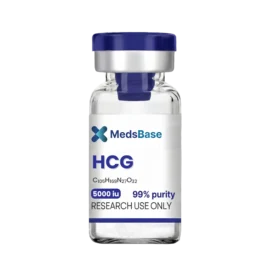
For broader context on HPG-axis and reproductive-system peptides in this catalogue, see HCG (Humanes Choriongonadotropin) (reiner LHCGR-Agonist — direkter Vergleich; nur LH-Seitenaktivität), Kisspeptin-10 (der upstream hypothalamische Kiss1R-Agonist — treibt endogene GnRH-Pulsatilität an), PT-141 (Bremelanotid) (melanocortin-receptor pharmacology — sexual-function studies), and Oxytocin Acetat (posteriore Hypophysen-Peptidhormone). Durchstöbern Sie das vollständige peptides & compounds catalog.
Verfügbare Stärken und Konzentrationen
MedsBase stocks HMG (urinary-extracted menotropin) in a single lyophilized vial strength calibrated to the standard 1:1 LH:FSH bioactivity unit. The vial is available in 10-vial, 20-vial, or 30-vial pack formats:
| Vial-Stärke | Typischer Anwendungsfall | Packungsgrößen |
|---|---|---|
| 75 IE LH + 75 IE FSH | Standard strength (the international-reference unit dose) — single-dose dual-gonadotropin stimulation, spermatogenesis-induction protocols (75–225 IU SC three times per week), ovarian-stimulation studies, two-cell two-gonadotropin co-culture stimulation, comparative pharmacology vs recombinant pure-LH and pure-FSH preparations | 10, 20 oder 30 Vials |
The 75:75 IU vial is the international-reference dose unit and the format used in essentially all published gonadotropin studies and clinical practice. Multiple-vial dosing (150 IU, 225 IU per administration) is standard for higher-dose protocols. The 30-vial pack is the more economical purchase per-IU for extended-cycle or multi-cohort protocols.
Wie es sich vergleicht — HMG vs HCG
HCG und hMG sind die beiden urin-extrahierten Gonadotropinpräparate in diesem Katalog, und sie zielen auf das Gonadotropin-Rezeptorsystem auf mechanistisch unterschiedliche Weise ab. HCG ist ein reiner LH/CG-Rezeptoragonist — Leydig-Zellen-/Theka-Zellen-Aktivierung nur. hMG ist das duale LH + FSH preparation — engages both halves of the two-cell two-gonadotropin model simultaneously. The choice between them in studies depends on whether the protocol needs LH-side activation alone or combined LH-side + FSH-side activation.
| Kriterium | HMG (Menotropin) | HCG |
|---|---|---|
| Zusammensetzung | Feste 1:1-Mischung: LH 75 IE + FSH 75 IE pro Durchstechflasche (+ Spuren von HCG, die das LH-Äquivalent des In-vivo-Signals dominieren) | Reines HCG (urin-extrahiert) — einziges Glykoprotein |
| Rezeptoren aktiviert | LHCGR und FSHR — duale Gonadotropin-Rezeptor-Aktivierung | LHCGR nur — einzelner Rezeptor |
| Quelle | Urin postmenopausaler Frauen | Urin schwangerer Frauen (uHCG) oder rekombinante CHO-Zellen (rHCG) |
| Best applications | Spermatogenesis induction (preserves Sertoli-cell function), ovarian follicular stimulation, two-cell two-gonadotropin model studies, dual-receptor pharmacology | Leydig-cell-only stimulation, ovulation triggering (LH-surge mimic), Leydig-cell-specific HPG-suppression-recovery, LHCGR pharmacology |
| Plasmahalbwertszeit | FSH ~30–40 h; LH-äquivalente Aktivität dominiert durch co-purifiziertes HCG (33–37 h) | 33–37 h (terminale Phase) |
| Typische Dosis | 75–225 IE SC (1–3 Fläschchen) pro Verabreichung; 3×/Woche in chronischen Protokollen | 500–5.000 IE SC/IM (Einzelbolus); 250–500 IE/Tag in chronischen Protokollen |
| Fläschchen-Dosierungseinheit | 75 IE Bioaktivität (die internationale Referenzeinheitsdosis) | 5.000 oder 10.000 IE Bioaktivität |
| WADA-Status | Zu allen Zeiten bei männlichen Athleten verboten (S2 — Peptidhormone) | Zu jeder Zeit bei männlichen Athleten verboten (S2 — Peptidhormone); Ausnahme für Athletinnen |
For studies focused on dual LHCGR + FSHR activation, spermatogenesis induction, or the canonical two-cell two-gonadotropin model, hMG is the standard reference compound. For studies focused on Leydig-cell-only stimulation, ovulation triggering, or HCG-specific LHCGR pharmacology, HCG ist das gezieltere Werkzeug. Siehe auch Kisspeptin-10 for upstream hypothalamic Kiss1R / GnRH-pulsatility studies.
Lagerung und Rekonstitution
Vor der Rekonstitution: Lagern Sie lyophilisierte Fläschchen gekühlt bei 2–8 °C in der Originalverpackung für kurzfristige Arbeitsbestände. Zur Langzeitlagerung frieren Sie ungeöffnete Fläschchen bei −20 °C ein (stabil ≥36 Monate bei −20 °C; ≥18 Monate bei 2–8 °C). Der lyophilisierte Kuchen ist mit Mannitol oder Lactose stabilisiert und verträgt kurze Raumtemperaturexposition während der Handhabung, sollte aber umgehend wieder gekühlt werden. Lichtschutz beachten. Rekonstitutionsverfahren: for each 75 IU vial, inject 1.0 mL of bacteriostatic water down the side wall of the vial (not directly onto the lyophilized cake) — this yields a working stock of 75 IU LH + 75 IU FSH per mL. For protocols that need higher concentrations (multi-vial pooling for higher single-dose), reconstitute 2–3 vials with the same 1.0 mL diluent total to give 150–225 IU/mL. Sanft schwenken, um aufzulösen – nicht schütteln, nicht vortexen. Hochschermischen löst die α/β-Heterodimere sowohl der LH- als auch der FSH-Komponenten auf und zerstört die Gonadotropin-Rezeptor-Bioaktivität. Der mannitolbasierte Lyophilisatkuchen löst sich typischerweise innerhalb von 30–60 Sekunden bei sanftem Schwenken auf. Kritische Lagerregeln für rekonstituiertes Material: Nach der Rekonstitution bei 2–8 °C lagern und innerhalb von 30 Tagen verwenden. Rekonstituiertes hMG nicht einfrieren — freeze-thaw cycles dissociate the LH and FSH α/β heterodimers (the same physical-chemistry constraint as HCG) and irreversibly destroy bioactivity. Protect from light. Discard if cloudiness, particulates, or marked colour change appears. For protocols requiring multiple aliquots, prepare aliquots at the time of reconstitution and store at 2–8 °C separately rather than freezing.
Häufig gestellte Fragen
Was ist der Unterschied zwischen HMG und HCG?
HCG is a pure LH/CG-receptor agonist — single glycoprotein hormone (CAS 9002-61-3) that binds and activates only the LHCGR on Leydig / theca / granulosa / luteal cells. hMG is a 1:1 mixture of LH and FSH bioactivity — distinct glycoprotein hormones (combined CAS 61489-71-2) that bind both the LHCGR (LH side) and the FSHR (FSH side). The clinical and studies consequence is that hMG produces dual-receptor stimulation that engages both halves of the two-cell two-gonadotropin model (Leydig + Sertoli in males; theca + granulosa in females), where HCG produces single-receptor stimulation of the LHCGR side only.
What is the HCG co-purification in hMG, and why does it matter for studies?
Veröffentlichte Zusammensetzungsanalysen von urinbasierten hMG-Präparaten berichten, dass etwa 95 % der in-vivo LH-Rezeptor-vermittelten Bioaktivität is actually attributable to trace HCG co-purified from postmenopausal urine, rather than to LH itself (Wolfenson et al., 2005). This is because HCG and LH bind the same LHCGR with similar affinity, but HCG has 33–37 h plasma half-life vs LH’s ~20 min — so even small amounts of co-purified HCG dominate the cumulative in-vivo LH-equivalent signal. For protocols where this distinction matters (e.g., comparing pure-LH pharmacology vs HCG-contaminated mixed-LH signal), rekombinantes LH (Luveris) ist das sauberere Werkzeug. Für Protokolle, bei denen eine duale LHCGR + FSHR-Aktivierung in einem festen 1:1-Verhältnis das Ziel ist, ist hMG der kanonische Referenzstandard.
Warum wird hMG aus dem Urin postmenopausaler Frauen gewonnen?
Postmenopausale Frauen verlieren die ovarielle negative Rückkopplungshemmung der hypothalamisch-hypophysären Achse, was die hypophysäre LH- und FSH-Ausschüttung dramatisch erhöht – typische postmenopausale Serum-LH- und FSH-Werte liegen bei jeweils 50–100+ mIU/ml, eine Größenordnung höher als prämenopausale Werte. Beide Hormone werden dann renal in konzentrierter Form in den Urin ausgeschieden. Gepoolter postmenopausaler Urin ist daher die konzentrierteste natürliche Quelle für LH + FSH zur industriellen Extraktion. Die hMG-Industrie basiert auf dieser Erkenntnis aus den frühen 1960er Jahren (Pergonal war die ursprüngliche Serono-Präparation) und besteht bis heute fort, obwohl ein Großteil des klinischen Marktes auf rekombinante reine LH- und FSH-Präparate umgestellt hat.
What published dose ranges have been used in studies?
Single-dose protocol use is typically 75–225 IU SC per administration (1–3 vials of the 75 IU strength), with 3×/week or daily dosing in chronic protocols. Spermatogenesis-induction protocols in published hypogonadotropic-hypogonadism studies typically use 75–150 IU 3×/week for 6–24 months in combination with HCG (the HCG provides additional Leydig-cell stimulation). In-vitro Sertoli-cell or granulosa-cell culture protocols typically use 1–10 IU/mL in growth medium. Users should consult primary literature appropriate to the species, model, and endpoint.
Was ist der Unterschied zwischen hMG und reinem rekombinantem FSH (Gonal-F / Puregon)?
Reines rekombinantes FSH (Follitropin alfa / Gonal-F; Follitropin beta / Puregon; hergestellt in CHO-Zellen aus klonierten FSH-α- und -β-cDNAs) enthält nur FSH bioactivity — no LH, no HCG. hMG contains both LH and FSH bioactivity at 1:1 ratio (plus trace HCG). For protocols that need pure FSHR activation isolated from LHCGR signalling, recombinant FSH is the correct tool. For protocols that need combined dual-receptor activation at physiological ratio, hMG is the correct tool. Published head-to-head trials in ovarian-stimulation have compared the two with broadly equivalent follicular-development endpoints but with subtly different oestradiol-response profiles (hMG tends to produce slightly higher mid-cycle oestradiol due to the LH-side androgen substrate it provides for granulosa-cell aromatase).
Warum kann rekonstituiertes hMG nicht eingefroren werden?
Der gleiche Grund wie bei HCG – sowohl LH als auch FSH sind Heterodimere aus zwei nicht-kovalent assoziierten Untereinheiten (α + β jeweils). Die α/β-Interaktion ist stabil im lyophilisierten Pulver (kein Wasser, das die Interaktion stört) und stabil in gekühlter wässriger Lösung bei 2–8 °C (die Dissoziationskinetik ist bei niedriger Temperatur langsam). Aber Eiskristallbildung beim Einfrieren zieht die Untereinheiten physikalisch auseinander, und sie reassoziieren nach dem Auftauen nur ineffizient. Das Ergebnis ist, dass gefrorenes und aufgetautes hMG einen großen Teil der Immunreaktivität behält, aber einen großen Teil der Bioaktivität verliert. Lyophilisiertes hMG kann eingefroren werden und ist bei −20 °C stabil; rekonstituiertes hMG nicht.
Wie ist der WADA-Regulierungsstatus von hMG?
hMG / menotropin is on the World Anti-Doping Agency (WADA) Prohibited List under class S2 (Peptide Hormones, Growth Factors, Related Substances and Mimetics). It is prohibited at all times — both in-competition and out-of-competition — for male athletes. Users conducting human-subject studies with hMG need to be aware of this regulatory status. For clinical in-vitro and rodent in-vivo studies the WADA status is informational only.
How does this pharmaceutical-grade hMG compare with the branded clinical preparations (Menopur, Menogon, Repronex)?
The branded clinical preparations are urinary-extracted menotropin (Menopur, Menogon, Repronex; the historical Pergonal preparation has been largely discontinued) packaged under various manufacturer SKUs for clinical use in assisted reproductive technologies. The pharmaceutical-grade hMG supplied here is the same urinary-extracted preparation at ≥99% HPLC purity, supplied without a clinical-use label and intended for clinical studies only. Users seeking clinical-use menotropin should obtain it through a clinical supply chain; users seeking pharmaceutical-grade material for in-vitro receptor pharmacology, rodent in-vivo work, or other clinical applications can use the material supplied here.
Can hMG be combined with HCG, Kisspeptin-10, or testosterone in protocols?
Yes — these compounds target different layers of the HPG axis and are commonly combined in published studies. The most-published combinations are hMG + HCG (the standard clinical and protocol for spermatogenesis induction in hypogonadotropic-hypogonadism models — hMG provides FSH-side support, additional HCG provides supplemental LH-side stimulation); hMG + Kisspeptin-10 (upstream + downstream dissection — kisspeptin drives endogenous GnRH while hMG provides direct gonadal stimulation); hMG + exogenous testosterone (for HPG-suppression-recovery, where the testosterone suppresses endogenous LH/FSH and hMG bypasses the suppression by acting directly at the gonad). Reconstitute each separately and follow each compound’s specific storage rules — neither hMG nor HCG should be frozen reconstituted.
Other Peptides for HPG-Axis and Reproductive Studies
- HCG (Humanes Choriongonadotropin) — Reiner LH/CG-Rezeptoragonist — direkter Vergleich; nur LH-seitige Aktivität
- Kisspeptin-10 — Hypothalamischer Kiss1R-Agonist — Upstream-HPG-Achsenregulator, steuert die GnRH-Pulsatilität
- PT-141 (Bremelanotid) — Melanocortin-4 receptor agonist — sexual-function studies
- Oxytocin Acetat — Posterior pituitary nonapeptide — reproductive and social bonding
- Tesamorelin — GHRH-Analogon — andere endokrine Achse, häufig gemeinsam untersucht
- BAC-Wasser (Bakteriostatisches Wasser) — Erforderlich zur Rekonstitution lyophilisierter Fläschchen — steriles, 0,9% Benzylalkohol-konserviertes Lösungsmittel
Weitere Optionen in Peptiden
Sortiert nach aktuellen MedsBase-Bestellvolumen — was andere Kunden in dieser Kategorie wählen.
| Stärke | 75 IE |
|---|---|
| Menge | 10 Fläschchen, 20 Fläschchen, 30 Fläschchen |
 HMG (Human Menopausal Gonadotropin / Menotropin) — Pharmaceutical Grade
Fragen & Antworten
HMG (Human Menopausal Gonadotropin / Menotropin) — Pharmaceutical Grade
Ähnliche Produkte
Bewertungen
Es gibt noch keine Bewertungen.