






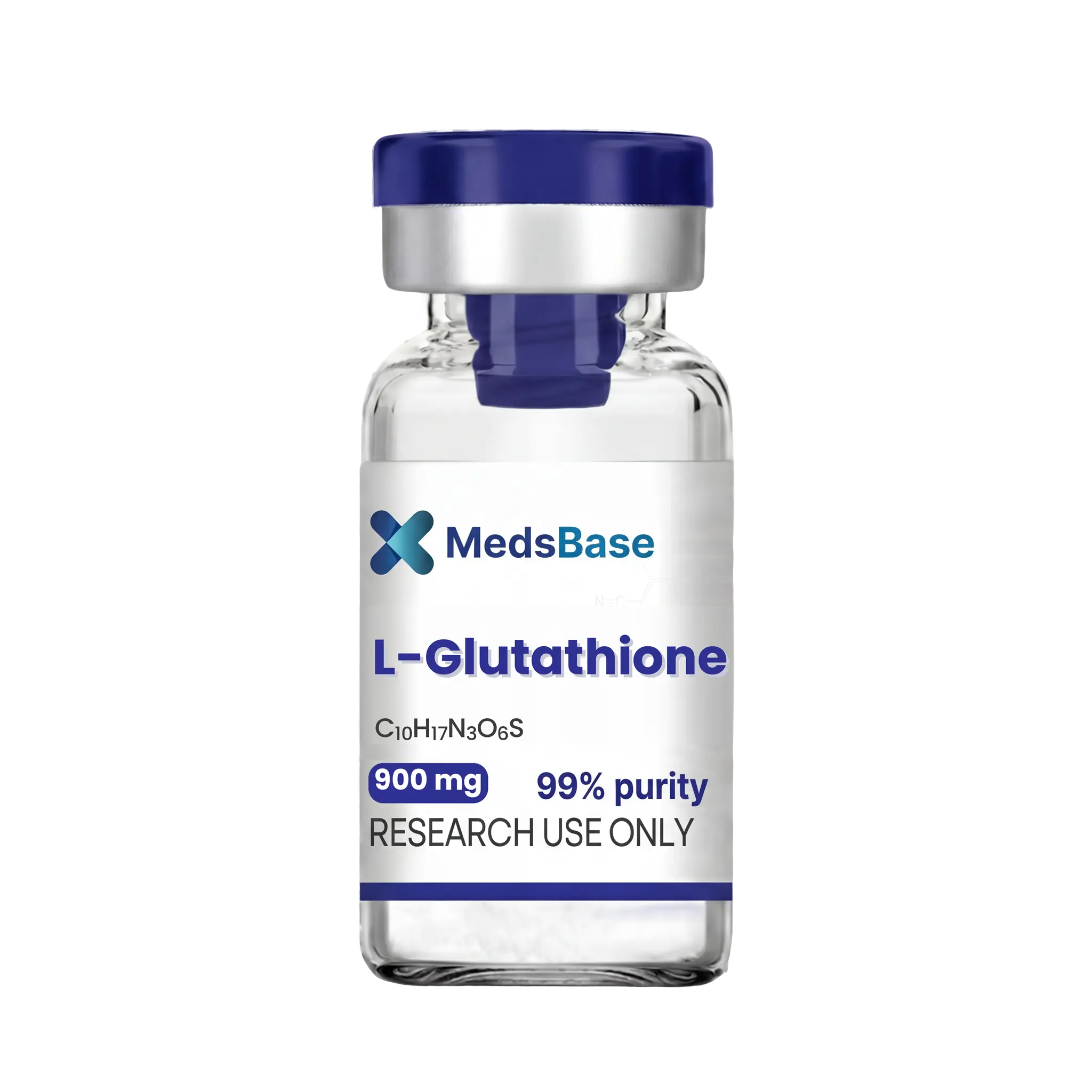
L-Glutathione (Reduced / GSH) Injectable — Pharmaceutical Grade
✅ γ-Glutamyl-Tripeptid (γ-Glu-Cys-Gly) – primäres zelluläres Nicht-Protein-Thiol
✅ GPx-Substrat (Peroxidreduktion) + GST-Co-Substrat (Xenobiotika-Konjugation) + Redox-Status-Puffer
✅ Einzigartige γ-Peptidbindung – Peptidase-resistent; nur γ-GT spaltet es
✅ Canonical reference compound for cellular antioxidant defence studies
✅ Lyophilisiertes USP-Grade-Reduktionsform; CAS 70-18-8, MW 307.32
L-Glutathion (Reduziert / GSH) contains the γ-glutamyl-cysteinyl-glycine tripeptide compound.
✓ Medizinisch überprüft von Morgan Ellis — Pharmazieforscher · 8 Jahre Erfahrung · Zuletzt überprüft: Mai 2026
Kurze Antwort — Was ist Glutathion (GSH)?
L-Glutathion (reduziert; GSH) ist das Tripeptid γ-Glutamyl-Cysteinyl-Glycin (γ-Glu-Cys-Gly), CAS 70-18-8, Summenformel C10H17N3O6S, MW 307.32 g/mol. GSH is the most abundant non-protein cellular thiol (millimolar intracellular concentrations) and the canonical reference compound for cellular antioxidant defence studies. The unique γ-Peptidbindung between glutamate’s γ-carboxyl and cysteine’s amino group (rather than the standard α-peptide bond) makes GSH resistant to common peptidases — only γ-glutamyltransferase (γ-GT) can cleave it. Cells use GSH as the primary electron donor for glutathione peroxidase-mediated hydrogen-peroxide reduction, as the conjugating co-substrate for glutathione-S-transferase-mediated xenobiotic detoxification, and as the redox-status buffer that controls protein thiol-disulfide equilibrium. Supplied here as lyophilized USP-grade powder for clinical studies use only.
📦 Jede Bestellung ist durch unsere Reshipment Assurance Policy abgedeckt — wenn Ihr Paket nicht innerhalb von 20 Werktagen ankommt, versenden wir es erneut.
| Spezifikation | Detail |
|---|---|
| Verbindungsklasse | γ-Glutamyl tripeptide; primary cellular non-protein thiol antioxidant; small-molecule peptide (γ-linked, peptidase-resistant) |
| Chemischer Name | L-Glutathion, reduziert (γ-L-Glutamyl-L-Cysteinyl-Glycin; Synonyme: GSH, Glutathion freie Säure, reduziertes Glutathion) |
| CAS-Nummer | 70-18-8 (reduzierte GSH-Form); verwandt: 27025-41-8 (oxidierte GSSG-Dimerform, hier nicht geliefert) |
| Molekularformel | C10H17N3O6S |
| Molekulargewicht | 307,32 g/mol (freie Säure) |
| Sequenz | γ-L-Glutamyl-L-cysteinyl-glycin (γ-Glu-Cys-Gly). Beachten Sie die γ-Peptidbindung Verbindung zwischen der γ-COOH-Seitenkette des Glutamats und der α-Aminogruppe des Cysteins, anstelle der üblichen α-Peptidbindung. Diese nicht-standardmäßige Verknüpfung macht GSH resistent gegen gewöhnliche α-Peptidasen — nur γ-Glutamyltransferase (γ-GT) spaltet es, was der geschwindigkeitsbestimmende Schritt beim extrazellulären GSH-Abbau und -Recycling ist. |
| Mechanismus | Drei primäre zelluläre Funktionen. (1) Elektronendonor für Glutathionperoxidase (GPx-Familie) — 2 GSH + H2O2 → GSSG + 2 H2O, die klassische zelluläre Wasserstoffperoxid-Reduktionsreaktion; GSSG wird dann durch NADPH-abhängige Glutathionreduktase zurück zu 2 GSH reduziert. (2) Co-Substrat für Glutathion-S-Transferase (GST-Familie) — konjugiert GSH an elektrophile xenobiotische und endogene Substrate, wodurch ausscheidbare Mercaptursäure-Konjugate entstehen (der zentrale Leber-Entgiftungsweg). (3) Redox-Status-Puffer — das GSH:GSSG-Verhältnis (typischerweise ~100:1 in gesunden Zellen) kontrolliert das Thiol-Disulfid-Gleichgewicht von Proteinen über Thioredoxin- und Glutaredoxin-vermittelten Austausch und reguliert tausende redox-sensitive Proteinaktivitäten. |
| Form | Lyophilized white-to-off-white crystalline powder; single-use vials. Hoch hygroskopisch — verschließen Sie die Fläschchen nach jeder Entnahme sofort wieder, um Feuchtigkeitsaufnahme zu vermeiden. |
| Reinheit | ≥99% (HPLC-verifiziert, COA auf Anfrage); Titration bestätigt ≥98% reduzierte GSH-Form (≤2% oxidierter GSSG-Gehalt). USP-Grade-Referenz. |
| Löslichkeit | Wasser 20 mg/mL; PBS (pH 7,2) 10 mg/mL — leicht löslich bei den angegebenen Fläschchenkonzentrationen. Die Thiolgruppe (-SH) macht GSH empfindlich gegenüber Luftoxidation — Arbeitslösungen sollten frisch aus dem lyophilisierten Fläschchen hergestellt und möglichst innerhalb von 24 Stunden verwendet werden. DMSO ist ein geeignetes Co-Lösungsmittel für die Vorbereitung von Zellkultur-Stammlösungen (bis zu 100 mg/mL) und bietet zusätzlichen Schutz vor Luftoxidation. |
| Lagerung | Lyophilisiert: 2–8 °C in originalverpackter, versiegelter Verpackung für kurzfristige Arbeitsbestände; −20 °C für die Langzeitlagerung ungeöffneter Fläschchen (stabil ≥36 Monate bei −20 °C; ≥18 Monate bei 2–8 °C). Rekonstituierte wässrige Lösungen: 2–8 °C, innerhalb von ~7 Tagen verwenden (Luftoxidation zu GSSG ist der limitierende Faktor). Lichtgeschützt lagern. Wiederholtes Einfrieren und Auftauen rekonstituierter Lösungen vermeiden — kumulative Zyklen beschleunigen die GSH → GSSG-Oxidation. |
Was ist L-Glutathion (reduziert / GSH)?
L-Glutathion (reduzierte Form, GSH) ist das am häufigsten vorkommende nicht-proteinogene zelluläre Thiol in der eukaryotischen Biologie — vorhanden in millimolaren intrazellulären Konzentrationen (1–10 mM in den meisten Zelltypen; bis zu 10 mM in Hepatozyten) und dient als Hauptpuffer für den zellulären Redox-Status. Strukturell handelt es sich um ein Tripeptid aus Glutamat, Cystein und Glycin (γ-Glu-Cys-Gly), CAS 70-18-8, Summenformel C10H17N3O6S, Molekulargewicht 307,32 g/mol.10H17N3O6S, molecular weight 307.32 g/mol. The defining structural feature of glutathione is its γ-Peptidbindung. Standardpeptide sind über α-Peptidbindungen zwischen der α-Carboxylgruppe einer Aminosäure und der α-Aminogruppe der nächsten verknüpft. Bei Glutathion ist die Bindung zwischen Glutamat und Cystein unkonventionell: Sie wird zwischen der γ-Carboxylgruppe of glutamate’s side chain and the α-amino of cysteine. This non-standard linkage is the molecular basis for glutathione’s resistance to common cellular peptidases — only γ-glutamyltransferase (γ-GT, GGT, EC 2.3.2.2) recognises and cleaves the γ-bond. As a result, glutathione is uniquely stable in the cellular cytosol where it would otherwise be rapidly degraded by α-peptidase activity, and γ-GT-mediated extracellular degradation is the rate-limiting step of glutathione recycling. Glutathione is synthesised in two ATP-dependent steps by the cytosolic enzymes Glutamat-Cystein-Ligase (GCL) — die die γ-Glutamyl-Cystein-Bindung bildet — und Glutathion-Synthetase (GSS) — which adds the C-terminal glycine. GCL is the rate-limiting enzyme and is feedback-inhibited by glutathione itself, providing autoregulation of cellular glutathione levels. Cysteine availability is the other major rate-limiting input — which is why N-acetylcysteine (NAC), a cysteine prodrug, is the canonical clinical intervention for boosting cellular glutathione synthesis in oxidative-stress and detoxification contexts (the basis of NAC’s approval for paracetamol overdose and other clinical indications). Glutathione exists in cells in two interconverting forms: the reduzierten Form (GSH) mit einer freien Thiolgruppe (-SH) und der oxidierten Form (GSSG) bei der zwei GSH-Moleküle durch eine Disulfidbrücke verbunden sind. Das GSH:GSSG-Verhältnis (typischerweise ~100:1 in gesunden Zellen, sinkend auf 10:1 oder weniger unter oxidativem Stress) ist der klassische zelluläre Redox-Biomarker. GSSG wird durch Glutathion-Reduktase (GR, GSR), an NADPH-dependent flavoenzyme — connecting the GSH redox system to NADPH availability and ultimately to the pentose phosphate pathway. This is why pentose-phosphate-pathway disruption (G6PD deficiency, glucose-6-phosphate availability) impairs GSH-system function and triggers oxidative cell damage. The pharmaceutical-grade material supplied here is the reduced GSH form, supplied as lyophilized powder for reconstitution and protocol use alongside the peptide catalogue.
Wirkmechanismus — Drei primäre zelluläre Funktionen
Der biologische Mechanismus von GSH ergibt sich aus drei primären zellulären Rollen, die alle in der veröffentlichten Biochemie gut charakterisiert sind:
- Substrat für Glutathionperoxidase (GPx) — Reduktion von Wasserstoffperoxid und Lipidperoxid — Die am häufigsten zitierte Rolle von GSH. Die GPx-Familie (GPx1–8, mit der selenabhängigen GPx1 als häufigster Isoform) katalysiert die Reaktion 2 GSH + ROOH → GSSG + ROH + H2O, wobei Wasserstoffperoxid und Lipidhydroperoxide zu Wasser bzw. Alkoholen reduziert werden. Dies ist die primäre Abwehr der Zelle gegen reaktive Sauerstoffspezies, die durch mitochondriale Atmung, NADPH-Oxidase-Aktivität und andere oxidative Prozesse entstehen. GPx4 ist die spezifische Isoform, die die Reduktion von Lipidhydroperoxiden katalysiert und das molekulare Ziel darstellt, dessen Funktionsverlust Ferroptose — the iron-dependent regulated cell death pathway that has become a major focus of recent cancer-studies and neurodegenerative-disease studies.
- Co-Substrat für Glutathion-S-Transferase (GST) — Konjugation von Xenobiotika und Endobiotika — Die GST-Familie (zytosolische, mikrosomale und mitochondriale Mitglieder; ~20 humane GST-Isoformen) katalysiert die Konjugation von GSH an elektrophile Substrate über die GSH-Thiolgruppe, wodurch GSH-S-Konjugat-Addukte entstehen, die anschließend durch γ-GT und Dipeptidasen zu Mercaptursäuren verarbeitet und ausgeschieden werden. Dies ist der zentrale Phase-II-Entgiftungsweg in Leber und anderen Geweben, der eine Vielzahl von Xenobiotika (Arzneimittelmetaboliten, Umweltchemikalien, Produkte der Phase-I-Cytochrom-P450-Metabolisierung), endogene Elektrophile (4-Hydroxynonenal, Acrolein aus Lipidperoxidation) und reaktive Intermediate (NAPQI aus Paracetamol, Grundlage der NAC-Therapie bei Paracetamol-Überdosierung) verarbeitet.
- Redoxstatus-Puffer — Regulation des Thiol-Disulfid-Gleichgewichts von Proteinen — The cellular GSH:GSSG ratio sets the thermodynamic equilibrium for protein-thiol redox state via thioredoxin- and glutaredoxin-mediated exchange. Thousands of cellular proteins have redox-sensitive cysteine residues whose thiol-disulfide state is regulated by this equilibrium — including key transcription factors (NF-κB, AP-1, Nrf2, p53), signalling kinases (PTPs, PTEN), apoptosis machinery (caspases), and metabolic enzymes (glyceraldehyde-3-phosphate dehydrogenase, others). GSH-mediated redox buffering is therefore not just an antioxidant defence but a signalling regulatory mechanism — a fact that has emerged in published studies over the past two decades and is one of the most-cited rationales for the use of GSH in protocols beyond simple antioxidant supplementation.
- Cystein-Reservoir und interorganer Aminosäurentransport — GSH dient als gewebestabiles, transportfähiges Reservoir für Cystein — die limitierende Aminosäure für die Neusynthese von Proteinen und weiterer GSH-Synthese. Freies Cystein ist metabolisch instabil (auto-oxidiert zu Cystin, kann H2S, etc.), daher hält der Körper seinen Cysteinpool größtenteils als GSH auf und transportiert Cystein zwischen Organen (insbesondere Leber → Niere, Leber → andere Gewebe) als GSH, das dann im Zielgewebe durch γ-GT wieder zu Cystein verarbeitet wird.
- Direkte Radikalfängerwirkung — Neben enzymatischen Funktionen reagiert GSH direkt mit Hydroxylradikalen, Peroxylradikalen und reaktiven Stickstoffspezies über die Thiolgruppe. Quantitativ trägt dies weniger zur gesamten antioxidativen Abwehr bei als der enzymvermittelte GPx-Mechanismus, ist jedoch in Kompartimenten und unter Bedingungen wichtig, in denen enzymatische Systeme gesättigt oder abwesend sind (extrazelluläres GSH in der Lungenflüssigkeit, GSH im Darmlumen etc.).
The pharmacokinetic profile of injectable GSH is well-characterised: IV administration produces rapid systemic distribution with peak plasma concentrations within minutes, but plasma half-life is short (~10–15 minutes) due to rapid γ-GT-mediated breakdown to cysteinylglycine and subsequent re-synthesis or further breakdown at target tissues. The brief plasma residence is one of the reasons why daily or twice-daily IV dosing protocols are common in published GSH studies. Cell-membrane permeability of intact GSH is low — cells primarily import the constituent amino acids and re-synthesise GSH intracellularly. This is why oral GSH is poorly bioavailable and why injectable preparations (or alternatively NAC as a cysteine prodrug) are required for effective tissue delivery in published studies.
Published Evidence
GSH is used in clinical contexts that investigate:
- Zelluläre antioxidative Abwehr – die kanonische Referenzverbindung — by far the most-cited cellular antioxidant in the published literature; standard reference compound for any new antioxidant intervention studies; the molecular gold standard for cellular redox-status analysis
- Hydrogen peroxide and lipid peroxide reduction studies — direct GPx substrate; used in published studies on GPx isoform pharmacology, peroxide-handling pathway dissection, and the integration of GSH with thioredoxin and peroxiredoxin redox systems
- Ferroptosis studies — GPx4-mediated lipid-hydroperoxide reduction is the gatekeeper of ferroptosis; GSH and its synthesis-pathway interventions (BSO, erastin, RSL3) are the canonical tools for ferroptosis induction / suppression studies in cancer, neurodegeneration, and ischaemia-reperfusion contexts
- Phase II detoxification and xenobiotic-conjugation studies — GST substrate for the central liver-detoxification pathway; used in studies on drug-metabolite handling, environmental-chemical exposure, paracetamol-induced hepatotoxicity (NAPQI scavenging), and the broader pharmacology of mercapturic-acid conjugation
- Protein-thiol redox signalling studies — the GSH:GSSG ratio controls thiol-disulfide equilibrium of thousands of cellular proteins; used in studies on redox-sensitive transcription factors (Nrf2, NF-κB, AP-1), kinase regulation (PTPs, PTEN), and the broader cellular “redoxome”
- Mitochondrial dysfunction and ageing studies — mitochondrial GSH levels decline with age and in many disease models; published studies uses exogenous GSH and GSH-pathway interventions to probe mitochondrial-redox contributions to ageing, neurodegeneration, and metabolic disease
- Hepatology and liver-injury studies — GSH is most abundant in hepatocytes (5–10 mM concentration); used in published studies on alcoholic liver disease, NAFLD/MASH, viral hepatitis models, and paracetamol-overdose / drug-induced liver injury
- Hematology and erythrocyte studies — erythrocyte GSH is the major defence against oxidative haemolysis; used in studies on G6PD deficiency, sickle-cell disease, oxidative haemolysis pharmacology
- Cancer redox and chemoprotection studies — many chemotherapeutic drugs generate ROS as part of their mechanism, and tumour cells often have elevated GSH levels; published studies uses GSH and GSH-pathway interventions to dissect chemotherapy redox biology
For broader context on cellular cofactor and redox / antioxidant compounds in this catalogue, see B12 (Cyanocobalamin) (small-molecule companion cofactor — methylation cycle), L-Carnitin (mitochondrialer Fettsäure-Shuttle — begleitendes kleines Molekül), NAD⁺ (direkte Dinukleotid-Pool-Supplementierung — Redox-Elektronentransport), 5-Amino-1MQ (NAD-Achsen-Schonung durch NNMT-Hemmung), und SS-31 (Elamipretide) (kardiolipinbindendes mitochondrial-targetiertes antioxidatives Peptid). Durchsuchen Sie das vollständige peptides & compounds catalog, oder siehe die kuratierte longevity compounds Hub.
Verfügbare Stärken und Konzentrationen
MedsBase stocks Glutathione in three lyophilized vial sizes calibrated to typical protocol dose ranges. Each strength is available in 10-vial, 20-vial, or 30-vial pack formats:
| Vial-Stärke | Typischer Anwendungsfall | Packungsgrößen |
|---|---|---|
| 600 mg | Standard strength — entry-level protocols, in-vitro antioxidant-defence panels, dose-titration work, single-cohort murine titration; convenient for reconstitution at 100–200 mg/mL working stocks | 10, 20 oder 30 Vials |
| 900 mg | Mid-strength — extended in-vivo rodent dosing protocols, IV-protocols, multi-cohort sample sizes, hepatology / oxidative-stress model studies | 10, 20 oder 30 Vials |
| 1500 mg | High-strength vial — clinical-translational dose-range protocols (Italian Tationil IV dosing is 600–2400 mg/d for hepatology studies), large-cohort metabolic studies, multi-arm comparator work; lowest per-mg cost | 10, 20 oder 30 Vials |
All three strengths are the same chemical entity (lyophilized L-glutathione reduced form, ≥99% HPLC purity, USP-grade titration-confirmed reduced-form content). The 1500 mg vial provides the lowest per-mg cost for clinical-translational protocols. Users should determine specific dose ranges from peer-reviewed literature appropriate to the protocol.
Wie es sich vergleicht — Glutathion vs NAD⁺
Glutathion und NAD⁺ sind die beiden am meisten untersuchten kleinen Moleküle der zellulären Redox / Coenzym-Verbindungen in diesem Katalog, und sie befinden sich auf verbundenen aber mechanistisch unterschiedlichen Zweigen der zellulären Redoxbiologie. GSH ist das Haupt zelluläre antioxidative Abwehr kleines Molekül — in millimolaren Konzentrationen vorhanden und reduziert Peroxide über den GPx-Substrat-Mechanismus. NAD⁺ ist das Haupt zellulärer Elektronentransport coenzyme — reducible to NADH for electron transport in glycolysis / TCA cycle / β-oxidation, and substrate for sirtuins and PARPs. The two systems are interconnected: NADPH (made from NAD via the pentose phosphate pathway) is the reducing equivalent that regenerates GSH from GSSG via glutathione reductase. Studies that probes cellular redox biology often manipulates both pools and compares the consequences.
| Kriterium | Glutathion (GSH) | NAD⁺ |
|---|---|---|
| Chemische Klasse | γ-Glutamyl-Tripeptid (γ-Glu-Cys-Gly) | Dinucleotid-Coenzym (Adenin + Nicotinamid + Diphosphat) |
| Molekulargewicht | 307,32 g/mol | 663,43 g/mol |
| Zelluläre Rolle | Antioxidative Abwehr — GPx-Substrat (Peroxidreduktion), GST-Cosubstrat (Xenobiotika-Konjugation), Redoxstatus-Puffer | Elektronentransport-Coenzym — Substrat für β-Oxidation, Glykolyse, TCA; Substrat für Sirtuine und PARPs |
| Zelluläre Konzentration | 1–10 mM (Millimolar — häufigstes nicht-proteinogenes Thiol) | ~0,3–1 mM (NAD-Pool, mikromolar bis hoch-µM) |
| Best-studied studies focus | Antioxidative Abwehr, Ferroptose, Phase-II-Entgiftung, Redox-Signalgebung, Hepatologie, Paracetamol-induzierte Schädigung | Sirtuin-Biologie, Langlebigkeit, zelluläre Alterung, NAD-Achsen-Redox-Regulation |
| Plasmastabilität | Kurz — ~10–15 min Halbwertszeit (γ-GT-vermittelter extrazellulärer Abbau) | Sehr kurz — Minuten (oxidiert und zerfällt schnell in Lösung) |
| Verbindung | NADPH (aus NAD abgeleitet) regeneriert GSH aus GSSG über Glutathionreduktase | NADPH-Verbindung verknüpft den NAD-Pool mit der Reduktionskapazität des GSH-Systems |
| Klinische Anwendung | Zugelassenes Injektionspräparat in Italien/Japan/Korea (Tationil und ähnliche; Hepatologie, oxidativer Stress) | Not approved as a clinical therapeutic; studies-only compound |
For studies focused on cellular antioxidant defence, ferroptosis, Phase II detoxification, or redox signalling, Glutathione is the canonical reference compound. For studies focused on sirtuin biology, longevity-axis biochemistry, or NAD-dependent redox regulation, NAD⁺ is the more targeted tool. The two compounds are commonly co-administered in studies that probes the integrated cellular-redox-system response to oxidative stress, ageing, or mitochondrial dysfunction.
Lagerung und Rekonstitution
Vor der Rekonstitution: Lagern Sie lyophilisierte Fläschchen gekühlt bei 2–8 °C in der originalversiegelten Verpackung. Für die Langzeitlagerung frieren Sie ungeöffnete Fläschchen bei −20 °C ein (stabil ≥36 Monate bei −20 °C; ≥18 Monate bei 2–8 °C). Lyophilisiertes GSH ist stark hygroskopisch — verschließen Sie die Fläschchen nach jeder Entnahme umgehend, um Feuchtigkeitsaufnahme zu vermeiden (was die GSH → GSSG-Oxidation beschleunigt). Lichtgeschützt lagern. Rekonstitutionsverfahren: Geben Sie steriles Wasser, bakteriostatisches Wasser oder PBS (pH 7,2) an die Seitenwand des Fläschchens (nicht direkt auf den lyophilisierten Kuchen). Für ein 600 mg-Fläschchen ergeben 6,0 mL Verdünnungsmittel eine 100 mg/mL Arbeitslösung; 3,0 mL ergeben 200 mg/mL. Für ein 900 mg-Fläschchen ergeben 9,0 mL 100 mg/mL; 4,5 mL ergeben 200 mg/mL. Für ein 1500 mg-Fläschchen ergeben 7,5 mL eine 200 mg/mL-Lösung; 15 mL ergeben 100 mg/mL. GSH löst sich schnell bei leichtem Schwenken bei Raumtemperatur. Kritisch für rekonstituiertes GSH: die Thiol-(-SH)-Gruppe ist luftoxidationsempfindlich — rekonstituierte Lösungen oxidieren allmählich zur GSSG-Form, auch bei Kühlung. Arbeitslösungen möglichst frisch aus lyophilisierten Fläschchen herstellen oder innerhalb von 7 Tagen nach Rekonstitution gekühlt verwenden. Für die Langzeitlagerung rekonstituierten Materials Chelatbildner (1 mM EDTA) zur Verlangsamung der metallkatalysierten Oxidation hinzufügen, unter Inertgasatmosphäre (Argon oder Stickstoff gespült) lagern oder DMSO als Co-Lösungsmittel verwenden (welches zusätzlichen Schutz bietet). Nicht wiederholt einfrieren und auftauen. Verwerfen bei sichtbarer Farbveränderung (gelb/braun) oder Ausfällung.
Häufig gestellte Fragen
Was ist der Unterschied zwischen reduziertem (GSH) und oxidiertem (GSSG) Glutathion?
GSH is the reduced form with a free thiol (-SH) group on its cysteine residue — the biologically active form that serves as the cellular antioxidant. GSSG is the oxidised dimer form where two GSH molecules are linked through their cysteine sulfurs by a disulfide bridge — the spent form that needs to be re-reduced to 2 GSH by glutathione reductase. The cellular GSH:GSSG ratio (typically ~100:1 in healthy cells, dropping to 10:1 or lower under oxidative stress) is the canonical biomarker of cellular redox status. We supply the reduced GSH form; users requiring GSSG specifically should consult dedicated suppliers.
Warum hat GSH eine γ-Peptidbindung statt einer normalen α-Peptidbindung?
Die nicht-standardmäßige γ-Peptidbindung zwischen dem γ-COOH von Glutamat und dem α-NH von Cystein2 verleiht Glutathion seine zelluläre Peptidase-Resistenz. Standardmäßige zelluläre α-Peptidasen (Aminopeptidasen, Carboxypeptidasen) erkennen nur α-Peptidbindungen und können die γ-Bindung nicht spalten. Nur γ-Glutamyltransferase (γ-GT, GGT) erkennt und spaltet die γ-Bindung — und γ-GT ist das geschwindigkeitsbestimmende Enzym des GSH-Abbaus, hauptsächlich exprimiert auf der apikalen Oberfläche von Epithelzellen (Niere, Gallenwege etc.). Diese nicht-standardmäßige Verknüpfung ist daher essentiell für die stabile intrazelluläre Akkumulation von Glutathion in millimolaren Konzentrationen.
Warum ist die orale Bioverfügbarkeit von GSH gering?
Intact GSH is poorly absorbed across the intestinal epithelium because: (1) the γ-peptide bond prevents recognition by the standard PEPT1 / PEPT2 di-/tri-peptide transporters that absorb other tripeptides; (2) γ-GT activity at the brush border degrades much of the orally-administered GSH to its constituent amino acids before absorption; (3) the cysteine that is liberated is then largely consumed by enterocyte first-pass GSH re-synthesis. The net oral bioavailability of intact GSH is therefore very low, which is why injectable preparations or N-acetylcysteine (NAC, a cysteine prodrug) are preferred for systemic GSH-boosting studies interventions.
What published dose ranges have been used in studies?
Injectable IV GSH protocol dosing typically uses 600–1200 mg per dose, daily or 2–3×/week, for 4–12 weeks in human-subject studies (mirroring the Italian Tationil approved-product dose range of 600–2400 mg/d). Rodent in-vivo work uses 50–150 mg/kg IV / IP, mirroring the dose range that produces reliable systemic GSH elevation despite the short plasma half-life. In-vitro cell-culture protocols typically use 0.5–10 mM in growth medium (cells take up cysteine from GSH and re-synthesise intracellular GSH). Users should consult primary literature appropriate to the specific application.
Warum ist die Plasmahalbwertszeit von GSH so kurz?
Plasma γ-GT activity rapidly cleaves the γ-peptide bond of circulating GSH to cysteinylglycine, which is then further cleaved by dipeptidases to cysteine + glycine. The combined γ-GT + dipeptidase cascade gives intact circulating GSH a plasma half-life of only ~10–15 minutes. This is why repeated daily dosing is used in clinical-protocols rather than single high-dose bolus regimens, and why N-acetylcysteine (NAC) — which is taken up intact and used for intracellular GSH synthesis — is sometimes preferred as a longer-acting cysteine-source alternative for cellular GSH boosting studies.
Can GSH be combined with B12, NAC, or other redox / cofactor compounds in protocols?
Yes — GSH is mechanistically connected to many other cellular-redox and cofactor compounds. Common protocol combinations include: GSH + NAC (parallel cysteine-source strategies — GSH as the intact tripeptide, NAC as the cysteine prodrug — to compare extracellular vs intracellular GSH-supplementation routes); GSH + B12 (oxidative-stress-related neurology and methylation-cycle studies); GSH + NAD⁺ (integrierte Redox-Pool-Analyse); GSH + SS-31 (mitochondrial-targeted redox studies). Reconstitute each separately just before use and add separately rather than co-storing reconstituted solutions.
How does this pharmaceutical-grade GSH compare with clinical preparations like Tationil?
Tationil (and similar branded clinical preparations available in Italy / Japan / Korea / Philippines) is reduced-form L-glutathione approved as a clinical injectable for hepatology and oxidative-stress indications. The pharmaceutical-grade GSH supplied here is the same reduced-form L-glutathione at ≥99% HPLC purity, supplied without a clinical-use label and intended for clinical studies only. Users seeking clinical-use GSH should obtain it through a clinical supply chain; users seeking pharmaceutical-grade material for in-vitro and in-vivo clinical protocols can use the material supplied here.
Steht GSH auf der WADA-Verbotsliste?
Nein. Glutathion steht nicht auf der WADA-Verbotsliste. Es ist ein natürlich vorkommendes zelluläres Antioxidans-Tripeptid, das in millimolaren Konzentrationen in jeder kernhaltigen Zelle vorhanden ist – daher unterliegt es keinen leistungssportlichen Regulierungsbeschränkungen.
Other Small-Molecule Companion Compounds
- B12 (Cyanocobalamin) — Cobalamin coenzyme — methylation-cycle companion
- L-Carnitin — Mitochondrial fatty-acid shuttle — closest small-molecule companion analogue
- NAD⁺ — Oxidised dinucleotide coenzyme — direct NAD-pool / electron-transport studies
- 5-Amino-1MQ — NNMT-Inhibitor — NAD-Achsen-Vorläuferschonung, Methylierungs-Pool-Pufferung
- SS-31 (Elamipretide) — Kardiolipin-bindendes mitochondrial zielgerichtetes antioxidatives Peptid
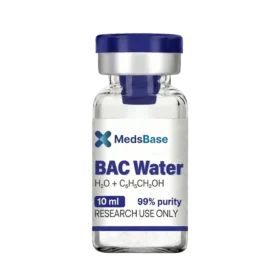
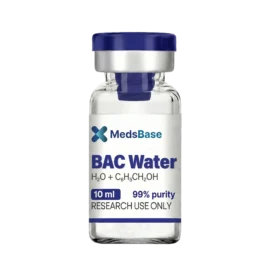
- BAC-Wasser (Bakteriostatisches Wasser) — Erforderlich zur Rekonstitution lyophilisierter Fläschchen — steriles, 0,9% Benzylalkohol-konserviertes Lösungsmittel
Weitere Optionen in Peptiden
Sortiert nach aktuellen MedsBase-Bestellvolumen — was andere Kunden in dieser Kategorie wählen.
| Stärke | 600 mg, 900 mg, 1500 mg |
|---|---|
| Menge | 10 Fläschchen, 20 Fläschchen, 30 Fläschchen |
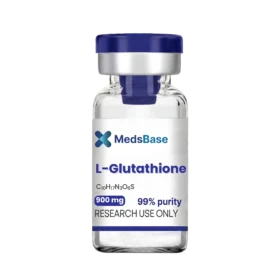 L-Glutathione (Reduced / GSH) Injectable — Pharmaceutical Grade
Fragen & Antworten
L-Glutathione (Reduced / GSH) Injectable — Pharmaceutical Grade
Ähnliche Produkte
Bewertungen
Es gibt noch keine Bewertungen.