







L-カルニチン(レボカルニチン)
✅ ミトコンドリアの長鎖脂肪酸シャトル(ペプチドではありません)
✅ CPT-I / CACT / CPT-II輸送機構の基質
✅ 脂肪酸化、インスリン感受性、心血管モデルで研究
✅ Acyl-CoA / free-CoA ratio buffer; sperm-motility studies
✅ レボカルニチンはカルニチン欠乏症に対してFDA承認(経口および静注)
L-カルニチン 合成レボカルニチンを含みます。
✓ 医学的監修: Morgan Ellis — 医薬品研究者 · 8年の経験 · 最終監修日:2026年5月
クイックアンサー — L-カルニチンとは?
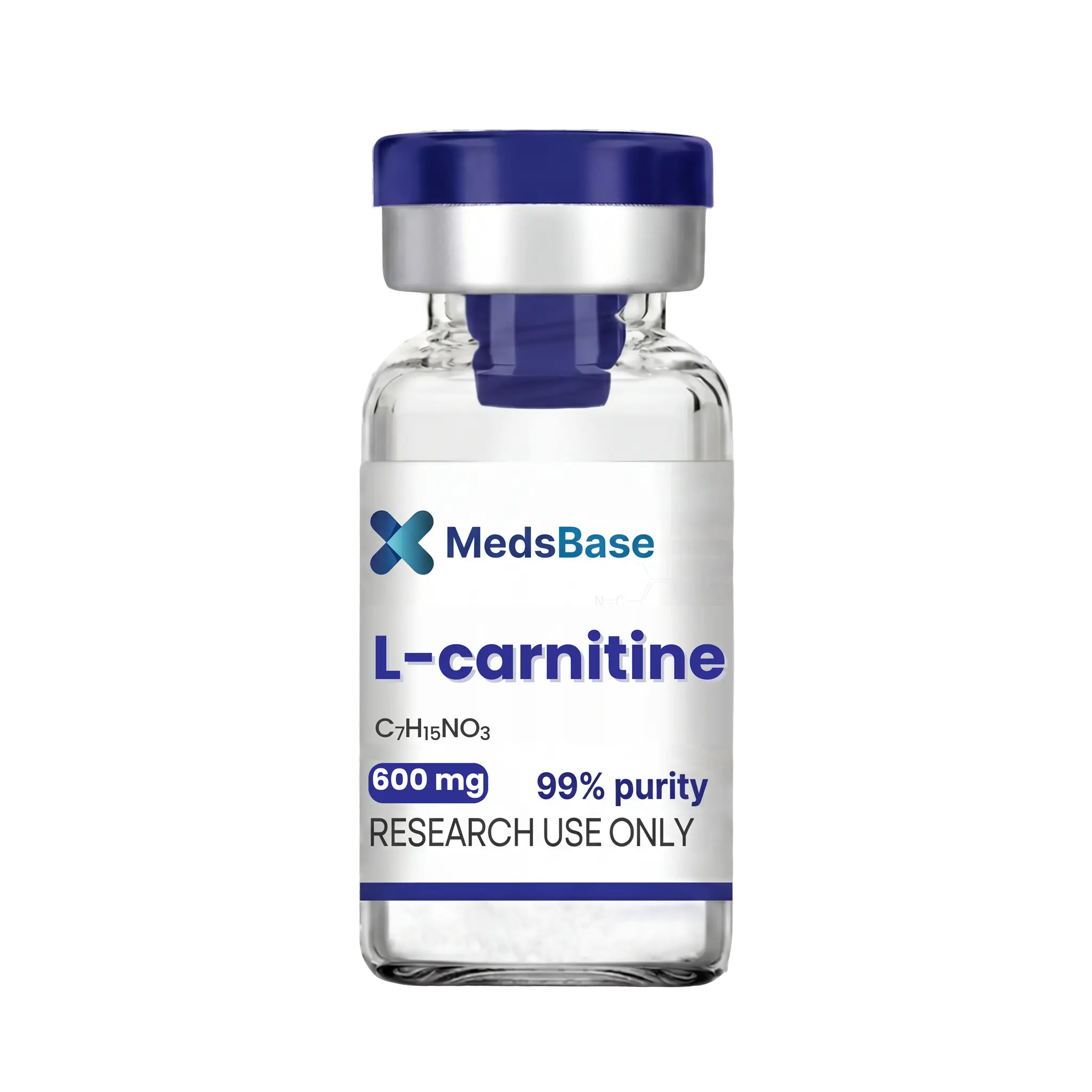
L-カルニチン (レボカルニチン;(3R)-3-hydroxy-4-(trimethylammonio)butanoate)は、小さな第四級アンモニウムアミノ酸誘導体であり — ペプチドではありません — that functions as the essential carrier molecule for transporting long-chain fatty acids across the mitochondrial inner membrane for β-oxidation. It is endogenously biosynthesised from L-lysine and L-methionine and is concentrated in skeletal muscle, heart, and liver. L-Carnitine is studied across mitochondrial-function studies, fat-oxidation physiology, insulin-sensitivity models, cardiovascular studies, neuroprotection (Alzheimer / autism in-vitro work), exercise physiology, and sperm-motility studies. Supplied in 600 mg and 1200 mg vials as levocarnitine USP-grade zwitterion for clinical studies use only. Stocked in our peptide catalogue alongside NAD⁺ as a complementary mitochondrial / metabolic support-injectable.
📦 すべてのご注文は、当店の 再発送保証ポリシー — 万が一、20営業日以内に商品が届かない場合は、再発送いたします。
| 仕様 | 詳細 |
|---|---|
| CAS番号 | 541-15-1(L-カルニチン内部塩/双性イオン) |
| タイプ | 第4級アンモニウムアミノ酸誘導体(ペプチドではありません);左旋性(3R)エナンチオマーは、カルニチンパルミトイル転移酵素(CPT-I/CPT-II)系を介してミトコンドリアの長鎖脂肪酸輸送を担う生物学的活性形態であり、L-リシンおよびL-メチオニンから内因性に生合成され、レボカルニチン(INN)またはビタミンBとも呼ばれるT 旧文献では |
| 分子式 | C7H15いいえ3 |
| 分子量 | 161.20 g/mol |
| IUPAC名 | (3R)-3-Hydroxy-4-(trimethylazaniumyl)butanoate |
| 配列 | 該当なし(低分子アミノ酸誘導体 — ペプチドではありません) |
| 形態 | 凍結乾燥粉末、白色~微黄色(双性イオン/内部塩形態) |
| 純度 | ≥99%(HPLC検証済み、COAはご要望に応じて提供) |
| 保管方法 | 凍結乾燥品:短期使用の作業用ストックは2~8 °C(冷蔵庫)、未開封バイアルの長期保管は−20 °C。溶解後:2~8 °C、約30日以内に使用。光から保護してください。溶解液の凍結融解の繰り返しは避けてください。レボカルニチンは吸湿性がありますので、使用後は速やかにバイアルを再封してください。 |
| 溶解性 | 水溶性が非常に高く(生理的pHでは双性イオン)、静菌水または滅菌水で穏やかに旋回させることで迅速に溶解します。特別な溶媒は不要です。調製液は、沈殿することなく約500 mg/mLまでの濃度で調製可能です。 |
L-カルニチンとは何ですか?
L-カルニチン (レボカルニチン)は、低分子で水溶性の第四級アンモニウムアミノ酸誘導体であり、分子式C7H15いいえ3 および分子量161.20 g/molです。これは ペプチドではありません — it is a single-residue zwitterionic molecule derived metabolically from the amino acids L-lysine and L-methionine through a multistep biosynthetic pathway distributed across kidney, liver, and brain. Only the (3R) enantiomer (the L-form / levo form / levocarnitine) is biologically active; the (3S) enantiomer (D-carnitine) is inactive and is now well-documented to interfere with the L-form’s transport, which is why pharmaceutical-grade material is supplied as the enantiomerically pure L-form rather than as racemic DL-carnitine. The molecule’s central physiological function is to serve as the 必須の運搬体 長鎖脂肪酸(Cを輸送するため12+) across the otherwise-impermeable mitochondrial inner membrane, where they are subsequently broken down by β-oxidation to acetyl-CoA, the substrate for the citric acid cycle and ATP synthesis. The transport machinery — carnitine palmitoyltransferase I (CPT-I) on the outer mitochondrial membrane, the carnitine/acylcarnitine translocase (CACT) across the inner membrane, and carnitine palmitoyltransferase II (CPT-II) on the matrix side — converts free fatty acids into acylcarnitines, ferries them across the bilayer, and releases them again as acyl-CoAs for oxidation. L-Carnitine is therefore the rate-limiting metabolite for fat oxidation in tissues with high oxidative demand: skeletal muscle, cardiac muscle, and liver. L-Carnitine is also a high-affinity buffer of the cellular acyl-CoA / free-CoA ratio. By accepting acyl groups onto its hydroxyl side chain, L-carnitine maintains the intracellular pool of free CoA that other CoA-dependent enzymes (pyruvate dehydrogenase, α-ketoglutarate dehydrogenase, fatty-acid β-oxidation) require to function. Carnitine deficiency therefore produces effects beyond fat oxidation alone — propagating into pyruvate handling, TCA-cycle flux, and overall mitochondrial bioenergetic balance. L-Carnitine has FDA approval (under the name レボカルニチン)を、ヒトの治療用途における 原発性および続発性カルニチン欠乏症 (oral and IV formulations) and is widely used in contexts that examine mitochondrial bioenergetics, fat oxidation, insulin sensitivity, cardiovascular function, neuroprotection, exercise physiology, and sperm motility.
作用機序 — ミトコンドリアにおける長鎖脂肪酸輸送
L-Carnitine’s central mechanism is documented across several decades of mitochondrial biochemistry studies:
- カルニチンパルミトイルトランスフェラーゼI(CPT-I) — ミトコンドリア外膜 — 長鎖脂肪酸はまず細胞質内で長鎖アシルCoAへと活性化されます。ミトコンドリア外膜に存在するCPT-Iは、アシル基をCoAからL-カルニチンの水酸基へ転移させ、長鎖アシルカルニチンを生成します。これはミトコンドリア脂肪酸酸化の律速段階であり、最も厳密に制御される段階です。CPT-Iは、マロニルCoA(摂食時の脂質合成代謝におけるアセチルCoAカルボキシラーゼの産物)によってアロステリックに阻害され、これによりインスリン/グルカゴンおよびAMPK系が脂肪酸酸化と脂肪合成のバランスを調節します。
- カルニチン/アシルカルニチントランスロカーゼ(CACT) — ミトコンドリア内膜 — CPT-Iによって生成された長鎖アシルカルニチンは、ミトコンドリア内膜を自由に通過できません。CACTはアンチポーターとして、細胞質側のアシルカルニチンとマトリックス内の遊離カルニチンを1:1の化学量論で交換し、アシルカルニチンをマトリックスへ送り届けるとともに、カルニチンをCPT-Iの再利用に回します。
- カルニチンパルミトイルトランスフェラーゼII(CPT-II) — ミトコンドリア内膜、マトリックス側 — マトリックス内ではCPT-IIがCPT-Iの反応を逆転させ、アシル基をカルニチンからマトリックスCoAへ転移し、長鎖アシルCoAを再生します。これによりβ酸化が可能になります。遊離したカルニチンはCACTを介して膜を横断し、次の輸送サイクルに戻ります。
- アシルCoA/遊離CoA比の緩衝と代謝の柔軟性 — 長鎖輸送に加えて、L-カルニチンは短鎖および中鎖アシル基(アセチルカルニチン、プロピオニルカルニチン)を受け取り、細胞内のアシルCoA/遊離CoA比を高容量で緩衝します。これにより、ピルビン酸デヒドロゲナーゼ、α-ケトグルタル酸デヒドロゲナーゼ、β酸化に必要な遊離CoAが維持されます。アセチルカルニチンの生成は、絶食、ケトン体産生、運動などで生じる過剰なアセチルCoAを安全に緩衝し、ミトコンドリア膜の外へ排出するメカニズムとしても機能します。
The pharmacokinetic profile of orally-administered L-carnitine is unusual: oral bioavailability is low (~15%) due to active intestinal saturation, with the remaining 85% subject to extensive bacterial degradation in the colon (yielding TMA and TMAO — a finding that has attracted attention in cardiovascular studies). Intravenous and intramuscular administration routes achieve much higher plasma levels and bypass the gut-microbial degradation pathway entirely, which is why pharmacological protocols commonly use parenteral administration despite the convenience of oral dosing.
Published Evidence
L-Carnitine is used in clinical contexts that investigate:
- ミトコンドリア機能と生体エネルギー学 — Seahorse/Oroborosを用いた呼吸測定、ミトコンドリア膜電位、ATP産生速度、初代肝細胞、骨格筋、心筋細胞培養における脂肪酸酸化速度
- 脂肪酸化と代謝柔軟性 — 骨格筋と肝臓におけるグルコース酸化と脂肪酸化の切り替え;インスリン抵抗性改善モデル;肥満げっ歯類およびDIO研究コホート
- Insulin sensitivity studies — improvement in skeletal-muscle insulin sensitivity in models of metabolic syndrome and type 2 diabetes preclinical studies; mechanistic dissection of the L-carnitine / acyl-CoA buffering / pyruvate handling axis
- Cardiovascular studies — angina, heart failure, ischemia-reperfusion injury, cardiomyopathy (in particular doxorubicin-induced cardiotoxicity and primary carnitine-deficiency cardiomyopathy); TMA/TMAO microbiome-axis cardiovascular studies
- Neuroprotection studies — Alzheimer-disease in-vitro models (acetylcarnitine specifically), Parkinson-disease models, peripheral diabetic neuropathy preclinical models, autism-spectrum studies where carnitine deficiency has been implicated
- Sperm motility and male fertility studies — epididymal acquisition of motility, mitochondrial energetics of sperm flagellar beat, antioxidant protection of spermatozoa; one of the most-studied compounds in male-fertility studies
- Exercise physiology and endurance studies — substrate utilisation during prolonged exercise, glycogen sparing, post-exercise recovery; studies interest in carnitine loading protocols and insulin co-administration to overcome muscle-uptake saturation
- Chronic kidney disease / haemodialysis studies — carnitine deficiency is common in dialysis-dependent end-stage renal disease patients and L-carnitine has FDA approval for this indication; preclinical studies continues on dialysis-related cardiomyopathy and muscle weakness
For broader context on mitochondrial and metabolic-axis compounds in this catalogue, see NAD⁺ (酸化型ジヌクレオチド補酵素、電子伝達系の中心的基質)、, SS-31 (Elamipretide) (ミトコンドリア標的型カルジオリピン結合ペプチド)、および MOTS-c (ミトコンドリア由来の代謝調節ペプチド)。全 peptides & compounds catalog 化合物選択のために。
利用可能な力価と濃度
MedsBase stocks L-Carnitine in two lyophilized vial sizes calibrated to typical protocol lengths. Each strength is available in 10-vial, 20-vial, or 30-vial pack formats:
| バイアル力価 | 代表的な使用例 | パックサイズ |
|---|---|---|
| 600 mg | Standard strength — dose-titration protocols, in-vitro mitochondrial-function panels, short-cycle in-vivo work, sperm-motility studies | 10、20、または30バイアル |
| 1200 mg | Extended-cycle or higher-dose protocols — long-arm metabolic studies, exercise-physiology saturation experiments, multi-cohort work; lowest per-mg cost | 10、20、または30バイアル |
Both strengths are the same chemical form (lyophilized levocarnitine zwitterion, ≥99% HPLC purity). Vial doses are deliberately much larger than the peptide range (5–20 mg) because L-carnitine is a small molecule used at gram-level doses — a 600 mg or 1200 mg vial corresponds roughly to a single intravenous dose in rodent or large-animal protocols. Users should determine specific dose ranges from peer-reviewed literature appropriate to the protocol.
比較 — L-カルニチン vs NAD⁺
L-カルニチンと NAD⁺ are the two non-peptide mitochondrial / metabolic support compounds in this catalogue, and they target completely different layers of mitochondrial bioenergetics. L-Carnitine sits on the fuel side ― 長鎖脂肪酸をマトリックス内に輸送し、β酸化に供します。NAD⁺が上に位置し 電子伝達系側 — it is the obligate electron acceptor for β-oxidation, glycolysis, and the TCA cycle, regenerated by Complex I of the electron transport chain. The two compounds are mechanistically complementary, and protocols sometimes combine them to probe upstream-substrate vs downstream-electron-flux contributions to mitochondrial output.
| 評価項目 | L-カルニチン | NAD⁺ |
|---|---|---|
| 化学分類 | 四級アンモニウムアミノ酸誘導体(単一の双性イオン) | ジヌクレオチド補酵素(アデニンとニコチンアミドヌクレオチドが二リン酸を介して結合) |
| 分子量 | 161.20 g/mol | 663.43 g/mol |
| ミトコンドリアにおける役割 | キャリア — 長鎖脂肪酸を内膜越しに輸送するシャトル | β酸化、解糖系、TCA回路における電子受容体;サーチュインやPARPの基質 |
| Best-studied studies focus | 脂肪酸化、インスリン感受性、心血管系、精子運動能、運動生理学 | サーチュイン生物学、長寿、細胞老化、NAD軸の酸化還元調節 |
| FDA承認 | はい — レボカルニチン、原発性/続発性カルニチン欠乏症(経口・静注)に対応 | No — compound only |
| 内因性生合成 | L-リシンとL-メチオニンから、腎臓/肝臓/脳で | トリプトファン(デノボ経由)またはニコチンアミド/ナイアシン(サルベージ経由)から |
| 血漿中安定性 | 安定 — 半減期は数時間 | 不安定 — 溶液中では半減期が数分と短く、急速に酸化・分解します |
| 一般的な用量 | 数百mgからグラム単位(げっ歯類/大型動物プロトコールでの単回投与) | 数十から数百mg(細胞培養:µM濃度) |
For studies focused on long-chain fatty-acid oxidation, cardiovascular metabolic function, insulin sensitivity, or sperm motility, L-Carnitine is the canonical reference compound. For studies focused on sirtuin biology, longevity-axis biochemistry, or NAD-dependent redox regulation, NAD⁺ より標的を絞ったツールです。こちらもご覧ください SS-31 (Elamipretide) for cardiolipin / inner-membrane-targeted mitochondrial studies and MOTS-c for mitochondrial-derived peptide-signalling studies.
保管方法と再溶解
再溶解前: 凍結乾燥バイアルは、短期使用の作業用ストックとして、元の包装のまま2~8 °Cで冷蔵保存してください。長期保存の場合は、未開封のバイアルを−20 °Cで冷凍保存してください。凍結乾燥L-カルニチンは、冷蔵で最大36か月、−20 °Cで最大60か月安定です。これは、低分子構造に加水分解されるアミド結合やジスルフィド架橋がないため、ほとんどの凍結乾燥ペプチドよりも大幅に安定しています。ただし、本化合物は, 吸湿性, そのため、各回の抜き取り後は速やかにバイアルを再封し、周囲の湿度への長時間の曝露を避けてください。 再溶解手順: 静菌水はバイアルの側壁に沿って注入してください(凍結乾燥ケーキに直接かけないでください)。600 mgバイアルの場合、3.0 mLの静菌水で200 mg/mLの使用濃度が得られ、1.2 mLでは500 mg/mLのストック溶液が得られます。1200 mgバイアルの場合、6.0 mLで200 mg/mLの使用ストックが、2.4 mLで500 mg/mLのストックが得られます。L-カルニチンは、穏やかに旋回させるだけで非常に速やかに溶解します(通常10~30秒以内)。これは、折りたたみ構造を持たない小さな双性イオンであるためです。溶解後は、バイアルを2~8 °Cで保存し、30日以内に使用してください。光から保護してください。濁り、粒子、または色の変化が現れた場合は廃棄してください。
よくある質問
L-カルニチンはペプチドですか?
いいえ。L-カルニチンは低分子の第四級アンモニウムアミノ酸誘導体(分子量161.20 g/mol)であり、, しません a peptide. We stock it in our studies-peptide catalogue alongside NAD⁺ because it serves a complementary role in mitochondrial / metabolic support and is supplied in the same injectable vial format. The spec table Sequence row is marked “n/a” for this reason.
L-カルニチンとアセチル-L-カルニチン(ALCAR)の違いは何ですか?
Acetyl-L-carnitine is L-carnitine with an acetyl group esterified to the hydroxyl side chain. ALCAR crosses the blood-brain barrier more efficiently and is the form most commonly used in CNS-focused studies (Alzheimer-disease, peripheral neuropathy). The base L-carnitine zwitterion that we supply here is the form used in peripheral metabolic support (cardiovascular, skeletal muscle, sperm motility, dialysis-related deficiency). The two compounds interconvert metabolically through carnitine acetyltransferase.
L-カルニチンとラセミ体DL-カルニチンの違いは何ですか?
Only the L (3R) enantiomer is biologically active. The D (3S) enantiomer is inactive and is now well-documented to interfere with L-form transport, accumulating in tissue and producing weakness and other adverse effects in long-term high-dose contexts. Pharmaceutical-grade levocarnitine (what we supply) is the enantiomerically pure L-form. The racemic DL-form is obsolete and is no longer used in either clinical or rigorous contexts.
Why is the dose so much larger than the peptide doses in this catalogue?
L-Carnitine is a small molecule (MW 161) and is used at gram-level doses — the body’s endogenous carnitine pool is approximately 25 g, concentrated in skeletal muscle. Study protocols typically use 100–500 mg/kg in rodent in-vivo work, which translates to hundreds of milligrams to grams per dose. Compare this to peptides (BPC-157, semaglutide, etc.) where typical doses are 100 µg to 5 mg per administration — three to four orders of magnitude smaller, reflecting the different molecular weights and the different receptor / mechanism scales.
What is the TMA / TMAO question I see in cardiovascular studies?
A subset of L-carnitine ingested orally is degraded by gut bacteria to trimethylamine (TMA), which the liver then oxidises to trimethylamine-N-oxide (TMAO). Elevated TMAO levels have been associated in epidemiological studies with adverse cardiovascular events, raising a controversy about whether long-term high-dose oral L-carnitine supplementation may be net-beneficial or net-harmful for cardiovascular endpoints. The question is active and unresolved. Parenteral L-carnitine bypasses the gut-microbial degradation pathway and is not subject to this concern.
What does CPT-I inhibition mean in metabolic support?
Carnitine palmitoyltransferase I (CPT-I) is the rate-limiting enzyme for mitochondrial long-chain fatty-acid uptake. Etomoxir is a classical CPT-I inhibitor used to block fat oxidation in study models; it is the pharmacological tool counterpart to the L-carnitine substrate. Study protocols sometimes combine L-carnitine supplementation (substrate side) with CPT-I inhibition (enzymatic side) to dissect substrate-limited vs enzyme-limited fat oxidation in different tissues and conditions.
Can I combine L-Carnitine with NAD⁺ in the same protocol?
Yes — the two compounds target different layers of mitochondrial bioenergetics (substrate transport vs electron transport), and combination is commonly used in studies that aims to probe upstream vs downstream limitations on mitochondrial output. They are chemically stable in solution together. Reconstitute each separately first to establish stability and concentration accuracy, then combine immediately before use rather than co-storing reconstituted vials.
What route of administration is used in published studies?
Intravenous and intramuscular routes are most common in pharmacological studies because they bypass the low (~15%) oral bioavailability and the gut-microbial TMA/TMAO degradation pathway. Subcutaneous administration is used in some rodent protocols. Oral administration is used in pharmacokinetic and nutritional studies where the bioavailability question is itself the studies focus.
ペプチドをもっと見る
最近のMedsBaseでの注文数に基づくランキング — このカテゴリーで他のお客様が選んでいる商品です。
| 含量 | 600 mg、1200 mg |
|---|---|
| 数量 | 10バイアル、20バイアル、30バイアル |
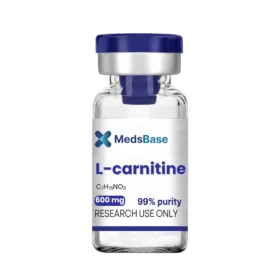 L-カルニチン(レボカルニチン)
Q&A
L-カルニチン(レボカルニチン)
関連商品
レビュー
まだレビューはありません