







Asitomycin 500

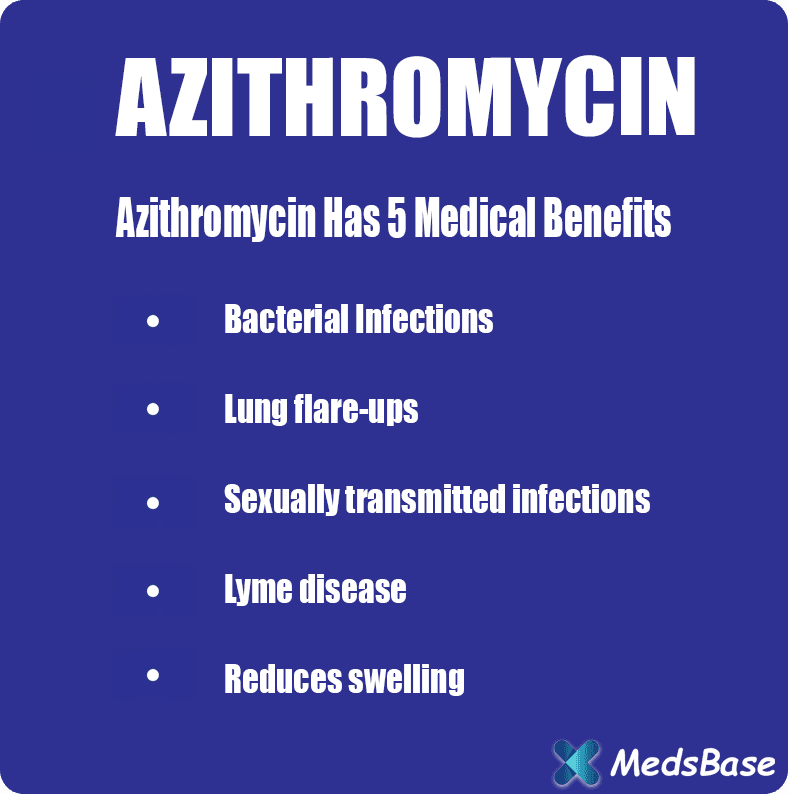

✅ Behandlar bakteriella infektioner
✅ Effektiv mot luftvägsinfektioner
✅ Bekämpar hudinfektioner
✅ Behandlar öroninfektioner
✅ Bekämpar urinvägsinfektioner
Asitomycin innehåller Azithromycin.
✓ Medicinskt granskad av Morgan Ellis — Apoteksforskare · 8 års erfarenhet · Senast granskad: maj 2026
⚡ Snabbt svar — Vad är Asitomycin 500?
Asitomycin 500 är en azithromycin 500 mg tablett — ett makrolidantibiotikum som används vid luftvägsinfektioner, hud- och mjukdelsinfektioner, klamydia och andra sexuellt överförbara infektioner, mellanöroninflammation och Mycoplasma lunginflammation. Vanliga doseringsscheman för vuxna är 500 mg en gång dagligen i 3 dagar (motsvarigheten till “Z-pack”) eller en enkel dos på 1 g för okomplicerad klamydia. Ta en gång dagligen med eller utan mat. Föredraget alternativ för patienter med penicillinallergi.
📦 Varje beställning omfattas av vår Reshipment Assurance Policy — om din försändelse inte anländer inom 20 arbetsdagar, skickar vi om den.
Varför beställa från MedsBase
Att beställa från MedsBase ger dig produkter från en WHO-GMP-certifierad tillverkare, diskret förpackning i vanliga kuvert, världsomspännande leverans och 4.9★ betyg från över 1 400 verifierade kunder. Kortbetalningar hanteras via en reglerad krypto-påfart — kontoutdraget kommer att visa processorns namn (en reglerad kortbetalningsprocessor), aldrig “MedsBase” eller något läkemedelsnamn. Varje försändelse täcks av vår Reshipment Assurance Policy.
Asitomycin 500 är en azithromycin 500 mg tablett — ett andra generations makrolidantibiotikum härlett från erytromycin. Azitromycin har ett brett spektrum som täcker grampositiva kocker, många gramnegativa respiratoriska patogener, atypiska organismer (Mycoplasma pneumoniae, Chlamydophila pneumoniae, Legionella), och de sexuellt överförbara patogenerna Chlamydia trachomatis och Neisseria gonorrhoeae (när det kombineras med ceftriaxon).
Azitromycins särskiljande drag är dess extraordinärt långa vävnadshalveringstid (60–70 timmar i vävnad jämfört med ~11 timmar i plasma) — detta är anledningen till att korta 3-dagars och till och med enkeldosregimer kan rensa infektioner som skulle ta 7–14 dagar med traditionella antibiotika. Det finns på WHOs modellista över essentiella läkemedel och är en grundpelare inom primärvård världen över.
Vad är Asitomycin 500?
Asitomycin är ett receptbelagt makrolidantibiotikum som är verksamt mot ett brett spektrum av bakterier. Det binder till 50S-enheten av den bakteriella ribosomen, blockerar proteinsyntesen och stoppar bakterietillväxten. Asitomycin 500 föreskrivs vanligtvis för:
- Samhällsförvärvad pneumoni — särskilt när atypiska organismer misstänks
- Akut bakteriell bronkit och förvärring av KOL — när antibiotika indikeras
- Bakteriell bihåleinflammation och svalginflammation — patienter med penicillinallergi
- Mellanöroninflammation — alternativ där amoxicillin inte kan användas
- Urogenital infektion orsakad av Chlamydia trachomatis — enstaka dos på 1 g har historiskt varit förstahandsval
- Gonorré (i kombination) — med ceftriaxon vid okomplicerad genitalinfektion enligt CDC:s riktlinjer
- Hud- och mjukdelsinfektioner — cellulit, erysipelas
- Bäckeninflammationssjukdom — som del av kombinationsbehandling
- Resediarré — förstahandsval i Syd- och Sydostasien på grund av fluorokinolonresistens
- Profylax mot Mycobacterium avium komplex (MAC) vid avancerad HIV
Hur fungerar Asitomycin 500?
Azitromycin är ett bakteriostatiskt makrolid vid terapeutiska doser (baktericid vid högre koncentrationer mot vissa organismer):
- Den binder till 23S rRNA av den 50S ribosomala subenheten, blockerar utgångstunneln genom vilken ny syntetiserade peptidkedjor måste passera
- Detta stoppar bakterieproteinets syntes utan att påverka mänskliga ribosomer (som är strukturellt olika)
- Azitromycin koncentrerar intracellulärt, särskilt i fagocyter som levererar det direkt till infektionsplatser
- Dess vävnadshalveringstid på 60–70 timmar innebär att en 3-dagars behandlingskurs ger 10 dagar av effektiva vävnadsmedelnivåer — vilket är anledningen till att korta behandlingsscheman fungerar för många infektioner
Asitomycin 500 Dosering och Administrering
| Indikation | Vuxendos | Varaktighet |
|---|---|---|
| Luftvägsinfektion (standard “Z-pack”) | 500 mg dag 1, sedan 250 mg dag 2–5 eller 500 mg dagligen | 3–5 dagar |
| Klamydia (okomplicerad urogenital) | 1 g (2 × 500 mg tabletter) | Enkel dos |
| Gonorré | 2 g + ceftriaxon 500 mg IM | Enkeldos kombination |
| Akut mediaotit (pediatrisk) | 30 mg/kg enkeldos eller 10 mg/kg/dag × 3 dagar | Som doserat |
| Resediarré | 500 mg dagligen ELLER 1 g enkeldos | 1–3 dagar |
| MAC-profylax (HIV) | 1 200 mg en gång i veckan | Pågående |
| Lever- / njurpåverkan | Försiktighet vid svår nedsättning | Vanligtvis ingen dosjustering nödvändig |
Hur man tar Asitomycin 500 korrekt
- Svälj tabletten hel med vatten – kan tas med eller utan mat (mat påverkar inte absorptionen av tabletten meningsfullt)
- Ta vid samma tid varje dag under en flerdagarsbehandling
- Avsluta hela den ordinerade behandlingen även om du känner dig bättre vid dag 2
- För enkeldosbehandling av klamydia, undvik sexuell kontakt i 7 dagar efter dosen för att förhindra vidarespridning (och partnerbehandling är viktig)
- Undvik antacider som innehåller aluminium eller magnesium inom 2 timmar efter dosering — de minskar absorptionen
- Håll dig väl hydrerad
Biverkningar av Asitomycin 500
Azitromycin tolereras vanligtvis väl. De vanligaste biverkningarna påverkar mag-tarmkanalen och är dosberoende.
| Allvarlighetsgrad | Biverkning |
|---|---|
| Vanliga (≥1 av 10) | Diarré, illamående, buksmärta |
| Vanliga (≥1 av 100) | Kräkningar, förändrad smakupplevelse, huvudvärk, yrsel, vaginal candidiasis, tillfällig ökning av leverenzymer |
| Ovanliga | Utslag, klåda, trötthet, tinnitus, hjärtklappning |
| Sällsynta men allvarliga | C. difficile kolit, svår hepatotoxicitet, Stevens-Johnson-syndrom / DRESS, QT-förlängning med torsades de pointes, hörselnedsättning vid långvarig högdosanvändning |
Sök akut medicinsk hjälp vid hjärtklappning eller svimning, gulsot, svår vattnig diarré med blod eller feber, eller utbrett utslag med slemhinneengagemang.
Varningar och försiktighetsåtgärder
- QT-förlängning. Azitromycin förlänger måttligt QT-intervallet. Undvik eller använd med försiktighet hos patienter med medfödd lång QT, okorrigerad hypokalemi eller hypomagnesemi, bradykardi, eller som tar andra QT-förlängande läkemedel (amiodaron, sotalol, kinoloner, metadon, antipsykotika).
- Leversfunktion. Sällsynta fall av allvarlig kolestatisk hepatit har rapporterats — undvik vid betydande leversvikt
- Myasthenia gravis. Makrolider kan förvärra myasteni — använd med försiktighet
- Graviditet och amning. Azitromycin anses säkert i båda — det har använts vid klamydiabehandling under graviditet i decennier
- Resistens. Resistens mot azitromycin hos Streptococcus pneumoniae och Neisseria gonorrhoeae ökar globalt; lokala riktlinjer föredrar nu ceftriakson som monoterapi för gonorré i många regioner
Kontraindikationer — Vem bör INTE ta Asitomycin 500
- Känd överkänslighet mot azitromycin, erytromycin eller något makrolid
- Tidigare kolestatisk gulsot eller leversvikt relaterad till azitromycin
- Medfödd långt QT-syndrom eller aktiv kombination av läkemedel som förlänger QT-intervallet
Läkemedelsinteraktioner
| Läkemedel / Klass | Interaktion |
|---|---|
| Läkemedel som förlänger QT-intervallet (amiodaron, sotalol, kinoloner, metadon, haloperidol, citalopram) | Additiv QT-förlängning — undvik kombination |
| Antacida (innehållande Al/Mg) | Minskar absorptionen — ta med 2 timmars mellanrum |
| Warfarin | Kan öka INR — övervaka noggrant |
| Digoxin | Azitromycin kan höja digoxinnivåer — övervaka för toxicitet |
| Ergotalkaloider | Risk för ergotism — undvik |
| Statiner (simvastatin, lovastatin) | Måttlig ökning av statinnivåer — övervaka för myopati |
| Ciclosporin, tacrolimus | Kan höja immunsuppressivanivåer — övervaka |
| Alkohol | Ingen direkt interaktion; måttlig intag tolereras |
Förvaringsinstruktioner
- Förvara under 25 °C på en torr plats, skyddat från direkt solljus
- Behåll i originalblisterförpackningen
- Förvara utom räckhåll för barn
- Använd inte efter utgångsdatumet
- Kassera oanvända tabletter via apotekets återtagssystem
Relaterade alternativ på MedsBase
- Azee — Cipla azithromycin, alternativt varumärke
- Mox — amoxicillin, penicillinbaserat alternativ
- Augmentin — amoxicillin + klavulansyra för beta-laktamasproducerande bakterier
- Erytromycin — äldre makrolid
- Ceftum — cefuroxim cefalosporin
- Bläddra bland alla antibiotika →
Vanliga frågor
Vad används Asitomycin 500 till?
Asitomycin 500 är ett azithromycin antibiotikum som används vid luftvägsinfektioner, hud- och mjukdelsinfektioner, klamydia, gonorré (i kombination med ceftriaxon), mellanöroninflammation och Mycoplasma / Legionella lunginflammation.
Hur snabbt verkar Asitomycin 500?
De flesta patienter märker förbättring inom 48–72 timmar. På grund av azithromycins mycket långa vävnadshalveringstid ger en 3-dagars behandlingskurs cirka 10 dagar av effektiva läkemedelsnivåer i vävnaden.
Är Asitomycin 500 samma sak som en Z-pack?
I princip ja — “Z-pack” är ett varumärkesregistrerat 5-dagars schema för azithromycin (500 mg dag 1 + 250 mg dag 2–5). Asitomycin 500 innehåller samma aktiva substans i samma styrka.
Kan jag dricka alkohol med Asitomycin 500?
Måttligt alkoholintag interagerar inte meningsfullt med azitromycin, men tungt drickande under en infektion fördröjer tillfrisknandet.
Bör jag ta Asitomycin 500 med mat?
Båda alternativen fungerar för tabletter. Om du tar suspension föredras en tom mage. Antacider som innehåller aluminium eller magnesium bör tas minst 2 timmar från dosen.
Kan Asitomycin 500 behandla klamydia?
Ja — en enkel dos på 1 g (två 500 mg-tabletter) har varit en standardbehandling för okomplicerad urogenital klamydia i många år. Doxycyklin 100 mg två gånger dagligen i 7 dagar föredras nu i många riktlinjer, men azitromycin förblir ett giltigt alternativ, särskilt när följsamhet är ett problem.
Jag är allergisk mot penicillin — kan jag ta Asitomycin?
Ja. Makrolider som azitromycin har ingen korsreaktivitet med penicillin och används rutinmässigt hos patienter med penicillinallergi.
Behandlar Asitomycin COVID-19?
Nej. Randomiserade studier (PRINCIPLE, RECOVERY) har visat ingen fördel med azitromycin vid COVID-19 utanför specifika fall av bakteriella superinfektioner. FDA, WHO och NICE rekommenderar mot rutinmässig användning för COVID-19.
Kommer Asitomycin att påverka min hjärtrytm?
Azitromycin kan förlänga QT-intervallet något. Hos patienter med befintliga hjärtrytmrubbningar eller som tar andra läkemedel som förlänger QT-intervallet, krävs hjärtmonitorering och dosövervägande. Sällsynta fall av torsades de pointes har rapporterats.
Hur länge bör jag vänta innan jag tar det igen?
En andra behandlingskurs kan ges när det är kliniskt indikerat. Upprepad användning inom korta intervall utan specifik indikation främjar resistensutveckling.
Relaterade alternativ
Andra produkter inom Sexuell hälsa som kunder även tittar på:
Fler alternativ vid klamydiabehandling
Rangerade efter senaste ordervolym på MedsBase — vad andra kunder i denna kategori väljer.

| Styrka | 500 mg |
|---|---|
| Kvantitet | 9 tabletter, 18 tabletter, 30 tabletter, 60 tabletter, 90 tabletter, 180 tabletter |
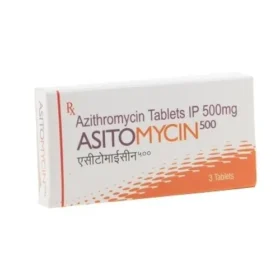 Asitomycin 500
Frågor & svar
Asitomycin 500
Relaterade produkter


Recensioner
Det finns inga recensioner än