







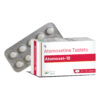
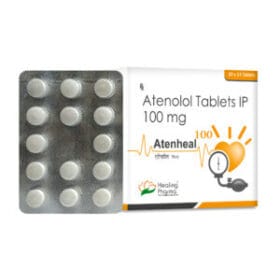
Atenheal

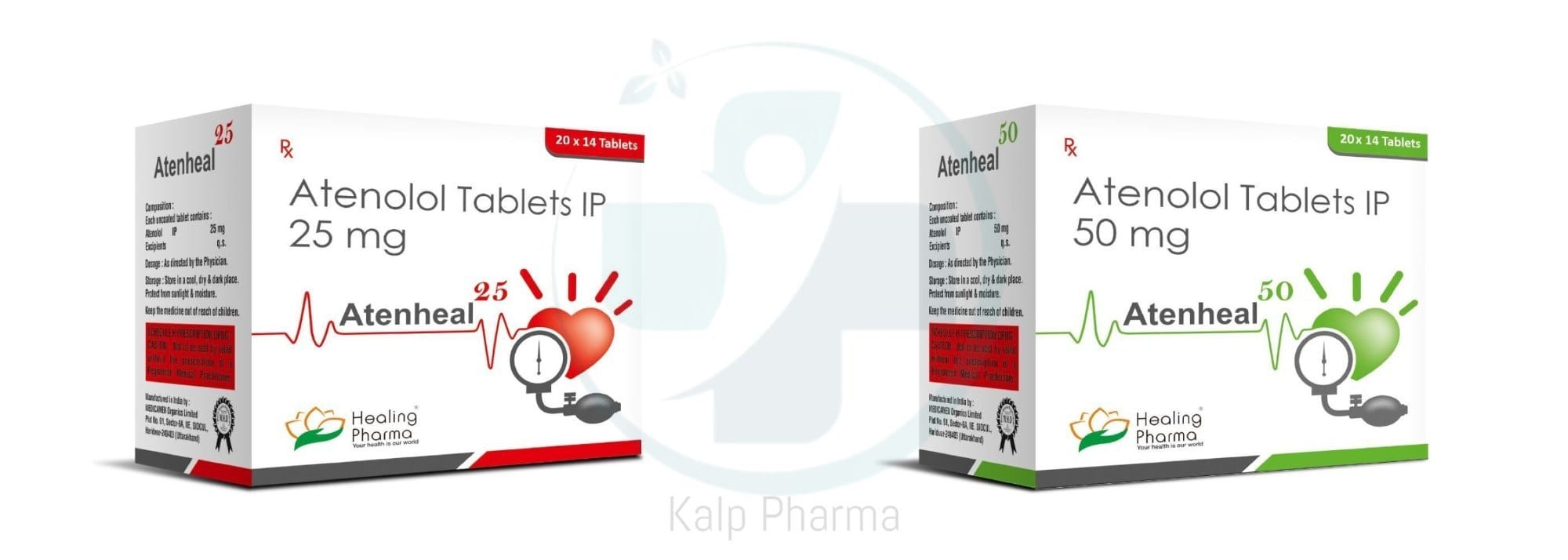

Atenheal är atenolol 25/50/100 mg tabletter — en kardioselektiv beta-1-blockerare. Förstahandsval vid angina och frekvenskontroll vid förmaksflimmer. Andrahandsval vid hypertoni (LIFE-studien visade sämre resultat jämfört med ARB-/CCB-baserade behandlingar). Hydrofil — minimala CNS-effekter. Utsöndras via njurarna — dosreducering krävs vid CKD.
✓ Medicinskt granskad av Morgan Ellis — Apoteksforskare · 8 års erfarenhet · Senast granskad: maj 2026
⚡ Snabbsvar — Vad är Atenheal?
Atenheal är en 25 / 50 / 100 mg atenolol tablett från en WHO-GMP-certifierad tillverkare — kardioselektiv (beta-1). Primärt användningsområde är högt blodtryck; används också vid angina, arytmikontroll, sekundärprevention efter hjärtinfarkt, även om atenololbaserad hypertonibehandling har sämre resultat jämfört med ACE-/ARB-/CCB-baserade regimen (LIFE-studien) — nu en andrahands blodtrycksmedicin. Typisk dos vid hypertoni: 25-100 mg en gång dagligen. Kontraindicerat vid astma (relativ kontraindikation för kardioselektiva preparat; absolut för icke-selektiva), svår bradykardi, andra/tredje gradens hjärtblock, akut dekompenserad hjärtsvikt och feokromocytom utan föregående alfa-blockad. Avbryt INTE abrupt – trappa ned över 1–2 veckor för att undvika reboundtakykardi/angina/hjärtinfarkt.
📦 Varje beställning omfattas av vår Reshipment Assurance Policy — om din försändelse inte anländer inom 20 arbetsdagar, skickar vi om den.
Varför beställa från MedsBase
Våra generiska läkemedel kommer från WHO-GMP-certifierade tillverkare och skickas världsvidt i diskreta, enkla förpackningar — inget läkemedelsnamn på försändelsens utsida. Kortbetalningar hanteras via en reglerad betalningsprocessor (kontoutdrag visar en reglerad kortbetalningsprocessor — aldrig “MedsBase” eller något läkemedelsnamn). Krypto och SEPA-banköverföring accepteras också. Varje beställning backas upp av vår Reshipment Assurance Policy.
Vad är Atenheal?
Atenheal är en oral tablett som innehåller atenolol 25 / 50 / 100 mg från en WHO-GMP-certifierad tillverkare, levereras i 30-180 tabletter. Atenolol är en kardioselektiv (beta-1). Introducerades 1976 som en av de första kardioselektiva betablockerarna. Tidigare förstahandsval vid hypertoni, nu i allmänhet nedgraderad till ett andrahands preparat — LIFE-studien (2002) och efterföljande metaanalyser visade att atenololbaserad hypertonibehandling gav sämre reduktion av stroke, hjärtinfarkt och total dödlighet jämfört med ARB-, ACE-hämmare- och kalciumantagonistbaserade regimen. Fortfarande brett använt för angina pectoris, frekvenskontroll och arytmibehandling.
Hur Atenolol Sänker Blodtrycket
Betablockerare sänker blodtrycket genom fyra mekanismer:
- Minskning av hjärtminutvolym — beta-1-blockad i sinusknutan minskar hjärtfrekvensen, och blockad i ventrikelmyokardiet minskar kontraktiliteten. Lägre hjärtminutvolym = lägre blodtryck.
- Hämning av renin-angiotensinsystemet — beta-1-blockad i juxtaglomerulära celler minskar frisättningen av renin, vilket sänker angiotensin II och aldosteron över 2-4 veckor. Detta står för en stor del av den långsiktiga blodtryckseffekten.
- Central sympatisk reduktion — lipofila betablockerare passerar blod-hjärnbarriären och minskar den centrala sympatiska utflödet.
Betablockerare är hydrofil — minimal penetration i CNS; en av anledningarna till att den är dåligt effektiv för migränprofylax (jämfört med propranolol) men ger färre CNS-biverkningar (mindre trötthet, livliga drömmar, depression). Plasmahalveringstiden för atenolol är 6-7 timmar (renalt utsöndrad).
Godkända och evidensbaserade användningsområden
- Hypertoni (primär indikation)
- Stabil angina pectoris — förblir förstahandsval för symtomlindring
- Frekvenskontroll vid förmaksflimmer
- Supraventrikulär takykardi
- Efter hjärtinfarkt — bevisen är något svagare än för metoprolol / carvedilol / bisoprolol
- Tyreotoxikos — symtomkontroll
- Situationsbunden ångest — lågdos för prestationsångest (även om propranolol föredras för sin CNS-penetration)
Atenheal Dosering
Dosering för vuxenhypertoni: 25-100 mg en gång dagligen.
Börja lågt, titrera uppåt över 2-4 veckor till måltryck (vanligtvis <140/90 vid okomplicerad hypertoni; <130/80 vid diabetes, kronisk njursjukdom eller etablerad hjärt-kärlsjukdom). Kontrollera vilopuls före varje dosökning — titrera inte om <55 slag/min.
Övervakning:
- Vilopuls och blodtryck vid 2, 4 och 8 veckor efter start eller dosändring
- Baslinje-EKG vid någon hjärtanamnes; periodiskt EKG om symtom förändras
- Njurfunktion (atenolol utsöndras via njurarna; dosreduktion vid eGFR <35)
Administrering: svälj hela med vatten. Ta vid ungefär samma tid varje dag.
Avslutning: Avbryt ALDRIG abrupt. Trappa ned över 1-2 veckor (minska med 25-50% varje 3-5 dagar). Plötsligt avbrott orsakar reboundtakykardi, förvärrad angina och — hos patienter med kranskärlssjukdom — kan utlösa hjärtinfarkt. Detta är en av de viktigaste säkerhetsåtgärderna för betablockerare.
Biverkningar
Vanliga (>5%):
- Trötthet, slöhet — anpassar sig ofta över 2-4 veckor
- Kalla händer och fötter (perifer vaskonstriktion)
- Bradykardi (kontrollera puls; avbryt om <50 slag/min)
- Trötthet vid fysisk ansträngning — maximal hjärtfrekens dämpas av betablockad
- Yrsel, postural hypotoni
- Minimala CNS-effekter (hydrofil)
- Nedsatt libido, erektil dysfunktion (främst vid högre doser)
Mindre vanliga: depression, nedsatt libido / erektil dysfunktion, magbesvär, Raynaud-liknande kölintolerans, bronkospasm (vanligare hos icke-selektiva preparat).
Viktigt men ovanligt:
- Maskerad hypoglykemi hos diabetiker — betablockerare dämpar varningstecknen som takykardi / tremor vid lågt blodsocker. Övervaka glukos noggrannare; föredra nebivolol eller bisoprolol vid insulinbehandlad diabetes.
- Bronkospasm — kan vara allvarlig vid astma / KOL. Absolut kontraindikation för icke-selektiva preparat; relativ för kardioselektiva.
- Hjärtblock eller försämrad hjärtsvikt — hos känsliga patienter. Börja lågt, titrera långsamt.
Kontraindikationer och försiktighet
- Svår astma/svår KOL — relativ kontraindikation (kardioselektivitet är relativ, inte absolut)
- Andra- eller tredjegrads atrioventrikulärt block (utan pacemaker)
- Sinusbradykardi <50 slag/minut
- Kardiogen chock, dekompenserad hjärtsvikt som kräver inotroper
- Svår perifer artärsjukdom, Raynauds syndrom (relativ)
- Feokromocytom utan föregående alfa-blockad — paradoxal hyperton kris (använd aldrig betablockerare före alfa-blockerare)
- Svår leversvikt (för substanser som metaboliseras i stor utsträckning i levern: propranolol, metoprolol, carvedilol, labetalol)
- Svår njursvikt — dosjustering krävs för substanser som utsöndras via njurarna (atenolol, nadolol)
- Överkänslighet mot atenolol
Graviditet: Kategori C; passerar placentan; liten risk för intrauterin tillväxthämning, neonatal bradykardi och hypoglykemi. Använd endast om fördelen tydligt överväger risken; labetalol är det föredragna betablockeringsmedlet under graviditet.
Amning: små mängder i bröstmjölk; anses generellt vara förenligt med övervakning.
Läkemedelsinteraktioner
- Verapamil, diltiazem (icke-dihydropyridin-KKB) — additiv bradykardi, hjärtblock och negativ inotropi; kombination bör i regel undvikas. Dihydropyridin-KKB (amlodipine, nifedipine) är säkrare att kombinera med betablockerare.
- Andra betablockerare — kombinera inte; additiv bradykardi
- Clonidine — om klonidin ska avslutas, avsluta betablockeraren först (flera dagar innan) för att undvika rebound hypertensiv kris
- Insulin och sulfonylurea — döljer varningssignaler för hypoglykemi; övervaka blodsocker noga
- NSAID — minskar den antihypertensiva effekten av betablockerare; undvik kronisk kombination
- Alkohol — additiv hypotoni och CNS-depression (särskilt för lipofila preparat)
Översikt av betablockerarklassen
| Betablockerare | Selektivitet | Bäst för |
|---|---|---|
| Propranolol (Inderal, Ciplar, Beloc) | Icke-selektiv | Migrän, tremor, tyreotoxikos, prestationsångest, HTN |
| Metoprolol | Kardioselektiv | Post-MI, HF-REF (succinat ER), angina, AF frekvenskontroll |
| Carvedilol | Icke-selektiv + α-1 | HF-REF (mortalitetsbevis), post-MI |
| Bisoprolol | Högt kardioselektiv | HF-REF, HTN, angina, AF frekvenskontroll |
| Nebivolol | Ultra-selektiv + NO | Äldre, metabolt syndrom, erektil dysfunktion |
| Atenolol | Kardioselektiv (hydrofil) | Angina, AF frekvenskontroll (andra val vid HTN) |
| Labetalol | Icke-selektiv + α-1 | Graviditetshypertoni, hypertensiv kris |
Renal excretion innebär dosreduktion behövs vid nedsatt njurfunktion (halvera dosen om eGFR 15-35; varannan dag om eGFR <15). Hydrofil profil innebär dålig effekt vid migrän och essentiell tremor — föredra propranolol för dessa indikationer.
Förvaring
Förvara Atenheal under 25°C. Håll utom räckhåll för barn — oavsiktlig intag av betablockerare hos barn kan orsaka livshotande bradykardi och hypoglykemi.
Vanliga frågor
Hur lång tid tar det för Atenheal att sänka blodtrycket?
Du bör se en viss blodtryckssänkning inom 1-2 dagar efter behandlingsstart; den fullständiga antihypertensiva effekten uppnås efter 2-4 veckor (orsakad av den gradvisa renin-angiotensin-suppressionen, inte den omedelbara hjärtfrekvenseffekten). Mät blodtrycket hemma samma tid varje dag för att följa effekten.
Kan jag ta Atenheal om jag har astma?
Atenolol är kardioselektivt, vilket gör det relativt säkrare vid astma jämfört med icke-selektiva medel. Dock är kardioselektiviteten relativ — vid högre doser kan fortfarande beta-2-blockad uppstå. Vid svår eller instabil astma, undvik alla betablockare om möjligt. Vid mild astma eller KOL, använd med övervakning och tillgång till inhalator.
Varför ska jag aldrig sluta med Atenheal abrupt?
Plötsligt avbrott orsakar återfallstakykardi och förvärrad angina inom 24-48 timmar, driven av uppreglering av betareceptorer under kronisk blockad. Hos patienter med kranskärlssjukdom kan detta utlösa en hjärtinfarkt eller instabil angina. Avtrappa alltid över 1-2 veckor vid upphörande.
Kommer Atenheal att påverka min träningsprestation?
Ja — betablockad dämpar hjärtfrekensresponsen vid träning, så din maximalpuls blir lägre och du blir trött snabbare vid höga intensiteter. För rekreationsmotion anpassar sig de flesta; för tävlingsutmattningsidrottare kan betablockare avsevärt försämra prestationen och är förbjudna i precisionssporter (skytte, bågskytte — där de minskar fysiologisk tremor).
Kommer Atenheal att påverka mitt blodsocker om jag har diabetes?
Betablockare maskerar varningssignaler för hypoglykemi som takykardi / tremor / hjärtklappning, vilket gör lågt blodsocker svårare att upptäcka. De kan också dämpa den motreglerande glukosresponsen. Övervaka glukos oftare vid betablockad, särskilt om du tar insulin eller sulfonylurea-preparat. Nebivolol och bisoprolol har den bästa metaboliska profilen.
Kan jag dricka alkohol när jag tar Atenheal?
Måttlig alkoholkonsumtion är generellt acceptabel, men alkohol förstärker de hypotensiva och CNS-deprimerande effekterna. Res dig upp långsamt efter att ha druckit. Alkohol är också en oberoende blodtryckshöjare; att minska intaget kan förbättra blodtryckskontrollen oberoende av Atenheal.
Orsakar Atenheal viktuppgång?
Äldre betablockerare (propranolol, atenolol, metoprolol) är förknippade med måttlig viktökning (1-3 kg) och försämrad insulinkänslighet över tid. Nebivolol och carvedilol är viktneutrala eller något viktgynnsamma på grund av sina vasodilatoriska komponenter. För patienter med metabolt syndrom, nebivolol är det föredragna betablockeraren när det behövs.
Är Atenheal säkert under graviditet?
Kategori C. Använd endast om fördelen tydligt överväger risken. För antihypertensiv användning under graviditet, labetalol är det föredragna betablockeraren; metyldopa och nifedipin är de två andra graviditetssäkra alternativen.
Kan jag ta Atenheal tillsammans med andra blodtrycksmediciner?
Ja — betablockerare kan kombineras väl med dihydropyridinkalciumkanalblockerare (amlodipine), ACE-hämmare (ramipril, lisinopril), ARB (losartan, telmisartan, olmesartan), och tiaziddiuretika (HCTZ). Undvik kombination med icke-dihydropyridin CCB (verapamil, diltiazem) — additiv risk för bradykardi och hjärtblock.
Var kan jag köpa Atenheal online?
Du kan köpa Atenheal (atenolol 25 / 50 / 100 mg tablett, 30-180 tabletter) från MedsBase med diskret förpackning och världsomspännande leverans.
Relaterade betablockerare & antihypertensiva
- Carloc — Carvedilol 3,125 mg (HF-starter)
- Labebet — Labetalol 100 mg (graviditetssäkert)
- Metomac — Metoprolol 25 mg
- Provanol — Propranolol 10 mg
- Provanol SR — Propranolol 80 mg SR
- Topme XL — Metoprolol ER 100 mg
- Bläddra bland alla blodtryckssänkande läkemedel
Relaterade alternativ
Andra produkter inom Kroniska tillstånd som kunder även tittar på:
Fler alternativ inom medicinering mot högt blodtryck
Rangerade efter senaste ordervolym på MedsBase — vad andra kunder i denna kategori väljer.
| Kvalitet | 28 tabletter, 56 tabletter, 84 tabletter, 168 tabletter |
|---|---|
| Styrka | 25 mg, 50 mg, 100 mg |
 Atenheal
Frågor & svar
Atenheal
Relaterade produkter




Recensioner
Det finns inga recensioner än