








Erytromycin
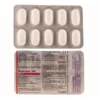
✅ Bekämpar bakterieinfektioner
✅ Behandlar akne effektivt
✅ Förebygger reumatisk feber
✅ Främjar respiratorisk hälsa
✅ Säker under graviditet
✓ Medicinskt granskad av Morgan Ellis — Apoteksforskare · 8 års erfarenhet · Senast granskad: maj 2026
⚡ Snabbsvar — Vad är Erythromycin?
Erythromycin är ett erythromycinpreparat som används vid streptokockfaryngit (vid penicillinallergi), atypisk pneumoni, klamydia under graviditet samt som lågdos prokinetikum vid gastropares. Tillverkat enligt WHO-GMP-standarder.
📦 Varje beställning omfattas av vår Reshipment Assurance Policy — om din försändelse inte anländer inom 20 arbetsdagar, skickar vi om den.
Varför beställa från MedsBase
Våra generiska läkemedel kommer från WHO-GMP-certifierade tillverkare och skickas världsvidt i diskreta, enkla förpackningar — inget läkemedelsnamn på försändelsens utsida. Kortbetalningar hanteras via en reglerad betalningsprocessor (kontoutdrag visar en reglerad kortbetalningsprocessor — aldrig “MedsBase” eller något läkemedelsnamn). Krypto och SEPA-banköverföring accepteras också. Varje beställning backas upp av vår Reshipment Assurance Policy.
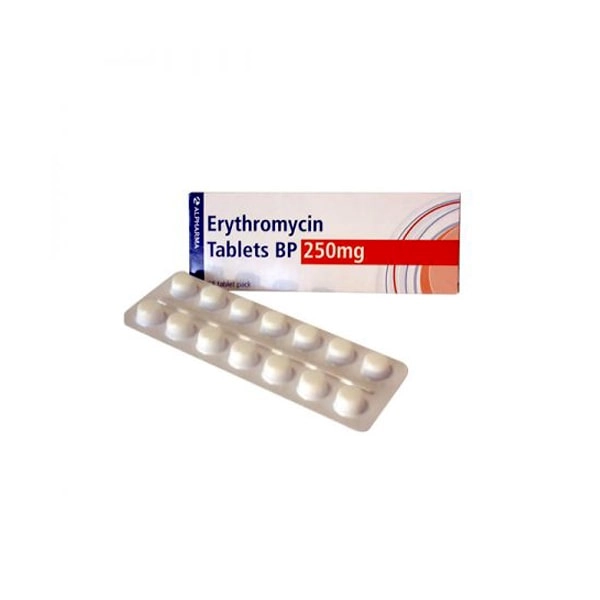
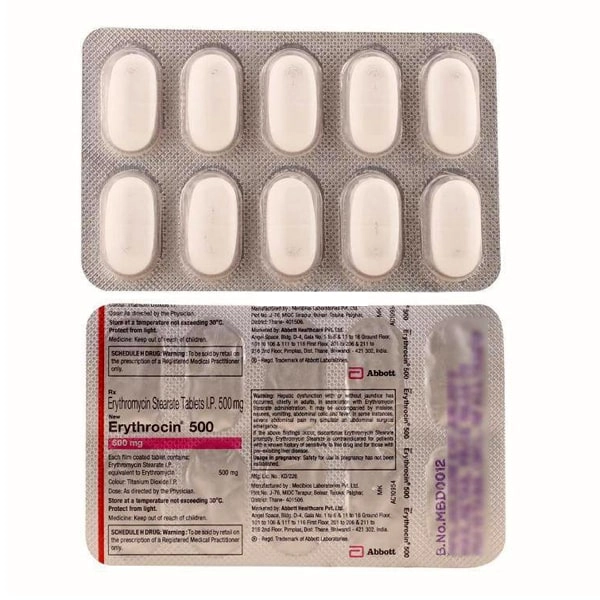
Erythrocin 250mg tablett tas via munnen, helst en timme före eller 2 timmar efter en måltid. Det tas bäst upp på tom mage. Det bör användas regelbundet med jämna mellanrum enligt läkarens ordination. Utför inte några doser och avsluta hela behandlingen även om du känner dig bättre. Att sluta med medicinen för tidigt kan leda till att infektionen återkommer eller förvärras.
Vanliga biverkningar som kan uppstå med denna medicin inkluderar kräkningar, illamående, buksmärtor och diarré. Dessa är vanligtvis tillfälliga och försvinner när behandlingen avslutas. Kontakta din läkare om dessa biverkningar inte försvinner eller kvarstår under en längre tid.
Informera din läkare om du har någon tidigare allergihistorik eller hjärtproblem innan du tar denna medicin. Gravida eller ammande kvinnor bör rådgöra med sin läkare innan de använder denna medicin.
ANVÄNDNING AV ERYTHROCIN TABLETT
- Bakteriella infektioner
FÖRDELAR MED ERYTHROCIN TABLETT
Vid bakterieinfektioner
BIVERKNINGER AV ERYTHROCIN TABLETT
Vanliga biverkningar av Erythrocin
- Kräkningar
- Illamående
- Buksmärta
- Diarré
HUR MAN ANVÄNDER ERYTHROCIN TABLETT
HUR ERYTHROCIN TABLETT FUNGERAR
Ansvarsfriskrivning:
Vår enda avsikt är att säkerställa att konsumenterna får information som är expertgranskad, korrekt och tillförlitlig. Informationen här ska dock INTE användas som ersättning för råd från en kvalificerad läkare. Informationen som tillhandahålls här är endast av informativ karaktär. Denna information kanske inte täcker alla möjliga biverkningar, läkemedelsinteraktioner, varningar eller försiktighetsåtgärder. Vänligen konsultera din läkare och diskutera alla dina frågor relaterade till sjukdomar eller läkemedel. Vår avsikt är att stödja, inte ersätta, relationen mellan läkare och patient.
Vanliga frågor
Vilka infektioner behandlar Erythromycin?
Erythromycin (erythromycin) är ett makrolidantibiotikum som används för samhällsförvärvad pneumoni, atypiska luftvägsinfektioner (Mycoplasma, Chlamydia, Legionella), kikhosta, Streptokockfaryngit hos patienter med penicillinallergi, hud- och mjukdelsinfektioner, akne och utvalda urogenitala infektioner inklusive icke-gonokockal uretrit. Det är också ett viktigt alternativ i erythromycininnehållande Helicobacter pylori utrotningsregimer.
Hur länge behöver jag ta Erythromycin?
Typiska behandlingskurser varar 5–14 dagar beroende på infektionen. Ta den med jämna mellanrum (var 8:e eller 12:e timme beroende på regimen). Makrolider har en lång postantibiotisk effekt — även efter den sista dosen förblir vävnadsnivåerna terapeutiska i flera dagar.
Vilka är de vanligaste biverkningarna?
Makrolider är välkända för sina biverkningar i mag-tarmkanalen — illamående, magkramp och diarré — eftersom de direkt stimulerar motilinreceptorer i tarmen. Erytromycin har också en klassvarning för förlängning av QT-intervallet; undvik kombination med andra läkemedel som förlänger QT-intervallet (citalopram, vissa antipsykotika, kinoloner, metadon) och diskutera med din läkare om du har känd lång-QT, elektrolytrubbning eller betydande hjärtsjukdom.
Interagerar erytromycin med andra läkemedel?
Makrolider (särskilt erytromycin och klaritromycin) är starka CYP3A4-hämmare, vilket höjer blodnivåerna av statiner (simvastatin och lovastatin bör pausas), warfarin, vissa kalciumkanalblockerare, ergotalkaloider (undvik helt), pimozid (undvik) och flera immunsuppressiva läkemedel. Lämna en fullständig medicinlista till din förskrivande läkare.
Kan jag ta erytromycin under graviditet?
Erytromycin anses generellt acceptabelt under graviditet när det behövs kliniskt — säkerhetsdata är omfattande. Erytromycinestolat (en specifik saltform) undviks under graviditet på grund av hepatotoxicitet hos modern, men andra formuleringar är acceptabla. Bekräfta alltid med din förskrivande läkare.
Kan jag dricka alkohol när jag tar erytromycin?
Det finns ingen direkt disulfiramliknande reaktion med makrolider, men måttlig till hög alkoholkonsumtion kan förvärra biverkningarna i mag-tarmkanalen och bör minimeras under behandlingen.
Andra antibiotika
Andra antibiotika som kunder även överväger:
Fler alternativ inom antibiotika
Rangerade efter senaste ordervolym på MedsBase — vad andra kunder i denna kategori väljer.
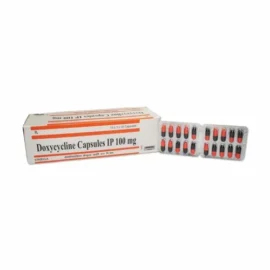



| Styrka | 250 mg, 500 mg |
|---|---|
| Kvantitet | 30 Tablett/er, 60 Tablett/er, 90 Tablett/er |
| Farmaceutisk form | Tabletter |
| Tillverkare | Pfizer Ltd |
| Behandling | Bakteriella infektioner |
| Generiskt märke | Erytromycin |
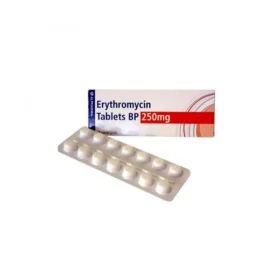 Erytromycin
Frågor & svar
Erytromycin
Relaterade produkter












Recensioner
Det finns inga recensioner än