







Mikacin Injektion
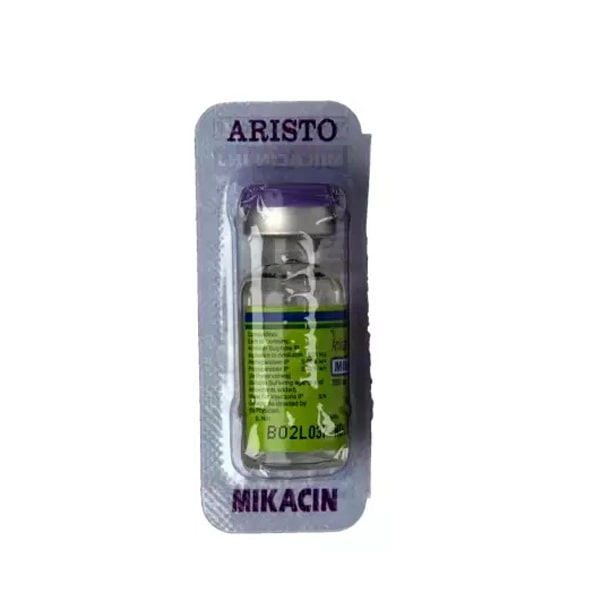
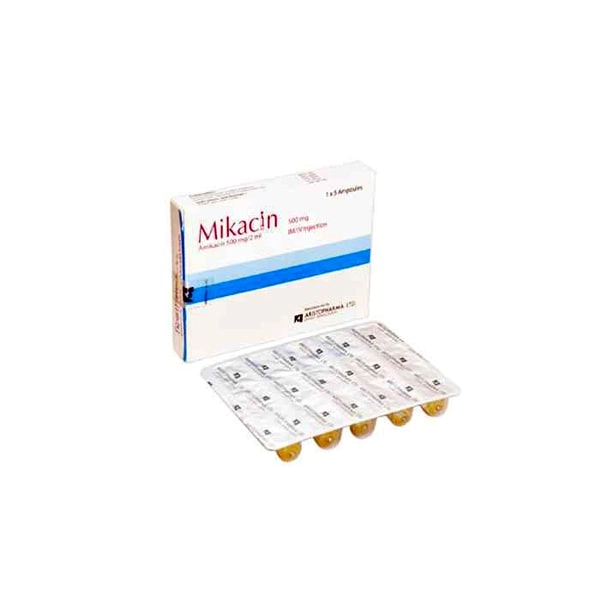

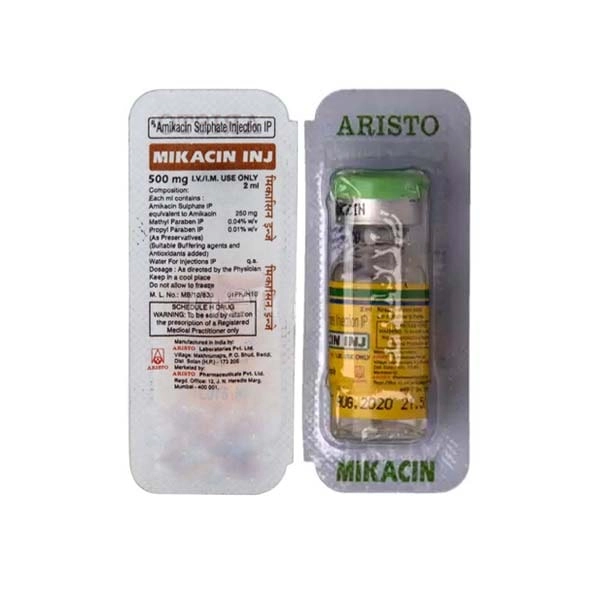



✅ Behandlar bakteriella infektioner
✅ Intramuskulärt eller intravenöst bruk
✅ Effektiv mot resistenta bakterier
✅ Minskar infektionssymtom
✅ Främjar snabbare återhämtning
✓ Medicinskt granskad av Morgan Ellis — Apoteksforskare · 8 års erfarenhet · Senast granskad: maj 2026
⚡ Snabbsvar — Vad är Mikacin Injektion?
Mikacin Injektion är en amikacin IV / IM-injektion (Aristo) — en aminoglykosidantibiotika för svår gramnegativ sepsis, Pseudomonas-pneumoni och komplicerad UVI. Endast för sjukhusbruk med obligatorisk läkemedelsmonitorering. Black-box: nefrotoxicitet, ototoxicitet, neuromuskulär blockad.
📦 Varje beställning omfattas av vår Reshipment Assurance Policy — om din försändelse inte anländer inom 20 arbetsdagar, skickar vi om den.
Varför beställa från MedsBase
Våra generiska läkemedel kommer från WHO-GMP-certifierade tillverkare och skickas världsvidt i diskreta, enkla förpackningar — inget läkemedelsnamn på försändelsens utsida. Kortbetalningar hanteras via en reglerad betalningsprocessor (kontoutdrag visar en reglerad kortbetalningsprocessor — aldrig “MedsBase” eller något läkemedelsnamn). Krypto och SEPA-banköverföring accepteras också. Varje beställning backas upp av vår Reshipment Assurance Policy.
Hur Mikacin Injection fungerar
Mikacin Injection innehåller amikacin, en aminoglykosidantibiotika som binder till den 30S-ribosomala subenheten, orsakar felavläsning av mRNA-kodon och hämmar bakterieproteinbiosyntesen. Den är baktericid med koncentrationsberoende dödande och en lång postantibiotisk effekt — vilket stödjer en gång daglig utsträckt intervall-dosering för de flesta indikationer. Spektrum: aeroba gramnegativa stavar (Pseudomonas aeruginosa, Klebsiella, Enterobacter, Serratia, Acinetobacter, Proteus, Citrobacter), och synergi med cellväggsaktiva läkemedel mot Enterococcus och viridans-streptokocker. Aktivitet mot atypiska mykobakterier (M. tuberculosis MDR-stammar, M. abscessus). Ingen aktivitet mot anaerober eller de flesta grampositiva som monoterapi.
Indikationer & dosering
| Indikation | Dos | Varaktighet |
|---|---|---|
| Svår gramnegativ sepsis (pyelonefrit, intraabdominell — kombination) | 15 mg/kg en gång dagligt (utsträckt intervall) ELLER 7,5 mg/kg var 12:e timme | 5–7 dagar sedan de-eskalera |
| Pseudomonas-pneumoni (kombination med cefepim / piperacillin-tazobaktam / meropenem) | 15 mg/kg en gång dagligt | 5–14 dagar |
| Komplicerad UVI / kateterassocierad | 15 mg/kg en gång dagligt | 5–7 dagar |
| Endokardit (kombination, gentamicinalternativ) | 7,5 mg/kg var 12:e timme | 4–6 veckor |
| MDR-TB-schema (specialistanvändning) | 15 mg/kg en gång dagligt | Per schema |
| MAC / M. abscessus (kombination) | 15 mg/kg tre gånger i veckan | Remittera till specialist |
Dosjustering: använd ideal kroppsvikt (eller justerad vikt vid fetma). Minska dosen/förläng intervallet vid nedsatt njurfunktion baserat på kreatininclearance. Terapeutisk läkemedelsövervakning är obligatorisk — måltopp 50–60 mg/L (förlängt intervall) och bottenvärde < 1 mg/L för de flesta indikationer.
Aminoglykosider orsakar dos- och tidsberoende nefrotoxicitet (15–25 % av behandlade patienter) och ototoxicitet — både vestibulär (balans/svindel) och kokleär (högfrekvent hörselnedsättning). Hörselnedsättning kan vara permanent; vestibulär skada är det ofta också. Riskfaktorer: hög ålder, nedsatt njurfunktion från början, uttorkning, samtidig användning av loopdiuretika/vancomycin/cisplatin/amfotericin B/NSAID/kontrastmedel, långvariga behandlingsförlopp (> 7 dagar). Aminoglykosider förstärker också neuromuskulär blockad — försiktighet vid myasthenia gravis och under narkos. Mitokondriell DNA-mutation m.1555A>G förutsäger svår, snabbdebuterande hörselnedsättning efter ens en enda dos; genetisk screening rekommenderas alltmer när snabbtester finns tillgängliga.
Biverkningar
- Nefrotoxicitet: icke-oligurisk akut tubulär nekros, vanligen reversibel om den upptäcks i tid och läkemedlet avbryts.
- Ototoxicitet: högfrekvent hörselnedsättning (kokleär) och/eller balansrubbningar (vestibulär). Ofta irreversibel. Testa före och under långvariga behandlingsförlopp.
- Neuromuskulär blockad: muskelsvaghet, andningsdepression — särskilt vid myasthenia gravis och under narkos.
- Lokala injektionsreaktioner; flebit vid intravenös administrering.
- Allergiska hudreaktioner.
Kontraindikationer
- Känd överkänslighet mot aminoglykosider.
- Svår förutbefintlig njur- eller hörselnedsättning.
- Myasthenia gravis (relativ — neuromuskulär blockad).
- Graviditet (särskilt första och andra trimestern) — relativ; risk för fosterototoxicitet.
- Samtidig användning av loopdiuretika hos äldre med nedsatt njurfunktion (additiv nefro-/ototoxicitet).
Läkemedelsinteraktioner
| Läkemedel | Effekt | Åtgärd |
|---|---|---|
| Loopdiuretika (furosemid / bumetanid) | Additiv ototoxicitet | Undvik kombination om möjligt |
| Vancomycin / cisplatin / amphotericin / intravenöst kontrastmedel / NSAID | Additiv nefrotoxicitet | Övervakning av njurfunktion dagligen |
| Neuromuskulära blockmedel (vecuronium, rocuronium) | Förlängd paralys | Kommunikation med anestesiteam |
| Cefalosporiner (hög dos) | Möjlig additiv nefrotoxicitet | Övervaka noggrant |
| Bisfosfonater / penicilliner / andra beta-laktamer (i samma spruta) | Aminoglykosider inaktiveras av beta-laktamer in vitro | Ge i separata infusionslinjer / tidsseparera |
Graviditet & amning
Aminoglykosider är kategori D — fosterototoxicitet rapporterad. Undvik under graviditet om inte livshotande infektion behandlas utan alternativ.
Förvaring
Förvara under 25 °C, skyddat från direkt solljus och fukt. Behåll i originalförpackning. Förvara utom räckhåll för barn. Kassera eventuella oanvända tabletter efter det tryckta utgångsdatumet — nedbrutna antibiotika kan förlora styrka eller frigöra nedbrytningsprodukter.
Detta läkemedel är endast effektivt mot bakterieinfektioner. Använd det inte för virussjukdomar (vanlig förkylning, de flesta halsont, influensa, COVID-19), avbryt inte behandlingen tidigt när du mår bättre, och spara inte rester till framtida infektioner. Missbruk leder till läkemedelsresistenta bakterier som MRSA, ESBL och CRE — WHO rankar antibiotikaresistens som en av de 10 största globala folkhälsoutmaningarna.
Vanliga frågor
Hur ges Mikacin-injektion?
Mikacin-injektion ges på sjukhus genom intramuskulär injektion eller intravenös infusion. Doseringen baseras på vikt och njurfunktion, med peak-/trough-terapeutisk drogmonitorering för att balansera effekt och toxicitet.
Hur lång varar behandlingen vanligtvis?
De flesta empiriska aminoglykosidbehandlingar varar 3–7 dagar som del av kombinationsbehandling, sedan trappas de ner baserat på odlingsresultat och klinisk respons. Endokardit och MDR-TB kräver betydligt längre specialistscheman.
Varför är hörselnedsättning ett bekymmer?
Aminoglykosider ackumuleras i hårceller i innerörat. Permanent skada på högfrekventa cochlea och vestibulär dysfunktion är dos- och tidsberoende. Audiometri rekommenderas före och under långvariga behandlingar.
Vad händer med mina njurar?
Akut tubulär nekros är den vanligaste toxiciteten (15–25% av behandlingarna). Det är vanligtvis reversibelt om läkemedlet avbryts snabbt — daglig kreatininmätning, urinprodukt och monitorering av dalnivåer upptäcker det tidigt.
Kan det interagera med min redan existerande svaghet?
Ja — aminoglykosider förstärker neuromuskulär blockad. Vid myasthenia gravis kan muskel svaghet förvärras kraftigt. Berätta för varje läkare om en myasthenia-diagnos före någon procedur.
Vad är en gång daglig dosering?
Moderna behandlingsregimer ger hela den dagliga dosen som en enda infusion (förlängd intervall dosering). Detta utnyttjar den långa postantibiotiska effekten och minskar njurtoxiciteten genom att låta läkemedlet rensas mellan doser. Dalnivåer styr tidpunkten för efterföljande doser.
Kan jag ta det under graviditet?
Aminoglykosider undviks vanligtvis under graviditet på grund av fosterototoxicitet. Använd endast vid behandling av livshotande infektioner utan alternativ.
Vad betyder “synergi med penicillin”?
För vissa allvarliga infektioner (enterokockendokardit, listeriameningit) ger kombinationen av en aminoglykosid och ett cellväggsverkande medel snabbare baktericid aktivitet än något av läkemedlena ensamt. Aminoglykosiddosen är lägre än för Gram-negativ sepsis.
Finns det ett säkrare alternativ för min Pseudomonas-infektion?
Cefepim, piperacillin-tazobaktam, meropenem, ceftolozan-tazobaktam och ceftazidim-avibaktam är alternativ. Aminoglykosider används vanligtvis i kombination snarare än som monoterapi på grund av resistens och toxicitet.
Vad ska jag berätta för framtida läkare om detta läkemedel?
Notera eventuella resultat från audiometri före och efter behandling, högsta kreatininvärde och den kumulativa dosen. Om du bär på en mitokondriell m.1555A>G-mutation, dokumentera detta – framtida exponering för aminoglykosider bör undvikas.
Aminoglykosider som Mikacin Injection (amikacin) hanterar Gram-negativ bakteriemi men bär på risk för njur- och ototoxicitet vid långvarig användning, så när odlingarna stabiliseras går kliniker ofta över till ett mindre nefrotoxiskt fluorokinolon som Lynx Injection (levofloxacin 2 ml IV) för resten av behandlingsperioden.
Andra antibiotika och antiinfektiva läkemedel
- Levomac (Levofloxacin) — respiratoriskt fluorokinolon
- Cifran (Ciprofloxacin) — UVI / GI / Pseudomonas-täckning
- Moxif (Moxifloxacin) — bred respiratorisk täckning med anaerob aktivitet
- Azee (Azitromycin) — alternativ för atypiska patogener
- Augmentin (Amoxicillin + klavulansyra) — beta-laktamalternativ
Fler alternativ inom antibiotika
Rangerade efter senaste ordervolym på MedsBase — vad andra kunder i denna kategori väljer.
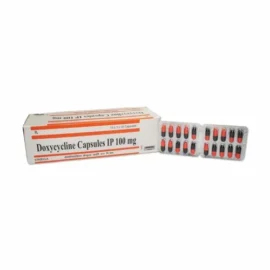

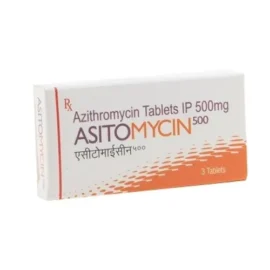
| Styrka | 100 mg, 250 mg, 500 mg |
|---|---|
| Kvantitet | 1 Injection/s, 3 Injection/s, 6 Injection/s |
| Farmaceutisk form | Injection/s |
| Tillverkare | Aristo Pharma |
| Behandling | Bakteriella infektioner |
| Generiskt märke | Amikacin |
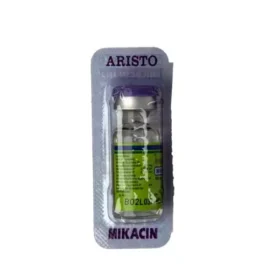 Mikacin Injektion
Frågor & svar
Mikacin Injektion
Relaterade produkter


Recensioner
Det finns inga recensioner än