







Pyridium
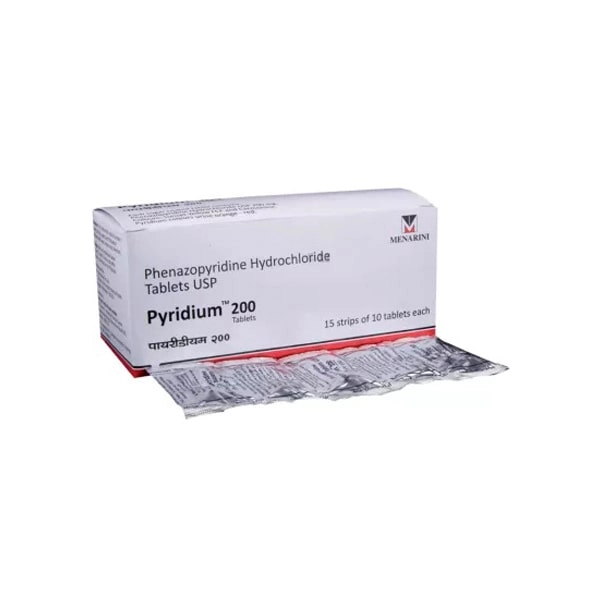
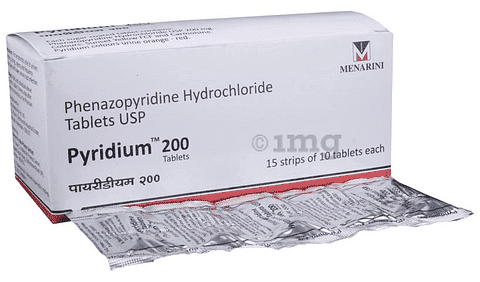
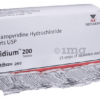
✅ Lindrar smärta vid urinering
✅ Minskar obehag i urinblåsan
✅ Dämpar trängningskänsla
✅ Snabbverkande formel
✅ Köpes utan recept
✓ Medicinskt granskad av Morgan Ellis — Apoteksforskare · 8 års erfarenhet · Senast granskad: maj 2026
⚡ Snabbt svar — Vad är Pyridium?
Pyridium är ett urinanalgetikum som lindrar brännande känsla, trängningar och frekvent urinering vid urinvägsinfektion. INTE ett antibiotikum — använd endast som ett 2-dagars komplement till definitiv antibiotikabehandling. Orsakar harmlös orange-röd färgning av urinen. Tillverkat enligt WHO-GMP-standarder.
📦 Varje beställning omfattas av vår Reshipment Assurance Policy — om din försändelse inte anländer inom 20 arbetsdagar, skickar vi om den.
Varför beställa från MedsBase
Våra generiska läkemedel kommer från WHO-GMP-certifierade tillverkare och skickas världsvidt i diskreta, enkla förpackningar — inget läkemedelsnamn på försändelsens utsida. Kortbetalningar hanteras via en reglerad betalningsprocessor (kontoutdrag visar en reglerad kortbetalningsprocessor — aldrig “MedsBase” eller något läkemedelsnamn). Krypto och SEPA-banköverföring accepteras också. Varje beställning backas upp av vår Reshipment Assurance Policy.
Pyridium-tabletter tas bäst med mat efter att ha ätit en mellanmål. Detta minskar risken för magbesvär som kan orsakas av läkemedlet. Generellt bör användningen av detta läkemedel inte överstiga 2 dagar. Konsultera din läkare angående dos och behandlingstid och följ instruktionerna noggrant.
Vanliga biverkningar av detta läkemedel inkluderar huvudvärk, illamående, kräkningar, diarré, utslag och urinförändring. Dessa biverkningar är vanligtvis tillfälliga och försvinner efter avslutad behandling. Om de kvarstår eller förvärras ska du dock meddela din läkare.
Innan du påbörjar behandling med detta läkemedel bör du tala om för din läkare om du är gravid, ammar eller lider av lever-, njur- eller hjärtsjukdomar. Du bör också berätta för din läkare om du tar andra läkemedel för samma tillstånd eller andra sjukdomar.
ANVÄNDNINGSFÖR PYRIDIUM-TABLETT
- Symtomatisk smärtlindring
FÖRDELAR MED PYRIDIUM-TABLETT
Vid symtomatisk smärtlindring
BIVERKNINGAR AV PYRIDIUM-TABLETT
Vanliga biverkningar av Pyridium
- Huvudvärk
- Illamående
- Kräkningar
- Diarré
- Utslag
- Urinförändring
HUR MAN ANVÄNDER PYRIDIUM TABLETT
Ansvarsfriskrivning:
Vår enda avsikt är att säkerställa att konsumenterna får information som är expertgranskad, korrekt och tillförlitlig. Informationen här ska dock INTE användas som ersättning för råd från en kvalificerad läkare. Informationen som tillhandahålls här är endast av informativ karaktär. Denna information kanske inte täcker alla möjliga biverkningar, läkemedelsinteraktioner, varningar eller försiktighetsåtgärder. Vänligen konsultera din läkare och diskutera alla dina frågor relaterade till sjukdomar eller läkemedel. Vår avsikt är att stödja, inte ersätta, relationen mellan läkare och patient.
Vanliga frågor
Är Pyridium ett antibiotikum?
Nej. Pyridium (fenazopyridin) är ett smärtstillande medel för urinvägarna — det lindrar brännande känsla, trängningar och smärta vid urinvägsinfektion, men det behandlar INTE den underliggande bakteriella infektionen. Det måste kombineras med ett riktigt antibiotikum (som nitrofurantoin, trimethoprim, fosfomycin eller en fluorokinolon) valt efter känslighet. Att använda Pyridium ensamt låter infektionen fortskrida.
Hur snabbt lindrar Pyridium UTI-symtom?
Vanligtvis inom 30–60 minuter efter den första dosen, med maximal lindring efter 2–3 timmar. De flesta behöver bara ta Pyridium i 2–3 dagar (tillsammans med en 3–7 dagars antibiotikakur) — symtomen försvinner vanligtvis innan antibiotikan har avslutat behandlingen av bakterierna.
Varför blir min urin orange?
Pyridium innehåller en stark orange-röd färgämne som utsöndras oförändrad i urinen. Färgförändringen är ofarlig och förväntad — men den kan permanent fläcka underkläder och kontaktlinser (ta bort linser under behandlingen). Den stör också urinstickprov, så meddela den som utför urinanalys.
Vem bör inte ta Pyridium?
Undvik vid betydande njursvikt (kreatininclearance under 50 ml/min — läkemedlet ackumuleras), G6PD-brist (risk för hemolys), svår leversjukdom och känd överkänslighet. Var försiktig hos äldre patienter och de med anemi. Data om graviditet och amning är begränsade; korta kurer används ibland under graviditet efter medicinsk rådgivning.
Vilka är biverkningarna av Pyridium?
Huvudvärk, yrsel och mild magbesvär är de vanligaste. Sällsynta men allvarliga: methemoglobinemi (cyanos, andnöd, huvudvärk — sök omedelbar vård), hemolytisk anemi vid G6PD-brist, och gulfärgning av huden eller ögonvitan som kan indikera methemoglobinemi eller leverskada.
Hur länge kan jag ta Pyridium?
Maximalt 2 dagar utan läkarutvärdering. Pyridium är ett symtomlindrande medel, inte en bot. Om smärtan kvarstår efter 2 dagar svarar den underliggande infektionen inte på antibiotikan och du behöver en ny utvärdering, urinodling och eventuellt ett alternativt antibiotikum.
Andra urinvägsmediciner
Andra urinvägsmediciner som kunder även överväger:
Fler alternativ inom antibiotika
Rangerade efter senaste ordervolym på MedsBase — vad andra kunder i denna kategori väljer.
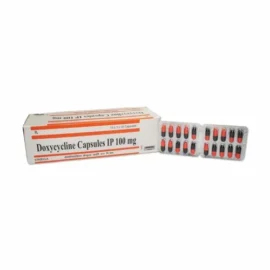


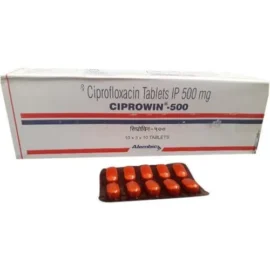
| Styrka | 200 mg, 250 mg, 500 mg |
|---|---|
| Kvantitet | 30 Tablett/er, 60 Tablett/er, 90 Tablett/er |
| Farmaceutisk form | Tabletter |
| Tillverkare | Menarini |
| Behandling | Bakteriella urinvägsinfektioner |
| Generiskt märke | PhenazopyridineC |
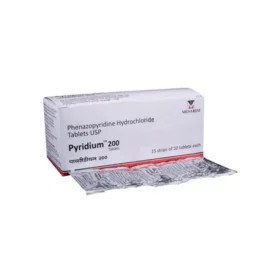 Pyridium
Frågor & svar
Pyridium
Relaterade produkter






















Recensioner
Det finns inga recensioner än