









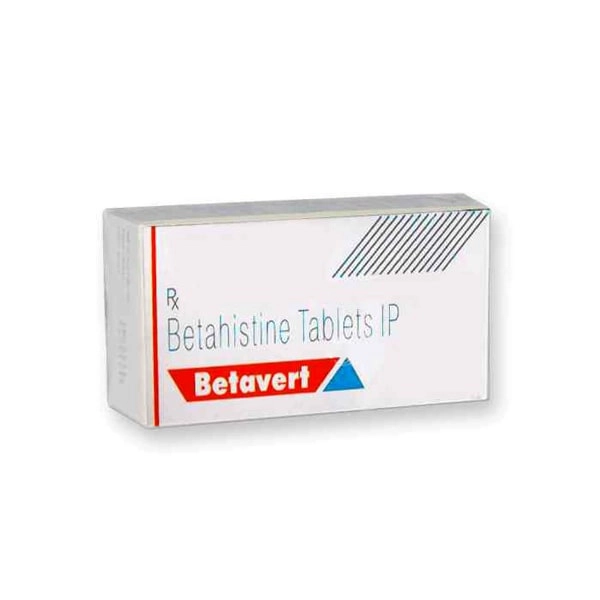
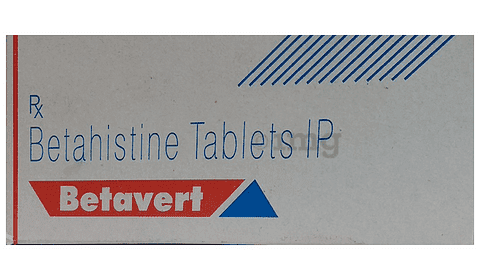
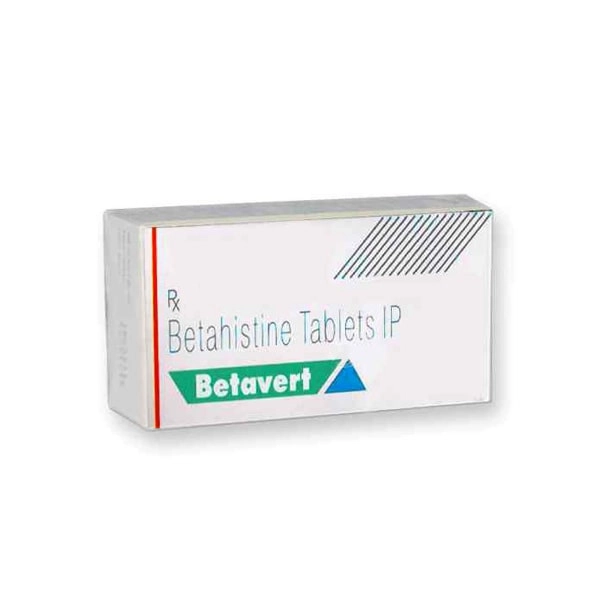
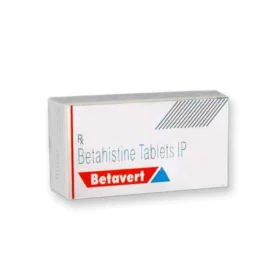
Betavert

✅ Reduserer anfall av vertigo
✅ Forbedrer balanse og stabilitet
Betavert inneholder Betahistin
✓ Medisinsk vurdert av Morgan Ellis — Farmasøytisk forsker · 8 års erfaring · Sist gjennomgått: mai 2026
⚡ Raskt svar — Hva er Betavert?
Betavert er en betahistin 8 / 16 mg tablett mot kronisk Ménières sykdom og annen perifer vestibulær vertigo. Det er en histaminanalog (svak H1 agonist + H3 antagonist) som forbedrer blodsirkulasjonen i cochlea og støtter vestibulær kompensasjon. Standard dose er 16 mg tre ganger daglig med mat. Virkningen er gradvis — 4–6 uker — så det er et vedlikeholdsmedikament, ikke et akuttmedikament. Ved akutte episoder bruk meclizin (Diligan) eller proklorperazin i stedet.
Hvorfor bestille fra MedsBase
📦 Hver ordre er dekket av vår Reshipment Assurance Policy — hvis pakken din ikke ankommer innen 20 virkedager, sender vi ny.
Betavert er Sun Pharma sin betahistin 8 / 16 mg tablett, spesielt brukt til perifer vestibulær vertigo og den klassiske triaden ved Menières sykdom: episodisk vertigo, sensorineural hørselstap og tinnitus. Betahistin har vært i klinisk bruk siden 1960-tallet og forblir det mest brukte spesifikke behandlingen for Menière i Europa og Asia.
Betavert skiller seg fra legemidler brukt mot reisesyke (meclizin i Diligan, dimenhydrinat, cinnarizin) og fra antiemetika brukt ved akutt vertigoanfall (proklorperazin, prometazin). Feil medikamentklasse for feil type vertigo gir liten effekt.
Hva Betavert brukes til
- Menières sykdom — den klassiske indikasjonen; reduserer hyppighet og alvorlighetsgrad av vertigoanfall; kan gi beskjeden bedring av tinnitus og hørselsvariasjoner
- Perifer vestibulær vertigo — tilbakevendende rotasjonssvimmelhet fra indre øre eller vestibulærnerve
- Vestibulær nevritt (gjenopprettingsfase) — støtter sentral kompensasjon som del av et vestibulært rehabiliteringsprogram
- BPPV (adjuvant) — kanalitreposisjonsmanøvrer (Epley, Semont) forblir førstevalg; betahistin er kun støttende
Betahistin er ikke indikert for reisesyke, svimmelhet ved posturalt trykkfall, sentral (hjernesentrert) vertigo, eller generell uspesifikk svimmelhet.
Hvorfor bestille fra MedsBase
Betavert leveres fra en WHO-GMP-sertifisert produsent, blisterpakket og diskret sendt over hele verden. Hver ordre er dekket av vår Reshipment Assurance Policy — hvis den ikke ankommer innen 20 virkedager sender vi ny forsendelse på vår bekostning. Over 1 400 verifiserte kunder — les anmeldelser.
Hvordan Betahistin Virker
Betahistins nøyaktige virkemåte i det indre øret er fortsatt debattert, men flere virkninger er beskrevet:
- Vasodilatasjon av mikrosirkulasjonen i stria vascularis i det indre øret — antas å redusere endolymfatisk trykk ved Menière's sykdom
- H3 reseptorantagonisme i vestibulære kjerner — øker histaminomsetning og støtter vestibulær kompensasjon
- Svak H1 agonisme ved postsynaptiske steder
- Forbedrer symmetrien i vestibulær nerveaktivitet under rekonvalesens fra ensidig vestibulær skade
Start på klinisk effekt er gradvis — de fleste pasienter trenger 4–6 uker en tilstrekkelig dose før hyppigheten av vertigoepisoder reduseres. Dette er grunnen til at Betavert er et forebyggende middel, ikke et akuttmiddel.
Dosering
| Scenario | Dose | Merknader |
|---|---|---|
| Menières sykdom (standard) | 16 mg tre ganger daglig (48 mg/dag) | BEMED-studie-støttet mål-dose for moderat til alvorlig sykdom |
| Startdose | 8 mg tre ganger daglig | Øk dosen etter 2–4 uker ved delvis respons |
| Vedlikeholdsbehandling når sykdommen er kontrollert | 8–16 mg tre ganger daglig | Fortsett i måneder; trapp ned under medisinsk veiledning når vedvarende kontroll er oppnådd |
| Maksimal daglig dose | 48 mg/dag | Delt i 2–3 doser; høyere daglige totaler gir ikke ekstra nytte |
| Eldre | Standarddose | Ingen rutinemessig reduksjon; betahistin er ikke søvndyssende |
| Hepatisk/nyresvikt | Ingen spesifikk justering | Bruk med forsiktighet ved alvorlig svikt |
| Graviditet og amming | Unntatt hvis absolutt nødvendig | Begrenset menneskelig data |
Hvordan ta Betavert riktig
- Svelg hel med vann, med eller etter et måltid for å redusere mageubehag
- Fordel dosene jevnt gjennom dagen – morgen, ettermiddag, kveld (eller to ganger daglig for 24 mg-styrken)
- Tillat 4–6 uker ved en tilstrekkelig dose før effekt vurderes
- Kombiner med livsstilstiltak for Menière: diett med lite salt (< 2 g natrium/dag), jevn hydrering, moderert inntak av koffein og alkohol, stresshåndtering
- Ikke stopp brått etter måneders bruk — gradvis nedtrapping under medisinsk veiledning
- Før en vertigo-dagbok — den primære effektmarkøren er reduksjon i anfall per måned, ikke hvordan du føler deg på en enkelt dag
Bivirkninger
| Alvorlighetsgrad | Effekt |
|---|---|
| Vanlig | Mild kvalme, fordøyelsesbesvær, hodepine |
| Mindre vanlig | Hudutslett, kløe, nesleutbrudd, rødming |
| Sjelden | Bronkospasme hos astmatikere, angioødem, alvorlig overfølsomhet |
Søk medisinsk hjelp ved pustebesvær, utbredt utslett eller ansiktshvelving.
Kontraindikasjoner og forsiktighetsregler
- Feokromocytom — absolutt kontraindikasjon; histaminanaloger kan utløse katekolaminutslipp
- Bronkial astma — bruk med forsiktighet, overvåk for bronkospasmer ved alvorlig sykdom
- Aktiv magesårlidelse — betahistin kan forverre mageirritasjon; ta sammen med mat
- Graviditet og amming — unngå med mindre klart nødvendig
- BPPV — kanalittreposisjonering er definitiv behandling; Betavert er i beste fall et supplement
- Barn — begrenset sikkerhetsdata; brukes ikke rutinemessig
Legemiddelinteraksjoner
| Legemiddel / Klasse | Interaksjon |
|---|---|
| H1 antihistaminer (cetirizin, loratadin, difenhydramin, meklizin) | Farmakologisk antagonisme mot betahistin — ikke kombiner rutinemessig; velg én strategi |
| MAO-hemmere (fenelzin, tranylcypromin, moklobemid, selegilin | Hemm betahistinmetabolisme — øk nivåer; unngå eller overvåk |
| β2-agonister (salbutamol, formoterol) | Ingen klinisk relevant interaksjon |
| Diuretika (tyiazider) | Ofte forskrevet sammen for Menières sykdom — ingen ugunstig interaksjon |
| Alkohol | Forverrer vestibulære symptomer ved aktiv sykdom — begrens |
Oppbevaring
- Under 25 °C på et tørt sted, unna direkte sollys
- Oppbevar i originalblister, utilgjengelig for barn
- Ikke bruk etter utløpsdato
Vanlige spørsmål
Hva brukes Betavert til?
Betavert (betahistin) brukes primært for Menières sykdom og andre former av perifer vestibulær vertigo. Det reduserer hyppigheten og alvorlighetsgraden av vertigoanfall og kan gi en beskjeden bedring av tilhørende tinnitus og hørselsvariasjoner.
Hvor raskt virker Betavert?
Effekten bygger seg gradvis — gi 4–6 uker ved en tilstrekkelig dose før effekten vurderes. Betahistin reduserer hyppigheten av fremtidige vertigoepisoder; det stopper ikke en episode som allerede pågår.
Kan jeg bruke Betavert for reisesyke?
Nei — betahistin er ikke effektivt mot reisesyke. Bruk meklizin (Diligan), cinnarizin eller dimenhydrinat i stedet.
Kan jeg bruke Betavert for BPPV?
BPPV (godartet paroksysmal posisjonsvertigo) responderer best på kanalittreposisjoneringsmanøvrer — Epley- eller Semont-manøveren — som fysisk flytter krystallene i indreøret som forårsaker BPPV. Betavert er i beste fall et supplement.
Hjelper Betavert mot tinnitus?
Hos pasienter med Menières sykdom forbedres tinnitus ofte samtidig med vertigokontroll. For isolert tinnitus uten vertigo er bevisene for betahistins effekt svakere, og andre tilnærminger (lydmasking, tinnitusretrainingsterapi, kognitiv atferdsterapi) foretrekkes.
Hvor lenge bør jeg ta Betavert?
Menières sykdom er en kronisk tilstand; pasienter fortsetter ofte med betahistin i måneder til år avhengig av anfallsfrekvens. Din lege vil veilede deg ved forsøk på å trappe ned etter vedvarende perioder uten anfall.
Kan jeg ta Betavert under svangerskap?
Begrenset menneskelig data. Vanligvis unngått med mindre det er klart nødvendig. Diskuter med legen din.
Hva bør jeg gjøre under et akutt vertigoanfall?
Betavert er forebyggende; det stopper ikke et akutt anfall. Under et anfall bør du sitte eller ligge stille i et mørkt rom, unngå plutselige hodebevegelser, og hvis symptomene er alvorlige, kan du bruke en kort kur med meclizine (Diligan) eller proklorperazin (Stemetil) de første 48–72 timene.
Gir Betavert døsighet?
Mindre enn antihistaminer som cinnarizin. Betahistin er ikke markant søvnigjørende, selv om noen brukere kan oppleve mild døsighet eller hodepine i starten som avtar over de første 1–2 ukene.
Hvilke livsstilstiltak hjelper mot Menières sykdom?
Lavsaltkost (< 2 g natrium/dag), jevn hydrering, begrensing av koffein og alkohol, unngå MSG, stresshåndtering og vestibulære rehabiliteringsøvelser. Disse tiltakene forsterker betahistins effekt og hos noen pasienter kontrolleres symptomene med minimal medisinering.
Andre behandlinger for svimmelhet og reisesyke
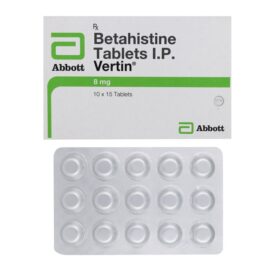
- Vertin (betahistine 8 mg, Abbott)
- Betavert Tab (betahistine 24 mg)
- Diligan (meclizine 25 mg) — mot reisesyke og akutt svimmelhet de første 48–72 timer
- Stemetil (prochlorperazine 5 mg) — akutt svimmelhet/kvalme-rescue
- Avomine (promethazine 25 mg) — sedativt antihistamin mot reisesyke
Medisinsk ansvarsfraskrivelse
Denne siden er kun til informasjonsformål og er ikke erstatning for råd fra en kvalifisert kliniker. Plutselig alvorlig svimmelhet med nevrologiske symptomer (plutselig hørselstap, dobbeltsyn, sløv tale, svakhet, nummenhet, kraftig hodepine eller ustø gange) krever akutt medisinsk vurdering — disse kan indikere slag eller sentral patologi snarere enn indreørsproblemer. Diskuter nye svimmelhetssymptomer med lege før selvbehandling.
Flere alternativer i behandling av svimmelhet og reisesyke
Rangert etter nylig bestillingsvolum på MedsBase — hva andre kunder i denne kategorien velger.


| Styrke | 8 mg, 16 mg |
|---|---|
| Antall | 30 Tablett/er, 60 Tablett/er, 90 Tablett/er |
| Farmasøytisk form | Tablet/t |
| Produsent | Sun Pharma |
| Behandling | Svimmelhet, Menières sykdom |
| Generisk merke | Betahistin |
 Betavert
Spørsmål og svar
Betavert
Relaterte produkter














Anmeldelser
Det er ingen anmeldelser ennå