








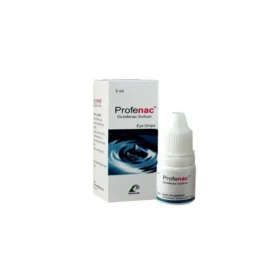
Profenac Eye Drop
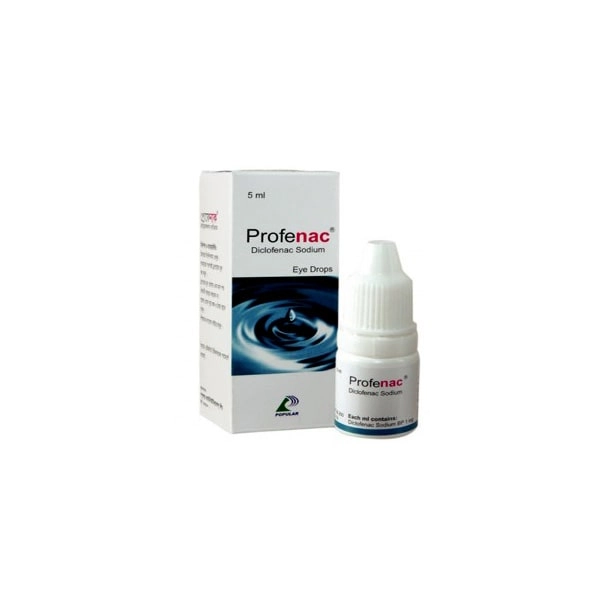
Profenac (diklofenak natrium 0,1%) — topikal NSAID øyedråpe for betennelse etter kataraktoperasjon, sesongbetont allergisk konjunktivitt og smertekontroll etter refraktiv kirurgi.
✓ Medisinsk vurdert av Morgan Ellis — Farmasøytisk forsker · 8 års erfaring · Sist gjennomgått: mai 2026
⚡ Raskt svar — Hva er Profenac øyedråpe?
Profenac øyedråpe er diklofenak natrium 0,1%, en topikal NSAID øyedråpe for postoperativ smerte og betennelse, allergisk konjunktivitt, og forebygging av cystoid makulaødem etter kataraktoperasjon. Brukes 2–4 ganger daglig.
📦 Hver ordre er dekket av vår Reshipment Assurance Policy — hvis pakken din ikke ankommer innen 20 virkedager, sender vi ny.
Hvorfor bestille fra MedsBase
Profenac øyedråpe er hentet fra en WHO-GMP-sertifisert produsent og sendes over hele verden i enkel, diskret emballasje. Hver bestilling er dekket av vår Reshipment Assurance Policy — hvis den ikke har ankommet innen 20 virkedager, sender vi på nytt uten ekstra kostnad. Støttet av over 1 400 verifiserte kundeanmeldelser.
Hva er Profenac øyedråpe?
Profenac øyedråpe produseres av Sun Pharma og inneholder diklofenak natrium 0,1% som en steril oftalmisk løsning. Topikale NSAID-er reduserer betennelse ved å blokkere syklo-oksygenase (COX)-enzymer, noe som reduserer prostaglandinproduksjonen. De er ikke-steroide og unngår de økte øyetrykk, kataraktrisiko og immunsuppresjonsproblemene som følger med topikale steroider.
Hvordan det virker
Diklofenak natrium hemmer både COX-1 og COX-2 (direkte) i øyets vev. Resultatet er redusert prostaglandinsyntese, mindre leukocyttertransport og redusert miosis, smerte og betennelse.
Indikasjoner
- Postoperativ øyebetennelse etter kataraktoperasjon, refraktiv kirurgi, hornhinnekryssbinding
- Profilakse mot cystoid makulaødem (CME) etter kataraktoperasjon — spesielt hos pasienter med diabetes, tidligere CME, eller epiretinal membran
- Opprettholdelse av intraoperativ mydriase under kataraktoperasjon (reduserer miose fra prostaglandinfrigjøring)
- Sesongbetont allergisk konjunktivitt — ikke førstevalg, men nyttig når antihistaminer ikke er tilstrekkelige
- Postoperativ smertelindring — reduserer bruk av narkotika etter refraktiv kirurgi
Dosering
| Indikasjon | Dose |
|---|---|
| Inflammasjon etter katarakt | 1 dråpe fire ganger daglig i 2 uker |
| CME-profilakse (høy risiko) | Før operasjon i 1–3 dager, fortsett deretter i 4–6 uker etter operasjon |
| Allergisk konjunktivitt | 1 dråpe fire ganger daglig etter behov |
Bivirkninger
Lokalt: stikkende følelse ved påføring (mest vanlig), konjunktival hyperemi, følelse av fremmedlegeme, midlertidig uskarpt syn, øyeløken, hornhinnfargning ved langvarig bruk.
Overfølsomhet: sjeldne bronkospasmer hos pasienter som er følsomme for aspirin, urtikaria, angioødem.
Advarsler og kontraindikasjoner
- Astma forårsaket av aspirin eller NSAID — relativ kontraindikasjon
- Eksisterende hornhinnesykdom (alvorlig tørr øye, nevrotrofisk keratitt, herpesinfeksjon) — økt risiko for hornhinnesmeltning
- Diabetisk keratopati — økt risiko for smeltning
- Samtidig bruk av topiske steroider — additiv toksisitet for hornhinnen
- Blødningsdiatese eller bruk av antikoagulantia — liten risiko for intraoperativ blødning ved preoperativ bruk
- Sen svangerskap (tredje trimester) — unngå (teoretisk risiko for tidlig lukking av ductus arteriosus ved systemisk absorpsjon; minimal fra øyedråper)
- Barn — vanligvis trygt over 3 år; sjelden brukt under den alderen
Oppbevaring
Oppbevares ved 15–25°C beskyttet mot lys. Kasser 28 dager etter første åpning.
Vanlige spørsmål
Hva brukes Profenac øyedråpe til?
Mest vanlig etter stæroperasjon for å redusere betennelse, kontrollere smerte og forebygge cystoid makulaødem. Brukes også ved allergisk konjunktivitt, etter refraktiv kirurgi og som et alternativ til steroider hos pasienter med steroidrespons.
Hvordan skiller Profenac øyedråpe seg fra en steroid øyedråpe?
NSAID-er blokkerer prostaglandinsyntesen uten å påvirke det bredere immunforsvaret. De øker ikke intraokulært trykk (IOP), forårsaker ikke katarakt og fremmer ikke viral eller soppinfeksjon — noe som gjør dem tryggere for langvarig bruk. De er også mindre potente ved alvorlig betennelse; steroider foretrekkes fortsatt ved aktiv uveitt.
Hvorfor brukes Profenac øyedråpe etter kataraktoperasjon?
Prostaglandiner som frigjøres under operasjonen forårsaker smerte, miosis og bidrar til cystoid makulaødem (en vanlig årsak til synstap etter kataraktoperasjon). NSAID-er demper denne responsen. Mange øyeleger bruker NSAID-er sammen med steroider de første 2 ukene, og fortsetter deretter med kun NSAID i 4–6 uker ved høyt risiko for CME.
Hva er hornhinnesmeltning?
Sjeldent, men alvorlig — hornhinneepitelet brytes ned og det underliggende stromaet tynnes, noen gang med progresjon til perforasjon. Risikofaktorer: langvarig bruk, underliggende hornhinnesykdom, diabetes, samtidig bruk av topikale steroider. Stopp dråpene og søk samme dag ved uforklarlig økende smerte eller synstap.
Kan jeg kjøre bil etter å ha brukt Profenac øyedråpe?
Mild uskarphet i 5–10 minutter etter påføring. Vent til synet er klart.
Er Profenac øyedråpe trygt under svangerskap?
Topikal absorpsjon er minimal. Unngå i tredje trimester (teoretisk tidlig lukking av ductus arteriosus ved systemiske NSAID-er). Generelt trygt tidligere i svangerskapet når klart indikert.
Kan jeg bruke Profenac øyedråpe sammen med en steroid øyedråpe?
Ja, men vær oppmerksom på additiv hornhinnetoksistitet. Kombinasjonen er standard etter kataraktoperasjon på mange klinikker. Vent 5 minutter mellom flaskene.
Hva hvis jeg er følsom for aspirin?
Kryssreaktivitet er mulig. Unngå topikale NSAID-er hvis du har en historie med aspirinindusert astma eller anafylaksi til orale NSAID-er.
Hva om jeg glemmer en dose?
Ta den så snart du husker det, med mindre den neste planlagte dosen er nær.
Hvor lenge varer en typisk kur?
2–6 uker avhengig av indikasjon. Unngå kurer lengre enn 6 uker med mindre under spesialistoppfølging på grunn av kumulativ hornhinnetoksistitet.
Andre øyemedisiner
Kunder som ser på dette produktet vurderer også disse alternativene i vår Øyepleie rekkevidde:
- Pred Forte (prednisolonacetat)
- FML Eye Drop (fluorometholon)
- Lotepred Eye Drop (loteprednol)
- Acular LS (ketorolac)
- Megabrom (bromfenac)
Medisinsk ansvarsfraskrivelse
Informasjonen på denne siden er kun til undervisningsformål og er ikke erstatning for medisinsk rådgivning fra en kvalifisert oftalmolog eller optiker. Øyelidelser kan raskt true synet – plutselig synstap, kraftige smerter eller skade er en øyemedisinsk nødssituasjon. Alltid konsulter en øyehelsepersonell før du starter, stopper eller endrer en behandling.
Flere alternativer innen øyepleie
Rangert etter nylig bestillingsvolum på MedsBase — hva andre kunder i denne kategorien velger.
| Styrke | 0,1% (5 ml) |
|---|---|
| Antall | 1 flaske, 3 flasker, 6 flasker |
| Farmasøytisk form | Øyedråpe(r) |
| Produsent | Cipla Inc |
| Behandling | Øyepleie |
| Generisk merke | Diclofenac Sodium |
 Profenac Eye Drop
Spørsmål og svar
Profenac Eye Drop
Relaterte produkter




Anmeldelser
Det er ingen anmeldelser ennå