








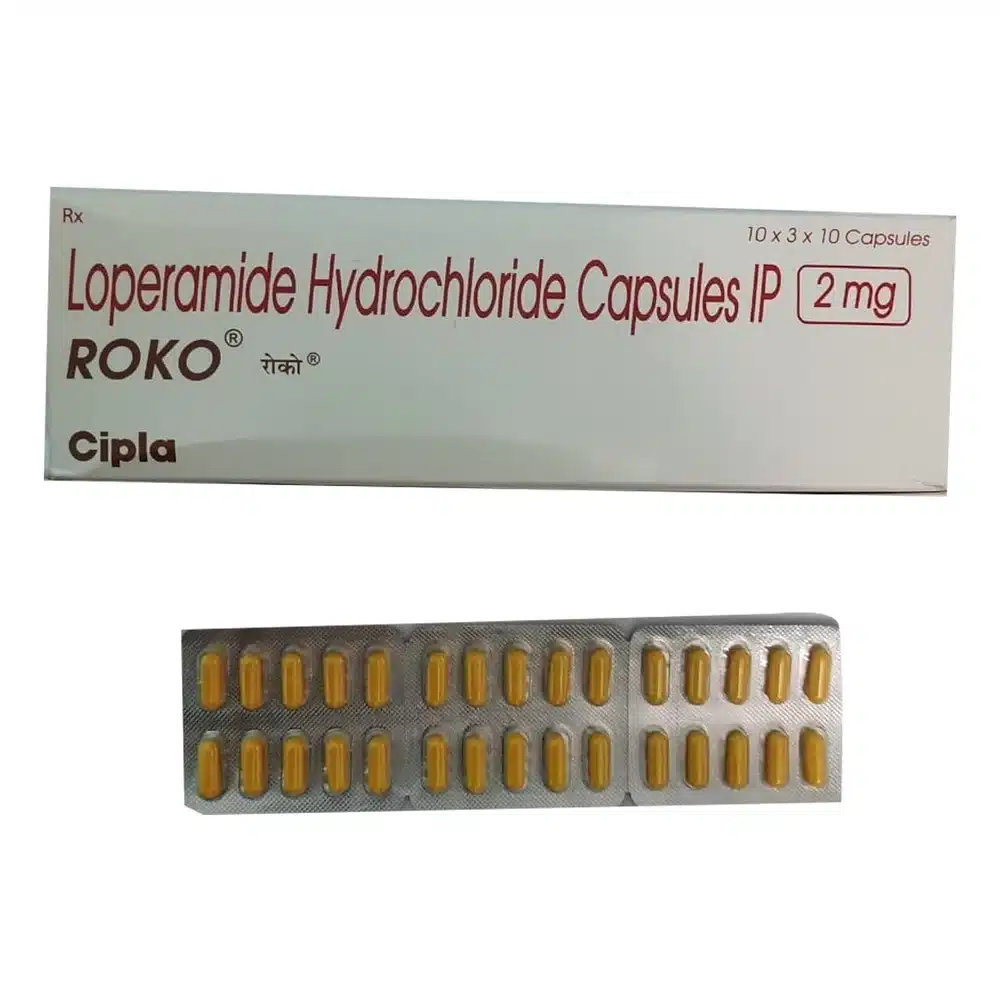
Roko
✅ Lindring av diaré
✅ Normaliserer tarmsfunksjon
✅ Lindrer tilhørende symptomer
✅ Rask og effektiv
✅ Forbedret livskvalitet
Roko inneholder loperamidhydroklorid
✓ Medisinsk vurdert av Morgan Ellis — Farmasøytisk forsker · 8 års erfaring · Sist gjennomgått: mai 2026
Hurtigsvar — Hva er Roko?
Roko tablett inneholder loperamidhydroklorid 2 mg — en opioidreseptoragonist som begrenses til tarmveggen og reduserer tarmmotiliteten, og lindrer akutt og kronisk diaré. Produsert av Cipla, er standarddosen 4 mg initialt etterfulgt av 2 mg etter hver løse avføring, opptil 16 mg i løpet av 24 timer. Det reduserer avføringsfrekvens og press uten de sentralnervesystemeffektene som andre opioider har.
📦 Hver ordre er dekket av vår Reshipment Assurance Policy — hvis pakken din ikke ankommer innen 20 virkedager, sender vi ny.
Hvorfor bestille fra MedsBase
Våre generiske legemidler kommer fra WHO-GMP-sertifiserte produsenter og sendes over hele verden i diskret, nøytral emballasje — ingen legemiddelnavn på utsiden av pakken. Kortbetalinger håndteres av en regulert betalingsbehandler (kontoutskrifter viser en regulert kortbetalingsprosessor — aldri “MedsBase” eller noe legemiddelnavn). Krypto og SEPA bankoverførsel godtas også. Hver ordre er dekket av vår Reshipment Assurance Policy.
Hva er Roko?
Roko er en antidiarétablett som inneholder loperamidhydroklorid 2 mg, produsert av Cipla Ltd i India. Loperamide er en syntetisk opioidreseptoragonist som virker spesifikt i tarmveggen for å redusere tarmmotiliteten og senke avføringsfrekvensen. I motsetning til eldre opioider (kodein, difenoksylat) har loperamide stort sett ingen virkning på sentralnervesystemet ved terapeutiske doser fordi det aktivt holdes utenfor hjernen av P-glykoproteintransportøren i blod-hjerne-barrieren.
Denne farmakologiske målrettingen gjør Roko spesielt egnet for å kontrollere diaré uten sedering, eufori, respiratorisk depresjon eller misbrukspotensial assosiert med andre opioider. Det har vært et hovedmiddel mot diaré over hele verden siden det ble introdusert på 1970-tallet og står på WHOs modellliste over essensielle medisiner.
Bruk av Roko
- Akutt ikke-infeksiøs diaré — plutselig oppstart, vanligvis selvbegrensende, forårsaket av kostholdsmessig uforsiktighet, viral gastroenteritt (etter at infeksjonssymptomene har avtatt), eller bivirkninger av medisiner.
- Kronisk diaré — ved irritabel tarm med diaré (IBS-D), inflammatorisk tarmsykdom under remisjon, post-vagotomi eller kort tarmsyndrom.
- Reisediarré — symptomatisk lindring i tillegg til passende rehydrering.
- Reduksjon av ileostomiutskillelse — hos pasienter med høyt utskillelsesvolum fra stomi der væsketap er problematisk.
- Strålingsindusert diaré — hos pasienter som gjennomgår bekkenbestråling.
- Kjemoterapiindusert diaré — spesielt ved irinotekanbaserte behandlingsregimer.
Hvordan Roko virker
Loperamide binder seg til μ-opioidreseptorer i det myenteriske plexus i tykktarmen — det nervecellenettverket som regulerer peristaltikken. Bindingen hemmer frigjøringen av acetylkolin og prostaglandiner, noe som reduserer styrken og frekvensen av tarmkontraksjoner. Resultatet er langsommere transittid, noe som gir tykktarmen mer tid til å absorbere vann og elektrolytter fra avføringen. Netto avføringsvolum reduseres og avføringen blir fastere.
Loperamide reduserer også unormale anal sfinktertonusendringer som sees ved diaré, noe som forbedrer kontinens. Ved terapeutiske doser er det ingen smertestillende eller sentral opioidvirkning på grunn av P-glykoprotein-efflusssperren ved blod-hjerne-barrieren. Dette er grunnen til at loperamide ikke er klassifisert som et kontrollert stoff i de fleste land.
Dosering og administrering
Voksendosering for akutt diaré: 4 mg (to tabletter) initialt, etterfulgt av 2 mg (én tablett) etter hver påfølgende løse avføring. Maksimalt 16 mg (8 tabletter) i løpet av 24 timer. Avbryt når avføringen blir formet.
Voksendosering for kronisk diaré: 4 mg initialt, deretter 2 mg etter hver løs avføring eller etter behov. Vedlikeholds dose 2–12 mg daglig, justert etter klinisk respons. Maksimalt 16 mg daglig.
Barn i alderen 4–8 år: 1 mg opptil 3 ganger daglig, maksimalt 2 dager. Barn 9–12 år: 2 mg to ganger daglig, maksimalt 5 dager. Ikke bruk på barn under 4 år uten legeveiledning.
Hvordan bruke Roko
- Ta tabletter hele med vann. Roko trenger ikke å tas sammen med mat.
- Sammen med Roko, bør du opprettholde god hydrering — orale rehydreringssalter (ORS) anbefales for å erstatte tapte væsker og elektrolytter.
- Stopp å ta Roko så snart diaréen avtar eller avføringen blir fast. Fortsett ikke profylaktisk.
- Søk medisinsk råd hvis diaréen ikke bedres innen 48 timer, eller hvis det oppstår feber, blodig avføring eller alvorlig magesmerte.
- Ikke overstige 16 mg (8 tabletter) i løpet av 24 timer.
Bivirkninger av Roko
- Vanlig: forstoppelse (spesielt ved langvarig bruk); magesmerter eller kramper; oppblåsthet; kvalme; tørr munn; svimmelhet.
- Mindre vanlig: utslett; flatulens; oppkast; tretthet.
- Sjeldne, men alvorlige: paralytisk ileus (spesielt ved høye doser eller hos små barn); toksisk megakolon ved utbrudd av ulcerøs kolitt; allergiske reaksjoner inkludert angioødem; alvorlig forstoppelse som fører til tarmobstruksjon.
- Ved ekstrem overdosering (>60 mg): hjerterytmeforstyrrelser — QT-forlengelse, torsades de pointes — på grunn av perifer natriumkanalblokkering. Denne risikoen har ført til regulatoriske begrensninger på pakkestørrelser i flere land.
Forholdsregler og advarsler
- Blodig diaré eller høy feber: BRUK IKKE Roko — dette kan tyde på invasiv bakteriell infeksjon (Salmonella, Shigella, C. difficile) eller kolitt der nedsatt tarmmotilitet kan forverre utfallet.
- Akutt oppblussing av ulcerøs kolitt: kontraindisert — risiko for toksisk megakolon.
- Antibiotikassosiert kolitt (C. difficile): unngå — nedsatt tarmmotilitet fører til at toksiner blir fanget i tykktarmen.
- Barn under 2 år: kontraindisert — risiko for paralytisk ileus.
- Alvorlig leversvikt: redusert metabolisme — bruk med forsiktighet, lavere doser.
- Graviditet: begrenset data; bruk kun hvis fordelene klart oppveier risikoene.
- Amming: små mengder utskilles i morsmelk — kortere kurser regnes generelt som trygge.
Legemiddelinteraksjoner
Viktige interaksjoner: ritonavir, kinidin, itrakonazol, ketokonazol — hemmer loperamidmetabolismen og P-glykoprotein-effluksen, noe som øker plasmanivåene og risikoen for sentrale opioideffekter og kardiotoksisitet; kolestyramin — binder loperamid i tarmen og reduserer absorpsjonen; QT-forlengende legemidler (amiodaron, sotalol, makrolidantibiotika, enkelte antipsykotika) — additiv risiko for arytmi ved høye doser loperamid; andre opioider — teoretisk additiv sentral virkning ved svært høye doser.
Oppbevaring
Oppbevares under 25 °C i originalblisteren, beskyttet mot fuktighet. Holdes utilgjengelig for barn. Ikke bruk etter utløpsdatoen.
Vanlige spørsmål
Hvor raskt virker Roko?
Lindring begynner vanligvis innen 30 minutter til 1 time etter første dose på 4 mg. Toppeffekten oppnås etter 4–5 timer. De fleste tilfeller av akutt diaré avklares innen 24 timer etter start med Roko, mens kronisk diaré krever lengre pågående dosering tilpasset individuell respons.
Kan jeg ta Roko mot reisediaré?
Ja — Roko er effektivt for symptomatisk lindring av reisediaré og kan kombineres med passende antibiotikabehandling ved moderate til alvorlige tilfeller. Ved blodig avføring, høy feber eller kraftige magesmerter bør du søke medisinsk hjelp i stedet for å beholde deg selv med kun loperamid.
Er Roko trygt for langtidsbruk?
For kroniske tilstander som IBS-D eller ileostomibehandling kan loperamid brukes langvarig under medisinsk oppfølging ved lavest mulig effektiv dose. Overvåk for forstoppelse og juster dosen etter behov. Langtidsbruk ved standarddoser er ikke assosiert med avhengighet eller toleranse.
Kan jeg gi Roko til mitt barn?
Loperamid anbefales ikke for barn under 2 år på grunn av økt risiko for paralytisk ileus. For barn i alderen 4–8 år kan 1 mg-doser gis i kortere perioder. Konsulter alltid en barnelege først, og sørg for tilstrekkelig væskeinntak med oral rehydreringsløsning uavhengig av om Roko brukes.
Hvorfor er loperamid ikke vanedannende?
Loperamid pumpes aktivt ut av hjernen av P-glykoprotein ved blod-hjerne-barrieren. Ved terapeutiske doser når praktisk talt ingen stoffet de sentrale opioidreseptorene som er ansvarlige for eufori eller avhengighet. Ved ekstremt høye doser (>60 mg) blir transportøren mettet og noen sentrale effekter kan oppstå — derfor har flere land innført pakningsstørrelsesbegrensninger.
Når bør jeg IKKE ta Roko?
Ikke ta Roko hvis du har: blodig avføring, høy feber (over 38,5 °C), kraftige magesmerter som kan tyde på ileus eller peritonitt, antibiotika-assosiert kolitt, eller en aktiv oppblussing av ulcerøs kolitt eller Crohns sykdom. I slike tilfeller kan nedsatt tarmmotilitet forverre den underliggende tilstanden.
Hva bør jeg gjøre hvis jeg ved et uhell har tatt for mye?
En moderat overdose (opptil 16 mg over døgngrensen) forårsaker vanligvis bare alvorlig forstoppelse eller magekramper. Store overdoser (over 60 mg på en dag) kan forårsake hjerterytmeforstyrrelser og krever akutt medisinsk hjelp — EKG-overvåkning og støttebehandling. Ved tvil, kontakt giftinformasjonen eller oppsøk akuttmedisinsk hjelp.
Relaterte alternativer
Andre produkter innen Generell helse som kunder også ser på:
| Antall | 30 Kapsel/er, 60 Kapsel/er, 90 Kapsel/er |
|---|
 Roko
Roko
Spørsmål og svar
Roko
Relaterte produkter


Anmeldelser
Det er ingen anmeldelser ennå