








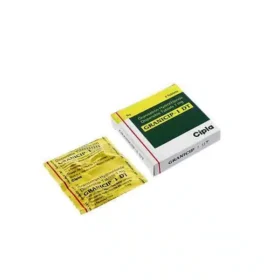
Granicip
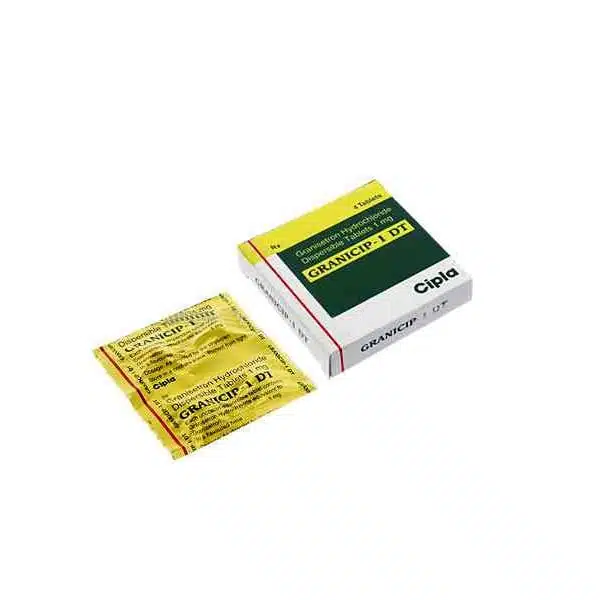
Granicip (Granisetron 1 mg / 2 mg) — andra generationens 5-HT3-antagonist för en gång daglig användning vid kemoterapi, strålbehandling och postoperativ illamående och kräkningar (PONV). Har längre halveringstid (~9 timmar) jämfört med ondansetron.
✓ Medicinskt granskad av Morgan Ellis — Apoteksforskare · 8 års erfarenhet · Senast granskad: maj 2026
⚡ Snabbsvar — Vad är Granicip?
Granicip innehåller granisetron 1 mg / 2 mg, en andra generationens 5-HT3-receptorantagonist tillhör samma klass som ondansetron men har längre halveringstid (~9 timmar mot 4 timmar). Används för att förebygga kemoterapi-inducerad, strålning-inducerad, och postoperativ illamående och kräkningar. Den längre halveringstiden innebär att en enkel oral dos eller intravenös dos räcker för en dag vid måttligt emetogen kemoterapi. Tillverkas av Cipla enligt WHO-GMP-standarder.
📦 Varje beställning omfattas av vår Reshipment Assurance Policy — om din försändelse inte anländer inom 20 arbetsdagar, skickar vi om den.
Varför beställa från MedsBase
Våra generiska läkemedel kommer från WHO-GMP-certifierade tillverkare och skickas världsvidt i diskreta, enkla förpackningar — inget läkemedelsnamn på försändelsens utsida. Kortbetalningar hanteras via en reglerad betalningsprocessor (kontoutdrag visar en reglerad kortbetalningsprocessor — aldrig “MedsBase” eller något läkemedelsnamn). Krypto och SEPA-banköverföring accepteras också. Varje beställning backas upp av vår Reshipment Assurance Policy.
Granisetron kontra ondansetron — när man ska välja granisetron
Båda molekylerna blockerar 5-HT3-receptorn och har liknande toppeffekt. De kliniskt meningsfulla skillnaderna är:
- Halveringstid: granisetron ~9 h, ondansetron ~4 h. En enda dos granisetron täcker en 24-timmars kemoterapidag bättre.
- QT-signal: ondansetron har den starkare hjärtsignalen (FDA-rekommenderad maxdos 16 mg IV); granisetron är intermediär; palonosetron är den renaste.
- Dosfrekvens: granisetron ges vanligtvis en gång dagligen peroralt eller en gång IV; ondansetron ges var 8:e timme.
- Förstoppning: liknande mellan de två, men något mindre frekvent med granisetron.
- Kostnad: ondansetron är billigare och mer allmänt tillgänglig; granisetron föredras när en gång daglig dosering förenklar följsamheten.
Varför beställa från MedsBase
Granicip levereras från en WHO-GMP-certifierad tillverkare. Varje beställning skickas diskret över hela världen och omfattas av vår Reshipment Assurance Policy — om den inte anländer inom 20 arbetsdagar, skickar vi en ny utan extra kostnad. Granisetron är det 5-HT3-antagonistvalet för en gång daglig dosering när följsamhet till en flerdosersschema är ett bekymmer, och det är ett användbart alternativ för patienter som tolererar ondansetron dåligt.
Verkningsmekanism
Granisetron är en mycket selektiv antagonist av serotonin 5-HT3-receptorn på vagala afferenter (perifera) och kemoreceptorns utlösningszon i area postrema (central). Kemoterapi och strålning får enterochromaffina celler i tarmen att frisätta serotonin, som annars skulle driva kräkningar via det medullära kräkcentret. Genom att blockera 5-HT3-receptorn avbryter granisetron denna signal både perifert och centralt. Det binder inte till D2, H1, muskarinerga eller alfa-adrenerga receptorer — därför saknas sedering, extrapyramidala reaktioner och antikolinerga biverkningar.
Indikationer
- CINV (kemoterapi-inducerad): måttligt och högt emetogen kemoterapi — vanligtvis kombinerat med dexametason ± en NK1-antagonist (aprepitant) för högt emetogena behandlingsregimer.
- Strålning-inducerad illamående: total kroppsbestrålning, hög dos abdominal strålning.
- Postoperativ illamående och kräkningar (PONV): engångs IV vid induktion eller slutet av operationen.
- Refraktär kemobehandlingsillamående: efter ondansetronmisslyckande (korsresistens är ofullständig — byte kan rädda vissa patienter).
Dos
| Indikation | Dos |
|---|---|
| CINV (oralt, vuxen) | 2 mg PO 1 timme före kemoterapi, sedan 2 mg dagligen i upp till 5 dagar (eller 1 mg två gånger dagligen) |
| CINV (IV) | 10 mcg/kg (eller fast dos 1 mg) IV 30 minuter före cellgiftsbehandling |
| PONV | 1 mg IV vid induktion eller vid operationsslut (enstaka dos) |
| Pediatrisk (CINV) | 10–40 mcg/kg IV (max 3 mg per dos); specialistövervakning |
| Njur-/leversvikt | Ingen dosreduktion rutinmässigt nödvändig; svår leverdysfunktion kan förlänga clearance |
Biverkningar
- Mycket vanligt: huvudvärk (~14–21%), förstoppning (~3–9%)
- Vanligt: yrsel, trötthet, asteni, tillfällig AST/ALT-höjning, sömnlöshet, mild smakrubbning
- Mindre vanliga: hypertoni, hypotoni, buksmärta, utslag
- Sällsynta men allvarliga: QT-förlängning/torsades, serotoninssyndrom (med SSRIs/triptaner), svår överkänslighet
Läkemedelsinteraktioner
- QT-förlängande läkemedel: undvik samtidig användning med azitromycin, fluorkinoloner, citalopram, metadon, antipsykotika (särskilt hos patienter med elektrolytrubbningar).
- Serotonerga läkemedel (SSRI, SNRI, MAO-hämmare, triptaner, tramadol, fentanyl, linezolid): sällsynta fall av serotoninssyndrom rapporterade.
- Starka CYP3A4-inducerare (rifampicin, fenytoin, karbamazepin, johannesört): kan sänka granisetronnivåer.
- Starka CYP3A4-hämmare (ketoconazol, ritonavir, klaritromycin): kan något höja nivåerna — klinisk betydelse är liten.
Vanliga frågor
Hur skiljer sig Granicip från Ondem (ondansetron)?
Båda är 5-HT3-antagonister, men granisetron har en längre halveringstid (~9 timmar jämfört med ~4 timmar), så en enda oral dos räcker för en kemoterapidag. Ondansetron måste doseras var 8:e timme. Ondansetron har en något högre QT-signal och en FDA-granskad maxdos på 16 mg intravenöst. För enkel illamående är ondansetron billigare; för bättre följsamhet under kemoterapi förenklar granisetron schemat.
När börjar Granicip verka?
Verkan börjar efter 30–60 minuter vid oral inntagning och inom 5–10 minuter intravenöst. Ta den orala dosen 1 timme före kemoterapi för bästa skydd.
Är granisetron säkert under graviditet?
Granisetron är FDA kategori B (djurstudier visar ingen skada; begränsad kontrollerad data från människor). Reservera för refraktär kemoterapiinducerad illamående eller hyperemesis när första valets läkemedel har misslyckats; specialistövervakning rekommenderas.
Kan jag ta Granicip för åksjuka eller graviditetsillamående?
Nej. Granisetron är reserverat för kemoterapi, strålbehandling och postoperativ illamående. Rörlighetsrelaterad illamående är histaminerg/cholinerg — använd prometazin (Avomine), cinnarizin eller meklozin. Förstahandsval vid graviditetsillamående är doksylamin + B6 (Doxinate, Pregnidoxin NU).
Orsakar Granicip sömnighet?
Nej. Liksom andra 5-HT3-antagonister orsakar granisetron inte sömnighet, extrapyramidala reaktioner eller antikolinerga biverkningar. Huvudvärk och förstoppning är de vanligaste biverkningarna.
Kan jag dricka alkohol när jag tar Granicip?
Små mängder då och då är osannolikt att interagera farmakologiskt, men alkohol kan förvärra illamående och uttorkning under kemoterapi — undvik under aktiva behandlingscykler.
Vad händer om min illamående inte kontrolleras?
Lägg till dexametason, en NK1-antagonist (aprepitant) eller olanzapin för högt emetogen kemoterapi. Att byta till en annan 5-HT3-antagonist (palonosetron) eller klass (D2-antagonist) är rimligt när en molekyl har misslyckats.
Är förstoppning ett problem?
Ja — förstoppning uppstår hos upp till 1 av 11 användare vid flerdagarsbehandling. Upprätthåll hydrering, fibrer och profylaktiska laxermedel (senna/bisakodyl/movicol) under kemocykler.
Hur förvaras Granicip?
Förvara tabletter vid rumstemperatur (under 30°C), skyddat från ljus. Förvara utom räckhåll för barn. Använd inte efter utgångsdatumet som anges på förpackningen.
Är 5-HT3-antagonister det enda alternativet för kemoterapi-relaterad illamående?
Nej. Moderna riktlinjedrivna CINV-regimer kombinerar en 5-HT3-antagonist + dexametason + (för högt emetogen kemoterapi) en NK1-antagonist som aprepitant. Olanzapin är också användbart för refraktära fall. Enskild 5-HT3-agent används främst för måttligt emetogena regimer.
Andra behandlingar mot illamående
- Ondem (ondansetrontablett)
- Emeset 4 ODT (ondansetron oralt dispergerande tablett)
- Ondem-injektion (ondansetron IV/IM)
- Dompewal (domperidon — D2-antagonist)
- Stemetil MD (proklorperazin ODT)
- Bläddra bland alla behandlingar mot illamående
Fler alternativ inom behandling av illamående
Rangerade efter senaste ordervolym på MedsBase — vad andra kunder i denna kategori väljer.
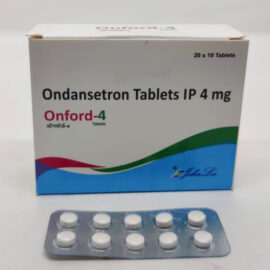

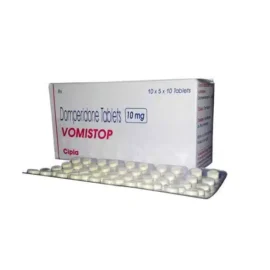

| Styrka | 1 mg |
|---|---|
| Kvantitet | 28 tabletter, 56 tabletter, 84 tabletter |
| Farmaceutisk form | Tabletter |
| Tillverkare | Cipla Inc |
| Behandling | Illamående, Kräkningar |
| Generiskt märke | Granisetron |
 Granicip
Frågor & svar
Granicip
Relaterade produkter

Recensioner
Det finns inga recensioner än