









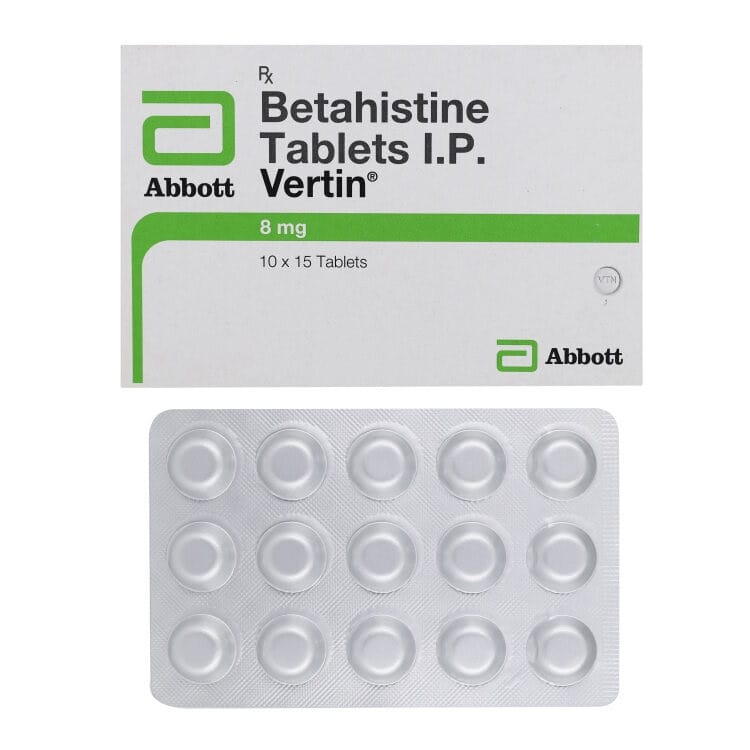
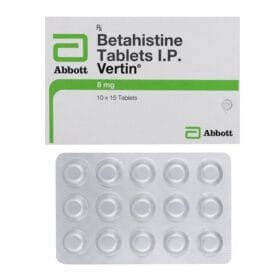
Vertin


✅ Minskar yrselssymptom
✅ Förbättrar balans
✅ Minimizerar illamående
✅ Lindrar yrsel
✅ Förbättrar innerörefunktion
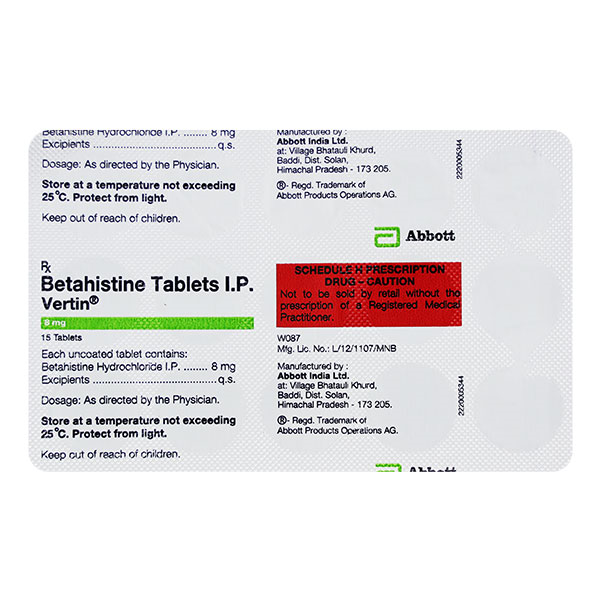
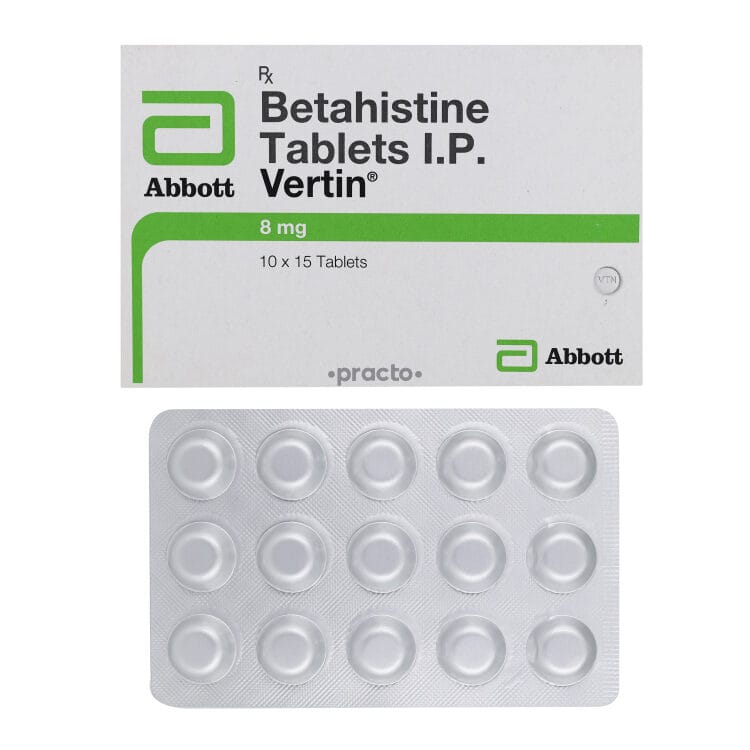
Vertin innehåller Betahistine.
✓ Medicinskt granskad av Morgan Ellis — Apoteksforskare · 8 års erfarenhet · Senast granskad: maj 2026
⚡ Snabbsvar — Vad är Vertin?
Vertin är en betahistine dihydrochloride 8 mg tablett som används för att behandla perifer yrsel, tinnitus och hörselnedsättning kopplad till Ménières sjukdom. Det är en histaminanalog som förbättrar mikrocirkulationen i innerörat. Den vanliga dosen är 8–16 mg tre gånger dagligen med mat. Inte främst för åksjuka eller generell yrsel — dessa svarar bättre på cinnarizin, proklorperazin eller dimenhydrinat.
Varför beställa från MedsBase
📦 Varje beställning omfattas av vår Reshipment Assurance Policy — om din försändelse inte anländer inom 20 arbetsdagar, skickar vi om den.
Vertin är Abbotts betahistine dihydrochloride 8 mg tablett, används specifikt för perifer vestibulär yrsel och den klassiska triaden av Ménières sjukdom: episodisk yrsel, sensorineural hörselnedsättning och tinnitus. Betahistin är en svag histaminanalog som har använts kliniskt sedan 1960-talet och förblir den mest föreskrivna specifika behandlingen för Ménière världen över.
Vertin skiljer sig från de läkemedel som används för åksjuka (cinnarizin, dimenhydrinat, meklizin) eller från antiemetika som används för akuta yrselepisoder (proklorperazin, prometazin). Att förstå skillnaden är viktigt eftersom fel läkemedel för fel typ av yrsel ger liten effekt.
Vad är Vertin?
Vertin är ett vaskulärt aktivt histaminanalog med svag H₁-agonist och måttlig H₃-antagonistverkan. Det används främst för tillstånd där mikrocirkulationen i innerörat och endolymfatiskt tryck antas orsaka symtom.
Vertin indikeras för:
- Ménières sjukdom — den klassiska indikationen; minskar frekvens och svårighetsgrad av vertigoepisoder, kan i viss mån förbättra tinnitus och hörselfluktuationer
- Perifer vestibulär vertigo — återkommande episoder av rotationsyrsel som tillskrivs innerörat eller balansnerven
- Vestibular neurit (återhämtningsfas) — som en del av en rehabiliteringsstrategi
- BPPV (godartad paroxysmalt positionsberoende yrsel) — endast som tillägg; kanalrepositioneringsmanövrar (Epley) förblir förstahandsval
Vertin används inte vanligtvis för åksjuka, yrsel, icke-specifik svindel eller central (hjärnbetingad) yrsel.
Hur fungerar Vertin?
Betahistins exakta verkningsmekanism i innerörat är fortfarande omdiskuterad, men flera effekter har karaktäriserats:
- Vasodilatation av stria vascularis mikrocirkulation i innerörat, tros minska endolymfatiskt tryck vid Ménières sjukdom
- H₃-receptorantagonism i vestibulära kärnor, vilket ökar histaminomsättningen och kan främja vestibulär kompensation
- Svag H₁-agonistverkan vid postsynaptiska ställen
- Förbättrar balansnervens utsignalssymmetri under återhämtning från ensidig balansskada
Början av klinisk fördel är gradvis — de flesta patienter behöver flera veckor av kontinuerlig behandling innan frekvensen av vertigoanfall minskar.
Vertin Dosering och Administrering
| Scenario | Dos | Anteckningar |
|---|---|---|
| Ménières sjukdom (standard) | 8–16 mg tre gånger dagligen | Måldos 24–48 mg totalt dagligen; öka dosen vid partiell respons |
| Initial dosering | 8 mg tre gånger dagligen | Öka efter 2–4 veckor vid behov |
| Högdosregimen | 16 mg tre gånger dagligen (48 mg/dag) | Stöds av BEMED-studien och europeiska riktlinjer |
| Underhåll | 8 mg tre gånger dagligen när kontroll uppnåtts | Fortsätt i månader; trappa ned under medicinsk övervakning |
| Äldre | Standarddos | Ingen rutinmässig dosreduktion |
| Graviditet | Undvik om det inte är absolut nödvändigt | Begränsad data |
| Maximal daglig dos | 48 mg | Delas i tre doser |
Hur man tar Vertin korrekt
- Svälj tabletten hel med vatten, helst med eller efter måltid för att minska magbesvär
- Fördela doserna jämnt under dagen (morgon, eftermiddag, kväll)
- Tillåt minst 4–6 veckor i en tillräcklig dos innan effekt bedöms
- Fortsätt med saltrestriktion, tillräcklig hydrering och måttlig koffein-/alkoholkonsumtion — livsstilsåtgärder vid Ménières sjukdom förstärker läkemedelsverkan
- Avbryt inte plötsligt om du har tagit det i flera månader — en gradvis minskning är vanligtvis föreskriven
- Registrera anfallsfrekvens i en dagbok — den primära markören för effekt är hur många yrselanfall du har per månad
Biverkningar av Vertin
| Allvarlighetsgrad | Biverkning |
|---|---|
| Vanliga | Lätt illamående, dyspepsi, huvudvärk |
| Ovanliga | Hudutslag, klåda, nässelutslag, rodnad |
| Sällsynt | Bronkospasm hos astmatiker, angioödem, svår överkänslighet |
Sök medicinsk hjälp vid andningssvårigheter, utbrett utslag eller ansiktsödem.
Varningar och försiktighetsåtgärder
- Feokromocytom. Kontraindicerat — histaminanaloger kan utlösa katekolaminflod
- Bronkial astma. Använd med försiktighet — övervaka för bronkospasm, särskilt vid svår sjukdom
- Peptiskt ulcussjukdom. Betahistine kan förvärra magirritation — ta med mat och använd med försiktighet
- Graviditet och amning. Begränsad mänsklig data — undvik om inte tydligt nödvändigt
- Alkohol. Kan förvärra balans- och koordinationssymtom — begränsa strikt under aktiv vertigo
- BPPV. Vertin behandlar inte BPPV mekaniskt — Epley- eller Semont-manövern för kanalitomposition är avgörande; vertin är i bästa fall ett komplement
Kontraindikationer — Vem bör INTE ta Vertin
- Feokromocytom
- Känd överkänslighet mot betahistin eller något hjälpämne
- Barn (säkerhetsdata är begränsad)
- Allvarlig aktiv peptisk ulcussjukdom
Läkemedelsinteraktioner
| Läkemedel / Klass | Interaktion |
|---|---|
| H₁-antihistaminer (cetirizin, loratadin, difenhydramin) | Motverkar betahistins effekt — undvik rutinmässig samtidig användning |
| MAO-hämmare (fenelzin, tranylcypromin, moklobemid) | Kan hämma betahistins metabolism — höjer nivåerna; undvik eller övervak |
| β₂-agonister (salbutamol) | Ingen kliniskt relevant interaktion |
| Diuretika | Förskrivs ofta samtidigt vid Ménières sjukdom (vanligen tiazider) — ingen negativ interaktion |
| Alkohol | Kan förvärra vestibulära symptom — begränsa användning |
Förvaringsinstruktioner
- Förvara under 25 °C på en torr plats, skyddat från direkt solljus
- Behåll i originalblisterförpackningen
- Förvara utom räckhåll för barn
- Använd inte efter utgångsdatumet
Relaterade alternativ på MedsBase
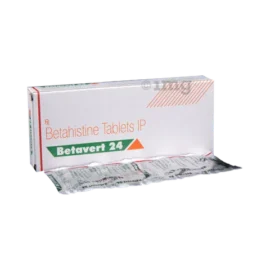
- Betavert — alternativt betahistinmärke
- Stemetil — proklorperazin, vid akuta vertigosymptom och illamående
- Bläddra bland alla reseillamående och motionssjuketabletter →
Vanliga frågor
Vad används Vertin till?
Vertin (betahistine) används främst för Ménières sjukdom och andra former av perifer vestibulär yrsel. Det minskar frekvensen och svårighetsgraden av vertigoanfall och kan i viss mån förbättra åtföljande tinnitus och hörselfluktuationer.
Hur snabbt verkar Vertin?
Effekten byggs upp gradvis — tillåt 4–6 veckor vid tillräcklig dos innan effekt bedöms. Betahistin minskar frekvensen av framtida vertigoepisoder; det stoppar inte akut en pågående episod.
Kan jag använda Vertin mot åksjuka?
Nej — betahistin är inte effektivt mot åksjuka. För det, använd cinarizin, dimenhydrinat, meklin eller skopolaminplåster.
Kan jag använda Vertin för BPPV?
BPPV (godartad paroxysmalt positionsberoende vertigo) svarar bäst på kanalitrepositionsmanövrar såsom Epley- eller Semont-manövern — dessa flyttar fysiskt de inre öronskristaller som orsakar BPPV. Medicinering är endast kompletterande.
Hjälper Vertin mot tinnitus?
Hos patienter med Ménières sjukdom förbättras tinnitus ofta samtidigt som vertigokontrollen. För isolerad tinnitus utan vertigo är bevisen för nytta svagare och andra metoder (ljudmaskering, tinnitusretrainingterapi, kognitiv beteendeterapi) föredras.
Hur länge ska jag ta Vertin?
Ménières sjukdom är en kronisk åkomma; patienter fortsätter ofta med Vertin i månader till år beroende på anfallsfrekvens. Din läkare kommer att vägleda försök att trappa ned om du har långa perioder utan anfall.
Kan jag ta Vertin under graviditet?
Begränsad data för människor — undviks vanligtvis om inte tydligt nödvändigt. Diskutera med din läkare.
Vad ska jag göra under ett akut vertigoanfall?
Vertin är en förebyggande medicin; den avbryter inte ett akut anfall. Under ett anfall, sitt eller ligg stilla i ett tyst mörkt rum, undvik plötsliga huvudrörelser, och om du har svåra symtom kan en antiemetisk medicin som proklorkperazin (Stemetil) eller ondansetron användas kortvarigt.
Orsakar Vertin trötthet?
Mindre än antihistaminer som cinnarizin — betahistin är inte markant sömnframkallande, men vissa användare upplever ändå mild trötthet eller huvudvärk initialt.
Vilka livsstilsåtgärder hjälper vid Ménières sjukdom?
Lågsaltkost (<2 g natrium/dag), regelbunden hydrering, begränsning av koffein och alkohol, undvikande av MSG, stresshantering och vestibulär rehabiliteringsträning. Dessa åtgärder förstärker Vertins effekt och hos vissa patienter kontrollerar de symtomen utan ytterligare medicin.
Vertin (betahistin) behandlar yrsel av vestibulärt ursprung och Menière’s sjukdom via histaminmodulering snarare än antagonism, så för den situationella rörelseillamående-änden av spektrumet — bil, sjö, buss, flyg — är rätt verktyg H1-antagonisten Avimax (promethazine 25 mg) tas 30 till 60 minuter före resan.
Andra behandlingar för yrsel och åksjuka
- Betavert (betahistine 8 / 16 mg, Sun Pharma)
- Betavert Tab (betahistine 24 mg)
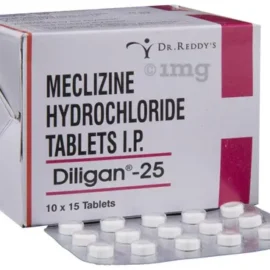
- Diligan (meclizine 25 mg) — för åksjuka och akut yrsel under de första 48–72 timmarna
- Stemetil (prochlorperazine 5 mg) — akut yrsel/illamående akutbehandling
- Avomine (promethazine 25 mg) — lugnande antihistamin för åksjuka
Fler alternativ inom behandling av yrsel och åksjuka
Rangerade efter senaste ordervolym på MedsBase — vad andra kunder i denna kategori väljer.
| Styrka | 8 mg |
|---|---|
| Kvantitet | 30 tabletter, 60 tabletter, 90 tabletter, 180 tabletter |
 Vertin
Frågor & svar
Vertin
Relaterade produkter






Recensioner
Det finns inga recensioner än