







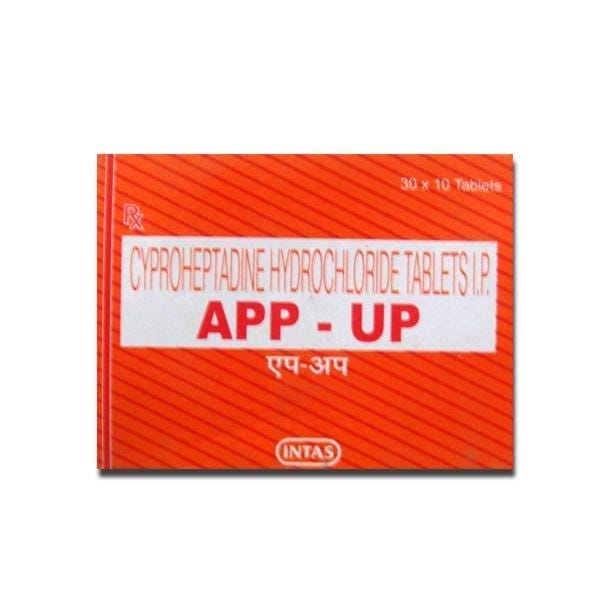
App-Up
✅ Fokozza az étvágyat
✅ Segít a súlygyarapodásban
✅ Kezeli az allergiákat
✅ Enyhíti a viszketést
✅ Migrén kezelésére
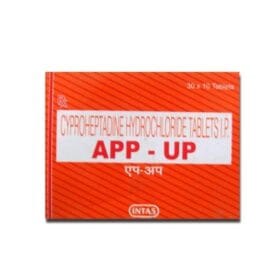
Az App-Up Cyproheptadint tartalmaz.
✓ Orvosi ellenőrzés Morgan Ellis — Gyógyszerkutató · 8 év tapasztalat · Utolsó felülvizsgálat: 2026 május
⚡ Gyors válasz — Mi az App-Up?
App-Up egy márka cyproheptadine hydrochloride (4 mg), egy első generációs (nyugtató hatású) orális antihisztamin a piperidin csoportba tartozó (egyben szerotonin 5-HT2 antagonista). Használják allergiás rhinitis, urticaria (kiütések), viszkető bőr, rovarharapásra adott reakciók és enyhe allergiás reakciók kezelésére. Hatás kezdete: 30–60 perc; hatásidő: 4–6 óra — ezért az adagokat általában napi 2–3 alkalommal osztják el. Egy kettős H1 + 5-HT2 antagonista. A legerősebb viszketésgátló hatású az első generációs antihisztaminok közül, de jelentős altató hatással, étvágyfokozó és súlygyarapodást okozó hatással jár. Széles körben használják Indiában, Latin-Amerikában és Ázsiában — kevésbé gyakori a nyugati országokban, ahol a második generációs antihisztaminok dominálnak. Legtöbb felhasználónál álmosságot okoz — ne vezessen vagy üzemeltessen gépeket adag bevétele után, amíg nem tudja, hogyan hat Önre. Kerülje szűk szögű glaukómában, hólyagkimeneti akadály esetén, súlyos asztmaroham alatt és idősebb korúaknál, ahol léteznek alternatívák. Nem kezelés anafilaxiára — súlyos allergiás reakciókhoz adrenalinra van szükség.
📦 Minden rendelést fedez a Újraküldési Garancia — ha a csomagod nem érkezik meg 20 munkanapon belül, újraküldjük.
Miért rendelj a MedsBase-ról
Generikus gyógyszereink WHO-GMP minősítésű gyártóktól származnak, és diszkrét, egyszerű csomagolásban szállítjuk őket világszerte — a csomagon nem szerepel a gyógyszer neve. A kártyás fizetések egy szabályozott feldolgozón keresztül történnek (a számlaleírások egy szabályozott kártyafizetési feldolgozót tartalmaznak — soha nem “MedsBase” vagy bármilyen gyógyszer neve). Kriptovalutát és SEPA banki átutalást is elfogadunk. Minden rendelést a Reshipment Assurance Policy biztosíték fedez.
Mi az App-Up?
Az App-Up egy orális antihisztamin, amely cyproheptadine hydrochloride (4 mg) hatóanyagot tartalmaz, WHO-GMP tanúsítvánnyal rendelkező gyártó által gyártva. 30, 60, 90 vagy 180 tablettás csomagokban kapható. Eredeti márka: Periactin (Merck, 1961).
a ciproheptadin-hidroklorid a első generációs H1-antihisztaminok osztályába tartozik — az 1940-es és 50-es években kifejlesztett eredeti antihisztaminok. Hatásosak, de az újabb szerekkel ellentétben könnyen átjutnak a vér-agy gáton, ami nyugtató hatást és antikolinerg mellékhatásokat okoz. Az első generációs antihisztaminok ma is hasznosak lehetnek akut allergiás epizódokban, rövid távú éjszakai viszketés kezelésére, valamint speciális indikációkban (mozgásbetegség, egyes migrén protokollok, étvágygerjesztés).
Mire használják az App-Up-ot?
Allergiás rhinitis, urticaria, viszkető bőr, szerotonin szindróma (antidotumként való alkalmazás), a ciproheptadint széles körben használják étvágygerjesztőként off-label alkalmazásban étvágytalanság és fejlődési zavar esetén. Történelmileg migrén megelőzésre, carcinoid szindrómában (hasmenés/flushing kezelésére) és SSRI által okozott szexuális diszfunkció kezelésére használták.
Hogyan működik az App-Up?
a ciproheptadin-hidroklorid blokkolja a hisztamin H1-receptorokat a szervezetben. A hisztamin az allergiás reakciók során szabadul fel a mast sejtekből és bazofilokból, és okozza a klasszikus tüneteket: tüsszögést, orrfolyást, viszkető szemeket, erek tágulását, urticariát, bronchoconstrictiót és nyáktermelést. A H1-receptorok blokkolása ezeket a hatásokat gátolja.
Az újabb (második generációs) antihisztaminokkal ellentétben, az első generációs szerek könnyen átjutnak a vér-agy gáton és kötődnek a központi H1-receptorokhoz — nyugtató hatást kiváltva. Emellett jelentős affinitással rendelkeznek a muszkarinikus acetilkolin-receptorokhoz, ami klasszikus antikolinerg hatásokat okoz (szájszárazság, vizeletretenció, homályos látás, székrekedés). A ciproheptadin emellett blokkolja szerotonin 5-HT2 receptorokhoz, egyedi alkalmazási lehetőségeket biztosít szerotonin szindróma, carcinoid szindróma és étvágygerjesztés esetén.
Adagolás és alkalmazás
Adagolás: Felnőttek: 4 mg naponta 3-szor (szokásos tartomány 4–20 mg/nap; max. 32 mg/nap). Gyermekek 7–14 éves korig: 4 mg naponta 2–3-szor. Gyermekek 2–6 éves korig: 2 mg naponta 2–3-szor.
- Hatás kezdete: 30–60 perc.
- Hatásidő: 4–6 óra — ezért szükséges napi 2–3 adagolás, szemben a másodgenerációs antihisztaminok napi egyszeri adagolásával.
- Vegyen be étkezéssel vagy anélkül; az étel enyhén csökkentheti a korai álmosságot.
- Az esti adag hasznos lehet álmosság és éjszakai viszketés esetén; a nappali adagok zavarhatják a koncentrációt.
- Ha elfelejtett egy adagot, vegye be, amint eszébe jut, kivéve, ha a következő adag ideje már elérkezett; ne duplázza meg az adagot.
- Nem ajánlott hosszú távú napi használatra, ha másodgenerációs alternatívák állnak rendelkezésre.
Mellékhatások
Nyugtató hatás: A ciproheptadin (H és gyakran okoz álmosságot. A legtöbb beteg szédülést tapasztal szokásos adagoknál; a tűrés részben kialakulhat 1–2 hét alatt.
Anticholinerg: Mérsékelt — szájszárazság, homályos látás, vizeletürítési nehézség, székrekedés. Kerülendő keskenyszögű glaukómában, húgyúti elzáródásban és esésveszélynek kitett idős betegeknél.
Testsúly: Jelentős étvágygerjesztés és testsúlynövekedés jellemző hatások — a ciproheptadint gyakran írják fel off-label módon testsúlynövelőként anorexia vagy fejlődési zavarokkal küzdő gyermekeknél. A kívánt vagy nemkívánatos hatás a kontextustól függ.
Egyéb gyakori mellékhatások:
- Fejfájás, szédülés
- Koncentrációzavar, lassult reakcióidő
- Fényérzékenység (ritkán)
- Megvastagodott hörgői váladék (asztmában jelentős)
Nem gyakori, de fontos:
- Paradox CNS-stimuláció gyermekeknél (hiperaktivitás, ingerlékenység, ritkán nagy dózisnál görcsroham)
- Vizeletretenció megnagyobbodott prosztatában
- Zugszögű glaukoma kiváltása
- Öregeknél esésveszély (nyugtatás és antikolinerg delirium kockázata miatt)
- Túlérzékenységi reakciók
Gyógyszerkölcsönhatások
- Alkohol, benzodiazepinek, opioidok, hipnotikumok — összeadódó CNS-depresszió. Kerülni vagy óvatosan használni.
- Triciklusos antidepresszánsok, MAO-gátlók — additív anticholinerg hatás; az MAO-gátlók meghosszabbíthatják és fokozhatják az antihisztamin hatásokat — kerüljük 14 napig.
- Egyéb anticholinerg gyógyszerek (oxibutinin, szkopolamin, atropin) — additív szájszárazság, vizeletretenció, székrekedés, kognitív tompulás.
- SSRI-k / SNRI-k — a ciproheptadint néha SSRI-által okozott szexuális diszfunkció kezelésére használják, de csökkentheti az SSRI antidepresszáns hatását; orvosi utasítás szerint alkalmazandó.
- Metoklopramid, proklorperazin — additív nyugtató és extrapyramidális hatások.
Ki ne szedje az App-Up-ot?
- Újszülöttek és koraszülöttek
- Szoptató anyák — az első generációs antihisztaminok átjutnak a tejbe és irritációt vagy táplálási nehézséget okozhatnak a csecsemőben; második generációs szerek előnyösek, ha kezelés szükséges
- Akut asztma roham — az anticholinerg hatás besűríti a váladékot
- Szűkszögű glaukóma
- Húgyhólyag-kivezetési akadály vagy tünetes prosztatahypertrófia
- Gyomorfekély pylorus obstrukcióval
- Monoamin-oxidáz-gátlók (MAO-gátlók) használata 14 napon belül
- Ismert túlérzékenység a ciproheptadin-hidrokloridra vagy hasonló antihisztaminokra
- Idősebb felnőttek — kerüljük, ahol második generációs alternatívák állnak rendelkezésre (esés, zavartság, vizeletretenció kockázatai)
Terhességben és gyermekeknél való használat
Terhesség: Az első generációs antihisztaminokat évtizedek óta használják megfelelő biztonsági mutatók mellett, de a második generációs szerek (loratadin, cetirizin) az elsődleges választás. Beszélje meg szülésznőjével a szedés megkezdése előtt.
Szoptatás: Az első generációs antihisztaminok átjutnak a szoptató anyatejbe és elszenderedhetik a csecsemőt. Emellett csökkenthetik a tejtermelést. Szoptató anyák esetén előnyben részesítendő a loratadin vagy a cetirizin, ha kezelésre van szükség.
Gyermekek: Korhatárok a Dózázás részben. Fiatal gyermekekben paradox izgatottság léphet fel.
Tárolás
Az App-Up-ot 25°C alatt, száraz helyen, az eredeti blistercsomagolásban tárolja. Tartsa gyermekektől elzárt helyen.
Gyakran Ismételt Kérdések
Az App-Up ugyanaz, mint a ciproheptadin-hidroklorid?
Igen — az App-Up hatóanyaga a ciproheptadin-hidroklorid. A szabályozó hatóságok előírják a bioegyenértékűséget az eredeti márkával (Periactin (Merck, 1961)).
A ciproheptadint súlygyarapításra használják?
Igen — a ciproheptadin az egyik leggyakrabban felírt határon túli étvágyfokozó gyermekeknél, akiknél fejlődési zavar, gyenge étvágy vagy kachexia áll fenn, és néha felnőtteknél is. A tipikus adag 2–4 mg napi 2–3 alkalommal; 1–3 kg súlygyarapítás 4–8 hét alatt jellemző. A súlygyarapítóként való használata a legtöbb országban nem hivatalosan jóváhagyott, és a hatást a hipotalamikus étvágyszabályozó központban történő H1-blokád és szerotonin-antagonizmus hajtja. Beszéljen orvossal, mielőtt e célból használná.
Mennyire fog álmosítani az App-Up?
A ciproheptadin (H és gyakran okoz álmosságot. A legtöbb beteg szédülést tapasztal szokásos adagoknál; a tolerancia részben kialakulhat 1–2 hét alatt. Az első adagot olyan időpontban vegye be, amikor legalább 6–8 órára nem kell vezetnie vagy gépeket kezelnie. A hatás dózisfüggő; a kisebb, osztott adagok gyakran kevésbé álmosítóak, mint egyetlen nagy adag.
Szedhetem minden nap az App-Up-ot?
Az első generációs antihisztaminokat általában nem ajánlják hosszú távú napi használatra, ha második generációs szerek elérhetők — az antikolinerg terhelés és az álmosság összeadódik. Krónikus szénanátha vagy urticaria esetén váltson loratadinra, cetirizinre vagy fexofenadinra. Rövid kurzusok biztonságosak akut epizódok esetén.
Ihatok alkoholt az App-Up szedése mellett?
Nem. Az alkohol és az első generációs antihisztaminok egyaránt depressor hatással vannak a központi idegrendszerre; kombinálásuk jelentősen fokozza a álmosságot, a koordinációs zavarokat és a balesetek kockázatát.
Adhatom az App-Up-ot gyermekemnek?
A korhatár a készítménytől függően változik – lásd az adagolási szakaszt. A paradox izgatottság (ingerlékenység, hiperaktivitás, alvászavar) ismert reakció kisgyermekeknél; ha előfordul, szakítsa meg a szedést és forduljon orvoshoz. A gyermekek rutin allergiáinál a cetirizin vagy a loratadin az első választás.
Hol vásárolhatom meg az App-Up-ot online?
Az App-Up-ot (4 mg) a MedsBase-től rendelheti meg 30, 60, 90 vagy 180 tablettás csomagolásban. Világszerte szállítunk, diszkrét csomagolásban és hiteles WHO-GMP minősítésű gyártói készletből.
Kapcsolódó allergia gyógyszerek
- Allegra — Fexofenadin (legkevésbé álmosságot okozó alternatíva)
- Loratin — Loratadin (nem álmosságot okozó alternatíva)
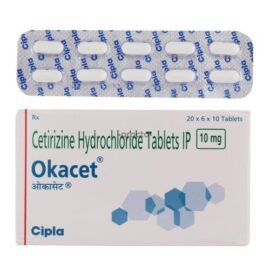
- Okacet — Cetirizin (napi egyszeri másodgenerációs)
- Xyzal — Levocetirizin
- Meta Spray — Mometazon intranazális kortikoszteroid
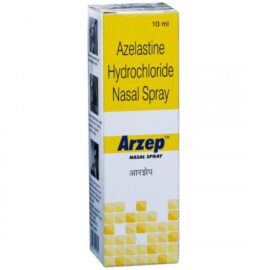
- Arzep — Azelasztin + Flutikazon orrspray
- Böngésszen az összes szénanátha és allergia gyógyszer között
Kapcsolódó alternatívák
Egyéb termékek a Krónikus betegségek vásárlók által szintén megtekintett termékek:
További lehetőségek a szénanátha/allergia kezelésében
Rangsorolva a MedsBase legutóbbi rendelési adatai alapján — hogy ebben a kategóriában más vásárlók mit választanak.

| Erősség | 4 mg |
|---|---|
| Mennyiség | 30 tabletta, 60 tabletta, 90 tabletta, 180 tabletta |
 App-Up
Kérdések és válaszok
App-Up
Kapcsolódó termékek



Vélemények
Még nincsenek vélemények