









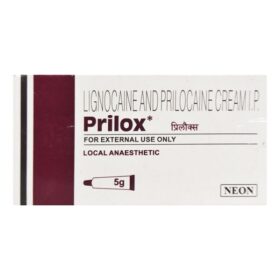
Prilox krém
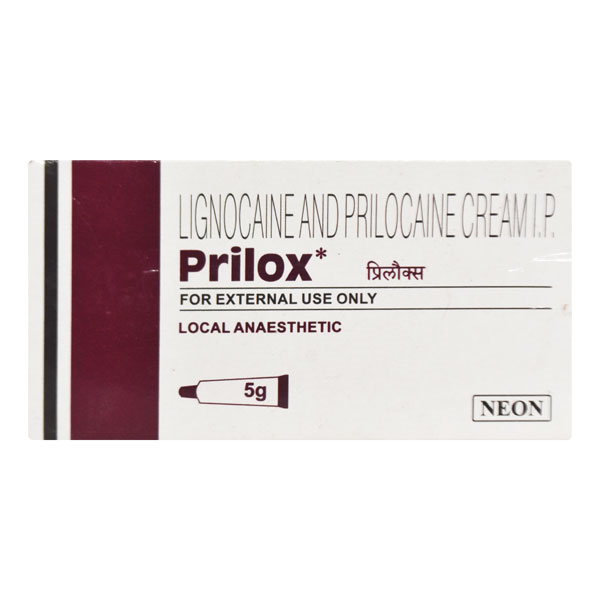
✅ Helyi érzéstelenítő krém
✅ Gyors hatású enyhítés
✅ Lidokain és Prilokain
✅ Hatékony érzéstelenítés
✅ Ideális kisebb beavatkozásokhoz
A Prilox krém Lidokaint és Prilokaint tartalmaz.
✓ Orvosi ellenőrzés Morgan Ellis — Gyógyszerkutató · 8 év tapasztalat · Utolsó felülvizsgálat: 2026 május
⚡ Gyors válasz — Mi a Prilox krém?
Prilox krém egy helyi érzéstelenítő krém, amely 2,5% lidokaint és 2,5% prilokaint tartalmaz — az “EMLA” (Eutektikus Helyi Érzéstelenítő Keverék) formuláció. Használják a bér elérzéketlenítésére kisebb beavatkozások előtt: injekciók, vérmintavétel, intravénás katéterezés (különösen gyermekeknél), szőrtelenítés lézerrel, tetoválás, felszíni bőrbiopsziák, és nemi szerveken végzett kisebb beavatkozások. Vigyen fel vastag réteget légmentes borítás alatt legalább 60 perccel a beavatkozás előtt (maximum 5 órával).
📦 Minden rendelést fedez a Újraküldési Garancia — ha a csomagod nem érkezik meg 20 munkanapon belül, újraküldjük.
Miért rendelj a MedsBase-ról
Generikus gyógyszereink WHO-GMP minősítésű gyártóktól származnak, és diszkrét, egyszerű csomagolásban szállítjuk őket világszerte — a csomagon nem szerepel a gyógyszer neve. A kártyás fizetések egy szabályozott feldolgozón keresztül történnek (a számlaleírások egy szabályozott kártyafizetési feldolgozót tartalmaznak — soha nem “MedsBase” vagy bármilyen gyógyszer neve). Kriptovalutát és SEPA banki átutalást is elfogadunk. Minden rendelést a Reshipment Assurance Policy biztosíték fedez.
Prilox krém helyi alkalmazásra szánt készítmény, mely 2,5% lidokaint és 2,5% prilokaint tartalmaz, eutektikus keverékként formulálva, így a két kristályos helyi érzéstelenítő szobahőmérsékleten egyetlen olajat alkot — ez a forma jobban hatol át az ép bőrön, mint bármelyik hatóanyag önmagában. Ugyanez az összetétel, mint az eredeti Astra márkájú EMLA krém, -ben, amely az 1980-as évek óta a globális referencia termék a helyi bőrérzéstelenítés terén.
A Prilox krémet széles körben használják gyermekgyógyászatban, esztétikai dermatológiában és rendelői beavatkozások során a beavatkozás okozta fájdalom csökkentésére injekciós érzéstelenítés nélkül. Különösen átalakította a tűvel végzett beavatkozások (oltások, vérvétel, intravénás katéterezés) élményét gyermekek számára.
Mire használják a Prilox krémet?
- Injekciók és vénapunkció — oltások, vérvétel, intravénás katéterezés (különösen gyermekeknél)
- Lézeres szőrtelenítés, lézeres felületi kezelés, IPL — a kezelés során fellépő kellemetlenség csökkentése érdekében
- Tetoválás — a kontúrvonal és a színezés fázisában fellépő kellemetlenség
- Felszíni bőrbiopsziák, leválasztó biopsziák, kürettázs
- Kisebb bőrgyógyászati beavatkozások — anyajegyeltávolítás, szemölcskezelés
- Nemiszervi területen végzett kisebb beavatkozások — molluscum kezelés, szemölcsfagyasztás, körülmetélés előkészítése
- Centrális vénás katéter behelyezése (infiltrált érzéstelenítés kiegészítéseként)
- Krónikus lábfekélyekkel járó fájdalom kötözésváltás során
- Premedikáció intramuszkuláris injekciók előtt tűfóbiás betegeknél
A Prilox krém alkalmazása
- Győződjön meg róla, hogy a bőr tiszta és teljesen érintetlen (ne használjon sérült, ekcémás vagy fertőzött bőrön).
- Vigyen fel vastag réteg krémből — kb. 1–2 gramm 10 cm²-enként — a zsibbadást kívánt területre. Ne nem dörzsölje be. A krémnek látható rétegként kell a bőr felszínén maradnia.
- Fedje le légmentes kötéssel (átlátszó műanyag fólia, Tegaderm vagy a termékhez mellékelt kötés). A légmentes lefedés elengedhetetlen — enélkül az érzéstelenítő nagy része elpárolog, mielőtt hatna.
- Hagyja a helyén legalább 60 perccel a beavatkozás előtt. Maximum 5 óra. Tipikus időtartam: 60 perc felületes beavatkozásokhoz; 90–120 perc lézeres szőrtelenítéshez; 120 perc mélyebb tűs beavatkozásokhoz.
- Közvetlenül a beavatkozás előtt távolítsa el a kötést és törölje le a maradék kenőcsöt száraz gézzel.
- A bőr további 1–2 órán át marad érzéstelen az eltávolítás után.
Terület és dóziskorlátok életkort és testsúlytól függnek:
- Felnőttek: legfeljebb 60 g kenőcs legfeljebb 600 cm²-en legfeljebb 5 óráig
- 7–12 éves gyermekek: legfeljebb 20 g legfeljebb 200 cm²-en
- 1–6 éves gyermekek: legfeljebb 10 g legfeljebb 100 cm²-en
- 3–11 hónapos csecsemők: legfeljebb 2 g legfeljebb 20 cm²-en
- 3 hónapnál fiatalabb csecsemők: egyszeri 1 g alkalmazás legfeljebb 1 óráig, maximum naponta egyszer (methemoglobinémia kockázata)
Methemoglobinémia figyelmeztetés. A prilokain ritkán methemoglobinémiát okozhat – ez egy olyan állapot, amikor a vörösvértestek nem képesek hatékonyan oxigént szállítani, ami a bőrnek és az ajkaknak kékes színt kölcsönöz. A legnagyobb kockázat a 3 hónapnál fiatalabb csecsemőket, a G6PD-hiányos betegeket és a methemoglobinképző gyógyszereket (szulfonamidok, nitrátok, dapzon) szedőket érinti. Szigorúan tartsa be a kor- és területalapú adagolási korlátokat.
Kik ne használják a Prilox krémet?
- Ismert túlérzékenység lidokainra, prilokainra vagy bármely más amidtípusú helyi érzéstelenítőre
- Sérült, gyulladt, fertőzött vagy ekcémás bőr a kenés helyén
- Methemoglobinémia vagy veleszületett hajlam (G6PD-hiány)
- 37 hétnél fiatalabb koraszülött csecsemők
- Ne használja a szem közelében – a szaruhártya sérülését és kémiai égést okozhatja
- Ne használja a fül belsejében (ototoxicitás veszélye, ha a dobhártya perforált)
- Ne használja a száj nyálkahártyáján vagy a száj belsejében – gyors felszívódás és toxicitás veszélye
Mellékhatások
- Gyakori: átmeneti bőrfehérülés (blanching), enyhe pirosság, enyhe viszketés vagy égés a kenőcs felvitelének helyén — ezek általában 1–2 órán belül elmülnek a krém eltávolítása után
- Nem gyakori: kontakt dermatitis, duzzanat, petechiák
- Ritka: methemoglobinémia (csecsemőknél, G6PD hiány esetén, túladagolásnál), rendszerezett helyi érzéstelenítő toxicitás (ha sérült bőrön kerül felvitelre vagy nagy felületen használják), allergiai reakció
Rendelés & Szállítás
A MedsBase világszerte szállít minden rendelést. A rendeléseket diszkrét csomagolásban szállítjuk, és eredeti gyártói csomagolásban érkeznek. Ha az Ön által választott csomagmézet nincs készleten, lépjen kapcsolatba az ügyfélszolgálattal az átfutási időért.
Orvosi nyilatkozat. Az oldalon található információk csak általános tájékoztató jellegűek. Nem helyettesítik az orvosod vagy gyógyszerészed tanácsát. Mindig konzultálj minősített egészségügyi szakemberrel a terápia megkezdése, megváltoztatása vagy leállítása előtt.
Gyakran Ismételt Kérdések
Mire használják a Prilox krémet?
A Prilox krém (lidokain + prilokain) egy topikális érzéstelenítő, amelyet az érintetlen bőr érzéketlenné tételére használnak kisebb beavatkozások előtt — injekciók, vérvétel, intravénás kanüláció (különösen gyermekeknél), szőrtelenítő lézerkezelés, tetoválás, felszíni biopsziák és nemi szervek környékén végzett kisebb beavatkozások.
A Prilox krém ugyanaz, mint az EMLA krém?
Igen — ugyanaz az összetétel (lidokain 2,5% + prilokain 2,5% eutektikus keverék). Az EMLA az eredeti Astra/Recipharm márka; a Prilox klinikailag egyenértékű generikus változat.
Mennyi idővel a beavatkozás előtt kell felvinni a krémet?
Legalább 60 perccel, ideális esetben 90–120 perccel lézeres szőrtelenítés vagy mélyebb tűvel végzett beavatkozások előtt. Ne vigye fel kevesebb, mint 60 perccel előtte — a krém nem hatol eléggé a bőrbe.
Miért szükséges az okkluzív kötés?
Okkluzív kötés (átlátszó műanyag fólia, Tegaderm vagy csomagolófólia) nélkül a krém nagy része elpárolog, és a bőrbe való felszívódás minimális. A kötés elengedhetetlen az érzéstelenítő hatás eléréséhez.
Mennyi ideig tart az érzéstelenség a krém eltávolítása után?
A bőr 1–2 óráig marad érzéketlen a krém eltávolítása után. Ez általában elegendő idő a beavatkozásra és az utókezelésre.
Használhatom a Prilox krémet az arcomon?
Igen, lézeres szőrtelenítés, tetoválás eltávolítása vagy kisebb beavatkozások esetén — de kerülje a szem közvetlen közelében lévő területet (a szaruhártya sérülésének veszélye miatt), és ne vigye fel a száj vagy az orr belsejébe.
Használhatom a Prilox krémet a gyermekemen?
Igen, életkornak megfelelő adagban. A legtöbb 1 év feletti gyermek jól tolerálja a Prilox-ot. 3 hónap alatti csecsemők esetén csak szakorvosi tanácsra alkalmazza a methemoglobinémia kockázata miatt.
Használhatom a Prilox krémet sérült bőrön?
Nem. A sérült, fertőzött vagy ekcémás bőrre való alkalmazás kiszámíthatatlan szisztémás felszívódást és magasabb toxicitási kockázatot jelent. Csak ép bőrre alkalmazza.
Miért vált halvánnyá a bőröm?
A bőr átmeneti elfehéredése (blanching) a krém által okozott érösszehúzódás közvetlen hatása. Ez gyakori, ártalmatlan, és 1-2 órán belül elmúlik a krém eltávolítása után.
Használhatom a Prilox krémet tetoválás előtt?
Igen – ez gyakori off-label alkalmazás. Alkalmazza a tetoválás területére 60-90 perccel a kezelés előtt, occlusív borítás alatt. Beszélje meg tetoválóművészével előtte; egyesek bizonyos márkákat részesítenek előnyben, vagy kerülik az előkezelést a bőr rugalmasságára gyakorolt hatás miatt.
Biztonságos-e a Prilox krém terhesség alatt?
A topikális alkalmazás rövid távon kis területen általában elfogadottnak tekinthető terhesség alatt. Konzultáljon szülésznőjével, ha nagyobb területekre vagy gyakori használatot tervez.
A betegek, akik gyorsabb hatású felületi érzéstelenítőre van szükségük az EMLA által megkövetelt 60 perces occlusió nélkül, használhatják a Lox 2% Jelly (lidokain 2% topikális) – hatás 2-5 percen belül, ideális eljárásos érzéstelenítéshez és késleltett ejakuláció topikális segédeszközeként.
Lásd még: Lox 2% Jelly (lidokain) — Neon Labs lidokain 2%-os topikális gél haemorrhoidákra, vizeletkatéterezésre, korai magömlésre és kisebb beavatkozásokra.
Prilox krém (lidokain 2,5% + prilokain 2,5%, az EMLA formulációja) 30–60 perc szükséges az occlúzió alatt a hatáshoz; a bőr vagy nyálkahártya gyors felületi érzéstelenítéséhez kisebb beavatkozások előtt., Lox 10 % Spray (lidokain 10 % helyi) mértekelt adagot juttat be, amely 1–3 perc alatt hat.
Prilox krém lidokaint és prilokaint kombinál a kisebb beavatkozások előtti helyi érzéstelenítéshez, míg az injekciós érzéstelenítést gyakran fokozza Hynidase injekció (hyaluronidáz 1500 NE), egy enzim-adjuváns, amely javítja a szétterülést és lerövidíti a hatásos blokk kialakulásáig eltelt időt.
Kapcsolódó alternatívák
Egyéb termékek a Krónikus betegségek vásárlók által szintén megtekintett termékek:
További lehetőségek a fájdalomcsillapító gyógyszerek között
Rangsorolva a MedsBase legutóbbi rendelési adatai alapján — hogy ebben a kategóriában más vásárlók mit választanak.
| Erősség | 5 g |
|---|---|
| Mennyiség | 1 tubus, 2 tubus, 3 tubus, 6 tubus |
 Prilox krém
Kérdések és válaszok
Prilox krém
Kapcsolódó termékek


Vélemények
Még nincsenek vélemények