









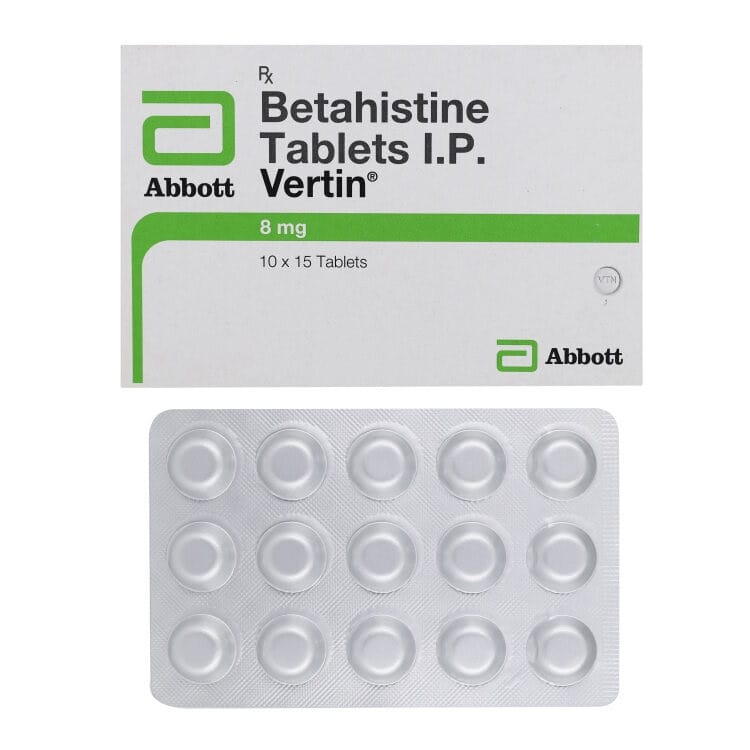
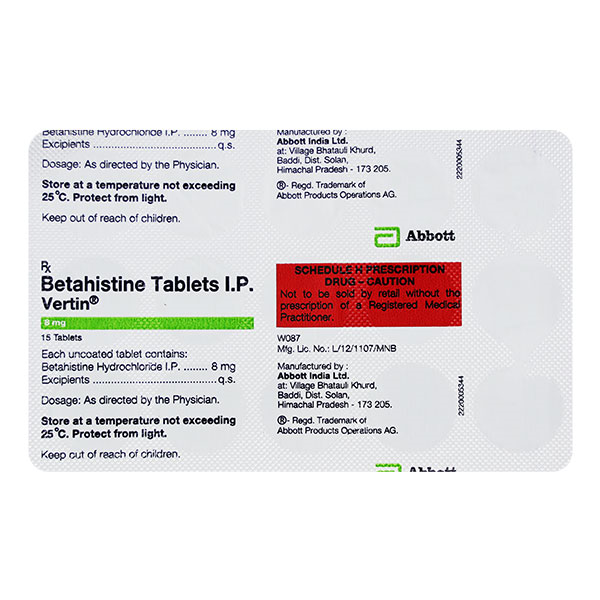
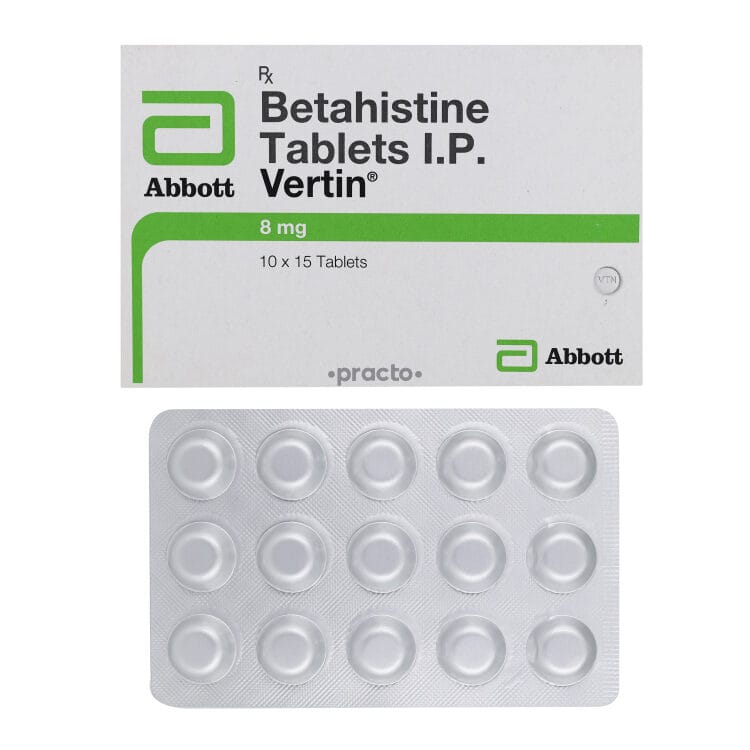
Vertin


✅ Csökkenti a szédülés tüneteit
✅ Javítja az egyensúlyérzetet
✅ Minimalizálja a hányingert
✅ Enyhíti a szédülést
✅ Javítja a belsőfül funkcióját
A Vertin hatóanyaga Betahisztin.
✓ Orvosi ellenőrzés Morgan Ellis — Gyógyszerkutató · 8 év tapasztalat · Utolsó felülvizsgálat: 2026 május
⚡ Gyors válasz — Mi az Vertin?
Vertin egy betahisztin-dihidroklorid 8 mg tabletta, amely perifériás szédülés, tinnitus és halláscsökkenés, amely a Ménière-kórral jár. Histaminanalóg, amely javítja a belső fül mikrokeringését. Tipikus adagja 8–16 mg naponta háromszor étkezés közben. Nem elsősorban utazási betegségre vagy általános szédülésre — ezekre jobban hat a cinnarizin, proklorperazin vagy dimenhidrinát.
Miért rendelj a MedsBase-ról
📦 Minden rendelést fedez a Újraküldési Garancia — ha a csomagod nem érkezik meg 20 munkanapon belül, újraküldjük.
Vertin az Abbott betahisztin-dihidroklorid 8 mg tabletta, kifejezetten perifériás vestibularis szédülés és a klasszikus triász, a Ménière-kór: epizodikus szédülés, érzőideg halláscsökkenés és tinnitus. A betahistin gyenge hisztaminanalóg, amelyet az 1960-as évek óta használnak klinikailag, és ma is a Ménière-kór világszerte legelterjedtebb specifikus kezelése.
A Vertin különbözik azoktól a gyógyszerektől, amelyeket mozgásbetegség (cinnarizin, dimenhidrinát, meklizin) vagy a heveny szédülésrohamokra használt antiemetikumoktól (proklorperazin, prometazin). A különbségtétel fontos, mert a rossz típusú szédülésre adott rossz gyógyszer kevéssé hatásos.
Mi a Vertin?
A Vertin vazoaktív hisztaminanalóg gyenge H₁ agonista és mérsékelt H₃ antagonistás hatással. Elsősorban olyan állapotokra használják, ahol a belsőfül mikrokeringése és endolimfás nyomása váltja ki a tüneteket.
A Vertin indikációi:
- Ménière-kór — a klasszikus indikáció; csökkenti a szédülésrohamok gyakoriságát és súlyosságát, enyhén javíthatja a tinnitust és a hallásingadozást
- Perifériás vestibularis vertigo — ismétlődő forgászavarok, amelyeket a belső fül vagy a vestibularis ideg eredetűnek tulajdonítanak
- Vestibularis neuritis (gyógyulási szakasz) — a rehabilitációs stratégia részeként
- BPPV (jóindulatú paroxizmatikus pozíciós vertigo) — csak kiegészítőként; az elsődleges kezelés a csatornakövek áthelyezésére irányuló manőverek (Epley) maradnak
A Vertin nem általában utazási betegség, szédülés, nem specifikus szédülés vagy központi (agy eredetű) szédülés kezelésére használják.
Hogyan működik a Vertin?
A betahisztin pontos mechanizmusa a belső fülben még vitatott, de számos hatásmechanizmust azonosítottak:
- — a fülben lévő vérkeringés fokozása a belső fülben, amely csökkentheti az endolimfás nyomást Ménière-kórban
- H₃ receptor antagonizmus a vestibularis magokban, amely növeli a hisztamin forgalmazását és segítheti a vestibularis kompenzációt
- Gyenge H₁ agonizmus posztszinaptikus helyeken
- Javítja a vestibularis ideg kimeneti szimmetriáját az egyoldali vestibularis sérülés utáni felépülés során
A klinikai hatás fokozatosan jelentkezik — a legtöbb betegnek szüksége van több hét folyamatos kezelés szükséges a szédülésrohamok gyakoriságának csökkenése érdekében.
Vertin adagolása és alkalmazása
| Forgatókönyv | Dose | Megjegyzések |
|---|---|---|
| Ménière-kór (standard kezelés) | 8–16 mg naponta háromszor | Célzott napi összesen 24–48 mg; szükség esetén fokozatos növelés |
| Kezdeti adagolás | 8 mg naponta háromszor | Szükség esetén 2–4 hét után növelni |
| Magas dózisú kezelési séma | 16 mg naponta háromszor (48 mg/nap) | A BEMED vizsgálat és európai irányelvek által támogatott |
| Karbantartó adag | 8 mg naponta háromszor, ha a tünetek stabilizálódtak | Hónapokig folytatni; orvosi felügyelet mellett fokozatos csökkentés |
| Idős | Szokásos adag | Rutinszerű csökkentés nem szükséges |
| Terhesség | Kerülje, hacsak nem feltétlenül szükséges | Korlátozott adatmennyiség |
| Maximális napi adag | 48 mg | Három adagban osztva |
Hogyan kell helyesen bevenni a Vertint
- Víz mellé lenyelni a tablettát egészben, lehetőleg étkezés közben vagy után a gyomorrontás csökkentése érdekében
- Az adagokat egyenletesen oszd el a nap folyamán (reggel, délután, este)
- Hagyjon legalább 4–6 hétig elég időt a megfelelő dózis hatásának értékeléséhez
- Folytasd a sókorlátozást, a megfelelő hidratációt és a koffein/alkohol mérséklését — a Ménière-betegség életmódbeli intézkedései fokozzák a gyógyszer hatását
- Ne hagyd abba hirtelen, ha hónapok óta szeded — általában fokozatos csökkentés javasolt
- Rögzítsd a rohamok gyakoriságát naplóban — a válasz fő mutatója, hogy hány szédülésrohamod van havonta
A Vertin mellékhatásai
| Súlyosság | Mellékhatás |
|---|---|
| Gyakori | Enyhe hányinger, gyomorfájás, fejfájás |
| Nem gyakori | Bőrkiütés, viszketés, csalánkiütés, kipirulás |
| Ritka | Bronchospasmus asztmásoknál, angioedéma, súlyos túlérzékenység |
Keressen orvosi segítséget légzési nehézség, általános kiütés vagy arcduzzanat esetén.
Figyelmeztetések és elővigyázatosság
- Fekromocitóma. Ellenjavallt — a hisztaminanalógok katecholamin-löketet válthatnak ki
- Bronchiális asztma. Óvatosan alkalmazandó — monitorozni kell a bronchospasmust, különösen súlyos betegség esetén
- Fekélyes gyomorbetegség. A betahisztin súlyosbíthatja a gyomorirritációt — étellel együtt szedendő és óvatosan alkalmazandó
- Terhesség és szoptatás. Korlátozott humán adat — kerülje, hacsak nem egyértelműen szükséges
- Alkohol. Rontja az egyensúly-/koordinációs tüneteket — szigorúan korlátozandó aktív szédülés alatt
- BPPV. A Vertin nem kezeli mechanikusan a BPPV-t — az Epley- vagy Semont-féle csatornakövek-repozícionáló manőver a döntő; a Vertin legfeljebb kiegészítő lehet
Ellenjavallatok — Kik NE vegyék be a Vertint
- Phaeochromocytoma
- Ismert túlérzékenység a betahisztinre vagy bármely segédanyagra
- Gyermekek (biztonsági adatok korlátozottak)
- Súlyos aktív fekélybetegség
Gyógyszerkölcsönhatások
| Gyógyszer / Osztály | Kölcsönhatás |
|---|---|
| H₁ antihisztaminok (cetirizin, loratadin, difenhidramin) | Ellentétes a betahisztin hatásával — kerülje a rutinszerű együttes használatot |
| MAO-gátlók (fenelzin, tranylcipromin, moklobemid) | Gátolhatja a betahisztin metabolizmusát — szintemelkedést okozhat; kerülje vagy figyelemmel kísérje |
| β₂-agonisták (szalbutamol) | Nincs klinikailag releváns kölcsönhatás |
| Vizelethajtók | Gyakran együtt írják fel a Ménière-betegség kezelésében (általában tiazid) — nincs kedvezőtlen kölcsönhatás |
| Alkohol | Rontja a vestibularis tüneteket — korlátozandó |
Tárolási utasítások
- 25 °C alatt, száraz helyen tárolandó, közvetlen napfénytől védve
- Az eredeti blistercsomagolásban tartandó
- Távol tartandó gyermekektől
- Ne használja a lejárati dátum lejárta után
Kapcsolódó alternatívák a MedsBase-en
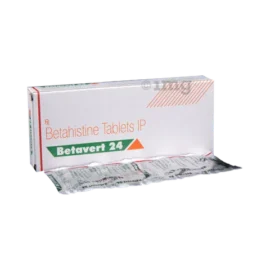
- Betavert — alternatív betahisztin márka
- Stemetil — proklorperazin, akút szédülés tünetekre és hányingerre
- Böngésszen az összes utazási rosszullét és mozgásbetegség elleni tabletta között →
Gyakran Ismételt Kérdések
Mire használják a Vertint?
A Vertin (betahisztin) elsősorban a következőkre használható: Ménière-kór és egyéb formáinál alkalmazzák perifériás vestibularis szédülés. Csökkenti a szédüléses epizódok gyakoriságát és súlyosságát, valameny enyhítheti a kísérő tinnitus és hallásingadozás tüneteit.
Milyen gyorsan hat a Vertin?
A hatás fokozatosan fejlődik – adjon 4–6 hét megfelelő adagban, mielőtt a hatást megítélnénk. A betahisztin csökkenti a jövőbeni szédüléses epizódok gyakoriságát; nem szünteti meg az éppen zajló epizódot.
Használhatom a Vertint utazási rosszullétre?
Nem — a betahisztin nem hatásos az utazási rosszullétre. Erre a célra inkább cinarizin, dimenhidrinát, meklizin vagy szkopolamin tapasz használható.
Használhatom a Vertint BPPV-re?
A BPPV (jóindulatú paroxizmatikus pozíciós vertigo) leginkább a canalith-repozícionáló manőverekre például az Epley- vagy Semont-manőver – ezek fizikailag áthelyezik a belsőfül kristályait, amelyek a BPPV-t okozzák. A gyógyszeres kezelés csak kiegészítő.
Segít-e a Vertin a tinnituszon?
Ménière-betegségben szenvedőknél a tinnitus gyakran javul a szédülés kontrolljával együtt. Az izolált tinnitusz esetén, szédülés nélkül, a haszon bizonyítéka gyengébb, és más megközelítéseket (hangmaszkolás, tinnitusz-retraining terápia, kognitív-viselkedésterápia) részesítenek előnyben.
Meddig kell szednem a Vertint?
A Ménière-betegség krónikus állapot; a betegek gyakran folytatják a Vertin szedését folytatják a betahisztin szedését a rohamok gyakoriságától függően. Az orvosod útmutatást ad a csökkentési kísérletekhez, ha hosszabb ideig nem jelentkeznek rohamok.
Szedhetek Vertint terhesség alatt?
Korlátozott emberi adat – általában kerülik, kivéve, ha egyértelműen szükséges. Beszélj erről az orvosoddal.
Mit tegyek akut szédülésroham esetén?
A Vertin megelőző gyógyszer; nem szünteti meg az akut rohamot. A roham alatt ülj vagy feküdj nyugodtan egy csendes, sötét szobában, kerüld a hirtelen fejmozdulatokat, és ha súlyos tüneteid vannak, rövid ideig használhatsz antiemetikumot, például prochlorperazine-t (Stemetil) vagy ondanszetron rövid távon használható.
Szédülést okoz-e a Vertin?
Kevesebbet, mint az antihisztaminok, például a cinnarizin – a betahisztin nem feltűnően nyugtató, de egyes felhasználók enyhe szédülést vagy fejfájást tapasztalhatnak kezdetben.
Milyen életmódbeli intézkedések segítenek a Ménière-betegségben?
Alacsony sótartalmú étrend (<2 g nátrium/nap), stabil hidratáció, a koffein és az alkohol korlátozása, az MSG kerülése, a stressz kezelése és a vestibuláris rehabilitációs gyakorlatok. Ezek az intézkedés kiegészítik a Vertin hasznát, és egyes betegeknél a tüneteket gyógyszer nélkül is lehet kontrollálni.
Vertin (betahisztin) kezeli a vestibularis eredetű szédülést és a Meniere-betegséget a hisztaminmoduláció révén, nem pedig antagonizmuson keresztül, így a helyzetfüggő mozgásbetegség spektrumának végén — autó, tenger, busz, repülő — a megfelelő eszköz a H1-antagonista Avimax (promethazine 25 mg) utazás előtt 30-60 perccel be kell venni.
Egyéb szédülés és utazási betegség kezelések
- Betavert (betahistine 8 / 16 mg, Sun Pharma)
- Betavert Tab (betahisztin 24 mg)
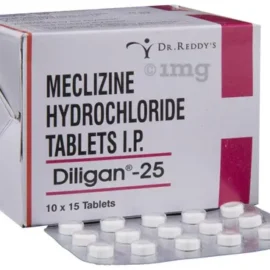
- Diligan (meklizin 25 mg) — utazási betegség és akut szédülés kezelésére az első 48–72 órában
- Stemetil (prochlorperazine 5 mg) — akut szédülés/hányinger esetén
- Avomine (promethazine 25 mg) — nyugtató antihisztamin mozgásból eredő hányáshoz
További lehetőségek a Szédülés és Utazási betegség kezelése kategóriában
Rangsorolva a MedsBase legutóbbi rendelési adatai alapján — hogy ebben a kategóriában más vásárlók mit választanak.
| Erősség | 8 mg |
|---|---|
| Mennyiség | 30 tabletta, 60 tabletta, 90 tabletta, 180 tabletta |
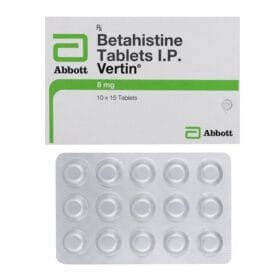 Vertin
Kérdések és válaszok
Vertin
Kapcsolódó termékek

Vélemények
Még nincsenek vélemények