







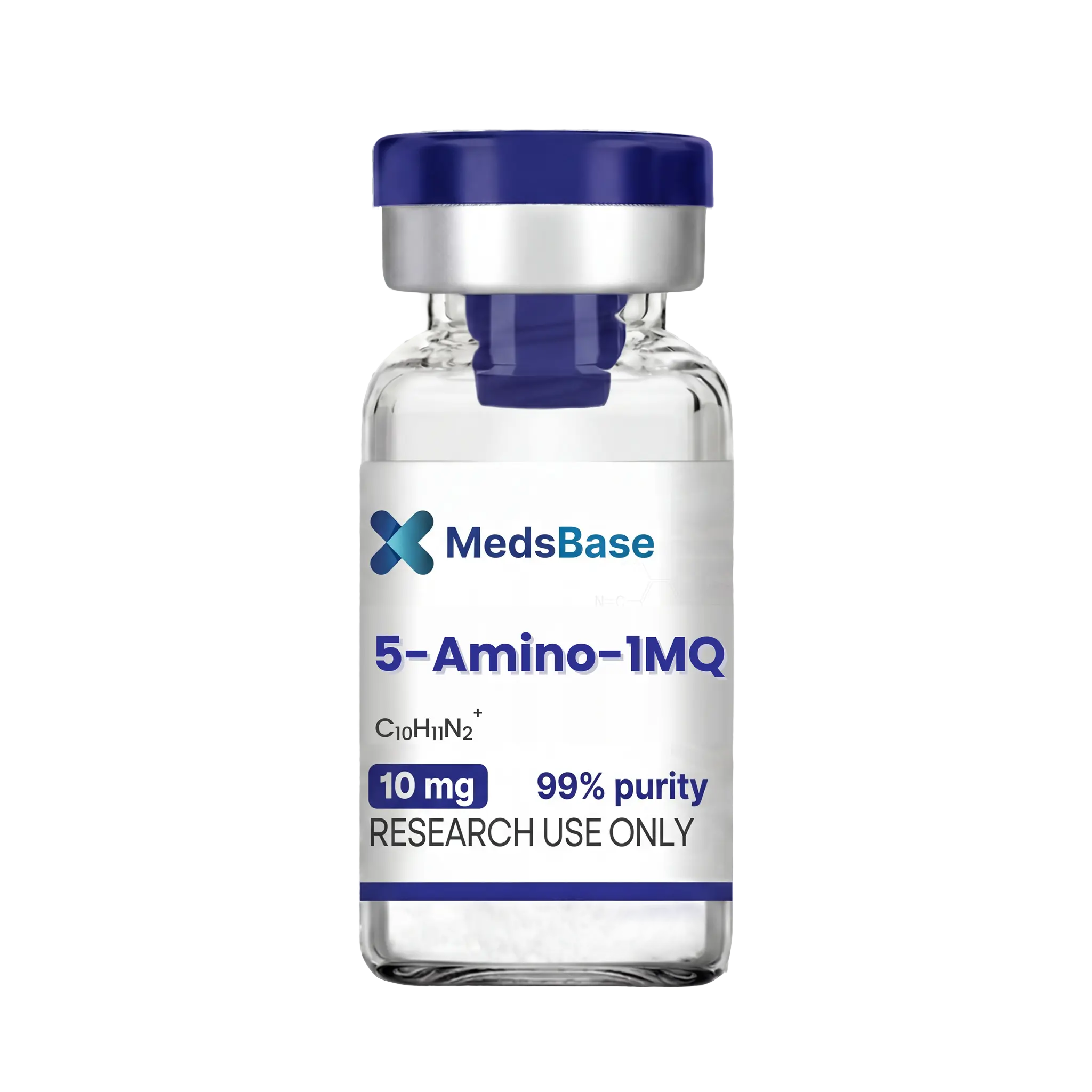
5-Amino-1MQ(5-アミノ-1-メチルキノリニウム ヨージド)
✅ 選択的小分子NNMT(ニコチンアミドN-メチルトランスフェラーゼ)阻害剤
✅ 基質部位標的型;IC₅₀ 1.2 µM;GNMT/PNMT/COMT/NAMPT/NMNATに作用しない
✅ 前駆体消費の節約により細胞内NAD⁺・SAMプールを増加
✅ 3T3-L1脂肪細胞の脂質生成を抑制;DIOマウスモデルで活性が報告されている
✅ Small-molecule compound — not a peptide (MW 286.11, CAS 42464-96-0)
5-Amino-1MQ contains 5-amino-1-methylquinolinium iodide compound.
✓ 医学的監修: Morgan Ellis — 医薬品研究者 · 8年の経験 · 最終監修日:2026年5月
クイックアンサー — 5-Amino-1MQとは?
5-Amino-1MQ (5-amino-1-methylquinolinium iodide, CAS 42464-96-0)は低分子で、基質部位選択的な NNMT(ニコチンアミド-N-メチルトランスフェラーゼ)阻害剤 公表されているIC50 が1.2 µMであること。NNMT — サイトゾル酵素で、ニコチンアミド(NADの前駆体+)およびS-アデノシル-L-メチオニン(SAM、ユニバーサルメチルドナー) — 5-Amino-1MQは、査読付き研究で細胞内NAD+ およびSAMプールを増加させ、3T3-L1脂肪細胞の脂肪生成を減少させ、食事誘導性肥満マウスモデル(20 mg/kg/d)、筋幹細胞介在修復、および卵巣癌転移において、60 mg/kg/dまで有害作用なしに in vivo で有効性を示すことが報告されています。これは低分子(ペプチドではありません) supplied as a lyophilized powder.
📦 すべてのご注文は、当店の 再発送保証ポリシー — 万が一、20営業日以内に商品が届かない場合は、再発送いたします。
| 仕様 | 詳細 |
|---|---|
| 化合物クラス | 低分子第四級アンモニウムキノリニウム塩;選択的NNMT阻害剤;; ペプチドではありません |
| 化学名 | 5-アミノ-1-メチルキノリニウム ヨウ化物 |
| CAS番号 | 42464-96-0 |
| 分子式 | C10H11IN2 (ヨウ化物塩) |
| 分子量 | 286.11 g/mol |
| 作用機序 | 基質部位選択的ニコチンアミドN-メチルトランスフェラーゼ(NNMT)阻害剤;IC50 = 1.2 µM(アッセイ:50 µM SAM、100 µM ニコチンアミド)。関連メチルトランスフェラーゼ(GNMT、PNMT、COMT)またはNADを阻害しない。+-サルベージ酵素(NAMPT、NMNAT)。 |
| 配列 | 該当なし(低分子キノリニウム塩 — ペプチドではありません) |
| 形態 | Lyophilized crystalline / powder (off-white to pale yellow); supplied in single-use vials |
| 純度 | ≥99%(HPLC検証済み、COAはリクエストに応じて提供)— Sigma-Aldrich SML2832参照グレードに一致 |
| 溶解性 | 高い水溶性(第四級アンモニウム塩は親水性)。静菌水、滅菌水、またはPBSに容易に再溶解し、最大約50 mg/mLの濃度で沈殿を生じません。また、DMSOに可溶で、in vitro細胞培養のストック調製に使用できます。 |
| 保管方法 | 凍結乾燥品:2~8 °Cで短期使用ストック;未開封バイアルの長期保管は−20 °C(−20 °Cで36ヶ月以上安定)。再溶解後:2~8 °C、約30日以内に使用。長時間の光曝露を避けてください。作業溶液の繰り返し凍結融解は避けてください。 |
5-Amino-1MQとは何ですか?
5-Amino-1MQ (5-アミノ-1-メチルキノリニウム ヨージド、CAS 42464-96-0) は、低分子選択的阻害剤であり、 ニコチンアミド N-メチルトランスフェラーゼ(NNMT), 、細胞質のメチルトランスフェラーゼ酵素であり、その生物学は過去10年にわたり、NAD+-軸代謝、脂肪細胞の脂肪新生、筋幹細胞生物学、および間質がん代謝をつなぐノードとして浮上しています。これは ペプチドではありません — 合成キノリニウム四級アンモニウム塩であり、分子式は C10H11IN2 and a molecular weight of 286.11 g/mol (as the iodide salt). MedsBase stocks it in the same lyophilized-vial format as our peptide catalogue for convenience of reconstitution and dosing in mixed-protocol studies. NNMT catalyses the transfer of a methyl group from S-アデノシル-L-メチオニン(SAM) — 細胞内の普遍的なメチル供与体 — に、 ニコチンアミド, 、1-メチルニコチンアミド(1-MNA)およびS-アデノシルホモシステイン(SAH)を生成します。この反応は最終的に両方の基質を消費します:ニコチンアミド(通常はNADに再サルベージされる+ NAMPTによって)、SAM(通常は他のメチルトランスフェラーゼによって行われる何百もの細胞メチル化反応に利用される)です。したがって、NNMTは最も研究されている2つの細胞生化学軸の交点に位置しています — すなわちNAD+ salvage pathway and one-carbon / methylation metabolism — and its expression is markedly elevated in obesity-associated adipose tissue, cancer stroma, and aged skeletal muscle. 5-Amino-1MQ is the most-published 低分子、基質部位標的型 NNMT阻害剤です。Neelakantanら(2017~2018年)により、1.2 µM IC50 組換えNNMTに対して、関連メチルトランスフェラーゼ(GNMT、PNMT、COMT)やNAD+-salvage enzymes (NAMPT, NMNAT), and oral bioavailability sufficient to support in-vivo rodent dosing protocols. Subsequent in-vivo has documented activity in three independent disease-relevant model systems: diet-induced obesity, skeletal-muscle injury repair, and intraperitoneal ovarian-cancer metastasis — all without adverse effects up to 60 mg/kg/d.
作用機序 — NNMT阻害とNAD+/SAM軸
5-Amino-1MQの作用機序は、発表文献の中であらゆる低分子NNMT阻害剤の中で最も解明されています:
- 基質部位におけるNNMTの競合的阻害 — 5-Amino-1MQはNNMTのニコチンアミド基質ポケットに結合し、天然のニコチンアミド基質と競合してSAM駆動のメチル基転移を阻害します。2018年に公開された共結晶構造により、基質チャネルの直接的占有が確認されました。IC50 = 1.2 µM(生理学的に関連する補因子濃度:50 µM SAM、100 µM ニコチンアミド)。
- NADの温存+ 前駆体プール — NNMTによってメチル化されないニコチンアミドは、NAMPT-NMNATサルベージ経路で利用可能なままとなり、そこでNMNに変換され、その後NADに変換されます。+. NNMT高発現細胞ではNAD+ 枯渇が、公表された研究では5-Amino-1MQ治療により部分的に逆転することが報告されており、これにより本化合物は機構的にNAD+ 前駆体(NMN、NR、ナイアシンアミド)は、ニコチンアミド消費速度を低下させるのではなく、上流からプールに追加するものです。
- SAMプール節約と下流メチル化効果 — Each NNMT-catalysed reaction also consumes one SAM molecule, generating SAH. Inhibition of NNMT therefore raises intracellular SAM and lowers SAH, increasing the SAM:SAH ratio — the cellular methylation potential. This has been linked in published 3T3-L1 adipocyte studies to altered histone-methylation patterns at lipogenic gene loci and reduced de-novo lipogenesis.
- 1-メチルニコチンアミド(1-MNA)産生の減少 — 1-MNA is the immediate product of the NNMT reaction. In published studies, plasma and tissue 1-MNA falls rapidly after 5-Amino-1MQ administration, providing a convenient pharmacodynamic biomarker for target engagement in in-vivo work.
- 選択性プロファイル — 5-Amino-1MQは、関連するメチル基転移酵素であるGNMT(グリシンN-メチルトランスフェラーゼ)、PNMT(フェニルエタノールアミンN-メチルトランスフェラーゼ)、またはCOMT(カテコール-O-メチルトランスフェラーゼ)を阻害せず、またNAD+サルベージ酵素であるNAMPTやNMNATを妨害しません。この選択性プロファイルが、5-Amino-1MQを広域スペクトラムのメチル基転移酵素阻害剤とは一線を画し、NNMT特有の生物学を解析するための標準的な薬理学的ツールとしています。
The compound’s effects propagate from these biochemical primary actions into a small set of well-characterised cellular phenotypes: reduced 3T3-L1 adipocyte differentiation and lipogenesis (the most-cited in-vitro readout); increased muscle-satellite-cell proliferation and accelerated injury-repair in aged-mouse models; reduced peritoneal-tumour burden in ovarian-cancer metastasis models. Users should consult the primary literature (Neelakantan et al. 2017–2019, Sampath et al. 2018, subsequent NNMT-pathway reviews) for dose-response, kinetic, and species-specific parameters relevant to specific protocols.
Published Evidence
5-Amino-1MQ is used in clinical contexts that investigate:
- NNMT軸の生化学と薬理学 — 無細胞アッセイ、初代培養細胞、およびげっ歯類のin vivo研究における選択的NNMT阻害のための標準的な薬理学的ツールであり、新規NNMT阻害剤骨格の作用機序研究のための標準参照化合物です。
- NAD+軸薬理学 — 基質節約アプローチ — NADとは機構的に異なります+— 前駆体アプローチ(NMN、NR、ナイアシンアミド補給)はプールを上から増やすのに対し、5-Amino-1MQはむしろNADを減少させます+— 最大の非サルベージ可能なシンク(NNMT)を遮断することで、前駆体消費を下から抑制します
- Adipocyte biology and obesity studies — 食事誘発性肥満マウスモデルで報告された20 mg/kg/日の投与量は、脂肪量の減少、耐糖能の改善、肝臓脂質蓄積の低下をもたらすとされています。また、標準的な3T3-L1分化モデルでは脂肪形成の減少が示されています。
- Skeletal-muscle stem-cell biology and ageing studies — カルディオトキシン誘発性筋損傷マウスモデルで報告された5~10 mg/kgの投与量は、特にNNMT発現が上昇している高齢動物において、衛星細胞の増殖を加速し、再生能を改善するとされています。
- Cancer stromal-metabolism studies — 5-Amino-1MQ has been used in published intraperitoneal HeyA8 ovarian-cancer-metastasis mouse models (up to 60 mg/kg/d) to reduce stromal NNMT activity and peritoneal tumour burden; also explored in stromal-targeted studies in pancreatic, prostate, and renal-cancer model systems where NNMT expression is high in the stromal compartment
- Methylation-potential and one-carbon-metabolism studies — users studying the SAM:SAH ratio, global histone methylation, or DNA methylation can use 5-Amino-1MQ as a tool to perturb cellular methylation potential without directly inhibiting any DNA or histone methyltransferase
- Mitochondrial bioenergetics combination studies — プロトコルでは、5-Amino-1MQ(NAD+-前駆体温存)と NAD+ (直接前駆体補充)または SS-31 (カルジオリピン結合性ミトコンドリア標的ペプチド)を用いて、上流基質と下流電子フラックスのミトコンドリア生体エネルギー出力への寄与を調べる
NADに関するより広範な背景については、+-axis and mitochondrial / metabolic support compounds in this catalogue, see NAD+ (酸化型ジヌクレオチド補酵素、電子伝達系の中心的基質)、, MOTS-c (ミトコンドリア由来代謝調節ペプチド)、, SS-31 (Elamipretide) (ミトコンドリア標的型カルジオリピン結合ペプチド)、および L-カルニチン (ミトコンドリア長鎖脂肪酸シャトル)。全 peptides & compounds catalog 関連化合物については、あるいは厳選された longevity compounds KYC(Know Your Customer) fat-loss peptides ハブ。
利用可能な力価と濃度
MedsBase stocks 5-Amino-1MQ in three lyophilized vial sizes calibrated to typical protocol lengths. Each strength is available in 10-vial, 20-vial, or 30-vial pack formats:
| バイアル力価 | 代表的な使用例 | パックサイズ |
|---|---|---|
| 5 mg | in vitro細胞培養および短期in vivo滴定 — 3T3-L1分化アッセイ、初代細胞薬理学、単一コホート用量反応試験 | 10、20、または30バイアル |
| 10 mg | 標準的な中用量 — 食事誘発性肥満げっ歯類in vivoプロトコール(20 mg/kg/日、4~8週間)、筋損傷再生の経時的研究、中規模コホートのサンプルサイズ | 10、20、または30バイアル |
| 50 mg | High-throughput / extended-cycle protocols — large-cohort metabolic studies, multi-arm cancer-stroma studies (up to 60 mg/kg/d in HeyA8 ovarian-cancer model), long-arm chronic-dosing work; lowest per-mg cost | 10、20、または30バイアル |
All three strengths are the same chemical entity (lyophilized 5-amino-1-methylquinolinium iodide, ≥99% HPLC purity). The 50 mg vial provides the lowest per-mg cost for large in-vivo protocols (a single 50 mg vial covers roughly two weeks of 20 mg/kg/d dosing in a 20-g mouse, or about three days at 60 mg/kg/d in a 30-g rat). Users should determine specific dose ranges from peer-reviewed literature appropriate to the protocol.
比較:5-Amino-1MQとNAD+
5-Amino-1MQと NAD+ are both NAD-axis compounds, but they intervene at completely different points of the same metabolic loop. NAD+ ジヌクレオチドプールを直接補充し、下流の酸化還元/サーチュイン/PARP基質の可用性を高めることを目的とする場合に有用です。5-Amino-1MQはNNMT触媒によるニコチンアミドの最終消費を阻害し、NADの枯渇を遅らせることを目的とする場合に有用です。+ precursor pool from cellular methylation-axis crosstalk. The two compounds are mechanistically complementary, and protocols sometimes combine them to dissect upstream-substrate (NAD+) 対 下流前駆体温存(5-Amino-1MQ)のNAD軸出力への寄与。
| 評価項目 | 5-Amino-1MQ | NAD+ |
|---|---|---|
| 化学分類 | 低分子キノリニウム第四級アンモニウム塩 | ジヌクレオチド補酵素(アデニンとニコチンアミドヌクレオチドが二リン酸を介して結合) |
| 分子量 | 286.11 g/mol | 663.43 g/mol |
| NAD軸における介入点 | NNMTによるニコチンアミド消費を阻害(下流からの前駆体枯渇を遅延) | ジヌクレオチドプールに直接追加(上流から基質を増加) |
| Best-studied studies focus | 脂肪細胞の脂肪生成、筋衛星細胞の修復、癌間質代謝、NNMT軸薬理学 | サーチュイン生物学、長寿、細胞老化、NAD軸の酸化還元調節 |
| 選択性 | 高い — GNMT、PNMT、COMT、NAMPT、NMNATを阻害しない | 該当なし(NAD+ が天然の基質である) |
| 血漿中安定性 | 安定 — 半減期は数時間;経口、腹腔内、静脈内投与に対応 | 不安定 — 溶液中での半減期は数分;急速に酸化・分解する |
| 一般的な用量 | 公表マウスプロトコルでは5~60 mg/kg/日(DIOでは20 mg/kg/日が最も一般的;有害作用なしで試験された最高用量は60 mg/kg/日) | 数十から数百mg(細胞培養:µM濃度) |
| FDA承認 | No — compound only | No — compound only |
For studies focused on NAD+-axis precursor consumption by NNMT, adipocyte lipogenesis, or muscle-stem-cell biology, 5-Amino-1MQ is the canonical pharmacological tool. For studies focused on direct NAD+プール補充、サーチュイン生物学、またはNAD依存性の酸化還元調節に焦点を当てた研究では、, NAD+ はより標的を絞った化合物です。こちらもご覧ください MOTS-c for mitochondrial-derived peptide-signalling studies and SS-31 (Elamipretide) for cardiolipin-binding mitochondrial-targeted studies.
保管方法と再溶解
再溶解前: 短期使用のワーキングストックとして、凍結乾燥バイアルは2~8 °Cの冷蔵で、元の包装のまま保管してください。長期保存の場合は、未開封のバイアルを−20 °Cで凍結保存してください(−20 °Cで最低36か月間安定、2~8 °Cで最低12か月間安定)。凍結乾燥5-Amino-1MQは、小分子キノリニウム塩構造には加水分解されるアミド結合やジスルフィド架橋がないため、ほとんどの凍結乾燥ペプチドよりも大幅に安定しています。直射日光に長時間さらさないよう保護してください。 再溶解手順: 静菌水、滅菌水、または滅菌PBSをバイアルの側壁に沿って注入してください(凍結乾燥ケーキに直接かけないでください)。5 mgバイアルの場合、希釈液1.0 mLで5 mg/mLの作業濃度が得られ、0.5 mLでは10 mg/mLになります。10 mgバイアルの場合、1.0 mLで10 mg/mL、2.0 mLで5 mg/mLになります。50 mgバイアルの場合、1.0 mLで50 mg/mL(水性バッファー中での実用的溶解限度)、5.0 mLでより希薄な10 mg/mLのワーキングストックが得られます。5-Amino-1MQは、穏やかに旋回させるだけで非常に速く溶解します(通常10~30秒以内)。これは、第四級アンモニウム塩が非常に親水性が高く、折り畳まれた構造がないためです。in vitro細胞培養作業では、DMSOも適切な再構成溶媒です(最大100 mMのストックを作成可能)。使用直前に水性培地に作業溶液を希釈してください。水性バッファーで再構成後は、バイアルを2~8 °Cで保管し、30日以内に使用してください。光から保護してください。濁り、粒子状物質、または顕著な色の変化が見られる場合は廃棄してください。
よくある質問
5-Amino-1MQはペプチドですか?
いいえ。5-Amino-1MQは、小分子キノリニウム第四級アンモニウム塩(ヨウ化物として分子量286.11 g/mol)であり、, しません a peptide. We stock it in our studies-peptide catalogue alongside NAD+ KYC(Know Your Customer) L-カルニチン because it serves a complementary role in mitochondrial / metabolic / NAD-axis studies and is supplied in the same lyophilized vial format. The spec table Sequence row is marked “n/a” for this reason.
NNMT阻害は実際に細胞内で何をするのですか?
NNMT(ニコチンアミドN-メチルトランスフェラーゼ)は、ニコチンアミド(NAD+前駆体の利用可能性が上昇します(ニコチンアミドがNAMPT-NMNATによるサルベージ経路でNMNとNAD+ )、そして細胞内SAMが上昇し、SAHが低下します(これにより細胞のメチル化ポテンシャル、すなわちSAM:SAH比が上昇します)。これらの2つの生化学的一次効果は、公表された研究で実証された細胞表現型へとつながります:脂肪細胞の脂質生成の減少、筋幹細胞修復の促進、そしてがん間質の腫瘍支持代謝の低減です。+), and intracellular SAM rises while SAH falls (raising the cellular methylation potential — the SAM:SAH ratio). These two biochemical primary effects propagate into the cellular phenotypes documented in published studies: reduced adipocyte lipogenesis, accelerated muscle-stem-cell repair, and reduced cancer-stroma tumour-supportive metabolism.
5-Amino-1MQはNMN、NR、ナイアシンアミドとどのように異なりますか?
NMN, NR, and niacinamide are all NAD+-前駆体化合物 — これらはNAD+ pool from above by supplying salvageable precursors. 5-Amino-1MQ does the opposite: it blocks the terminal consumption of nicotinamide by NNMT, sparing the precursor pool from below. Mechanistically, the two approaches are complementary — published combination has explored whether co-administration of a precursor (NMN or NR) with a sparing agent (5-Amino-1MQ) produces an additive or super-additive effect on NAD+ のレベルに及ぼす効果が各介入単独と比較して相加的または超相加的であるかどうかが検討されました。
What published dose ranges have been used in mouse studies?
The most-cited mouse-protocol dose is 20 mg/kg/d for diet-induced obesity studies (4–8 weeks of daily intraperitoneal or oral administration). The injury-repair muscle has used 5–10 mg/kg. The HeyA8 ovarian-cancer-metastasis has used up to 60 mg/kg/d without adverse effects reported in the published studies. Users should consult primary literature (Neelakantan et al. 2017–2019, Sampath et al. 2018, subsequent NNMT-pathway reviews) for species-, model-, and endpoint-specific dosing guidance.
What routes of administration are used in published studies?
Intraperitoneal (IP) administration in rodents is the most-common route in published in-vivo studies because it provides reliable systemic exposure and is convenient for repeated daily dosing. Oral administration (gavage or drinking water) has also been used in chronic dosing protocols. Subcutaneous and intravenous routes are less common but are documented. For in-vitro work, the compound is added directly to culture medium at micromolar concentrations.
5-Amino-1MQはNAD+, MOTS-c, or SS-31 in protocols?
Yes — the four compounds target different layers of mitochondrial and NAD-axis biology and are commonly combined in studies that aims to dissect upstream-substrate vs downstream-electron-flux vs cardiolipin / inner-membrane structural contributions to mitochondrial output. They are chemically stable in solution together. Reconstitute each separately first to establish stability and concentration accuracy, then combine immediately before use rather than co-storing reconstituted vials. The most-studied combination in published literature is 5-Amino-1MQ with NAD+ 前述の前駆体(NMNまたはNR); ペプチド化合物との組み合わせは発表が少ないものの、機構的には合理的です。
5-Amino-1MQがFDA承認されていないのはなぜですか?
5-Amino-1MQ is a relatively recent tool compound (substrate-site selectivity was first published by Neelakantan et al. in 2017) and has not entered human clinical development to date. The NNMT-inhibitor space is active in early-stage drug discovery — several second-generation NNMT inhibitor scaffolds are in preclinical development — but no compound in this class has yet completed human clinical trials. 5-Amino-1MQ remains the most-published reference tool for selective NNMT inhibition in clinical studies.
5-Amino-1MQの選択性は、より広範なスペクトルのメチルトランスフェラーゼ阻害剤とどのように比較されますか?
5-Amino-1MQは基質部位を標的とした阻害剤で、NNMTのニコチンアミド基質ポケットに結合し、SAM補因子ポケットには関与しません。これはSAM競合型メチルトランスフェラーゼ阻害剤(シネファンギンやメチルチオアデノシン類似体など)とは機構的に異なり、これらは補因子ポケットを標的とするため、広範囲のメチルトランスフェラーゼを阻害します。基質部位を標的とするアプローチにより、5-Amino-1MQはGNMT、PNMT、COMTなどの他のSAM依存性酵素に対して選択性を示し、汎メチルトランスフェラーゼ阻害剤としてではなく、NNMT特異的な生物学を解析するツールとして有用です。
Other Compounds for NAD-Axis and Metabolic Studies
- NAD⁺ — Oxidised dinucleotide coenzyme — direct NAD-pool supplementation studies
- MOTS-c — Mitochondrial-derived peptide — metabolic and insulin sensitivity
- SS-31 (Elamipretide) — カルジオリピン結合性ミトコンドリア標的ペプチド
- Epitalon — Pineal-axis tetrapeptide bioregulator — telomerase / longevity studies
- L-カルニチン — ミトコンドリア長鎖脂肪酸シャトル — 併用低分子
- BAC Water(静菌水) — 全ての凍結乾燥バイアルの再溶解に必要 — 無菌、0.9%ベンジルアルコール保存希釈液
ペプチドをもっと見る
最近のMedsBaseでの注文数に基づくランキング — このカテゴリーで他のお客様が選んでいる商品です。
| 含量 | 5 mg、10 mg、50 mg |
|---|---|
| 数量 | 10バイアル、20バイアル、30バイアル |
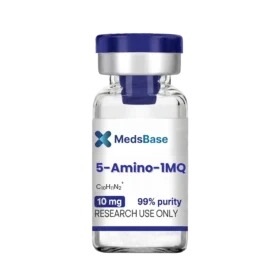 5-Amino-1MQ(5-アミノ-1-メチルキノリニウム ヨージド)
Q&A
5-Amino-1MQ(5-アミノ-1-メチルキノリニウム ヨージド)
関連商品
レビュー
まだレビューはありません