





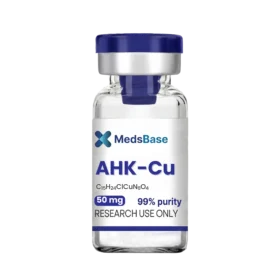
AHK-Cu
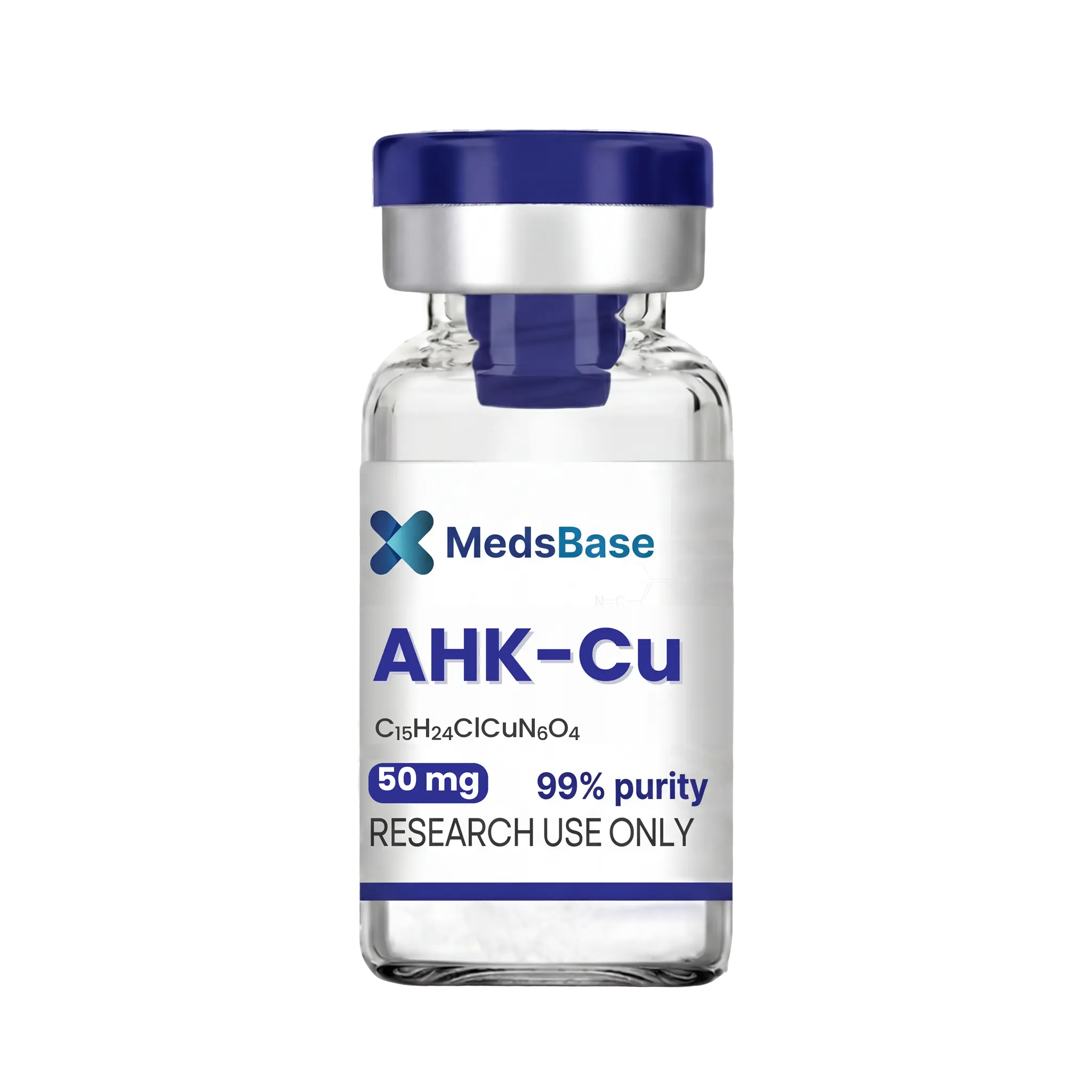
✅ アラニル-ヒスチジル-リシン銅(II)トリペプチド
✅ GHK-Cuの姉妹分子
✅ Hair follicle biology compound
✅ 毛乳頭細胞の刺激、成長期延長
✅ フィナステリド/ミノキシジルとは異なる作用機序
AHK-Cu 合成銅ペプチド複合体を含みます。
✓ 医学的監修: Morgan Ellis — 医薬品研究者 · 8年の経験 · 最終監修日:2026年5月
クイックアンサー — AHK-Cuとは何ですか?
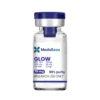
AHK-Cu (アラニル−ヒスチジル−リシン銅(II)複合体)は合成銅結合性トリペプチドであり、姉妹分子であり、 GHK-Cu. While GHK-Cu is the canonical skin and wound-healing copper peptide, AHK-Cu’s signal is concentrated in 毛包生物学 — published preclinical work documents stimulation of dermal papilla cells, follicular enlargement, increased follicular vascularization, and prolongation of the anagen growth phase. Supplied in 20 mg and 50 mg lyophilized vials.
📦 すべてのご注文は、当店の 再発送保証ポリシー — 万が一、20営業日以内に商品が届かない場合は、再発送いたします。
| 仕様 | 詳細 |
|---|---|
| CAS番号 | 110374-12-4(AHK-Cu); 71567-06-1(AHK遊離ペプチド) |
| 分子式 | C15H25CuN6O4 (1:1銅複合体) |
| 分子量 | ~417 Da(銅複合体) |
| 配列 | Ala-His-Lys(AHK、3アミノ酸)が1個のCuに配位2+ イオンは、Hisのイミダゾール窒素、Alaのアミノ末端、およびAlaとHisの間の脱プロトン化ペプチド窒素を介して |
| 形態 | 凍結乾燥銅ペプチド複合体(青色から青紫色の粉末;色は結合したCuのd-d遷移に由来します2+) |
| 純度 | ≥99%(HPLC検証済み、COAはご要望に応じて提供) |
| 保管方法 | 凍結乾燥品:使用時在庫は2~8℃(冷蔵)に保管。未開封バイアルの長期保管には−20℃。再溶解後:2~8℃で約30日以内に使用。光から保護してください。再溶解液の凍結融解は避けてください。 |
| 溶解性 | 静菌水(推奨)または短期間使用の場合は滅菌水。水に可溶;溶解した溶液は結合したCuの特徴的な青色を保持します。2+. |
AHK-Cuとは何ですか?
AHK-Cu (アラニル-ヒスチジル-リジン銅(II)複合体)は、3つのアミノ酸Ala、His、Lysから構成され、単一のCuに配位した合成銅結合トリペプチドです2+ イオン。これは、より広範に研究されている姉妹分子です GHK-Cu — both belong to the “copper peptide” class, both share the same Cu-coordination architecture using a histidine residue, and both are studied in dermatological contexts. Where they diverge is in primary signal: GHK-Cu is the canonical peptide for skin remodelling, wound healing, and connective-tissue repair, while AHK-Cu’s most-cited applications are in 毛包生物学. The well-characterised molecular composition is C15H25CuN6O4, 、分子量約417 Da。Cu2+ ion coordinates with the tripeptide via the imidazole nitrogen of histidine, the amino terminus of alanine, and the deprotonated peptide nitrogen between Ala and His — the same square-planar coordination geometry as in GHK-Cu. The bound copper gives both compounds their characteristic blue-to-violet colour in solid and dissolved form — users reconstituting AHK-Cu should expect a visibly blue working solution. AHK-Cu is supplied as a high-purity lyophilized copper-peptide complex for reconstitution with bacteriostatic water. The compound is 承認されていません by the FDA, EMA, MHRA, or any other major regulator for human therapeutic use. For the sister skin-studies copper peptide, see our GHK-Cu 製品ページをご覧ください。
作用機序 — 毛包乳頭細胞への銅送達
AHK-Cuが銅ペプチドの中で機構的に際立っているのは、その 毛乳頭細胞における優先的シグナル伝達 in the hair follicle — the mesenchymal cells at the base of each follicle that regulate hair-shaft production and cycle through the growth (anagen), regression (catagen), and rest (telogen) phases. Published studies has documented three principal mechanisms:
- 毛乳頭細胞への銅の送達 — Cu2+ ion is the active payload of AHK-Cu (and of GHK-Cu in skin studies). The tripeptide is a vehicle that ferries the metal ion into target tissue, where copper participates in multiple enzyme cofactor roles including lysyl oxidase (collagen and elastin cross-linking) and superoxide dismutase (oxidative-stress buffering). At the hair follicle, dermal papilla cells take up copper from AHK-Cu and use it to support the follicular extracellular matrix and oxidative-stress management that anagen requires.
- VEGFのアップレギュレーションと毛包血管新生 — AHK-Cuは毛乳頭細胞において血管内皮増殖因子(VEGF)の発現を刺激します。その下流効果として、毛包の灌流が増加します。これは成長期に急速に増殖する毛母のケラチノサイトの代謝需要を支えるために、毛包基部での新たな毛細血管の成長を引き起こします。この灌流増強メカニズムはミノキシジルのメカニズムと重なりますが、根本的に異なる経路(ATP感受性カリウムチャネルの調節ではなく、銅-ペプチドによる直接的シグナル伝達)を介して作用します。
- 成長期の延長と毛包肥大 — In published rodent hair-cycle studies, AHK-Cu administration prolongs the duration of the anagen growth phase and increases overall follicular size. The combined effect is more hair-shaft production per follicle per cycle. The mechanism appears to be downstream of the copper-delivery and VEGF-upregulation steps — healthy, well-perfused follicles in a copper-replete environment sustain anagen for longer before transitioning to catagen.
The mechanism is fundamentally different from the two FDA-approved hair-loss compounds: finasteride blocks 5-alpha-reductase to lower scalp DHT (hormonal mechanism); minoxidil opens ATP-sensitive potassium channels to vasodilate follicular vessels (vascular mechanism). AHK-Cu provides direct mesenchymal-cell signalling and copper-cofactor delivery, working at a different point in follicular biology than either FDA-approved compound — which makes it a useful tool for dissecting follicular cell biology independent of androgen-axis or vasodilation-mediated mechanisms. Subcutaneous, topical, and intrafollicular injection routes are all documented in published studies.
Published Evidence
AHK-Cu is used in clinical contexts that investigate:
- Hair follicle biology studies — dermal papilla cell proliferation assays, follicular size measurement, hair-shaft diameter analysis, organ-cultured hair follicle studies; canonical copper-peptide compound for the hair-axis (Pyo et al., J Korean Med Sci 2007; Uno & Kurata, J Investig Dermatol)
- Hair cycle studies — 成長期/退行期/休止期の期間、休止期毛包における成長期誘導、確立された毛軸比較化合物との用量反応比較
- Follicular vascularization studies — VEGF発現、毛包基部の毛細血管密度、毛包周囲灌流測定
- Comparative copper peptide studies — ~との直接比較 GHK-Cu for dermatological studies; AHK-Cu favoured for hair-axis endpoints, GHK-Cu favoured for skin/wound/anti-aging endpoints
- Topical and intradermal formulation studies — AHK-Cu is one of the more-studied copper peptides for topical and intradermal delivery; published studies investigates skin-penetration depth, follicular targeting via different vehicle formulations
- 脱毛メカニズムの解明 — alongside finasteride (androgen-axis) and minoxidil (vascular axis), AHK-Cu provides a third orthogonal studies mechanism (mesenchymal-cell + copper-cofactor + VEGF axis); useful for mechanism-of-action studies designs
- Collagen and elastin studies — copper’s role as cofactor for lysyl oxidase makes copper peptides relevant to studies on extracellular matrix crosslinking; AHK-Cu shares this mechanism with GHK-Cu at the broader level although hair-axis effects predominate.
For broader context on where AHK-Cu fits within the copper-peptide and dermatological studies landscape, see GHK-Cu as the canonical skin-studies copper peptide, BPC-157 for tissue-repair studies, and TB-500 for systemic recovery. Browse the full ペプチドカタログ 化合物選択のために。
利用可能な力価と濃度
MedsBase stocks AHK-Cu in two lyophilized vial sizes calibrated to typical protocol lengths. Each strength is available in 10-vial, 20-vial, or 30-vial pack formats with full reconstitution guidance:
| バイアル力価 | 代表的な使用例 | パックサイズ |
|---|---|---|
| 20 mg | Standard strength — topical formulation and short-cycle protocols | 10、20、または30バイアル |
| 50 mg | Bulk packs vial, extended cycles, lowest per-mg cost, multi-cohort follicle studies | 10、20、または30バイアル |
Both strengths are the same chemical form (lyophilized copper-peptide complex, 99%+ HPLC purity). Higher-mg vials are particularly useful for AHK-Cu because of the relatively large doses typical in topical-formulation studies compared with the microgram-range systemic peptides. Higher-mg vials require smaller reconstitution volumes per unit dose.
AHK-CuとGHK-Cuの比較
AHK-Cuと GHK-Cu are sister copper-binding tripeptides that share the same Cu-coordination chemistry but differ in the first amino-acid residue (Ala vs Gly). This minor structural difference produces qualitatively different signals: GHK-Cu dominates skin/wound/anti-aging studies while AHK-Cu’s strongest signal is in hair follicle biology.
| 評価項目 | AHK-Cu | GHK-Cu |
|---|---|---|
| アミノ酸数 | 3つのアミノ酸(トリペプチド) | 3つのアミノ酸(トリペプチド) |
| 配列 | Ala-His-Lys | Gly-His-Lys |
| 銅配位 | 1:1 Cu2+ HisおよびN末端を介して | 1:1 Cu2+ HisおよびN末端を介して |
| Primary signal | 毛包の生物学、成長期延長 | 皮膚リモデリング、創傷治癒、アンチエイジング |
| 標的細胞種 | 毛乳頭細胞(毛包) | 真皮線維芽細胞、ケラチノサイト(皮膚) |
| VEGFシグナル伝達 | 強力 — 毛包血管新生 | 中等度 — 創傷床の血管新生 |
| 内因性存在 | 合成(内因性の有意なプールなし) | 内因性(血漿中濃度は加齢とともに低下) |
| 一般的な用量 | 2~10 mg 局所 / 1~5 mg 皮下 | 1~5 mg 局所 / 0.5~2 mg 皮下 |
For hair-axis studies, AHK-Cu is the canonical first choice because of the dermal-papilla-cell selectivity and the documented anagen-prolongation signal. For skin remodelling, wound healing, and anti-aging studies, GHK-Cu is the canonical reference. Some studies designs use both in parallel arms to dissect copper-peptide effects that are shared (general Cu cofactor delivery) from effects that are sequence-specific (cell-type selectivity).
保管方法と再溶解
再溶解前: 短期使用のワーキングストックは、凍結乾燥バイアルを元の包装のまま2~8 °Cで冷蔵保存してください。未開封の長期保存の場合は、−20 °Cで凍結保存してください。凍結乾燥AHK-Cuは冷蔵で最大24ヶ月、−20 °Cで最大36ヶ月安定です。凍結乾燥粉末の凍結融解サイクルは避けてください。Cu2+ 配位は凍結乾燥形態では安定しています。再構成後は、光や還元剤への長時間の曝露が銅の酸化状態に影響を与える可能性があります。 再溶解手順: 静菌水をペプチドバイアルの側壁に沿って注入します(凍結乾燥ケーキに直接かけないでください)。20 mgバイアルの場合、2.0 mLの静菌水で10 mg/mLの作業濃度が得られます — 0.1 mLで1 mg、0.5 mLで5 mgを投与します。静かに旋回させてください — 振とう しません せず、完全に溶解するまで2~5分間待ちます。正しく再構成された溶液は透明で、結合したCu特有の青色を呈するはずです2+. 。濁りや沈殿は再構成に問題があることを示します。廃棄して再試行してください。 完全に再溶解した溶液は、無色透明である必要があります。 store refrigerated at 2–8 °C and use within 30 days for optimal stability. Do not freeze the reconstituted solution — freeze-thaw cycles degrade peptide integrity. Protect from direct light at all times. For topical formulation studies, AHK-Cu can be incorporated into a wide range of vehicles (creams, gels, serums) for follicle-studies delivery; published vehicle studies includes liposomal and microemulsion formulations for enhanced follicular penetration.
よくある質問
What is AHK-Cu used for in studies?
AHK-Cu is used in studies investigating hair follicle biology, dermal papilla cell proliferation, anagen phase prolongation, follicular vascularization, hair-shaft diameter, comparative copper-peptide pharmacology, topical and intradermal formulation studies, and mechanism-of-action dissection of hair-loss biology distinct from the androgen-axis (finasteride) and vascular (minoxidil) mechanisms. It is the canonical copper-peptide compound for the hair-axis. The pharmaceutical-grade AHK-Cu sold here is しません FDA-approved and is supplied strictly for clinical studies use only.
AHK-CuはGHK-Cuとどう違うのですか?
両者は銅結合性トリペプチドであり、同じCu配位構造(Hisを介した1:1のCu2+ binding). They differ in the first amino-acid residue — alanine in AHK-Cu, glycine in GHK-Cu — producing different cell-type selectivity in published studies. AHK-Cu’s strongest signal is in dermal papilla cells of the hair follicle; GHK-Cu‘の最も強いシグナルは皮膚線維芽細胞とケラチノサイトにあります。この2つは、共通の銅ペプチド効果と配列特異的効果を分離するために並行して研究されることがよくあります。
What is the typical AHK-Cu dose?
Published preclinical protocols typically use 1–5 mg per administration for subcutaneous delivery and 2–10 mg for topical formulation studies, given 1–3 times daily for 4–12 week cycles. A 20 mg vial reconstituted with 2.0 mL bacteriostatic water yields 10 mg/mL — 0.1 mL equals 1 mg, 0.5 mL equals 5 mg.
AHK-CuはFDA承認されていますか?
No. AHK-Cu is not approved by the FDA, EMA, MHRA, or any other major regulator for human therapeutic use. Copper peptides have been incorporated into some cosmetic products under cosmetic-regulation frameworks, but AHK-Cu specifically has no therapeutic approval.
AHK-Cuはどのように保管すべきですか?
凍結乾燥バイアル:短期使用の作業用ストックは2~8 °Cで冷蔵、未開封バイアルの長期保管は−20 °Cで冷凍保存してください。溶解液:2~8 °Cで冷蔵し、30日以内に使用してください。溶解液は凍結しないでください。凍結融解サイクルはペプチドを分解し、銅の配位に影響を与える可能性があります。銅の酸化状態を保つため、常に直射光を避けてください。
AHK-Cuをどのように溶解しますか?
上記の再溶解手順に従ってください。注射用静菌水をバイアルの内壁に沿って(凍結乾燥ケーキに直接当てないように)加え、静かに旋回させ、完全に溶解するまで2~5分間置きます。 しません バイアルを振ってください。正しく再溶解された溶液は、結合したCuの特徴的な青色を呈し、澄んでいます2+ ― 色そのものが再溶解が成功し、銅配位が損なわれていないことを確認します。20 mgバイアルに2.0 mLの希釈液を使用した場合、作業濃度は10 mg/mLです。
MedsBaseではどの容量のレタルトルチドを取り揃えていますか?
MedsBase carries AHK-Cu in 20 mg and 50 mg lyophilized vials. Each strength is available in 10-vial, 20-vial, or 30-vial pack sizes. All vials are supplied at 99%+ HPLC purity with a certificate of analysis available on request.
AHK-Cuが青色をしているのはなぜですか?
AHK-Cu(およびGHK-Cu)の特徴的な青から紫の色は、結合したCuのd-d電子遷移に由来し、2+ ヒスチジン残基とペプチド主鎖が形成する平面四配位環境において生じます。この色は銅配位が成功していることの有用な定性的指標であり、適切に再溶解された青色溶液は損なわれていないCu結合を確認でき、2+ 一方、無色または薄い溶液は銅の欠失や分解を示します。これは小ペプチドの中でもユニークで、ほとんどの合成ペプチドは再溶解すると無色の溶液を生じます。
AHK-Cuはフィナステリドやミノキシジルとどのように比較されますか?
The three target hair-loss biology through completely different mechanisms. Finasteride blocks 5-alpha-reductase to lower scalp dihydrotestosterone (DHT) levels — an androgen-axis mechanism. Minoxidil opens ATP-sensitive potassium channels to vasodilate follicular vessels — a vascular mechanism. AHK-Cu provides direct copper-cofactor delivery and VEGF-mediated follicular vascularization at the dermal papilla cell level — a mesenchymal-cell mechanism. The three mechanisms are orthogonal, which makes AHK-Cu a useful tool for studying follicular biology independent of androgen-axis or vasodilation-mediated effects.
Does AHK-Cu cause side reported effects?
Published preclinical studies has reported a notably clean safety profile at typical doses, with the main on-target effect being follicular stimulation. Off-target findings can include local injection-site irritation and (with prolonged high-dose topical exposure) modest cutaneous discolouration from copper deposition — both reversible with discontinuation. Systemic adverse effects from topical applications are rare due to limited transcutaneous absorption.
AHK-Cuの半減期はどのくらいですか?
In preclinical studies, AHK-Cu has a relatively short plasma half-life (~1–2 hours) following subcutaneous administration. The short half-life is offset by retention of bound copper in target tissues — even after plasma clearance, the copper delivered to dermal papilla cells continues to support follicular biology through its enzyme-cofactor roles. Topical formulations provide sustained local exposure that is more relevant for hair-axis studies than the systemic plasma profile.
Can AHK-Cu and GHK-Cu be stacked in studies?
Yes. The two copper peptides target different cell types (dermal papilla for AHK-Cu, dermal fibroblasts for GHK-Cu) and address different studies domains (hair vs skin), so co-administration is not pharmacologically redundant. Study protocols studying combined skin-and-hair endpoints — for example, comprehensive dermatological remodelling studies — sometimes use both arms.
How long does AHK-Cu take to show effects in preclinical studies?
Acute effects on dermal papilla cell VEGF expression are detectable within 24–72 hours in cell-culture studies. Follicular size and anagen-prolongation effects in rodent hair-cycle models typically become statistically significant after 4–8 weeks of regular treatment and continue to accrue through 12–16 weeks — matching the natural hair-cycle timeframe.
AHK-Cuを海外配送でご注文いただけますか?
Yes. MedsBase ships AHK-Cu worldwide from our dedicated peptide shipping network. Peptide-only orders qualify for our standalone peptide shipping service. All orders ship in temperature-controlled packaging with full tracking and are covered by our 再発送保証ポリシー.
Other Peptides for Hair, Skin, and Tissue-Regeneration Studies
- GHK-Cu — Sister copper-binding tripeptide — canonical skin remodelling and wound-healing compound
- BPC-157 — Body Protection Compound — tissue-regeneration and recovery
- TB-500(サイモシンベータ-4) — Systemic healing fragment — tissue and vascular recovery
- Epitalon — AEDG pineal tetrapeptide — longevity and circadian rhythm support
- Semax — Nootropic heptapeptide — CNS compound
参考文献
📖 Explore the copper-peptide studies landscape
すべてを閲覧 ペプチドカタログ, 、関連する皮膚科学および組織再生化合物を含む GHK-Cu (sister copper peptide for skin studies), BPC-157 (組織再生)、 TB-500 および.
ペプチドをもっと見る
最近のMedsBaseでの注文数に基づくランキング — このカテゴリーで他のお客様が選んでいる商品です。
| 含量 | (全身性治癒)。 |
|---|---|
| 数量 | 10バイアル、20バイアル、30バイアル |
 AHK-Cu
Q&A
AHK-Cu
関連商品
レビュー
まだレビューはありません