







GDF-8 (Myostatin)
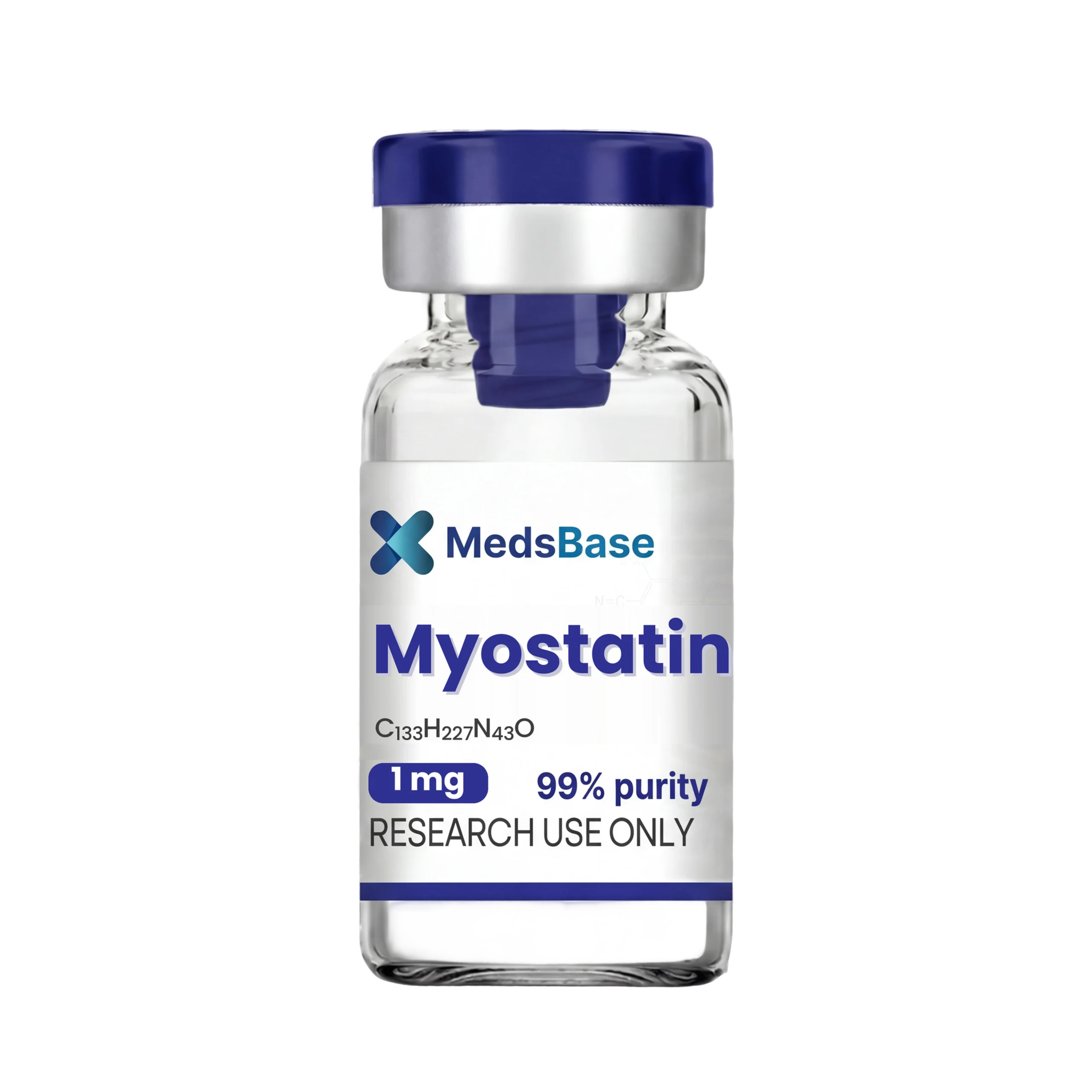
✅ 遺伝子組換え25.8 kDa活性型ミオスタチンホモ二量体
✅ 標準的なTGF-βスーパーファミリー萎縮性リガンド
✅ Follistatin 344の逆薬理学的パートナー
✅ ActRIIB/Smad2/Smad3経路アゴニスト
✅ HPLC純度95%以上、分析証明書はご要望に応じて提供
GDF-8 (Myostatin) は組換えタンパク質です。
✓ 医学的監修: Morgan Ellis — 医薬品研究者 · 8年の経験 · 最終監修日:2026年5月
クイックアンサー — GDF-8(ミオスタチン)とは何ですか?
GDF-8 (成長分化因子8)は、別名 ミオスタチン, is a recombinant TGF-β superfamily protein and the principal endogenous negative regulator of skeletal muscle mass. Loss-of-function mutations cause the well-known “double-muscling” phenotype in mice, cattle, dogs, and one documented human case. In published studies, recombinant GDF-8 is used as a pathway-stimulus tool: inducing atrophy phenotypes, validating myostatin antagonists such as follistatin 344, and characterising Smad2/Smad3 downstream signalling. Supplied in 1 mg lyophilized vials.
📦 すべてのご注文は、当店の 再発送保証ポリシー — 万が一、20営業日以内に商品が届かない場合は、再発送いたします。
| 仕様 | 詳細 |
|---|---|
| CAS番号 | 成熟二量体(組換えタンパク質)として正式には登録されていません。MSTN遺伝子によってコードされ、UniProt O14793 |
| タイプ | 組換えタンパク質(TGF-βスーパーファミリーリガンド;成熟型109アミノ酸C末端ジスルフィド結合ホモ二量体、375-aaプレプロタンパク質前駆体から切断) |
| 分子量 | 約25.8 kDa(成熟ホモ二量体;モノマー鎖あたり約12.9 kDa) |
| 構造 | 成熟型109-aaモノマー、標準的なTGF-βスーパーファミリーシスチンノットフォールドを有する;2つのモノマーが分子間ジスルフィド結合によって共有結合し、生物学的に活性なホモ二量体を形成;受容体結合面はActRIIBと相互作用する。 |
| 形態 | 凍結乾燥組換えタンパク質(白色~微黄色) |
| 純度 | ≥95%(HPLC検証済み、分析証明書はご要望に応じて) |
| 保管方法 | 凍結乾燥品:作業用ストックは2~8°C(冷蔵庫)、未開封バイアルの長期保管は−20°Cです。再溶解後:2~8°Cで約30日以内にご使用ください。光から保護してください。再溶解液の凍結融解は避けてください — 組換えタンパク質は特に凍結融解による変性を受けやすいためです。 |
| 溶解性 | 静菌水(推奨)または短い使用期間の場合は滅菌水をお使いください。作業希釈液の吸着ロスを最小限に抑えるため、キャリアタンパク質(BSA、0.1%)の任意添加をお勧めします。 |
GDF-8(ミオスタチン)とは何ですか?
GDF-8 (Growth/Differentiation Factor 8)は、一般に ミオスタチン, is a member of the transforming growth factor beta (TGF-β) superfamily and the principal physiological negative regulator of skeletal muscle mass. It was first characterised by McPherron, Lawler, and Lee (Nature 1997) as a secreted protein whose targeted disruption in mice produced animals with two- to three-fold greater skeletal muscle mass than wild-type controls. The same gene was rapidly identified as the cause of the “double-muscling” phenotype in Belgian Blue and Piedmontese cattle, the Bully Whippet phenotype in racing greyhounds, and one documented human case of striking infant hypermuscularity (Schuelke et al., NEJM 2004) — all carrying loss-of-function MSTN mutations. Mature myostatin is generated by post-translational processing of a 375-amino-acid preproprotein: the signal peptide is removed during secretion, then the prodomain (~243 aa) is cleaved off by furin proteases, releasing the active 109-amino-acid C-terminal mature myostatin. The active form is a homodimer of two mature monomer chains covalently linked by an intermolecular disulfide bond, with apparent mass approximately 25.8 kDa on non-reducing SDS-PAGE. The protein adopts the canonical TGF-β cystine-knot fold and binds the activin type IIB receptor (ActRIIB) with high affinity to initiate Smad-mediated signalling. Recombinant GDF-8 is supplied as a high-purity lyophilized powder for reconstitution with bacteriostatic water. Myostatin is 承認されていません by the FDA, EMA, MHRA, or any other major regulator for human therapeutic use.
作用機序 — ActRIIBシグナル伝達とSmad2/Smad3経路
GDF-8がTGF-βスーパーファミリーのリガンドの中で機構的に際立っている点は、その 筋肉成長を持続的に抑制する主要な役割 through a well-characterised three-step signalling cascade documented in published studies:
- ActRIIB受容体結合とI型受容体のリクルート — 成熟ミオスタチンホモ二量体は、骨格筋線維および他の細胞種の表面にあるアクチビンIIB型受容体(ActRIIB)に結合します。ActRIIBは恒常的に活性化しているセリン/スレオニンキナーゼであり、ミオスタチンが結合すると、I型受容体ALK4(ActRIB)およびALK5(TβRI)をリクルートし、トランスリン酸化します。リガンド-受容体の化学量論は、活性複合体において2:2:2のヘテロ四量体です。ActRIIBノックアウトはミオスタチンノックアウトと類似した表現型を示し、受容体の同一性が確認されています。
- Smad2/Smad3のリン酸化と核移行 — リン酸化されたALK4/ALK5 I型受容体は、受容体制御型Smad、特にミオスタチン経路のSmad2およびSmad3をリン酸化します。リン酸化Smad2/Smad3はSmad4(共通のSmad)とヘテロマー複合体を形成して核内へ移行し、標的遺伝子プロモーターのSmad結合エレメントに結合して転写コファクターをリクルートします。Smad経路は骨格筋におけるミオスタチンの主要なシグナル伝達出力です。
- 下流の転写効果 — アトロジン-1/MuRF1の上方制御とタンパク質合成抑制 — 核内のSmad複合体は、以下の3つの収束するメカニズムを通じて筋萎縮を促進する転写プログラムを調整します:ユビキチンリガーゼ萎縮遺伝子(アトロジン-1/Fbxo32およびMuRF1/Trim63)の誘導によるタンパク質分解の加速;IGF/インスリン軸とのクロストークを介したAkt/mTOR依存性のタンパク質合成の阻害;筋原性調節因子(MyoD、ミオゲニン)の抑制による衛星細胞駆動型修復の減速。総合的な効果として、筋タンパク質の蓄積が減少し、高用量または慢性的な曝露では明らかな萎縮が生じます。
Importantly for studies design, GDF-8 acts as a tonic inhibitor under physiological conditions — muscle mass is regulated by the balance between myostatin tone (atrophic) and IGF/Akt/mTOR signalling (anabolic). This is why Follistatin 344 (a myostatin/activin antagonist) and recombinant GDF-8 (the agonist itself) are both used in muscle studies — the antagonist removes the brake, while the recombinant ligand is the experimental tool that quantifies how strong the brake is and validates antagonist activity in receptor-binding and reporter-cell assays.
Published Evidence
Recombinant GDF-8 is used in clinical contexts that investigate:
- Muscle atrophy and wasting studies — インビトロ筋管萎縮アッセイ、エクスビボ筋標本、介入戦略研究のために再現性のある萎縮表現型を誘導するインビボ投与(McPherron et al., Nature 1997; Lee, Annu Rev Cell Dev Biol 2004)
- ミオスタチン拮抗薬の検証 — binding-affinity assays, neutralising-antibody potency assays, receptor-occupancy assays for drug discovery programmes targeting the myostatin pathway; canonical tool for validating follistatin 344, 可溶性ActRIIB-Fc融合タンパク質、抗ミオスタチン抗体
- Smad2/Smad3 signalling pathway studies — Smadリン酸化動態、核移行イメージング、Smad結合エレメントレポーターアッセイ、他のTGF-β経路メンバーとのクロストーク
- Atrogene transcription studies — アトロジン-1(Fbxo32)およびMuRF1(Trim63)プロモーター解析、ユビキチン-プロテアソーム活性、オートファジー軸とのクロストーク
- 悪液質およびサルコペニアモデル — 腫瘍担持げっ歯類悪液質モデル、老齢マウスサルコペニア、除神経誘発性萎縮 — 組換えGDF-8を用いて消耗表現型を増幅または再現
- Cardiac and other tissue studies — myostatin is expressed at lower levels in heart, adipose, and other tissues; published studies investigates GDF-8 effects in cardiomyocyte hypertrophy models and adipose-tissue biology
- Comparative TGF-β superfamily studies — 近縁のGDF-11(成熟ドメインで90%の配列同一性)およびアクチビンA(同じ受容体システムに結合)とのベンチマーキング;受容体選択性の機構的解明
- フォリスタチン344との逆薬理学的ペアリング — との併用投与 Follistatin 344 as the antagonist arm allows direct quantification of myostatin/antagonist binding stoichiometry and rescue of GDF-8-induced atrophy in study models.
For broader context on where GDF-8 fits within the anabolic / muscle-studies landscape, see Follistatin 344 標準的なミオスタチン拮抗薬として、, IGF-1 LR3 反対経路の同化作用部門(直接的なIGF-1R作動)のために、そして TB-500 for systemic muscle and tissue recovery. Browse the full ペプチドカタログ 化合物選択のために。
利用可能な力価と濃度
MedsBase stocks recombinant GDF-8 (Myostatin) in 1 mg lyophilized vials. The vial is available in 10-vial, 20-vial, or 30-vial pack formats with full reconstitution guidance:
| バイアル力価 | 代表的な使用例 | パックサイズ |
|---|---|---|
| 1 mg | Standard strength — binding assays, atrophy-induction protocols, antagonist validation | 10、20、または30バイアル |
GDF-8 is a ~25.8 kDa recombinant homodimeric protein supplied at ≥95% HPLC purity. The 1 mg vial format covers the typical dose range: nanomolar working concentrations for in-vitro binding and reporter-cell assays consume small fractions of a vial; in-vivo administration in rodent models uses microgram-per-injection doses that consume more vial per protocol.
比較 — GDF-8(Myostatin) vs Follistatin 344
組換えGDF-8および Follistatin 344 are an inverse-pharmacology pair: GDF-8 is the ligand and Follistatin 344 is the high-affinity binding protein that sequesters it. They are routinely paired in studies because the antagonist’s function can only be quantified against the ligand. The relationship parallels other well-known inverse pairs in pharmacology (e.g., agonist + antagonist of the same receptor) but at the ligand-binding-protein level rather than the receptor level.
| 評価項目 | GDF-8 (Myostatin) | Follistatin 344 |
|---|---|---|
| 筋肉生物学における役割 | 萎縮性リガンド(ブレーキ) | アンタゴニスト結合タンパク質(ブレーキ除去剤) |
| 活性型 | 109アミノ酸ホモ二量体(約25.8 kDa) | 344アミノ酸糖タンパク質単量体(約37 kDa) |
| 受容体または標的 | ActRIIB(アクチビンIIB型受容体) | ミオスタチン/アクチビンを隔離(受容体なし;直接リガンド結合) |
| 下流シグナル伝達 | Smad2/Smad3、萎縮遺伝子を活性化 | リガンド除去によりSmad活性化を阻害 |
| Primary studies role | 萎縮表現型を誘導/探索するツール | 萎縮を回復/予防するツール |
| 一般的な用量 | 10~100 ng/mL(in vitro);0.1~10 mcg(in vivo) | 10~100 mcg インビボ 1回あたり |
| 併用 | 結合化学量論のためのフォリスタチン344との併用 | 拮抗活性を検証するためのGDF-8との併用 |
For muscle-studies design, the pair is used together in three principal ways: (1) binding-affinity measurement (surface plasmon resonance, ELISA, isothermal titration calorimetry) of follistatin–myostatin interaction; (2) cell-based atrophy/rescue assays where GDF-8 induces myotube atrophy and follistatin co-treatment is tested for rescue; and (3) in-vivo validation where GDF-8 amplifies a wasting phenotype that follistatin co-administration attenuates. The two proteins are mechanistically complementary and rarely studied in isolation.
保管方法と再溶解
再溶解前: 短期使用のワーキングストックとして、凍結乾燥バイアルは元の包装のまま2~8°Cで冷蔵保存してください。未開封の長期保存の場合は、−20°Cで凍結保存してください。凍結乾燥GDF-8は冷蔵で最長12ヶ月、−20°Cで最長24ヶ月安定です。これは、大型の組換えジスルフィド結合二量体が時間経過とともにミスフォールディングや凝集を起こしやすいため、低分子合成ペプチドよりもやや短くなっています。凍結乾燥粉末の凍結融解サイクルは避けてください。 再溶解手順: バイアルの側壁に沿って静菌水を注入してください(凍結乾燥ケーキに直接かけないでください)。1 mgバイアルの場合、1.0 mLの静菌水で1 mg/mLの作業濃度が得られます。静かに旋回させてください — 絶対に しません 振とう — そして完全に溶解するまで5~10分間静置してください。組換えタンパク質は低分子ペプチドよりも溶解が遅いため、激しい撹拌は分子間ジスルフィド結合を破壊し、活性を低下させる可能性があります。正しく再構成された溶液は、透明で無色であり、目に見える粒子がないはずです。100 mcg/mL未満の作業希釈液の場合、キャリアタンパク質(最終濃度0.1%のBSA)を添加することで、プラスチックやガラス表面への吸着損失を最小限に抑えられます。 完全に再溶解した溶液は、無色透明である必要があります。 最適な安定性を得るため、2~8°Cで冷蔵保存し、30日以内に使用してください。再構成溶液は凍結しないでください — 組換え二量体タンパク質は凍結融解変性に特に敏感で、凝集や受容体結合活性の低下を引き起こします。濁り、沈殿、または変色が見られるバイアルは廃棄してください。厳密な用量反応較正が必要な結合親和性アッセイでは、最も再現性の高い結果を得るために、再構成後7日以内の新鮮な溶液を使用してください。
よくある質問
What is GDF-8 (Myostatin) used for in studies?
Recombinant GDF-8 is used in clinical studies as the canonical agonist of the myostatin pathway — it is the experimental tool for inducing reproducible muscle atrophy phenotypes, characterising Smad2/Smad3 signalling, validating myostatin antagonists (including Follistatin 344 and ActRIIB-Fc fusion proteins), and quantifying binding stoichiometry in pharmacology assays. It is not used to “improve” anything in study models — it is the negative regulator that users want to understand and ultimately inhibit. The pharmaceutical-grade GDF-8 sold here is しません FDA-approved and is supplied strictly for clinical studies use only.
GDF-8はフォリスタチン344とどう違いますか?
The two are an inverse-pharmacology pair. GDF-8 is the active myostatin ligand — the brake on muscle growth that drives atrophy via Smad2/Smad3 signalling. Follistatin 344 is a high-affinity binding protein that sequesters GDF-8 and activin, removing them from receptor availability. In study models, GDF-8 induces or amplifies the atrophy phenotype and follistatin 344 rescues it. The two are routinely paired in binding-affinity assays, cell-based rescue assays, and in-vivo validation studies of myostatin-pathway antagonists.
GDF-8はGDF-11とどう違いますか?
GDF-8 (myostatin) and GDF-11 share approximately 90% amino-acid identity in the mature domain and bind the same ActRIIB receptor with comparable affinity. The functional roles are partially overlapping but distinct in tissue distribution: GDF-8 is predominantly expressed in skeletal muscle and is the dominant regulator of muscle mass; GDF-11 is more broadly expressed and is studied in cardiac, neural, and hematopoietic contexts. The close sequence similarity makes selective antagonist development a major focus of current studies.
What is the typical GDF-8 dose?
公表されている前臨床プロトコルでは、通常、in vitro細胞培養実験(筋管萎縮アッセイ、レポーター細胞アッセイ、結合研究)には10~100 ng/mLの作業濃度が、in vivoげっ歯類萎縮誘導プロトコルには1回の投与あたり0.1~10 mcgが使用されます。1 mgバイアルを1.0 mLの静菌水で再構成すると1 mg/mLとなり、これをPBSまたは培地で希釈してin vitro用のナノモル作業溶液を調製します。
GDF-8はFDA承認されていますか?
No. GDF-8 / myostatin is not approved by the FDA, EMA, MHRA, or any other major regulator for human therapeutic use. Myostatin pathway has produced clinical-stage antagonists (anti-myostatin antibodies, soluble ActRIIB-Fc, follistatin gene therapy), some of which have reached late-stage trials for muscular dystrophy and sarcopenia, but recombinant GDF-8 itself is not a therapeutic.
GDF-8はどのように保管すべきですか?
凍結乾燥バイアル:短期作業用ストックは2~8°Cで冷蔵保存し、未開封バイアルの長期保管は-20°Cで保存してください。再構成溶液:2~8°Cで冷蔵保存し、一般的なプロトコルでは30日以内、厳密な校正が必要な結合親和性アッセイでは7日以内に使用してください。再構成溶液を凍結しないでください。組換え二量体タンパク質は、特に凍結融解による変性に対して感受性が高くなります。常に直射光から保護してください。100 mcg/mL未満の作業希釈液には、キャリアタンパク質(0.1% BSA)の添加が推奨されます。
GDF-8の再構成方法を教えてください。
上記の溶解手順に従ってください。静菌水をバイアルの側壁に沿って加え(凍結乾燥ケーキに直接かけないでください)、静かに旋回させ、完全に溶解するまで5~10分間待ちます。激しく振ら しません バイアルを振らないでください。激しい攪拌は分子間ジスルフィド結合を破壊し、活性を低下させる可能性があります。正しく再構成された溶液は無色透明で、目に見える粒子はありません。1 mgバイアル+1.0 mL希釈液の場合、作業濃度は1 mg/mLです。
純度の規格が99%ではなく95%なのはなぜですか?
Recombinant proteins like GDF-8 cannot achieve the ≥99% HPLC purity standard typical of small synthetic peptides because of inherent heterogeneity in any recombinant expression system — different folding intermediates and disulfide-isomer forms appear as related peaks on HPLC that are not impurities but isoforms of the target protein. ≥95% HPLC purity is the standard pharmaceutical-grade specification for GDF-8 and similar recombinant disulfide-linked dimer proteins. SDS-PAGE typically shows the expected ~25.8 kDa band under non-reducing conditions and ~12.9 kDa monomer under reducing conditions.
MedsBaseではどの容量のレタルトルチドを取り揃えていますか?
MedsBase carries recombinant GDF-8 (Myostatin) in 1 mg lyophilized vials. The vial is available in 10-vial, 20-vial, or 30-vial pack sizes. All vials are supplied at ≥95% HPLC purity with a certificate of analysis available on request.
Can GDF-8 and Follistatin 344 be paired in studies?
Yes — this is the canonical use case. The two are routinely paired in three principal ways: (1) binding-affinity measurement via SPR, ELISA, or ITC of the follistatin–myostatin interaction; (2) cell-based atrophy/rescue assays where GDF-8 induces myotube atrophy and follistatin co-treatment rescues; and (3) in-vivo studies where GDF-8 amplifies a wasting phenotype that follistatin co-administration attenuates. The inverse-pharmacology pairing is foundational to myostatin-axis studies design.
Does GDF-8 cause side reported effects?
The principal on-target effect of recombinant GDF-8 in study models is muscle atrophy — this is the intended pharmacological action, not a side effect. Off-target findings include modest effects on cardiac and adipose tissues consistent with the lower-level expression of ActRIIB in those compartments. At very high doses, broader TGF-β-superfamily-related effects on fibrosis and inflammation can be observed, attributable to receptor cross-talk with activin and GDF-11 pathways.
GDF-8の半減期はどのくらいですか?
In preclinical studies, recombinant mature GDF-8 has a plasma half-life of approximately 2–4 hours following intravenous administration. Endogenously, mature myostatin circulates bound to its own prodomain (latent complex) and to follistatin / other binding proteins, which dramatically extends the effective tissue half-life. For protocols, the recombinant active dimer is administered without the prodomain to deliver “free” myostatin to the ActRIIB receptor.
GDF-8が最初に発見された理由は何ですか?
GDF-8は、1997年にジョンズ・ホプキンス大学のMcPherron、Lawler、Leeらにより、新規のTGF-βスーパーファミリーメンバーを見つけるために設計された縮重PCRスクリーニング法を用いて同定されました(Nature 1997)。マウスでの標的破壊により、野生型対照と比較して骨格筋量が2~3倍に増加した動物が作出されました。これは非常に明確な表現型であり、ミオスタチンが筋成長の主要な生理的負の調節因子であることを即座に確立しました。ベルジアンブルー牛やホイペット犬で自然発生する「二重筋肉」表現型との関連は数か月以内に確立され、ヒトのMSTN変異症例は2004年にNEJMで発表されました。
How long does GDF-8 take to show effects in preclinical studies?
Smad2/Smad3リン酸化に対するin vitroでの効果は、細胞曝露から数分以内に検出可能です。細胞ベースのアッセイにおける筋管萎縮は、24~72時間以内に測定可能です。げっ歯類モデルにおけるin vivoでの萎縮表現型は、定期的な投与を1~4週間続けることで発現し、その速度は用量、投与経路、およびモデル生物の基礎的な筋量に依存します。
GDF-8を国際配送で注文できますか?
Yes. MedsBase ships GDF-8 worldwide from our dedicated peptide shipping network. Peptide-only orders qualify for our standalone peptide shipping service. All orders ship in temperature-controlled packaging with full tracking and are covered by our 再発送保証ポリシー.
Other Peptides for Anabolic, Muscle, and Growth-Axis Studies
- Follistatin 344 — ミオスタチン/アクチビンアンタゴニスト結合タンパク質 — GDF-8に対する逆薬理学的ペア
- IGF-1 LR3 — 長鎖アルギニン組換えIGF-1アナログ — IGF-1Rを介する逆経路の同化刺激
- TB-500(サイモシンベータ-4) — Systemic healing fragment — muscle and cardiac recovery
- CJC-1295 with DAC — Long-acting GHRH analog — growth hormone axis support
- Sermorelin — Shorter-acting GHRH(1-29) analog — natural GH-pulse support
参考文献
📖 ミオスタチン経路を探る
すべてを閲覧 ペプチドカタログ, 、逆薬理学的ペアとともに Follistatin 344 as the myostatin antagonist for pathway-rescue studies, IGF-1 LR3 for direct IGF-receptor anabolic studies, and TB-500 for systemic muscle and tissue recovery.
ペプチドをもっと見る
最近のMedsBaseでの注文数に基づくランキング — このカテゴリーで他のお客様が選んでいる商品です。
| 含量 | 1 mg |
|---|---|
| 数量 | 10バイアル、20バイアル、30バイアル |
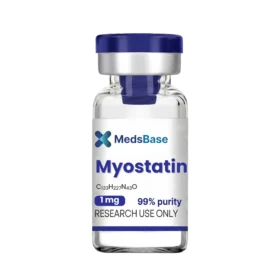 GDF-8 (Myostatin)
Q&A
GDF-8 (Myostatin)
関連商品
レビュー
まだレビューはありません