







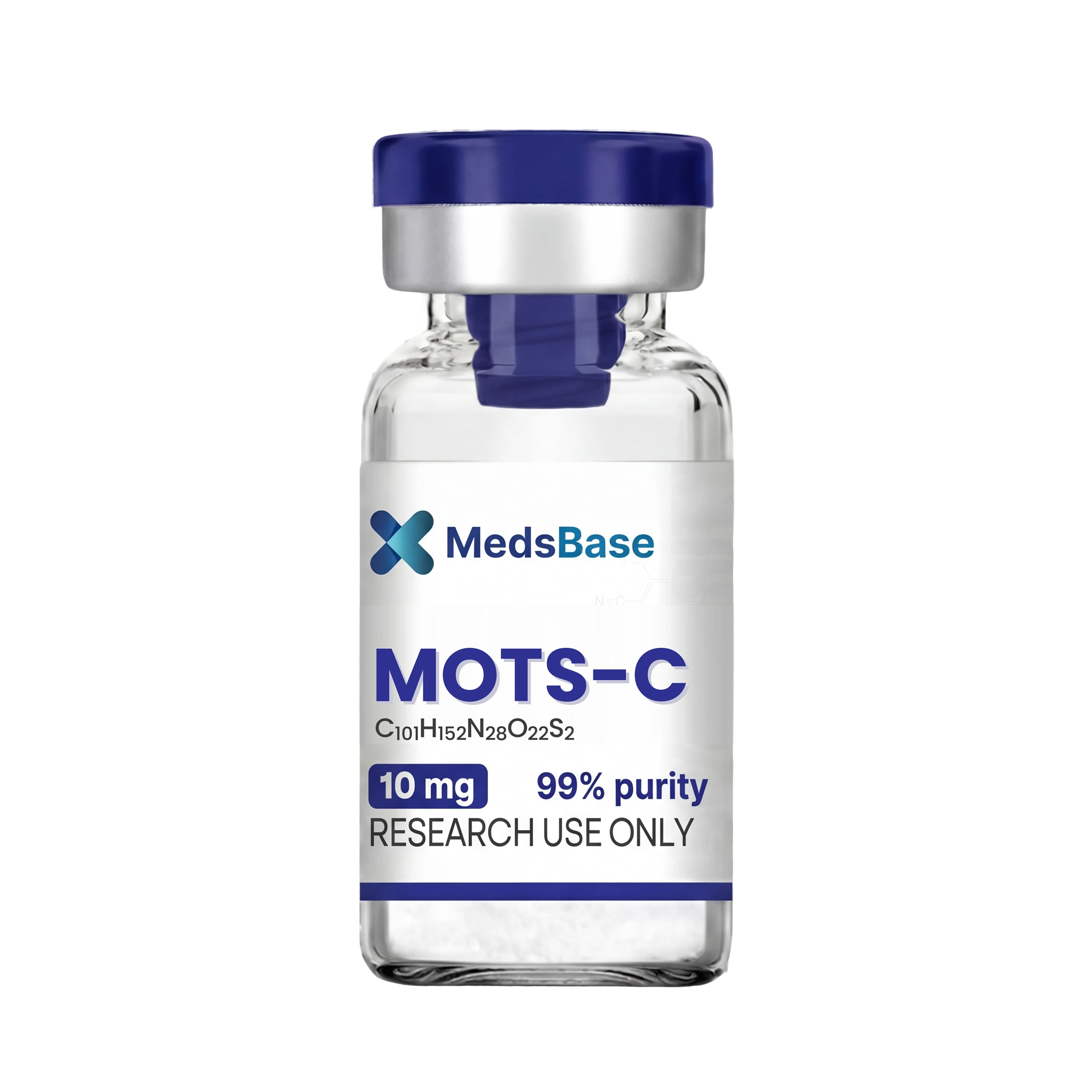
MOTS-c
✅ ミトコンドリアにコードされたシグナルペプチド
✅ AMPK代謝経路を活性化
✅ インスリン感受性をサポート
✅ 前臨床モデルにおける運動模倣化合物
✅ Longevity & geroscience compound
MOTS-c 合成ペプチド化合物を含みます。
✓ 医学的監修: Morgan Ellis — 医薬品研究者 · 8年の経験 · 最終監修日:2026年5月
クイックアンサー — MOTS-cとは何ですか?
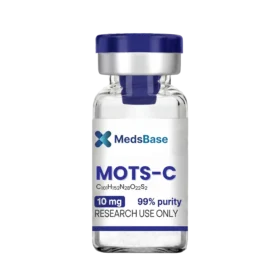
MOTS-c (Mitochondrial Open Reading frame of the Twelve S rRNA-c) is a 16-amino-acid mitochondrially-encoded signaling peptide first identified in 2015. In published preclinical studies it acts as an exercise-mimetic and metabolic regulator by activating the AMPK pathway, restoring insulin sensitivity, and modulating nuclear gene expression in response to mitochondrial stress. Supplied in 10 mg to 40 mg lyophilized vials.
📦 すべてのご注文は、当店の 再発送保証ポリシー — 万が一、20営業日以内に商品が届かない場合は、再発送いたします。
| 仕様 | 詳細 |
|---|---|
| CAS番号 | 1627580-64-6 |
| 分子式 | C100H152N28O22S2 |
| 分子量 | 2174.62 Da |
| 配列 | Met-Arg-Trp-Gln-Glu-Met-Gly-Tyr-Ile-Phe-Tyr-Pro-Arg-Lys-Leu-Arg (MRWQEMGYIFYPRKLR、16アミノ酸;ミトコンドリア12S rRNA遺伝子にコードされている) |
| 形態 | 凍結乾燥粉末(白色〜微黄色) |
| 純度 | ≥99%(HPLC検証済み、COAはご要望に応じて提供) |
| 保管方法 | 凍結乾燥品:使用時在庫は2~8℃(冷蔵)に保管。未開封バイアルの長期保管には−20℃。再溶解後:2~8℃で約30日以内に使用。光から保護してください。再溶解液の凍結融解は避けてください。 |
| 溶解性 | 静菌水(推奨)または短時間使用の場合は滅菌水 |
MOTS-cとは何ですか?
MOTS-c (12S rRNA-cのミトコンドリアオープンリーディングフレーム)は、Leeらによって最初に同定された16アミノ酸のペプチドで、 Cell Metabolism (2015) as a member of the newly recognised class of mitochondrially-derived peptides (MDPs). Unlike every other peptide in the studies catalog — which are encoded by nuclear DNA and synthesised in the cytoplasm — MOTS-c is encoded within the mitochondrial 12S rRNA gene and translated by mitochondrial ribosomes. This unusual biological origin makes it a direct intracellular signal of mitochondrial state, and the most-cited member of a peptide class that includes humanin and the SHLP family. The peptide sequence is MRWQEMGYIFYPRKLR, molecular weight approximately 2,175 Da, empirical formula C100H152N28O22S2. 内因性MOTS-cは代謝ストレスや酸化ストレス下でミトコンドリアから核へ移行し、葉酸回路/メチオニン代謝遺伝子プログラムを調節します。これは核コードペプチドには類を見ないメカニズムです。MOTS-cは高純度の凍結乾燥粉末として供給され、静菌水で再溶解して使用されます。そして、 for clinical studies use only. For related metabolic and longevity peptides, see our full ペプチドカタログ.
作用機序 — AMPK、グルコース代謝、および核移行
MOTS-cを従来の代謝ペプチドと差別化するのは、その 3つの作用機序 that spans the mitochondrion, the cytoplasm, and the nucleus — each contributing to the observed metabolic phenotype in published studies:
- AMPK経路の活性化 — MOTS-cは、細胞内AMP:ATP比の上昇と葉酸回路依存性メカニズムを通じて、細胞の主要なエネルギーセンサーであるAMP活性化プロテインキナーゼ(AMPK)を活性化します。AMPKの活性化は細胞代謝を異化方向へシフトさせます:GLUT4トランスロケーションを介したグルコース取り込みの増加、脂肪酸酸化、PGC-1αを介したミトコンドリア生合成、そしてオートファジーです。これはメトホルミンや運動が標的とするのと同じ経路であり、発表された文献でMOTS-cが「運動模倣ペプチド」と称される所以です。
- インスリン感受性とグルコース処理 — In high-fat-diet rodent models, MOTS-c administration restores insulin-stimulated glucose uptake in skeletal muscle and adipose tissue. The effect is independent of body-weight change in some studies designs, suggesting a direct insulin-sensitising mechanism rather than secondary to weight loss. MOTS-c-treated obese mice show normalised oral glucose tolerance and improved euglycaemic-clamp parameters in published studies.
- 核移行と適応的遺伝子発現 — 代謝ストレスや酸化ストレス下では、MOTS-cはミトコンドリアから核へ移行し、抗酸化応答(NRF2)、葉酸-メチオニン回路、および適応的代謝遺伝子を中心とした転写プログラムを共調節します。このミトコンドリアから核への逆行性シグナル伝達は、細胞内区画間コミュニケーションのペプチドレベルでの最初の例の一つであり、直接的なAMPK活性化を超えたMOTS-cの広範な効果の基盤となっています。
The biological appeal of MOTS-c in metabolic support is the convergence of these three mechanisms onto pathways already known to mediate the benefits of exercise and caloric restriction. Because endogenous MOTS-c declines markedly with age in human serum (~50% reduction across adult lifespan in published cohorts), the peptide has become a frequent target in aging and longevity studies as well as in metabolic syndrome.
Published Evidence
MOTS-c is used in clinical contexts that investigate:
- Metabolic syndrome and obesity studies — insulin sensitivity, glucose tolerance, body composition in high-fat-diet rodent models; benchmark peptide for AMPK-axis intervention studies (Lee et al., Cell Metabolism 2015; Reynolds et al., Front Physiol 2021)
- 2型糖尿病の前臨床モデル — db/db、ZDF、およびストレプトゾトシン誘発糖尿病モデル;肝臓インスリン感受性、β細胞機能、HbA1c代替指標に及ぼす影響
- 運動能力とミトコンドリア生合成 — トレッドミル持久力、VO2max surrogates, PGC-1α expression, mitochondrial DNA copy number in skeletal muscle studies
- Aging and longevity studies — lifespan extension models, age-related insulin resistance, sarcopenia; MOTS-c serum levels decline with age, making it a candidate replacement peptide in geroscience studies
- 心血管および腎保護 — ischaemia-reperfusion injury, oxidative stress markers, mitochondrial dysfunction in cardiac and renal tissue study models
- Bone health studies — 骨芽細胞分化、骨密度、加齢性骨粗鬆症モデル
- Comparative mitochondrial peptide studies — 他のミトコンドリア標的ペプチドとのベンチマーク(例: SS-31 (Elamipretide). 方法論的な比較については下記の比較セクションをご覧ください。
MOTS-cが代謝および長寿ペプチドの全体像の中でどのように位置づけられるかについて、より広い文脈については、 SS-31 (Elamipretide) 典型的なカルジオリピン標的ミトコンドリアペプチドとして、, Epitalon for telomere/longevity studies, and NAD+ for NAD-axis metabolic support. Browse the full ペプチドカタログ 化合物選択のために。
利用可能な力価と濃度
MedsBase stocks MOTS-c in three lyophilized vial sizes calibrated to typical protocol lengths. Each strength is available in 10-vial, 20-vial, or 30-vial pack formats with full reconstitution guidance:
| バイアル力価 | 代表的な使用例 | パックサイズ |
|---|---|---|
| 10 mg | Standard strength, short-cycle protocols | 10、20、または30バイアル |
| 20 mg | 中量バルクバイアル、用量あたりの再溶解液量を低減 | 10、20、または30バイアル |
| 40 mg | Extended-cycle protocols, longevity studies, lowest per-mg cost | 10、20、または30バイアル |
All three strengths are the same chemical form (lyophilized powder, 99%+ HPLC purity). Higher-mg vials yield greater per-vial dose flexibility and lower per-mg cost; the trade-off is that reconstituted solution must be used within 30 days, so multi-month protocols benefit from larger vials only when the per-week dose is correspondingly high.
MOTS-c 対 SS-31(エラミプレチド)— 比較ポイント
MOTS-cと SS-31 are the two most-cited mitochondrially-targeted peptides in current studies. They are mechanistically distinct and complementary, not redundant: MOTS-c is a signalling peptide that activates AMPK and nuclear-encoded adaptive programmes, while SS-31 is a structural peptide that binds cardiolipin in the inner mitochondrial membrane to stabilise the electron transport chain. Users often pair them in mitochondrial-dysfunction models for this reason.
| 評価項目 | MOTS-c | SS-31 (Elamipretide) |
|---|---|---|
| アミノ酸数 | 16アミノ酸 | 4アミノ酸(テトラペプチド) |
| 由来 | ミトコンドリアDNAにコードされる(12S rRNA遺伝子) | 合成Szeto-Schillerペプチド |
| 主な作用機序 | AMPK活性化、核内遺伝子発現 | カルジオリピン結合、ETC安定化 |
| 細胞標的 | ミトコンドリア → 細胞質 → 核 | ミトコンドリア内膜のみ |
| 一般的な用量 | 5~15mg、週1~3回 | 2~5mg、毎日 |
| Strongest signal | インスリン感受性、運動能力、老化 | 心虚血、腎ミトコンドリア機能不全 |
| スタッキング | Frequently co-administered with SS-31 in mitochondrial studies | MOTS-cと併用されることが多い |
The two peptides act on different layers of mitochondrial biology — MOTS-c regulates metabolic transcription, SS-31 stabilises membrane architecture — so they address non-overlapping studies questions. For metabolic/insulin sensitivity, MOTS-c is the default first choice. For cardiac, renal, or ischaemia-reperfusion mitochondrial protection, SS-31 is the canonical comparator.
保管方法と再溶解
再溶解前: 凍結乾燥バイアルは、短期使用ストックとして元の包装のまま2~8°Cで冷蔵保存してください。未開封の長期保存では、-20°Cで凍結してください。凍結乾燥MOTS-cは、冷蔵で最長24ヶ月、-20°Cで最長36ヶ月安定です。凍結乾燥粉末の凍結融解サイクルは避けてください。 再溶解手順: 注射用静菌水をペプチドバイアルの側壁に沿って注入してください(凍結乾燥ケーキに直接かけないでください)。10 mgバイアルの場合、2.0 mLの静菌水で5 mg/mLの使用濃度が得られ、U-100インスリンシリンジの10目盛りが500 mcgに相当します。静かにゆっくりと混ぜ、— 行う しません 振って— 完全に溶解するまで2~5分間静置してください。正しく再構成された溶液は透明で無色でなければなりません。 完全に再溶解した溶液は、無色透明である必要があります。 store refrigerated at 2–8 °C and use within 30 days for optimal stability. Do not freeze the reconstituted solution — freeze-thaw cycles degrade peptide integrity. Discard any vial showing cloudiness, precipitate, or discolouration. Because MOTS-c is typically dosed 1–3 times weekly in protocols, a single reconstituted 10 mg vial typically supports 2–3 weeks of dosing depending on the target dose and frequency.
よくある質問
What is MOTS-c used for in studies?
MOTS-c is used in studies investigating insulin sensitivity, type 2 diabetes models, exercise capacity, mitochondrial biogenesis, aging and longevity, cardiovascular ischaemia-reperfusion injury, renal mitochondrial dysfunction, and bone health. It is the most-cited mitochondrially-encoded signalling peptide in the published literature and serves as a benchmark for AMPK-axis interventions. MOTS-c is しません FDA-approved and is supplied here strictly for clinical studies use only.
MOTS-cはSS-31(エラミプレチド)とどのように異なりますか?
MOTS-c is a 16-amino-acid signalling peptide encoded by mitochondrial DNA that activates AMPK and regulates nuclear gene expression. SS-31 is a 4-amino-acid synthetic Szeto-Schiller peptide that binds cardiolipin in the inner mitochondrial membrane to stabilise the electron transport chain. The two address different layers of mitochondrial biology — MOTS-c at the metabolic-transcription level, SS-31 at the membrane-architecture level — and are frequently co-administered in mitochondrial-dysfunction studies.
What is the typical MOTS-c dose?
公表されている前臨床プロトコルでは、げっ歯類モデルにおいて、通常1回あたり5~15 mgを、週1~3回、4~12週間のサイクルで投与します。10 mgのバイアルを2.0 mLの静菌水で溶解すると5 mg/mLの濃度になり、U-100シリンジの10目盛りが500 mcgに相当します。
MOTS-cはFDA承認されていますか?
No. MOTS-c is not approved by the FDA, EMA, MHRA, or any other regulator for human therapeutic use.
MOTS-cはどのように保管すればよいですか?
凍結乾燥バイアル:短期使用の作業用ストックは2~8°Cで冷蔵保存、未開封バイアルの長期保存は-20°Cで保管してください。再溶解後の溶液:2~8°Cで冷蔵保存し、30日以内に使用してください。再溶解後の溶液は凍結しないでください。凍結融解サイクルによりペプチドが分解されます。常に直射光を避けて保護してください。
MOTS-cの溶解方法を教えてください。
上記の再溶解手順に従ってください。注射用静菌水をバイアルの内壁に沿って(凍結乾燥ケーキに直接当てないように)加え、静かに旋回させ、完全に溶解するまで2~5分間置きます。 しません バイアルを振らないでください。正しく再溶解された溶液は透明で無色です。10 mgバイアルに2.0 mLの溶解液を加えた場合、作業濃度は5 mg/mLです。
MedsBaseではどの容量のレタルトルチドを取り揃えていますか?
MedsBase carries MOTS-c in 10 mg, 20 mg, and 40 mg lyophilized vials. Each strength is available in 10-vial, 20-vial, or 30-vial pack sizes. All vials are supplied at 99%+ HPLC purity with a certificate of analysis available on request.
MOTS-cが「運動模倣」ペプチドと呼ばれる理由は何ですか?
The term derives from MOTS-c’s activation of AMPK and downstream effects on glucose uptake, fatty acid oxidation, and mitochondrial biogenesis — the same intracellular pathway responsible for many of the metabolic adaptations to exercise. In published studies, MOTS-c administration replicates several phenotypes of exercise training in sedentary animals: improved insulin sensitivity, increased treadmill endurance, and elevated PGC-1α expression in skeletal muscle. The metaphor is widely used in geroscience and metabolic-syndrome literature.
Can MOTS-c and SS-31 be stacked in studies?
Yes. MOTS-c and SS-31 act on different layers of mitochondrial biology and are frequently co-administered in preclinical mitochondrial-dysfunction studies. MOTS-c regulates metabolic transcription via AMPK; SS-31 stabilises the inner-membrane lipid environment. Their mechanisms are complementary rather than overlapping, which makes the combination useful in study models of multi-axis mitochondrial decline.
Does MOTS-c cause side reported effects?
Published preclinical studies has reported a notably clean safety profile at typical doses in rodent models, with no consistent off-target signals and good tolerability across 4–12 week dosing cycles. MOTS-c is structurally an endogenous human peptide, which reduces the risk of antibody-mediated reactions seen with engineered analogs. Long-term human safety data are not available because human trials are still in early stages.
MOTS-cの半減期はどのくらいですか?
In preclinical studies, MOTS-c has an estimated plasma half-life of approximately 3–4 hours following subcutaneous administration. The relatively short systemic half-life is offset by intracellular accumulation and the peptide’s role as an intracellular signalling molecule rather than a circulating hormone — effects persist beyond the plasma clearance window in study models.
なぜ加齢とともに内因性MOTS-cは減少するのですか?
Published cohort data show roughly a 50% decline in human serum MOTS-c levels between young and aged adults. The mechanism is not fully understood but is thought to relate to age-associated mitochondrial DNA mutations, declining mitochondrial transcription, and reduced biosynthesis of mitochondrially-encoded peptides in general. The age-related decline is one reason MOTS-c has attracted strong interest in longevity and geroscience studies.
How long does MOTS-c take to show effects in preclinical studies?
AMPKリン酸化およびグルコース取り込みに対する急性効果は、投与後数時間以内に検出可能です。高脂肪食を与えたげっ歯類モデルにおけるインスリン感受性および体組成への影響は、通常2~4週間の定期的な投与後に統計的に有意になります。運動能力の改善(トレッドミル持久力、VO2max surrogates) accrue over 4–8 weeks of continuous dosing.
MOTS-cを国際配送で注文できますか?
はい。MedsBaseは、専用のペプチド発送ネットワークからMOTS-cを全世界配送しています。ペプチドのみのご注文は、当社の単独ペプチド発送サービスの対象となります。すべてのご注文は、温度管理された梱包で追跡付きで発送され、当社の 再発送保証ポリシー.
Other Peptides for Metabolic, Mitochondrial, and Longevity Studies
- SS-31 (Elamipretide) — カルジオリピン結合ミトコンドリアテトラペプチド — 標準的な内膜安定化剤
- NAD+ — Nicotinamide adenine dinucleotide — sirtuin/longevity-axis metabolic support
- Epitalon — AEDG pineal tetrapeptide — telomerase activation and longevity studies
- セマグルチド — Long-acting GLP-1 agonist — glycaemic and body-weight studies
- Retatrutide — Triple GLP-1/GIP/glucagon agonist — multi-axis metabolic support
参考文献
📖 ミトコンドリア標的ペプチドを比較する
より広範な ペプチドカタログ ミトコンドリアおよび代謝ペプチド用(以下を含む) SS-31 (Elamipretide) for cardiolipin-targeted membrane studies, NAD+ for sirtuin-axis longevity studies, and Epitalon for telomere-axis longevity studies.
ペプチドをもっと見る
最近のMedsBaseでの注文数に基づくランキング — このカテゴリーで他のお客様が選んでいる商品です。
| 含量 | 10 mg、20 mg、40 mg |
|---|---|
| 数量 | 10バイアル、20バイアル、30バイアル |
 MOTS-c
Q&A
MOTS-c
関連商品

レビュー
まだレビューはありません