







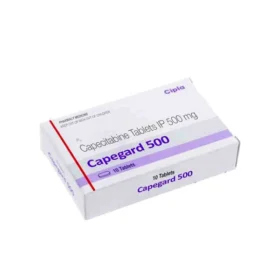
Capegard
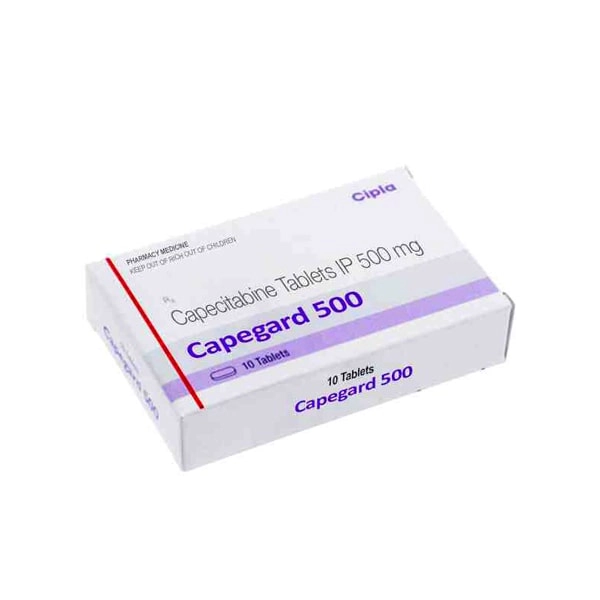
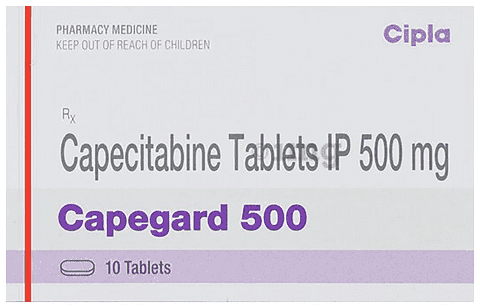
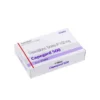
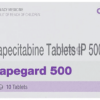
Capegard (Capecitabine 500 mg) — doustna prodruga 5-FU firmy Cipla stosowana w leczeniu uzupełniającym i przerzutowym raka jelita grubego, piersi oraz żołądka. Przed rozpoczęciem leczenia zaleca się badanie genotypu DPYD.
✓ Zweryfikowany medycznie przez Morgan Ellis — Badacz farmaceutyczny · 8 lat doświadczenia · Ostatnia weryfikacja: maj 2026
Szybka odpowiedź
Capegard — capecitabine 500 mg (Cipla Inc). Doustna prodruga 5-fluorouracylu (5-FU) — stosowana w leczeniu uzupełniającym i przerzutowym raka jelita grubego, piersi, żołądka oraz trzustki. Eliminuje konieczność dostępu dożylnego. Schemat dawkowania: dwa razy dziennie doustnie.
Co otrzymujesz z MedsBase:
- producenta certyfikowanego przez WHO-GMP
- Dyskretne opakowanie w zwykłej kopercie
- Wysyłka na cały świat
- Ocenione przez ponad 1400 klientów (przeczytaj opinie)
📦 Gwarancja Ponownej Wysyłki: jeśli Twoje zamówienie nie dotrze w ciągu 20 dni roboczych od wysyłki, wysyłamy je ponownie bez dodatkowych kosztów. Zapoznaj się z polityką.
Dlaczego warto zamawiać z MedsBase
Capegard jest wysyłany z certyfikowanej przez WHO-GMP fabryki w neutralnym opakowaniu, płatności są przetwarzane przez regulowanego operatora płatności (opis transakcji będzie wskazywał na regulowanego operatora płatności kartowych — nigdy MedsBase ani nazwę leku). Każde zamówienie objęte jest naszą 20-dniową gwarancją ponownej wysyłki.
⚠️ Terapia przeciwnowotworowa nadzorowana przez specjalistę — ten lek jest włączany, monitorowany i odstawiany przez onkologa lub hematologa. Dawkowanie zależy od typu nowotworu, stadium, powierzchni ciała, funkcji narządów i terapii towarzyszącej. Samoleczenie nie jest odpowiednie; poniższe informacje mają charakter edukacyjny i wspierają świadome rozmowy z Twoim specjalistą.
Częsty (30-60%) i ograniczający dawkę. Objawy: mrowienie, zaczerwienienie, bolesne pęknięcia, łuszczenie się skóry na dłoniach/stopach. Stopień 2+ wymaga przerwania dawkowania + redukcji dawki. Profilaktyka: emolienty, rękawice do prac domowych, unikanie ekspozycji na ciepło, kremy z mocznikiem, witamina B6 o niepotwierdzonej skuteczności. Ocena w każdym cyklu.
Niedobór dehydrogenazy dihydropirymidynowej (DPD) powoduje ciężkie, czasem śmiertelne toksyczne działanie — neutropenię, zapalenie błon śluzowych, biegunkę, neuropatię. Niektóre wytyczne zalecają obecnie badanie genotypu DPYD przed rozpoczęciem terapii 5-FU lub kapecytabiną w celu wykrycia częściowego/pełnego niedoboru. W przypadku niedoboru DPD konieczna jest redukcja dawki lub alternatywna terapia.
Najczęściej zadawane pytania
Jak jest przyjmowany?
1250 mg/m² dwa razy dziennie przez 14 dni, następnie 7-dniowa przerwa (cykl 3-tygodniowy). Niektóre schematy stosują 1000 mg/m² dwa razy dziennie przez 14 dni. Zawsze przepisywany przez specjalistę na podstawie powierzchni ciała.
Z jedzeniem czy bez?
W ciągu 30 minut po posiłku — poprawia tolerancję i standaryzuje wchłanianie.
Częste skutki uboczne?
Zespół dłoniowo-podeszwowy (bardzo częsty), biegunka, nudności, zmęczenie, zapalenie błon śluzowych, hiperbilirubinemia, łagodna neutropenia. Ciężkie objawy u pacjentów z niedoborem DPD.
Interakcje lekowe?
Warfaryna: kapecytabina znacznie zwiększa INR — częste monitorowanie lub przejście na LMWH. Fenytoina: podwyższone poziomy. Kwas folinowy: może nasilać toksyczność w niektórych schematach. Substraty CYP2C9: zmienne interakcje.
Przeciwwskazania?
Ciężka niewydolność nerek (CrCl <30), ciężki niedobór DPD, ciąża, karmienie piersią. Ostrożność przy umiarkowanej niewydolności nerek (redukcja dawki o 25%).
Co zrobić, jeśli wystąpi zespół dłoniowo-podeszwowy?
Stopień 1 (łagodne zaczerwienienie/dzestezja): kontynuować z miejscową pielęgnacją. Stopień 2 (bolesne, utrudniające funkcjonowanie): przerwać do powrotu do stopnia 1, zmniejszyć dawkę o 25%. Stopień 3 (ciężkie): przerwać, zmniejszyć dawkę o 50% przy wznowieniu.
Ciąża?
Bezwzględnie przeciwwskazane — działanie teratogenne. Skuteczna antykoncepcja podczas i przez co najmniej 6 miesięcy po terapii.
Monitorowanie funkcji nerek?
Początkowa ocena funkcji nerek, następnie przed każdym cyklem. Dostosowanie dawki przy CrCl 30-50 ml/min. Unikać przy CrCl <30.
W porównaniu z dożylnym 5-FU?
Równoważna lub wyższa skuteczność w większości przypadków (badanie X-ACT w raku jelita grubego). Podanie doustne jest znacznie wygodniejsze i pozwala uniknąć powikłań związanych z dostępem centralnym.
Co zrobić, jeśli pominię dawkę?
Pomiń pominiętą dawkę, jeśli minęło >6 godzin. Nie podwajaj dawki. Skonsultuj się z zespołem onkologicznym w przypadku pominięcia wielu dawek.
Inne leki przeciwnowotworowe
- Xeloda — kapecytabina 500 mg — doustny prolek 5-FU stosowany w raku piersi/jelita grubego/żołądka
- Altraz — anastrozol 1 mg — inhibitor aromatazy dla kobiet po menopauzie z rakiem piersi
- Xbira — abirateron 250 mg — inhibitor CYP17 w przerzutowym raku prostaty
- Zoldria — kwas zoledronowy dożylny — w przerzutach do kości i hiperkalcemii
- Actorise — darbepoetyna alfa — w niedokrwistości wywołanej chemioterapią
Więcej opcji w lekach przeciwnowotworowych
Ranking według liczby ostatnich zamówień MedsBase — co wybierają inni klienci w tej kategorii.

| Moc | 500 mg |
|---|---|
| Ilość | 20 tabletek, 40 tabletek, 80 tabletek |
| Postać farmaceutyczna | Tabletka/s |
| Producent | Cipla Inc |
| Leczenie | Rak jajnika, Rak głowy i szyi, Rak szyjki macicy |
| Marka generyczna | Capecitabine |
 Capegard
Pytania i odpowiedzi
Capegard
Produkty powiązane




Opinie
Nie ma jeszcze opinii