







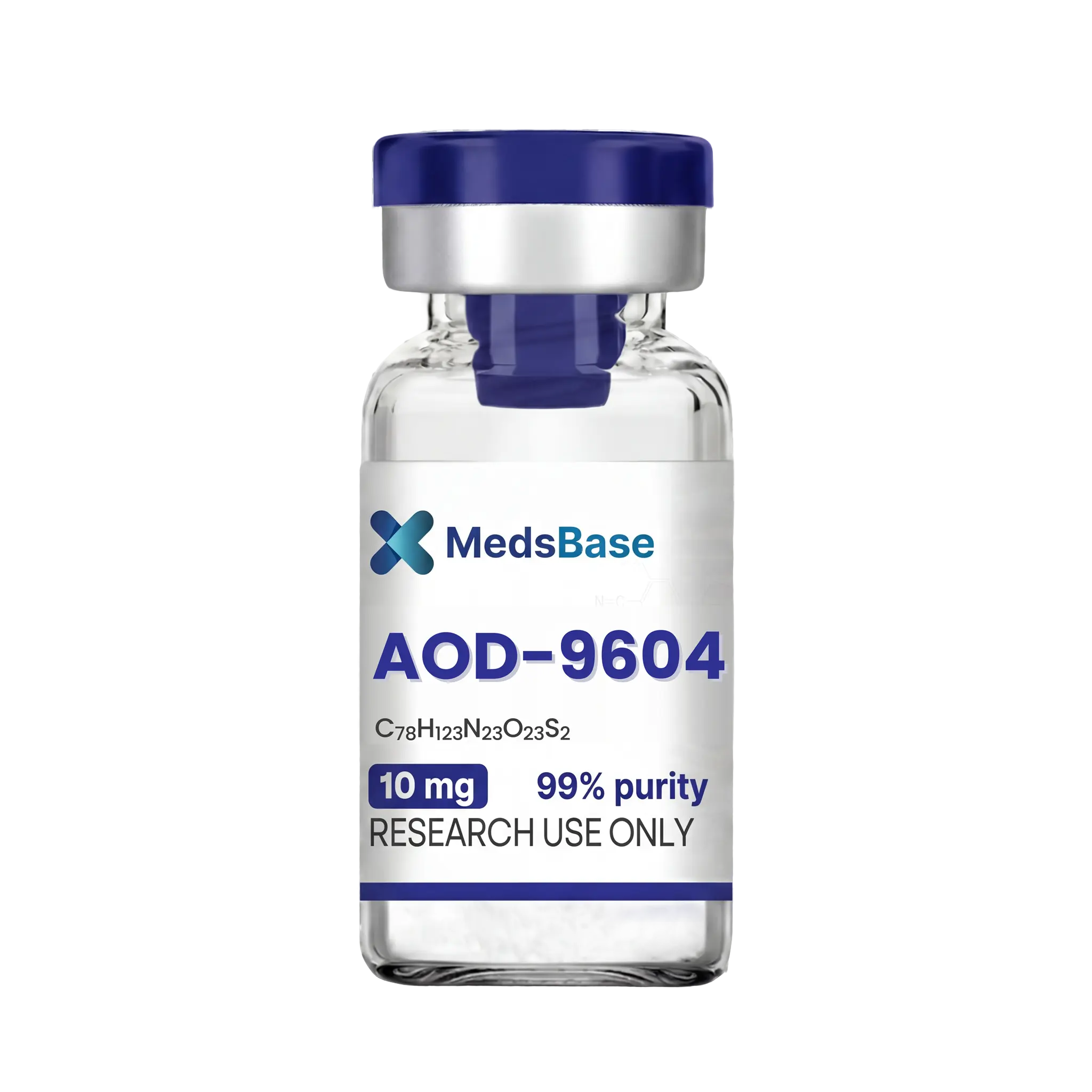
AOD-9604 (Lek przeciw otyłości 9604 / Tyr-hGH 177-191)
✅ Stabilizowany fragment lipolityczny hGH 176-191 z C-końcowym wydłużeniem N-końcowym (Tyr)
✅ Opracowany przez Metabolic Pharmaceuticals Ltd (Monash University, koniec lat 90.)
✅ Odłączony od GHR — brak IGF-1, brak JAK2/STAT5, brak zaangażowania osi wzrostu
✅ Lipolityczny + antylipogenny; zależny od β3-AR (mechanizm nie w pełni poznany)
✅ Okres półtrwania w osoczu ~4 min; badanie IIb fazy w otyłości zakończone niepowodzeniem (2007); masa cząsteczkowa 1815,1, CAS 221231-10-3
AOD-9604 zawiera syntetyczny peptyd badawczy Tyr-hGH(177-191).
✓ Zweryfikowany medycznie przez Morgan Ellis — Badacz farmaceutyczny · 8 lat doświadczenia · Ostatnia weryfikacja: maj 2026
Krótka odpowiedź — czym jest AOD-9604?
AOD-9604 (“Anti-Obesity Drug 9604”, CAS 221231-10-3) to syntetyczny 16-aminokwasowy peptyd opracowany przez Metabolic Pharmaceuticals Ltd (Australia) pod koniec lat 90. jako stabilizowany analog C-końcowego fragmentu lipolitycznego ludzkiego hormonu wzrostu. Sekwencja Tyr-Leu-Arg-Ile-Val-Gln-Cys-Arg-Ser-Val-Glu-Gly-Ser-Cys-Gly-Phe (16 aa, z N-końcowym rozszerzeniem tyrozynowym stabilizującym rodzicielski fragment hGH 177–191 oraz wewnątrzcząsteczkowym mostkiem disiarczkowym Cys7–Cys14). Wzór cząsteczkowy C78H123N23O23S2, masa cząsteczkowa 1815,1 Da. W opublikowanych badaniach in vitro i na gryzoniach AOD-9604 zachowuje lipolityczną i antylipogenną aktywność cząsteczki rodzicielskiej hGH, ale nie otrzymuje, przechowuje, nie ma dostępu ani wglądu w dane osobowe przekazywane przez Ciebie dostawcy płatności. Proces weryfikacji odbywa się w całości na platformie dostawcy i podlega jego własnej polityce prywatności oraz standardom bezpieczeństwa. wiąże się z receptorem GH — więc nie indukuje IGF-1, nie aktywuje szlaku sygnałowego JAK2/STAT5 osi wzrostu i nie wywołuje efektów promujących wzrost charakterystycznych dla pełnej długości HGH. Nieudana próba IIb fazy w otyłości (2007); obecnie stosowany jako peptyd badawczy. Wyłącznie do zastosowań laboratoryjnych.
📦 Każde zamówienie jest objęte naszą Polityka Gwarancji Ponownej Wysyłki — jeśli Twoja przesyłka nie dotrze w ciągu 20 dni roboczych, wysyłamy ją ponownie.
| Specyfikacja | Szczegóły |
|---|---|
| Klasa związku | Syntetyczny 16-aminokwasowy peptyd; stabilizowany analog C-końcowego fragmentu hGH; peptyd badawczy o działaniu lipolitycznym/antylipogennym (odłączony od wiązania z receptorem GH) |
| Nazwa chemiczna | AOD-9604 (“Anti-Obesity Drug 9604”; synonimy: Tyr-hGH 177-191; H-Tyr-(177-191 fragment hGH)-OH) |
| Numer CAS | 221231-10-3 (kanoniczne odniesienie Sigma-Aldrich, MedKoo, ChemicalBook) |
| Wzór cząsteczkowy | C78H123N23O23S2 |
| Masa cząsteczkowa | 1815,1 g/mol |
| Sekwencja | Tyr-Leu-Arg-Ile-Val-Gln-Cys-Arg-Ser-Val-Glu-Gly-Ser-Cys-Gly-Phe (jednoliterowe: YLRIVQCRSVEGSCGF; 16 aminokwasów). Wewnątrzcząsteczkowy mostek disiarczkowy Cys7–Cys14 tworzy strukturę cykliczną, która naśladuje geometrię disiarczkową regionu 182–189 rodzicielskiego hGH. N-końcowa tyrozyna jest syntetycznym dodatkiem (nieobecnym w natywnym hGH 177–191), który stabilizuje fragment przed proteolityczną degradacją aminokwasów N-końcowych. |
| Mechanizm | Mechanistycznie odłączona lipoliza. AOD-9604 NIE wiąże się z receptorem GH (GHR) — powierzchnia wiążąca GHR natywnego hGH leży w części N-końcowej (region reszt 1–120), który jest nieobecny w fragmencie 176–191. Uważa się, że aktywność lipolityczna/antylipogenna jest mediowana poprzez sygnalizację receptora β3-adrenergicznego i bezpośrednią aktywację lipazy wrażliwej na hormony (HSL) adipocytów poprzez cAMP-PKA. Mechanizm pozostaje nie w pełni scharakteryzowany w opublikowanej literaturze — nie ma jednego potwierdzonego receptora dla C-końcowego fragmentu lipolitycznego. |
| Okres półtrwania w osoczu | ~4 minuty (bardzo krótki — spowodowany proteolitycznym skróceniem N-końcowym pomimo stabilizującej Tyr). Ten krótki okres półtrwania jest jedną z wiodących hipotez wyjaśniających, dlaczego badanie fazy IIb dotyczące otyłości (2007) nie osiągnęło punktów końcowych związanych z utratą masy ciała — fragment ulega degradacji, zanim w tkance docelowej zgromadzi się wystarczająca ekspozycja na receptor. |
| Postać | Liofilizowany biały do kremowego amorficzny proszek; jednorazowe fiolki badawcze |
| Czystość | ≥99% (weryfikacja HPLC); spektrometria mas MALDI-TOF potwierdza masę 1815,1 Da. COA dostępny na życzenie. |
| Rozpuszczalność | Rozpuszczalny w wodzie bakteriostatycznej, wodzie sterylnej, PBS i 0,1% kwasie octowym przy stężeniu ≥5 mg/mL; łatwo rozpuszczalny w DMSO przy stężeniu ≥50 mg/mL do przygotowania roztworu macierzystego do badań in-vitro. Mostek disiarczkowy Cys7–Cys14 ogranicza geometrię peptydu, ale nie utrudnia rozpuszczalności w wodzie. |
| Przechowywanie | Liofilizat: 2–8 °C nieotwarty do krótkotrwałego przechowywania; −20 °C do długotrwałego przechowywania (stabilny ≥36 miesięcy w −20 °C; ≥18 miesięcy w 2–8 °C). Roztwór wodny po rekonstytucji: 2–8 °C, użyj w ciągu ~30 dni. Chronić przed światłem. Unikać wielokrotnego zamrażania i rozmrażania roztworu po rekonstytucji — mostek disiarczkowy jest stabilny przy pojedynczym cyklu zamrażania-rozmrażania, ale kumulacyjne cykle mogą prowadzić do przegrupowania wolnych tioli i częściowej agregacji. |
| Do celów badawczych | Wyłącznie do badań laboratoryjnych. Nie do stosowania diagnostycznego lub terapeutycznego u ludzi i zwierząt. AOD-9604 nie znajduje się na aktualnej Liście Substancji Zabronionych WADA pod swoją specyficzną nazwą, ale badacze powinni być świadomi, że szersza klasa S2 (Hormony Peptydowe, Czynniki Wzrostu, Substancje Pokrewne i Mimetyki) obejmuje fragmenty hormonu wzrostu i związki pokrewne. AOD-9604 dotarł do badań fazy IIb dotyczących otyłości, ale nie uzyskał aprobaty regulacyjnej; australijska TGA w pewnym momencie wymieniła AOD-9604 jako dozwolony składnik do ograniczonego użycia w kontekście badawczym, z późniejszymi różnicami w interpretacjach regulacyjnych w zależności od jurysdykcji. |
Co to jest AOD-9604?
AOD-9604 (“Anti-Obesity Drug 9604”; CAS 221231-10-3) to syntetyczny 16-aminokwasowy peptyd opracowany przez Metabolic Pharmaceuticals Ltd na Uniwersytecie Monash w Melbourne w Australii pod koniec lat 90. XX wieku. Jest to stabilizowany analog C-końcowego fragmentu lipolitycznego naturalnego ludzkiego hormonu wzrostu (reszty 177–191), do którego dodano N-końcową tyrozynę w celu spowolnienia proteolitycznej degradacji aminokwasu N-końcowego. Sekwencja Tyr-Leu-Arg-Ile-Val-Gln-Cys-Arg-Ser-Val-Glu-Gly-Ser-Cys-Gly-Phe (YLRIVQCRSVEGSCGF), z zachowanym naturalnym mostkiem disiarczkowym Cys182–Cys189 rodzicielskiego hGH jako Cys7–Cys14 w numeracji fragmentu. Masa cząsteczkowa 1815,1 g/mol, wzór empiryczny C78H123N23O23S2.
Logika farmakologiczna stojąca za AOD-9604 jest jednym z najczystszych przykładów analizy struktura-funkcja w badaniach nad peptydami HGH. Naturalny pełnej długości ludzki hormon wzrostu (191 aminokwasów) ma co najmniej dwie odrębne aktywności biologiczne: efekty promujące wzrost / anaboliczne (mediowane przez receptor GH, szlak sygnałowy JAK2/STAT5 i produkcję IGF-1) oraz efekty lipolityczne / antylipogenne (mediowane przez oddzielny, nie w pełni scharakteryzowany mechanizm, który nie wymaga zaangażowania receptora GH). Hipoteza grupy Monash zakładała, że aktywność lipolityczna jest zakodowana w regionie C-końcowym cząsteczki — i że syntetyczny peptyd obejmujący tylko ten region może zachować aktywność mobilizującą tłuszcz, tracąc jednocześnie aktywność angażującą oś wzrostu. Okazało się to prawdą w opublikowanych badaniach in vitro i na modelach gryzoni: fragment 176–191 zachowuje aktywność lipolityczną i antylipogenną w hodowlach adipocytów i modelach mysich DIO, ale nie wiąże GHR, nie aktywuje JAK2/STAT5 i nie indukuje IGF-1.
AOD-9604 przeszedł przez wiele badań klinicznych fazy I i II na początku i w połowie lat 2000., kończąc się 28-tygodniowym badaniem fazy IIb dotyczącym otyłości (~500 pacjentów) zakończonym w 2007 roku przez Metabolic Pharmaceuticals. Badanie nie osiągnęło pierwotnego punktu końcowego w postaci utraty wagi, a program rozwoju farmakologii otyłości został przerwany. AOD-9604 następnie trafił na rynek peptydów badawczych i nieregulowanych suplementów, gdzie pozostaje jednym z najczęściej cytowanych “peptydów spalających tłuszcz” w literaturze nieklinicznej. Związek zachowuje wartość badawczą jako kanoniczne narzędzie farmakologiczne do badania lipolizy niezależnej od GHR, biologii fragmentu C-końcowego hGH oraz podstaw strukturalno-funkcjonalnych wielokrotnych aktywności HGH.
Uwaga dotycząca nazewnictwa: AOD-9604 i “”Fragment HGH 176-191” są często używane zamiennie wśród dostawców i na rynku peptydów badawczych. Ściśle rzecz biorąc, AOD-9604 (CAS 221231-10-3) to opracowany przez Metabolic-Pharmaceuticals analog ze stabilizacją N-końcowej Tyr. “Fragment HGH 176-191” (CAS 66004-57-7 według niektórych źródeł) to starszy, niestabilizowany fragment hGH 177–191, z którego wywodzi się AOD-9604. Obie formy mają tę samą sekwencję aminokwasową YLRIVQCRSVEGSCGF w wielu preparatach dostawców — ale oznaczenie AOD-9604 specyficznie identyfikuje zarejestrowany związek badawczy Metabolic-Pharmaceuticals. Badacze powinni skonsultować COA, aby potwierdzić, której formie odpowiada dana partia od dostawcy.
Mechanizm działania — lipoliza odłączona od GHR
Mechanizm działania AOD-9604 jest jednym z najczęściej omawianych w badaniach nad peptydami HGH:
- Brak wiązania receptora GH — Powierzchnia wiążąca GHR w natywnym hGH znajduje się w N-końcowej połowie cząsteczki (obszar reszt 1–120), która jest nieobecna w fragmencie AOD-9604 / 176–191. W rezultacie AOD-9604 NIE wiąże receptora hormonu wzrostu (GHR), NIE aktywuje szlaku sygnałowego JAK2/STAT5, NIE indukuje wątrobowej produkcji IGF-1 oraz NIE wywołuje efektów promujących wzrost, stymulujących chondrocyty ani przeciwregulujących insulinę, charakterystycznych dla cząsteczki macierzystej. HGH 191AA właściwość farmakologiczna i podstawa użyteczności badawczej AOD-9604 jako narzędzia izolującego oś lipolizy. sygnalizacja przez receptor β3-adrenergiczny (hipoteza) właściwość farmakologiczna i podstawa zastosowania badawczego AOD-9604 jako narzędzia izolującego oś lipolizy.
- sygnalizacja przez receptor β3-adrenergiczny (hipoteza) — The leading mechanistic hypothesis for AOD-9604’s lipolytic activity is that it engages the β3-adrenergic receptor (ADRB3) on adipocytes, either directly as an allosteric modulator or via an intermediate pathway. Published in-vitro research has demonstrated that AOD-9604’s lipolytic effect is blunted by β3-adrenergic antagonists, supporting the β3-AR hypothesis, although direct AOD-9604 / β3-AR binding has not been conclusively demonstrated in radioligand-binding assays. The mechanism remains incompletely characterised — a feature researchers should be aware of when interpreting published AOD-9604 results.
- Aktywacja lipazy wrażliwej na hormony (HSL) — Po związaniu z receptorem, AOD-9604 aktywuje lipazę wrażliwą na hormony w adipocytach poprzez fosforylację zależną od PKA (klasyczna ścieżka aktywacji lipolizy), prowadząc do hydrolizy triglicerydów do glicerolu i wolnych kwasów tłuszczowych. Wzrost uwalniania wolnych kwasów tłuszczowych do krążenia został udokumentowany w opublikowanych badaniach in vivo na gryzoniach po podaniu AOD-9604.
- Działanie antylipogenne — Oprócz stymulacji lipolizy, AOD-9604 hamuje de novo lipogenezę w hodowlach adipocytów — zmniejszając aktywność acetyl-CoA karboksylazy (ACC) i syntazy kwasów tłuszczowych (FAS) w testach różnicowania komórek 3T3-L1. Połączenie zwiększonej lipolizy i zmniejszonej lipogenezy to klasyczny profil farmakologiczny “mobilizacji tłuszczu”, który miał być celem oryginalnego programu Metabolic-Pharmaceuticals.
- Badania dotyczące chrząstki/choroby zwyrodnieniowej stawów (wtórne wskazanie) — Po niepowodzeniu programu otyłościowego, AOD-9604 został przeprofilowany do badań w chorobie zwyrodnieniowej stawów, z hipotezą, że chondroprotekcyjne działanie macierzystego hGH może być częściowo zachowane w fragmencie C-końcowym. Opublikowane badania in vitro i na małych zwierzętach wykazały działanie ochronne na chondrocyty, chociaż nie ukończono dużych badań klinicznych w tym wskazaniu.
- Problem z okresem półtrwania wynoszącym 4 minuty — Okres półtrwania AOD-9604 w osoczu wynosi około 4 minut, co wynika z szybkiego proteolitycznego skrócenia końca aminowego, pomimo stabilizacji przez N-końcową tyrozynę. Ten bardzo krótki profil farmakokinetyczny jest jedną z głównych hipotez wyjaśniających, dlaczego badanie fazy IIb w otyłości nie osiągnęło punktów końcowych redukcji masy ciała — fragment ulega degradacji, zanim wystarczająca ekspozycja receptorowa może się nagromadzić w docelowej tkance tłuszczowej przy codziennym podskórnym podawaniu. Nowe peptydy badawcze, które oddziałują na tę samą oś lipolityczną, ale mają dłuższy okres półtrwania (zmodyfikowane fragmenty hGH ze stabilizacją PEG, białka fuzyjne fragment-Fc), są we wcześniejszych etapach badań i nie są dostępne komercyjnie.
Połączenie czystego mechanizmu rozłączenia GHR i rozczarowującego okresu półtrwania in vivo sprawia, że AOD-9604 jest użytecznym narzędziem badawczym o jasnym profilu farmakologicznym, ale z udokumentowanym ograniczeniem translacyjnym. Opublikowane dawkowanie w badaniach na gryzoniach wynosi zwykle 100–1000 µg/kg/dz. podskórnie, z wyższymi dawkami stosowanymi w celu przezwyciężenia krótkiego okresu półtrwania poprzez nasycenie klirensu. W badaniach na hodowlach komórkowych stosuje się stężenia mikromolarne ze względu na krótki biologiczny okres półtrwania fragmentu w pożywce hodowlanej.
Opublikowane zastosowania badawcze
AOD-9604 jest stosowany w badaniach laboratoryjnych dotyczących:
- Farmakologia lipolizy rozłączonej z GHR — klasyczne narzędzie badawcze do badania lipolitycznego/działania antylipogennego fragmentu C-końcowego hGH w izolacji od sygnalizacji osi GH; standardowy związek referencyjny dla nowych badań nad fragmentami hGH ukierunkowanymi wyłącznie na redukcję tłuszczu
- Badania struktura-funkcja HGH — AOD-9604 jest jednym z najczystszych przykładów farmakologicznej analizy struktura-funkcja wielofunkcyjnej cząsteczki HGH; stosowany w opublikowanych badaniach mapujących reszty domeny lipolitycznej naturalnego HGH
- Biologia adipocytów i badania lipolizy — indukuje lipolizę w hodowlach adipocytów 3T3-L1 i pierwotnych preparatach adipocytów; stosowany w badaniach nad regulacją lipazy hormonowrażliwej adipocytów, remodelowaniem kropli lipidowych oraz biologią adipocytów brunatnych/beżowych
- farmakologia receptora β3-adrenergicznego (pośrednia) — zależność AOD-9604 od receptora β3-AR (w niektórych opublikowanych badaniach) czyni go przydatnym jako pośrednią sondę w ścieżkach lipolizy sprzężonych z β3-AR, obok bezpośrednich agonistów β3-AR (CL-316,243, mirabegron)
- badania na gryzoniach z otyłością indukowaną dietą (DIO) — opublikowane protokoły dawkowania 4–8 tygodniowe (100–1000 µg/kg/d SC) u myszy i szczurów DIO wykazały redukcję masy tłuszczowej bez wpływu na masę beztłuszczową lub poziom IGF-1; standardowe narzędzie badawcze dla “tylko lipolitycznego” komponentu farmakologii utraty tłuszczu
- badania chrząstki/chondrocytów — stosowany w opublikowanych in-vitro modelach chondrocytów i małych zwierząt z osteoartrozą do oceny chondroprotekcyjnej; drugorzędny obszar badań po zaprzestaniu programu otyłościowego
- farmakologia porównawcza wobec HGH 191AA i fragmentu HGH 176-191 — opublikowane bezpośrednie porównania AOD-9604 z pełną długością HGH i niestabilizowanym fragmentem 176-191 scharakteryzowały różnice w wiązaniu GHR, indukcji IGF-1 i profilach lipolitycznych; AOD-9604 znajduje się na “tylko lipolitycznym, bez osi wzrostu” krańcu tego spektrum
- badania stabilności w osoczu i odporności na proteazy — 4-minutowy okres półtrwania sprawia, że AOD-9604 jest użytecznym związkiem referencyjnym w badaniach nad odpornością na proteazy; nowsze zmodyfikowane analogi (stabilizowane PEG, fuzja fragment-Fc, modyfikacje alternatywnych końcówek N-terminalnych) są porównywane z AOD-9604 we wczesnych etapach badań rozwojowych
Szerszy kontekst dotyczący peptydów badawczych osi HGH i redukcji tkanki tłuszczowej w tym katalogu można znaleźć w Fragment HGH 176-191 (niestabilizowany fragment macierzysty — bezpośrednie porównanie), HGH 191AA (pełna cząsteczka macierzysta — do porównań farmakologicznych), Tesamorelin (analog GHRH — stymulacja osi HGH), Sermorelina (analog GHRH 1-29), oraz MOTS-c (peptyd metaboliczny pochodzenia mitochondrialnego). Przeglądaj pełny katalog peptydów i związków badawczych, lub zobacz przygotowane centrum peptydów badawczych do utraty tkanki tłuszczowej i peptydy badawcze hormonu wzrostu huby.
Dostępne mocowania i stężenia
MedsBase stocks AOD-9604 in three lyophilized vial sizes calibrated to typical in-vitro and in-vivo research protocols. Each strength is available in 10-vial, 20-vial, or 30-vial pack formats:
| Mocowanie fiolki | Typowy przypadek użycia w badaniach | Rozmiary opakowań |
|---|---|---|
| 2 mg | Badania in-vitro na hodowlach komórkowych i krótkotrwałe dawkowanie in-vivo — testy lipolizy adipocytów 3T3-L1, farmakologia pierwotnych adipocytów, panele odpowiedzi na dawkę, dawkowanie w pojedynczej grupie myszy | 10, 20 lub 30 fiolek |
| 5 mg | Standardowe stężenie średnie — protokoły badań na gryzoniach z otyłością indukowaną dietą (100–500 µg/kg/d SC przez 4–8 tygodni), badania chondrocytów/choroby zwyrodnieniowej stawów, wielkość próbek dla wielu grup | 10, 20 lub 30 fiolek |
| 10 mg | Fiolka wysokiego stężenia do badań — protokoły długotrwałe/wysokodawkowe (do 1 mg/kg/d SC), duże badania DIO, porównania struktura-funkcja w wielu grupach; najniższy koszt na mg | 10, 20 lub 30 fiolek |
Wszystkie trzy stężenia to ta sama substancja chemiczna (liofilizowany AOD-9604, ≥99% czystości HPLC, potwierdzona masą MALDI-TOF na 1815,1 Da). Fiolka 10 mg oferuje najniższy koszt na mg dla dużych protokołów in-vivo (pojedyncza fiolka 10 mg wystarcza na około 50 dni dawkowania 200 µg/kg/d u myszy o wadze 25 g lub około 10 dni przy 1 mg/kg/d u szczura o wadze 30 g). Badacze powinni określić konkretne zakresy dawek na podstawie recenzowanej literatury odpowiedniej dla protokołu.
Porównanie — AOD-9604 a fragment HGH 176-191
AOD-9604 i Fragment HGH 176-191 to dwa peptydy badawcze C-końcowego fragmentu HGH w tym katalogu, które znajdują się bardzo blisko siebie w spektrum struktura-funkcja. AOD-9604 to analog opracowany przez Metabolic-Pharmaceuticals z rozszerzeniem N-terminalnej tyrozyny, która zwiększa stabilność na proteazy. Niestabilizowany fragment HGH 176-191 nie ma N-terminalnej Tyr i ma nieco krótszy okres półtrwania w hodowli/in-vivo, ale poza tym jest mechanicznie identyczny. Oba związki są często używane zamiennie w ofertach dostawców — różnica ma znaczenie dla rygorystycznych badań farmakologicznych, mniej dla prac stymulacyjnych na hodowlach komórkowych.
| Kryterium | AOD-9604 | Fragment HGH 176-191 |
|---|---|---|
| Numer CAS | 221231-10-3 | 66004-57-7 |
| Sekwencja (jednoliterowa) | YLRIVQCRSVEGSCGF (16 aa; ze stabilizacją N-końcową Tyr) | YLRIVQCRSVEGSCGF (16 aa) lub LRIVQCRSVEGSCGF (15 aa, bez stabilizacji) w zależności od partii dostawcy; patrz COA |
| Masa cząsteczkowa | 1815,1 g/mol | 1817.06 g/mol (16-aa jakość dostawcy) lub 1654 g/mol (15-aa bez stabilizacji) |
| Pochodzenie | Metabolic Pharmaceuticals Ltd (Monash University, Australia, lata 90-te) | Wcześniejsza akademicka preparatyka peptydów, przed AOD-9604 |
| Okres półtrwania w osoczu | ~4 minuty | ~2–3 minuty (krótszy, mniej stabilny wobec proteaz) |
| Wiązanie receptora GH | Brak — nie oddziałuje z osią GHR/JAK2/STAT5/IGF-1 | Brak — ta sama właściwość; oba są fragmentami odłączonymi od GHR |
| Historia badań klinicznych | Badanie fazy IIb dotyczące otyłości (~500 pacjentów, 2007) nie osiągnęło głównego punktu końcowego; program przerwany | Brak formalnego programu rozwoju klinicznego |
| Najlepsze zastosowania badawcze | Nieznacznie preferowany do pracy in-vivo ze względu na nieco dłuższy okres półtrwania; związek referencyjny do porównań struktura-funkcja | Testy lipolizy in-vitro w hodowli komórkowej, gdzie krótszy okres półtrwania jest mniej ograniczający |
Dla badań skupionych na rygorystycznej farmakologii fragmentów HGH pod kątem struktura-funkcja, AOD-9604 ze zarejestrowanym CAS / znanym pochodzeniem jest czystszym odniesieniem. Dla eksploracyjnych prac nad lipolizą in-vitro, gdzie dokładne pochodzenie ma mniejsze znaczenie, Fragment HGH 176-191 jest bardziej ekonomiczną opcją. Dla badań wymagających pełnej farmakologii HGH, w tym zaangażowania receptora GH / osi IGF-1, patrz HGH 191AA.
Przechowywanie i rekonstytucja
Przed rekonstytucją: przechowuj liofilizowane fiolki w lodówce w temperaturze 2–8 °C w oryginalnym opakowaniu jako krótkoterminowy zapas roboczy. Do długoterminowego przechowywania zamrażaj nieotwarte fiolki w temperaturze −20 °C (stabilne ≥36 miesięcy w −20 °C; ≥18 miesięcy w 2–8 °C). Mostek disiarczkowy Cys7–Cys14 jest stabilny w stanie liofilizowanym i podczas krótkiego przechowywania w lodówce. Chronić przed światłem.
Procedura rekonstytucji: wstrzyknij wodę bakteriostatyczną wzdłuż ścianki fiolki (nie bezpośrednio na liofilizowany proszek). Dla fiolki 2 mg, 1,0 mL rozpuszczalnika daje roztwór roboczy 2 mg/mL; 0,5 mL daje 4 mg/mL. Dla fiolki 5 mg, 1,0 mL daje 5 mg/mL; 2,5 mL daje 2 mg/mL. Dla fiolki 10 mg, 1,0 mL daje 10 mg/mL (praktyczny limit rozpuszczalności w buforze wodnym); 5,0 mL daje 2 mg/mL. AOD-9604 rozpuszcza się szybko przy delikatnym mieszaniu w temperaturze pokojowej — zwykle w ciągu 15–30 sekund. Po rekonstytucji przechowuj fiolkę w temperaturze 2–8 °C i zużyj w ciągu 30 dni. Chronić przed światłem. Unikaj wielokrotnych cykli zamrażania-odmrażania materiału po rekonstytucji — kumulatywne zamrażanie-odmrażanie może prowadzić do przegrupowania mostka disiarczkowego Cys7–Cys14 i częściowej agregacji. Wyrzuć, jeśli pojawi się zmętnienie, cząstki stałe lub wyraźna zmiana koloru.
Najczęściej zadawane pytania
Jaka jest różnica między AOD-9604 a fragmentem HGH 176-191?
AOD-9604 (CAS 221231-10-3) to zarejestrowany związek badawczy opracowany przez Metabolic-Pharmaceuticals z N-końcowym przedłużeniem tyrozyny, które zwiększa stabilność aminoterminalną wobec proteaz w stosunku do rodzicielskiego fragmentu hGH 177–191. “Fragment HGH 176-191” (CAS 66004-57-7 według niektórych źródeł) to wcześniejsza, niestabilizowana wersja tego samego C-końcowego peptydu hGH. Oba są często używane zamiennie na rynku peptydów badawczych, ale ściśle rzecz biorąc, oznaczenie AOD-9604 identyfikuje zarejestrowany analog Metabolic-Pharmaceuticals ze stabilizującą Tyr. Oba nie wiążą się z GHR i oba zachowują aktywność lipolityczną rodzicielskiego regionu C-końcowego hGH. Skonsultuj COA, aby potwierdzić, której formie sekwencji odpowiada dana partia.
Czy AOD-9604 to to samo co HGH?
Nie. AOD-9604 to syntetyczny 16-aminokwasowy fragment HGH obejmujący jedynie C-końcowy region lipolityczny (reszty 176–191 + N-końcowa Tyr). Natywny HGH 191AA jest pełnej długości białkiem składającym się z 191 aminokwasów. Najważniejszą różnicą farmakologiczną jest to, że pełna długość HGH wiąże receptor hormonu wzrostu (GHR) i aktywuje oś JAK2/STAT5/IGF-1 — wywołując szerokie efekty promujące wzrost i metaboliczne HGH — podczas gdy AOD-9604 NIE wiąże GHR i NIE indukuje IGF-1. AOD-9604 zachowuje jedynie aktywność lipolityczną/anty-lipogeniczną cząsteczki macierzystej. Te dwa związki są więc mechanistycznie odmienne: HGH 191AA dla pełnej farmakologii osi GH, AOD-9604 wyłącznie do badań nad lipolizą.
Dlaczego badanie fazy IIb dotyczące otyłości zakończyło się niepowodzeniem?
Opublikowane protokoły in vivo na myszach i szczurach zazwyczaj stosują 100–1000 µg/kg/d podskórnie, przy czym większość opublikowanych prac wykorzystuje zakres 200–500 µg/kg/d przez 4–8 tygodni. Wyższy zakres tego przedziału (do 1 mg/kg/d) był stosowany w niektórych publikacjach, aby przezwyciężyć krótki okres półtrwania. Badania in vitro na adipocytach 3T3-L1 zazwyczaj wykorzystują 1–10 µM. Badacze powinni konsultować się z literaturą pierwotną (Ng et al. — badania Metabolic Pharmaceuticals; Heffernan et al. — badania mechanizmu adipocytów) w celu uzyskania wskazówek dotyczących gatunków, modeli i punktów końcowych.
Jakie opublikowane zakresy dawek zostały wykorzystane w badaniach na gryzoniach?
Opublikowane protokoły in-vivo na myszach i szczurach zazwyczaj stosują dawkę 100–1000 µg/kg/d podskórnie, przy czym większość opublikowanych prac wykorzystuje zakres 200–500 µg/kg/d przez 4–8 tygodni. Górna granica tego zakresu (do 1 mg/kg/d) była stosowana w niektórych publikacjach w celu przezwyciężenia krótkiego okresu półtrwania. W testach in-vitro na adipocytach 3T3-L1 zazwyczaj stosuje się stężenie 1–10 µM. Badacze powinni skonsultować się z literaturą pierwotną (Ng et al. — badania Metabolic Pharmaceuticals; Heffernan et al. — badania mechanizmu adipocytów) w celu uzyskania wskazówek specyficznych dla gatunku, modelu i punktu końcowego.
Jaki jest status regulacyjny AOD-9604 według WADA?
AOD-9604 nie znajduje się na obecnej Liście Substancji Zabronionych WADA pod swoją specyficzną nazwą. Jednak szersza klasa S2 (Hormony Peptydowe, Czynniki Wzrostu, Substancje Pokrewne i Mimetyki) wyraźnie obejmuje fragmenty hormonu wzrostu oraz “związki związane z osią GH”, a klasyfikacja AOD-9604 w tej szerszej kategorii była przedmiotem dyskusji regulacyjnych. Badacze prowadzący badania na ludziach z użyciem AOD-9604 powinni bezpośrednio zapoznać się z aktualną Listą Substancji Zabronionych WADA i obowiązującymi przepisami jurysdykcyjnymi, zamiast polegać na braku konkretnej nazwy na liście.
Jaka jest różnica między AOD-9604 a bezpośrednimi agonistami receptorów β3-adrenergicznych, takimi jak mirabegron?
agoniści receptora β3-adrenergicznego — małe cząsteczki, które wiążą się z ortosterycznym miejscem β3-AR i aktywują sygnalizację Gs-cAMP. AOD-9604 jest bezpośrednim Agonisty receptora β3-adrenergicznego — małe cząsteczki, które wiążą się z ortosterycznym miejscem β3-AR i aktywują szlak sygnałowy Gs-cAMP. AOD-9604 to pośrednim Aktywator β3-AR (wg niektórych opublikowanych badań) — aktywność lipolityczna jest osłabiana przez antagonistów β3-AR, co potwierdza zależność od β3-AR, ale bezpośrednie wiązanie AOD-9604/β3-AR nie zostało jednoznacznie udowodnione. W badaniach wymagających precyzyjnie zdefiniowanej farmakologii bezpośredniej β3-AR, preferowanymi narzędziami są mirabegron lub CL-316,243. W badaniach wymagających szerszej farmakologii “fragmentu lipolitycznego HGH” o nie w pełni poznanym mechanizmie, AOD-9604 jest kanonicznym odniesieniem.
Tak — AOD-9604 celuje w inną warstwę biologii osi HGH niż pełna cząsteczka
Tak — AOD-9604 oddziałuje na inną warstwę biologiczną osi HGH niż pełna długość HGH 191AA lub analogi GHRH (Tesamorelin, Sermorelina), a kombinacje są powszechnie stosowane w opublikowanych badaniach w celu wyodrębnienia wyłącznie lipolitycznych efektów od szerszych efektów osi GH. Najczęściej publikowane kombinacje to AOD-9604 + HGH 191AA (testowanie, czy komponent lipolityczny dodaje się do pełnej aktywności HGH czy ją zmniejsza); AOD-9604 + MOTS-c (badania podwójnej utraty tłuszczu, różne mechanizmy); AOD-9604 + analog GHRH (testowanie, czy endogenne pulsacyjne uwalnianie HGH w połączeniu z fragmentem lipolitycznym przewyższa każdy z nich osobno). Rekonstytuuj każdy osobno i postępuj zgodnie z określonymi zasadami przechowywania każdego związku.
Dlaczego AOD-9604 jest czasami wymieniany jako 1815,1 Da, a czasami jako 1817 Da?
Różnica odzwierciedla różnicę między masą monojonową (1815,1 Da, obliczoną z najbardziej rozpowszechnionego izotopu każdego atomu) a średnią masą cząsteczkową (1817,1 Da, obliczoną z naturalnej średniej ważonej masy izotopowej każdego atomu). Obie są poprawne dla tej samej cząsteczki. Spektrometria mas MALDI-TOF zwykle podaje masę monojonową dla peptydów tej wielkości; starsza literatura i niektórzy dostawcy podają średnią masę. Do celów COA wartość 1815,1 Da jest kanoniczną wartością referencyjną Sigma-Aldrich.
Inne peptydy badawcze do badań osi HGH i utraty tłuszczu
- Fragment HGH 176-191 — Niestabilizowany fragment macierzysty — bezpośredni mechanistyczny odpowiednik, podobna lipoliza odłączona od GHR
- HGH 191AA — Pełna cząsteczka macierzysta — do porównawczej farmakologii z zaangażowaniem osi GH
- Tesamorelin — Analog GHRH — stymulacja osi HGH
- Sermorelina — Analog GHRH 1-29 — badania endogennego HGH przysadki
- MOTS-c — Peptyd metaboliczny pochodzenia mitochondrialnego — badania nad utratą tłuszczu z alternatywnym mechanizmem
- BAC Water (Woda bakteriostatyczna) — Wymagany do rekonstytucji każdej liofilizowanej fiolki — sterylny rozcieńczalnik z 0,9% benzylowym alkoholem jako środkiem konserwującym
Więcej opcji w Peptydach
Ranking według liczby ostatnich zamówień MedsBase — co wybierają inni klienci w tej kategorii.
| Moc | 2 mg, 5 mg, 10 mg |
|---|---|
| Ilość | 10 fiolek, 20 fiolek, 30 fiolek |
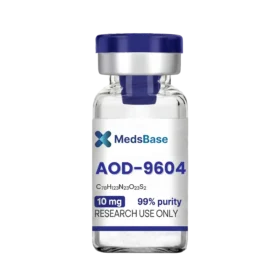 AOD-9604 (Lek przeciw otyłości 9604 / Tyr-hGH 177-191)
Pytania i odpowiedzi
AOD-9604 (Lek przeciw otyłości 9604 / Tyr-hGH 177-191)
Produkty powiązane
Opinie
Nie ma jeszcze opinii