







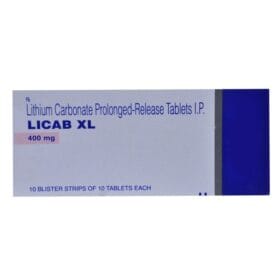
Licab XL
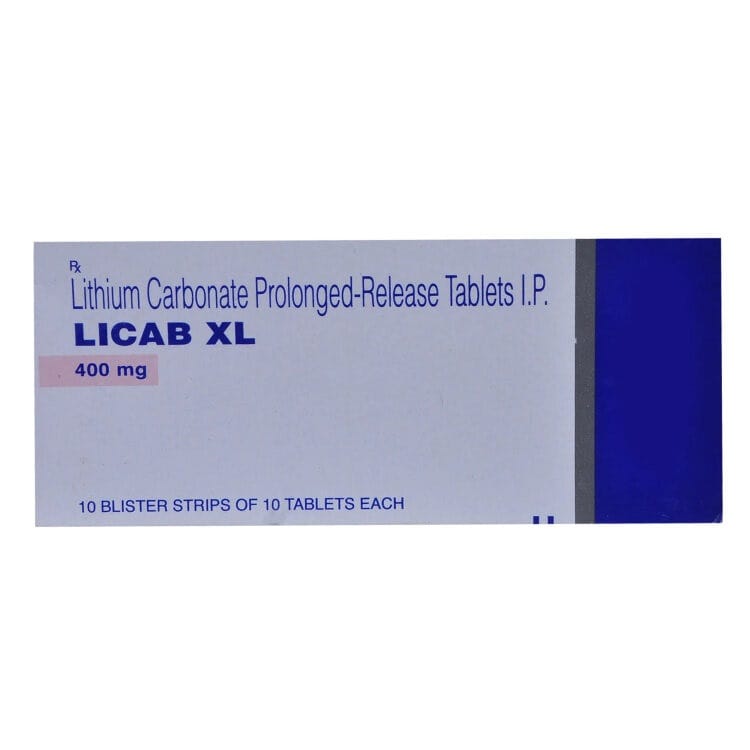
Licab XL (Węglan litu 400 mg XR) — stabilizator nastroju o przedłużonym uwalnianiu stosowany w leczeniu podtrzymującym choroby afektywnej dwubiegunowej i manii. Płaski profil stężenia w porównaniu z postacią IR — dawkowanie raz lub dwa razy dziennie.
✓ Zweryfikowany medycznie przez Morgan Ellis — Badacz farmaceutyczny · 8 lat doświadczenia · Ostatnia weryfikacja: maj 2026
⚡ Szybka odpowiedź
Licab XL (Węglan litu 400 mg XR, o przedłużonym uwalnianiu) to złoty standard w stabilizacji nastroju w chorobie afektywnej dwubiegunowej. Jedyny stabilizator nastroju z udokumentowanym działaniem zmniejszającym ryzyko samobójstwa. Wąski indeks terapeutyczny — wymagane monitorowanie stężenia w surowicy.
📦 Każde zamówienie jest objęte naszą Polityka Gwarancji Ponownej Wysyłki — jeśli Twoja przesyłka nie dotrze w ciągu 20 dni roboczych, wysyłamy ją ponownie.
Dlaczego warto zamawiać z MedsBase
Licab XL w MedsBase jest dostarczany bezpośrednio od producenta certyfikowanego przez WHO-GMP, w zwykłym, dyskretnym opakowaniu. Każde zamówienie objęte jest naszym Polityka Gwarancji Ponownej Wysyłki — 20-dniowym terminem dostawy lub wysyłamy ponownie bez dodatkowych kosztów — i kwalifikuje się do naszego programu lojalnościowego. Dostawa na całym świecie dostępna jest do większości krajów.
Co to jest Licab XL i jak działa
Licab XL to tabletka o przedłużonym uwalnianiu zawierająca węglan litu, dostarczana przez Intas. Dostępne dawki: 400 mg XR. Lit jest jednowartościowym kationem stosowanym w zaburzeniach afektywnych dwubiegunowych od ponad 70 lat (Cade, 1949). Jego mechanizm działania jest wielomodalny: hamowanie inozytolomonofosfatazy (IMPazy), hamowanie GSK-3β, modulacja transmisji glutaminianu oraz wpływ na geny zegara biologicznego. Efekt kliniczny: profilaktyka zarówno epizodów maniakalnych, jak i depresyjnych, wzmocnienie działania leków przeciwdepresyjnych oraz powtarzalne zmniejszenie wskaźnika samobójstw (~60% w badaniach długoterminowych).
Zakres terapeutyczny: 0,6–1,2 mEq/L w leczeniu podtrzymującym (w ostrej manii do 1,2). Toksyczność zaczyna się przy 1,5 mEq/L; ciężka toksyczność (zaburzenia świadomości, drgawki, niewydolność nerek, śmierć) przy 2,0+ mEq/L. Kontrola stężenia: 12 godzin po podaniu, w dolnej granicy stężenia. Harmonogram: 5–7 dni po każdej zmianie dawki, następnie co 6 miesięcy przy stabilnym stanie. Dodatkowo oznaczenie TSH, kreatyniny/eGFR, wapnia na początku i co 6 miesięcy.
Wskazania i dawkowanie
| Wskazanie | Początkowa | Docelowa dawka | Docelowe stężenie |
|---|---|---|---|
| Mania w przebiegu choroby afektywnej dwubiegunowej (ostra) | 600–900 mg/dobę w dawkach podzielonych | 900–1800 mg/dobę | 0,8–1,2 mEq/l |
| Podtrzymanie leczenia choroby afektywnej dwubiegunowej | — | 600–1200 mg/dobę | 0,6–1,0 mEq/l |
| Depresja dwubiegunowa / augmentacja jednobiegunowa | — | 600–900 mg/dobę | 0,4–0,8 mEq/l |
| Osoby starsze / zaburzenia czynności nerek | 150–300 mg/dobę | według stężenia | 0,4–0,8 mEq/l |
Formy XR są dawkowane raz lub dwa razy dziennie (płynniejsza krzywa stężenia, mniejsze efekty uboczne przy szczytowym stężeniu). Formy IR są zazwyczaj dawkowane 2-3 razy dziennie.
Ważne kwestie bezpieczeństwa
Po 10–20 latach terapii litem, u około 20% pacjentów rozwija się przewlekłe śródmiąższowe zapalenie nerek z postępującym spadkiem eGFR. Wymagane oznaczenie kreatyniny/eGFR na początku, po 3 miesiącach, 6 miesiącach, a następnie co 6 miesięcy. Przerwij lub zmniejsz dawkę, jeśli eGFR spadnie poniżej 60 z niewyjaśnioną progresją.
Lit koncentruje się w tarczycy i hamuje uwalnianie hormonów. Niedoczynność tarczycy rozwija się u 20–30% długotrwale stosujących; wymagane oznaczenie TSH na początku, po 3 miesiącach, 6 miesiącach, a następnie co 6 miesięcy. W przypadku objawów dodaj lewotyroksynę — zwykle nie ma potrzeby odstawienia litu.
Lit może powodować łagodną nadczynność przytarczyc z hiperkalcemią. Kontroluj poziom wapnia na początku i co 6 miesięcy.
Większość przypadków toksyczności litu w klinice pochodzi od pacjentów ze stabilną dawką, u których klirens litu spadł z powodu: (1) odwodnienia (biegunka i wymioty, gorączka, upały, intensywny wysiłek bez uzupełnienia płynów); (2) rozpoczęcia przyjmowania NLPZ; (3) rozpoczęcia przyjmowania inhibitora ACE lub ARB; (4) rozpoczęcia przyjmowania tiazydowego leku moczopędnego; (5) nagłej diety niskosodowej. Wyraźnie poinstruuj pacjentów na temat każdego z tych czynników. Wstrzymaj lit na 24–48 h podczas biegunki i wymiotów oraz sprawdź poziom po ustąpieniu objawów.
Lit był historycznie związany z wadami serca (szczególnie anomalia Ebsteina zastawki trójdzielnej) przy ekspozycji w pierwszym trymestrze. Współczesne badania sugerują, że absolutne ryzyko jest niewielkie, ale realne (około 1,2–7%). Idealnie należy zmienić lek przed ciążą; jeśli to niemożliwe, echokardiografia płodu w 20 tygodniu. Lit w późnej ciąży i po porodzie jest generalnie bezpieczniejszy niż w pierwszym trymestrze. Lit przenika do mleka w znaczących ilościach — zwykle unika się go podczas karmienia piersią.
Typowe działania niepożądane
- Drżenie — delikatny drżenie posturalne u większości użytkowników; grube drżenie przy wysokich poziomach (oznaka toksyczności).
- Wielomocz, polidypsja — moczówka prosta nerkowa, częściowa w większości przypadków.
- Przyrost masy ciała — zazwyczaj 4–7 kg w ciągu 12 miesięcy.
- Dolegliwości żołądkowo-jelitowe — nudności, biegunka, często zależne od dawki (zmniejszone przez formułę XR).
- Niedoczynność tarczycy — częste; kontrolować za pomocą lewotyroksyny.
- Pogorszenie funkcji nerek — kumulacyjne; monitorować.
- Spowolnienie poznawcze — niektórzy pacjenci opisują “uczucie spowolnienia” — często zależne od dawki.
- Trądzik, łuszczyca — opisano zaostrzenia.
Interakcje lekowe
- NLPZ — zmniejszają klirens nerkowy litu; może podnieść poziom o 30–50%; unikać lub często kontrolować poziom.
- Inhibitory ACE / ARB — zmniejszają klirens; te same zastrzeżenia.
- Diuretyki tiazydowe — zmniejszają klirens; poziom wzrasta przewidywalnie.
- Diuretyki pętlowe — zmienny efekt.
- SSRI — addytywny efekt serotoninergiczny; zwykle zgodny.
- Leki przeciwpsychotyczne — dodatkowe ryzyko NMS (rzadkie).
Ciąża, karmienie piersią, pediatria
Ciąża: niewielkie, ale realne ryzyko teratogenne w pierwszym trymestrze (anomalia Ebsteina); zaleca się zmianę leku przed planowaną ciążą, jeśli to możliwe. Późna ciąża: wymagane dostosowanie dawki ze względu na zwiększoną objętość dystrybucji. Karmienie piersią: lit koncentruje się w mleku; zwykle unikany. Pediatria: dopuszczony od 12 roku życia w wielu jurysdykcjach; wymaga nadzoru specjalisty.
Przechowywanie
Przechowywać w temperaturze 15–30 °C w oryginalnym opakowaniu.
Najczęściej zadawane pytania
Dlaczego lit wymaga monitorowania poziomu we krwi?
Lit ma wąskie okno terapeutyczne (0,6–1,2 mEq/L) — toksyczny przy 1,5, a ciężko toksyczny przy 2,0+. Nawet niewielkie zmiany dawki, wahania płynów lub interakcje mogą przesunąć poziom w stronę toksyczności. Monitorowanie jest tym, co czyni lit bezpiecznym. Pomijanie badań poziomu jest niebezpieczne.
Dlaczego lit zmniejsza wskaźnik samobójstw?
Lit jest jedynym lekiem psychiatrycznym z powtarzalnymi dowodami na długoterminowe zmniejszenie wskaźnika samobójstw (około 60% redukcji w zbiorczych badaniach). Mechanizm jest niepewny — prawdopodobnie kombinacja lepszej stabilizacji nastroju, zmniejszonej impulsywności i bezpośrednich efektów na układ serotoninergiczny i rytmy dobowe. Efekt wydaje się specyficzny dla litu i nie obserwuje się go przy innych stabilizatorach nastroju.
Jak objawia się toksyczność litu?
Wczesne: grubofalisty drżenie (inne niż delikatne drżenie przy normalnej terapii), dolegliwości żołądkowo-jelitowe, ataksja, niewyraźna mowa, dezorientacja. Późne: drgawki, niewydolność nerek, arytmia serca, śpiączka. W przypadku wystąpienia któregokolwiek z tych objawów należy natychmiast zgłosić się na ostry dyżur w celu oznaczenia poziomu litu i elektrolitów. Częste czynniki wywołujące: biegunka i wymioty, odwodnienie, nowe NLPZ/ACEi/tiazyd.
Dlaczego lit powoduje poliurię?
Lit powoduje częściową moczówkę prostą nerkową poprzez zakłócanie sygnalizacji wazopresyny w kanalikach zbiorczych nerek. Większość pacjentów ma poliurię 2–4 L/dzień; ciężka poliuria (> 5 L) sugeruje konieczność zmniejszenia dawki lub zmiany leku. Długotrwale poliuria może stać się nieodwracalna.
Jak długo działa lit?
Ostra odpowiedź na manię w ciągu 1–2 tygodni. Efekt profilaktyczny w leczeniu podtrzymującym narasta przez 6–12 miesięcy — efekt przeciwsamobójczy pojawia się około 6–12 miesięcy stabilnej terapii. Pacjenci, którzy przerwali i wznowili lit, często mają mniejszy efekt przy drugiej ekspozycji (możliwe zjawisko kindlingu).
Czy mogę pić alkohol przyjmując lit?
Sporadyczne spożycie alkoholu jest zwykle tolerowane. Ciężkie picie lub upijanie się stanowi poważne ryzyko, ponieważ powoduje odwodnienie i zmniejsza klirens litu — toksyczność jest przewidywalną konsekwencją. Wielu pacjentów przyjmujących lit ogranicza alkohol do okazjonalnych i umiarkowanych ilości.
Dlaczego trzęsie mi się ręka przy litu?
Drobne drżenie posturalne jest zależne od dawki i występuje u większości użytkowników. Zwykle jest łagodne i nasila się pod wpływem kofeiny i stresu. Grube drżenie lub nasilające się drżenie to oznaka toksyczności — należy sprawdzić poziom.
Czy można nagle odstawić lit?
Zazwyczaj nie — należy stopniowo zmniejszać dawkę przez 2–4 tygodnie, jeśli to możliwe. Nagłe odstawienie powoduje znaczący wzrost ryzyka nawrotu i samobójstwa w chorobie afektywnej dwubiegunowej; jest to jeden z najsilniejszych sygnałów w psychofarmakologii. Nawet pacjenci, którzy byli stabilni przez lata, nie powinni odstawiać litu impulsywnie.
Dlaczego monitorować tarczycę?
Lit koncentruje się w tarczycy i hamuje uwalnianie hormonów. Około 20–30% długoterminowych użytkowników rozwija niedoczynność tarczycy. Rozwiązanie jest proste (dodanie lewotyroksyny) — ale należy je wykryć przed pojawieniem się objawów, stąd rutynowe monitorowanie.
Czy lit powoduje przyrost masy ciała?
Tak — zwykle 4–7 kg w ciągu 12 miesięcy. Mniej niż olanzapina, więcej niż aripiprazol. Dieta/ćwiczenia od początku pomagają.
Inne leki na zdrowie psychiczne
- Torvate (Walerianian sodu — alternatywny stabilizator nastroju)
- Qutan SR 400 (Kwetiapina — leczenie podtrzymujące w chorobie afektywnej dwubiegunowej)
- Olanzap (Olanzapina — mania w chorobie afektywnej dwubiegunowej)
- Aripicon (Aripiprazol — mania afektywna dwubiegunowa)
- Atlura (Lurasidon — depresja w przebiegu choroby afektywnej dwubiegunowej)
Więcej opcji w zakresie zdrowia psychicznego i leków psychiatrycznych
Ranking według liczby ostatnich zamówień MedsBase — co wybierają inni klienci w tej kategorii.
| Moc | 400 mg |
|---|---|
| Ilość | 30 tabletek, 60 tabletek, 90 tabletek, 180 tabletek |
 Licab XL
Pytania i odpowiedzi
Licab XL
Produkty powiązane





Opinie
Nie ma jeszcze opinii