








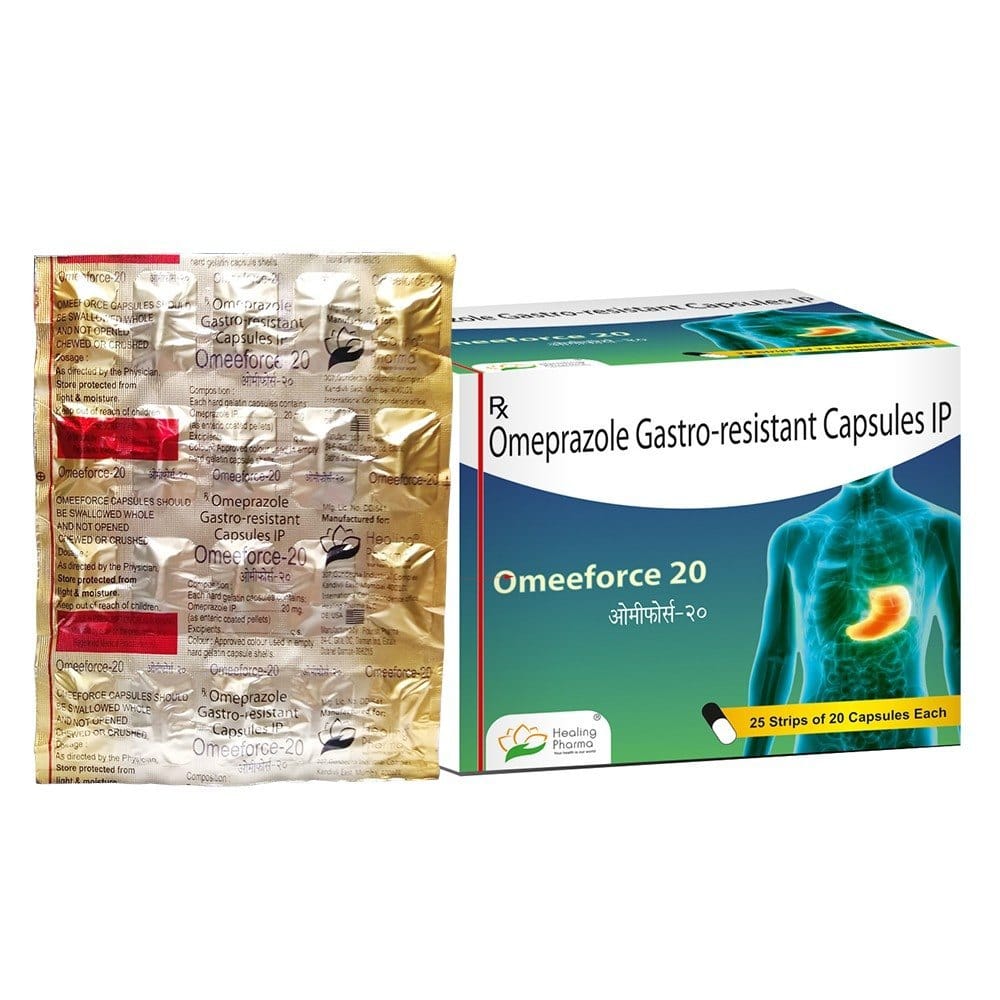
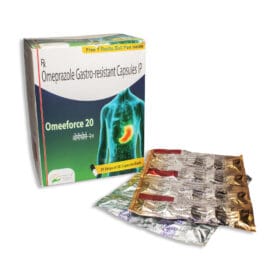
Omeeforce



✅ Ulga w refluksie kwasowym
✅ Gojenie wrzodów żołądka
✅ Zapobieganie zgadze
✅ Dawkowanie raz dziennie
✅ Komfort żołądkowo-jelitowy
Omeeforce 20 zawiera Omeprazol.
✓ Zweryfikowany medycznie przez Morgan Ellis — Badacz farmaceutyczny · 8 lat doświadczenia · Ostatnia weryfikacja: maj 2026
⚡ Szybka odpowiedź — Co to jest Omeeforce?
Omeeforce zawiera omeprazol (20 mg) od producenta certyfikowanego przez WHO-GMP — inhibitor pompy protonowej, który nieodwracalnie wyłącza H+/K+-ATPazową w komórkach okładzinowych żołądka. Standardowa dawka dla dorosłych: raz dziennie, 30–60 minut przed pierwszym posiłkiem dnia. Omeeforce jest stosowany w chorobie refluksowej przełyku (GERD), erozyjnym zapaleniu przełyku, chorobie wrzodowej żołądka i dwunastnicy, Helicobacter pylori schematach eradykacyjnych oraz zapobieganiu wrzodom związanym z NLPZ. Efekty narastają przez 3–5 dni; nie należy spodziewać się natychmiastowej ulgi już pierwszego dnia. Długotrwałe stosowanie (ponad kilka miesięcy) wymaga kontroli — ryzyko obejmuje niedobór witaminy B12 oraz niedobór magnezu, złamania, Clostridioides difficile infekcje i odbiciową hipersekrecję kwasu po nagłym odstawieniu.
📦 Każde zamówienie jest objęte naszą Polityka Gwarancji Ponownej Wysyłki — jeśli Twoja przesyłka nie dotrze w ciągu 20 dni roboczych, wysyłamy ją ponownie.
Dlaczego warto zamawiać z MedsBase
Nasze leki generyczne pochodzą od producentów posiadających certyfikat WHO-GMP i są wysyłane na cały świat w dyskretnym, zwykłym opakowaniu — bez nazwy leku na zewnątrz przesyłki. Płatności kartami są kierowane przez regulowanego procesora (opis wyciągu zawiera nazwę regulowanego procesora płatności — nigdy “MedsBase” ani żadnej nazwy leku). Akceptujemy również kryptowaluty i przelewy bankowe SEPA. Każde zamówienie jest objęte naszą Reshipment Assurance Policy.
Co to jest Omeeforce (Omeprazol)
Omeeforce to generyczna marka omeprazol, inhibitora pompy protonowej (PPI) z grupy benzimidazoli. Każda kapsułka zawiera 20 mg omeprazolu. IPP to najsilniejsza klasa leków zmniejszających wydzielanie kwasu żołądkowego i są one lekami pierwszego wyboru w umiarkowanych do ciężkich chorobach związanych z nadkwaśnością.
Jak działa Omeeforce (Mechanizm działania)
Inhibitory pompy protonowej są prolekami. Po wchłonięciu z jelita cienkiego lek przedostaje się do krwiobiegu i jest koncentrowany w kwaśnych kanalikach wydzielniczych komórek okładzinowych żołądka. Tam kwaśne środowisko protonuje cząsteczkę do jej aktywnej formy sulfenamidowej, która następnie tworzy kowalencyjne wiązanie disiarczkowe z resztami cysteiny na pompie H+/K+-ATPazy — ostatni etap w wydzielaniu kwasu. Ponieważ wiązanie jest nieodwracalne, wydzielanie kwasu nie może zostać wznowione, dopóki komórka okładzinowa nie zsyntetyzuje nowych pomp. Ten efekt farmakodynamiczny utrzymuje się przez 24–72 godziny, mimo że okres półtrwania leku w osoczu wynosi tylko ~1–2 godziny (dłużej dla ilaprazolu). Maksymalne zahamowanie wydzielania kwasu osiąga się po 3–5 dniach regularnego stosowania.
Jak omeprazol różni się od innych inhibitorów pompy protonowej: Omeprazol to pierwszy inhibitor pompy protonowej (wprowadzony w 1989 roku) i cząsteczka, z którą porównuje się wszystkie późniejsze IPP. Jest to mieszanina racemiczna enancjomerów R i S, metabolizowana głównie przez CYP2C19. Pacjenci z polimorfizmem CYP2C19 (szybcy vs. wolni metabolizatorzy) wykazują dużą zmienność poziomów w osoczu — nawet 5-krotną — co było jednym z powodów opracowania esomeprazolu (czystego izomeru S). Omeprazol ma najsilniejszy sygnał interakcji z klopidogrelem w swojej klasie, ponieważ hamuje CYP2C19, enzym przekształcający klopidogrel w jego aktywny metabolit. Jeśli przyjmujesz klopidogrel po stentowaniu lub udarze, Twój lekarz zazwyczaj przestawi Cię na pantoprazol lub rabeprazol.
Wskazania — Co leczy Omeeforce
1. Choroba refluksowa przełyku (GERD)
Najczęstszym wskazaniem jest stosowanie Omeeforce w objawowym GERD, z zapaleniem przełyku lub bez niego, potwierdzonym endoskopowo. Dla większości pacjentów wystarczające jest dawkowanie raz dziennie; niewielka grupa z objawami nocnymi może odnieść korzyść z dawkowania dwa razy dziennie lub przejścia na inhibitor pompy protonowej o dłuższym okresie półtrwania. Terapię lekową należy uzupełnić o modyfikację stylu życia — redukcję masy ciała, uniesienie wezgłowia łóżka, unikanie posiłków na 3 godziny przed snem, ograniczenie alkoholu, kawy i tytoniu oraz unikanie znanych czynników wyzwalających.
2. Erozyjne zapalenie przełyku
Endoskopowo potwierdzone zapalenie lub owrzodzenie dolnej części przełyku. IPP goją ~85–95% przypadków erozyjnego zapalenia przełyku po 8 tygodniach terapii standardową dawką. Ciężka choroba (stopień C/D w skali Los Angeles) może wymagać 8–12 tygodni podwójnej dawki IPP przed przejściem na dawkę podtrzymującą. Zaleca się kontynuację terapii podtrzymującej, ponieważ nawrót jest regułą, a nie wyjątkiem.
3. Choroba wrzodowa — wrzody żołądka i dwunastnicy
Inhibitory pompy protonowej (IPP) leczą wrzody dwunastnicy w ciągu 4 tygodni (~95% wskaźnik gojenia) i wrzody żołądka w ciągu 8 tygodni. Helicobacter pylori infekcja (przyczyna większości wrzodów trawiennych nie związanych z NLPZ) musi być przebadana i wyeliminowana, aby zapobiec nawrotom.
4. Eradykacja Helicobacter pylori
Omeeforce jest częścią standardowego leczenia H. pylori schematów eradykacyjnych. Typowe schematy obejmują:
- Terapię poczwórną z bizmutem (preferowana w regionach z wysoką opornością na klarytromycynę): IPP dwa razy dziennie + cytrynian bizmutu 120 mg cztery razy dziennie + tetracyklina 500 mg cztery razy dziennie + metronidazol 500 mg trzy razy dziennie, przez 14 dni.
- Terapię potrójną z klarytromycyną: IPP dwa razy dziennie + amoksycylina 1 g dwa razy dziennie + klarytromycyna 500 mg dwa razy dziennie, przez 14 dni. (Unikać w regionach, gdzie lokalna oporność na klarytromycynę > 15%).
- Terapia skojarzona: IPP + amoksycylina + klarytromycyna + metronidazol, wszystkie dwa razy dziennie, przez 10–14 dni.
Potwierdź eradykację testem oddechowym z mocznikiem lub testem antygenowym w kale 4 tygodnie po zakończeniu terapii i co najmniej 2 tygodnie po odstawieniu IPP — IPP mogą powodować wyniki fałszywie ujemne.
5. Zapobieganie wrzodom związanym z NLPZ
Dla pacjentów, którzy muszą kontynuować przewlekłą terapię NLPZ i mają podwyższone ryzyko wrzodów (wiek > 65 lat, przebyty wrzód, równoczesne stosowanie kortykosteroidów lub leków przeciwzakrzepowych, wysoka dawka NLPZ), współpodawanie IPP raz dziennie znacząco zmniejsza częstość występowania wrzodów żołądka i dwunastnicy.
6. Zespół Zollingera-Ellisona
Ten rzadki, wydzielający gastrynę guz powoduje ekstremalne nadmierne wydzielanie kwasu. Inhibitory pompy protonowej (IPP) w znacznie wyższych niż zwykle dawkach (często 80–120 mg pantoprazolu/dzień lub ekwiwalent, podzielone) są podstawą leczenia farmakologicznego obok lokalizacji guza i leczenia chirurgicznego/onkologicznego.
7. Dyspepsja czynnościowa i nieerozyjna choroba refluksowa
Próba 4–8 tygodniowego stosowania IPP jest uzasadniona w przypadku objawowej dyspepsji czynnościowej lub nieerozyjnej choroby refluksowej, z ponowną oceną potrzeby kontynuacji po tym okresie. Wielu pacjentów z tej grupy może przejść na terapię doraźną lub H2-antagonistyczną.
Dawkowanie
| Wskazanie | Dawka dla dorosłych | Duration |
|---|---|---|
| Choroba refluksowa przełyku (GERD) — standard | 20 mg raz dziennie, 30–60 minut przed śniadaniem | 4–8 tygodniach |
| Zapalenie przełyku (erozyjne) — gojenie | 20 mg (lub 40 mg w cięższych przypadkach) raz dziennie | 8–12 tygodniach |
| Zapalenie przełyku (erozyjne) — leczenie podtrzymujące | 20 mg raz dziennie | długoterminowo, z coroczną oceną |
| Gojenie owrzodzenia dwunastnicy | 20 mg raz dziennie | 4 tygodnie |
| Gojenie owrzodzenia żołądka | 20 mg raz dziennie | 8 tygodni |
| H. pylori eradykacja | 20 mg dwa razy dziennie (z antybiotykami) | 10–14 dni |
| zapobieganie wrzodom wywołanym przez NLPZ | 20 mg raz dziennie | czas trwania terapii NLPZ |
| Zollinger-Ellison | Zalecane przez specjalistę; często 40 mg dwa razy dziennie lub więcej | długoterminowo |
Przyjmuj Omeeforce 30–60 minut przed pierwszym posiłkiem dnia. Lek musi dotrzeć do komórki okładzinowej, gdy posiłek stymuluje aktywność pompy protonowej — inhibitory pompy protonowej tylko dezaktywują aktywne pompy. Przyjmowanie go po posiłku lub w trakcie posiłku daje mniejszy efekt farmakodynamiczny. Połykaj kapsułki w całości; nie rozgryzaj ani nie żuj (powłka dojelitowa jest kluczowa).
Bezpieczeństwo długoterminowe — co warto wiedzieć przed miesięcznym stosowaniem
- Witamina B12 niedobór po 2–3 latach stosowania — kwas jest potrzebny do uwolnienia B12 z białka pokarmowego. Kontroluj poziom B12 rocznie, jeśli stosujesz IPP > 2 lata.
- Niedobór magnezu — rzadki, ale istotny. Objawy: skurcze mięśni, drżenie, tężyczka, arytmia. Sprawdź poziom Mg, jeśli u pacjenta wystąpią te objawy lub zacznie przyjmować diuretyk.
- Ryzyko złamań biodra, nadgarstka i kręgosłupa — ~25% względny wzrost w badaniach obserwacyjnych (niewielki efekt bezwzględny; istotny u pacjentów z osteoporozą).
- Clostridioides difficile infekcja — IPP zwiększają ryzyko CDI około 2-krotnie; ryzyko w szpitalu + antybiotykoterapia jest znacznie wyższe niż samo stosowanie IPP w społeczności.
- Ostre śródmiąższowe zapalenie nerek i przewlekła choroba nerek — rzadko. Przerwij stosowanie inhibitorów pompy protonowej, jeśli kreatynina wzrośnie nieoczekiwanie.
- Polipy gruczołowe dna żołądka — łagodne, rozwijają się u długoterminowych użytkowników; nie wymagają interwencji, ale są odnotowywane podczas endoskopii.
- Odbójowe nadmierne wydzielanie kwasu — gdy długoterminowe stosowanie IPP zostanie gwałtownie przerwane, wydzielanie kwasu może przejściowo wzrosnąć na okres 2–4 tygodni. Zmniejszaj dawkę stopniowo przez 2–4 tygodnie, zamiast całkowicie przerywać leczenie.
Zasada: stosuj najniższą skuteczną dawkę przez najkrótszy konieczny okres. Roczna kontrola u lekarza przepisującego leki jest wskazana.
Działania niepożądane
Częste (1–10%):
- Ból głowy
- Biegunka lub zaparcia
- Ból brzucha lub wzdęcia
- Nudności
- Łagodna wysypka
- Zawroty głowy
Rzadkie, ale istotne:
- Ostre śródmiąższowe zapalenie nerek (rzadkie; idiosynkratyczne)
- Ciężka hipomagnezemia (długotrwałe stosowanie)
- Witamina B12 Niedobór (długotrwałe stosowanie)
- Skórny i układowy toczeń rumieniowaty (rzadki; odwracalny po odstawieniu)
- Polipy gruczołowe dna żołądka (łagodne; długotrwałe stosowanie)
- Ciężka nadwrażliwość / zespół Stevensa-Johnsona (bardzo rzadki)
- Złamanie kości (u pacjentów z osteoporozą przy długotrwałym stosowaniu wysokich dawek)
Interakcje lekowe
Omeprazol jest częściowo metabolizowany przez CYP2C19. Tabela interakcji poniżej obejmuje główne klasy; przed rozpoczęciem leczenia poinformuj swojego lekarza o wszystkich przyjmowanych lekach, suplementach i preparatach ziołowych.
| Lek / klasa | Interakcja | Co robić |
|---|---|---|
| Klopidogrel | Hamowanie CYP2C19 zmniejsza konwersję klopidogrelu do jego aktywnego metabolitu | Przejdź na pantoprazol lub rabeprazol, jeśli ochrona przeciwpłytkowa jest kluczowa (po wszczepieniu stentu) |
| Metotreksat (wysoka dawka) | Inhibitory pompy protonowej opóźniają klirens metotreksatu; potencjalna toksyczność | Wstrzymaj stosowanie inhibitorów pompy protonowej na 2–3 dni wokół wysokiej dawki metotreksatu |
| Leki na HIV — rilpiwiryna, atazanawir | Wchłanianie zależy od kwasu żołądkowego; inhibitory pompy protonowej znacząco obniżają poziom | Unikaj kombinacji — wybierz H2-antagonista lub inny schemat ART |
| Itrakonazol, ketokonazol | Wchłanianie wymaga kwasu; inhibitory pompy protonowej zmniejszają poziom leku przeciwgrzybiczego | Unikaj; stosuj alternatywy flukonazol lub amfoterycyna tam, gdzie to możliwe |
| Suplementy żelaza | Kwas niezbędny do wchłaniania żelaza dwuwartościowego; zmniejszany przez inhibitory pompy protonowej (IPP) | Stosuj żelazo wzbogacone witaminą C, oddzielnie od inhibitorów pompy protonowej o 2 godziny, lub przejdź na żelazo dożylne przy znacznym niedoborze |
| Węglan wapnia | Zmniejszone wchłanianie zależne od kwasu; cytrynian wapnia nie jest dotknięty | Przejdź na cytrynian wapnia w leczeniu osteoporozy |
| Lewotyroksyna | Zmniejszone wchłanianie z inhibitorami pompy protonowej | Sprawdź ponownie TSH po 6–8 tygodniach od rozpoczęcia; spodziewaj się zwiększenia dawki lewotyroksyny |
| Mykofenolan mofetylu | Inhibitory pompy protonowej zmniejszają AUC mykofenolanu o ~30–40% | Monitoruj stężenie mykofenolanu u biorców przeszczepów; rozważ zmianę na kwas mykofenolowy w postaci dojelitowej |
| Warfaryna | Niewielki wzrost INR przy omeprazolu/ezomeprazolu; minimalny przy pantoprazolu | Ponownie sprawdzić INR po 5–7 dniach od rozpoczęcia/zakończenia przyjmowania inhibitora pompy protonowej |
| Tacrolimus (przeszczep) | Nieznaczny wzrost ekspozycji na takrolimus (słaby inhibitor CYP3A4) | Monitoruj stężenie minimalne w momencie rozpoczęcia terapii inhibitorami pompy protonowej (PPI) |
Jak odstawić Omeeforce
Długotrwałe stosowanie inhibitorów pompy protonowej często powoduje nadmierne wydzielanie kwasu po odstawieniu gdy lek jest nagle odstawiony — przejściowe objawy przez 2–4 tygodnie, które mogą być błędnie interpretowane jako “konieczność stosowania inhibitora pompy protonowej (IPP) do końca życia”. Zalecane podejście to stopniowe zmniejszanie dawki, a nie nagłe odstawienie:
- Jeśli stosujesz dawkę dwa razy dziennie, zmniejsz do jednej dawki dziennie na 2 tygodnie.
- Zmniejsz dawkę o połowę na kolejne 2 tygodnie (np. 20 mg co drugi dzień lub przejdź na tabletkę o niższej dawce).
- Przejdź na doraźnie dawkowanie — przyjmuj IPP tylko w przypadku wystąpienia objawów.
- Przejściowo zastosuj antagonistę receptora H2 (famotydyna 20 mg w razie potrzeby) w przypadku nasilonych objawów podczas zmniejszania dawki.
- Leki zobojętniające kwas (np. Acigene) mogą być stosowane przy okazjonalnych nasilonych objawach podczas odstawiania.
Środki związane ze stylem życia (uniesienie wezgłowia łóżka, unikanie późnych posiłków, redukcja masy ciała, ograniczenie alkoholu/kawy) zmniejszają zależność od leków zmniejszających wydzielanie kwasu.
Przeciwwskazania i środki ostrożności
- Znana nadwrażliwość na omeprazol lub jakikolwiek inhibitor pompy protonowej z grupy benzimidazoli
- Jednoczesne stosowanie z rilpiwiryną (HIV) — bezwzględne przeciwwskazanie
- Ciężka niewydolność wątroby — zmniejszyć dawkę
- Pacjenci przyjmujący klopidogrel po wszczepieniu stentu (rozważyć zmianę na pantoprazol lub rabeprazol, jeśli przyjmują omeprazol/ezomeprazol)
- Długotrwałe objawy alarmowe (utrata masy ciała, dysfagia, krwawienie z przewodu pokarmowego, anemia, wiek > 55 lat z nowymi objawami) — wymagają diagnostyki, a nie empirycznej terapii IPP
Ciąża, karmienie piersią i dzieci
Ciąża: Objawy związane z kwasowością są częste w ciąży. Leki zobojętniające i sukralfat są lekami pierwszego wyboru. Jeśli konieczne jest zastosowanie inhibitora pompy protonowej (IPP), omeprazol ma największą bazę danych dotyczących bezpieczeństwa w ciąży; pantoprazol, lanzoprazol i ezomeprazol również mają rozsądne dane dotyczące bezpieczeństwa. Unikaj stosowania w pierwszym trymestrze, chyba że objawy są ciężkie lub oporne.
Karmienie piersią: Niewielkie ilości przenikają do mleka matki; zgodnie z konsensusem IPP są zgodne z karmieniem piersią.
Dzieci: Kilka IPP (omeprazol, lanzoprazol, ezomeprazol) jest zatwierdzonych do stosowania u dzieci z GERD, z dawką dostosowaną do masy ciała. Dane dotyczące pantoprazolu u dzieci są bardziej ograniczone. Przed rozpoczęciem leczenia skonsultuj się z gastroenterologiem dziecięcym.
Przechowywanie
Przechowuj w temperaturze 15–30 °C w oryginalnym blistrze, chroniąc przed wilgocią i bezpośrednim światłem słonecznym. Przechowuj w miejscu niedostępnym dla dzieci. Nie przekładaj kapsułek do tygodniowych pojemników na leki na dłuższy czas, ponieważ ekspozycja na wilgoć degraduje powłokę dojelitową.
Najczęściej zadawane pytania
Kiedy należy przyjmować Omeeforce — przed czy po jedzeniu?
Przyjmuj Omeeforce 30–60 minut przed pierwszym posiłkiem dnia. przed posiłkiem. Inhibitory pompy protonowej tylko dezaktywują aktywne pompy protonowe. Jedzenie stymuluje aktywność pomp, a lek musi znajdować się we krwi, gdy to nastąpi. Przyjmowanie go po posiłku, w trakcie posiłku lub przed snem znacznie zmniejsza efekt hamowania wydzielania kwasu.
Jak długo działa Omeeforce?
Pewna poprawa objawów jest często zauważalna w ciągu 24–72 godzin, ale pełny efekt farmakodynamiczny leku osiąga się po 3–5 dniach kolejnych dni regularnego przyjmowania, ponieważ nowe pompy protonowe muszą się wymienić, zanim osiągnie się stan stabilnego zahamowania wydzielania. Jeśli po 2 tygodniach prawidłowego przyjmowania standardowej dawki 20 mg nie zauważysz znaczącej poprawy objawów, skonsultuj się z lekarzem — może być konieczna wyższa dawka, inny inhibitor pompy protonowej lub dodatkowe leczenie H2lub diagnostyki w kierunku alternatywnego rozpoznania.
Czy mogę przyjmować Omeeforce długoterminowo?
Wielu pacjentów z przewlekłą chorobą refluksową przełyku (GERD) lub przełykiem Barretta przyjmuje inhibitory pompy protonowej (PPI) długoterminowo, a korzyści zwykle przewyższają ryzyko przy najniższej skutecznej dawce. Długoterminowe obawy — niedobór witaminy B12 oraz niedobór magnezu, złamania, C. difficile infekcje, polipy gruczołowe dna żołądka i bardzo rzadko przewlekła choroba nerek — są powodem, dla którego zasadą jest najniższa skuteczna dawka przez najkrótszy konieczny czas, z coroczną oceną potrzeby kontynuacji. Jeśli przyjmujesz PPI dłużej niż 2 lata, zapytaj o kontrolę poziomu witaminy B12 i magnezu.
Co się stanie, jeśli nagle odstawię Omeeforce?
Nagłe odstawienie długoterminowo przyjmowanego PPI może spowodować nadmierne wydzielanie kwasu po odstawieniu — przejściowe nasilenie zgagi przez 2–4 tygodnie, nawet u osób, które przed rozpoczęciem leczenia nie miały objawów refluksu. Jest to zjawisko farmakologiczne, a nie nawrót pierwotnej choroby. Zmniejszaj dawkę stopniowo przez 2–4 tygodnie; możesz stosować famotydynę 20 mg w razie potrzeby lub lek zobojętniający kwas żołądkowy w przypadku nagłych epizodów.
Czy mogę pić alkohol podczas przyjmowania Omeeforce?
Nie ma bezpośredniego niebezpiecznego interakcji między alkoholem a inhibitorami pompy protonowej, ale alkohol jest głównym czynnikiem wywołującym refluks — rozluźnia dolny zwieracz przełyku i stymuluje wydzielanie kwasu. Jeśli refluks jest powodem, dla którego przyjmujesz Omeeforce, ograniczenie alkoholu znacznie poprawia odpowiedź na leczenie.
Jak Omez wypada na tle innych inhibitorów pompy protonowej?
Omeprazol to oryginalny IPP, względem którego porównuje się wszystkie inne leki z tej grupy. Jest skuteczny i dobrze wyceniony, ale to IPP najbardziej podatny na polimorfizm CYP2C19 (duża zmienność międzyosobnicza w poziomach w osoczu) i ma najsilniejszą interakcję z klopidogrelem. Jeśli odpowiedź na leczenie jest niepełna lub przyjmujesz klopidogrel, rozsądne jest przejście na esomeprazol (bardziej skuteczny, ta sama rodzina), pantoprazol (najczystszy profil interakcji) lub rabeprazol (mniej zależny od CYP2C19).
Czy mogę przyjmować lek zobojętniający sok żołądkowy razem z Omeeforce?
Tak. Leki zobojętniające (takie jak Acigene) działają poprzez neutralizację już wydzielonego kwasu, podczas gdy inhibitory pompy protonowej zmniejszają przyszłe wydzielanie kwasu. Są one uzupełniające — lek zobojętniający jest przydatny do szybkiego łagodzenia objawów w pierwszych dniach terapii PPI lub przy okazjonalnych przełomach podczas leczenia podtrzymującego PPI. Przyjmuj lek zobojętniający co najmniej 1–2 godziny przed lub po PPI oraz innych lekach, których wchłanianie może być zaburzone.
Czy Omeeforce wchodzi w interakcje z moimi lekami na serce?
Najważniejsza interakcja PPI z lekami kardiologicznymi dotyczy klopidogrelu. Hamowanie CYP2C19 zmniejsza konwersję klopidogrelu do jego aktywnego metabolitu. W przypadku krytycznej ochrony przeciwpłytkowej (po wszczepieniu stentu) należy przejść na pantoprazol lub rabeprazol. IPP mają tylko niewielki wpływ na INR przy warfarynie — należy ponownie sprawdzić INR po 5–7 dniach od rozpoczęcia lub zakończenia przyjmowania. IPP nie mają klinicznie istotnych interakcji z statynami, beta-blokerami lub inhibitorami ACE w standardowych dawkach.
Czy Omeeforce jest bezpieczny w ciąży?
W ciąży preferowane są leki zobojętniające i sukralfat jako leczenie pierwszego rzutu. Jeśli konieczne jest zastosowanie PPI, omeprazol ma największą bazę danych dotyczącą bezpieczeństwa, ale pantoprazol, lanzoprazol i esomeprazol są również uważane za stosunkowo bezpieczne w ciąży. Unikaj w pierwszym trymestrze, jeśli objawy można kontrolować za pomocą zmian stylu życia i leków zobojętniających. Skonsultuj się z lekarzem prowadzącym ciążę.
Czy powinienem przyjmować Omeeforce, jeśli mam H. pylori infekcję?
Tak — inhibitory pompy protonowej są istotną częścią każdego H. pylori schematu eradykacyjnego. PPI podnosi pH żołądka, co zwiększa skuteczność antybiotyków (amoksycylina, klarytromycyna, tetracyklina, metronidazol) i zmniejsza metaboliczną aktywność bakterii. Po zakończeniu 10–14 dni terapii skojarzonej zwykle należy kontynuować sam PPI przez kolejne 4–8 tygodni, jeśli występuje współistniejąca choroba wrzodowa. Potwierdź eradykację testem oddechowym z mocznikiem lub testem antygenowym w kale 4 tygodnie po zakończeniu antybiotykoterapii — i co najmniej 2 tygodnie po odstawieniu PPI, który w przeciwnym razie może powodować fałszywie ujemne wyniki.
Powiązane alternatywy
Inne produkty w Zdrowie ogólne które klienci również przeglądają:
Więcej opcji w leczeniu refluksu żołądkowego
Ranking według liczby ostatnich zamówień MedsBase — co wybierają inni klienci w tej kategorii.


| Moc | 20 mg |
|---|---|
| Ilość | 20 kapsułek, 40 kapsułek, 60 kapsułek, 120 kapsułek |
 Omeeforce
Pytania i odpowiedzi
Omeeforce
Produkty powiązane





Opinie
Nie ma jeszcze opinii