







Orzine

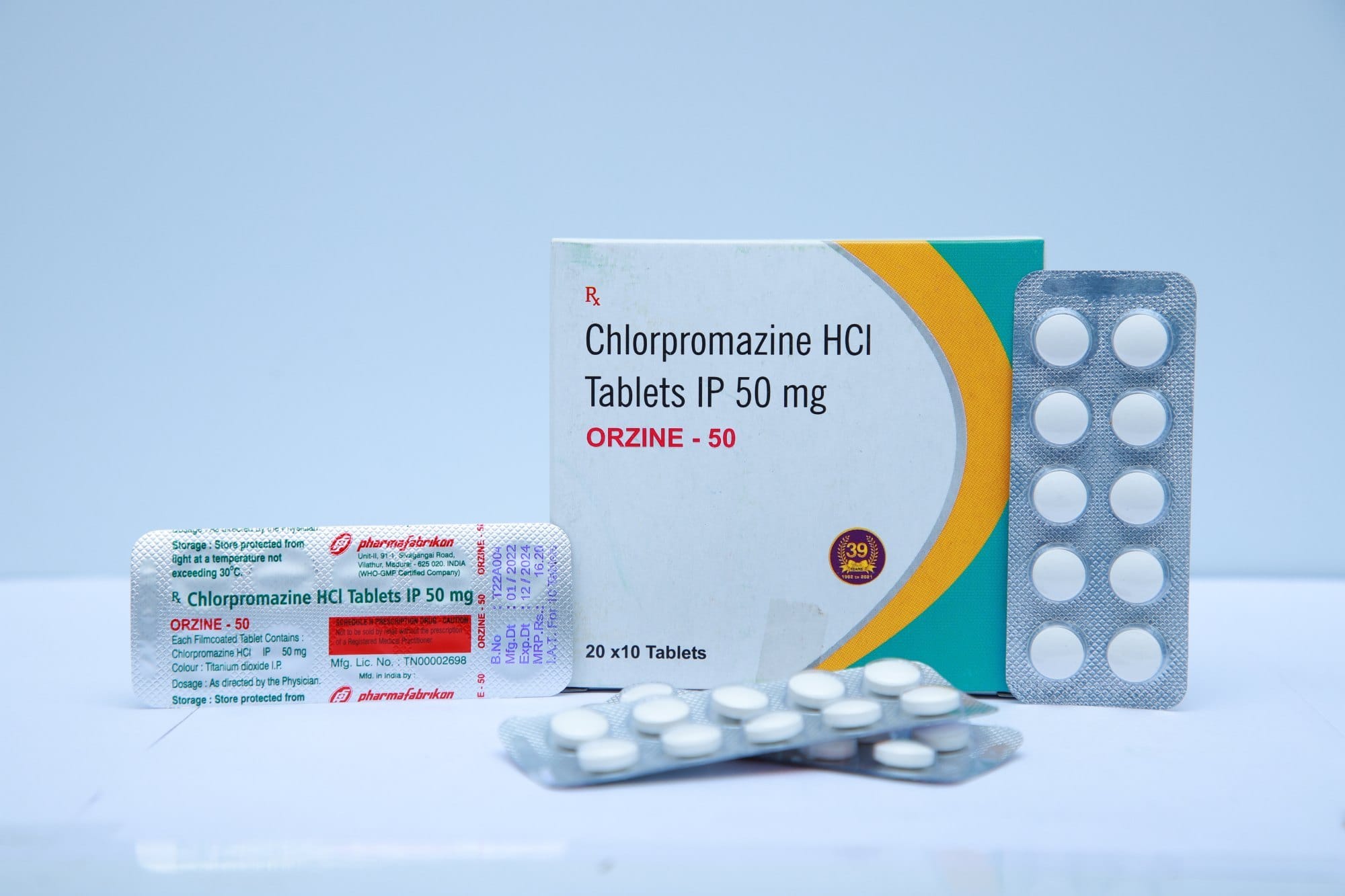

Orzine (Chlorpromazine 10/100 mg) — fenotiazyna pierwszej generacji stosowana w schizofrenii, silnym pobudzeniu, uporczywej czkawce. Pierwszy lek przeciwpsychotyczny (1952) — użyteczny FGA o wąskim zastosowaniu.
✓ Zweryfikowany medycznie przez Morgan Ellis — Badacz farmaceutyczny · 8 lat doświadczenia · Ostatnia weryfikacja: maj 2026
⚡ Szybka odpowiedź
Orzine (Chlorpromazine 10 / 100 mg) to przeciwpsychotyk z grupy fenotiazyn pierwszej generacji. Stosowany w schizofrenii, silnym pobudzeniu, uporczywej czkawce, ciężkich nudnościach/wymiotach oraz sedacji przedanestetycznej. Leki typowe (FGA) są obecnie zazwyczaj stosowane jako drugi wybór po atypowych.
📦 Każde zamówienie jest objęte naszą Polityka Gwarancji Ponownej Wysyłki — jeśli Twoja przesyłka nie dotrze w ciągu 20 dni roboczych, wysyłamy ją ponownie.
Dlaczego warto zamawiać z MedsBase
Orzine w MedsBase jest dostarczany bezpośrednio od producenta certyfikowanego przez WHO-GMP w prostym, dyskretnym opakowaniu. Każde zamówienie objęte jest naszą Polityka Gwarancji Ponownej Wysyłki — 20-dniowym terminem dostawy lub wysyłamy ponownie bez dodatkowych kosztów — i kwalifikuje się do naszego programu lojalnościowego. Dostawa na całym świecie dostępna jest do większości krajów.
Co to jest Orzine i jak działa
Orzine to tabletki z chlorpromazyną dostarczane przez Sun Pharma. Dostępne dawki: 10 / 100 mg.
Chlorpromazyna była pierwszym lekiem przeciwpsychotycznym (1952) i nadal jest przydatna w przypadku silnego pobudzenia, uporczywej czkawki i ostrej psychozy. Pierwsza fenotiazyna — silne działanie sedacyjne, silne działanie antycholinergiczne, silne blokowanie α1 oraz znaczące ryzyko EPS/dyskinezji późnych.
Wskazania i dawkowanie
| Wskazanie | Początkowa | Docelowa | Maksymalna |
|---|---|---|---|
| Schizofrenia (dorośli) | 25–50 mg TID | 200–800 mg/dobę | 1000 mg |
| Silne pobudzenie (IM) | 25–50 mg IM | — | 3 dawki/24h |
| Uporczywa czkawka | 25–50 mg TID–QID PO | — | 50 mg QID |
| Silne nudności/wymioty | 10–25 mg co 4–6 godzin PO | — | — |
| Osoby starsze/otępienie (poza wskazaniami, jako ostateczność) | 10 mg HS | 10–25 mg/dobę | w zależności od tolerancji |
Ważne kwestie bezpieczeństwa
Podobnie jak atypowe, wszystkie leki przeciwpsychotyczne niosą ostrzeżenie dotyczące śmiertelności w psychozie związanej z otępieniem.
Chlorpromazine wydłuża odstęp QT (w mniejszym stopniu niż tioridazyna). Objawy pozapiramidowe (EPS) i późne dyskinezy występują częściej niż w przypadku atypowych leków przeciwpsychotycznych. Skumulowane ryzyko późnych dyskinez wynosi około 5% rocznie w przeliczeniu na czas ekspozycji.
Wszystkie fenotiazyny wykazują znaczące działanie antycholinergiczne, przeciwhistaminowe i blokujące receptory α1. Szczególnie problematyczne u osób starszych – częste są upadki, majaczenie, zatrzymanie moczu i zaparcia. Przeciwwskazane w demencji, łagodnym przeroście gruczołu krokowego (BPH), jaskrze z wąskim kątem przesączania oraz ciężkich chorobach wątroby.
Fenotiazyny powodują fotowrażliwość (ciężkie oparzenia słoneczne), a przy długotrwałym stosowaniu – niebiesko-szare przebarwienia skóry oraz rzadkie przebarwienia soczewki/rogówki (szczególnie chlorpromazyna). Konieczna jest ochrona przed słońcem.
Typowe działania niepożądane
- Sedacja — uniwersalne.
- Niedociśnienie ortostatyczne — silne blokowanie receptorów α1.
- Antycholinergiczne — suchość w ustach, zaparcia, trudności w oddawaniu moczu, niewyraźne widzenie.
- EPS/ późna dyskineza — znaczące.
- Hiperprolaktynemia — silne.
- Przyrost masy ciała — umiarkowane.
- Wydłużenie odstępu QT — występuje w obu przypadkach, nasilone w tioridazynie.
- Fotowrażliwość — uniwersalne.
- Zapalenie wątroby typu cholestatycznego (rzadkie, idiosynkratyczne) — szczególnie chlorpromazyna.
Interakcje lekowe
- Inne leki wydłużające odstęp QT — ryzyko addytywne; unikać kombinacji.
- Silne inhibitory CYP2D6 (paroksetyna, fluoksetyna, bupropion, chinidyna) — znacznie podnoszą poziom; bezwzględne przeciwwskazanie dla tioridazyny.
- Leki przeciwnadciśnieniowe — silne addytywne działanie hipotensyjne.
- Leki antycholinergiczne — obciążenie addytywne.
- Depresanty OUN — addytywne działanie sedatywne.
- Lewodopa — antagonizm; unikać w chorobie Parkinsona.
Ciąża, karmienie piersią, pediatria
Ciąża: ograniczone dane; chlorpromazyna była historycznie stosowana w hiperemezie z zachowaniem ostrożności. Karmienie piersią: przenika do mleka; zwykle unikana. Pediatria: nie jest lekiem pierwszego wyboru; chlorpromazyna jest sporadycznie stosowana w małych dawkach przy ciężkim pobudzeniu u dzieci pod nadzorem specjalisty.
Przechowywanie
Przechowywać w temperaturze 15–30 °C, z dala od światła, w oryginalnym opakowaniu.
Najczęściej zadawane pytania
Dlaczego chlorpromazyna jest obecnie uważana za lek drugiego wyboru?
Chlorpromazyna była pierwszym skutecznym lekiem przeciwpsychotycznym i nadal jest przydatna, ale atypowe leki przeciwpsychotyczne (olanzapina, rysperydon, aripiprazol, lurazydon, kwetiapina) generalnie mają niższe wskaźniki EPS/TD i podobną skuteczność w objawach pozytywnych. Chlorpromazyna zachowuje swoje miejsce w leczeniu ciężkiego ostrego pobudzenia, uporczywej czkawki oraz ciężkich nudności/wymiotów.
Czy chlorpromazyna jest bezpieczna dla osób starszych?
Generalnie nie jest preferowana — obciążenie antycholinergiczne, ryzyko upadków, ortostaza i ryzyko TD wzrastają z wiekiem. Kryteria Beersa wskazują oba jako potencjalnie nieodpowiednie leki dla osób starszych. Jeśli jest stosowana, należy rozpocząć od małej dawki i regularnie oceniać stan pacjenta.
Czy chlorpromazyna może powodować późne dyskinezy?
Skumulowane ryzyko TD dla typowych leków przeciwpsychotycznych wynosi około 5%/rok ekspozycji (dla atypowych około 1%/rok). Po 5 latach stosowania typowych leków przeciwpsychotycznych około 25% pacjentów rozwija pewne objawy TD. Ryzyko jest wyższe u osób starszych i kobiet. TD może być nieodwracalne — przy pierwszych oznakach należy przejść na klozapinę lub atypowy lek o niskim ryzyku EPS.
Dlaczego chlorpromazyna powoduje nadwrażliwość na słońce?
Fenotiazyny odkładają się w skórze i ulegają uszkodzeniom fotochemicznym pod wpływem promieniowania UV — powodując silne oparzenia słoneczne, a przy długotrwałym stosowaniu niebiesko-szare przebarwienia. Konieczne jest stosowanie kremów z filtrem, odzieży ochronnej oraz ograniczenie ekspozycji na UV.
Czy chlorpromazynę można odstawić nagle?
Zmniejszaj dawkę stopniowo przez 2–4 tygodnie. Nagłe odstawienie powoduje odbicie cholinergiczne (nudności, pocenie się, bezsenność) i nawrót objawów psychotycznych. Dyskinezy odstawienne mogą również ujawnić TD, który był tłumiony przez lek.
Czy chlorpromazyna wchodzi w interakcje z innymi lekami?
Kilka istotnych interakcji: (1) inne leki wydłużające odstęp QT (efekt addytywny); (2) silne inhibitory CYP2D6, takie jak paroksetyna i fluoksetyna (znacznie podnoszą poziom leku); (3) leki przeciwnadciśnieniowe (addytywne działanie ortostatyczne). Zawsze przejrzyj pełną listę leków z lekarzem przepisującym.
Dlaczego chlorpromazyna na czkawkę?
Chlorpromazyna to jedyny lek zatwierdzony przez FDA w leczeniu uporczywej czkawki. Mechanizm działania jest niepewny — prawdopodobnie kombinacja centralnego działania antycholinergicznego i blokowania dopaminy w łuku odruchowym czkawki. Typowa dawka to 25–50 mg 3–4 razy dziennie doustnie; zwykle stosowana przez ograniczony czas.
Po jakim czasie działa chlorpromazyna?
Działanie uspokajające i sedacyjne w ciągu kilku godzin. Efekt przeciwpsychotyczny w ciągu 1–2 tygodni dla objawów pozytywnych. Pełne działanie po 4–6 tygodniach.
Czy chlorpromazynę można stosować krótkotrwale w ciężkim pobudzeniu?
Tak — chlorpromazyna w postaci domięśniowej jest czasem stosowana w ciężkich stanach pobudzenia w nagłych przypadkach psychiatrycznych. Nowe atypowe leki przeciwpsychotyczne (olanzapina domięśniowo, ziprasidon domięśniowo, aripiprazol domięśniowo) oraz benzodiazepiny domięśniowe w dużej mierze zastąpiły chlorpromazynę w tym wskazaniu we współczesnej praktyce.
Czy chlorpromazyna wpłynie na moją zdolność prowadzenia pojazdów?
Silna sedacja w pierwszych 1–2 tygodniach. Większość pacjentów na stabilnych dawkach prowadzi normalnie, ale ortostatyczne niedociśnienie i sedacja mogą się utrzymywać.
Inne leki na zdrowie psychiczne
- Aripicon (Aripiprazol — atypowy, niskie ryzyko EPS)
- Risdone (Rysperydon)
- Olanzap (Olanzapina)
- Sulpitac (Amisulpryd)
- Skizoril (Klozapina — choroba oporna na leczenie)
Więcej opcji w zakresie zdrowia psychicznego i leków psychiatrycznych
Ranking według liczby ostatnich zamówień MedsBase — co wybierają inni klienci w tej kategorii.

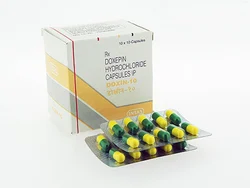


| Moc | 50 mg, 100 mg |
|---|---|
| Ilość | 30 tabletek, 60 tabletek, 90 tabletek, 180 tabletek |
 Orzine
Pytania i odpowiedzi
Orzine
Produkty powiązane















Opinie
Nie ma jeszcze opinii