







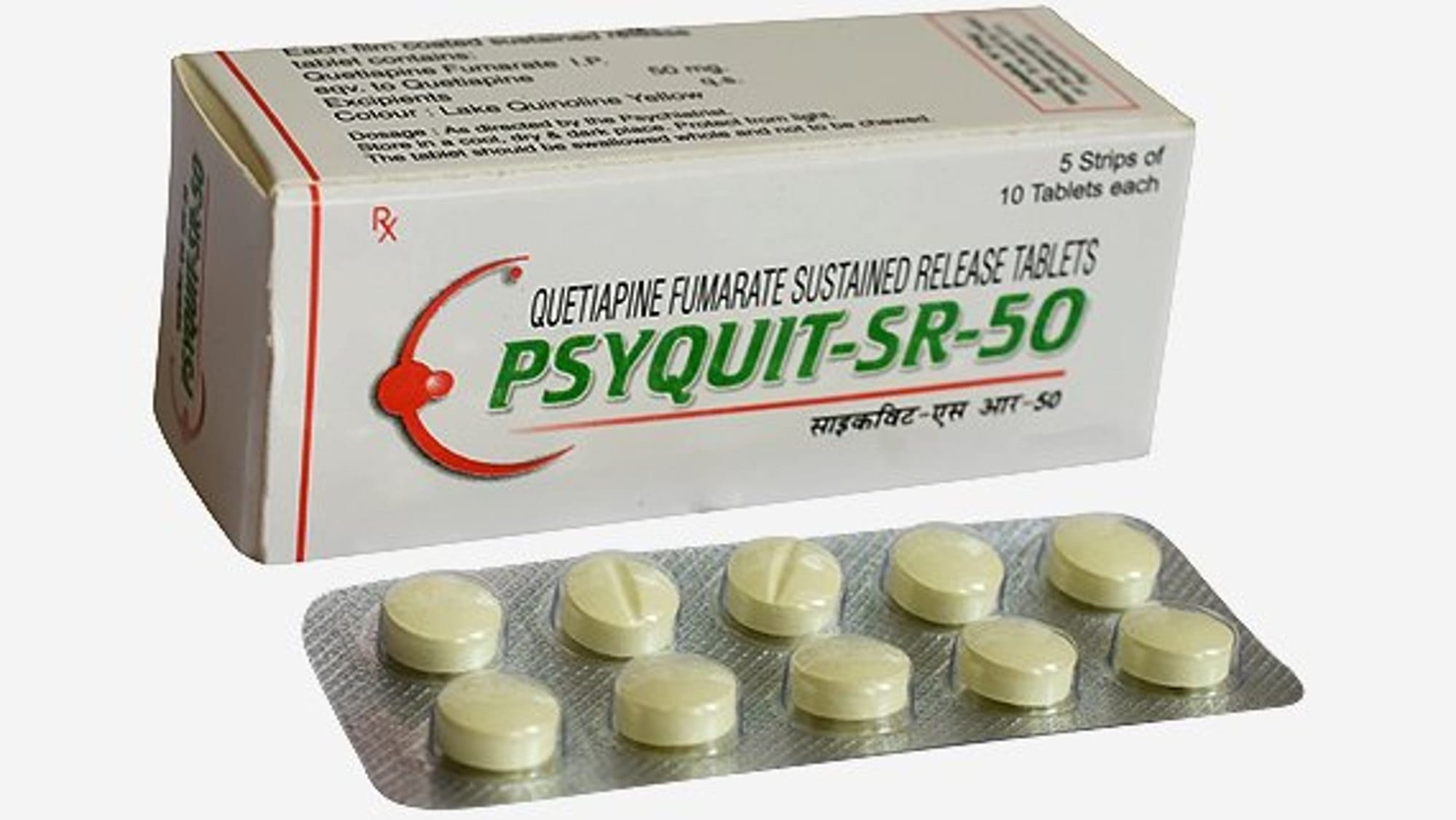
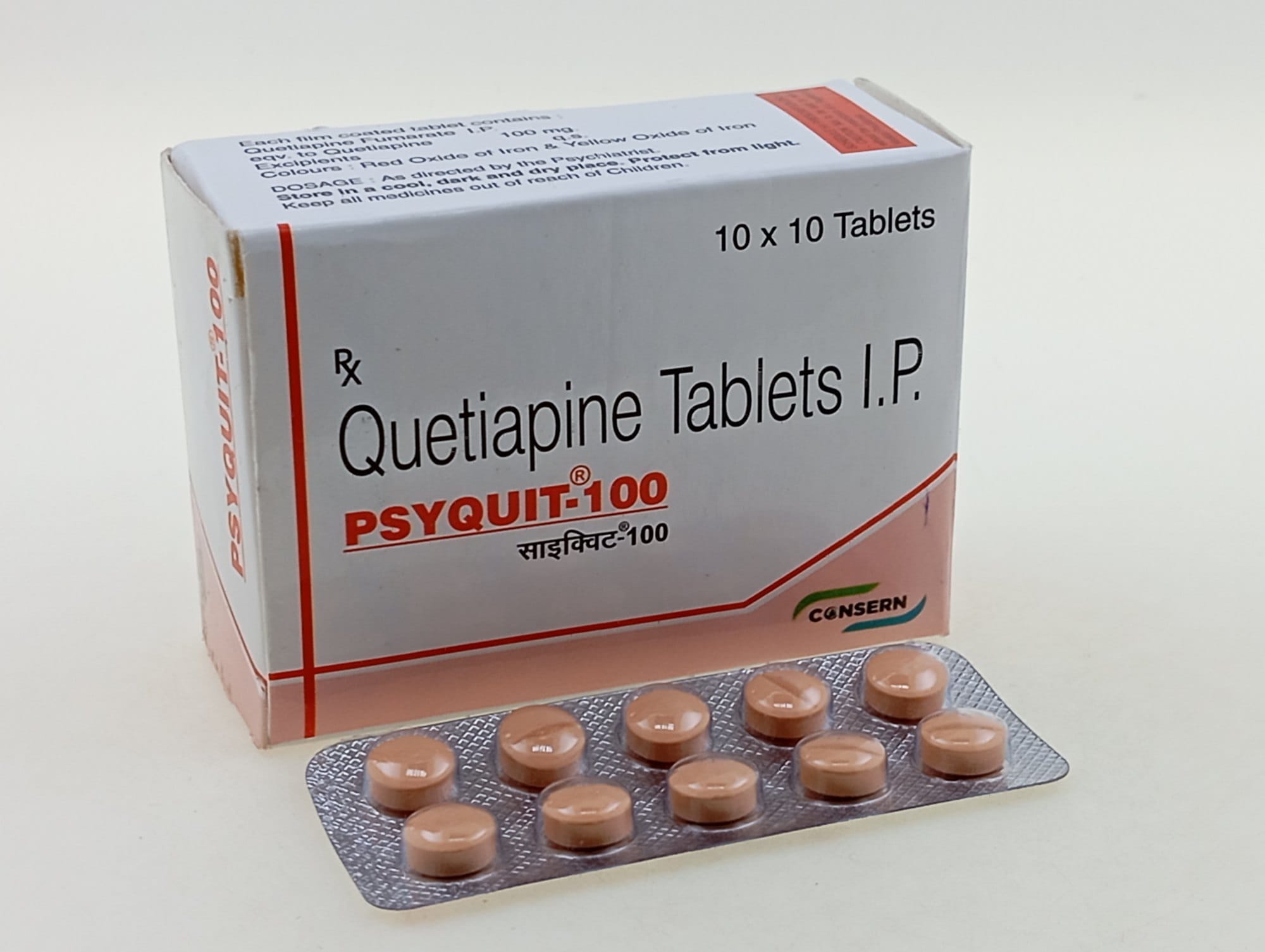
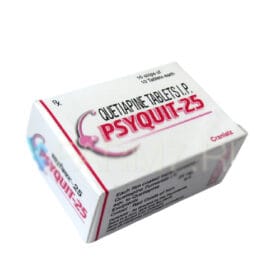
Psyquit

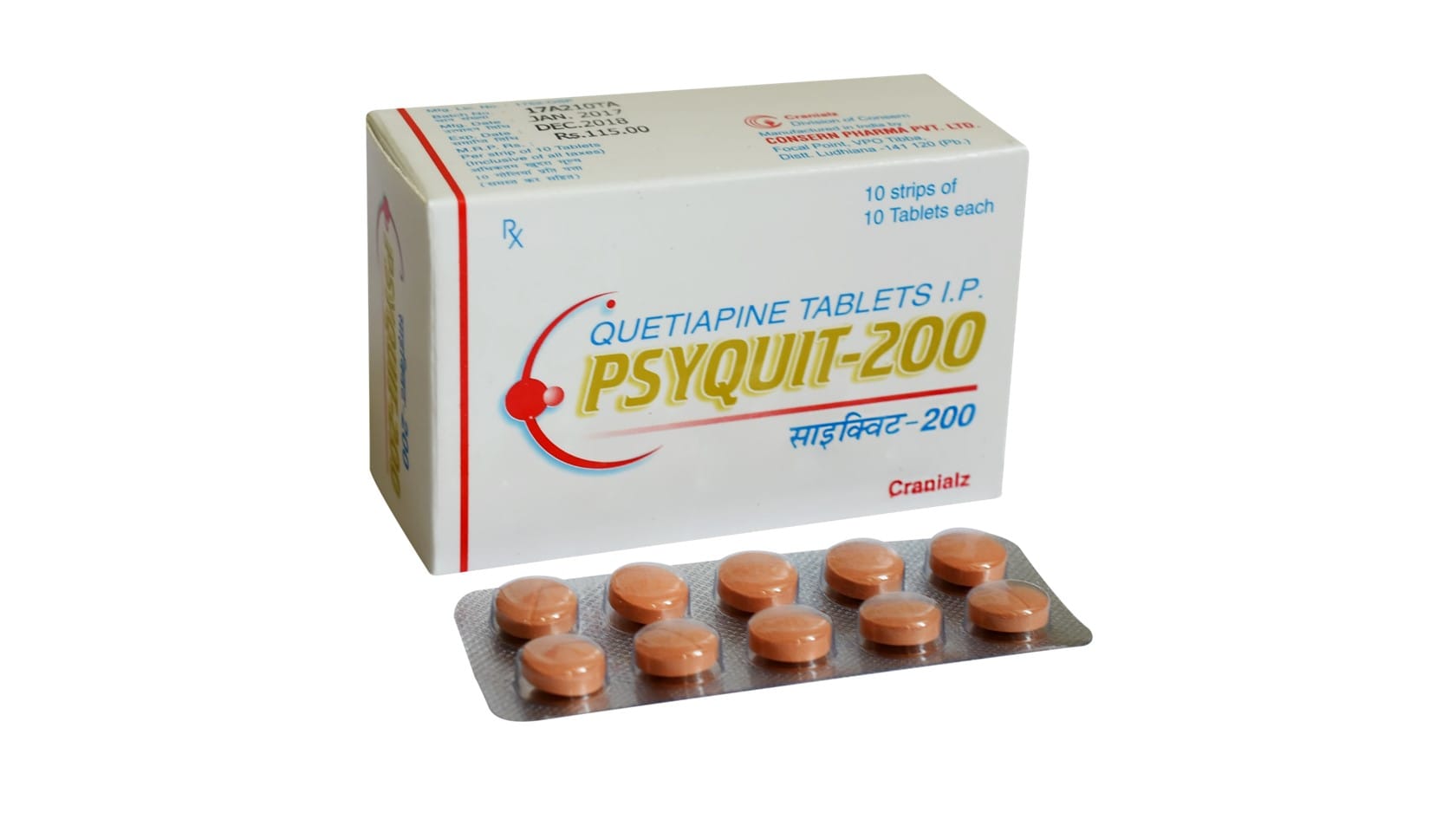
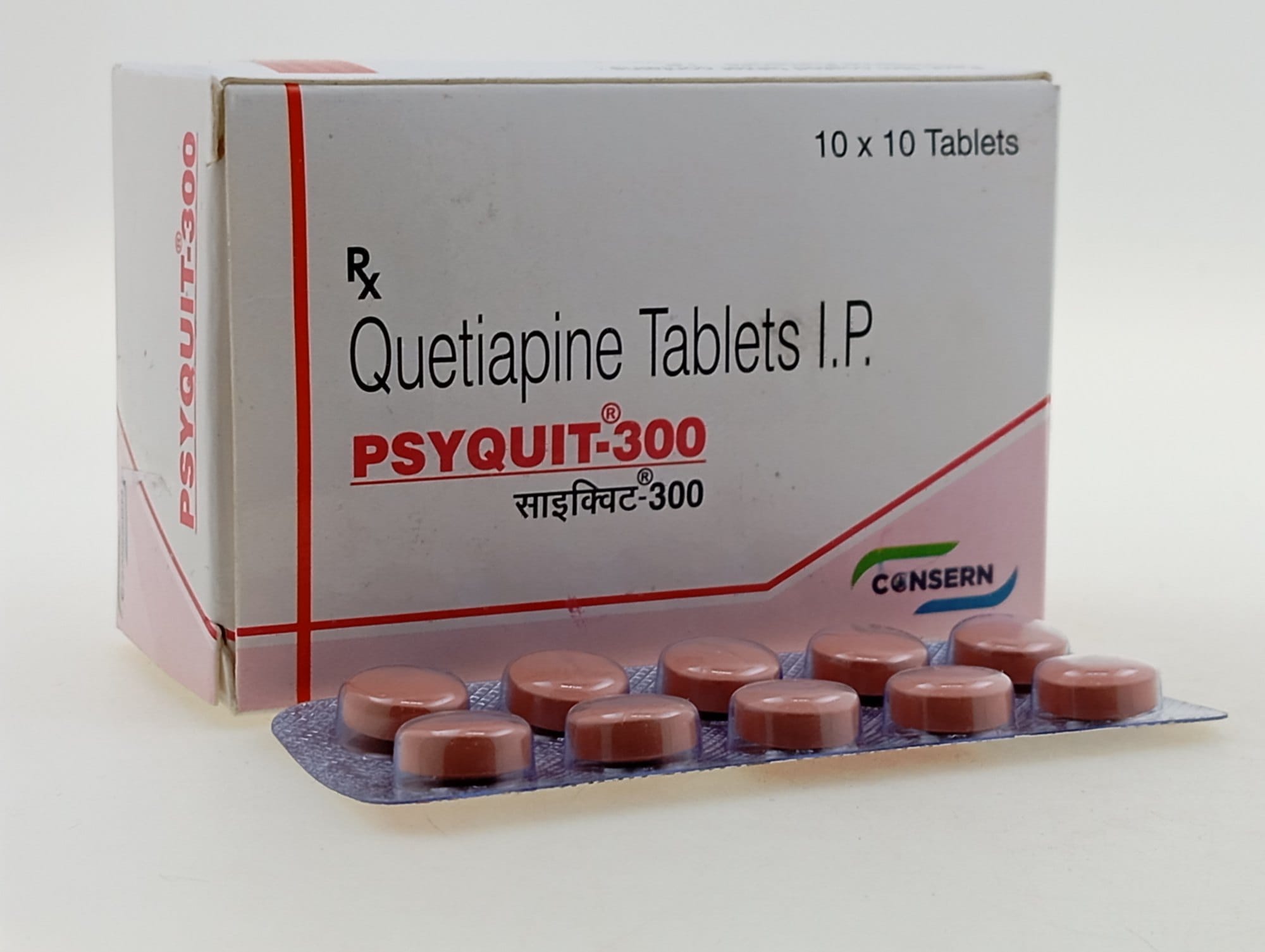


✅ Pomaga w leczeniu schizofrenii
✅ Stosowany w leczeniu zaburzeń afektywnych dwubiegunowych
✅ Kontroluje ciężką depresję
✅ Zmniejsza objawy lękowe
✅ Poprawia jakość snu
Psyquit zawiera kwetiapinę
✓ Zweryfikowany medycznie przez Morgan Ellis — Badacz farmaceutyczny · 8 lat doświadczenia · Ostatnia weryfikacja: maj 2026
⚡ Szybka odpowiedź — Czym jest Psyquit?
Psyquit zawiera kwetiapina 25 / 100 / 200 mg (o natychmiastowym uwalnianiu) od producenta z certyfikatem WHO-GMP (Sun Pharma) — atypowych neuroleptyków o szerokim zastosowaniu w schizofrenii, zaburzeniu dwubiegunowym i lekoopornej depresji. Mechanizm: antagonizm D2 + 5-HT2A oraz wyraźne działanie H1 przeciwhistaminowe (silne działanie sedacyjne) oraz blokada alfa-1 (ortostaza). Dawkowanie znacznie różni się w zależności od wskazania: 25–100 mg HS (stosowanie off-label przy bezsenności, jako dodatek przy lękach — kontrowersyjne), 300–800 mg/dobę (schizofrenia, mania w przebiegu choroby afektywnej dwubiegunowej), 150–300 mg/dobę (depresja dwubiegunowa, leczenie wspomagające w MDD). Główne ostrzeżenia klasowe: zespół metaboliczny (waga, glukoza, lipidy — efekt klasowy), silna sedacja, hipotensja ortostatyczna, wydłużenie QT, EPS (rzadziej niż w przypadku leków pierwszej generacji) oraz ostrzeżenie FDA czarna skrzynka dla śmiertelności w demencji u osób starszych.
📦 Każde zamówienie jest objęte naszą Polityka Gwarancji Ponownej Wysyłki — jeśli Twoja przesyłka nie dotrze w ciągu 20 dni roboczych, wysyłamy ją ponownie.
Dlaczego warto zamawiać z MedsBase
Nasze leki generyczne pochodzą od producentów posiadających certyfikat WHO-GMP i są wysyłane na cały świat w dyskretnym, zwykłym opakowaniu — bez nazwy leku na zewnątrz przesyłki. Płatności kartami są kierowane przez regulowanego procesora (opis wyciągu zawiera nazwę regulowanego procesora płatności — nigdy “MedsBase” ani żadnej nazwy leku). Akceptujemy również kryptowaluty i przelewy bankowe SEPA. Każde zamówienie jest objęte naszą Reshipment Assurance Policy.
Co to jest Psyquit?
Psyquit to doustna tabletka o natychmiastowym uwalnianiu zawierająca fumaran kwetiapiny 25/100/200 mg produkowany przez Sun Pharma. Kwetiapina (marka w USA Seroquel IR / Seroquel XR) to atypowy (drugiej generacji) lek przeciwpsychotyczny wprowadzony przez AstraZeneca w 1997 roku. Jest to D2 i 5-HT2A antagonistą o silnym działaniu H1 przeciwhistaminowym i umiarkowanym działaniu antagonistycznym alfa-1. Blokada H1 odpowiada za wyraźne działanie sedatywne; blokada alfa-1 powoduje ortostatyczne niedociśnienie; antagonizm 5-HT2A zmniejsza ryzyko działań niepożądanych pozapiramidowych w porównaniu z lekami przeciwpsychotycznymi pierwszej generacji.
The IR (natychmiastowe uwalnianie) postać osiąga szczytowe stężenie w osoczu w ciągu 1–2 godzin, zapewniając szybkie działanie uspokajające. Czas podania dawki ma znaczenie — sedacja występująca 1–3 godziny po podaniu może być zarówno korzystna (jako wspomaganie przy bezsenności), jak i ograniczająca (zmęczenie w ciągu dnia).
Approved Indications
- Schizofrenii — ostre i podtrzymujące
- Mania w przebiegu choroby afektywnej dwubiegunowej — ostre (monoterapia lub w połączeniu z litem/walproinianem)
- Depresja dwubiegunowa — jeden z nielicznych leków zatwierdzonych przez FDA w tym wskazaniu; lek pierwszego wyboru w leczeniu epizodu depresyjnego w przebiegu choroby afektywnej dwubiegunowej typu I
- Podtrzymanie leczenia choroby afektywnej dwubiegunowej — z litem lub walproinianem
- Leczenie wspomagające MDD — postać XR, 150–300 mg/dobę z lekiem przeciwdepresyjnym
- Stosowanie poza wskazaniami: bezsenność (mała dawka 25–50 mg), lęk (kontrowersyjne — ryzyko metaboliczne w przypadku lęku niepsychotycznego), pobudzenie w demencji (stosowane ostrożnie ze względu na ostrzeżenie w czarnej ramce)
Dawkowanie w zależności od wskazania
| Wskazanie | Rozpocznij | Docelowa | Maksymalnie | Uwagi |
|---|---|---|---|---|
| Schizofrenia (IR) | 50 mg 2×/dobę | 400–800 mg/dobę | 800 mg/dobę | Tytracja przez 4–7 dni; postać XR umożliwia dawkowanie raz na dobę przed snem |
| Mania w przebiegu choroby afektywnej dwubiegunowej (ostra) | 100 mg/dobę × dzień 1, zwiększać o 100 mg/dobę | 400–800 mg/dobę | 800 mg/dobę | Szybka tytracja w celu kontroli manii |
| Depresja dwubiegunowa | 50 mg przed snem × dzień 1, następnie 100, 200, 300 | 300 mg/dobę przed snem | 300 mg/dzień | Standardowa maksymalna dawka dla tego wskazania |
| Dodatek w MDD (tylko XR) | 50 mg HS | 150–300 mg/dobę | 300 mg/dzień | Dodać do istniejącego leku przeciwdepresyjnego; sedacja często ograniczająca dawkę |
| Stosowanie poza wskazaniami w bezsenności | 25–50 mg przed snem | 25–50 mg przed snem | 100 mg przed snem | Kontrowersyjne — ryzyko metaboliczne przy dawce nasennej sprawia, że jest to słaby wybór pierwszego rzutu; zarezerwować dla pacjentów, u których zawiodły liczne alternatywy |
| Osoby w podeszłym wieku | 25–50 mg/dobę, wolniejsze zwiększanie dawki | — | Rozważyć maksymalnie 200–300 mg/dobę | Większa sedacja i ortostaza — ryzyko upadków |
Działania niepożądane
Profil działań niepożądanych według mechanizmu
| Mechanizm | Efekty | Uwagi / postępowanie |
|---|---|---|
| Metaboliczne (5-HT2C + H1 pobudzenie apetytu) | Przyrost masy ciała (często znaczący), podwyższony poziom glukozy we krwi/cukrzyca nowo rozpoznana, dyslipidemia | Ostrzeżenie klasowe — masa ciała wyjściowa, ciśnienie krwi, glukoza na czczo, lipidy; ponowna ocena po 3 miesiącach i corocznie |
| H1 blokada | Silna sedacja, senność | Przydatne przed snem; często ograniczające w ciągu dnia. Mniejsze maksymalne działanie sedacyjne w przypadku preparatów XR |
| Blokada alfa-1 | Hipotensja ortostatyczna, zawroty głowy | Powolna tytracja; kontrola ciśnienia w pozycji leżącej/stoącej |
| Działanie antycholinergiczne (łagodne) | Suchość w ustach, zaparcia | Mniejsze niż w przypadku olanzapiny |
| D2 blokada | Objawy pozapiramidowe (akatyzja, parkinsonizm, dystonia) | Mniejsze niż w przypadku leków przeciwpsychotycznych pierwszej generacji; akatyzja przy wyższych dawkach |
| Inne | Wydłużenie odstępu QT | Podstawowe EKG; ostrożność przy stosowaniu z innymi lekami wydłużającymi odstęp QT |
| Rzadko | Dyskineza późna | Mniejsze ryzyko niż w przypadku typowych leków przeciwpsychotycznych, ale realne przy długotrwałym stosowaniu |
| Rzadko | Złośliwy zespół neuroleptyczny | Hipertermia, sztywność, niestabilność autonomiczna — stan nagły |
| Rzadko | Hiperprolaktynemia | Mniejsze niż w przypadku rysperydonu |
| Rzadko | Zaćma | Kontrowersje dotyczące monitorowania soczewki; niektórzy klinicyści zlecają badanie w lampie szczelinowej co 6 miesięcy |
Interakcje lekowe
Substrat CYP3A4: stężenie wzrasta przy silnych inhibitorach (ketokonazol, rytonawir, klarytromycyna) — zmniejszyć dawkę. Stężenie spada przy silnych induktorach (ryfampicyna, fenytoina, karbamazepina) — utrata skuteczności.
Dodatkowe działanie sedatywne: alkohol, benzodiazepiny, opioidy, sedatywne leki przeciwdepresyjne.
Wydłużenie odstępu QT: ostrożność z citalopramem (wysoka dawka), metadonem, ondansetronem, fluorochinolonami, ziprasidonem.
Leki przeciwnadciśnieniowe: dodatkowe ryzyko ortostatyczne z alfa-blokerami, inhibitorami ACE, diuretykami.
Obciążenie antycholinergiczne: efekt addytywny z difenhydraminą, oksybutyniną.
Monitorowanie metaboliczne
Wszystkie atypowe leki przeciwpsychotyczne mają ostrzeżenie klasowe dotyczące zespołu metabolicznego — przyrost masy ciała, dyslipidemia i upośledzona tolerancja glukozy. Kwetiapina znajduje się w grupie wyższego ryzyka (razem z olanzapiną i klozapiną). Standardowe monitorowanie: wartości wyjściowe + 3 miesiące + corocznie: masa ciała / BMI, obwód talii, glukoza na czczo lub HbA1c, lipidogram na czczo, ciśnienie krwi. Rozważ zmianę na lek o niższym ryzyku metabolicznym (arypiprazol, lurazydon, ziprasidon), jeśli pogorszy się masa ciała / glukoza.
Najczęściej zadawane pytania
Jak długo działa Psyquit?
Objawy ostrej psychozy lub manii często ustępują w ciągu kilku dni; pełna korzyść po 4–6 tygodniach. W przypadku depresji w przebiegu choroby afektywnej dwubiegunowej odpowiedź zwykle pojawia się po 1–3 tygodniach przy docelowej dawce 300 mg.
Dlaczego Psyquit jest stosowany w zaburzeniach snu?
Kwetiapina 25–50 mg HS powoduje silną sedację poprzez H1 Blokada. Stosowanie poza wskazaniami w celu poprawy snu stało się powszechne, ale jest kontrowersyjne — efekty metaboliczne kumulują się nawet przy niskich dawkach, a istnieją bezpieczniejsze leki nasenne.
Czy Psyquit spowoduje przybranie na wadze?
Prawdopodobnie tak — kwetiapina należy do atypowych leków przeciwpsychotycznych szczególnie sprzyjających przyrostowi masy ciała. Średni przyrost wagi w dawkach terapeutycznych wynosi 4–7 kg w ciągu 12 miesięcy; niektórzy pacjenci przybierają znacznie więcej. Pomocne są interwencje dotyczące stylu życia; w przypadku problemów z wagą może być konieczne przejście na arypiprazol lub lurazydon.
Czy Psyquit jest bezpieczny dla starszych pacjentów z demencją?
Ostrzeżenie FDA w czarnej ramce dotyczące zwiększonej śmiertelności u osób starszych z psychozą lub zaburzeniami zachowania związanymi z demencją. Stosować wyłącznie w przypadku, gdy strategie behawioralne i niefarmakologiczne zawiodły, a objawy są ciężkie; najniższa dawka, najkrótszy czas trwania, za zgodą rodziny poinformowanej o ryzyku.
Czy mogę pić alkohol podczas stosowania Psyquit?
Unikać — dodatkowa sedacja i ortostaza. Nawet umiarkowane spożycie alkoholu znacząco zwiększa ryzyko sedacji i upadków.
Jaka jest różnica między quetiapiną IR a XR?
Postać IR osiąga maksymalne stężenie po 1–2 godzinach; postać XR osiąga szczytowe stężenie po ~6 godzinach i umożliwia dawkowanie raz na dobę. Postać IR powoduje większą sedację zaraz po podaniu dawki; postać XR ma bardziej równomierny profil. Dzienna ekspozycja (AUC) jest podobna przy równoważnych dawkach.
Czy Psyquit może powodować objawy pozapiramidowe?
Kwetiapina wykazuje najniższe ryzyko wystąpienia objawów pozapiramidowych (EPS) wśród atypowych leków przeciwpsychotycznych, podobnie jak klozapina. Akatyzja przy wyższych dawkach jest najczęstszym działaniem niepożądanym ze strony układu ruchowego; ryzyko późnych dyskinez istnieje przy długotrwałym stosowaniu, ale jest znacznie niższe niż w przypadku leków przeciwpsychotycznych pierwszej generacji.
Ograniczone dane — kwetiapina jest jednym z lepiej przebadanych atypowych leków przeciwpsychotycznych w ciąży. Kontynuacja jest uzasadniona, gdy jest potrzebna w przypadku poważnych chorób psychicznych; ekspozycja w pierwszym trymestrze nie wydaje się zwiększać częstości poważnych wad wrodzonych powyżej poziomu podstawowego.
Ograniczone dane — kwetiapina jest jednym z leków atypowych lepiej przebadanych w ciąży. Kontynuacja jest uzasadniona w przypadku poważnych chorób psychicznych; ekspozycja w pierwszym trymestrze nie wydaje się zwiększać ryzyka poważnych wad wrodzonych powyżej poziomu wyjściowego.
Can I stop Psyquit abruptly?
Lepiej stopniowo zmniejszać dawkę, zwłaszcza po długotrwałym stosowaniu — nagłe odstawienie może powodować dyskinezję odstawienną, bezsenność, nudności, pocenie się oraz nawrót psychozy lub manii. Zmniejszaj dawkę o 25–50 mg co 1–2 tygodnie.
Jak należy przechowywać lek Psyquit?
Przechowywać w temperaturze 15–30 °C w oryginalnym opakowaniu blisterowym, z dala od wilgoci i światła słonecznego. Przechowywać w miejscu niedostępnym dla dzieci.
Powiązane alternatywy
Inne produkty w Choroby przewlekłe które klienci również przeglądają:
Więcej opcji w leczeniu lęku sytuacyjnego
Ranking według liczby ostatnich zamówień MedsBase — co wybierają inni klienci w tej kategorii.

| Moc | 25 mg, 50 mg, 100 mg, 200 mg, 300 mg |
|---|---|
| Ilość | 30 tabletek, 60 tabletek, 90 tabletek, 180 tabletek |
 Psyquit
Pytania i odpowiedzi
Psyquit
Produkty powiązane




Opinie
Nie ma jeszcze opinii