







Solu-Medrol
✅ Szybka ulga w stanach zapalnych
✅ Zmniejszenie objawów alergii
✅ Leczenie chorób autoimmunologicznych
✅ Łagodzenie ataków astmy
✅ Leczenie chorób reumatycznych
Solu-Medrol zawiera metyloprednizolon.
✓ Zweryfikowany medycznie przez Morgan Ellis — Badacz farmaceutyczny · 8 lat doświadczenia · Ostatnia weryfikacja: maj 2026
⚡ Szybka odpowiedź — co to jest Solu-Medrol?
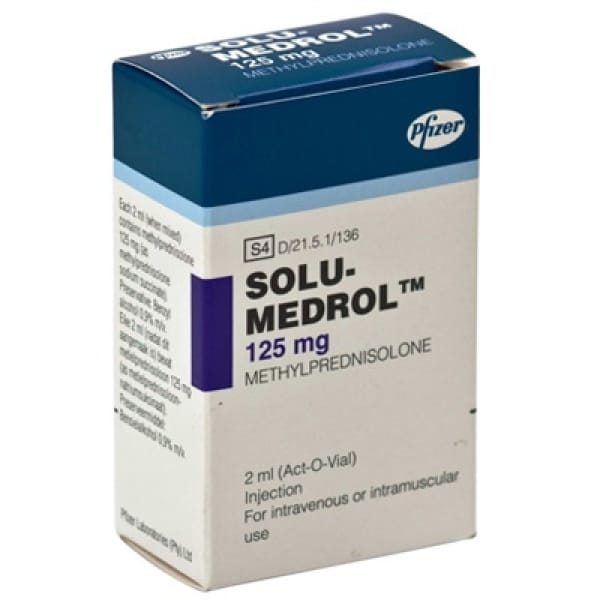
Solu-Medrol to sterylny proszek do rozpuszczania od firmy Pfizer zawierający metyloprednizolonu sodowego bursztynian 125 mg / 2 mL Act-O-Vial — silnie rozpuszczalny w wodzie ester proleku metyloprednizolonu przeznaczony do szybkiego bolus dożylny (IV) lub wlew gdy konieczna jest natychmiastowa, duża dawka glikokortykosteroidu. Początek działania następuje w ciągu minut do 1 godziny. Stosowany w celu terapia pulsowa wysokimi dawkami w rzucie SM (1 g IV dziennie przez 3–5 dni), ciężkiej astmie ostrej, wstrząsie anafilaktycznym po adrenalinie, ciężkim zaostrzeniu tocznia lub zapalenia naczyń, odrzuceniu przeszczepu (indukcja i ratunkowe), zagrażającej wzrokowi neuropatii nerwu wzrokowego oraz ciężkiej zapalnej chorobie ocznej. Niższe dawki (40–125 mg IV) stosuje się jako drugą linię w anafilaksji, ciężkich reakcjach alergicznych i ostrych urazach rdzenia kręgowego (kontrowersyjne). Terapia pulsowa wiąże się z realnym ryzykiem ciężkich zaburzeń rytmu serca i nagłej śmierci sercowej — monitorowanie kardiologiczne jest standardem podczas podawania dawek gramowych. Inne ostre ryzyka obejmują ciężkie reakcje psychiatryczne, hiperglikemię (szczególnie w cukrzycy) oraz anafilaksję na sam lek. Jest to lek do stosowania w szpitalu i nadzorowanych klinikach, nie do samodzielnego podawania przez pacjenta.
📦 Każde zamówienie jest objęte naszą Polityka Gwarancji Ponownej Wysyłki — jeśli Twoja przesyłka nie dotrze w ciągu 20 dni roboczych, wysyłamy ją ponownie.
Dlaczego warto zamawiać z MedsBase
Nasze leki generyczne pochodzą od producentów posiadających certyfikat WHO-GMP i są wysyłane na cały świat w dyskretnym, zwykłym opakowaniu — bez nazwy leku na zewnątrz przesyłki. Płatności kartami są kierowane przez regulowanego procesora (opis wyciągu zawiera nazwę regulowanego procesora płatności — nigdy “MedsBase” ani żadnej nazwy leku). Akceptujemy również kryptowaluty i przelewy bankowe SEPA. Każde zamówienie jest objęte naszą Reshipment Assurance Policy.
Co to jest Solu-Medrol?
Solu-Medrol to sterylny proszek do rekonstytucji i podawania w bolusie dożylnym lub wlewie produkowany przez Pfizer zawierający metyloprednizolonu sodowego bursztynian — syntetyczny kortykosteroid z klasy glikokortykosteroidów. Glikokortykosteroidy to najsilniejsze dostępne leki o szerokim spektrum działania przeciwzapalnego i immunosupresyjnego, wykazujące efekty w niemal każdej tkance i układzie narządów.
Solu-Medrol to oryginalny metyloprednizolonu sodowy bursztynian firmy Pfizer — standardowy steroid dożylny stosowany w szpitalach i na oddziałach ratunkowych. Dawka 125 mg / 2 mL w postaci Act-O-Vial jest najczęściej stosowaną na świecie i wykorzystywaną w ciężkiej astmie ostrej, anafilaksji (po epinefrynie), ciężkich zaostrzeniach POChP, rzutach stwardnienia rozsianego (w połączeniu z dodatkowymi fiolkami w dawkach gramowych), odrzuceniu przeszczepu i ciężkich zaostrzeniach chorób autoimmunologicznych. Przeznaczony do stosowania w warunkach szpitalnych lub pod nadzorem klinicznym, nie do samodzielnego podawania przez pacjenta.
4 mg metyloprednizolonu odpowiada w przybliżeniu 5 mg prednizolonu (współczynnik mocy ~5). Fizjologiczne dzienne wydzielanie kortyzolu u zdrowej osoby dorosłej wynosi około 5–7,5 mg w przeliczeniu na prednizolon — każda dawka powyżej tej wartości jest “suprafizjologiczna” i zaczyna hamować oś podwzgórze-przysadka-nadnercza (oś HPA).
Dlaczego metyloprednizolonu sodowy bursztynian dożylnie? Sam metyloprednizolon jest słabo rozpuszczalny w wodzie — niemożliwy do podania dożylnego w dawkach gramowych wymaganych w terapii pulsowej. Bursztynian sodowy jest bardzo dobrze rozpuszczalny w wodzie, szybko rozpuszcza się w dostarczonym rozcieńczalniku i jest hydrolizowany we krwi do aktywnego metyloprednizolonu w ciągu kilku minut. Konstrukcja Act-O-Vial z podwójną komorą utrzymuje proszek i rozcieńczalnik oddzielnie do momentu rekonstytucji, wydłużając okres przydatności do użycia i skracając czas przygotowania przez farmaceutę w sytuacjach nagłych, gdzie liczy się każda minuta.
Jak działa Solu-Medrol?
Metyloprednizolon wnika do komórek, wiąże się z receptorem glikokortykosteroidowym wewnątrzkomórkowym, a kompleks receptor-lek przemieszcza się do jądra komórkowego, gdzie modyfikuje transkrypcję setek genów. Efektem końcowym jest szerokie tłumienie kaskady zapalnej:
- Hamuje cytokiny prozapalne (IL-1, IL-6, TNF-α, IFN-γ) i chemokiny.
- Stabilizuje błony lizosomalne, zmniejszając uwalnianie enzymów proteolitycznych do tkanek.
- Hamuje fosfolipazę A2 poprzez lipokortynę, odcinając szlaki prostaglandynowe i leukotrienowe na wcześniejszym etapie.
- Zmniejsza przepuszczalność naczyń włosowatych i obrzęk tkanek.
- Hamuje funkcję limfocytów B i T oraz zmniejsza liczbę krążących limfocytów (względna limfopenia).
- Zmniejsza aktywność eozynofilów i bazofilów, co częściowo wyjaśnia szybki efekt w astmie, alergii i stanach eozynofilowych.
Początek działania klinicznego (dożylnie): genomiczne efekty przeciwzapalne w ciągu 1–4 godzin. Przy dawkach gramowych, dodatkowe szybkie niegenomiczne efekty stabilizujące błony pojawiają się w ciągu minut, przyczyniając się do natychmiastowej poprawy objawów obserwowanej w rzucie stwardnienia rozsianego, ciężkiej astmie i ostrych urazach rdzenia kręgowego.
— wzmacnia normalną odpowiedź fizjologiczną, a nie wywołuje ją sztucznie.
Solu-Medrol stosuje się wszędzie tam, gdzie potrzebna jest natychmiastowa, bardzo duża dawka glikokortykosteroidu, a pacjent nie może czekać na wchłanianie doustne.
Terapia pulsowa wysokimi dawkami (dawki gramowe)
- Rzut stwardnienia rozsianego — 500–1000 mg dożylnie dziennie przez 3–5 dni, z doustnym zmniejszaniem dawki lub bez
- Ostre zapalenie nerwu wzrokowego — 1 g dożylnie dziennie przez 3 dni
- Ostre odrzucenie przeszczepu nerki — 250–1000 mg dożylnie dziennie przez 3 dni
- Ciężkie zaostrzenie tocznia rumieniowatego układowego lub zapalenia naczyń — 500–1000 mg dożylnie dziennie przez 3 dni, następnie steroid doustny + lek oszczędzający steroidy
- Zagrażająca wzroku orbitopatia Gravesa-Basedowa — 500 mg dożylnie raz w tygodniu przez 6 tygodni, następnie 250 mg tygodniowo
- Ciężkie zaostrzenie śródmiąższowej choroby płuc
Dawka dożylna niższa (40–500 mg)
- Ciężka ostra astma brak odpowiedzi na nebulizowane leki rozszerzające oskrzela — 40–125 mg dożylnie co 6 godzin
- Anafilaksja — leczenie drugiego rzutu po adrenalinie i lekach przeciwhistaminowych, 125 mg dożylnie
- Ciężkie reakcje nadwrażliwości na leki lub środki kontrastowe
- Zaostrzenie POChP w warunkach szpitalnych — 40 mg dożylnie co 6–12 godzin, gdy droga doustna jest niewskazana
- Ostre uszkodzenie rdzenia kręgowego — protokół wysokich dawek (NASCIS), obecnie kontrowersyjny; wiele ośrodków urazowych nie stosuje go ze względu na sygnał szkodliwości
Solu-Medrol jest otrzymuje, przechowuje, nie ma dostępu ani wglądu w dane osobowe przekazywane przez Ciebie dostawcy płatności. Proces weryfikacji odbywa się w całości na platformie dostawcy i podlega jego własnej polityce prywatności oraz standardom bezpieczeństwa. wskazany w: leczeniu podtrzymującym (przejście na doustne, gdy pacjent może połykać), nierozpoznanym wstrząsie lub sepsie bez konsultacji specjalistycznej, lub rutynowym stosowaniu ambulatoryjnym.
Dawkowanie i sposób stosowania Solu-Medrol
Solu-Medrol jest dostępny w postaci 125 mg / 2 mL Act-O-Vial. System Act-O-Vial z podwójną komorą zawiera liofilizowany proszek metyloprednizolonu sodowego bursztynianu w górnej komorze i rozcieńczalnik wody bakteriostatycznej w dolnej komorze, oddzielone zatyczką. Aktywuj przez naciśnięcie plastikowego tłoka, aby zepchnąć zatyczkę i uwolnić rozcieńczalnik do proszku.
Typiczne dawki dożylne dla dorosłych
| Wskazanie | Dawka metyloprednizolonu | Uwagi |
|---|---|---|
| Nawrót SM | 500–1000 mg dożylnie codziennie przez 3–5 dni | Nie wymaga stopniowego zmniejszania dawki przy krótkotrwałym stosowaniu pulsacyjnym |
| Ostre zapalenie nerwu wzrokowego | 1 g dożylnie codziennie przez 3 dni | Następnie prednizolon doustnie 1 mg/kg przez 11 dni, a następnie stopniowe zmniejszanie dawki (protokół ONTT) |
| Ciężki rzut tocznia rumieniowatego układowego / zapalenia naczyń | 500–1000 mg dożylnie codziennie przez 3 dni | Następnie steroid doustny + lek oszczędzający steroidy |
| Ostre odrzucenie przeszczepu nerki | 250–1000 mg dożylnie codziennie przez 3 dni | Następnie stopniowe zmniejszanie dawki doustnej do dawki podtrzymującej |
| Ciężka ostra astma | 40–125 mg dożylnie co 6 godzin | Przejście na podanie doustne, gdy tylko pacjent będzie wystarczająco stabilny, aby przełknąć |
| Wstrząs anafilaktyczny (leczenie wspomagające po adrenalinie) | 125 mg w bolusie dożylnym | Zmniejsza ryzyko reakcji dwufazowej; nie jest lekiem pierwszego wyboru |
| Ciężkie zaostrzenie POChP w warunkach szpitalnych | 40 mg dożylnie co 6–12 godzin | Prednizolon doustny jest preferowany, gdy pacjent może połykać |
Jak podaje się Solu-Medrol
- Przygotowanie Act-O-Vial: przytrzymaj fiolkę pionowo, naciśnij plastikowy tłok, aby uwolnić rozcieńczalnik do komory z proszkiem, następnie delikatnie mieszaj (nie wstrząsaj gwałtownie), aż proszek całkowicie się rozpuści — zwykle w ciągu 30 sekund. Roztwór jest klarowny i bezbarwny.
- Użyj w oznaczonym terminie po przygotowaniu — sprawdź ulotkę produktu; zazwyczaj do 48 godzin w lodówce.
- Dla dawek do 250 mg: powolny bolus dożylny przez co najmniej 5 minut. Szybszy bolus wiąże się z ciężkimi zaburzeniami rytmu serca i zatrzymaniem krążenia.
- Dla dawek od 250 mg do 1 g: powolny bolus dożylny przez 30 minut lub dłużej, LUB wlew w 100–250 mL soli fizjologicznej lub 5% glukozy przez 30 minut.
- Dla terapii pulsowej (1 g): wlew w 100–250 mL soli fizjologicznej przez 30–60 minut. Monitorowanie kardiologiczne jest standardem — bradyarytmia, migotanie przedsionków, przełom nadciśnieniowy i (rzadko) nagła śmierć sercowa zostały zgłoszone.
- Kontynuuj terapię steroidami doustnymi: przy przejściu z podawania dożylnego na doustne, nie przerywaj podawania dożylnego aż dawka doustna zostanie wchłonięta (nakładanie co najmniej jednej dawki).
- Monitoruj glikemię kapilarną co 4 godziny podczas wlewów gramowych u pacjentów z cukrzycą — spodziewaj się znacznej hiperglikemii wymagającej insuliny.
- Monitoruj nastrój i orientację codziennie — psychoza steroidowa w pulsacyjnym podawaniu lub ciężka bezsenność są częste, szczególnie przy infuzji wieczornej. Jeśli to możliwe, planuj infuzje na godziny poranne.
- Dokumentacja: wskazanie, dawka, czas trwania infuzji, parametry życiowe (RR, HR, glikemia), czas rekonstytucji, numer partii fiolki.
Po terapii pulsacyjnej — redukcja dawki, osłona i monitorowanie
3–5-dniowa pulsacyjna dawka 500–1000 mg metyloprednizolonu dożylnego zazwyczaj nie wymaga redukcji — supresja osi podwzgórze-przysadka-nadnercza po tak krótkim czasie ustępuje w ciągu 1–2 tygodni. Jednak większość protokołów pulsacyjnych jest kontynuowana doustnym kursem steroidów (np. prednizolon 1 mg/kg/dobę w zapaleniu nerwu wzrokowego, tygodnie osłony doustnej w odrzuceniu przeszczepu lub zapaleniu naczyń). To właśnie przebieg doustny decyduje o ostatecznej redukcji dawki.
- Jeśli następuje terapia doustna: redukcja dawki zależy od czasu trwania i dawki osłony doustnej, a nie od pulsacyjnej dawki dożylnej.
- Jeśli nie ma terapii doustnej: monitoruj zmęczenie, nudności, hipotonię ortostatyczną przez 1–2 tygodnie po ostatniej dawce pulsacyjnej. W przypadku wystąpienia objawów może być konieczna krótkotrwała poranna osłona hydrokortyzonem.
- Osłona chirurgiczna/chorobowa: każdy pacjent, który otrzymał pulsacyjną dawkę steroidu dożylnego w ciągu ostatnich 6 tygodni, wymaga osłony hydrokortyzonem w dawce stresowej przy poważnych zabiegach chirurgicznych, ciężkiej chorobie lub sepsie — supresja osi podwzgórze-przysadka-nadnercza może utrzymywać się dłużej niż oczekiwano.
- Monitorowanie kardiologiczne, glikemii, ciśnienia krwi i nastroju przez 24–72 godziny po każdej infuzji gramowej dawki. Wiele poważnych działań niepożądanych występuje podczas lub krótko po infuzji.
Działania niepożądane Solu-Medrol
Ostre działania niepożądane pulsacyjnej dawki metyloprednizolonu dożylnego to bardziej dramatyczne i o szybszym początku działania niż w przypadku doustnych odpowiedników steroidów, przy czym długotrwałe skutki krótkich cykli są zwykle łagodne ze względu na ograniczony czas ekspozycji.
Ostre, w trakcie lub krótko po wlewie:
- Bradykardia, migotanie przedsionków, ekstrasystolia komorowa — szczególnie przy szybkim bolusie lub u pacjentów z zaburzeniami elektrolitowymi. Zgłaszano przypadki nagłej śmierci sercowej; standardową praktyką jest monitorowanie czynności serca podczas wlewów gramowych.
- Gwałtowny wzrost ciśnienia tętniczego w pierwszej godzinie wlewu
- Znaczna hiperglikemia — należy spodziewać się gwałtownego wzrostu poziomu glukozy we krwi w ciągu kilku godzin; w cukrzycy niemal zawsze wymagana jest skala insulinowa
- Rumień twarzy, metaliczny lub dziwny posmak, pieczenie w okolicy krocza — częste przy bolusie, przemijające
- Ciężka bezsenność, pobudzenie, wahania nastroju, mania, jawna psychoza — szczególnie w 2–3 dniu terapii pulsowej
- Ostra hipokaliemia — może zwiększać ryzyko arytmii; kontrolować poziom potasu przed i po pulsie
Pierwsze tygodnie po terapii pulsowej:
- Początek wyglądu cushingoidalnego (mniej wyraźny niż przy doustnych cyklach)
- Ścieńczenie skóry, łatwe powstawanie siniaków
- Utrzymująca się bezsenność i chwiejność emocjonalna
- Zwiększone ryzyko infekcji (bakteryjnych, wirusowych, grzybiczych, oportunistycznych)
- Martwica jałowa głowy kości udowej — ryzyko znacznie wzrasta przy terapii pulsowej w porównaniu z doustnymi steroidami; poinformować pacjenta o konieczności zgłoszenia nowego bólu biodra lub kolana.
Rzadkie, ale poważne — wymagają pilnej konsultacji:
- Nagła arytmia serca lub zatrzymanie krążenia podczas lub bezpośrednio po wlewie
- Ciężka reakcja psychiatryczna (mania, psychoza) wymagająca hospitalizacji psychiatrycznej
- Rozsiana ciężka infekcja (reaktywacja gruźlicy, grzybicze oportunistyczne, ciężka ospa wietrzna, Pneumocystis)
- Krwawienie lub perforacja przewodu pokarmowego (szczególnie przy jednoczesnym stosowaniu NLPZ)
- Anafilaksja na sam lek — rzadka, ale zgłaszana
- Zespół rozpadu guza — u pacjentów z masywną chłoniakiem lub białaczką otrzymujących puls steroidowy po raz pierwszy
Ostrzeżenia i środki ostrożności
- Aktywna lub nieleczona infekcja — steroidy maskują objawy infekcji i pogarszają rokowanie. Nie stosować przy gorączce o nieustalonej przyczynie. Ustalona infekcja czasem wymaga steroidów (np. ciężki COVID-19), ale tylko po konsultacji specjalistycznej.
- Utajona gruźlica — przesiew przed każdym długotrwałym lub powtarzanym kursem; rozważyć profilaktykę izoniazydem przy wyniku dodatnim.
- Cukrzyca — spodziewać się istotnego pogorszenia; zwiększyć dawkowanie doustnych leków hipoglikemizujących lub insuliny w trakcie terapii.
- Nadciśnienie, niewydolność serca — metyloprednizolon zatrzymuje pewną ilość sodu i płynów — wzrost ciśnienia i masy ciała podczas terapii pulsowej.
- Choroba wrzodowa żołądka, wywiad w kierunku krwawienia z przewodu pokarmowego, współistniejące stosowanie NLPZ — przepisać inhibitor pompy protonowej przy każdym umiarkowanie długim lub długim kursie.
- Ryzyko osteoporozy — szczególnie istotne u pacjentów otrzymujących powtarzane depotowe iniekcje domięśniowe lub długie kursy doustne.
- Jaskra i zaćma — iniekcje okołogałkowe szczególnie mogą podnosić ciśnienie śródgałkowe; roczna kontrola okulistyczna przy długotrwałym stosowaniu.
- Historia psychiatryczna — pulsacyjne dawki dożylne i wysokie dawki doustne steroidów mogą wywołać manię, depresję, psychozę. Stosować najniższą skuteczną dawkę; ostrzec pacjenta i rodzinę.
- Ciąża — metyloprednizolon przenika przez łożysko; uważany za zgodny z ciążą przy wskazaniach w ciężkich chorobach matki, ale rutynowe stosowanie elektywne należy odroczyć.
- Karmienie piersią — niewielkie ilości przenikają do mleka; klinicznie nieistotne przy typowych dawkach przeciwzapalnych. Po pulsie dożylnym odroczyć karmienie piersią na 4 godziny po wlewie 1 g, aby zminimalizować ekspozycję niemowlęcia.
- Dzieci — zahamowanie wzrostu jest realnym problemem przy długotrwałym stosowaniu; monitorować wzrost i masę ciała, stosować minimalną skuteczną dawkę przez minimalny czas.
- Osoby w podeszłym wieku — zwiększone ryzyko osteoporozy, cukrzycy, infekcji, efektów psychiatrycznych. W miarę możliwości stosować niższe dawki i krótsze okresy leczenia.
- Szczepionki żywe — przeciwwskazane w dawkach immunosupresyjnych (po terapii pulsowej odroczyć żywe szczepionki na co najmniej 3 miesiące). Szczepionki inaktywowane (przeciw grypie, pneumokokom, COVID-19, rekombinowany Shingrix) są dopuszczalne.
- Historia kardiologiczna — przed podaniem dawki gramowej należy wykonać badanie EKG i oznaczyć poziom potasu w surowicy. Ciągłe monitorowanie kardiologiczne podczas infuzji każdej dawki > 250 mg, szczególnie u pacjentów z niewydolnością serca, świeżym zawałem mięśnia sercowego lub znaną arytmią.
Przeciwwskazania — Kto NIE powinien otrzymywać Solu-Medrol
- Znana nadwrażliwość na metyloprednizolon, nośnik (laktoza, ester bursztynianu sodu, siarczyny w niektórych formulacjach) lub jakikolwiek pokrewny kortykosteroid
- Systemowa infekcja grzybicza (chyba że jest specyficznie pokryta terapią przeciwgrzybiczą)
- Nieleczona aktywna infekcja bakteryjna, wirusowa, mykobakteriowa lub pasożytnicza bez odpowiedniego leczenia
- Niedawne podanie żywej szczepionki w dawkach immunosupresyjnych
- Malaria mózgowa (kortykosteroidy pogarszają rokowanie)
- Ciężka, niekontrolowana arytmia w czasie planowanej infuzji pulsowej (względne; należy zrównoważyć z pilnością)
- Ciężkie, niestabilne zaburzenie psychiczne bez współprowadzenia psychiatrycznego (względne)
Interakcje lekowe
| Łączyć z | Efekt | Co robić |
|---|---|---|
| NLPZ (ibuprofen, diklofenak, naproksen) | Znaczne ryzyko owrzodzeń i krwawień z przewodu pokarmowego | Współpodawaj inhibitor pompy protonowej; unikaj długotrwałego łączenia. |
| Warfaryna, DOAC | Zmienna zmiana INR; zwiększone ryzyko krwawień z przewodu pokarmowego | Monitoruj INR częściej podczas zmian dawkowania. |
| Leki przeciwcukrzycowe | Steroidy znacząco podwyższają poziom glukozy we krwi | Oczekuj 1,5–3× większego zapotrzebowania na insulinę podczas terapii; zwiększaj dawki leków doustnych. |
| Leki przeciwnadciśnieniowe, diuretyki | Steroidy zatrzymują płyny, podnoszą ciśnienie krwi | Monitorować ciśnienie krwi; zwiększać dawkę leków przeciwnadciśnieniowych w razie potrzeby. |
| Leki powodujące utratę potasu (tiazydy, diuretyki pętlowe, amfoterycyna) | Dodatkowa hipokaliemia — zwiększa ryzyko arytmii podczas wlewu pulsacyjnego | Sprawdź poziom potasu przed leczeniem; uzupełnij w razie potrzeby. |
| Silne inhibitory CYP3A4 (ketokonazol, rytonawir, klarytromycyna) | Podnosi poziom metyloprednizolonu i wydłuża jego działanie | Obserwuj nasilone działania niepożądane steroidów; rozważ niższą dawkę. |
| Silne induktory CYP3A4 (ryfampicyna, fenytoina, karbamazepina, dziurawiec) | Obniża poziom metyloprednizolonu — utrata kontroli nad chorobą | Może być potrzebna 2–3× wyższa dawka steroidów; konsultacja ze specjalistą. |
| Szczepionki żywe (MMR, ospa wietrzna, żółta febra, BCG, żywa donosowa przeciw grypie, żywa Zostavax) | Ryzyko rozsianego zakażenia szczepem szczepionkowym | Przeciwwskazane przy dawkach immunosupresyjnych oraz przez 3 miesiące po odstawieniu. Szczepionki inaktywowane i rekombinowana Shingrix są bezpieczne. |
| Digoksyna | Hipokaliemia wywołana steroidami zwiększa ryzyko toksyczności digoksyny | Monitoruj poziom potasu i digoksyny. |
| Inne leki immunosupresyjne (metotreksat, azatiopryna, cyklosporyna, leki biologiczne, inhibitory JAK) | Zwiększone ryzyko infekcji | Kombinacje są powszechne i często konieczne — wymagają nadzoru specjalisty i rozważenia profilaktyki infekcji. |
| Leki wydłużające odstęp QT, leki antyarytmiczne | Puls steroidów + zmiany elektrolitowe mogą zwiększać ryzyko arytmii | Monitorowanie kardiologiczne podczas wlewu; sprawdź K+ i Mg2+ przed i w trakcie. |
Instrukcja przechowywania
- Przechowuj nieprzygotowany Act-O-Vial w temperaturze 20–25°C, chroniąc przed światłem. Nie zamrażać.
- Po przygotowaniu: przechowuj w lodówce (2–8°C) i użyj w oznaczonym okresie trwałości (zazwyczaj 48 godzin przy prawidłowym przechowywaniu — sprawdź ulotkę produktu).
- Wyrzuć przygotowany roztwór, który był w temperaturze pokojowej dłużej niż okres przydatności do użycia lub który wykazuje zmętnienie lub cząstki stałe.
- Do wlewu dożylnego: rozcieńcz przygotowany roztwór w 5% dekstrozie lub 0,9% chlorku sodu; rozcieńczony roztwór jest stabilny przez oznaczony okres wlewu.
- Przechowywać w miejscu niedostępnym dla dzieci.
- Nie używać po upływie terminu ważności podanego na opakowaniu.
- Zwróć niewykorzystany produkt do apteki w celu utylizacji — nie spłukuj ani nie wyrzucaj do odpadów domowych.
Powiązane alternatywy w MedsBase
Inne leki stosowane w terapii przeciwzapalnej i autoimmunologicznej dostępne obok tego produktu:
- Barinat (baricitinib 2 / 4 mg) — inhibitor JAK1/J2 stosowany w RZS
- Tofe (tofacitinib 5 mg) — inhibitor JAK1/J3 stosowany w RZS, WZJG, ŁZS
- Azoran (azatiopryna 50 mg) — klasyczny lek immunosupresyjny z grupy LMPCh
- Lefuheal (leflunomid) — doustny LMPCh stosowany w reumatoidalnym zapaleniu stawów
- Conimune ME (cyklosporyna) — inhibitor kalcyneuryny
- Wysolone (prednizolon 5 / 10 / 20 mg) — doustny glikokortykosteroid
- Medrol (metylprednizolon 4 / 8 / 16 mg) — doustny glikokortykosteroid
- Predniheal (prednizolon) — doustny glikokortykosteroid
- Hisone (hydrokortyzon) — fizjologiczny steroid zastępczy
- Budez CR (budezonid) — ukierunkowany na jelita kortykosteroid stosowany w chorobie Leśniowskiego-Crohna
- Kenacort (triamcynolon) — systemowy kortykosteroid
Poznaj pełną Leki przeciwzapalne i terapia autoimmunologiczna kategorię.
Najczęściej zadawane pytania
Dlaczego stosować IV Solu-Medrol zamiast sterydu doustnego?
IV metylprednizolon dostarcza całą dawkę do krążenia w ciągu minut — wchłanianie doustne trwa od 30 minut do 2 godzin, a wchłonięta dawka może być zmniejszona przez choroby żołądkowo-jelitowe, wymioty lub wstrząs. W stanach, gdzie liczy się każda godzina (nawrót SM, wstrząs anafilaktyczny po adrenalinie, ciężka astma, odrzucenie przeszczepu, dawki gramowe w zapaleniu naczyń lub zaostrzeniu SLE), podanie IV jest jedyną praktyczną drogą. Gdy stan pacjenta się ustabilizuje, należy jak najszybciej przejść na terapię doustną — steryd doustny w tej samej dawce jest bioekwiwalentny i pozwala uniknąć specyficznych dla IV ryzyk arytmii i szybkiej hiperglikemii.
Czy pulsacyjna dawka IV Solu-Medrol jest bardziej niebezpieczna niż steryd doustny?
Ostre ryzyko jest większe: ciężkie arytmie i (rzadko) nagła śmierć sercowa zostały zgłoszone przy szybkim bolusie lub u pacjentów z zaburzeniami elektrolitowymi. Ciężkie reakcje psychiatryczne (mania, psychoza) są również częstsze przy dawkach gramowych niż w terapii doustnej. Jednak całkowita kumulacyjna ekspozycja na sterydy w ciągu 3–5 dni terapii pulsacyjnej jest podobna do 2–3 tygodniowego kursu prednizolonu doustnego — więc długoterminowe ryzyko utraty masy kostnej, zaćmy i utrzymującej się cukrzycy jest zwykle niższe niż przy długotrwałej terapii doustnej. Profil ryzyka to “krótki i intensywny” vs “długi i stabilny”.
Dlaczego Solu-Medrol wymaga monitorowania kardiologicznego podczas terapii pulsacyjnej?
Szybkie podanie IV dużych dawek sterydów powoduje ostre zmiany elektrolitowe (hipokaliemia, czasem hipomagnezemia), bezpośrednie efekty na przewodzenie sercowe i gwałtowny wzrost ciśnienia krwi — razem mogące wywołać bradyaritmię, migotanie przedsionków, ekstrasystolię komorową i (rzadko) zatrzymanie krążenia. Przed terapią pulsacyjną standardowo wykonuje się EKG, sprawdza poziom potasu i magnezu oraz prowadzi ciągłe monitorowanie kardiologiczne podczas wlewu.
Co oznacza uczucie “uderzenia gorąca i metalicznego smaku” podczas wlewu?
Częste, przejściowe, niegroźne odczucia podczas bolusa IV: uderzenia gorąca na twarzy, metaliczny lub dziwny smak w ustach, sporadycznie uczucie ocieplenia lub pieczenia w kroczu oraz krótkotrwałe uczucie niepokoju. Pojawiają się w ciągu minut od bolusa i ustępują w ciągu godziny. Spowolnienie tempa wlewu zmniejsza te objawy, ale nie zawsze je eliminuje. Nie są to reakcje alergiczne i nie stanowią przeciwwskazania do dalszego stosowania.
Jak długo 3-dniowa terapia pulsacyjna Solu-Medrol hamuje produkcję kortyzolu?
Hamowanie osi podwzgórze-przysadka-nadnercza po 3–5 dniach terapii pulsacyjnej 500–1000 mg/dobę zwykle ustępuje w ciągu 1–2 tygodni. Jednak jeśli terapia pulsacyjna jest kontynuowana długim stopniowym zmniejszaniem dawki doustnej (jak to zwykle bywa w zapaleniu nerwu wzrokowego, zapaleniu naczyń, odrzuceniu przeszczepu), powrót funkcji osi zależy od czasu trwania terapii doustnej, a nie od terapii pulsacyjnej. Pokrycie hydrokortyzonem w dawce stresowej jest rozsądne przy każdej większej operacji, ciężkiej chorobie lub sepsie w ciągu 6 tygodni od terapii pulsacyjnej w dawce gramowej.
Czy poziom cukru we krwi wzrośnie podczas terapii pulsowej?
Prawie zawsze — dożylne podanie metyloprednizolonu w dawce gramowej powoduje gwałtowną hiperglikemię w ciągu kilku godzin. Pacjenci z cukrzycą zwykle wymagają tymczasowej skali insuliny w trakcie i przez 24–48 godzin po każdym pulsie. U pacjentów bez cukrzycy może wystąpić przejściowa hiperglikemia indukowana steroidami, która ustępuje w ciągu kilku dni. Kontroluj poziom glukozy we krwi włośniczkowej co 4 godziny w okresie infuzji u każdego pacjenta z rozpoznaną cukrzycą lub czynnikami ryzyka.
Czy mogę zarazić się infekcją po pojedynczym pulsie dożylnym?
Ryzyko ostrej infekcji po 3–5-dniowym pulsie jest realne, ale niższe niż w przypadku długotrwałej terapii doustnej. Największe obawy budzą: reaktywacja utajonej gruźlicy lub wirusowego zapalenia wątroby typu B (w miarę możliwości wykonaj badania przed rozpoczęciem terapii), ciężka ospa wietrzna lub półpasiec u pacjentów bez odporności oraz rozsiana infekcja grzybicza u pacjentów z wcześniejszymi czynnikami ryzyka. Profilaktyka przeciwko Pneumocystis jest czasami dodawana przy długotrwałej immunosupresji skojarzonej, ale nie jest standardem w przypadku krótkiego, samodzielnego pulsu.
Dlaczego nie mogę samodzielnie podawać Solu-Medrol w domu?
Dożylne podanie steroidów w dawce pulsowej wiąże się z realnym, natychmiastowym ryzykiem arytmii, ciężkiej reakcji psychiatrycznej, anafilaksji na sam lek oraz ostrej hiperglikemii u pacjentów z cukrzycą. Wymaga to monitorowania kardiologicznego, dostępu dożylnego do leczenia ratunkowego oraz przeszkolonego personelu, który rozpozna i zaradzi problemom. Mniejsze dawki (40–125 mg) są czasami podawane przez pielęgniarki środowiskowe w domu w przypadku ciężkiej astmy lub anafilaksji, ale nigdy nie stosuje się dawek gramowych używanych w stwardnieniu rozsianym lub odrzuceniu przeszczepu. Solu-Medrol to lek szpitalny i do stosowania w warunkach klinicznych pod nadzorem.
Czy dożylny Solu-Medrol jest bezpieczny w ciąży?
Metyloprednizolon w ograniczonym stopniu przenika przez łożysko (mniej niż deksametazon lub betametazon), dlatego w przypadku terapii wskazanej dla matki jest preferowanym steroidem dożylnym w wysokiej dawce w ciąży — na przykład w leczeniu rzutu stwardnienia rozsianego lub ciężkiego zaostrzenia astmy. Pojedyncze krótkie kursy są dobrze tolerowane przez płód; długotrwałe stosowanie wiąże się z wewnątrzmacicznym ograniczeniem wzrostu. Zawsze konsultuj się z położnikiem.
Dlaczego warto zamawiać z MedsBase
Solu-Medrol jest dostarczany przez producenta certyfikowanego przez WHO-GMP z pełną dokumentacją COA. Wysyłamy na cały świat w prostym, dyskretnym opakowaniu, a każde zamówienie jest objęte naszym Polityka Gwarancji Ponownej Wysyłki. Przy płatności kartą w opisie transakcji widnieje nazwa regulowanego procesora płatności (regulowany procesor płatności kartowych), nigdy “MedsBase” ani nazwa leku.
Inne leki przeciwzapalne i immunosupresyjne
Jeśli Solu-Medrol nie odpowiada Twojej sytuacji, dostępne są następujące opcje w tej kategorii:
- Kenacort Injection (Triamcynolon acetonid 10/40 mg/ml) — depot domięśniowy/dostawowy
- Wysolone (Prednizolon 5/10/20 mg) — doustna redukcja dawki po pulsie dożylnym
- Medrol (Metyloprednizolon 4/8/16 mg) — doustna wersja tej samej cząsteczki
- Kenacort (Triamcynolon 4 mg) — doustny triamcynolon
- Placentrex Injection — biologiczny dodatek wspomagający regenerację tkanek
Więcej opcji w kategorii Leki przeciwzapalne i immunosupresyjne
Ranking według liczby ostatnich zamówień MedsBase — co wybierają inni klienci w tej kategorii.


| Moc | 125 mg / 2 ml |
|---|---|
| Ilość | 1 fiolka, 2 fiolki, 3 fiolki, 6 fiolek |
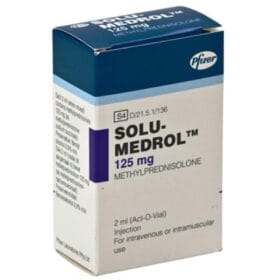 Solu-Medrol
Pytania i odpowiedzi
Solu-Medrol
Produkty powiązane



Opinie
Nie ma jeszcze opinii