








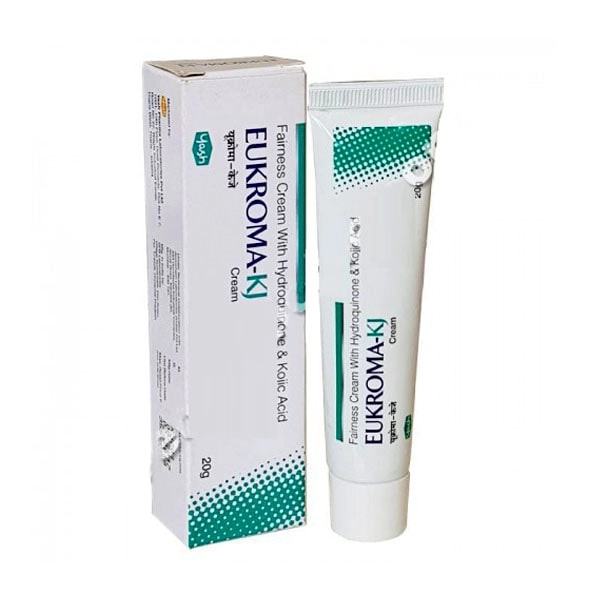
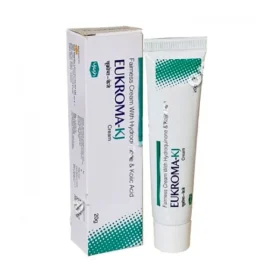
Eukroma Kj Cream
✅ Echipă tonul pielii
✅ Reduce pigmentația
✅ Tratează afecțiunile pielii
✅ Îmbunătățește aspectul pielii
✅ Promovează sănătatea pielii
✓ Verificat medical de Morgan Ellis — Cercetător farmaceutic · 8 ani de experiență · Ultima recenzie: mai 2026
⚡ Răspuns rapid — Ce este crema Eukroma-KJ?
Crema Eukroma-KJ este o cremă topica de despigmentare de la Yash Pharma care combină hidrochinonă 4% cu acid kojic 2%. Cele două substanțe active inhibă producția de melanină prin mecanisme complementare — hidrochinona blochează locul de legare al enzimei tirosinazei, în timp ce acidul kojic chelează cofactorul de cupru — oferind o depigmentare mai puternică decât hidrochinona singură. Utilizat pentru melasmă (cloasmă), hiperpigmentare post-inflamatorie (PIH) post-acneică și lentigo solare. Aplicați un strat subțire pe petele întunecate o dată pe noapte; curs maxim continuu 4–6 luni înainte de o pauză obligatorie pentru a evita ochronoza exogenă. SPF 50+ cu spectru larg zilnic este obligatoriu — expunerea la UV anulează efectul în câteva zile. Contraindicate în sarcină și alăptare. Hidrochinona a fost restricționată de FDA SUA la supraveghere specializată din 2020.
📦 Fiecare comandă este acoperită de politica noastră de Politica noastră de Reexpediere Garantată — dacă coletul dumneavoastră nu sosește în 20 de zile lucrătoare, îl relivrăm.
De ce să comanzi de la MedsBase
Medicamentele noastre generice sunt procurate de la producători certificați WHO-GMP și expediate la nivel mondial în ambalaje discrete și simple — fără denumirea medicamentului pe exteriorul coletului. Plățile cu cardul sunt procesate printr-un procesor reglementat (descrierile de pe extrasul de cont includ un procesor de plăți cu card reglementat — niciodată “MedsBase” sau numele vreunui medicament). Acceptăm și criptomonede și transferuri bancare SEPA. Fiecare comandă este susținută de Politica noastră de Asigurare pentru Relivrare.
Ce este crema Eukroma-KJ?
Eukroma-KJ este o cremă depigmentantă topică de la Yash Pharma care combină hidrochinonă 4% — agentul depigmentant topic standard de aur — cu acid kojic 2%, un inhibitor de tirosinază derivat din Aspergillus oryzae fermentare. Sufixul “-KJ” din numele comercial denotă Kacid kojic + hidrochinonă (uneori scris HJ) formulare; acesta nu este amestecul multi-ingredient “triplu Kligman” (care conține în plus tretinoină și un corticosteroid topic).
Combinația de hidrochinonă + acid kojic este poziționată între hidrochinona cu un singur ingredient (mai blândă, mai lentă) și triplul Kligman (mai rapid, cu mai multe efecte adverse). Acidul kojic potențează inhibarea tirosinazei de către hidrochinonă fără riscurile de atrofie cauzată de steroid și dermatită de rebond ale unei creme care conține corticosteroid, astfel încât durata sigură a ciclului este 4–6 luni (comparabilă cu hidrochinona cu un singur ingredient) și nu limita de 8 săptămâni a triplului Kligman. Eukroma-KJ Cream este un produs pe bază de rețetă destinat utilizării ciclice, sub supraveghere medicală — nu pentru înălbirea cosmetică a pielii pe termen nelimitat.
Cum funcționează Eukroma-KJ Cream?
Ambele substanțe active țintesc enzima limitatoare de viteză în producția de melanină, tirozinază, dar în puncte diferite ale enzimei — motiv pentru care combinația este mai puternică decât fiecare ingredient separat:
- Hidrochinonă 4% intră în competiție cu substratul natural al enzimei (tirozină / DOPA) la situl activ, blocând sinteza de melanină la pasul său limitator de viteză. La această concentrație, produce și citotoxicitate selectivă a melanocitelor, reducând activitatea generală a melanocitelor în zona tratată.
- Acid kojic 2% chelatează ionul de cupru care se află în centrul situsului activ al tirosinazei. Fără cofactorul de cupru, tirozina nu poate cataliza sinteza de melanină deloc. Acidul kojic mai elimină și radicalii liberi induși de UV care declanșează activarea melanocitelor.
Rezultatul vizibil este deschiderea culorii la 4–8 săptămâni, beneficiul maxim la 3–4 luni, și întreținere continuă ulterior, cu condiția respectării protocolului ciclic. Efectul este complet dependente de UV — fără protecție zilnică riguroasă cu SPF 50+, orice câștig se pierde în câteva zile de expunere neprotejată la soare, iar continuarea aplicării cremei pe pielea deja reactivată crește paradoxal riscul de ocronoză.
Utilizări și indicații
- Melasmă (cloasmă) — pete maronii simetrice pe obraji, frunte, buza superioară, adesea determinate hormonal (sarcină, utilizare de contraceptive orale, perimenopauză)
- Hiperpigmentare post-inflamatorie (PIH) după acnee, eczemă, arsuri sau laser; util în special pentru pielea Fitzpatrick III–VI unde hiperpigmentarea post-inflamatorie este persistentă
- Lentigo solare (pete solare, pete de bătrânețe) pe față și pe dosul mâinilor
- Hiperpigmentare periorbitală/periorală (folosită moderat, evitând cu grija marginea pleoapei și vermilionul buzelor)
- Întreținere după un ciclu cu triplu Kligman — când se reduce după cele 8 săptămâni de tratament triplu, Eukroma-KJ Cream este un produs de întreținere rezonabil pentru încă 4–6 luni
Eukroma-KJ Cream nu este potrivită pentru: melasma profundă dermal-pigmentară (care răspunde la laser sau peelinguri chimice mai degrabă decât la tratamente topice), piele fisurată sau eczematoasă, decolorare cosmetică zilnică pe termen lung (populația cu cel mai mare risc de ocronoza), pistrui (efelide — cauzate de UV și tind să recidiveze) sau afecțiuni care necesită un corticosteroid pe bază de rețetă (pentru care o cremă triplă Kligman ar fi alegerea mai bună).
Dozarea și modul de aplicare al Eukroma-KJ Cream
Eukroma-KJ Cream este furnizată sub formă de cremă în tuburi de 1, 3 sau 6, conținând 4% hidrochinonă și 2% acid kojic. Aplicați numai pe zonele întunecate afectate, nu pe întreaga față sau corp.
Cum să aplicați corect Eukroma-KJ Cream
- Spălați ușor cu un demachiant blând, care nu spumează și uscați prin tamponare. Așteptați 20–30 de minute ca pielea să se usuce complet — aplicarea hidrochinonei pe pielea umedă crește senzația de înțepătură și absorbția în mod imprevizibil.
- Testare preliminară pe o porțiune mică de piele. Aplicați o cantitate de mărimea unui bob de mazăre pe partea internă a antebrațului o dată pe zi timp de 48–72 de ore înainte de utilizarea pe față. Acidul kojic poate provoca dermatită de contact alergică la 5–10% dintre utilizatori — mai frecvent decât hidrochinona singură — iar un test preliminar pozitiv înseamnă că nu puteți utiliza acest crem.
- Aplicați un strat subțire doar pe zonele întunecate, nu pe pielea sănătoasă din jur. Folosiți un bețișor de bumbac pentru precizie pe zone mici (de ex. zone periorbitale sau periorale).
- Evitați ochi, pleoape, colțuri ale gurii, nări, buze, membrane mucoase și partea anterioară a gâtului.
- O dată pe noapte este regimul standard. Unii dermatologi recomandă creșterea la de două ori pe zi (dimineața + seara) după 2–3 săptămâni dacă este bine tolerat, dar acest lucru crește riscul de ocronoza și nu este recomandat pentru utilizatorii pentru prima dată.
- Durata maximă continuă: 4–6 luni. După aceasta, faceți o pauză de 2–3 luni înainte de orice alt tratament. Nu depășiți 8 luni de utilizare a hidrochinonei în orice perioadă de 12 luni consecutive.
- Utilizarea zilnică a unui produs cu SPF 50+ cu spectru larg dimineața este obligatorie — nu doar în timpul tratamentului, ci și indefinit după. Se recomandă utilizarea unui ecran solar mineral (oxid de zinc sau dioxid de titan) sau hibrid pentru melasmă. Reaplicați la fiecare 2–3 ore în exterior. Folosiți o pălărie cu bor larg și evitați complet salonul de bronzare.
- Opriți imediat dacă observați decolorări albastre-negre sau gri-ardezii ale zonelor tratate, arsuri persistente, bășici sau întunecare rebound. Nu continuați tratamentul în prezența acestor semne de avertizare.
Efecte Secundare ale Cremă Eukroma-KJ
Frecvente (ușoare; se ameliorază în primele 2–3 săptămâni):
- Ușoară uscare sau descuamare în zona tratată
- Furnicături sau arsură la aplicare (mai accentuate în săptămânile 1–2)
- Ușoară roșeață în jurul zonei tratate
- Creșterea sensibilității la soare a pielii tratate
Mai puțin frecvente:
- Dermatită de contact alergică — 5–10% cu această combinație (acidul kojic este un sensibilizator mai frecvent decât hidrochinona singură)
- Efect halo — deschiderea culorii pielii sănătoase din jurul zonei tratate, producând un inel vizibil. Se poate atenua prin aplicarea strictă pe zona afectată.
- Hiperpigmentare temporară de rebound la întreruperea bruscă a cremei fără un produs de întreținere sau SPF
Rar, dar opriți și consultați un dermatolog:
- Ocronoză exogenă — pigmentație paradoxală albastru-negricioasă sau gri-ardozie; se dezvoltă la utilizarea continuă peste 6 luni, în special pe pielea Fitzpatrick V–VI la concentrații de hidrochinonă de 4% și mai mari. Poate fi permanentă. Întrerupeți utilizarea cremei la prima suspiciune.
- Dermatită de contact severă cu vezicule, exsudare sau arsură persistentă
- Depigmentare periobitală (din cauza răspândirii în zona pleoapelor)
Avertismente și precauții
- Sarcină și alăptare: contraindicate. Hidrochinona este clasificată de FDA în Categoria C de sarcină, cu absorbție sistemică de până la 35% la aplicarea pe față. Pentru melasma asociată sarcinii, treceți la acid azelaic 15–20% (Categoria B de sarcină) cu SPF 50+ strict.
- Expunere la soare: este obligatoriu să utilizați zilnic un SPF 50+ cu spectru larg. Fără acesta, efectul de depigmentare se inversează în câteva zile, iar riscul de ocronoză crește semnificativ.
- Protocol ciclic: nu utilizați continuu peste 6 luni. Luați o pauză de 2–3 luni între cursuri. Nu depășiți 8 luni de utilizare hidrochinonă în orice perioadă de 12 luni.
- Acțiune FDA 2020: toate produsele cu hidrochinonă fără prescripție au fost retrase de pe piața americană în septembrie 2020. Hidrochinona este acum restricționată la supraveghere specializată în SUA, UE, Japonia și majoritatea Asiei.
- Sensibilitate la acidul kojic: pacienții cu antecedente de dermatită alergică de contact la produse cosmetice care conțin acid kojic nu ar trebui să utilizeze Eukroma-KJ Cream. Alegeți în schimb o cremă cu hidrochinonă cu un singur ingredient.
- Piele Fitzpatrick V–VI: risc crescut de ochronoză. Se recomandă începerea cu o concentrație mai mică de hidrochinonă (2%) timp de 2–3 luni înainte de a trece la 4%.
- Nu aplicați pe pielea deteriorată, eczemă activă, arsură solară severă sau răni deschise.
- Îndepărtarea părului cu ceară, cu fir, laser, dermabraziune, microneedling, peeling-uri chimice: întrerupeți aplicarea cremei Eukroma-KJ timp de 7–10 zile înainte de oricare dintre aceste proceduri și nu reluați până când pielea s-a reepitelizat complet.
- Copii sub 12 ani: nu este pentru uz pediatric.
Contraindicații — Cine NU ar trebui să folosească crema Eukroma-KJ
- Hipersensibilitate cunoscută la hidrochinonă, acid kojic sau orice componentă a formulării
- Sarcină, planificare sarcină sau alăptare
- Eczemă activă, rozacee severă, dermită umezită sau răni deschise în zona de tratat
- Ochronoză exogenă stabilită (pigmentație albastru-negru indusă de hidrochinonă)
- Alergie de contact documentată anterior la un produs care conține acid kojic
- Copii sub 12 ani
- Pacienți care nu doresc să se angajeze la utilizarea zilnică a SPF 50+ și la protocolul de ciclare — raportul risc/beneficiu nu justifică utilizarea
Interacțiuni medicamentoase și cu produse de îngrijire a pielii
| Combinați cu | Efect | Ce să faceți |
|---|---|---|
| Retinoizi topici (tretinoină, adapalenă, tazarotenă) | Sinergic — retinoidul crește penetrarea hidrochinonei și accelerează turnover-ul pigmentar | Noaptea 1: crema Eukroma-KJ pe petele întunecate. Noaptea 2: retinoizi pe întreaga față. Alternați nopțile sau stratificați cu o așteptare de 30 de minute. Nu amestecați în palmă. |
| Vitamina C 10–15% (acid L-ascorbic) | Compatibil — inhibare complementară a tirosinazei + antioxidant UV | Vitamina C dimineața sub SPF; crema Eukroma-KJ noaptea. |
| Niacinamidă 5% | Compatibil — reduce transferul de melanozomi și susține bariera | Partener excelent, zi sau noapte. |
| Acid azelaic 15–20% | Compatibil — mecanisme complementare; de asemenea, opțiunea de întreținere în timpul pauzei din ciclu | Acid azelaic dimineața; crema Eukroma-KJ noaptea. |
| Produse topice cu arbutină, deoxiarbutină, rezorcinol, fenol | Risc de depigmentare suprapusă + creșterea riscului de ocronoză | Evitați utilizarea concomitentă în timpul unui tratament activ cu crema Eukroma-KJ. |
| Seruri cu AHA/BHA în procentaje ridicate (glicolic >10%, salicilic >2%) | Iritare cumulativă, perturbarea barierii cutanate, risc de ocronoză | Limitați utilizarea la un exfoliant cu frecvență redusă, o dată pe săptămână, în timpul tratamentului cu hidrochinonă. |
| Peroxid de benzoil / peroxid de hidrogen aplicat pe aceeași zonă | Accelerează oxidarea hidrochinonei — reduce potența și poate provoca temporar colorarea pielii în nuanțe galbene-maronii | Aplicați BPO doar dimineața; crema Eukroma-KJ se aplică noaptea. Nu amestecați sau stratificați. |
| SPF 50+ cu spectru larg zilnic | Accesoriu obligatoriu — nu opțional | Aplicați în fiecare dimineață. Reaplicați la fiecare 2–3 ore în exterior. Folosiți SPF mineral/hibrid pentru melasmă. |
Instrucțiuni de Depozitare
- Se păstrează la temperatura camerei, 15–25°C. Păstrați tubul bine închis și departe de lumina directă a soarelui.
- Hidrochinona se oxidează (devine maronie sau gri) atunci când este expusă la aer și lumină și își pierde rapid eficacitatea odată ce se decolorează. Dacă crema s-a închis la culoare, aruncați tubul.
- Aruncați 6 luni după prima deschidere, chiar dacă produsul mai există.
- Păstrați la distanță de copii.
Alternative conexe pe MedsBase
Alte produse de depigmentare și pentru acnee disponibile pe MedsBase:
- Melrio Cream (hidrochinonă + tretinoină + fluocinolonă)
- Melacare Forte Cream (hidrochinonă + tretinoină + mometazonă)
- Kojiglo Forte Cream (hidrochinonă + tretinoină + mometazonă)
- Epilite Liquid (hidrochinonă 2%)
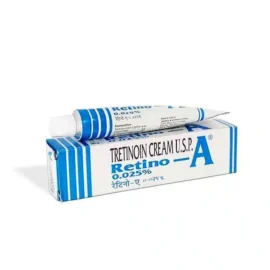
- Retino-A Cremă (tretinoină 0,025% / 0,05%)
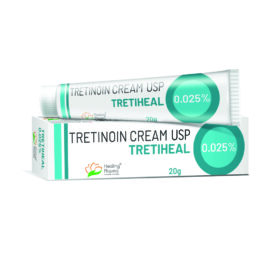
- Tretiheal Cremă (tretinoină 0,025% / 0,05% / 0,1%)
- Isotroin (isotretinoină orală 5/10/20/30 mg)
Lectură utilă: Cremă de tretinoină vs gel · Tretinoină vs retinol · Tot ce doriți să știți despre acnee.
Întrebări frecvente
Când voi vedea rezultate de la crema Eukroma-KJ?
Eclarisirea vizibilă începe la 4–8 săptămâni; beneficiul maxim la 3–4 luni. Dacă nu observați nicio înseninare la 8 săptămâni, cel mai probabil fie nu aplicați zilnic SPF (cea mai mare cauză reversibilă de eșec), aplicați pe pielea udă sau recent spălată, fie aveți o melasmă dermală profundă care necesită un laser sau un peeling chimic în loc de un tratament topic.
De ce să combinați hidrochinona cu acidul kojic?
Cele două substanțe active inhibă tirosinaza (enzima limitatoare de viteză în sinteza melaninei) la puncte diferite ale enzimei. Hidrochinona concurează cu substratul natural al tirosinazei la situsul activ; acidul kojic chelează cofactorul de cupru de care are nevoie enzima pentru a funcționa. Acționând simultan în ambele puncte este mai puternic decât fiecare separat, iar acidul kojic mai capturează și radicalii liberi induși de UV care activează melanocitele. Compensarea este un risc ușor mai mare de dermatită de contact alergică de la acidul kojic (5–10% față de 3–5% pentru hidrochinonă singură).
Cum diferă crema Eukroma-KJ de o cremă triplă Kligman (Melrio, Melacare, Kojiglo)?
O cremă triplă Kligman adaugă tretinoin (un retinoid) și un corticosteroid topic la hidrochinonă. Acționează mai rapid și este mai puternic decât crema Eukroma-KJ, dar prezența corticosteroizilor limitează utilizarea în siguranță la cicluri de 8 săptămâni (utilizarea prelungită poate provoca atrofie cutanată, telangectazii și rozacee indusă de corticoizi). Crema Eukroma-KJ nu conține corticoizi sau retinoizi, astfel încât poate fi utilizată în cicluri de 4–6 luni. Mulți dermatologi prescriu un tratament triplu Kligman pentru o fază de inducție agresivă de 8 săptămâni, urmată de trecerea la o cremă cu hidrochinonă și acid kojic, precum Eukroma-KJ, pentru întreținere.
Pot folosi crema Eukroma-KJ în timpul sarcinii sau al alăptării?
Nu. Hidrochinona este clasificată de FDA în Categoria C pentru sarcină, cu absorbție sistemică de până la 35% la aplicarea pe față. Pentru melasma asociată sarcinii, treceți la acid azelaic 15–20% (Categoria de sarcină B) cu SPF 50+ riguros, care este sigur atât în timpul sarcinii, cât și al alăptării.
Ce este ochronoză exogenă și cum o evit?
Ochronoza exogenă este o pigmentare paradoxală albastru-negricioasă sau gri-ardzie cauzată de utilizarea continuă a hidrochinonei peste 6 luni, în special la concentrația de 4% și pe pielea Fitzpatrick V–VI. Poate fi permanentă. Prevenție: (1) curs maxim continuu de 4–6 luni, (2) pauză de 2–3 luni între cicluri, (3) SPF 50+ zilnic fără excepție, (4) aplicare doar pe zona afectată — niciodată pe pielea sănătoasă din jur — și (5) oprire imediată dacă petele tratate se înnegresc în loc să se deschidă.
De ce am nevoie de SPF 50+ în fiecare zi?
Expunerea la UV reactivează melanocitele și anulează toate câștigurile obținute cu crema Eukroma-KJ în câteva zile. Expunerea accidentală la soare (conducere, mers până la magazin, șezut lângă fereastră) este suficientă pentru a anula săptămâni întregi de utilizare a cremei. SPF 50+ cu spectru larg este mai important decât crema în sine pentru controlul hiperpigmentării pe termen lung. Protecțiile solare minerale sau hibride (oxid de zinc și/sau dioxid de titan) funcționează mai bine decât filtrele chimice pentru melasmă, deoarece blochează atât declanșatorii de pigment din lumina vizibilă, cât și radiațiile UV.
Pot să aplic crema Eukroma-KJ împreună cu tretinoina noaptea?
Da, dar nu simultan pe aceeași zonă a pielii. Aplicarea imediată a celor două crește riscul de iritație și de ocronoza. Opțiunile practice sunt: (a) nopți alternante — crema Eukroma-KJ în noaptea 1, tretinoina în noaptea 2; sau (b) aplicare cu un interval de 30 de minute între aplicații, pentru a permite absorbția completă a primului produs. Nu amestecați cele două produse în palmă înainte de aplicare.
Ce înseamnă “efectul halo” și cum îl pot evita?
Efectul halo reprezintă iluminarea nedorită a pielii sănătoase din jurul unei pete întunecate tratate, producând un inel vizibil mai palid. Este o consecință directă a aplicării cremei Eukroma-KJ dincolo de marginea petei întunecate pe pielea normală din jur. Preveniți acest lucru aplicând strict pe pată în sine — folosiți un bețișor de bumbac pentru pete mici, aplicați crema cu un deget curat pentru pete mai mari și nu “estompați” spre margine.
Pot folosi crema Eukroma-KJ pe gât, piept sau mâini?
Da. Utilizarea în afara feței este potrivită pentru lentigo solare pe dosul mâinilor, pigmentarea “colier solar” pe pieptul anterior și semnele post-inflamatorii pe membre. Același protocol ciclic (curs continuu maxim de 4–6 luni) se aplică, iar SPF 50+ zilnic pe zonele tratate este obligatoriu. Combinațiile triple Kligman sunt primește, recomandate pentru utilizarea în afara feței deoarece steroidul provoacă atrofie la expunerea prelungită pe corp — crema Eukroma-KJ (fără steroid) este alegerea mai sigură pentru utilizarea în afara feței.
Este hidrochinonul sigur? Am văzut afirmații că provoacă cancer.
IARC clasifică hidrochinonul ca Grupa 3 — neclasificabil ca carcinogen pentru oameni. Semnalul de cancer din studiile pe animale nu s-a tradus în expunerea umană topică în deceniile de utilizare în dermatologie la concentrații de 2–4%. Îngrijorarea reală de siguranță este ochronoză exogenă (un efect secundar de pigmentare), nu cancer, și este complet prevenibil prin respectarea protocolului de ciclare și a utilizării zilnice a SPF 50+.
Mai multe opțiuni în Îngrijirea pielii și Frumusețe
Clasificate în funcție de volumul recent de comenzi MedsBase — ce aleg alți clienți în această categorie.


| Concentrație | 4%w/w + 2%w/w |
|---|---|
| Cantitate | 1 Tub, 3 Tuburi, 6 Tuburi |
| Formă farmaceutică | Creme |
| Producător | Yash Pharma |
| Indicație | Hiperpigmentare, Melasmă |
| Brand generic | Hidrochinonă + Tretinoină + Mometazonă |
 Eukroma Kj Cream
Întrebări și răspunsuri
Eukroma Kj Cream
Produse similare





Recenzii
Nu există recenzii încă