









Tachyra
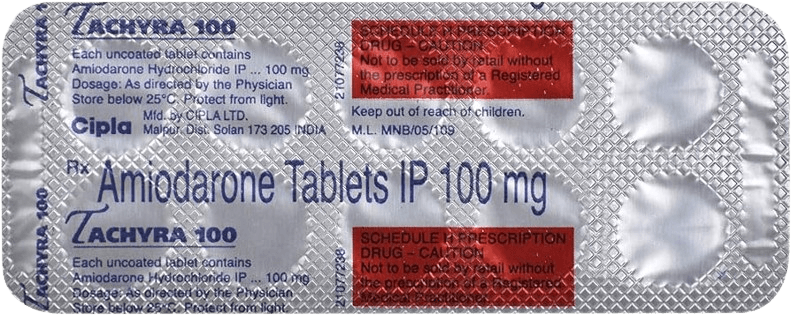

Tachyra sunt comprimate de amiodaronă 200 mg — generic al antiaritmicului de clasă III de referință. Blocator multi-canal cu activitate pe potasiu, sodiu, beta și canalele de calciu; timp de înjumătățire tisular lung (40-60 de zile); cea mai eficientă opțiune orală pentru bolile cardiace structurale unde alte antiaritmice eșuează. Povara semnificativă de monitorizare (teste hepatice, TSH, teste funcționale pulmonare, examen ocular) datorită toxicității organice. Administrat de specialiști.
✓ Verificat medical de Morgan Ellis — Cercetător farmaceutic · 8 ani de experiență · Ultima recenzie: mai 2026
⚡ Răspuns rapid — Ce este Tachyra?
Tachyra sunt comprimate de amiodaronă 200 mg de la un producător certificat WHO-GMP — un antiaritmic de clasă III (cu proprietăți de clasă I, II și IV — “blocator multi-canal”). Amiodarona a fost introdusă în anii 1960 ca antianginoasă de Labaz; proprietățile sale antiaritmice au fost recunoscute mai târziu. În ciuda toxicității organice substanțiale, rămâne cel mai eficient antiaritmic oral atât pentru aritmii atriale (FA, flutter), cât și ventriculare (TV, FV) și este utilizat pe scară largă în bolile cardiace structurale unde alte antiaritmice sunt contraindicate. blochează multiple canale ionice — potasiu (clasa III, prelungește repolarizarea), sodiu (clasa I), beta-receptori (clasa II, parțial) și calciu (clasa IV). De asemenea, blochează conversia hormonilor tiroidieni și acțiunea periferică. Timpul de înjumătățire extrem de lung (40-60 de zile) și volumul mare de distribuție înseamnă că efectul terapeutic se acumulează în săptămâni. Dozare: Doza de încărcare: 200 mg de trei ori pe zi timp de 1 săptămână, apoi 200 mg de două ori pe zi timp de 1 săptămână, apoi doza de întreținere de 200 mg o dată pe zi (doza totală de încărcare este de obicei 10 g). Doza de întreținere: 100-400 mg o dată pe zi (ajustați în funcție de răspunsul clinic și nivelurile medicamentului). Managementul aritmiilor este o disciplină condusă de cardiologie — diagnosticul, selecția medicamentului și monitorizarea necesită de obicei consult specializat. Acesta nu este un medicament pentru terapie autoinițiată.
📦 Fiecare comandă este acoperită de politica noastră de Politica noastră de Reexpediere Garantată — dacă coletul dumneavoastră nu sosește în 20 de zile lucrătoare, îl relivrăm.
De ce să comanzi de la MedsBase
Medicamentele noastre generice sunt procurate de la producători certificați WHO-GMP și expediate la nivel mondial în ambalaje discrete și simple — fără denumirea medicamentului pe exteriorul coletului. Plățile cu cardul sunt procesate printr-un procesor reglementat (descrierile de pe extrasul de cont includ un procesor de plăți cu card reglementat — niciodată “MedsBase” sau numele vreunui medicament). Acceptăm și criptomonede și transferuri bancare SEPA. Fiecare comandă este susținută de Politica noastră de Asigurare pentru Relivrare.
Ce este Tachyra?
Tachyra sunt comprimate de amiodaronă 200 mg de la un producător certificat WHO-GMP, furnizate în cutii de 30-180 de comprimate. Amiodarona a fost introdusă în anii 1960 ca antianginoasă de către Labaz; proprietățile sale antiaritmice au fost recunoscute mai târziu. În ciuda toxicității organice substanțiale, rămâne cel mai eficient antiaritmic oral atât pentru aritmiile atriale (FA, flutter) cât și pentru cele ventriculare (TV, FV) și este utilizat pe scară largă în bolile cardiace structurale unde alte antiaritmice sunt contraindicate.
Cum acționează amiodarona
Amiodarona blochează multiple canale ionice — potasiu (clasa III, prelungește repolarizarea), sodiu (clasa I), beta-receptori (clasa II, parțial) și calciu (clasa IV). De asemenea, blochează conversia hormonilor tiroidieni și acțiunea periferică. Timpul de înjumătățire extrem de lung (40-60 de zile) și volumul mare de distribuție înseamnă că efectul terapeutic se acumulează în săptămâni.
Utilizări aprobate
- Fibrilația atrială și flutterul (controlul ritmului; de asemenea, controlul frecvenței în situații specifice)
- Tahicardia ventriculară / fibrilație ventriculară — utilizare IV acută în stop cardiac (ALS); administrare orală cronică pentru prevenirea recurenței
- Aritmii supraventriculare rezistente la alte agenți
- Aritmic preferat în bolile cardiace structurale (IC, post-IM) unde agenții din clasa Ic (flecainidă, propafenonă) sunt contraindicați
Doza și Monitorizare
Doza: Doza de încărcare: 200 mg de trei ori pe zi timp de 1 săptămână, apoi 200 mg de două ori pe zi timp de 1 săptămână, apoi doza de întreținere de 200 mg o dată pe zi (doza totală de încărcare este de obicei 10 g). Doza de întreținere: 100-400 mg o dată pe zi (ajustați în funcție de răspunsul clinic și nivelurile medicamentului).
Monitorizare:
- Valori inițiale: ECG, teste funcționale hepatice (LFTs), TSH (T4 liber dacă anormal), radiografie toracică, teste funcționale pulmonare (DLCO), consult oftalmologic, inspectare cutanată.
- La fiecare 3 luni: Teste funcționale hepatice (LFTs), TSH.
- La fiecare 6 luni: radiografie toracică; teste funcționale respiratorii (PFTs) dacă există simptome pulmonare.
- Anual: examinare completă a ochiului pentru microdepozite corneene și neuropatie optică.
- Interrupție la: dispnee cu scădere a PFTs sau infiltrate noi, transaminaze >3× ULN, disfuncție tiroidiană severă necorectabilă, interval QT >500 ms, bradicardie <50 bpm cu simptome, decolorare piele albastru-gri, tulburări vizuale severe.
Efecte Secundare
- Toxicitate pulmonară (1-17%) — poate fi fatală; pneumonită progresând spre fibroză. Incidența este dependentă de doză. Întrerupeți imediat la dispnee cu scădere a PFTs sau infiltrate noi.
- Hepatotoxicitate (1-3% semnificativ clinic; 15-50% cu creștere ușoară a enzimelor hepatice)
- Disfuncție tiroidiană — atât hipotiroidism (10-20%) cât și hipertiroidism (2-10%). Tirotoxicoză indusă de amiodaronă (AIT) poate fi letală.
- Microdepozite corneene — universal după luni de terapie; rareori afectează vederea; de obicei reversibil.
- Neuropatie optică (rar; poate progresa către pierdere permanentă a vederii — întrerupeți imediat la orice modificare vizuală)
- Decolorare piele albastru-gri (legată de fotosensibilitate; ireversibilă)
- Neuropatie periferică
- Bradicardie, prelungire QT, torsade de pointes (rar — în ciuda prelungirii QT, amiodarona rareori provoacă torsade)
- GI: grețuri, anorexie, constipație
Contraindicații
- Bradicardie sinusală fără stimulator cardiac
- Bloc AV gradul doi/trei fără stimulator cardiac
- Disfuncție tiroidiană severă (cu excepția cazurilor în care aritmia este amenințătoare pentru viață și există suport tiroidian)
- Hipersensibilitate cunoscută la iod sau amiodaronă
- Medicamente concomitente care provoacă torsade de pointes (relativ)
- Sarcină (evitați; s-a raportat hipotiroidism fetal)
- Alăptare (evitați; trece în lapte)
Interacțiuni medicamentoase
- Warfarin — amiodarona aproape dublează INR; înjumătățiți doza de warfarin la inițierea amiodaronei; monitorizați săptămânal.
- Digoxină — crește nivelul digoxinului cu 50-100%; înjumătățiți doza de digoxin.
- Statine — amiodarona inhibă CYP3A4, crescând nivelurile de simvastatină și atorvastatină; limitați simvastatina la 20 mg cu amiodaronă.
- Alte medicamente care prelungesc intervalul QT (fluorochinolone, macrolide, SSRI, antipsihotice, metadonă) — prelungire aditivă a intervalului QT; evitați sau monitorizați ECG.
- Blocante ale canalelor de calciu non-DHP și beta-blocante — bradicardie și bloc AV aditive.
- Suc de grapefruit — crește nivelurile de amiodaronă.
Întrebări frecvente
De ce amiodarona necesită atât de mult monitorizare?
Amiodarona este extrem de eficientă, dar se acumulează în țesuturi pe parcursul săptămânilor (timp de înjumătățire 40-60 de zile) și provoacă toxicități organice distinctive — fibroză pulmonară (potențial fatală), hepatită, atât hipotiroidism cât și hipertiroidism, depozite corneene, neuropatie optică și piele albăstrui-gri. Monitorizarea este concepută pentru a detecta acestea în stadiile incipiente și reversibile. Acesta este prețul eficacității unice a medicamentului în boala cardiacă structurală, unde alte antiaritmice eșuează.
Pot să opresc amiodarona rapid?
Timpul de înjumătățire în țesuturi este de 40-60 de zile — astfel, efectul persistă săptămâni după ultima doză. Acesta este de obicei un avantaj (scădere graduală) dar complică trecerea la un alt antiaritmic. Orice schimbare este condusă de specialist; planificați în avans pentru interacțiuni care persistă 2-3 luni după oprire.
Pot lua Tachyra în timpul sarcinii?
În general, nu. Amiodarona conține iod și poate provoca hipotiroidism fetal. Utilizați doar pentru aritmii materne care pun viața în pericol, după consultare specializată.
Unde pot cumpăra Tachyra online?
Puteți cumpăra Tachyra (amiodaronă 200 mg, 30-180 de comprimate) de la MedsBase cu ambalaj discret și livrare la nivel mondial.
Medicamente cardio-vasculare conexe
- Abana — formulă ayurvedică cardiacă
- Aldactone — Spironolactonă
- Coq Forte — CoQ10 + licopen + seleniu + omega-3
- Vymada — Sacubitril/Valsartan ARNI
- Waf-5 — Warfarin 5 mg (VKA)
- Xarelto 20 — Rivaroxaban 20 mg (DOAC)
- Răsfoiți toate medicamentele pentru hipertensiune arterială
Alternative conexe
Alte produse din Afecțiuni cronice pe care clienții le vizualizează de asemenea:
Mai multe opțiuni în medicamente pentru hipertensiune arterială
Clasificate în funcție de volumul recent de comenzi MedsBase — ce aleg alți clienți în această categorie.


| Concentrație | 200 mg |
|---|---|
| Cantitate | 30 Comprimat/e, 60 Comprimat/e, 90 Comprimat/e, 180 Comprimat/e |
 Tachyra
Întrebări și răspunsuri
Tachyra
Produse similare







Recenzii
Nu există recenzii încă